
Resources to support parents 202021 Numberblocks Learning at
Resources to support parents 2020/21 Numberblocks Learning at home Series 1 Episode 9 Off we go
Maths in the Episode To watch this episode, please go to BBC i. Player - Numberblocks. Look for Series 1: Off we go! Number order In this episode children hear and join in with the Numberblocks chanting and singing the numbers to five. When the Numberblocks get muddled and are in the wrong order, children can help put them right, putting the smaller numbers at the start of the line. When the Numberblocks are in the right order, they look like a staircase and their song sounds much better!
Talk and discuss together • Watch the episode together. • Ask your child what they noticed and be interested in anything they have to say. • Use the following pictures and activities to explore and talk about the maths involved.
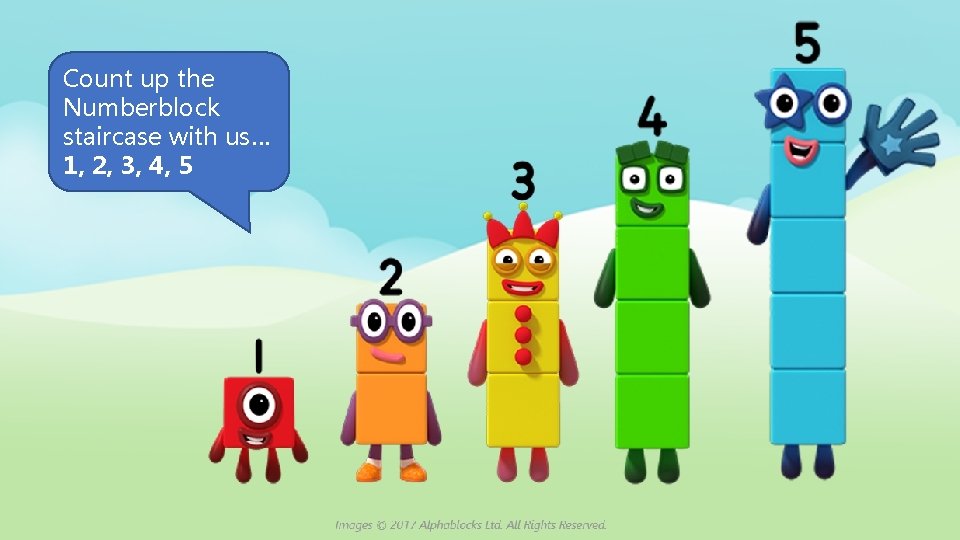
Count up the Numberblock staircase with us… 1, 2, 3, 4, 5
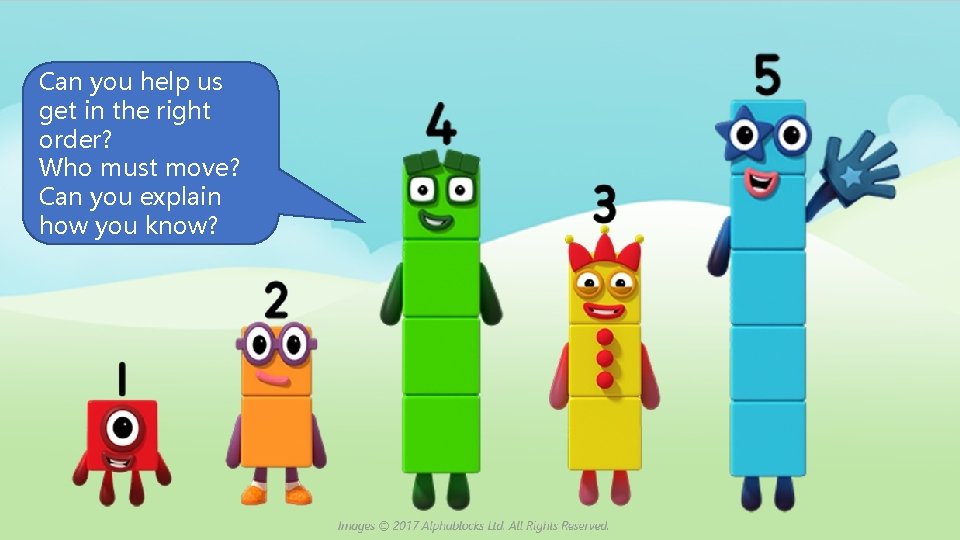
Can you help us get in the right order? Who must move? Can you explain how you know?
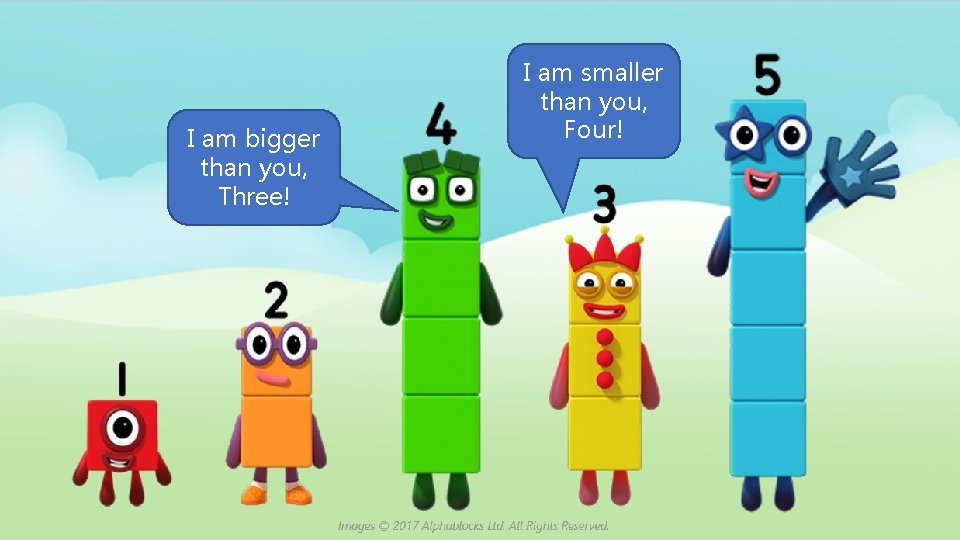
I am bigger than you, Three! I am smaller than you, Four!
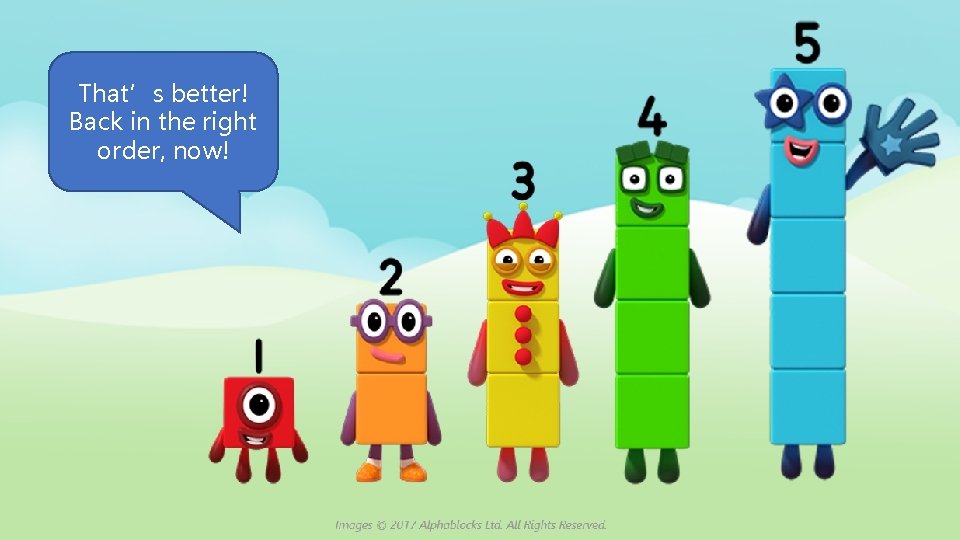
That’s better! Back in the right order, now!
Images © 2017 Alphablocks Ltd. All Rights Reserved.
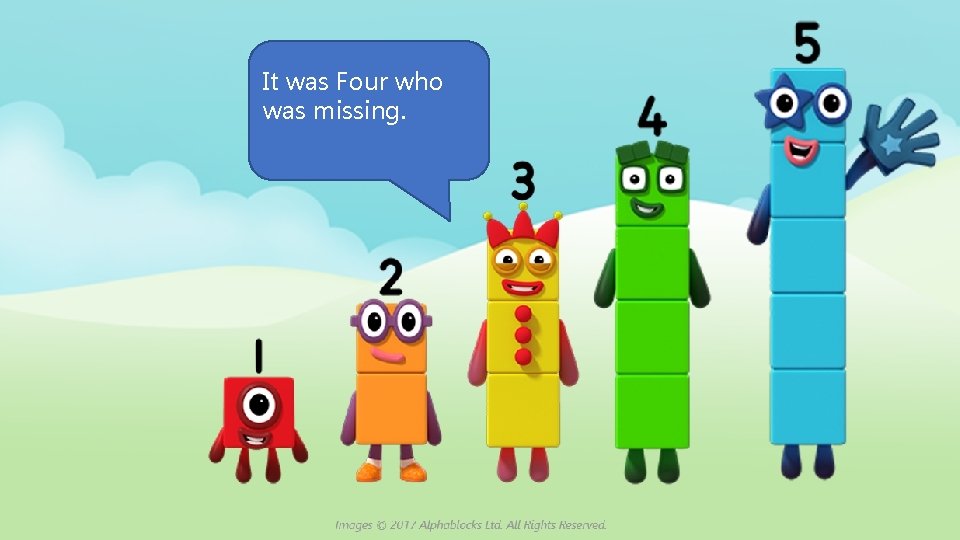
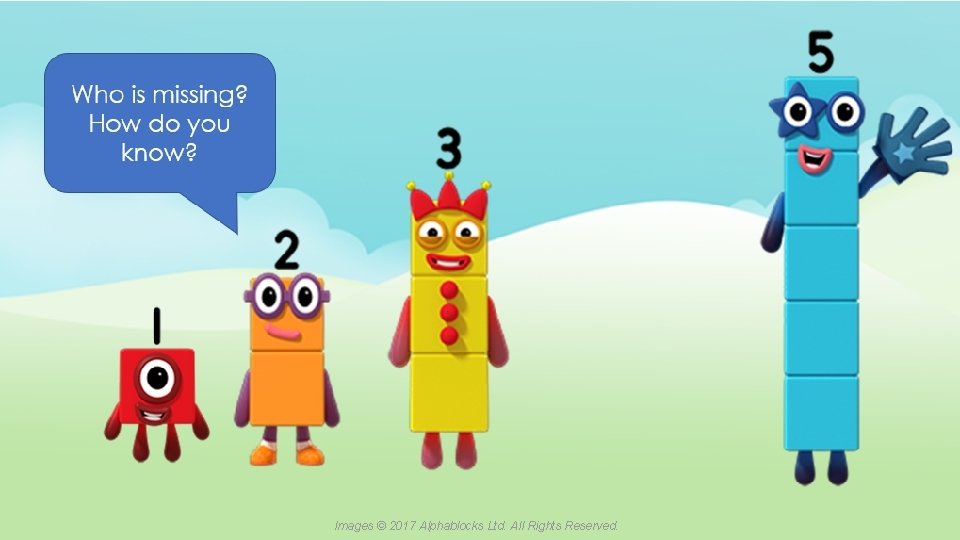
It was Four who was missing.
Around the home • Practise saying and singing the numbers to five together, in the right order. • Help each other remember the next number if one of you ‘gets stuck’. It might be the adult who forgets the next number! • If you have bricks or blocks which are the same size, you could make a staircase pattern up to five. Talk about how each ‘step’ needs one more brick than the last one. • Use plastic bottle tops or one penny coins to make a staircase pattern on a flat surface. • Make your own Numberblocks with connecting bricks. You might sometimes find that the blocks get into the wrong order – you will need to help them get into the right order again! • Draw your own Numberblocks One to Five, cut them out and mix them up. How quickly can you put them right? What if someone hides a Numberblock, can you say which one is missing?
General tips that can make a difference in • Provide lots of opportunities to say how many things you can see (up to 5) without counting. maths • Whenever you talk about a small set of objects, say the number. For example, please pick up those 3 teddies or look at those 2 dogs. • Count up (starting from one) when walking upstairs and count back when walking downstairs. • Count lots of different objects, big and small, and ask ‘How many are there? ’ Your child should be able to tell you without going back and re-counting. If they can’t, then tell them: ‘There are 6 altogether’. • Play with fingers, firstly practise counting fingers. • Ask your child to put their fingers down and then say or hold up a number such as 3. Can they do it without counting? Can they do it using different fingers? Can they do it using fingers from two hands? • Play board games with your child which involve moving along numbered tracks, such as ‘Snakes and Ladders’. Check that your child counts along the track correctly, moving one square for each number counted. Regular use of these simple ideas, whenever the opportunity arises, will improve your child’s maths.
General tips that can make a difference in • Notice when there are two amounts and one is more than the other, or they are the same. maths • • • For example, I have 2 eyes and 2 ears, or I have more chips than peas. Talk about and describe shapes you can see outside or around your home. For example, count corners, talk about straight/curved edges, flat/curved surfaces. If you have building blocks then talk about and describe things that are built. In the bath or at the sink, play with containers, pouring water, counting how many small pots are needed to fill the big container. Encourage your child to draw a picture of their number work and explain their mark-making to you, for example, how many leaves they find on a walk. This doesn’t necessarily mean writing the numerals (1, 2, 3, 4… etc. ). Sing counting songs and rhymes. You can find some on the internet, but children love it if you join in with them! Make a deliberate maths mistake from time to time and ask your child to explain why you are wrong. For example, say that 4 is bigger than 5. Regular use of these simple ideas, whenever the opportunity arises, will improve your child’s maths.
- Slides: 12