
Resources for safe prescribing Kristin Gray Medicines Information
Resources for safe prescribing Kristin Gray Medicines Information Manager Auckland City Hospital Pharmacy January 2018
The role of the pharmacist Clinical Pharmacists - Ward-based or team-based Medicines Information departments Larger hospitals Good knowledge on the existence of local policies and general drug information Clinical support
Introduction to Resources What are they? (Why do I need to learn about them? ) Where are they? (How do I access them? ) Are they any good? (When would I use them? )
Guidelines and Formularies A guideline is usually disease or treatment orientated and aims to reflect current best practice A formulary is drug –orientated and contains summary drug information which aims to aid treatment decisions
How is this relevant to me? Guidelines help with clinical decision-making Formularies can provide additional information about medicines Both may influence the medicines you have available to you to prescribe Having knowledge of where to find these resources will help you when you are prescribing as a junior doctor
Clinical scenario Alcohol and Drug Dependence Disorders (Pysch 03) You are the overnight house officer at the ED in Thames Hospital. A 54 -year old with a history of chronic alcohol use is admitted after being found collapsed and comatose following the ingestion of two bottles of rum. You diagnose acute alcohol intoxication but want to prevent withdrawal. What do you prescribe? - Are there any hospital guideline or protocols to guide you?
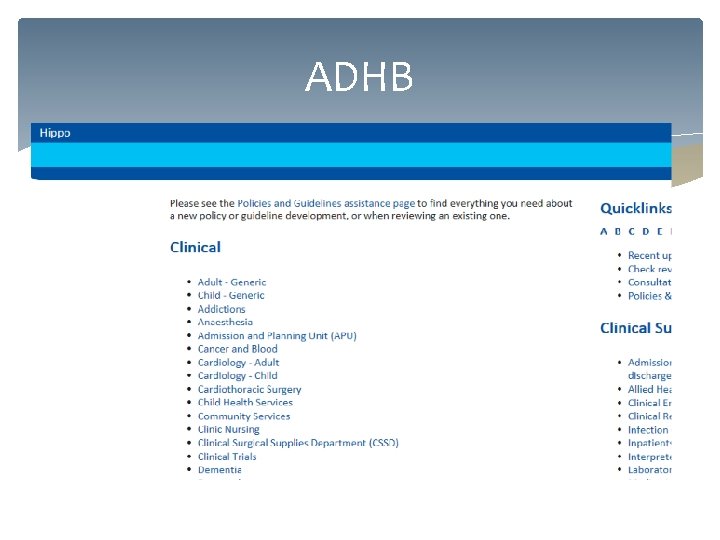
ADHB
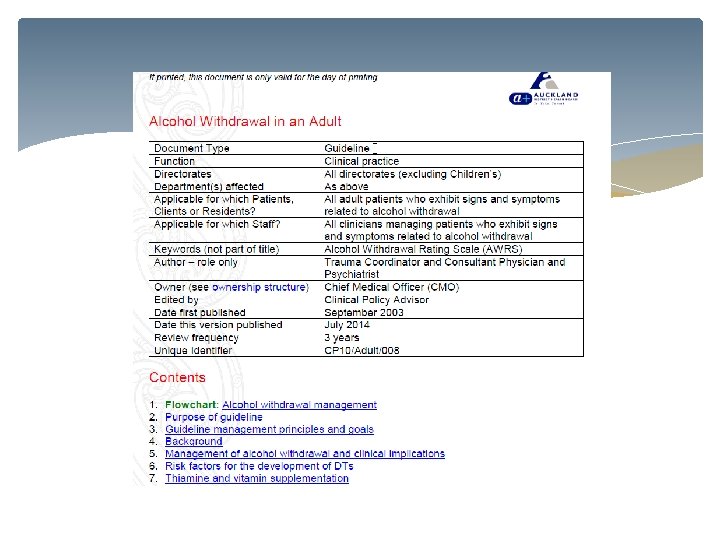
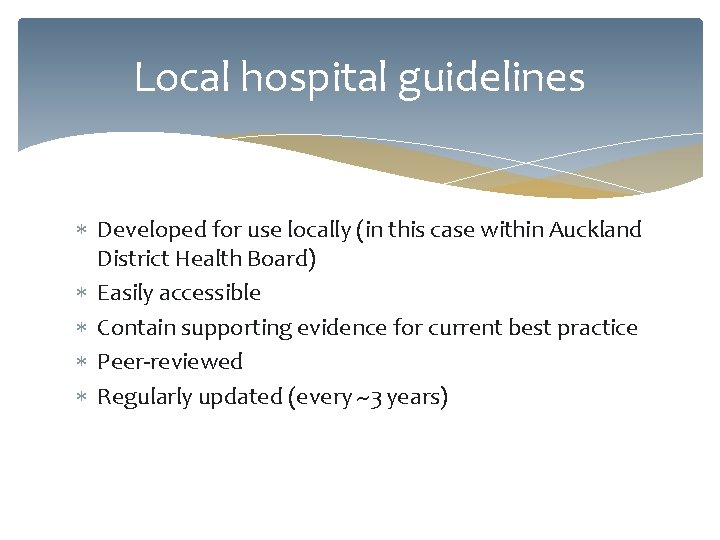
Local hospital guidelines Developed for use locally (in this case within Auckland District Health Board) Easily accessible Contain supporting evidence for current best practice Peer-reviewed Regularly updated (every ~3 years)
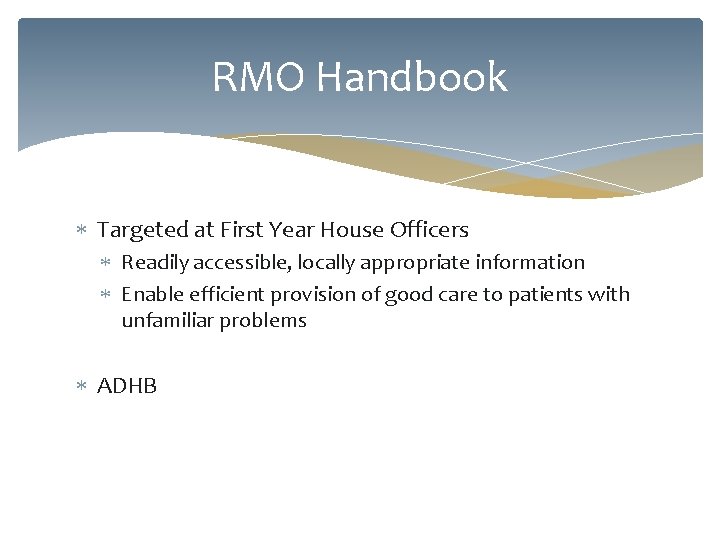
RMO Handbook Targeted at First Year House Officers Readily accessible, locally appropriate information Enable efficient provision of good care to patients with unfamiliar problems ADHB
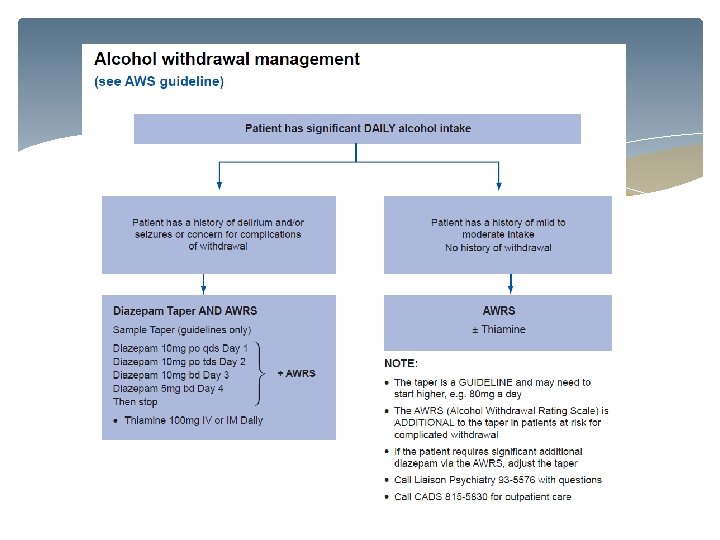
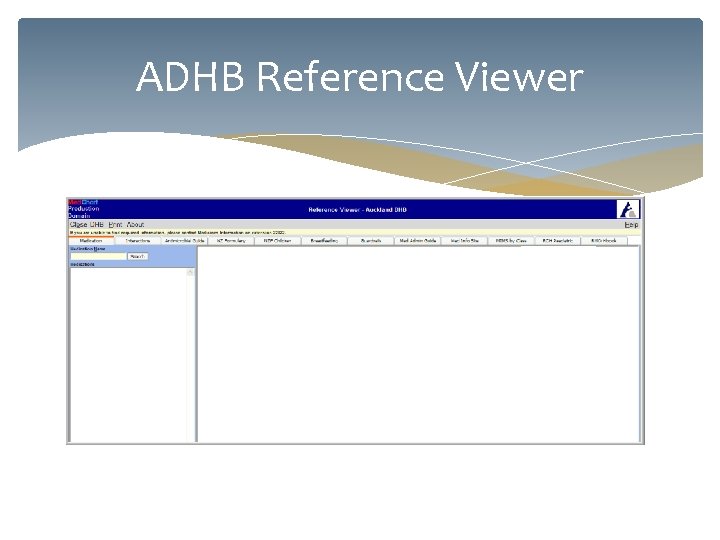
ADHB Reference Viewer
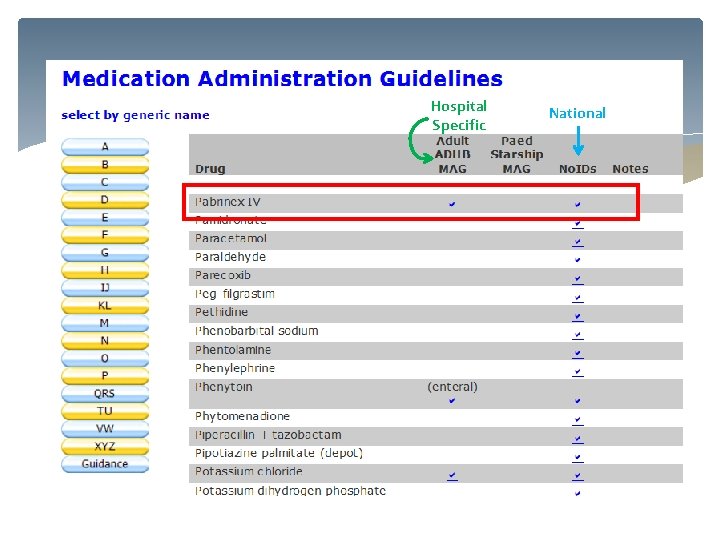
Hospital Specific National
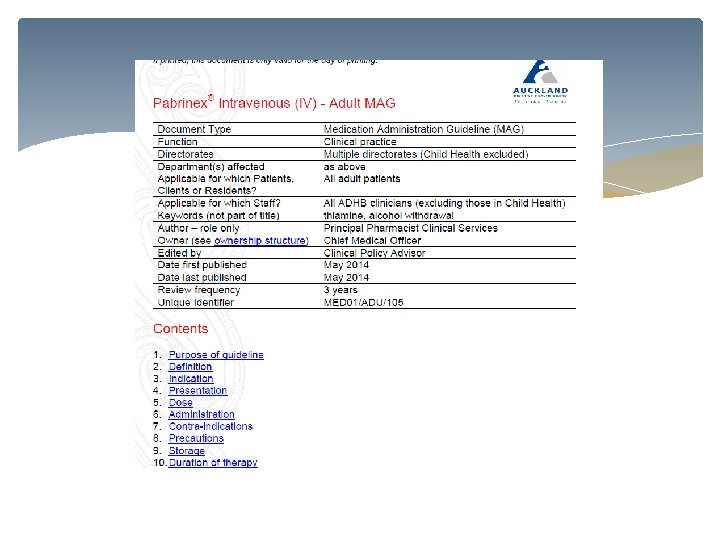
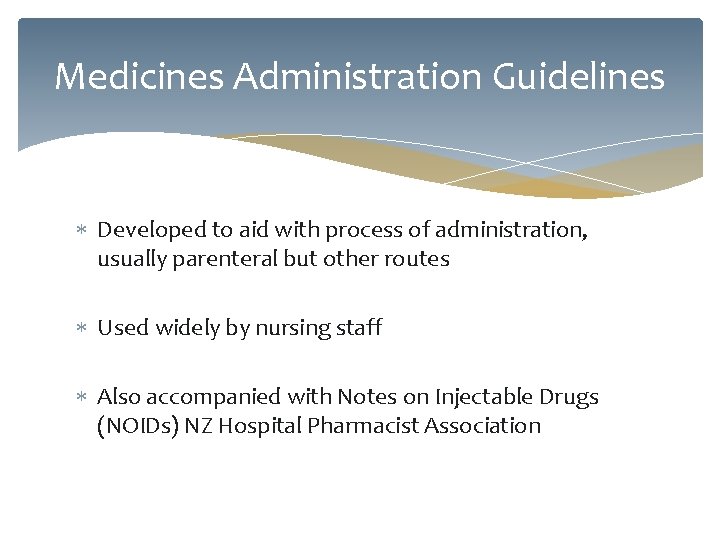
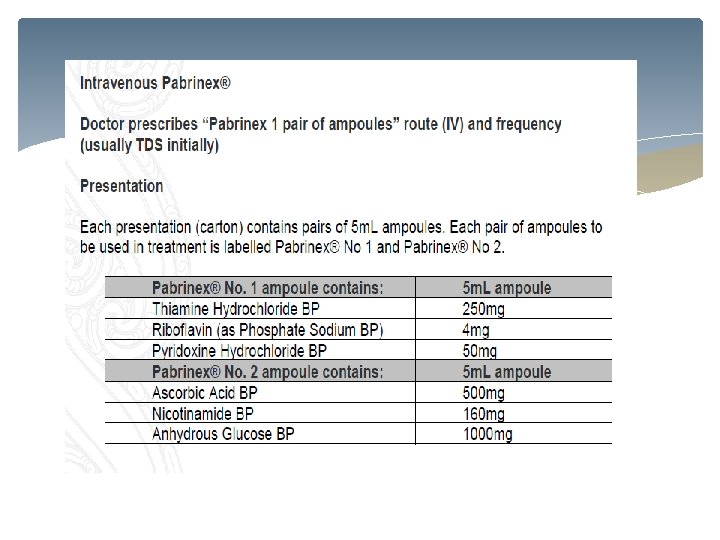
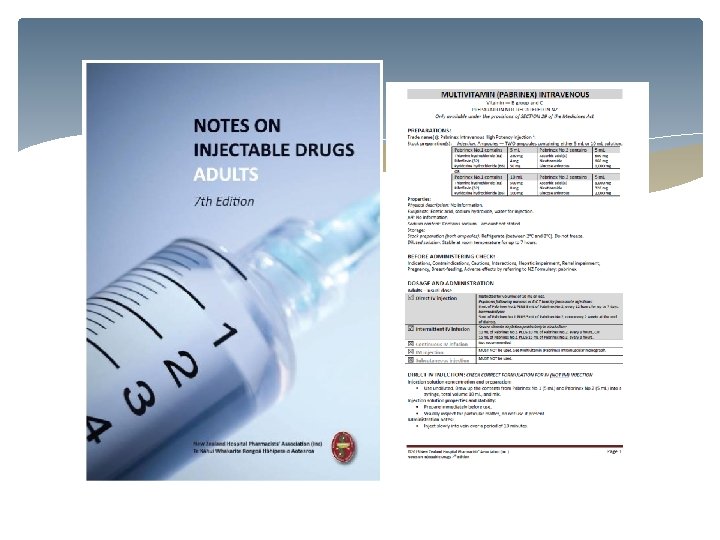
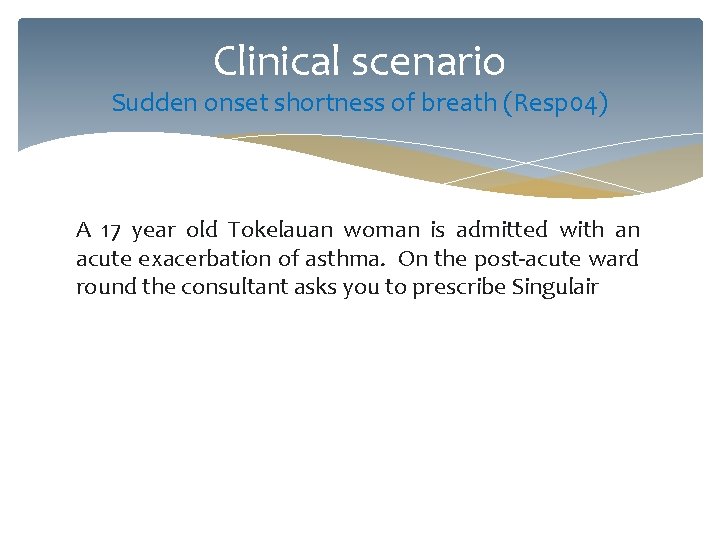
Medicines Administration Guidelines Developed to aid with process of administration, usually parenteral but other routes Used widely by nursing staff Also accompanied with Notes on Injectable Drugs (NOIDs) NZ Hospital Pharmacist Association
Clinical scenario Sudden onset shortness of breath (Resp 04) A 17 year old Tokelauan woman is admitted with an acute exacerbation of asthma. On the post-acute ward round the consultant asks you to prescribe Singulair
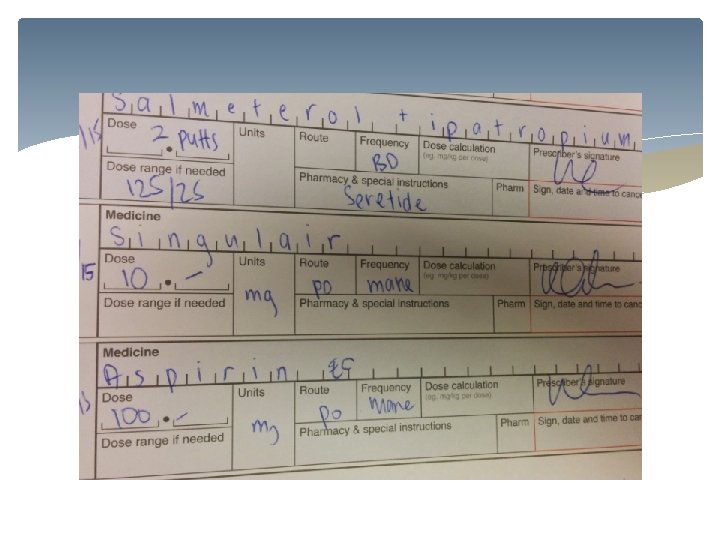
Clinical scenario Sudden onset shortness of breath (Resp 04) A 17 year old Tokelauan woman is admitted with an acute exacerbation of asthma. On the post-acute ward round the consultant asks you to prescribe “Singulair” What is Singulair? What’s the dose? Any side effects? Any interactions? Is there a resource to help you?
New Zealand Formulary Launched July 2012 Four main components: general notes on medicines use practical notes on specific therapeutic categories detailed monographs of individual medicines details of preparations available and relevant subsidy information
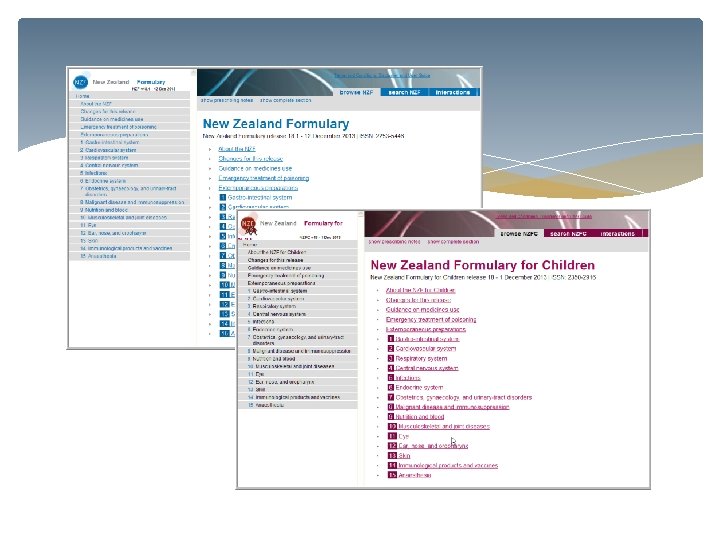
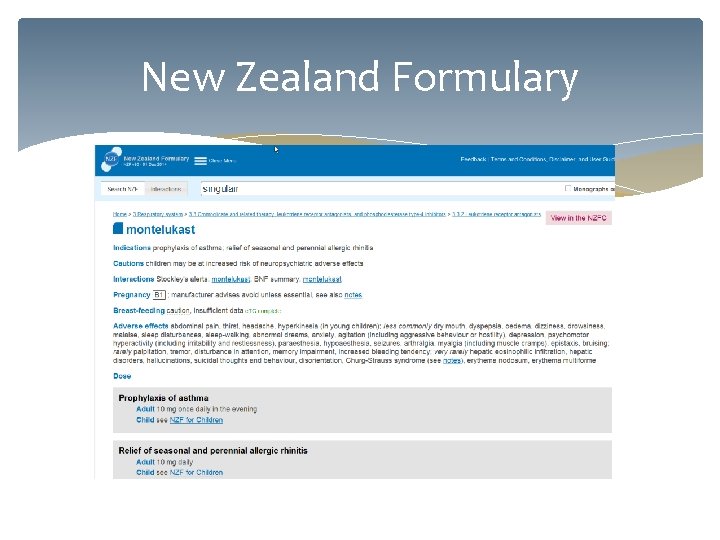
New Zealand Formulary
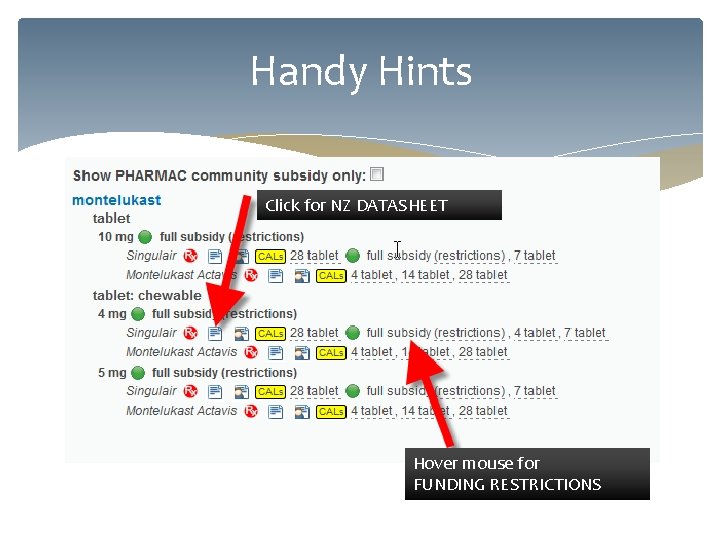
Handy Hints Click for NZ DATASHEET Hover mouse for FUNDING RESTRICTIONS
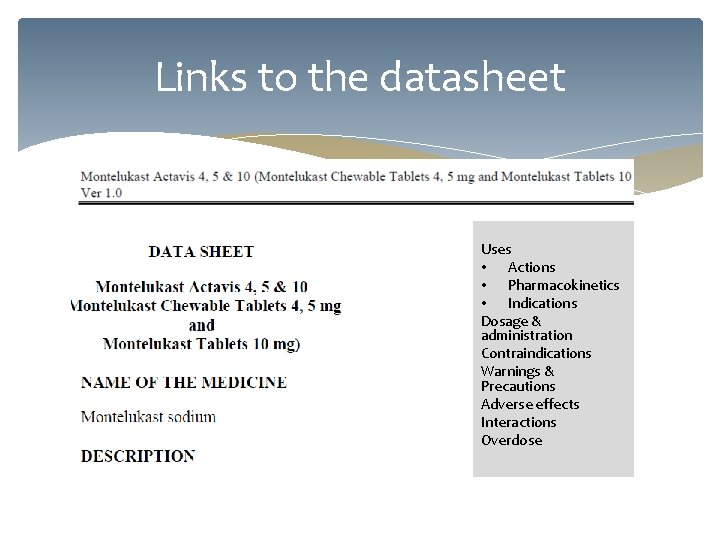
Links to the datasheet 5 pages Uses • Actions • Pharmacokinetics • Indications Dosage & administration Contraindications Warnings & Precautions Adverse effects Interactions Overdose
What information can I find in a datasheet? Information provided by manufacturer regarding licensed: - dosing - route(s) of administration - ADR’s as per the licensing clinical trials (+/- post- marketing surveillance) - pharmacokinetics - very limited information on special populations
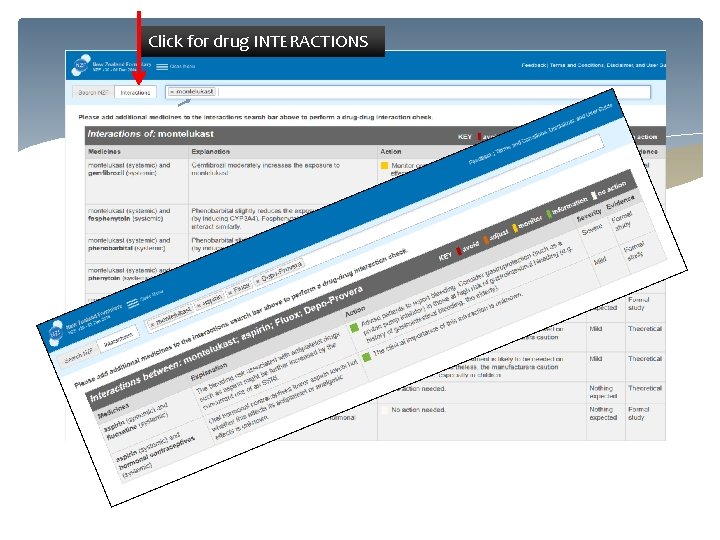
Click for drug INTERACTIONS
Clinical scenario Sudden onset shortness of breath (Resp 04) A 17 year old Tokelauan woman is admitted with an acute exacerbation of asthma. On the post-acute ward round the consultant asks you to prescribe Singulair When she is discharged, what will it cost her to continue Montelukast?
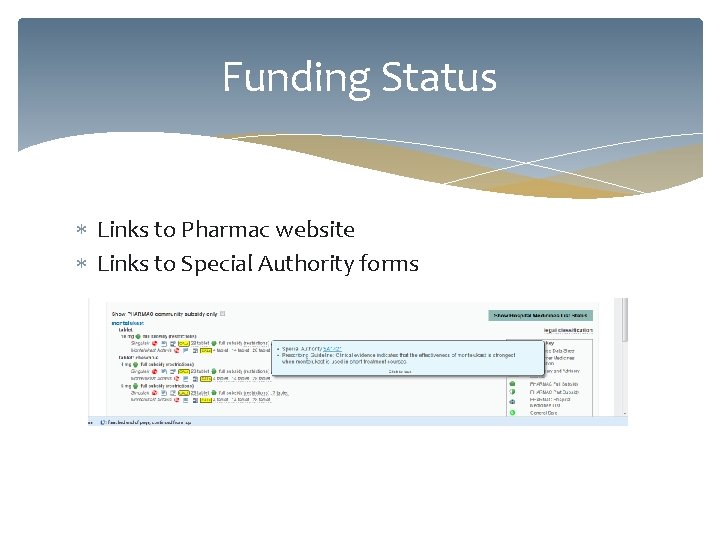
Funding Status Links to Pharmac website Links to Special Authority forms
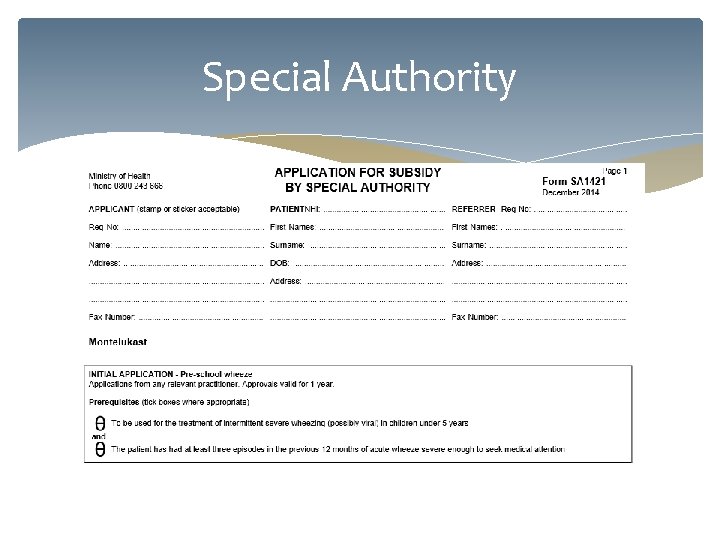
Special Authority
Clinical scenario Pancytopenia (Blood 07) A 28 year old man presents to the Emergency Department after being unwell with fever (temperature up to 39. 7°C). His full blood count shows marked pancytopenia with no detectable segmented neutrophils The guidelines recommend piperacillin and tazobactam (and gentamicin) but the patient has anaphylaxis to penicillin. The registrar suggests meropenem. Can you prescribe this?
What did NZF say? Meropenem: Cautions sensitivity to beta-lactam antibacterials (avoid if history of immediate hypersensitivity reaction, see Hypersensitivity reactions)
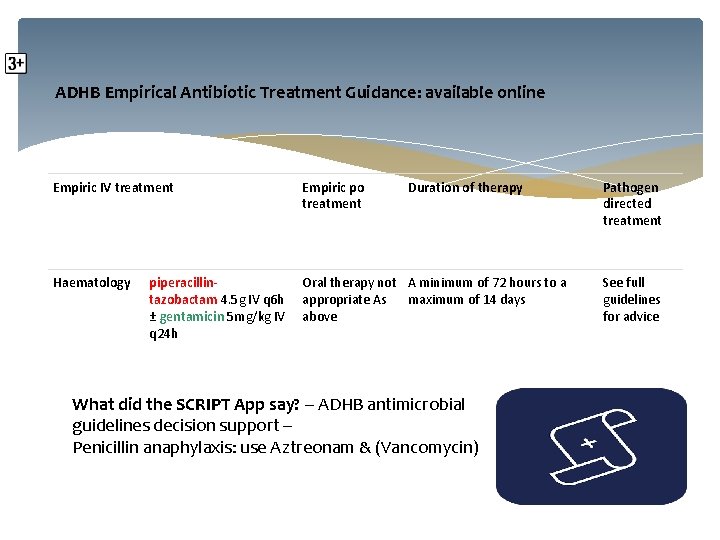
ADHB Empirical Antibiotic Treatment Guidance: available online Empiric IV treatment Empiric po treatment Haematology Oral therapy not A minimum of 72 hours to a appropriate As maximum of 14 days above piperacillintazobactam 4. 5 g IV q 6 h ± gentamicin 5 mg/kg IV q 24 h Duration of therapy What did the SCRIPT App say? – ADHB antimicrobial guidelines decision support – Penicillin anaphylaxis: use Aztreonam & (Vancomycin) Pathogen directed treatment See full guidelines for advice
HML Why? National consistency in access to medicines in DHB hospitals No more postcode medicines National funding of pharmaceuticals 1 July 2013 Shift to Pharmac being responsible for deciding which pharmaceuticals will be funded for use in DHB hospitals
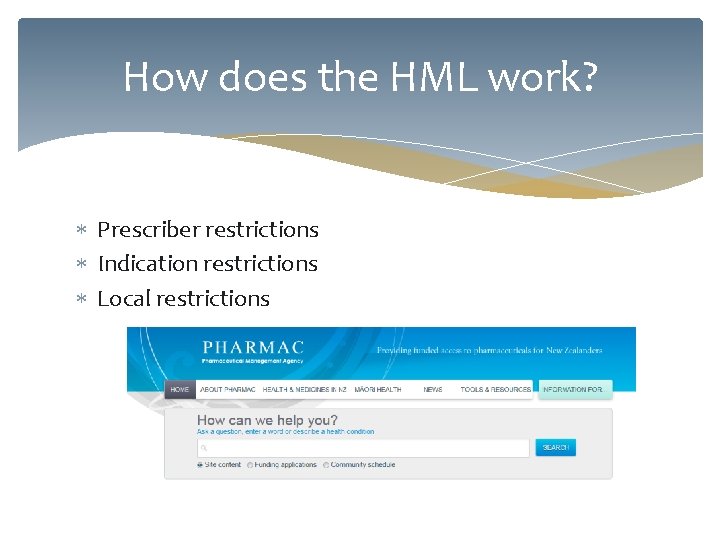
How does the HML work? Prescriber restrictions Indication restrictions Local restrictions
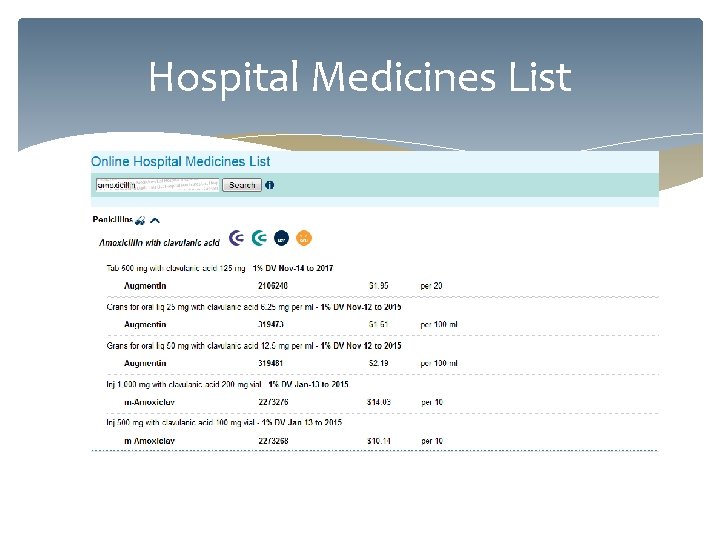
Hospital Medicines List
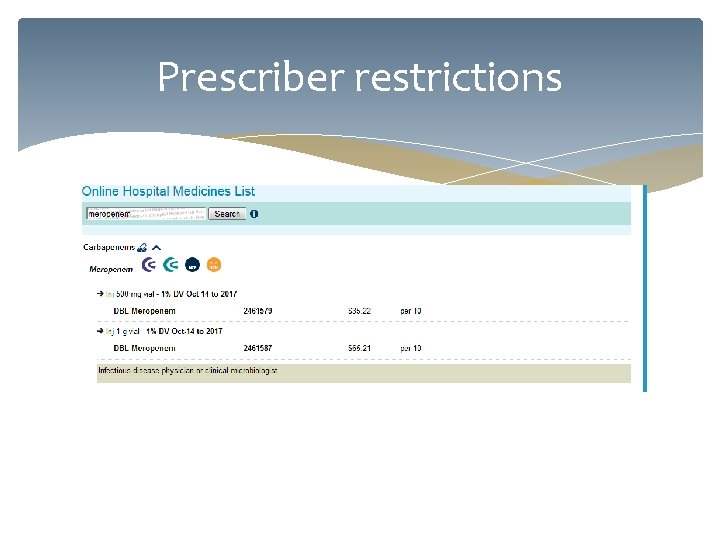
Prescriber restrictions
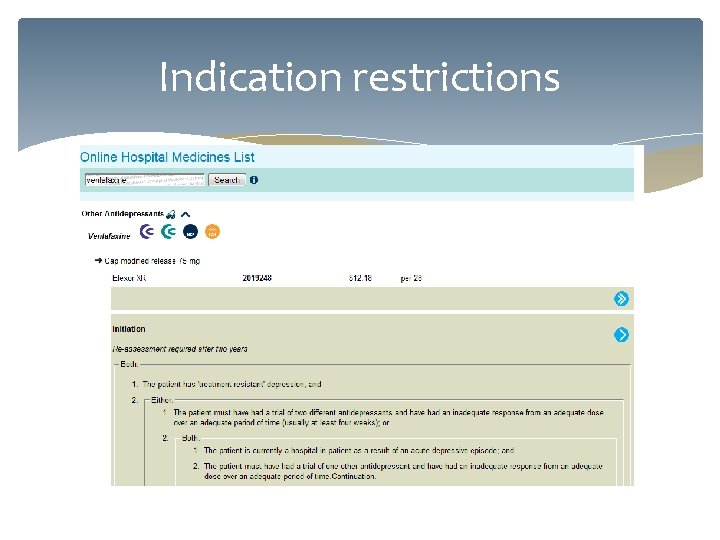
Indication restrictions
What if its not on the list? ! If patient already on medicine Continuation of therapy (Rule 8) If newly started in hospital Requires approval from Pharmac for funding Rapid Assessment (Hospital Medicines Committee) Named Patient Pharmaceutical Assessment (Pharmac)
The all important question. . . As a Junior Doctor am I ever likely to need to look at the HML or any Pharmac publication for that matter? Probably not. However, you will need to be aware of limitations to prescribing
In summary…. Many resources available National Local How to find them? Variable in each DHB No true “one stop shop” Don’t be afraid to ask for help – find your pharmacist/pharmacy contact details
- Slides: 41