
Resources for Higher Education Institutions February 24 2017
Resources for Higher Education Institutions February 24, 2017 These Trainings are offered [in part] under grant number SM 062894 from the Substance Abuse & Mental Health Services Administration (SAMHSA), U. S. Department of Health & Human Services (HHS). The views, policies, and opinions expressed are those of the authors and do not necessarily reflect those of SAMHSA or HHS.
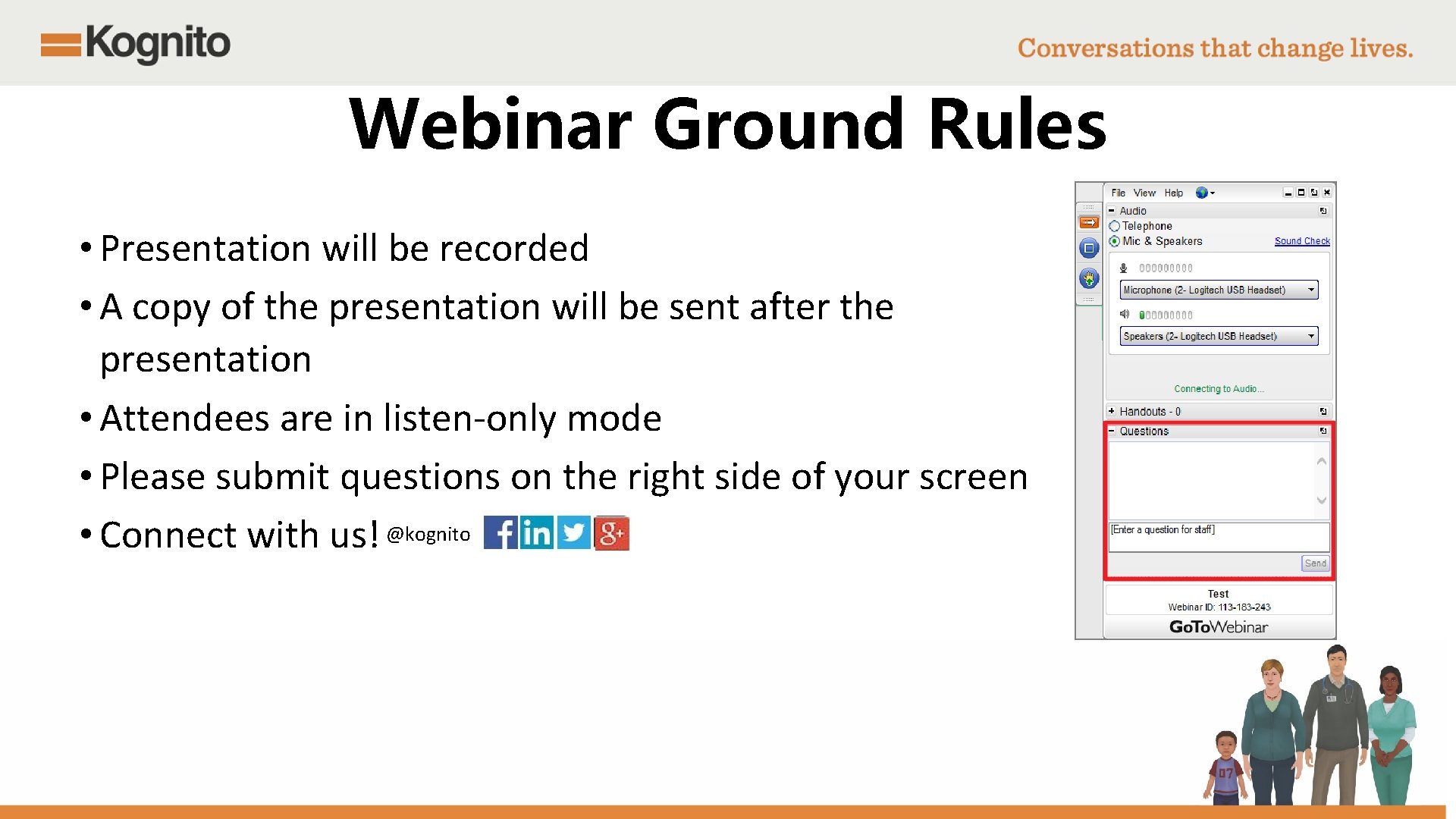
Webinar Ground Rules • Presentation will be recorded • A copy of the presentation will be sent after the presentation • Attendees are in listen-only mode • Please submit questions on the right side of your screen • Connect with us! @kognito
Agenda • Welcome by Ohio Suicide Prevention Foundation • Why Ohio Youth & Young Adults? • Why Higher-Ed? • Welcome by Kognito • Why Kognito? • About the Simulations • Accessing the Simulations • Steps for Promoting the Course
About the Ohio Suicide Prevention Foundatio n.
Mission: To promote suicide prevention as a public health issue and advance evidence-based awareness, intervention and methodology strategies that will support priority populations and healthy communities. Vision: Through the leadership and stewardship of OSPF, Ohio will have culturally appropriate and strongly supported local capacity for prevention and reduction of suicides and will promote and emphasize statewide efforts for suicide reduction and prevention services for Ohioans throughout their lifespans. Shawna Hite SAMHSA GLS Grant Project Coordinator 614 -429 -1528 ext. 402 shawna. hite@ohiospf. org Website: Ohiospf. org
What We Know about Suicide… • People of all ages, races, & genders are at risk. • Completed suicide is a major U. S. public health crisis. - Suicide ideation, behaviors, and attempts are too common. • Suicide is a preventable death. • You CAN make a difference! - Your job is to ASK – to listen – call for help. Information Obtained from: National Center for Health Statistics (NCHS), National Vital Statistics System: 10 Leading Causes of Death, United States, 1999 - 2015, All Races, Both Sexes (https: //webappa. cdc. gov/cgi-bin/broker. exe) & 10 Leading Causes of Death, United States 2010 - 2015, All Races, Both Sexes, 10 -24 (https: //webappa. cdc. gov/cgi-bin/broker. exe)
Why Ohio Youth & Young Adults? .
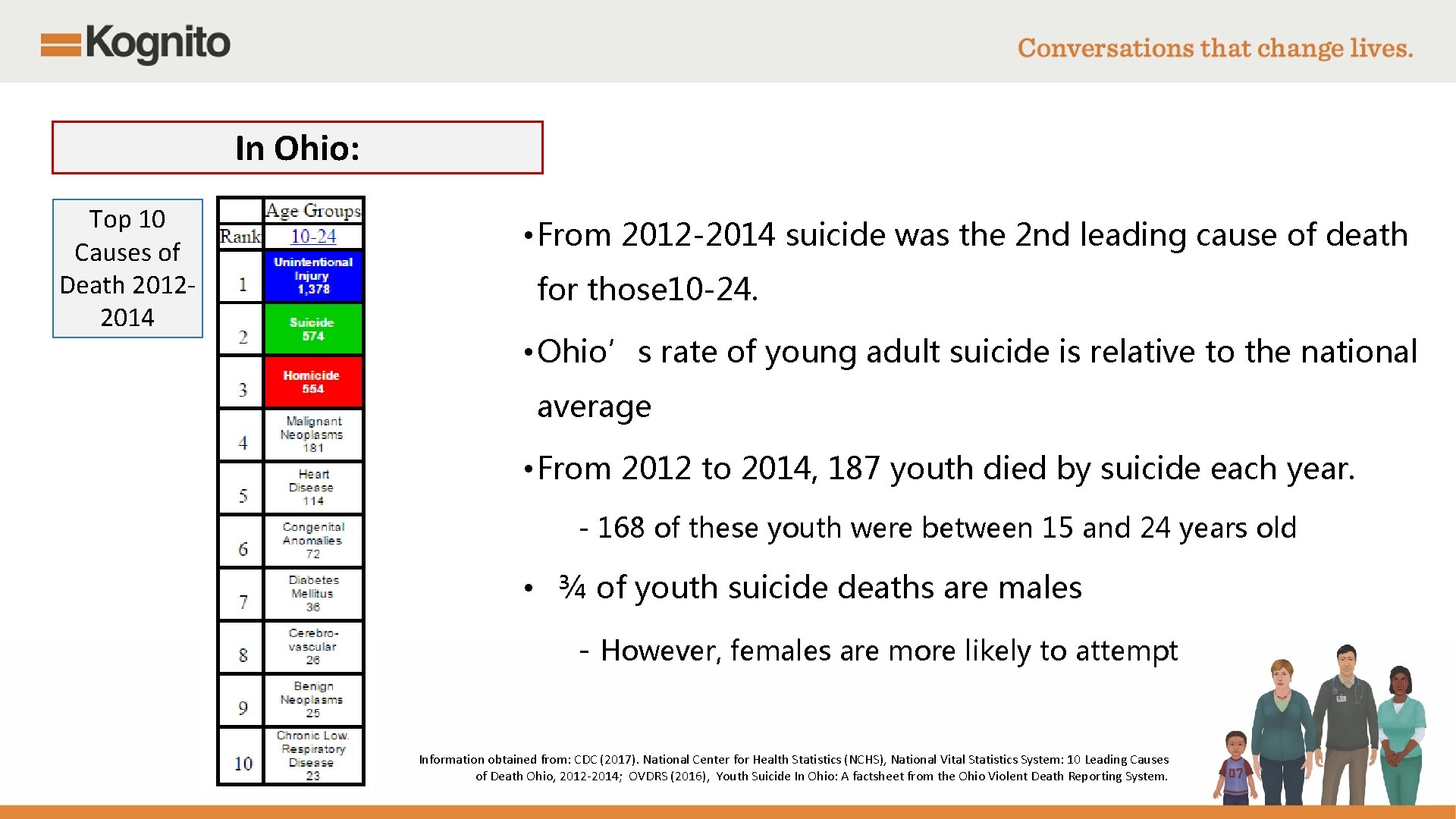
In Ohio: Top 10 Causes of Death 20122014 • From 2012 -2014 suicide was the 2 nd leading cause of death for those 10 -24. • Ohio’s rate of young adult suicide is relative to the national average • From 2012 to 2014, 187 youth died by suicide each year. - 168 of these youth were between 15 and 24 years old • ¾ of youth suicide deaths are males - However, females are more likely to attempt Information obtained from: CDC (2017). National Center for Health Statistics (NCHS), National Vital Statistics System: 10 Leading Causes of Death Ohio, 2012 -2014; OVDRS (2016), Youth Suicide In Ohio: A factsheet from the Ohio Violent Death Reporting System.
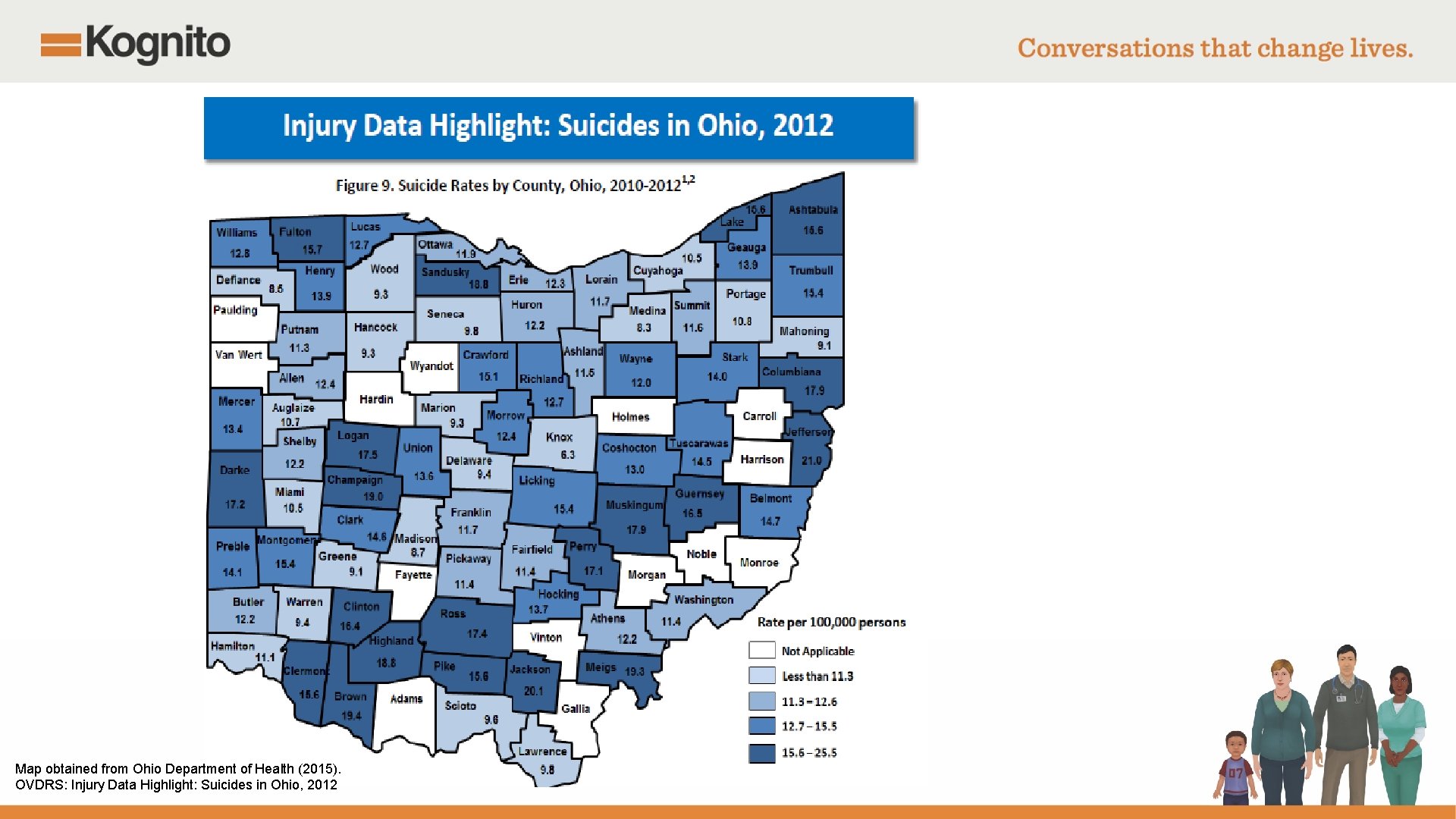
Map obtained from Ohio Department of Health (2015). OVDRS: Injury Data Highlight: Suicides in Ohio, 2012
Why Higher Education? .
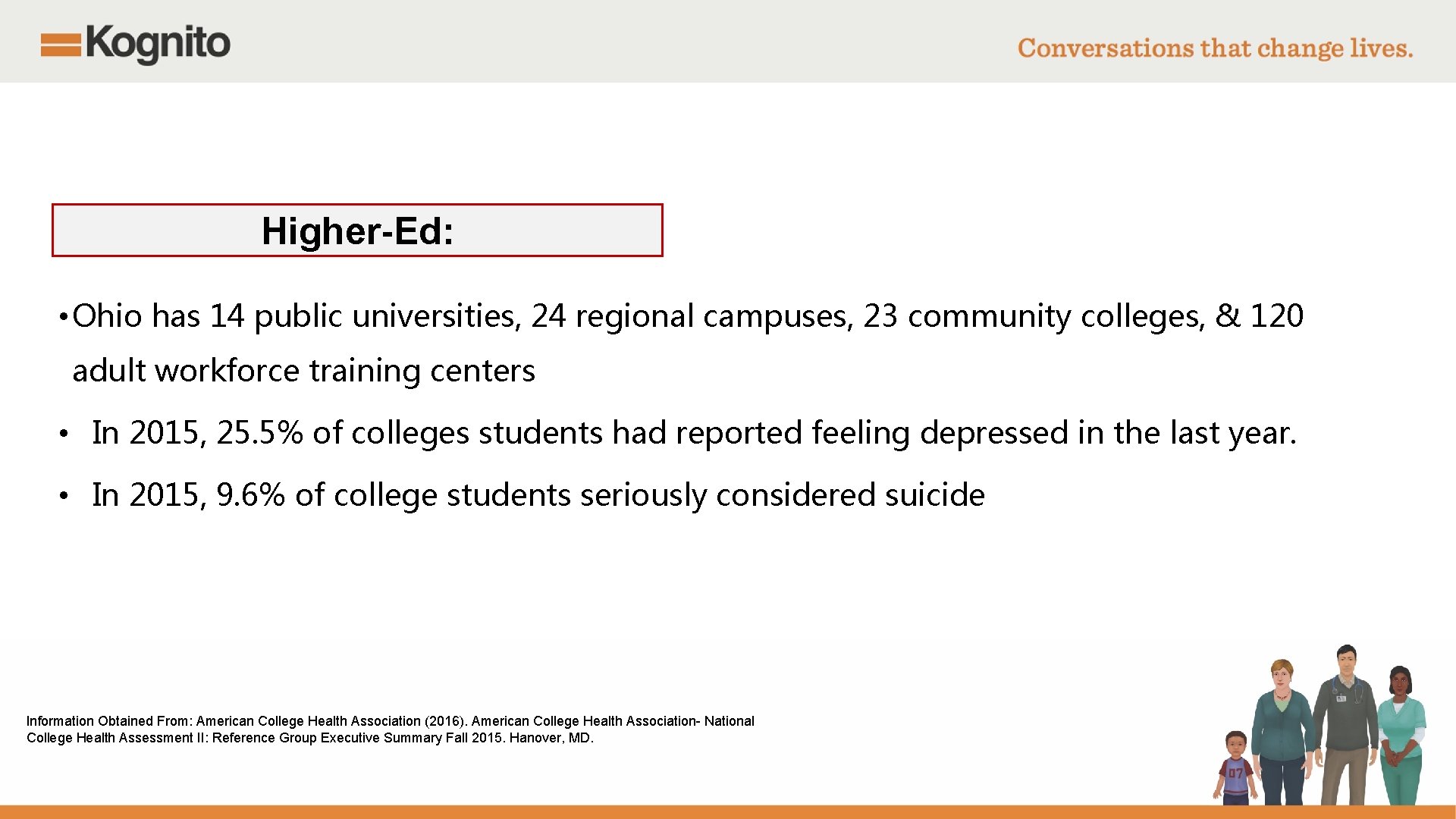
Higher-Ed: • Ohio has 14 public universities, 24 regional campuses, 23 community colleges, & 120 adult workforce training centers • In 2015, 25. 5% of colleges students had reported feeling depressed in the last year. • In 2015, 9. 6% of college students seriously considered suicide Information Obtained From: American College Health Association (2016). American College Health Association- National College Health Assessment II: Reference Group Executive Summary Fall 2015. Hanover, MD.
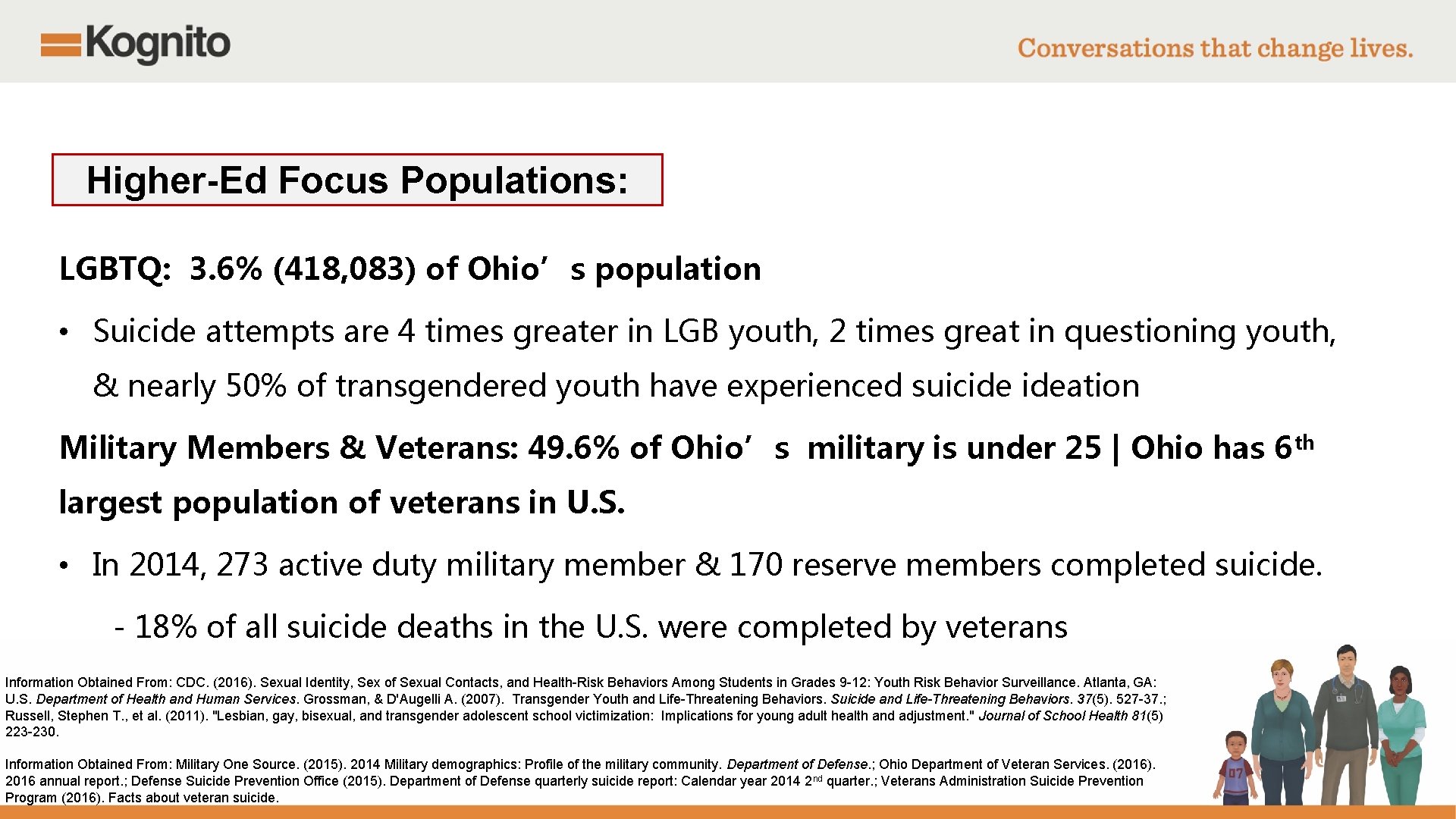
Higher-Ed Focus Populations: LGBTQ: 3. 6% (418, 083) of Ohio’s population • Suicide attempts are 4 times greater in LGB youth, 2 times great in questioning youth, & nearly 50% of transgendered youth have experienced suicide ideation Military Members & Veterans: 49. 6% of Ohio’s military is under 25 | Ohio has 6 th largest population of veterans in U. S. • In 2014, 273 active duty military member & 170 reserve members completed suicide. - 18% of all suicide deaths in the U. S. were completed by veterans Information Obtained From: CDC. (2016). Sexual Identity, Sex of Sexual Contacts, and Health-Risk Behaviors Among Students in Grades 9 -12: Youth Risk Behavior Surveillance. Atlanta, GA: U. S. Department of Health and Human Services. Grossman, & D'Augelli A. (2007). Transgender Youth and Life-Threatening Behaviors. Suicide and Life-Threatening Behaviors. 37(5). 527 -37. ; Russell, Stephen T. , et al. (2011). "Lesbian, gay, bisexual, and transgender adolescent school victimization: Implications for young adult health and adjustment. " Journal of School Health 81(5) 223 -230. Information Obtained From: Military One Source. (2015). 2014 Military demographics: Profile of the military community. Department of Defense. ; Ohio Department of Veteran Services. (2016). 2016 annual report. ; Defense Suicide Prevention Office (2015). Department of Defense quarterly suicide report: Calendar year 2014 2 nd quarter. ; Veterans Administration Suicide Prevention Program (2016). Facts about veteran suicide.
Higher-Ed Legislation Ohio State Law on Suicide Prevention • House Bill 28: http: //suicideprevention. ohio. gov/ ⁻ The bill requires public institutions of higher education to provide students with information on mental health, with an emphasis placed on providing students with suicide prevention resources. ⁻ As of October 2016, all public institutions of higher education are now required to provide: 1. Access to Crisis Intervention Services 2. Access to Mental Health Programs 3. Access to Multimedia Applications 4. Student Communication Plans 5. Postvention plans Information Obtained From: Ohio Life Saver Website: http: //suicideprevention. ohio. gov/
Why Kognito? .
Orientation & Awareness • Communication Pathway Planning • Onboarding/ Walk- through • Identifying Stakeholders • Outreach Planning Contact: Jenna Henek Account Manager Jenna. henek@kognito. com 212 -675 -9234 x 121 Support & Engagement • Implementation Strategies • Usage Stimulation Drives • Email/Webinar Refreshers • Data-Driven Conversations
Conversations with Virtual Humans Instructional Benefits: § § § Safe to self-disclose, experiment Increase in engagement, openness Decrease in transference reactions Decrease social evaluative threat The challenge of the uncanny valley Other benefits: § Personalization of experience § Reaches audiences who won’t/can’t attend in-person trainings
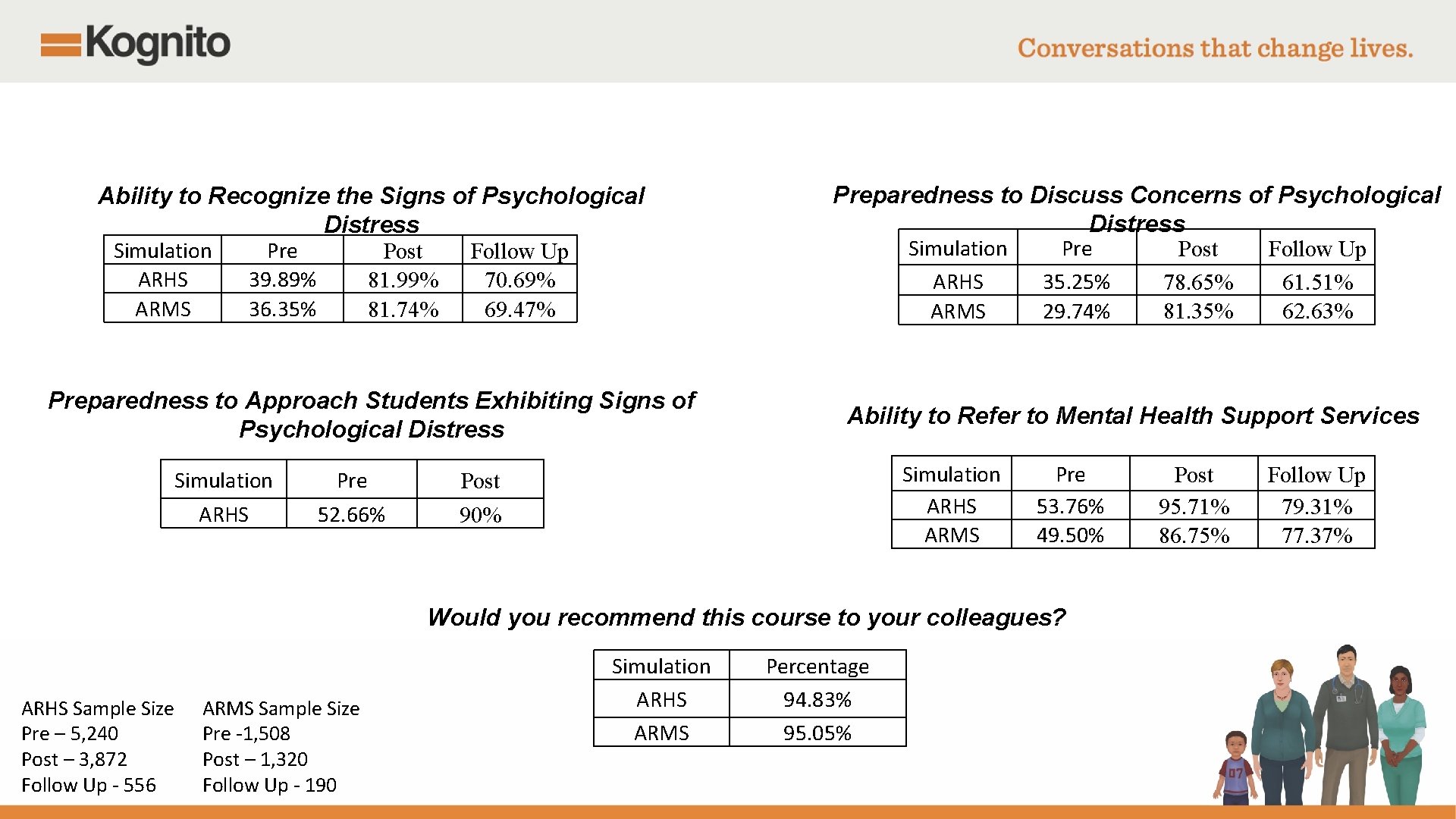
Ability to Recognize the Signs of Psychological Distress Simulation Pre Follow Up Post ARHS ARMS 39. 89% 36. 35% 81. 99% 81. 74% Pre 52. 66% ARHS ARMS 70. 69% 69. 47% Preparedness to Approach Students Exhibiting Signs of Psychological Distress Simulation ARHS Preparedness to Discuss Concerns of Psychological Distress Simulation Pre Post Follow Up 35. 25% 29. 74% Simulation ARHS ARMS Pre 53. 76% 49. 50% Would you recommend this course to your colleagues? ARHS Sample Size Pre – 5, 240 Post – 3, 872 Follow Up - 556 ARMS Sample Size Pre -1, 508 Post – 1, 320 Follow Up - 190 61. 51% 62. 63% Ability to Refer to Mental Health Support Services Post 90% Simulation ARHS ARMS 78. 65% 81. 35% Percentage 94. 83% 95. 05% Post 95. 71% 86. 75% Follow Up 79. 31% 77. 37%
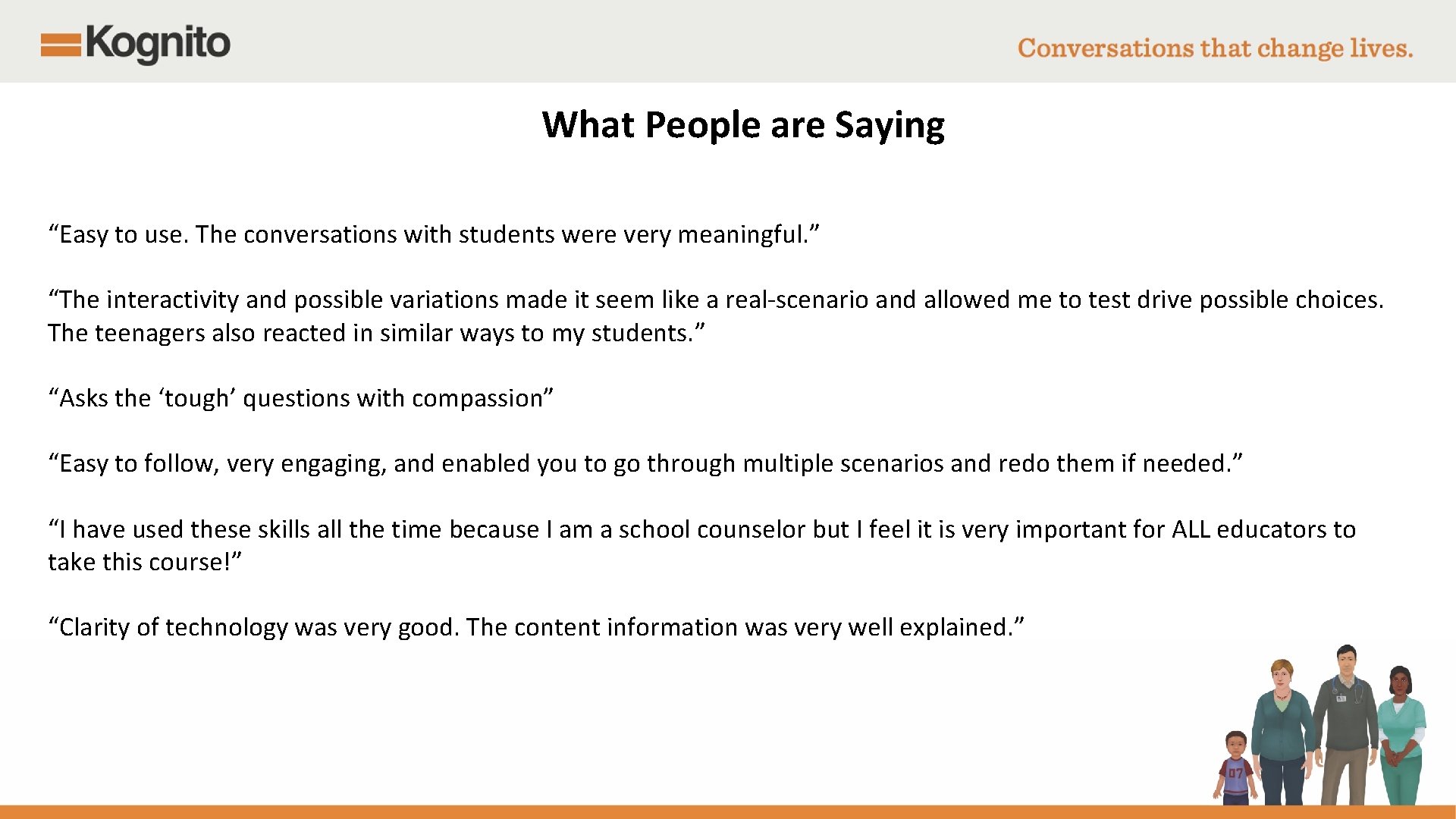
What People are Saying “Easy to use. The conversations with students were very meaningful. ” “The interactivity and possible variations made it seem like a real-scenario and allowed me to test drive possible choices. The teenagers also reacted in similar ways to my students. ” “Asks the ‘tough’ questions with compassion” “Easy to follow, very engaging, and enabled you to go through multiple scenarios and redo them if needed. ” “I have used these skills all the time because I am a school counselor but I feel it is very important for ALL educators to take this course!” “Clarity of technology was very good. The content information was very well explained. ”
About the Simulations
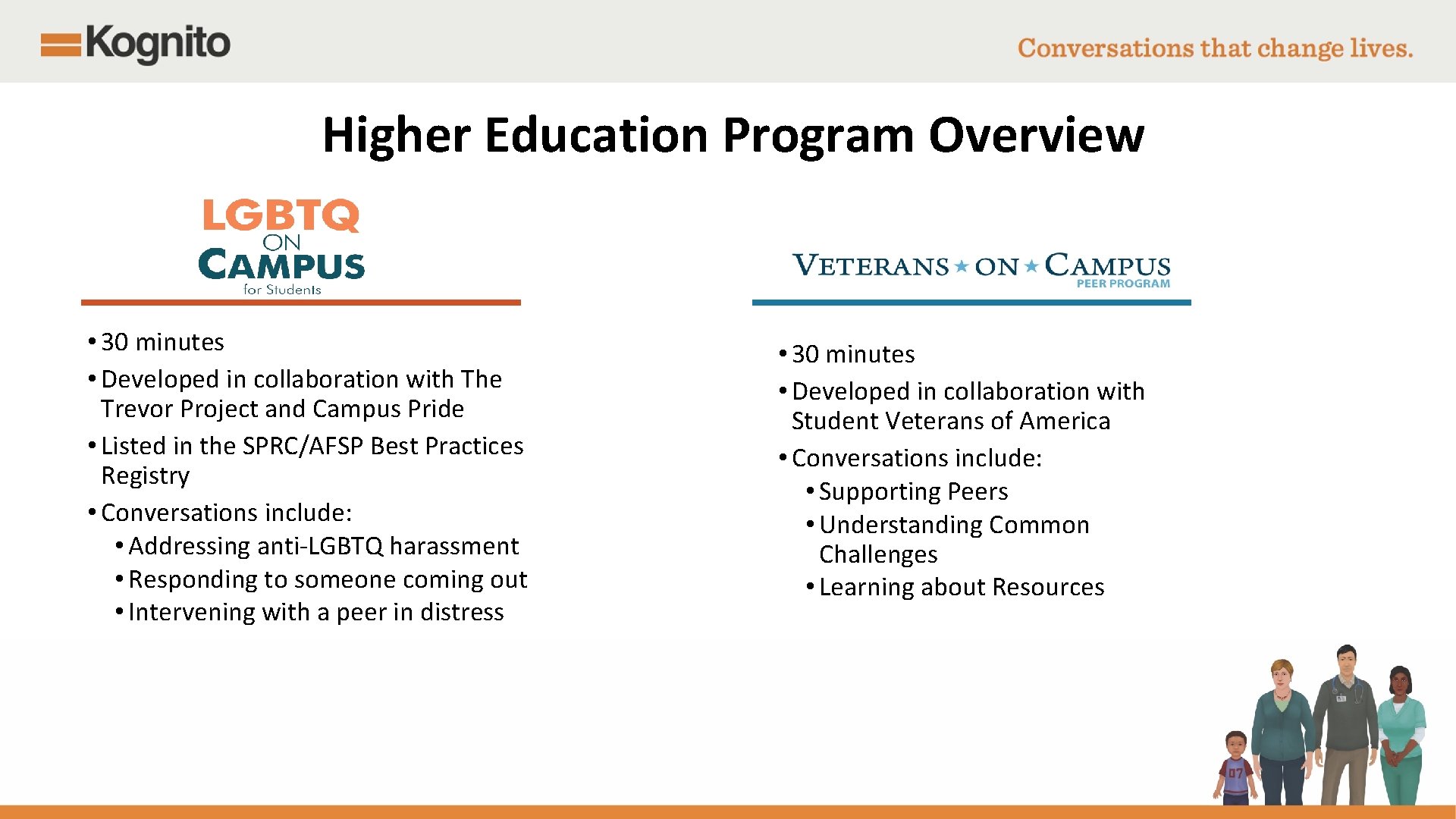
Higher Education Program Overview • 30 minutes • Developed in collaboration with The Trevor Project and Campus Pride • Listed in the SPRC/AFSP Best Practices Registry • Conversations include: • Addressing anti-LGBTQ harassment • Responding to someone coming out • Intervening with a peer in distress • 30 minutes • Developed in collaboration with Student Veterans of America • Conversations include: • Supporting Peers • Understanding Common Challenges • Learning about Resources
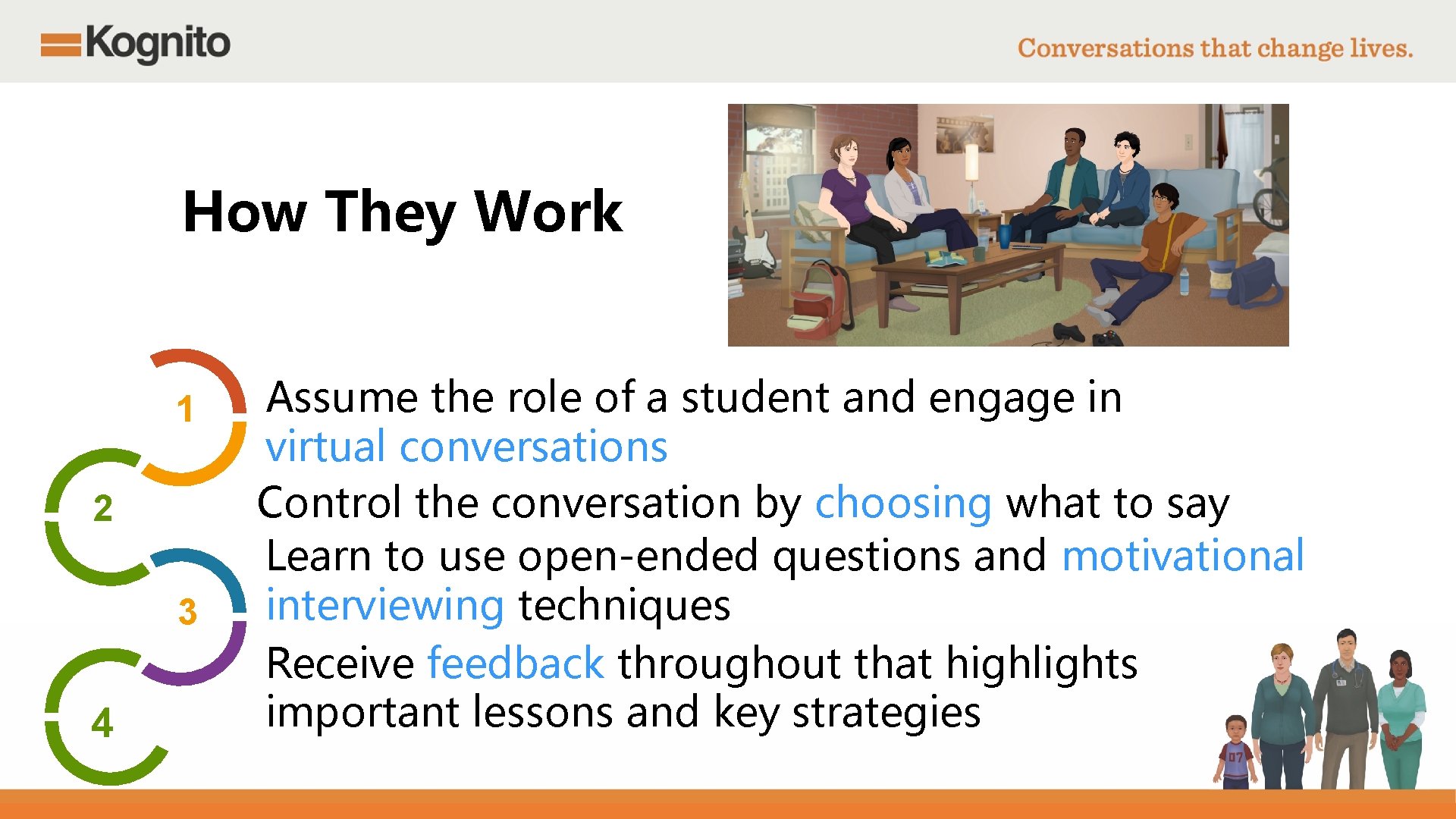
How They Work 1 2 3 4 Assume the role of a student and engage in virtual conversations Control the conversation by choosing what to say Learn to use open-ended questions and motivational interviewing techniques Receive feedback throughout that highlights important lessons and key strategies
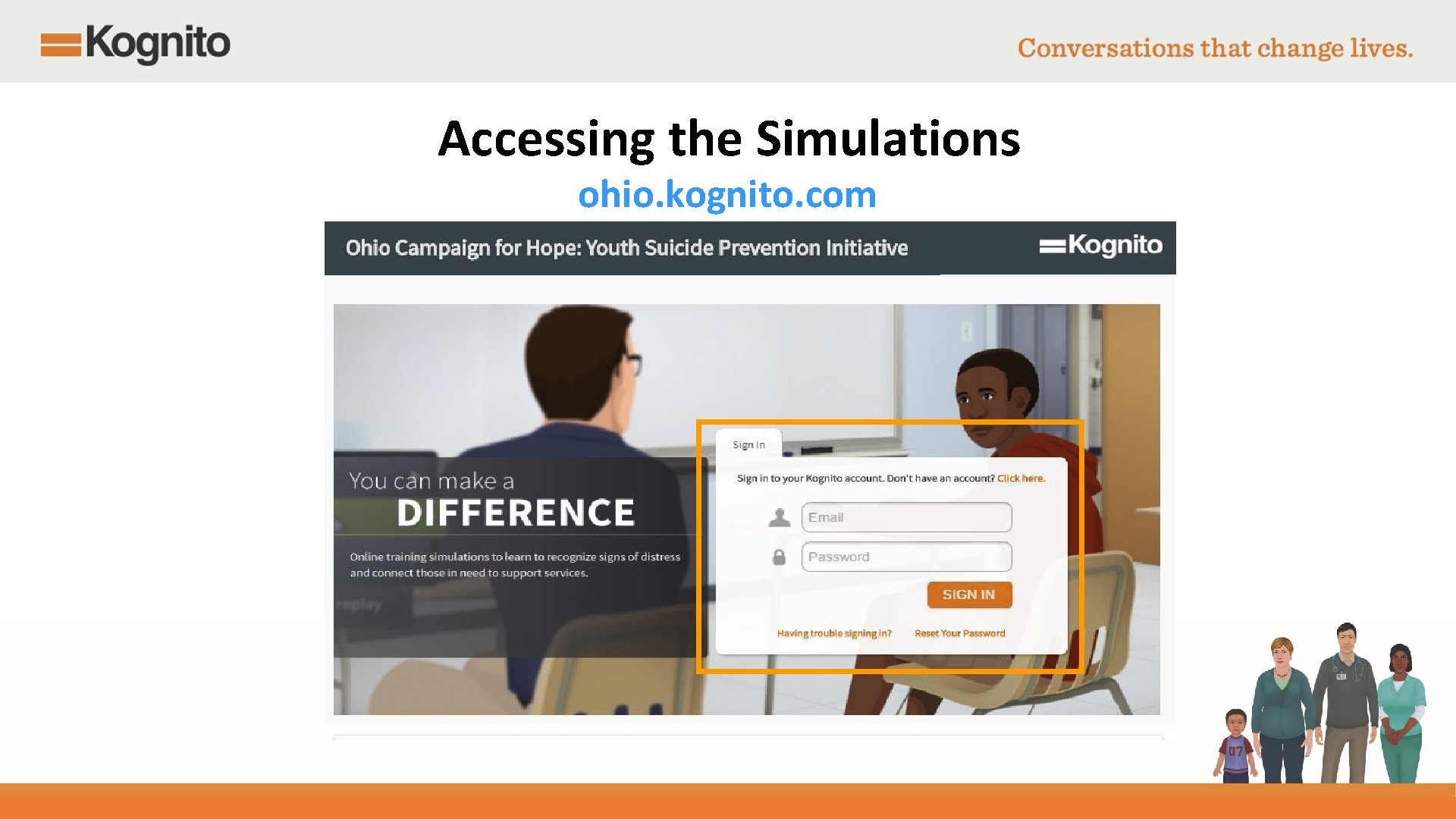
Accessing the Simulations ohio. kognito. com
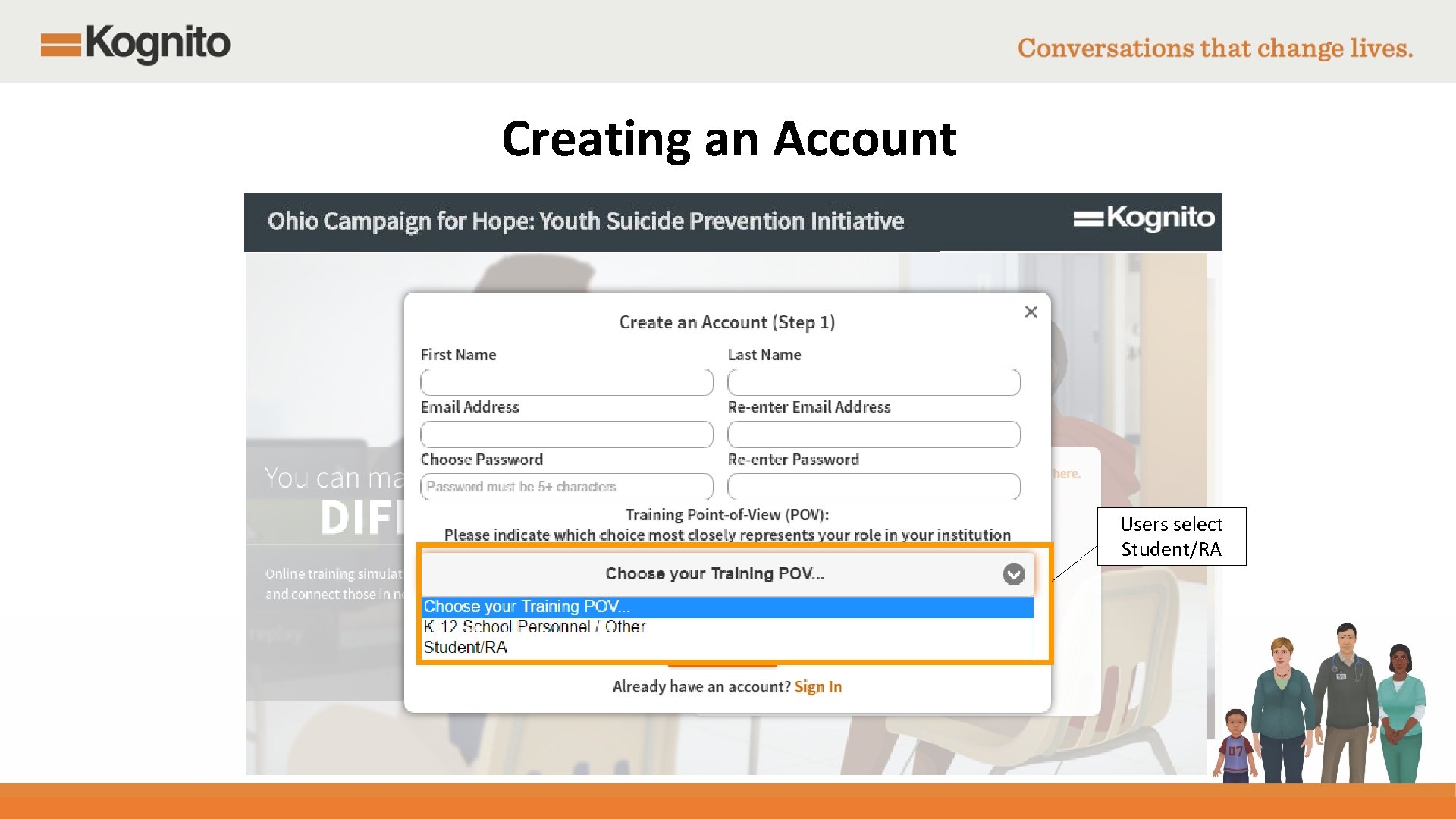
Creating an Account Users select Student/RA
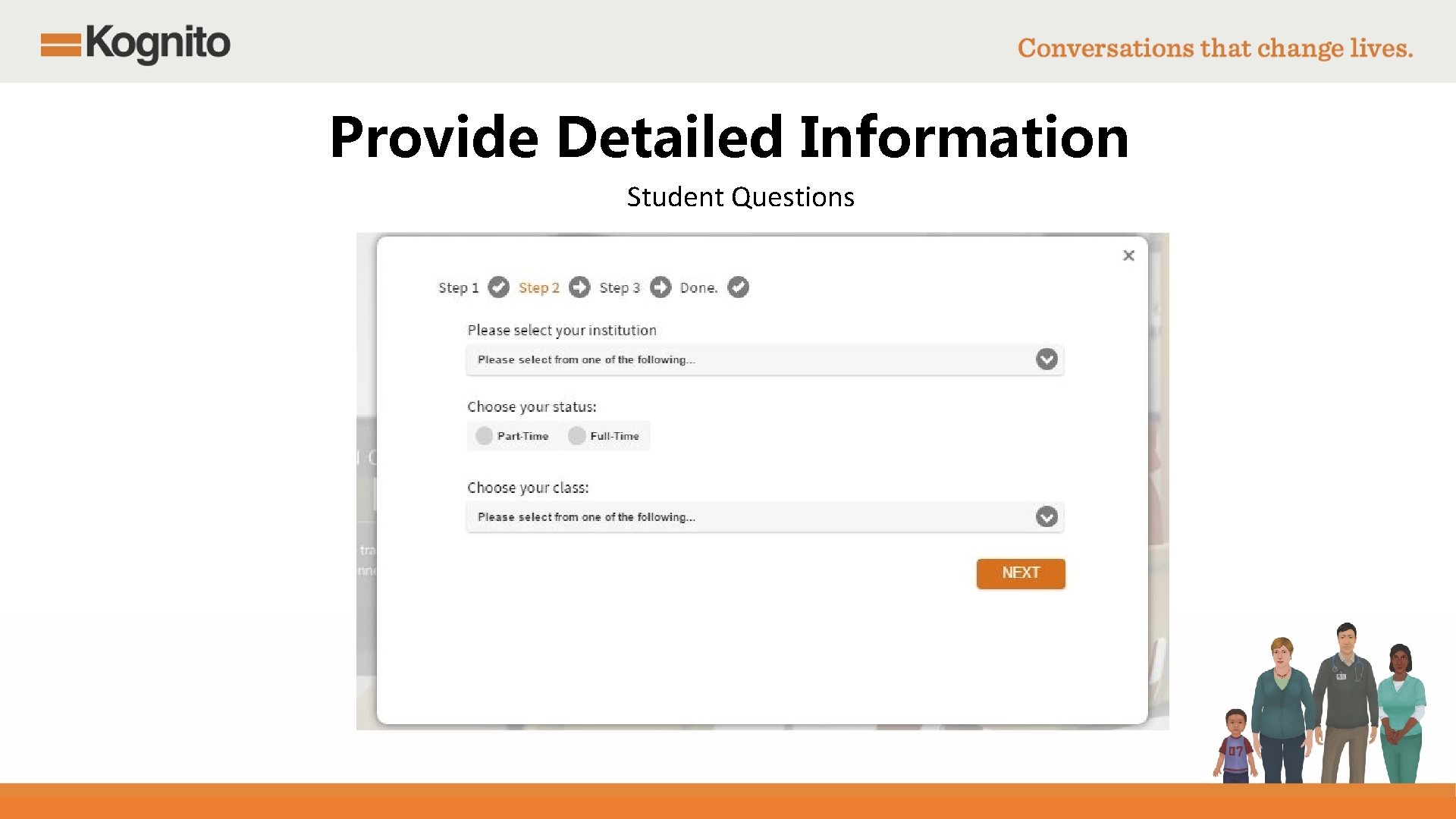
Provide Detailed Information Student Questions
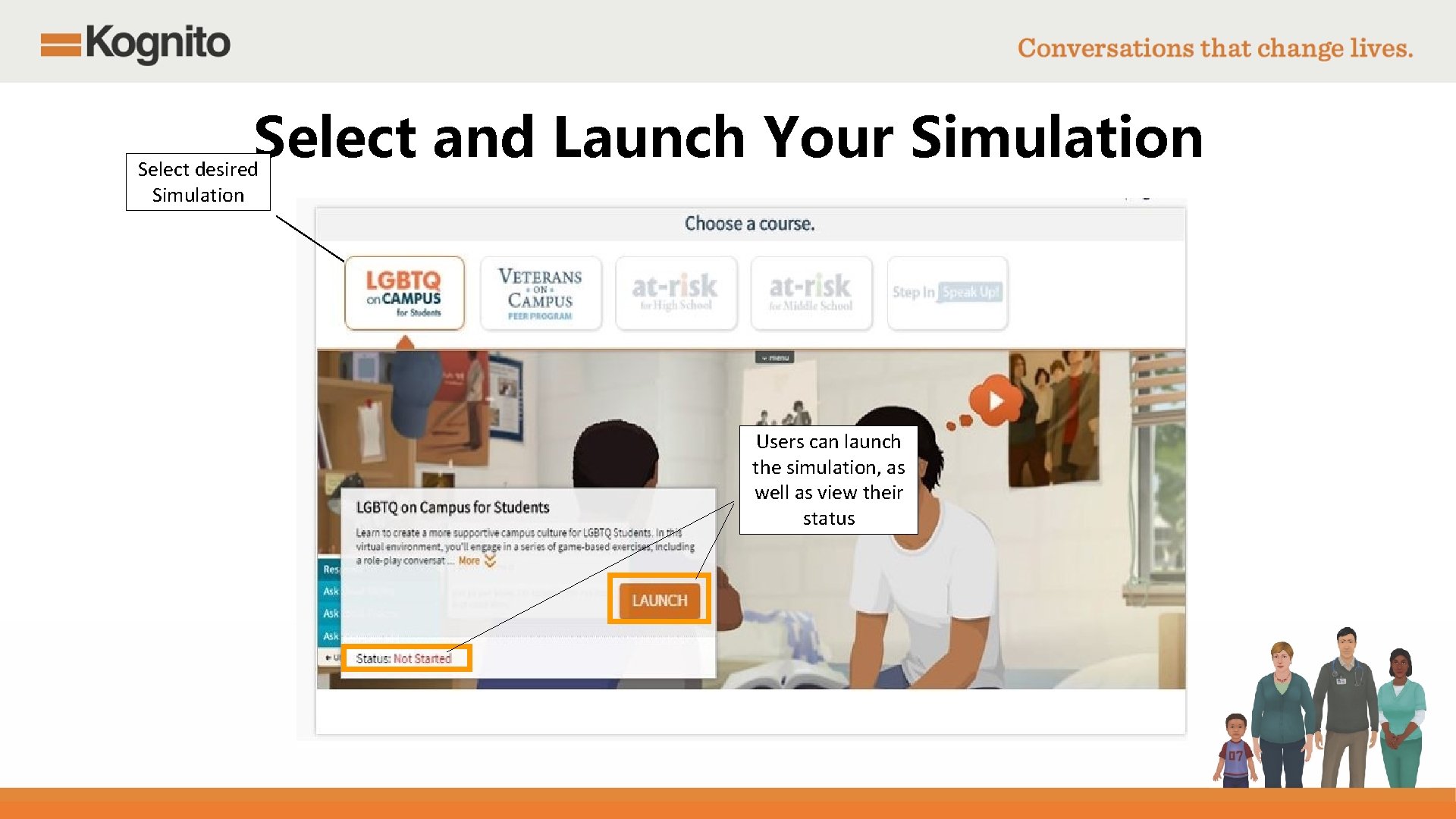
Select and Launch Your Simulation Select desired Simulation Users can launch the simulation, as well as view their status
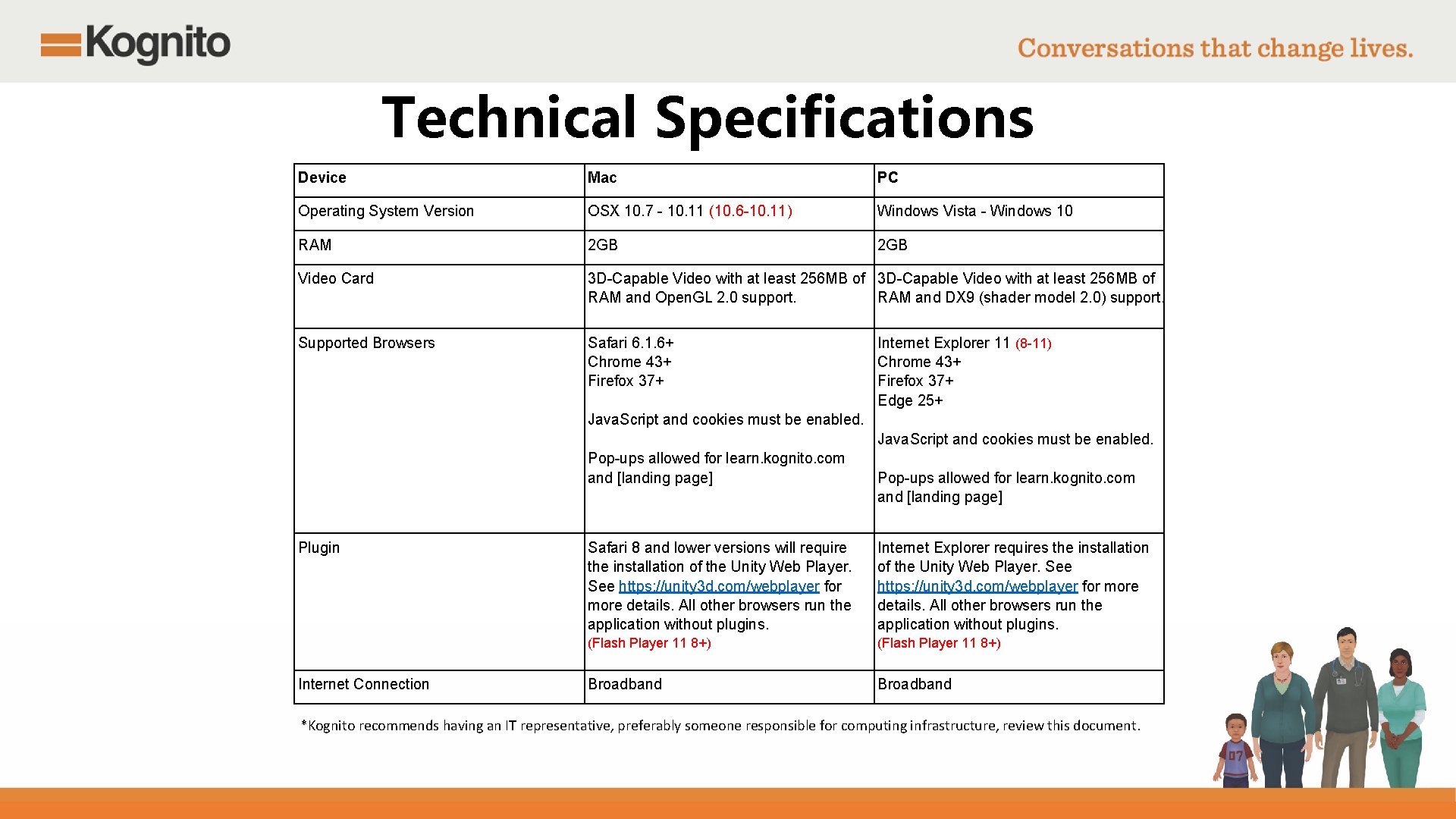
Technical Specifications Device Mac PC Operating System Version OSX 10. 7 - 10. 11 (10. 6 -10. 11) Windows Vista - Windows 10 RAM 2 GB Video Card 3 D-Capable Video with at least 256 MB of RAM and Open. GL 2. 0 support. RAM and DX 9 (shader model 2. 0) support. Supported Browsers Safari 6. 1. 6+ Chrome 43+ Firefox 37+ Java. Script and cookies must be enabled. Pop-ups allowed for learn. kognito. com and [landing page] Internet Explorer 11 (8 -11) Chrome 43+ Firefox 37+ Edge 25+ Java. Script and cookies must be enabled. Pop-ups allowed for learn. kognito. com and [landing page] Plugin Safari 8 and lower versions will require the installation of the Unity Web Player. See https: //unity 3 d. com/webplayer for more details. All other browsers run the application without plugins. Internet Explorer requires the installation of the Unity Web Player. See https: //unity 3 d. com/webplayer for more details. All other browsers run the application without plugins. (Flash Player 11 8+) Broadband Internet Connection *Kognito recommends having an IT representative, preferably someone responsible for computing infrastructure, review this document.
Administrator Resources How to Help Us Train Ohio!
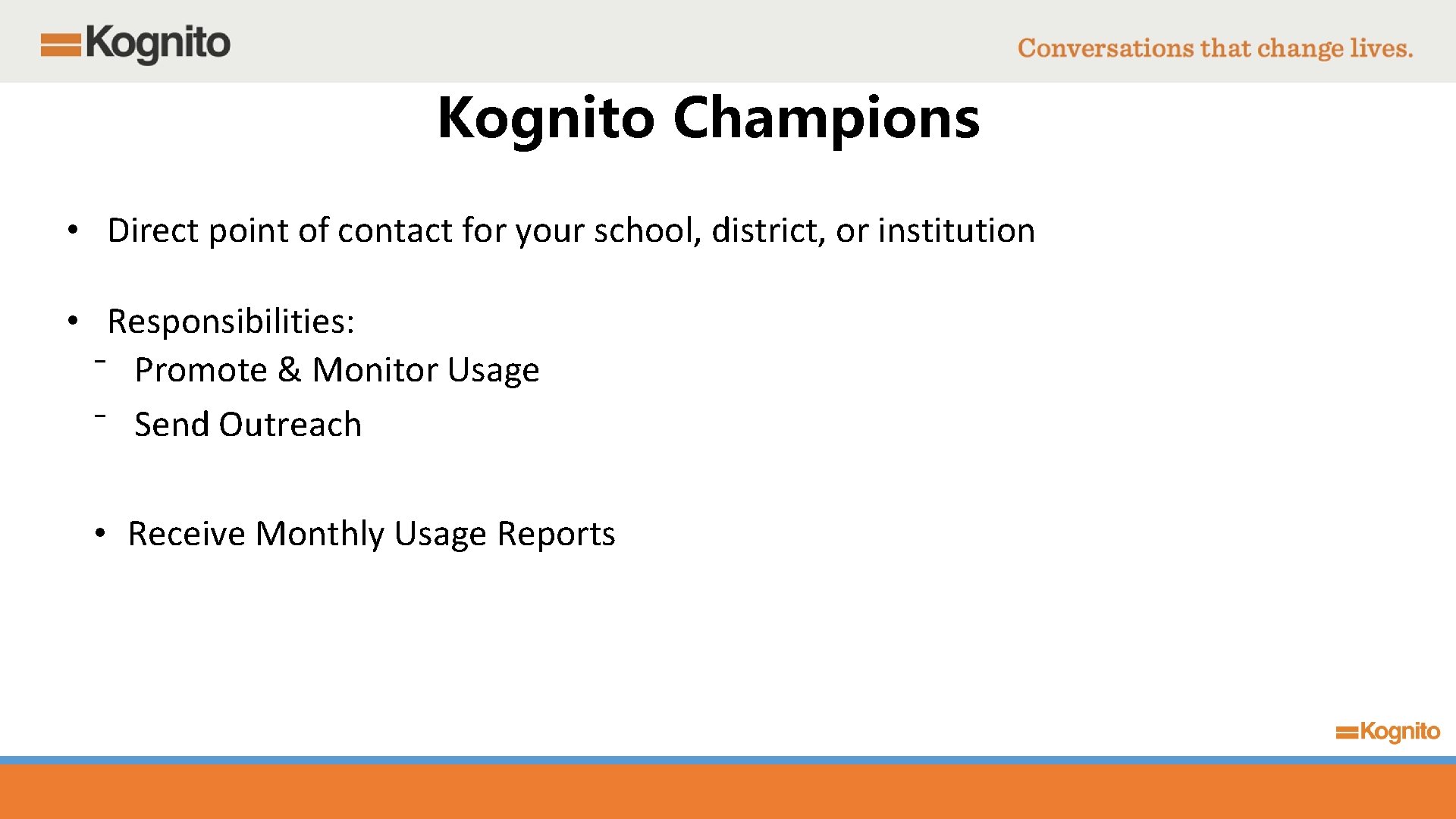
Kognito Champions • Direct point of contact for your school, district, or institution • Responsibilities: ⁻ Promote & Monitor Usage ⁻ Send Outreach • Receive Monthly Usage Reports
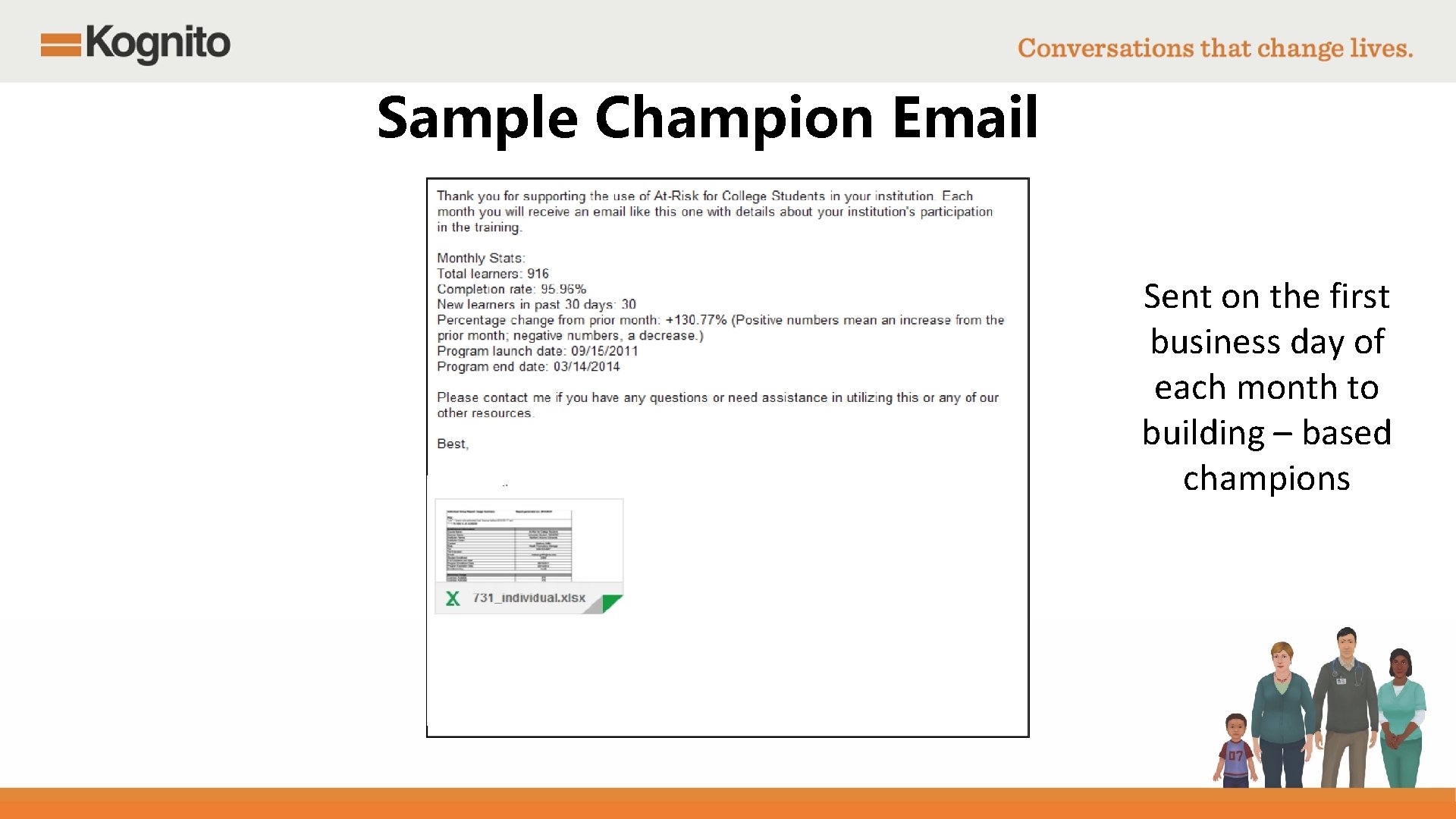
Sample Champion Email Sent on the first business day of each month to building – based champions
How to Help Us Promote within Ohio!
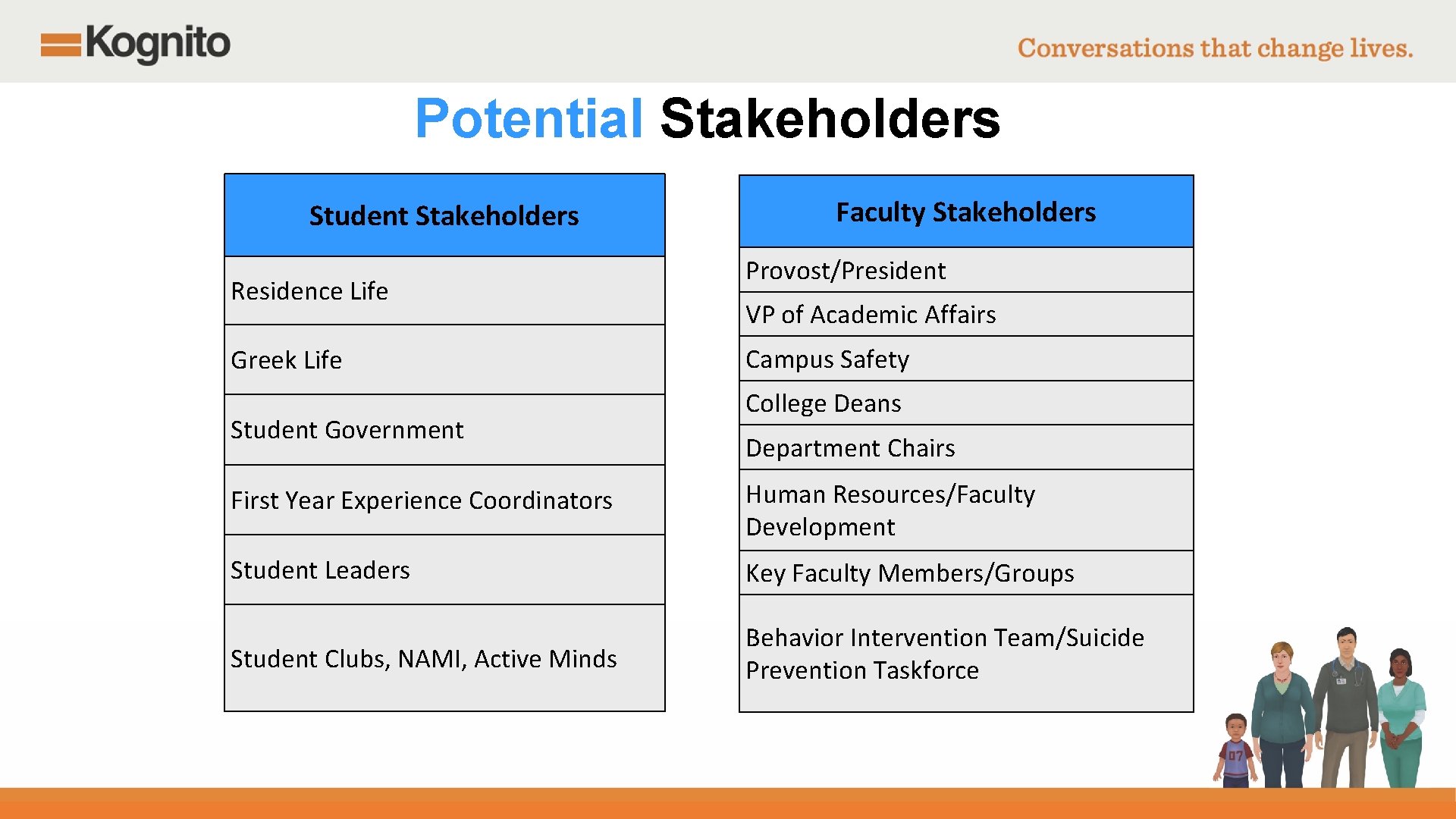
Potential Stakeholders Student Stakeholders Residence Life Greek Life Student Government Faculty Stakeholders Provost/President VP of Academic Affairs Campus Safety College Deans Department Chairs First Year Experience Coordinators Human Resources/Faculty Development Student Leaders Key Faculty Members/Groups Student Clubs, NAMI, Active Minds Behavior Intervention Team/Suicide Prevention Taskforce
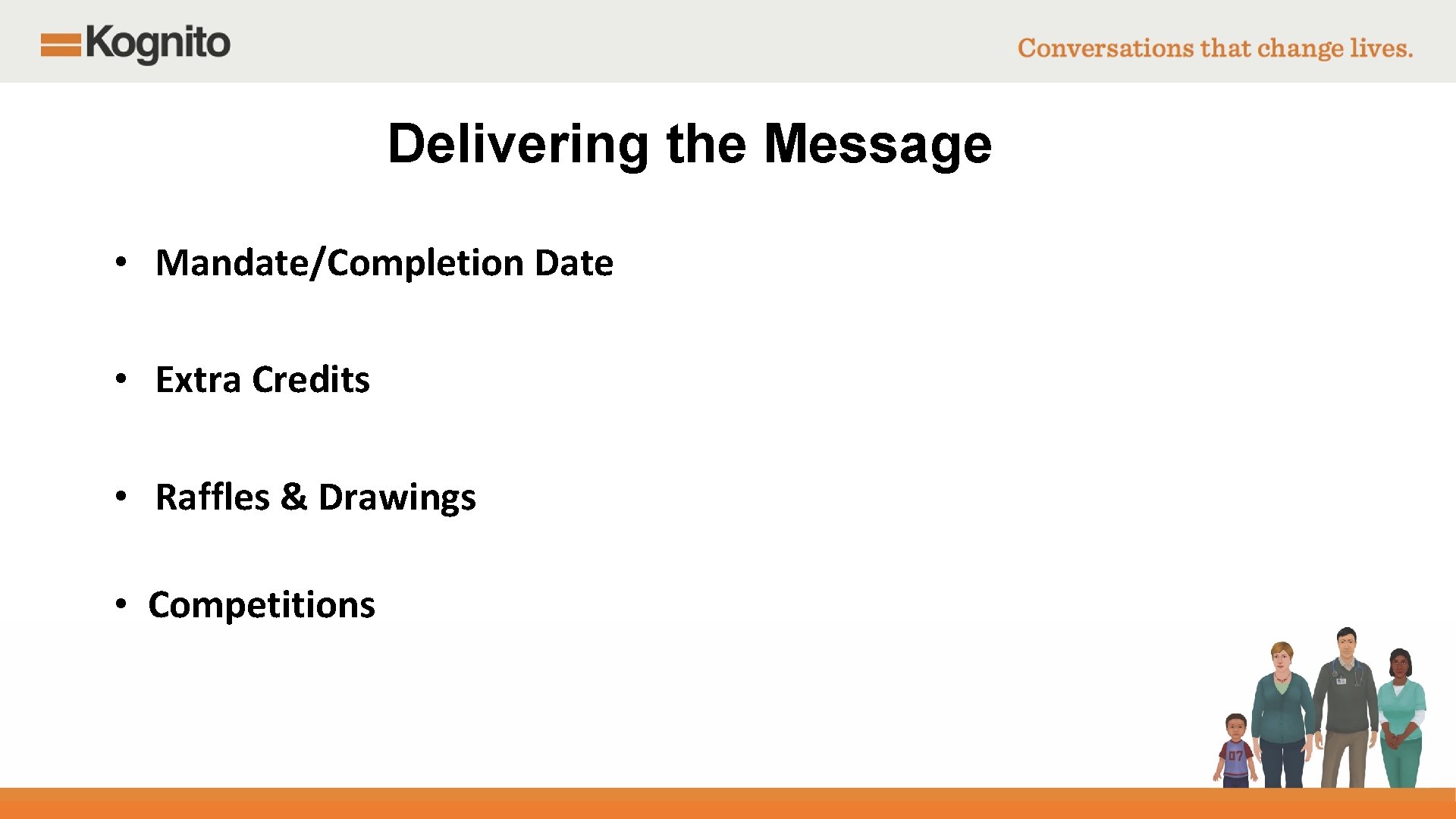
Delivering the Message • Mandate/Completion Date • Extra Credits • Raffles & Drawings • Competitions
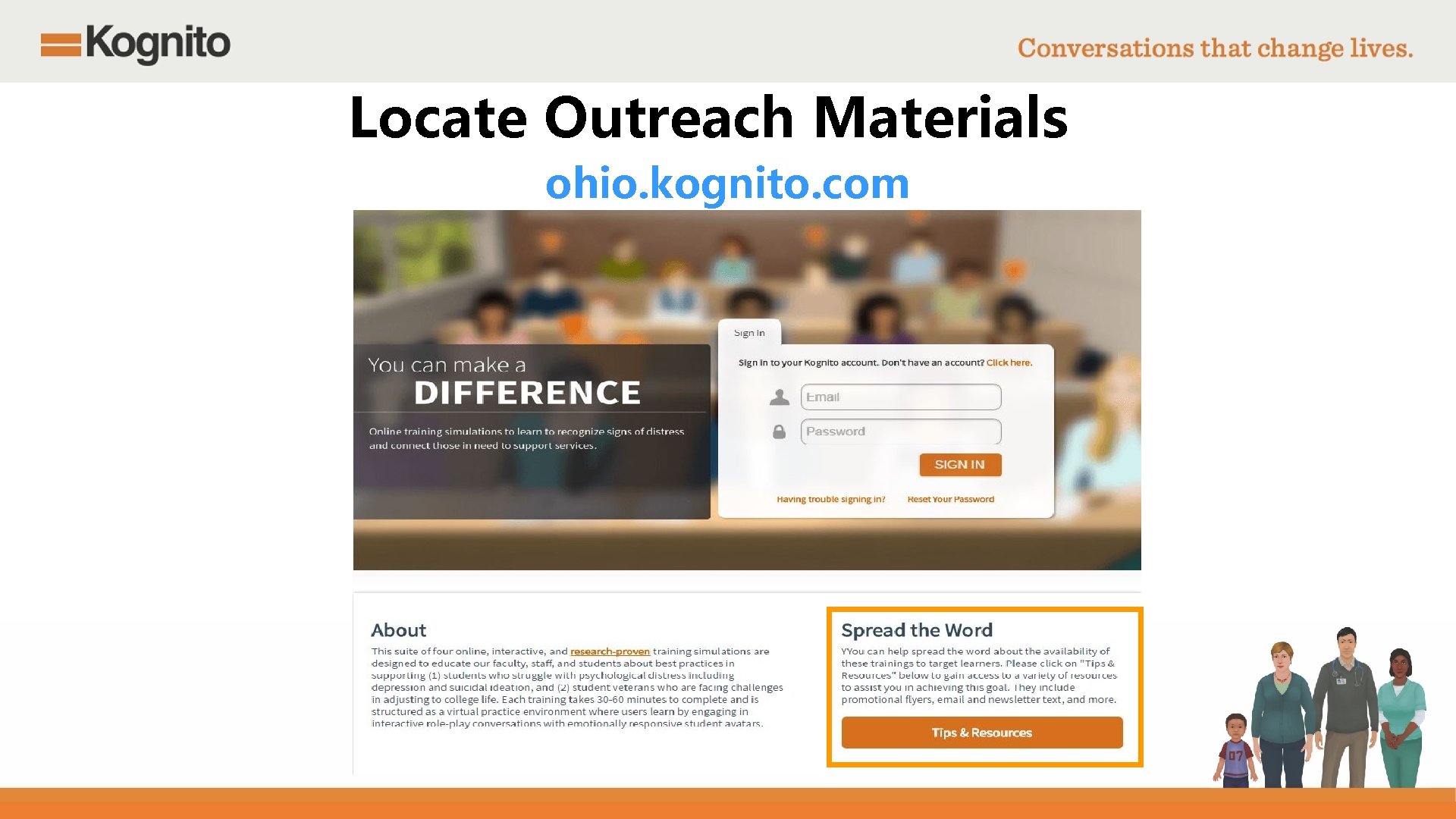
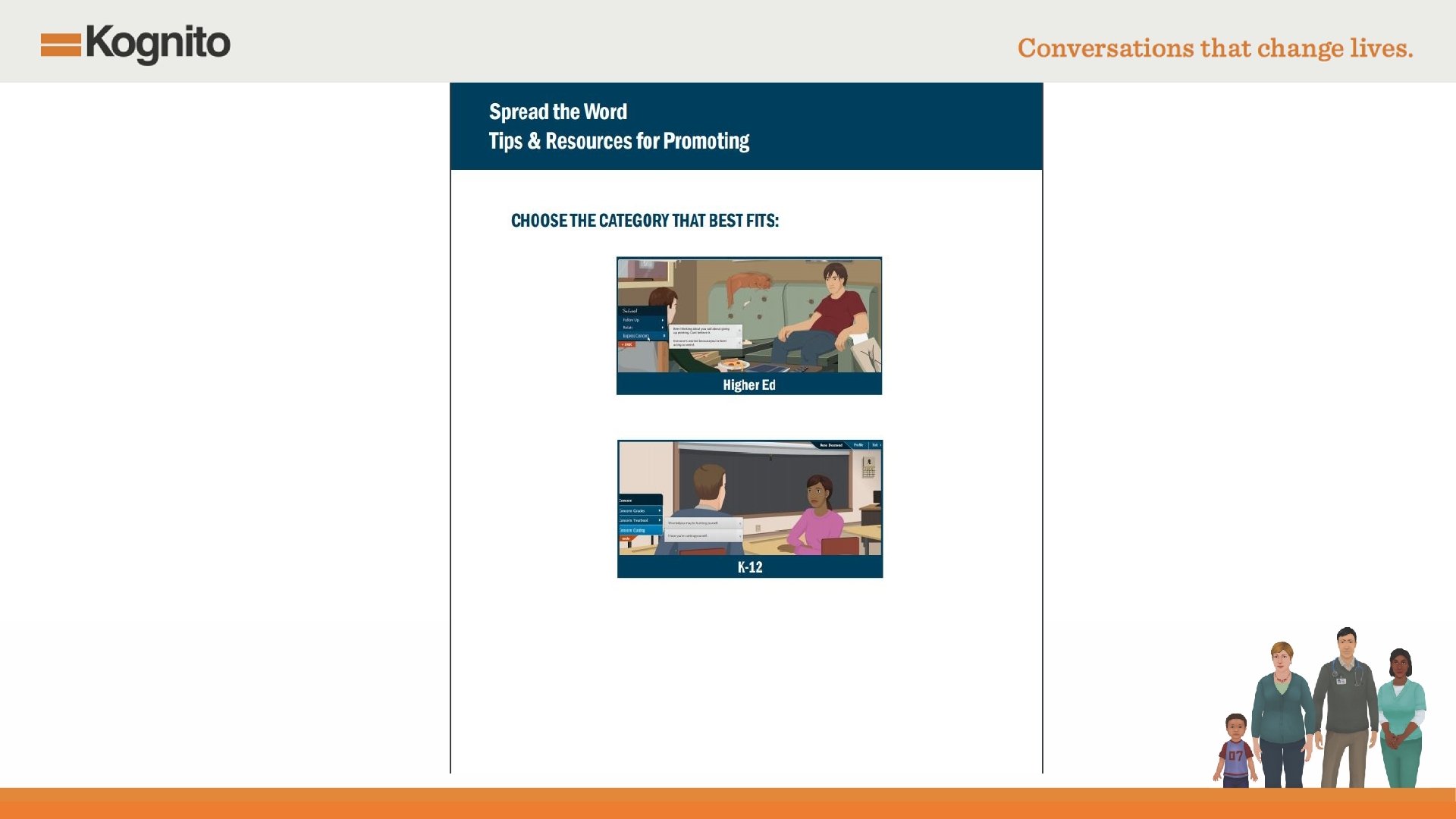
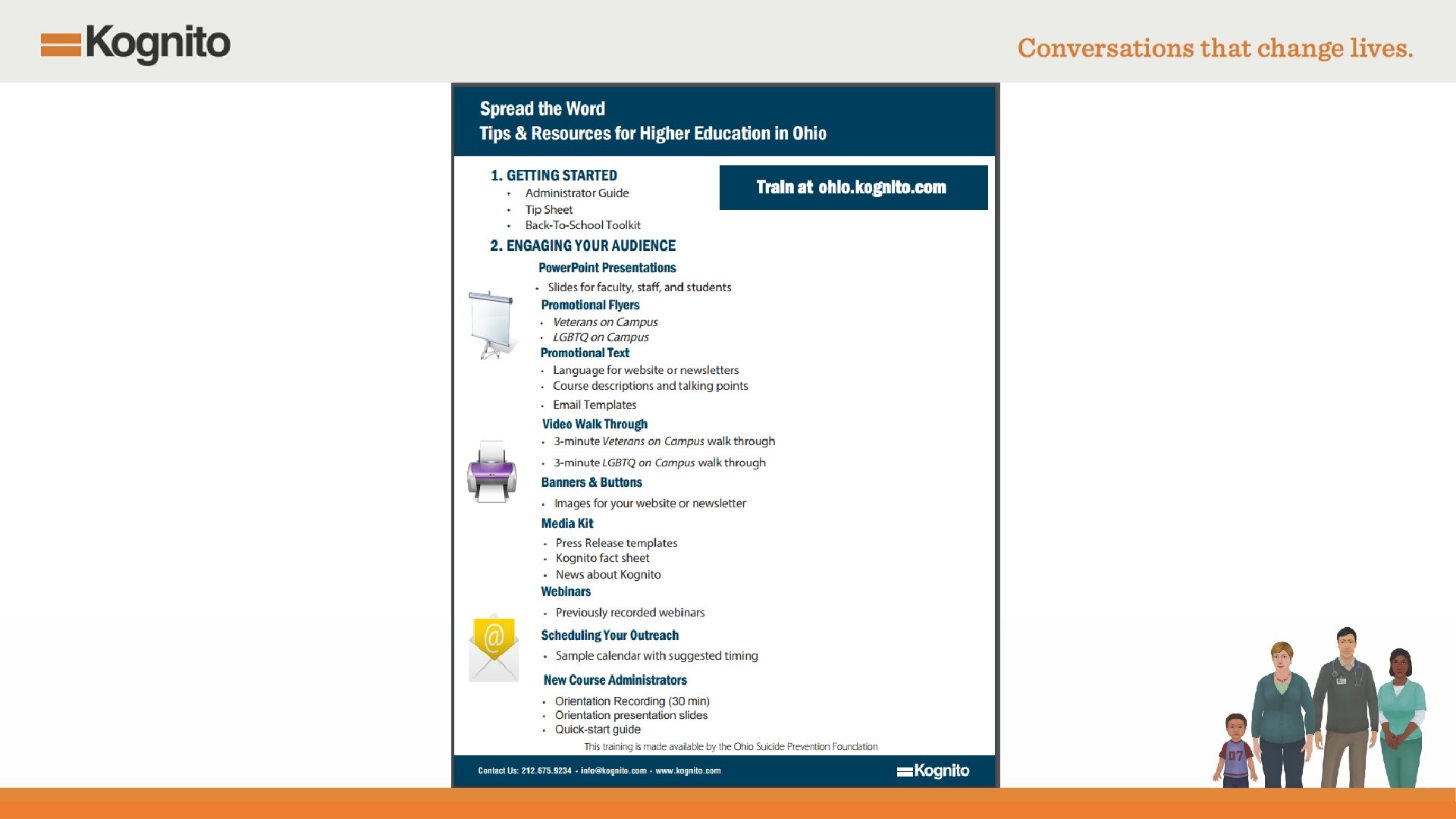
Locate Outreach Materials ohio. kognito. com
Questions? For technical support or any questions about your simulation, please contact Kognito at support@kognito. com or 646 -923 -8632 Contact: Jenna Henek Account Manager 212 -675 -9234 x 121 Jenna. Henek@kognito. com Website: Kognito. com Contact: Shawna Hite SAMHSA GLS Grant Project Coordinator 614 -429 -1528 ext. 402 Shawna. Hite@ohiospf. org Website: Ohiospf. org
- Slides: 36