
Resources Examples of computer resources printers tape drives
- Slides: 31
Resources • Examples of computer resources – printers – tape drives – tables • Processes need access to resources in reasonable order • Suppose a process holds resource A and requests resource B – at same time another process holds B and requests A – both are blocked and remain so 1
Resources (1) • Deadlocks occur when … – processes are granted exclusive access to devices – we refer to these devices generally as resources • Preemptable resources – can be taken away from a process with no ill effects • Nonpreemptable resources – will cause the process to fail if taken away 2
Resources (2) • Sequence of events required to use a resource 1. request the resource 2. use the resource 3. release the resource • Must wait if request is denied – requesting process may be blocked – may fail with error code 3
Introduction to Deadlocks • Formal definition : A set of processes is deadlocked if each process in the set is waiting for an event that only another process in the set can cause • Usually the event is release of a currently held resource • None of the processes can … – run – release resources – be awakened 4
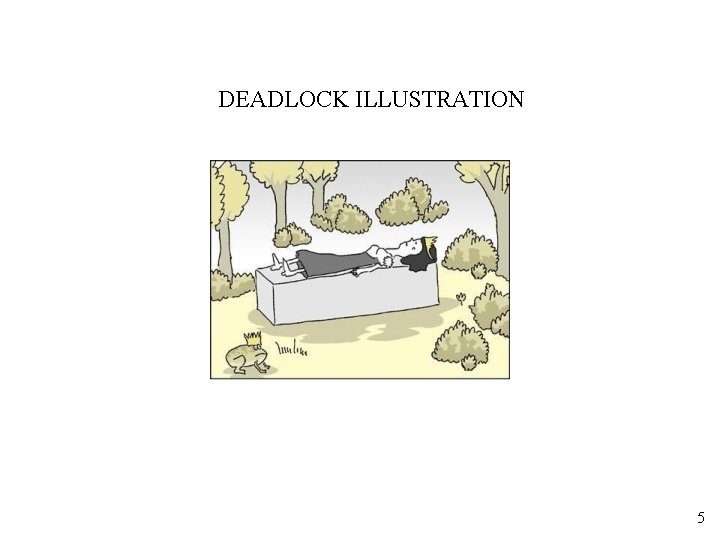
DEADLOCK ILLUSTRATION 5
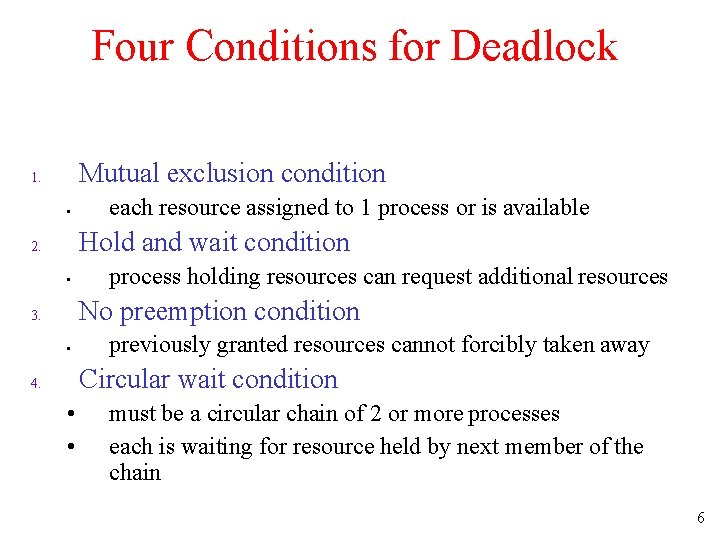
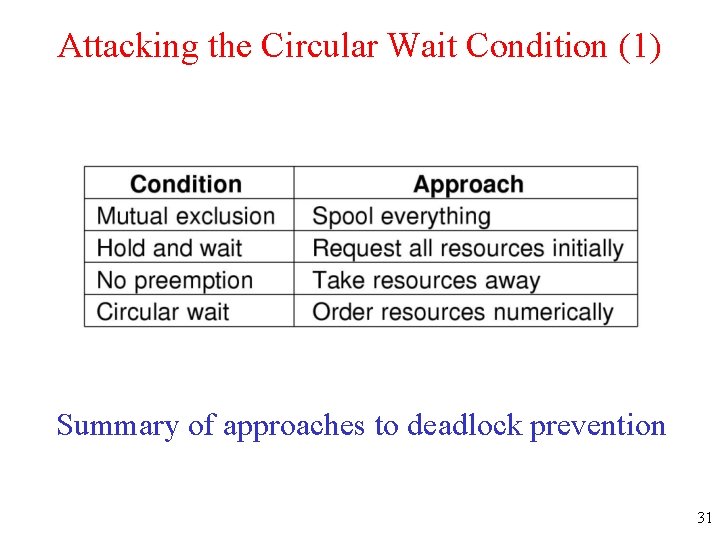
Four Conditions for Deadlock Mutual exclusion condition 1. • each resource assigned to 1 process or is available Hold and wait condition 2. • process holding resources can request additional resources No preemption condition 3. • previously granted resources cannot forcibly taken away Circular wait condition 4. • • must be a circular chain of 2 or more processes each is waiting for resource held by next member of the chain 6
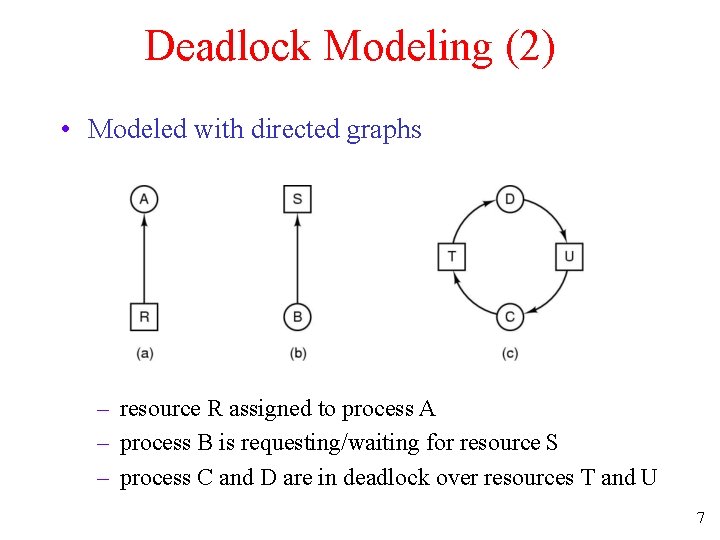
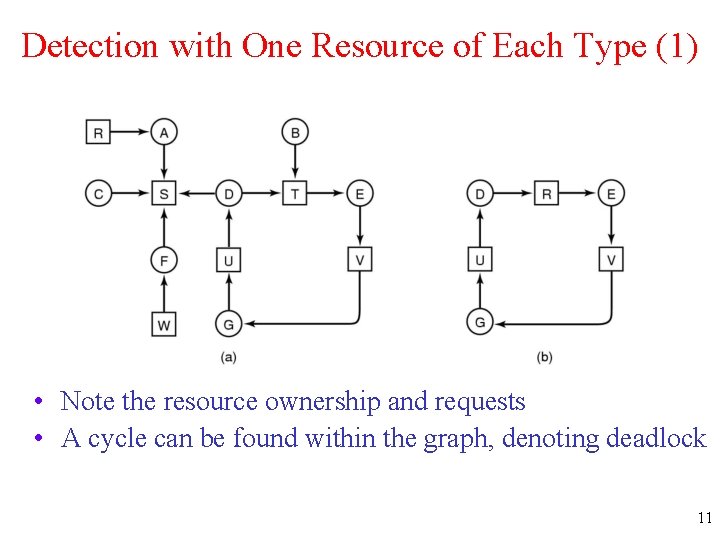
Deadlock Modeling (2) • Modeled with directed graphs – resource R assigned to process A – process B is requesting/waiting for resource S – process C and D are in deadlock over resources T and U 7
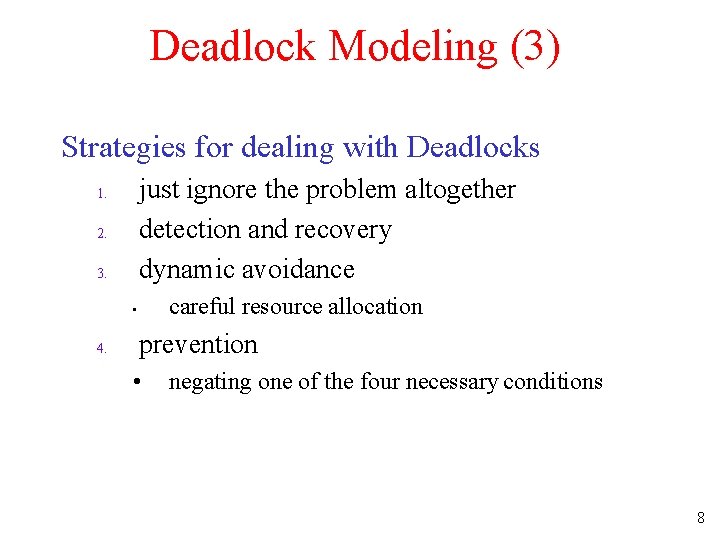
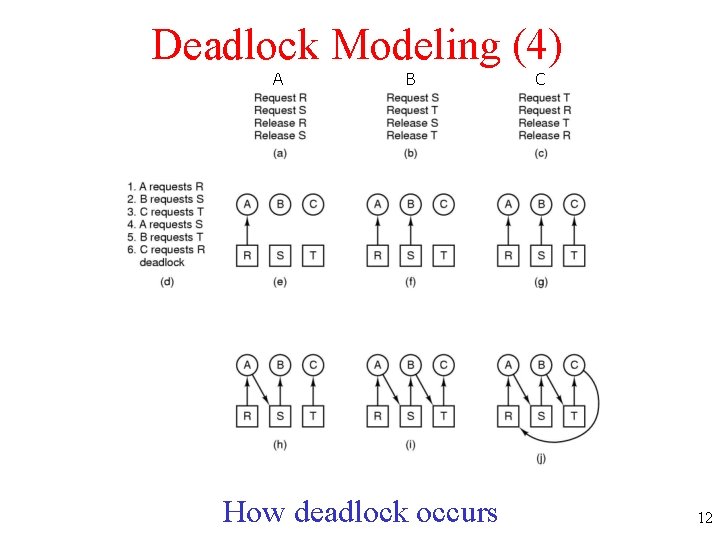
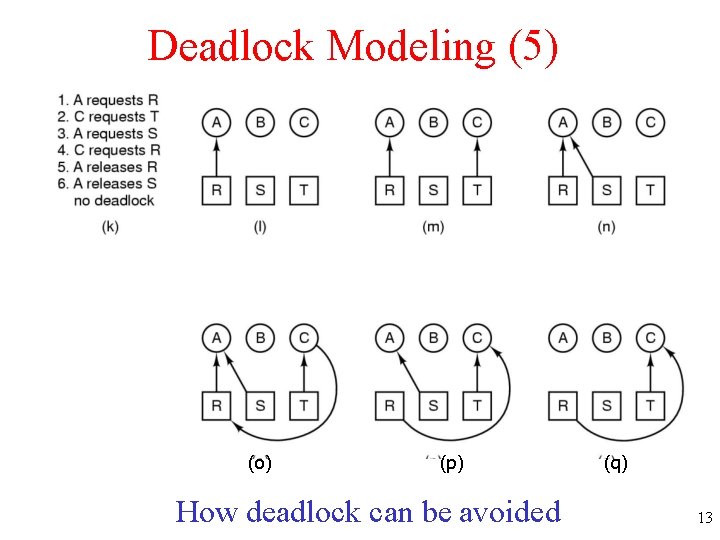
Deadlock Modeling (3) Strategies for dealing with Deadlocks just ignore the problem altogether detection and recovery dynamic avoidance 1. 2. 3. careful resource allocation • 4. prevention • negating one of the four necessary conditions 8
Deadlock Modeling (4) A B How deadlock occurs C 12
Deadlock Modeling (5) (o) (p) How deadlock can be avoided (q) 13
Detection with One Resource of Each Type (1) • Note the resource ownership and requests • A cycle can be found within the graph, denoting deadlock 11
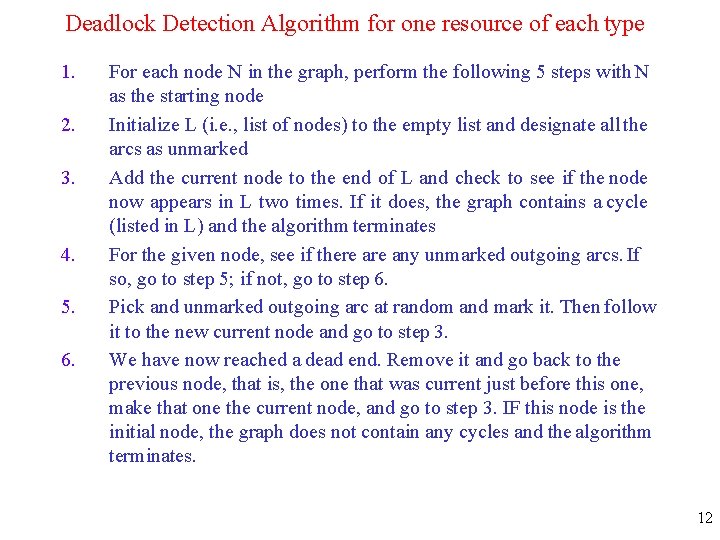
Deadlock Detection Algorithm for one resource of each type 1. 2. 3. 4. 5. 6. For each node N in the graph, perform the following 5 steps with N as the starting node Initialize L (i. e. , list of nodes) to the empty list and designate all the arcs as unmarked Add the current node to the end of L and check to see if the node now appears in L two times. If it does, the graph contains a cycle (listed in L) and the algorithm terminates For the given node, see if there any unmarked outgoing arcs. If so, go to step 5; if not, go to step 6. Pick and unmarked outgoing arc at random and mark it. Then follow it to the new current node and go to step 3. We have now reached a dead end. Remove it and go back to the previous node, that is, the one that was current just before this one, make that one the current node, and go to step 3. IF this node is the initial node, the graph does not contain any cycles and the algorithm terminates. 12
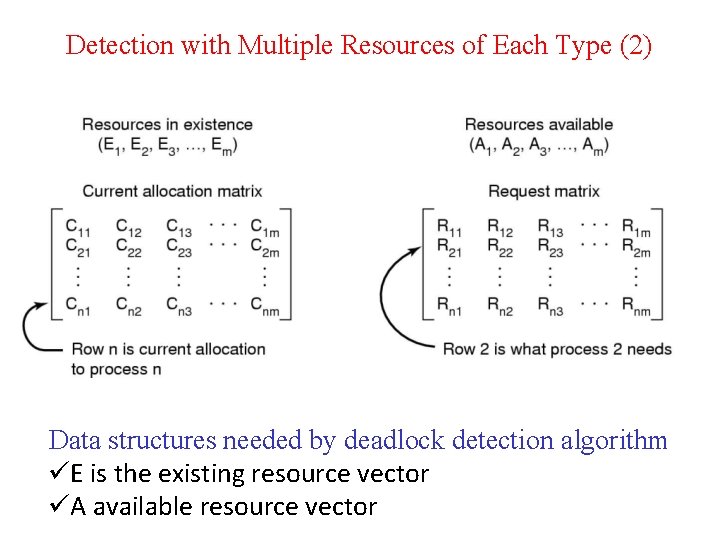
Detection with Multiple Resources of Each Type (2) Data structures needed by deadlock detection algorithm üE is the existing resource vector üA available resource vector
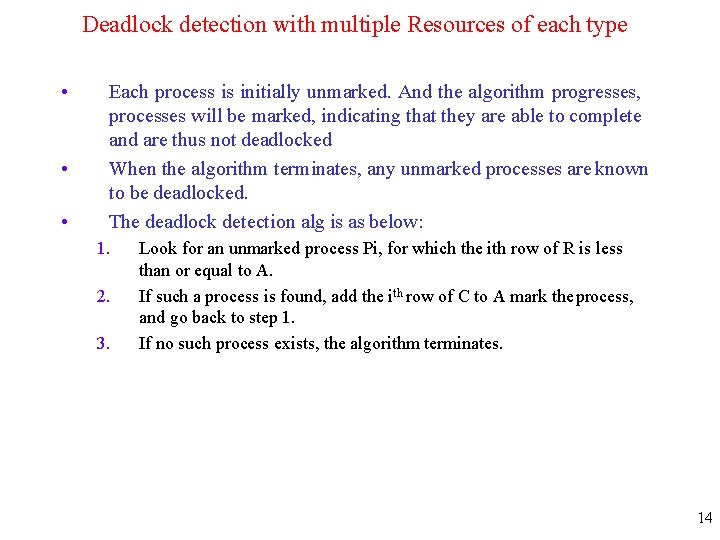
Deadlock detection with multiple Resources of each type • • • Each process is initially unmarked. And the algorithm progresses, processes will be marked, indicating that they are able to complete and are thus not deadlocked When the algorithm terminates, any unmarked processes are known to be deadlocked. The deadlock detection alg is as below: 1. 2. 3. Look for an unmarked process Pi, for which the ith row of R is less than or equal to A. If such a process is found, add the ith row of C to A mark the process, and go back to step 1. If no such process exists, the algorithm terminates. 14
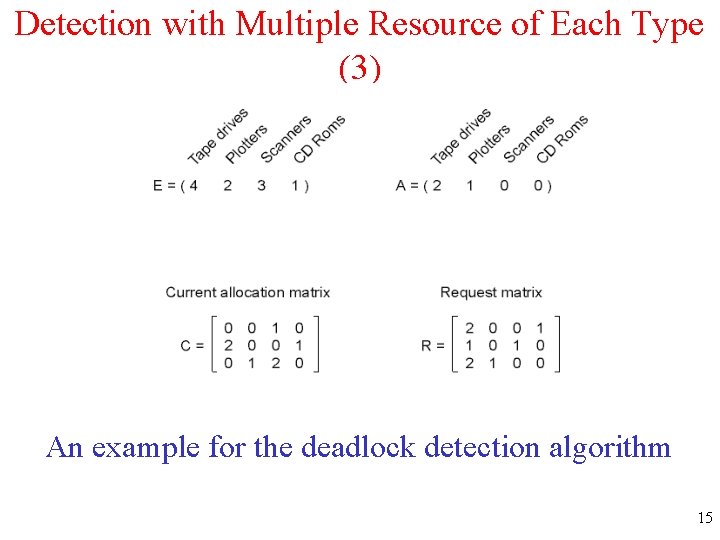
Detection with Multiple Resource of Each Type (3) An example for the deadlock detection algorithm 15
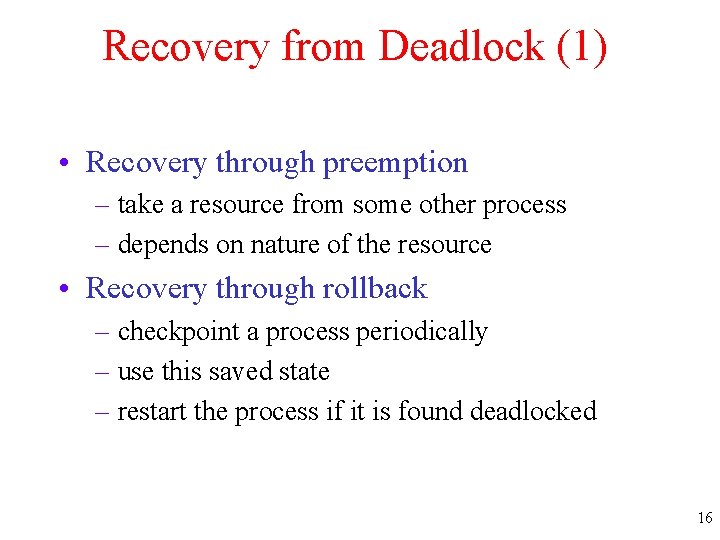
Recovery from Deadlock (1) • Recovery through preemption – take a resource from some other process – depends on nature of the resource • Recovery through rollback – checkpoint a process periodically – use this saved state – restart the process if it is found deadlocked 16
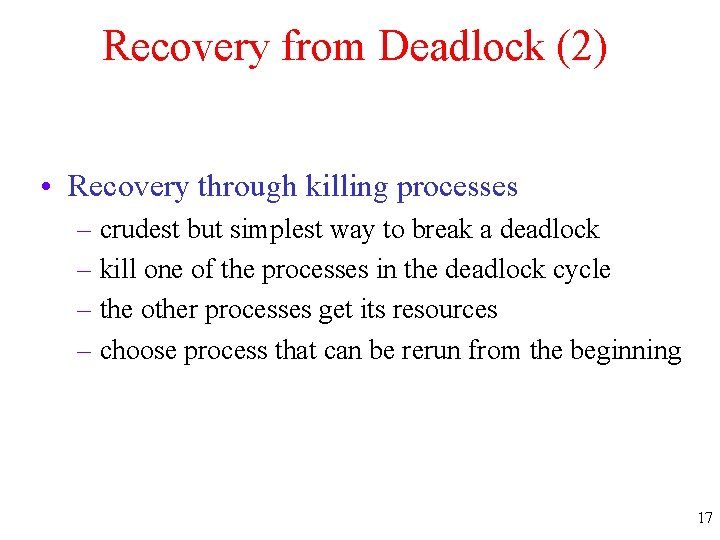
Recovery from Deadlock (2) • Recovery through killing processes – crudest but simplest way to break a deadlock – kill one of the processes in the deadlock cycle – the other processes get its resources – choose process that can be rerun from the beginning 17
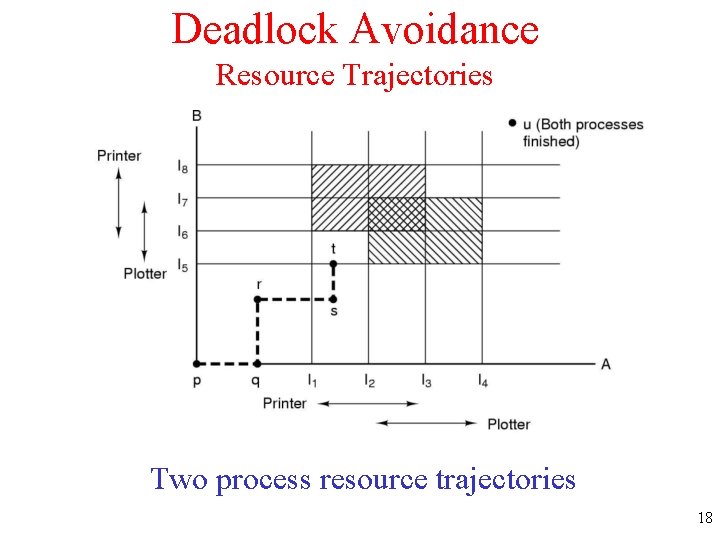
Deadlock Avoidance Resource Trajectories Two process resource trajectories 18
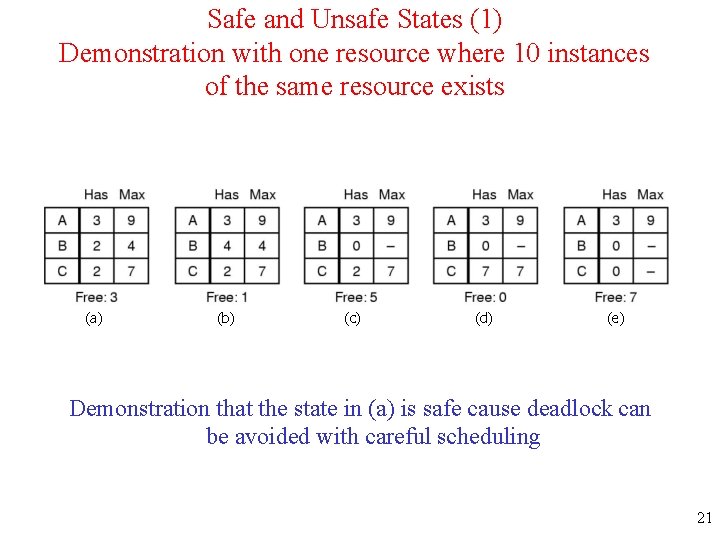
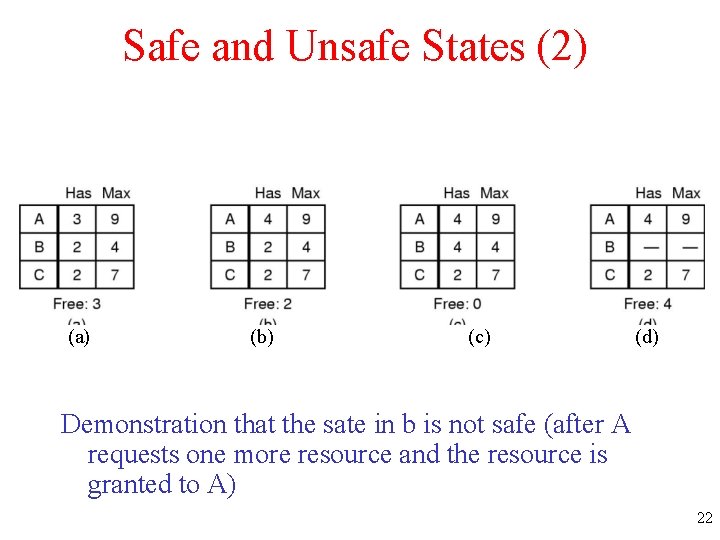
Safe and Unsafe states • A state is called safe if it is not deadlocked and there is some scheduling order in which every process can run to completion even if all of them suddenly requests their maximum number of resources immediately. • Otherwise the state of the system is said to be unsafe • Safe/unsafe states are anonymous to a banker with loans • Note that an unsafe state is not a deadlocked state, but there is a possibility that the system MAY go into a deadlocked state if all processes request their maximum amount of resources at the same time 19
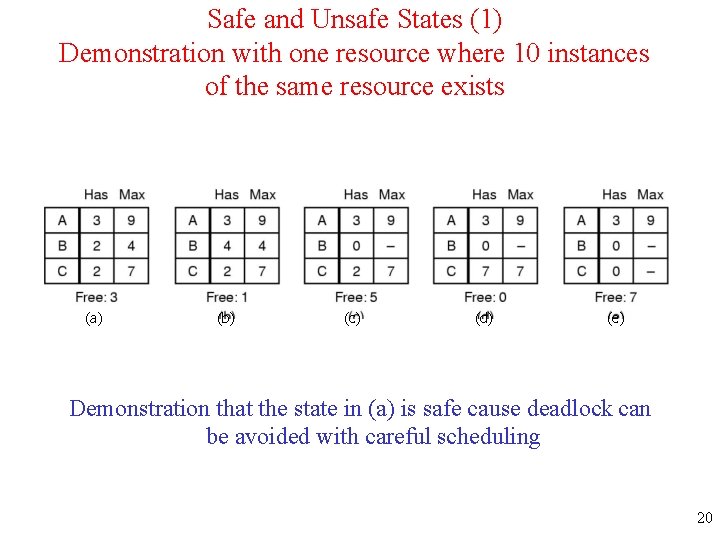
Safe and Unsafe States (1) Demonstration with one resource where 10 instances of the same resource exists (a) (b) (c) (d) (e) Demonstration that the state in (a) is safe cause deadlock can be avoided with careful scheduling 20
Safe and Unsafe States (1) Demonstration with one resource where 10 instances of the same resource exists (a) (b) (c) (d) (e) Demonstration that the state in (a) is safe cause deadlock can be avoided with careful scheduling 21
Safe and Unsafe States (2) (a) (b) (c) (d) Demonstration that the sate in b is not safe (after A requests one more resource and the resource is granted to A) 22
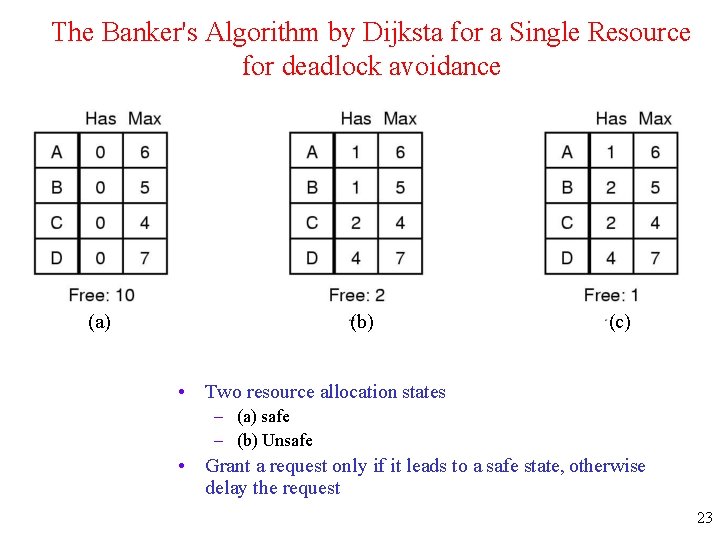
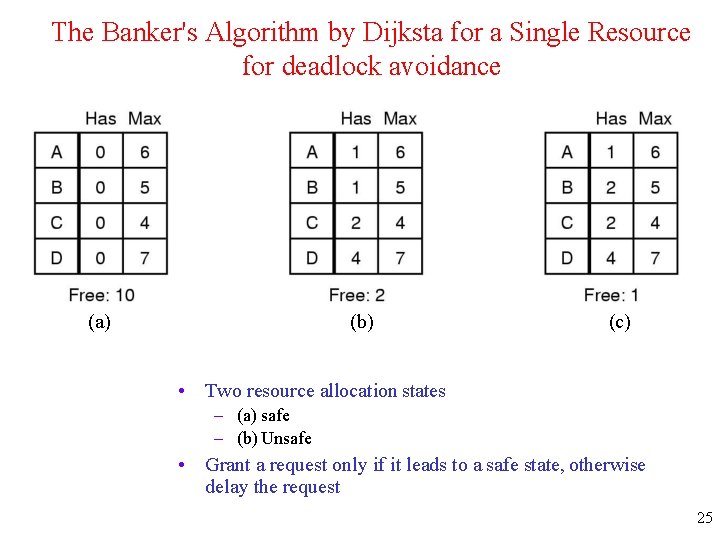
The Banker's Algorithm by Dijksta for a Single Resource for deadlock avoidance (a) (b) (c) • Two resource allocation states – (a) safe – (b) Unsafe • Grant a request only if it leads to a safe state, otherwise delay the request 23
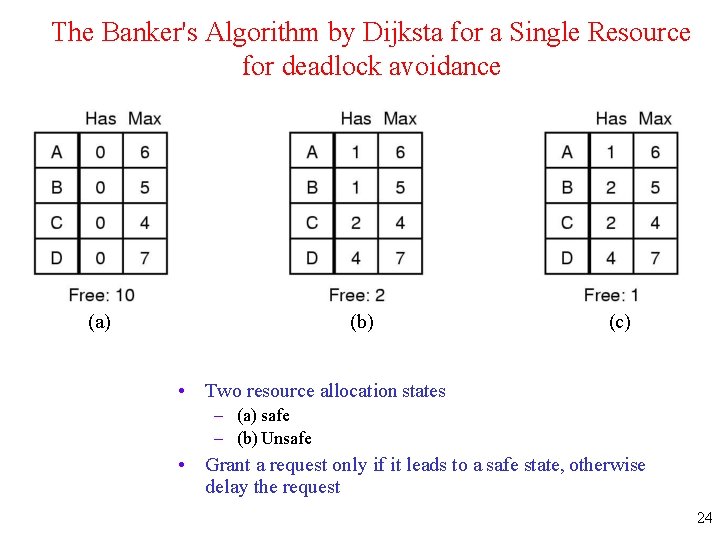
The Banker's Algorithm by Dijksta for a Single Resource for deadlock avoidance (a) (b) • (c) Two resource allocation states – (a) safe – (b) Unsafe • Grant a request only if it leads to a safe state, otherwise delay the request 24
The Banker's Algorithm by Dijksta for a Single Resource for deadlock avoidance (a) (b) • (c) Two resource allocation states – (a) safe – (b) Unsafe • Grant a request only if it leads to a safe state, otherwise delay the request 25
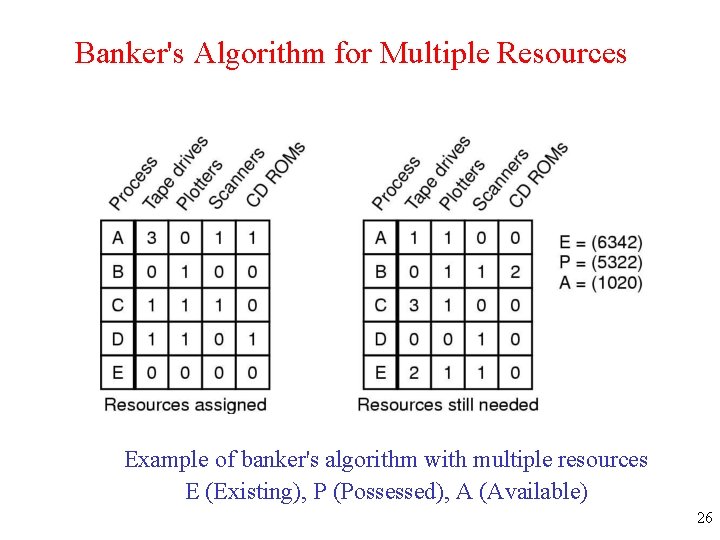
Banker's Algorithm for Multiple Resources Example of banker's algorithm with multiple resources E (Existing), P (Possessed), A (Available) 26
Deadlock Prevention Attacking the Mutual Exclusion Condition • Some devices (such as printer) can be spooled – only the printer daemon uses printer resource – thus deadlock for printer eliminated • Not all devices can be spooled • Principle: – avoid assigning resource when not absolutely necessary – as few processes as possible actually claim the resource 27
Attacking the Hold and Wait Condition • Require processes to request resources before starting – a process never has to wait for what it needs • Problems – may not know required resources at start of run – also ties up resources other processes could be using • Variation: – process must give up all resources – then request all immediately needed 28
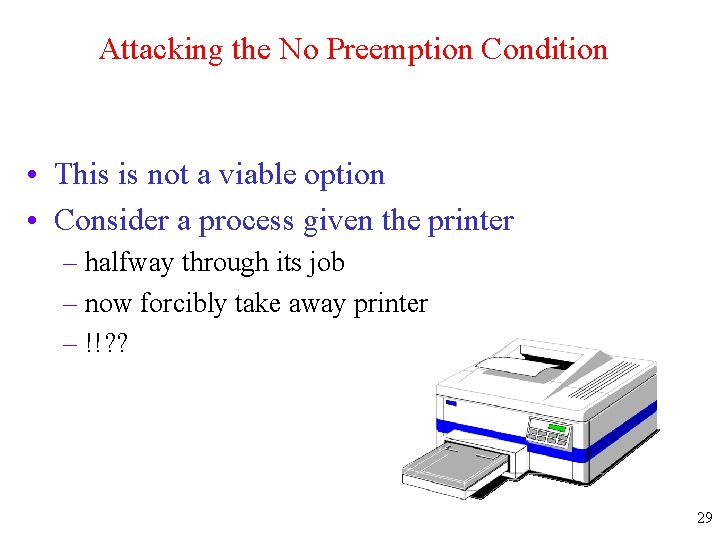
Attacking the No Preemption Condition • This is not a viable option • Consider a process given the printer – halfway through its job – now forcibly take away printer – !!? ? 29
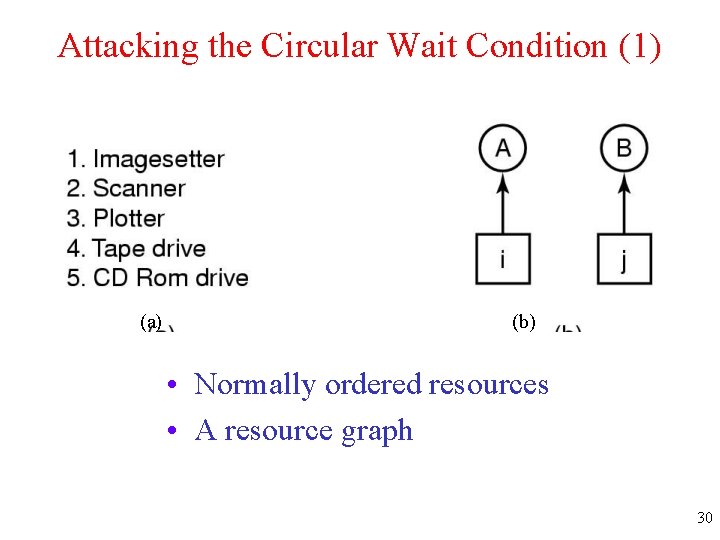
Attacking the Circular Wait Condition (1) (a) (b) • Normally ordered resources • A resource graph 30
Attacking the Circular Wait Condition (1) Summary of approaches to deadlock prevention 31