
Resources and the Environment 7 th grade Chapter
- Slides: 22
Resources and the Environment 7 th grade Chapter 19 (Blue)
19. 1 Natural Resources
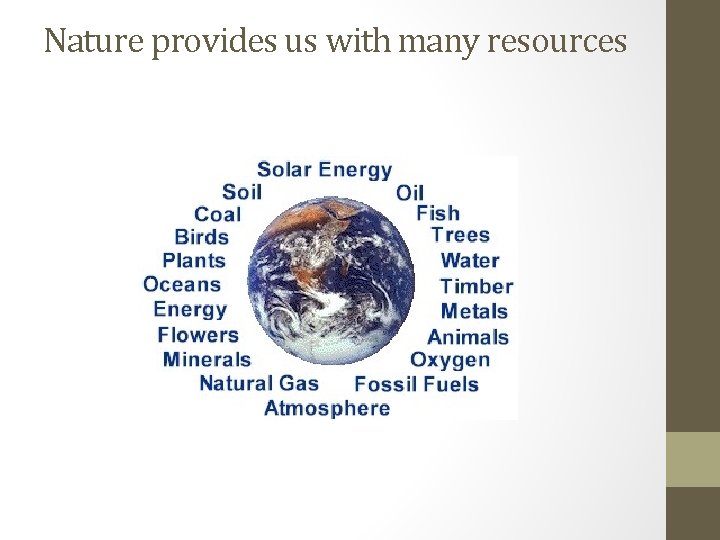
Nature provides us with many resources
RENEWABLE RESOURCES • Resources such as trees, fish, oxygen, and fresh water are generally considered to be renewable resources as they can be continually reproduced. Fresh water from the Earth's recycling process, fresh air from the oxygen produced by plants and trees, and trees and fish which can reproduce themselves. •
Words to think of when you consider what resources are renewable Infinite No limits Extending indefinitely
"Renewable" resources become non-renewable due to mis-management by humans and pollution of the environment by humans.
NON-RENEWABLE RESOURCES • Such things as fossil fuels (oil, coal, gas) and minerals cannot be reproduced (in a human lifetime) and therefore can be used up. • These are called non-renewable resources. Words to think of: • Finite Limited Having a limited existence
• Natural Resources are materials in the environment that are useful for living things. • Renewable Resources can be replenished by the environment. Examples: trees, water, wind • Nonrenewable Resources cannot be replaced or are replaced very slowly. Examples: topsoil, fossil fuels • Alternative Energy Sources to Fossil Fuels: Geothermal, Nuclear, Wind, Solar, Water
19. 2 Conservation and Wildlife Protection
• Nonrenewable resources can be conserved by using less, using a renewable resource, or recycling.
• Topsoil can take thousands of years to be replaced. Farming causes soil depletion (the removal of nutrients in soil). • Farmers can replenish soil by: crop rotation and adding fertilizers.
• Erosion also causes soil infertility. Erosion is the wearing down of soil by wind and water. • Farmers can reduce erosion by practicing soil management and using farming techniques such as, strip cropping, contour plowing and no-till farming.
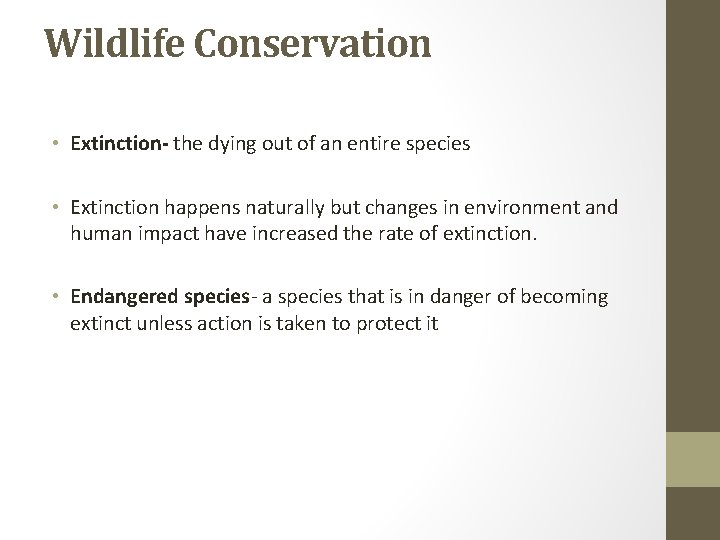
Wildlife Conservation • Extinction- the dying out of an entire species • Extinction happens naturally but changes in environment and human impact have increased the rate of extinction. • Endangered species- a species that is in danger of becoming extinct unless action is taken to protect it
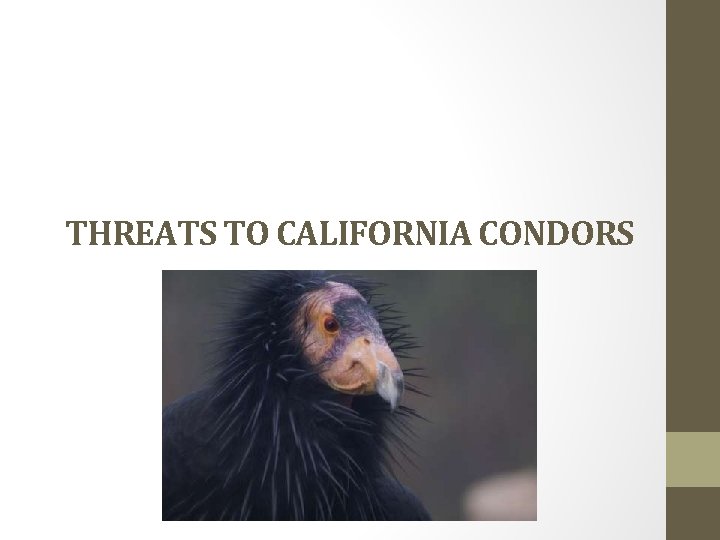
THREATS TO CALIFORNIA CONDORS
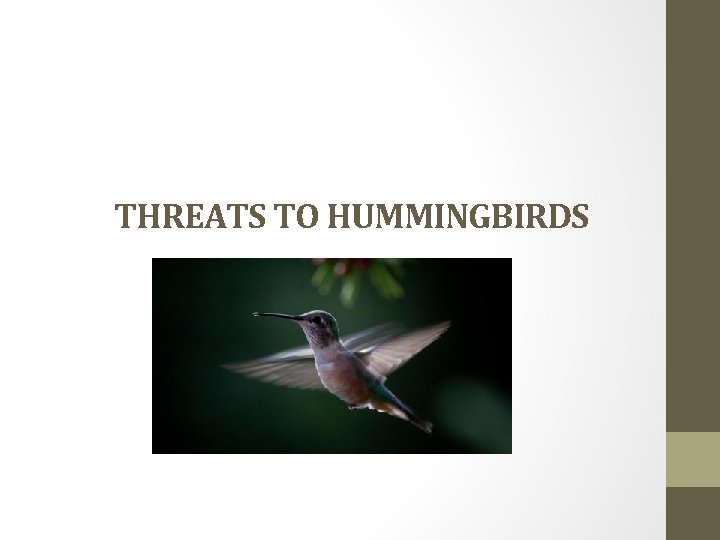
THREATS TO HUMMINGBIRDS
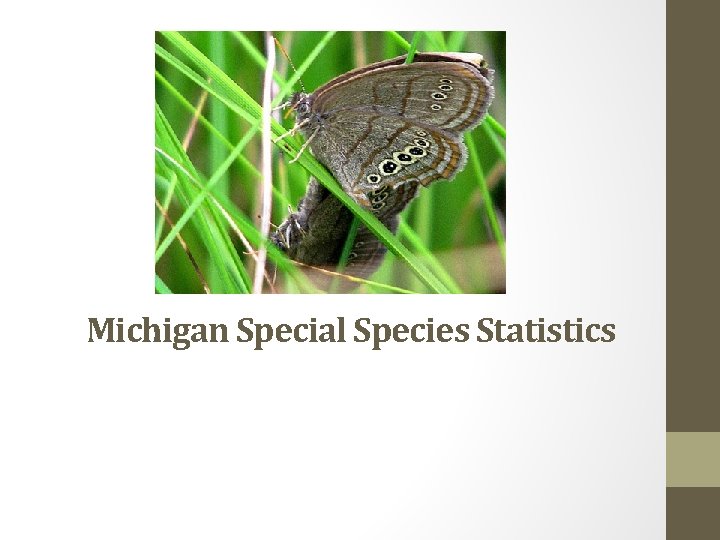
Michigan Special Species Statistics
• Land conservation is important. We conserve land by setting aside wilderness areas, parks, and protected areas. • Recycling helps conserve resources and conserves land space that would normally become the next landfill. Recycling is a process that changes or reprocesses an item or resource. • Mineral Conservation is important because most minerals are nonrenewable. We also use fossil fuels to mine them and cause habitat destruction when mining.
19. 3 Maintaining a Healthy Environment
How We Affect the Environment • Ozone Depletion-caused by air pollution (CFCs) and thins the ozone layer which acts as a sunscreen for us and protects us from harmful UV rays emitted by the Sun. • Greenhouse Effect- Earth’s heat-trapping feature that allows heat in but doesn’t allow it to radiate back to space, this keeps us warm. Greenhouse gases (carbon dioxide) are responsible for the greenhouse effect burning of fossil fuels is increasing the amount of CO 2 in the atmosphere. • Global Warming- an increase in the average yearly temperature
Air Pollution • Pollutant- any substance that contaminates the environment and causes pollution • Smog-a form of air pollution that is created when sunlight reacts with pollutant chemicals produced by burning fossil fuels • Acid rain-pollutants in air can get trapped in water as it condenses and falls as rain. It is rain or snow with a p. H below 5. 6. It washes away soil nutrients, pollutes water and organisms.
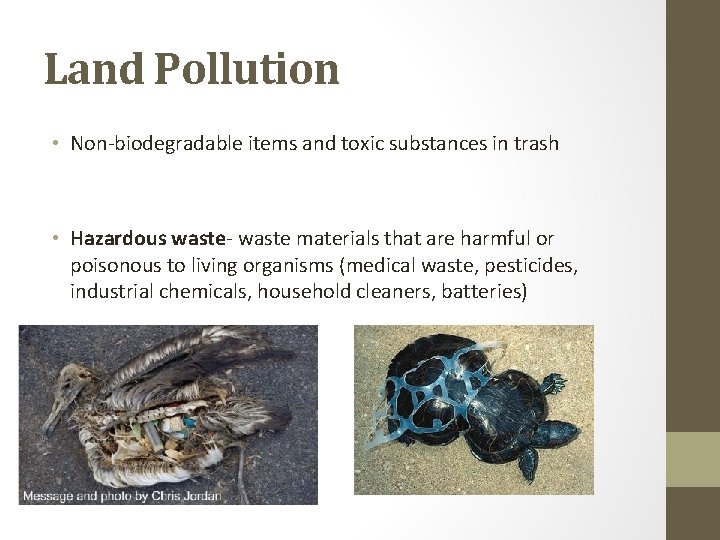
Land Pollution • Non-biodegradable items and toxic substances in trash • Hazardous waste- waste materials that are harmful or poisonous to living organisms (medical waste, pesticides, industrial chemicals, household cleaners, batteries)
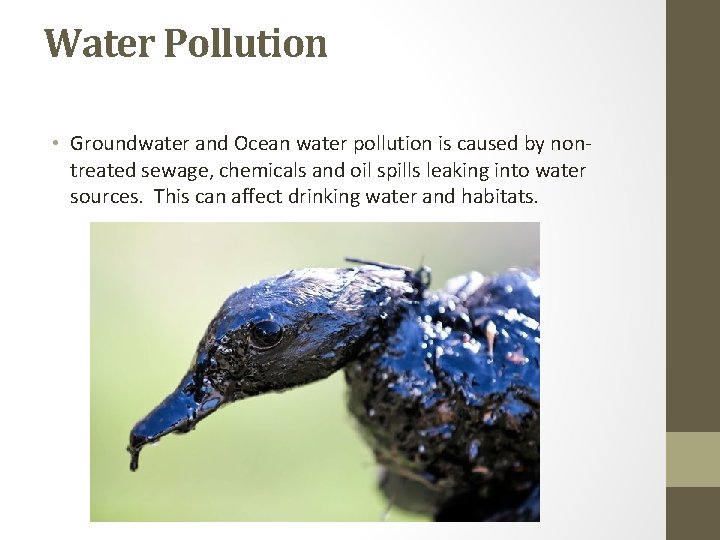
Water Pollution • Groundwater and Ocean water pollution is caused by nontreated sewage, chemicals and oil spills leaking into water sources. This can affect drinking water and habitats.