
Resource Sharing of Portable Computers Using Wireless Communication
Resource Sharing of Portable Computers Using Wireless Communication By Christine Meyer
Outline • Routing Protocols • Load Balancing Techniques • Cluster Computing Software • Wireless Security Attacks • Conclusion
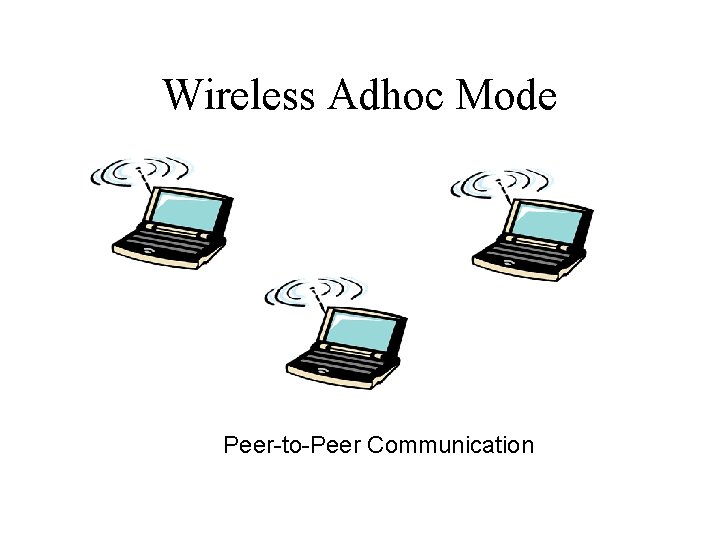
Wireless Adhoc Mode Peer-to-Peer Communication
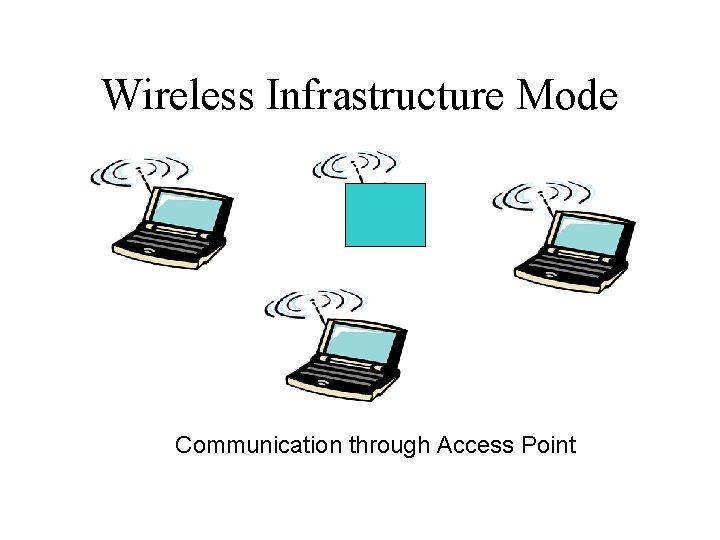
Wireless Infrastructure Mode Communication through Access Point

Direct Sequence Spread Spectrum (DSSS)
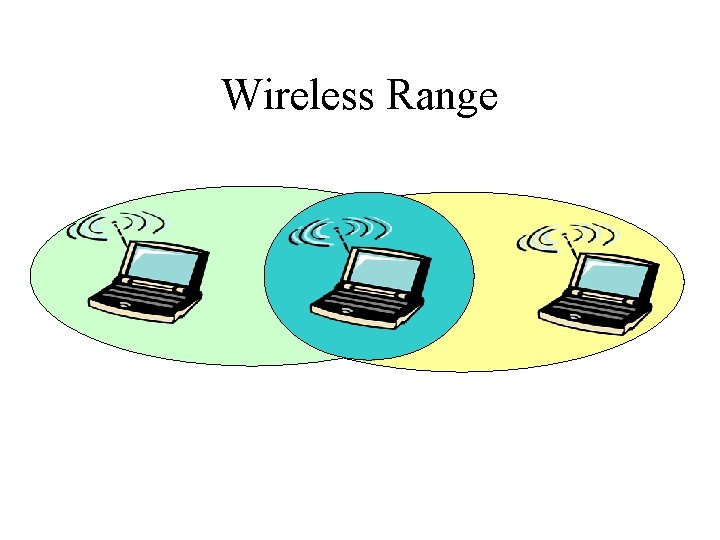
Wireless Range
Routing Protocols • Dynamic Source Routing (DSR) • Destination Sequence Distance Vector (DSDV) • Temporary-Ordered Routing Algorithm (TORA) • Ad Hoc On-Demand Distance Vector (AODV)
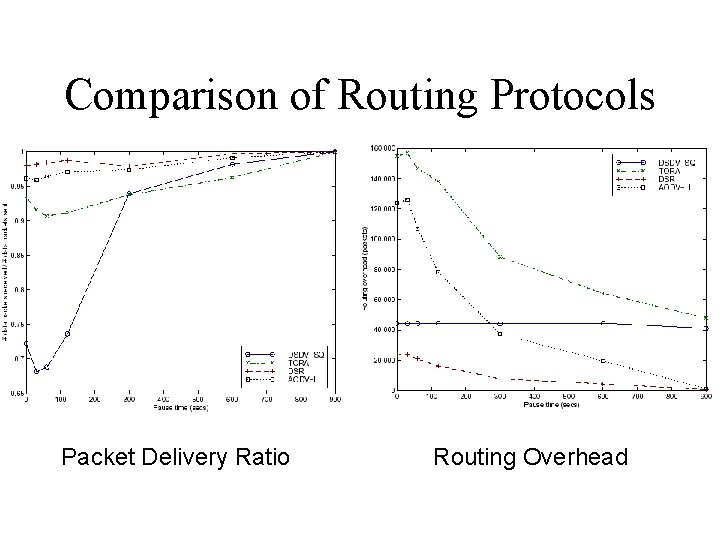
Comparison of Routing Protocols Packet Delivery Ratio Routing Overhead
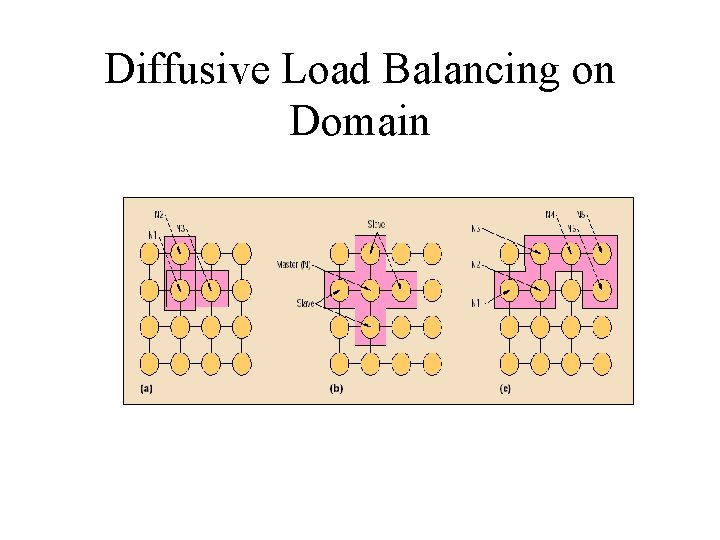
Diffusive Load Balancing on Domain
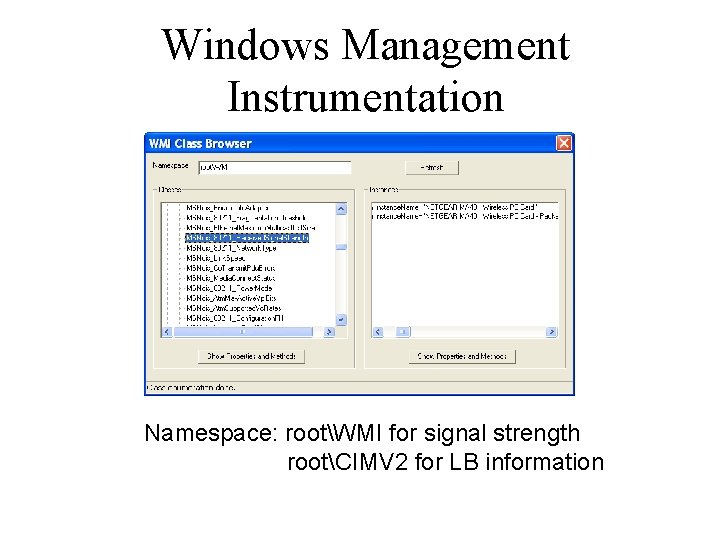
Windows Management Instrumentation Namespace: rootWMI for signal strength rootCIMV 2 for LB information
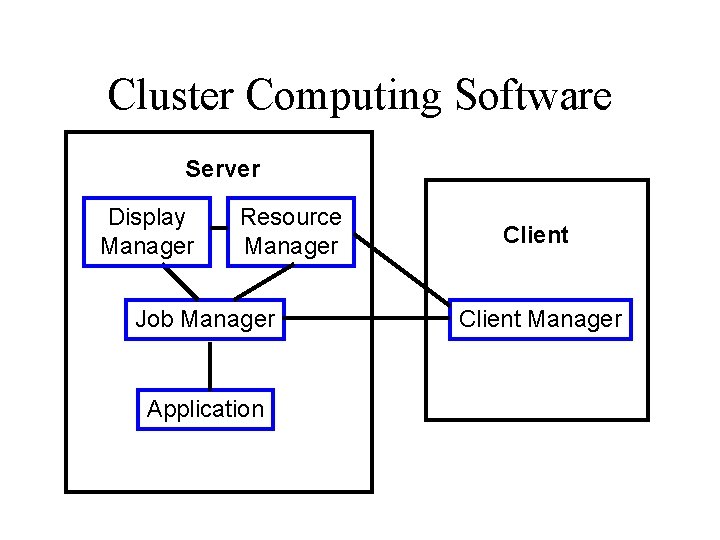
Cluster Computing Software Server Display Manager Resource Manager Job Manager Application Client Manager
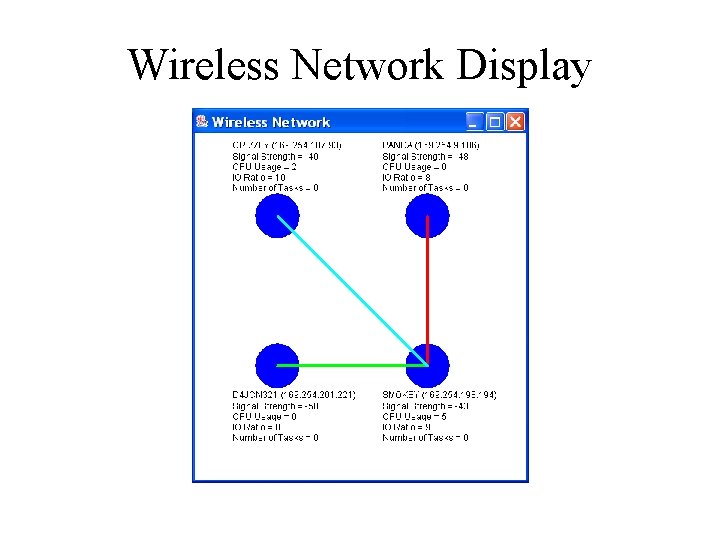
Wireless Network Display
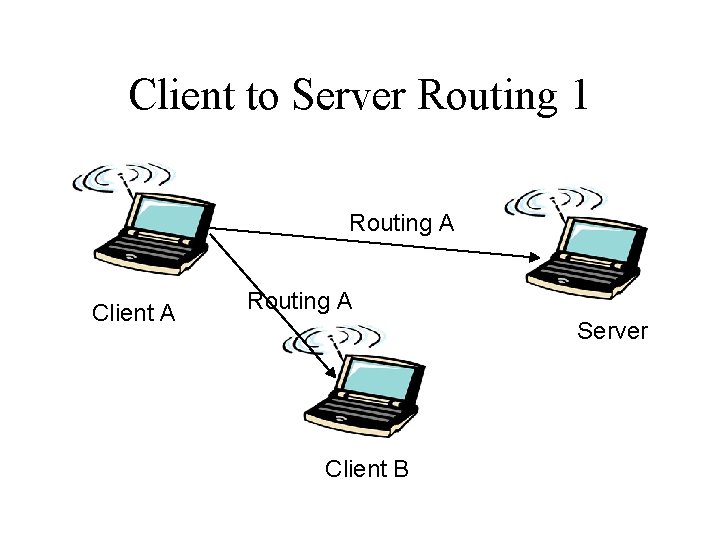
Client to Server Routing 1 Routing A Client A Routing A Server Client B
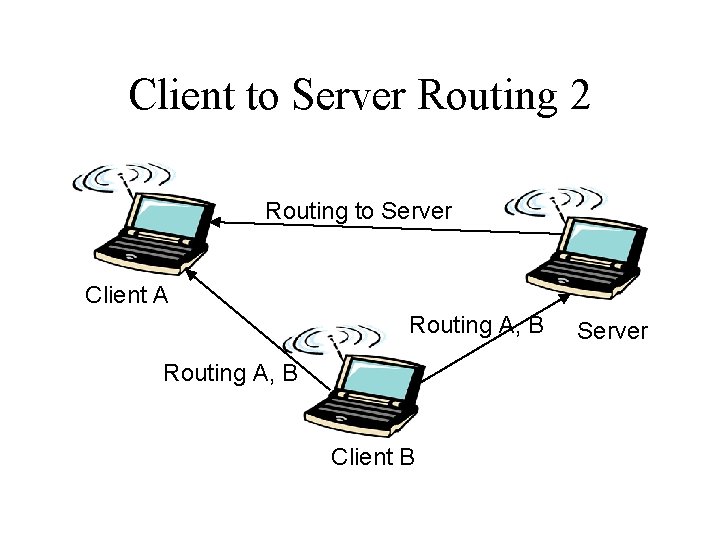
Client to Server Routing 2 Routing to Server Client A Routing A, B Client B Server
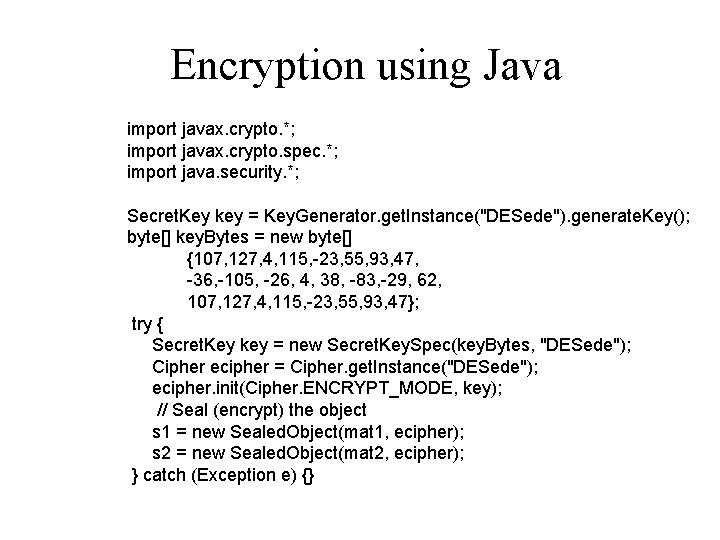
Encryption using Java import javax. crypto. *; import javax. crypto. spec. *; import java. security. *; Secret. Key key = Key. Generator. get. Instance("DESede"). generate. Key(); byte[] key. Bytes = new byte[] {107, 127, 4, 115, -23, 55, 93, 47, -36, -105, -26, 4, 38, -83, -29, 62, 107, 127, 4, 115, -23, 55, 93, 47}; try { Secret. Key key = new Secret. Key. Spec(key. Bytes, "DESede"); Cipher ecipher = Cipher. get. Instance("DESede"); ecipher. init(Cipher. ENCRYPT_MODE, key); // Seal (encrypt) the object s 1 = new Sealed. Object(mat 1, ecipher); s 2 = new Sealed. Object(mat 2, ecipher); } catch (Exception e) {}
![Decryption with Java byte[] key. Bytes = new byte[] {107, 127, 4, 115, -23,](http://slidetodoc.com/presentation_image_h2/665d95ed1a0668a07c99a89d22797b73/image-16.jpg "Decryption with Java byte[] key. Bytes = new byte[] {107, 127, 4, 115, -23,")
Decryption with Java byte[] key. Bytes = new byte[] {107, 127, 4, 115, -23, 55, 93, 47, -36, -105, -26, 4, 38, -83, -29, 62, 107, 127, 4, 115, -23, 55, 93, 47}; try { Secret. Key key = new Secret. Key. Spec(key. Bytes, "DESede"); Cipher dcipher = Cipher. get. Instance("DESede"); dcipher. init(Cipher. DECRYPT_MODE, key); // Unseal (decrypt) the class a = (Matrix)s 1. get. Object(dcipher); b = (Matrix)s 2. get. Object(dcipher); } catch (Exception e) {}
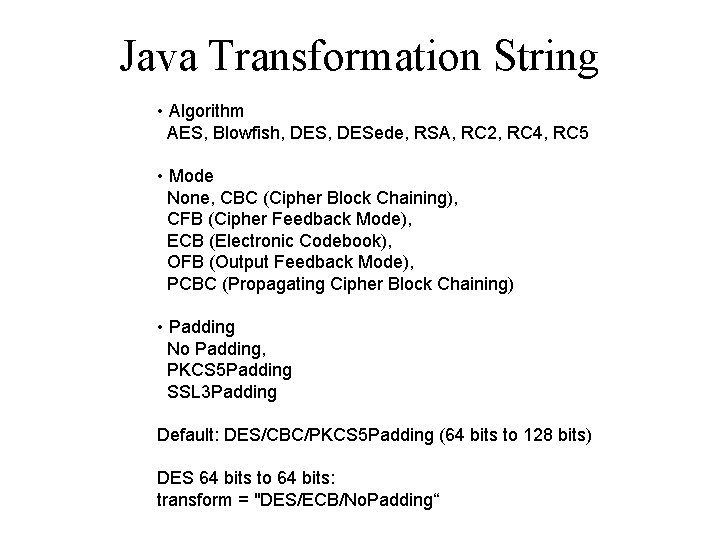
Java Transformation String • Algorithm AES, Blowfish, DESede, RSA, RC 2, RC 4, RC 5 • Mode None, CBC (Cipher Block Chaining), CFB (Cipher Feedback Mode), ECB (Electronic Codebook), OFB (Output Feedback Mode), PCBC (Propagating Cipher Block Chaining) • Padding No Padding, PKCS 5 Padding SSL 3 Padding Default: DES/CBC/PKCS 5 Padding (64 bits to 128 bits) DES 64 bits to 64 bits: transform = "DES/ECB/No. Padding“
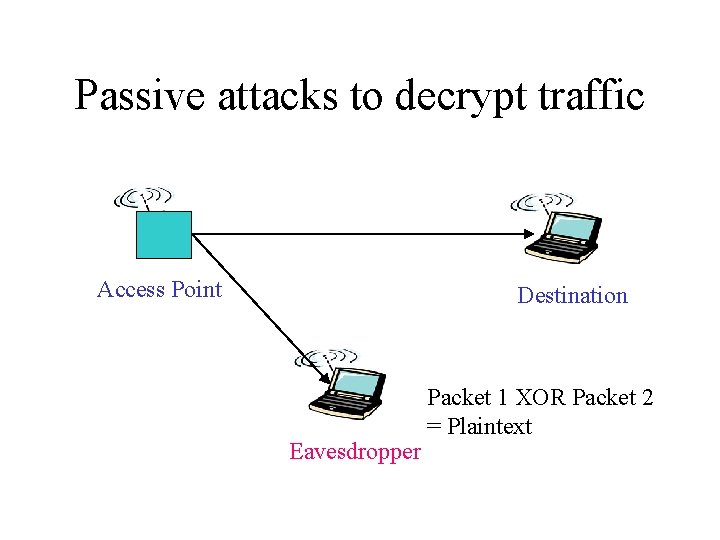
Passive attacks to decrypt traffic Access Point Destination Eavesdropper Packet 1 XOR Packet 2 = Plaintext
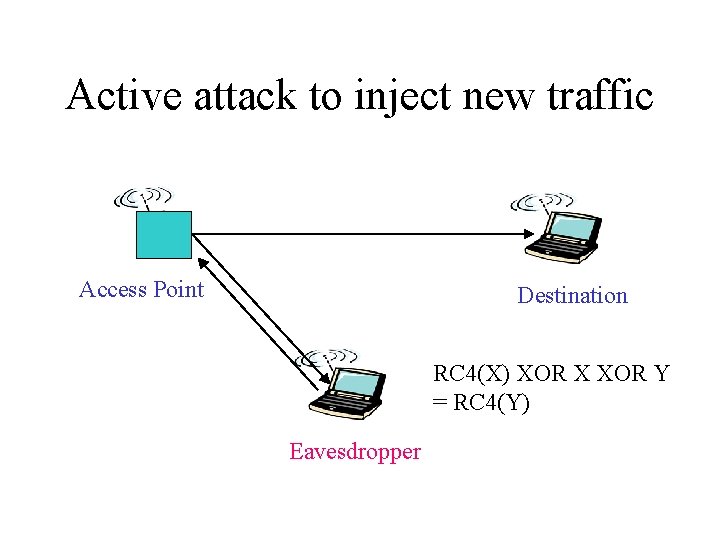
Active attack to inject new traffic Access Point Destination RC 4(X) XOR X XOR Y = RC 4(Y) Eavesdropper
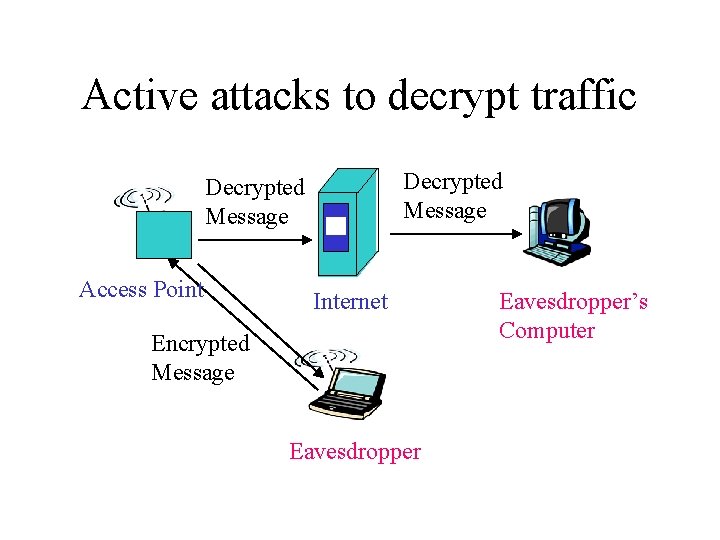
Active attacks to decrypt traffic Decrypted Message Access Point Internet Encrypted Message Eavesdropper’s Computer
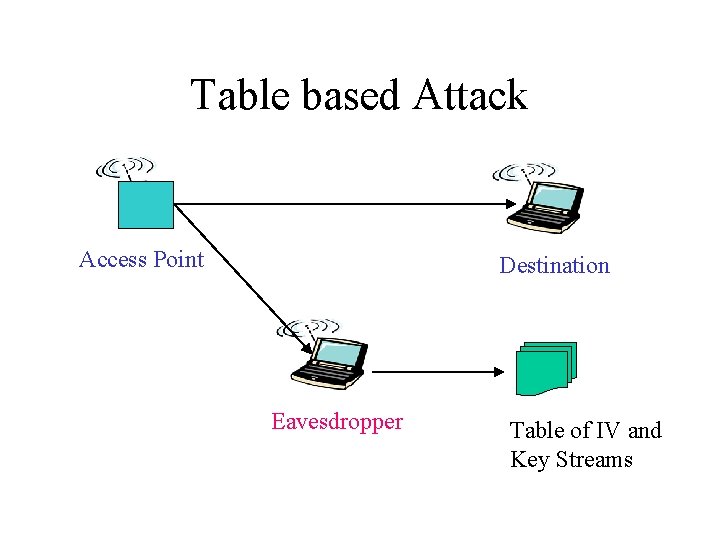
Table based Attack Access Point Destination Eavesdropper Table of IV and Key Streams
WPA Denial of Service Attack WPA can shutdown the system if it receives two failed packets within a onesecond period Wi-Fi Encryption Fix Not Perfect http: //www. wired. com/news/business/0, 13 67, 56350, 00. html
Conclusion • It is possible to improve performance through resource sharing of portable computers • In the future, the transfer rate for wireless will be greater therefore reducing transfer time • Security is provided for access points but not for ad-hoc mode • Encryption is possible through Java with a small overhead factor
- Slides: 23