
Resource Management of Heterogeneous Wireless Sensor Networks Tajana
- Slides: 9
Resource Management of Heterogeneous Wireless Sensor Networks Tajana Šimunić Rosing Edoardo Regini, Gaurav Dhiman Funded by HPWREN – NSF & industry: Sun Microsystems, HP, Qualcomm
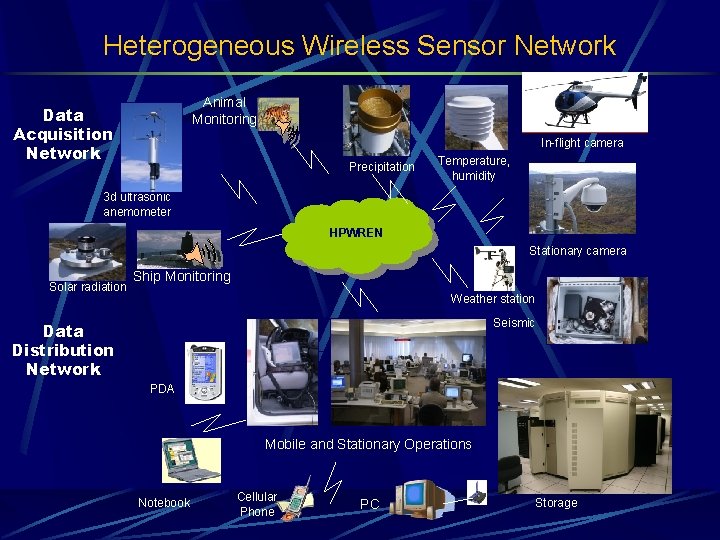
Heterogeneous Wireless Sensor Network Animal Monitoring Data Acquisition Network In-flight camera Precipitation Temperature, humidity 3 d ultrasonic anemometer HPWREN Stationary camera Solar radiation Ship Monitoring Weather station Seismic Data Distribution Network PDA Mobile and Stationary Operations Notebook Cellular Phone PC Storage
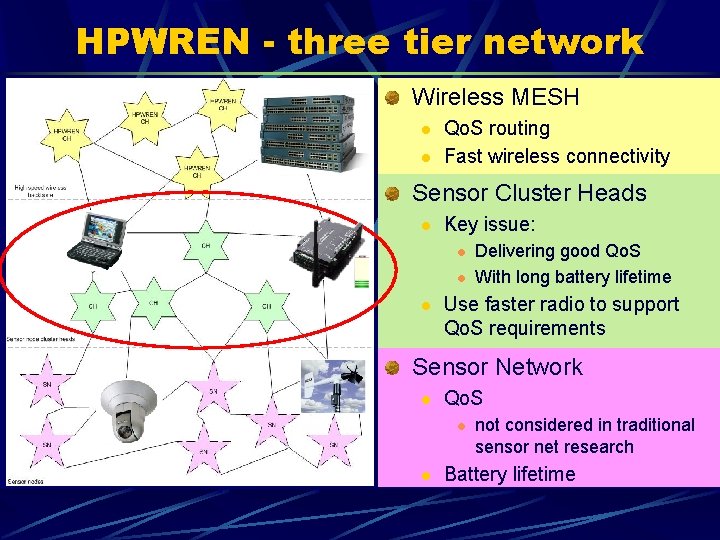
HPWREN - three tier network Wireless MESH l l Qo. S routing Fast wireless connectivity Sensor Cluster Heads l Key issue: l l l Delivering good Qo. S With long battery lifetime Use faster radio to support Qo. S requirements Sensor Network l Qo. S l l not considered in traditional sensor net research Battery lifetime
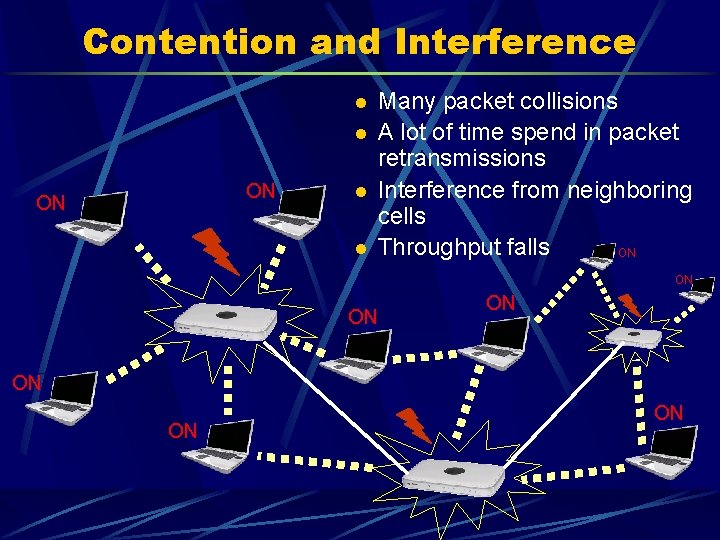
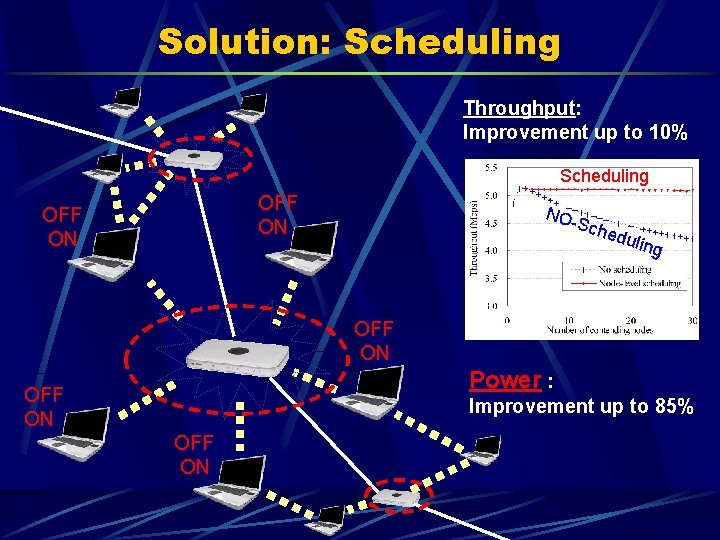
Contention and Interference l l ON ON l l Many packet collisions A lot of time spend in packet retransmissions Interference from neighboring cells Throughput falls ON ON
Solution: Scheduling Throughput: Improvement up to 10% Scheduling OFF ON NO- Sch ed uling OFF ON Power : OFF ON Improvement up to 85% OFF ON
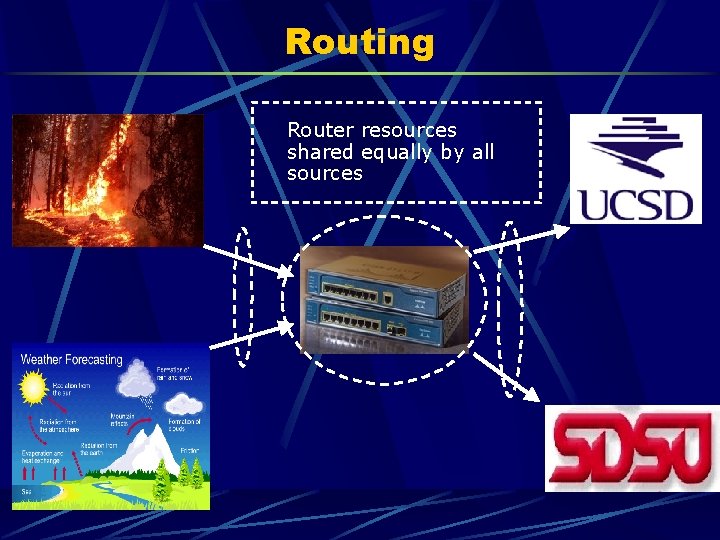
Routing Router resources shared equally by all sources
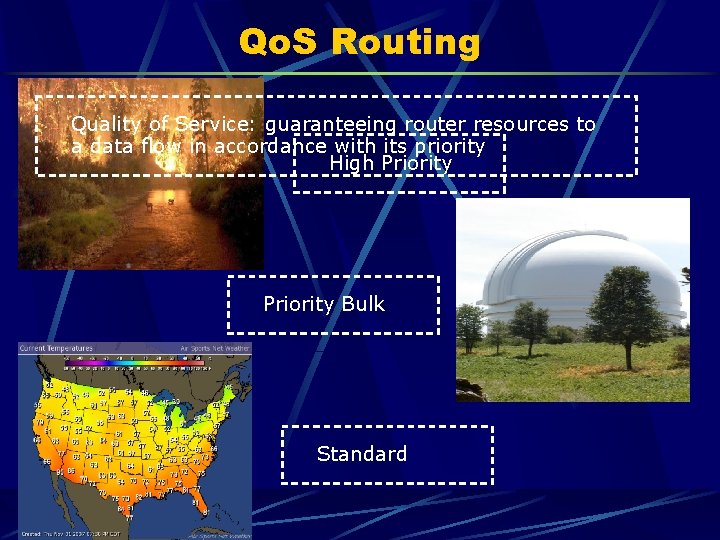
Qo. S Routing Quality of Service: guaranteeing router resources to a data flow in accordance with its priority High Priority Bulk Standard
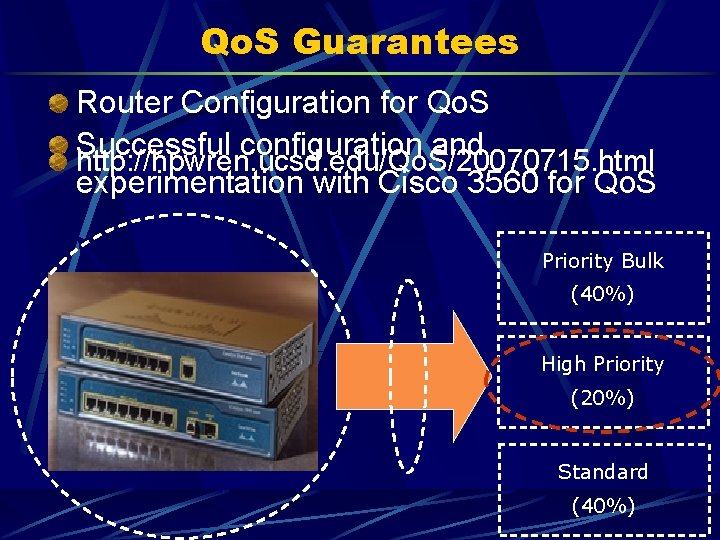
Qo. S Guarantees Router Configuration for Qo. S Successful configuration and http: //hpwren. ucsd. edu/Qo. S/20070715. html experimentation with Cisco 3560 for Qo. S Priority Bulk (40%) High Priority (20%) Standard (40%)
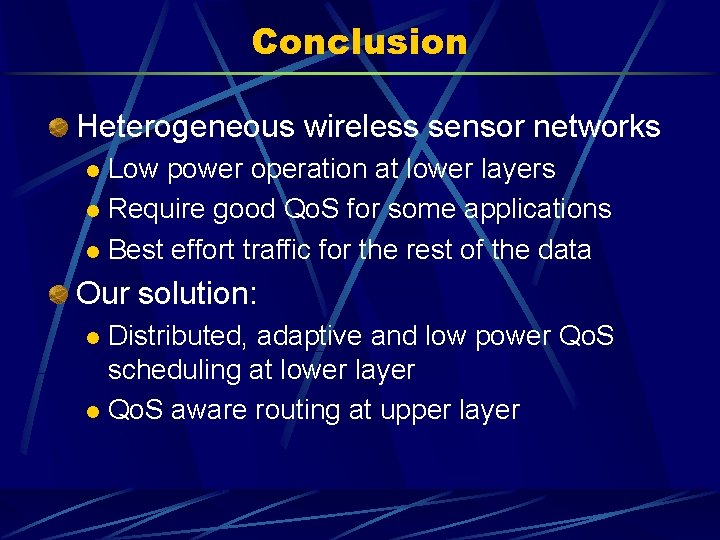
Conclusion Heterogeneous wireless sensor networks Low power operation at lower layers l Require good Qo. S for some applications l Best effort traffic for the rest of the data l Our solution: Distributed, adaptive and low power Qo. S scheduling at lower layer l Qo. S aware routing at upper layer l