
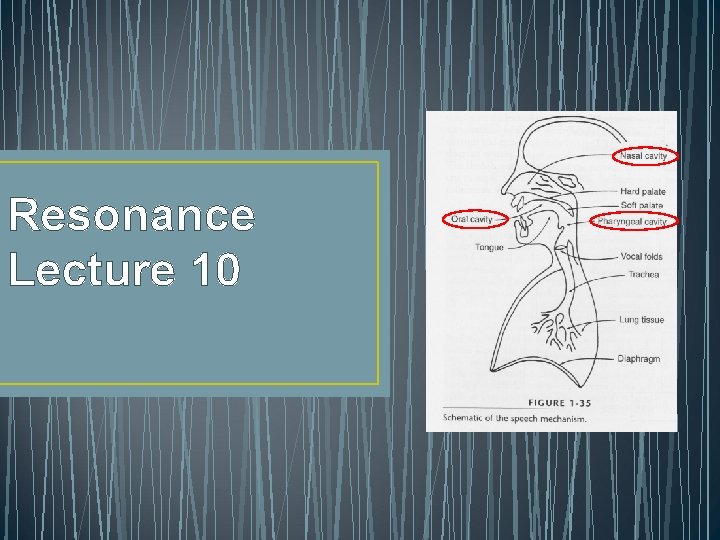
Resonance Lecture 10 Resonance 3 Types Pharyngeal Oral
- Slides: 27
Resonance Lecture 10
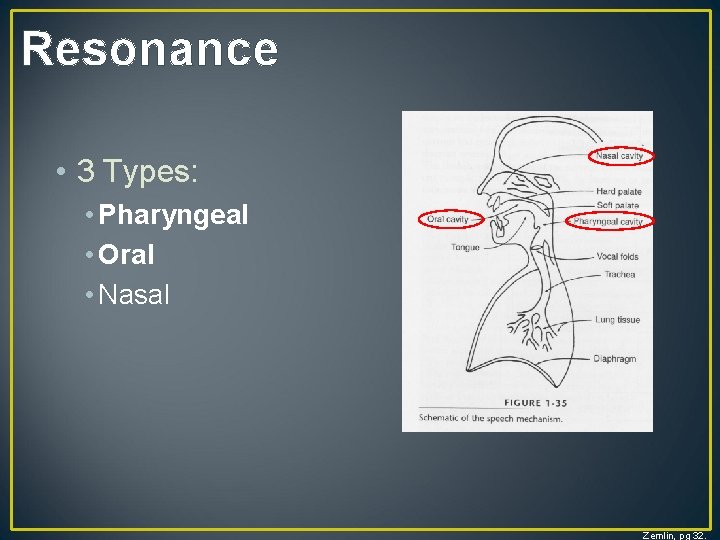
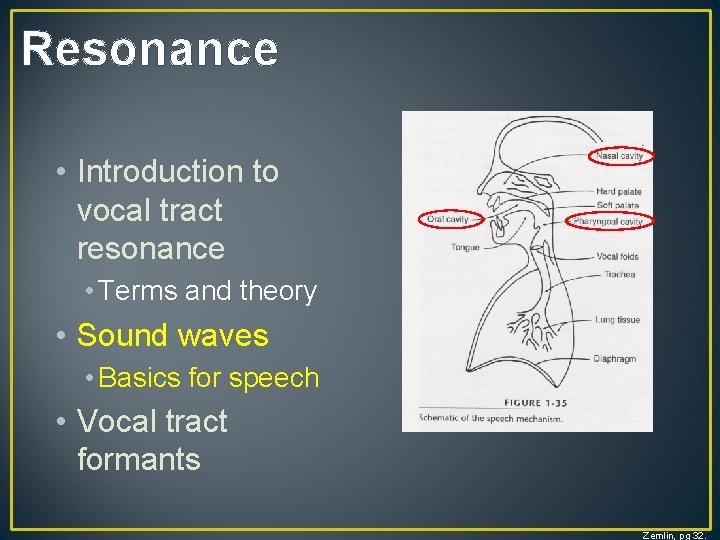
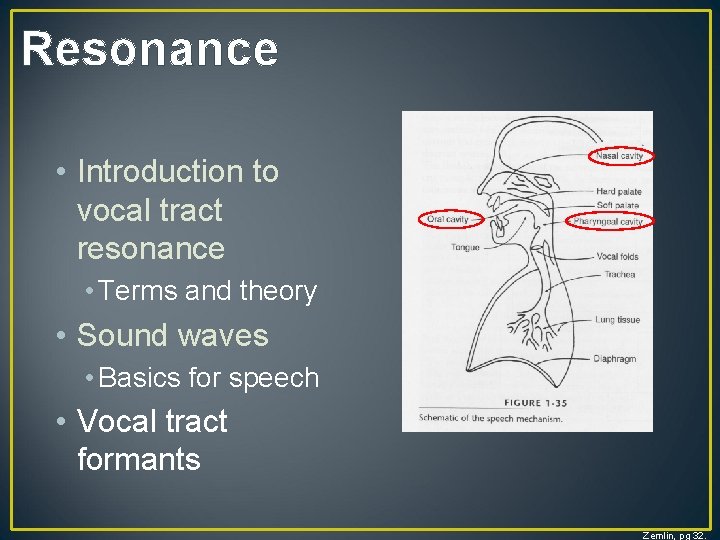
Resonance • 3 Types: • Pharyngeal • Oral • Nasal Zemlin, pg 32.
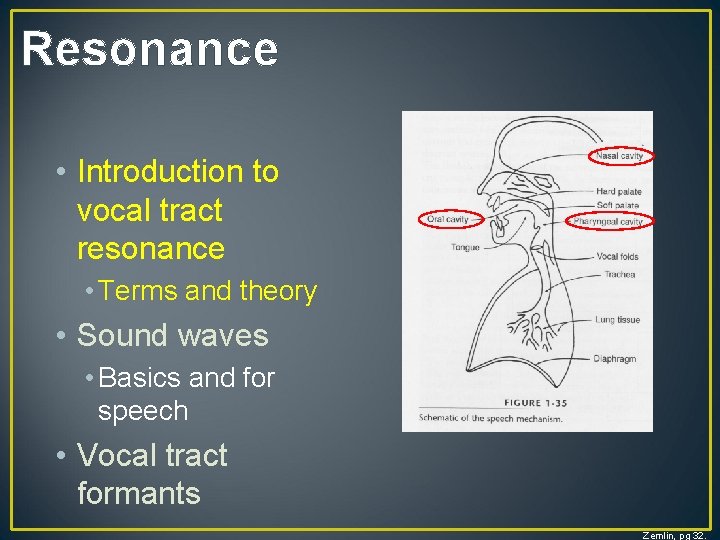
Resonance • Introduction to vocal tract resonance • Terms and theory • Sound waves • Basics and for speech • Vocal tract formants Zemlin, pg 32.
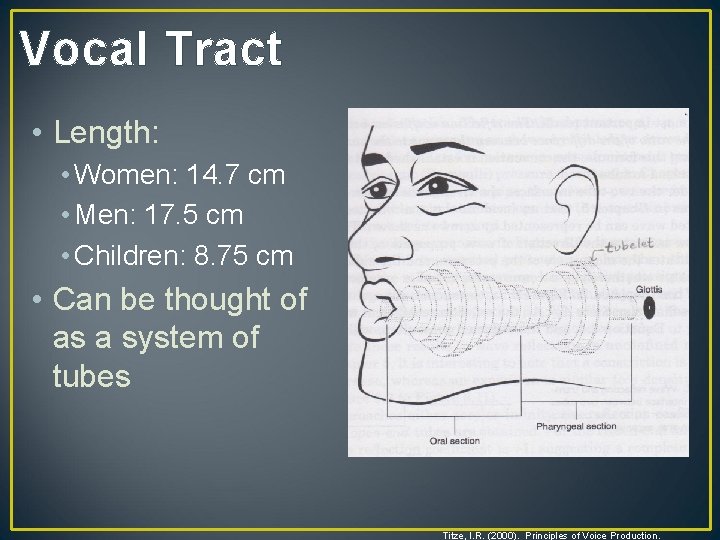
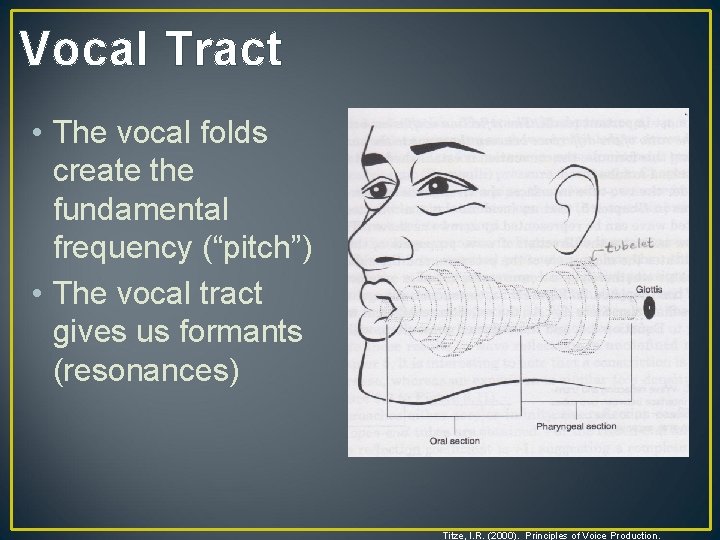
Vocal Tract • Length: • Women: 14. 7 cm • Men: 17. 5 cm • Children: 8. 75 cm • Can be thought of as a system of tubes Titze, I. R. (2000). Principles of Voice Production.
Vocal Tract • The vocal folds create the fundamental frequency (“pitch”) • The vocal tract gives us formants (resonances) Titze, I. R. (2000). Principles of Voice Production.
Basics of Resonance Source-Filter Theory of Voice Production Source = vocal folds (glottis) Filter = vocal tract (pharynx/oral cavity) “Whereas the glottis produces a sound of many frequencies, the vocal tract selects (filters) a subset of these frequencies for radiation from the mouth. ” Note: This theory states that the vocal folds produce the fundamental frequency (pitch)- the vocal tract does Quote from: Titze, I. R. (2000). Principles of Voice Production.
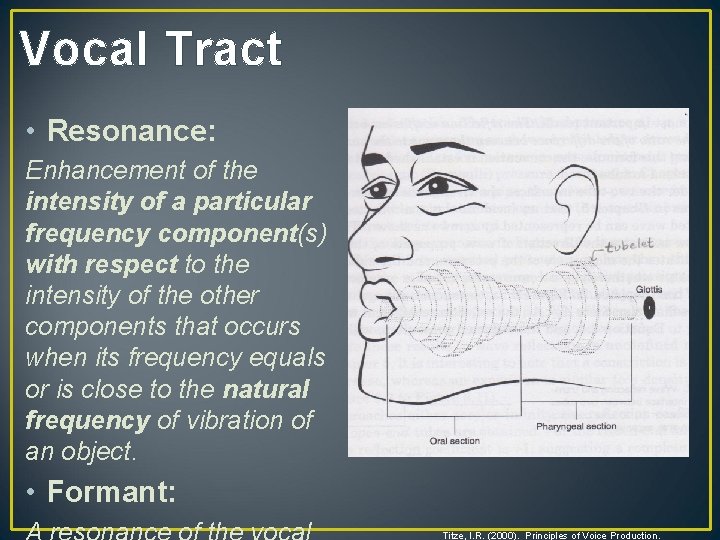
Vocal Tract • Resonance: Enhancement of the intensity of a particular frequency component(s) with respect to the intensity of the other components that occurs when its frequency equals or is close to the natural frequency of vibration of an object. • Formant: Titze, I. R. (2000). Principles of Voice Production.
Resonances • Remember from hearing physiology: • Resonance of ear canal: Around 2. 5 k. Hz • Resonance of the concha: Around 5 k. Hz • The vocal tract also has multiple resonances (formants) • When talking about vowels, we usually discuss the first 2 -3 formants, which vary based on the speech sound being produced Quote from: Titze, I. R. (2000). Principles of Voice Production.
Resonance • Introduction to vocal tract resonance • Terms and theory • Sound waves • Basics for speech • Vocal tract formants Zemlin, pg 32.
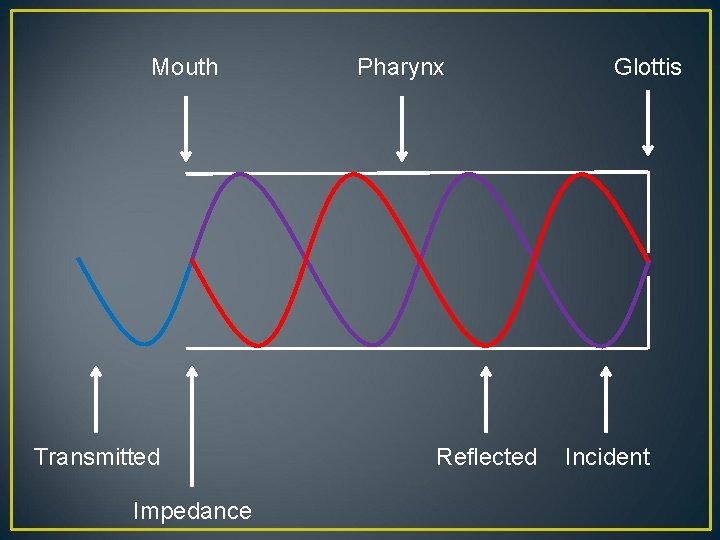
Mouth Transmitted Impedance Pharynx Reflected Glottis Incident
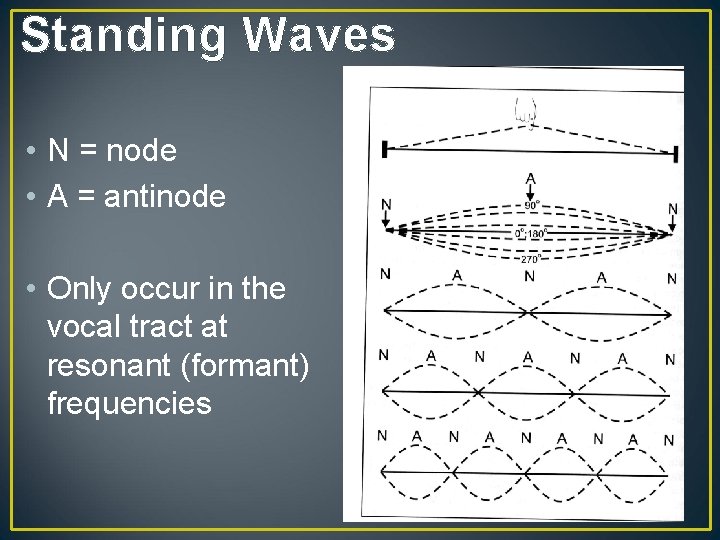
Standing Waves • N = node • A = antinode • Only occur in the vocal tract at resonant (formant) frequencies
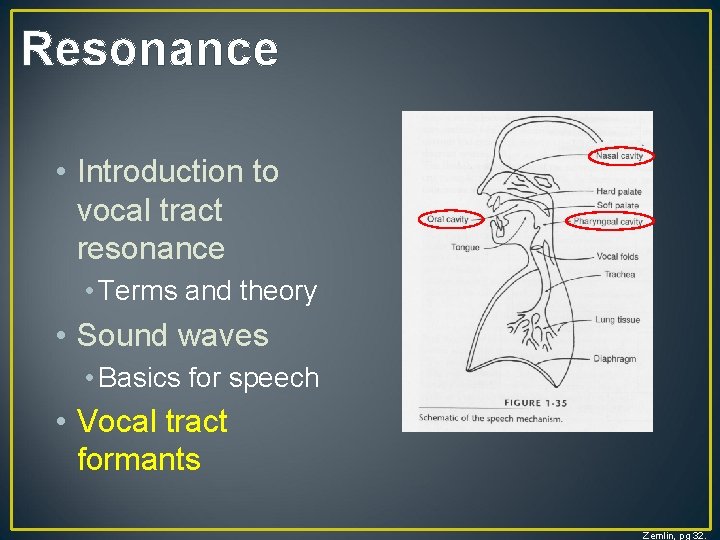
Resonance • Introduction to vocal tract resonance • Terms and theory • Sound waves • Basics for speech • Vocal tract formants Zemlin, pg 32.
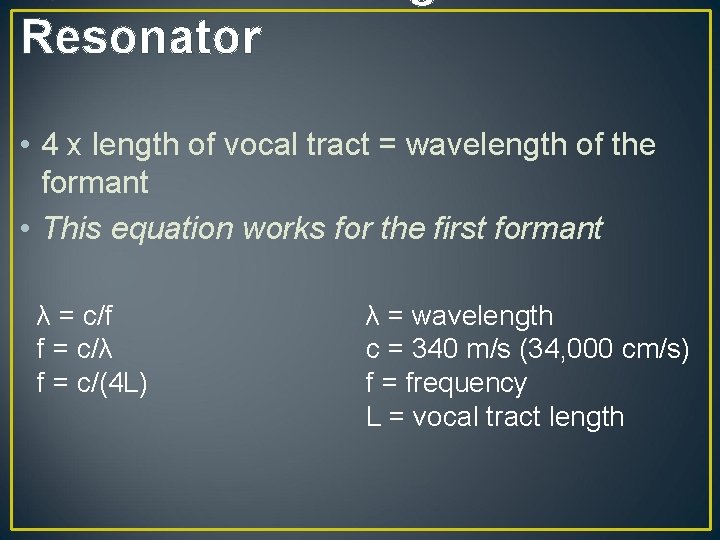
Resonator • 4 x length of vocal tract = wavelength of the formant • This equation works for the first formant λ = c/f f = c/λ f = c/(4 L) λ = wavelength c = 340 m/s (34, 000 cm/s) f = frequency L = vocal tract length
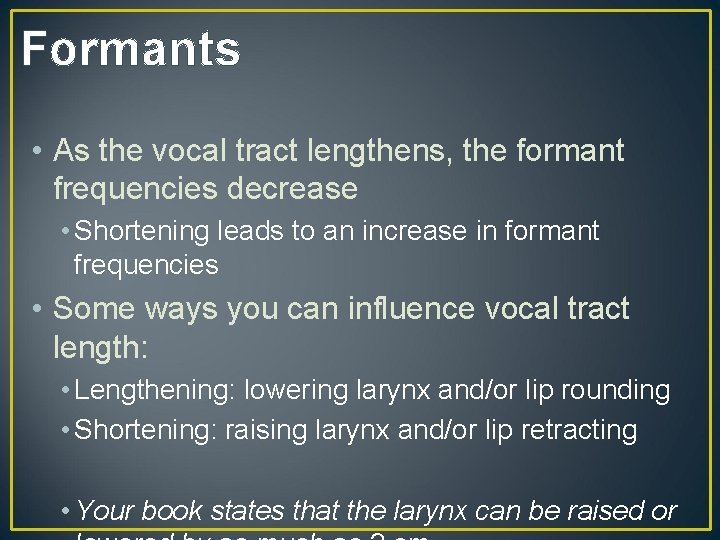
Formants • As the vocal tract lengthens, the formant frequencies decrease • Shortening leads to an increase in formant frequencies • Some ways you can influence vocal tract length: • Lengthening: lowering larynx and/or lip rounding • Shortening: raising larynx and/or lip retracting • Your book states that the larynx can be raised or
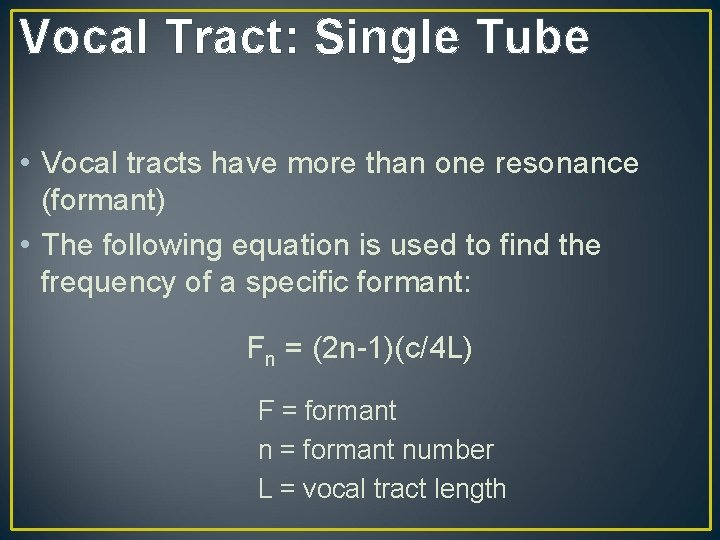
Vocal Tract: Single Tube • Vocal tracts have more than one resonance (formant) • The following equation is used to find the frequency of a specific formant: Fn = (2 n-1)(c/4 L) F = formant number L = vocal tract length
Resonance • Introduction to vocal tract resonance • Terms and theory • Sound waves • Basics for speech • Vocal tract formants Zemlin, pg 32.
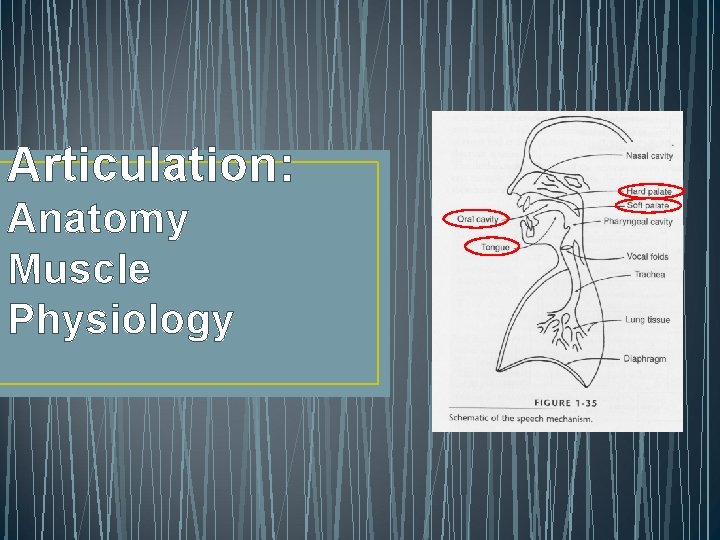
Articulation: Anatomy Muscle Physiology
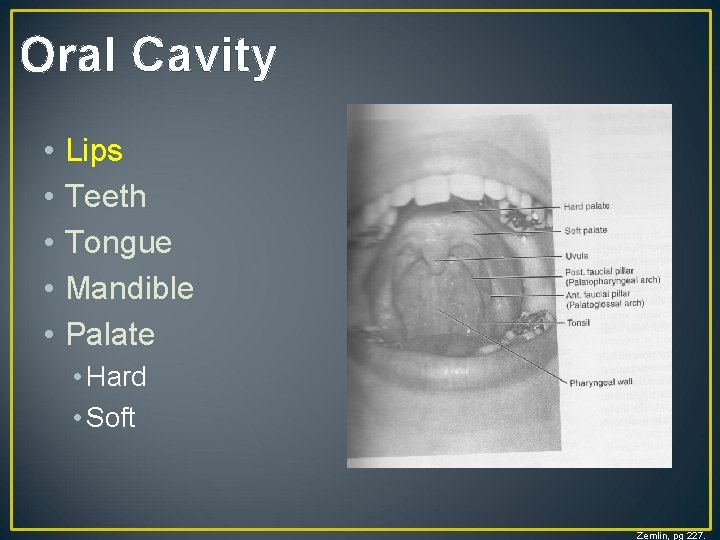
Oral Cavity • • • Lips Teeth Tongue Mandible Palate • Hard • Soft Zemlin, pg 227.
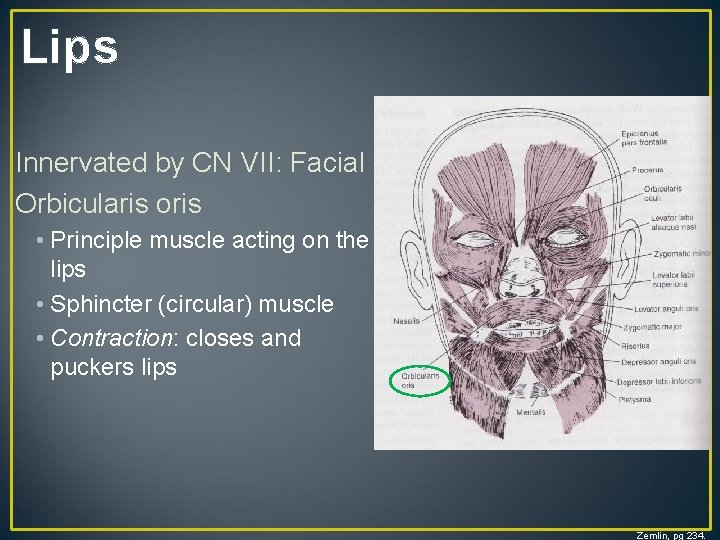
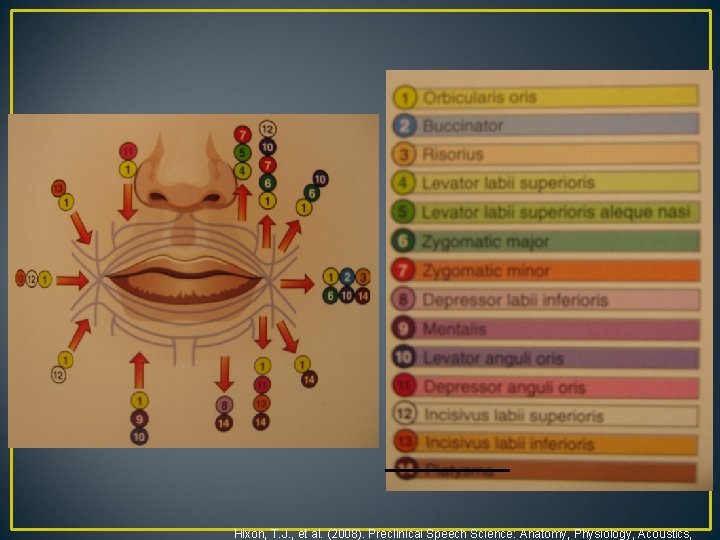
Lips Innervated by CN VII: Facial Orbicularis oris • Principle muscle acting on the lips • Sphincter (circular) muscle • Contraction: closes and puckers lips Zemlin, pg 234.
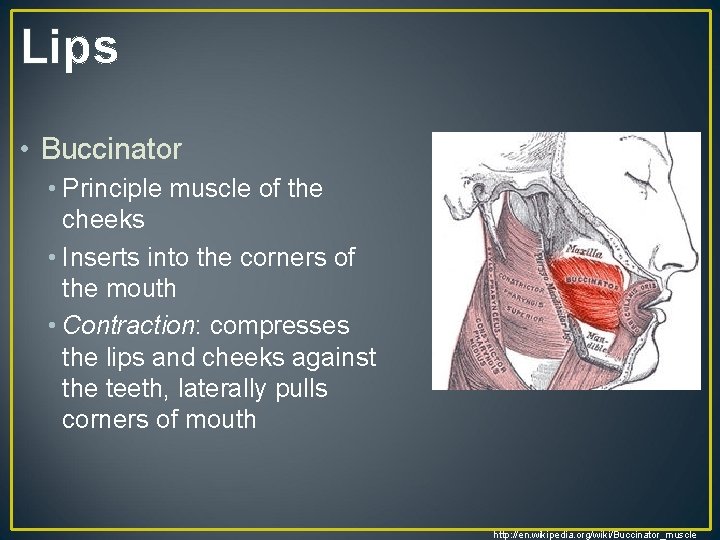
Lips • Buccinator • Principle muscle of the cheeks • Inserts into the corners of the mouth • Contraction: compresses the lips and cheeks against the teeth, laterally pulls corners of mouth http: //en. wikipedia. org/wiki/Buccinator_muscle
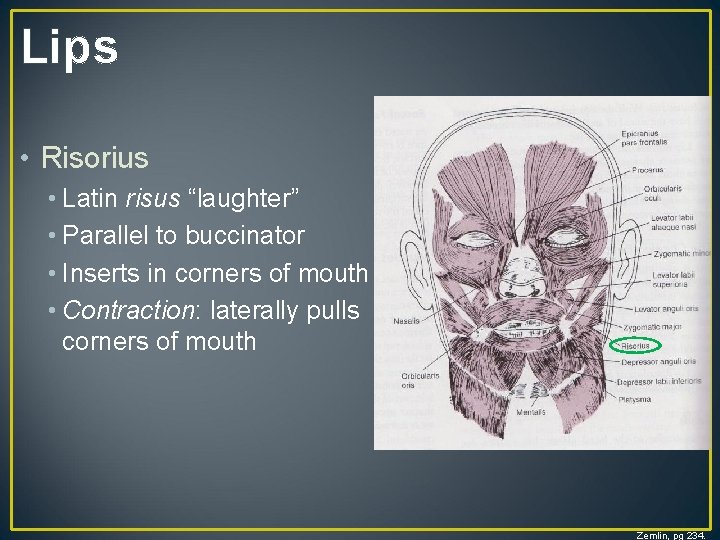
Lips • Risorius • Latin risus “laughter” • Parallel to buccinator • Inserts in corners of mouth • Contraction: laterally pulls corners of mouth Zemlin, pg 234.
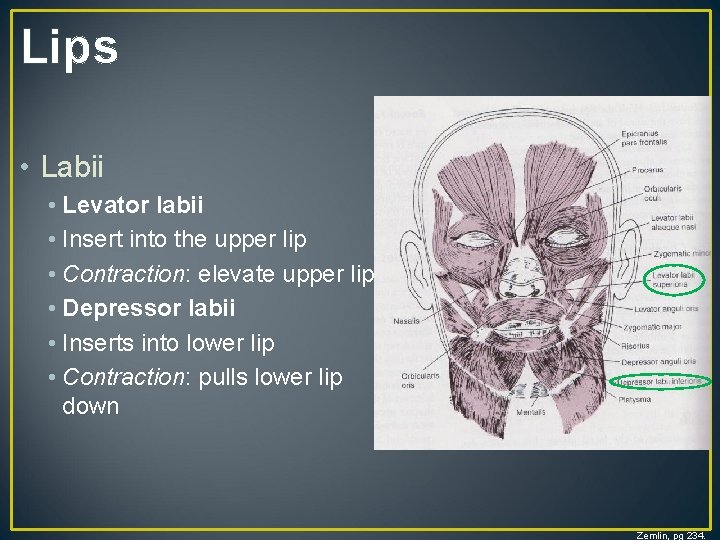
Lips • Labii • Levator labii • Insert into the upper lip • Contraction: elevate upper lip • Depressor labii • Inserts into lower lip • Contraction: pulls lower lip down Zemlin, pg 234.
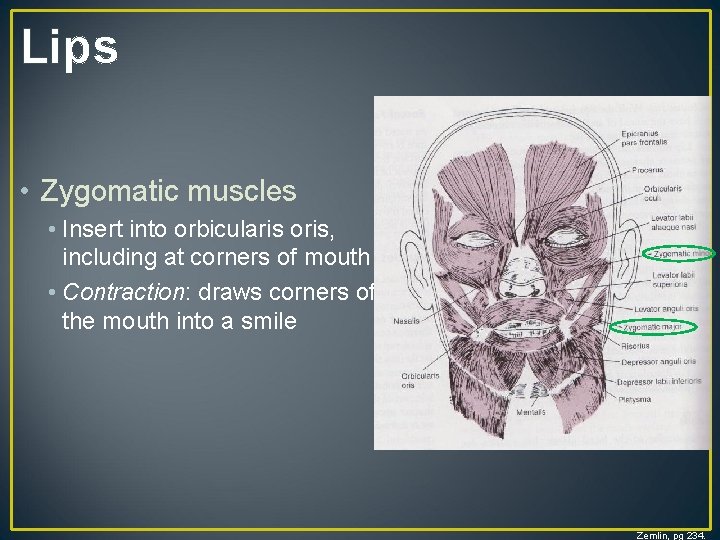
Lips • Zygomatic muscles • Insert into orbicularis oris, including at corners of mouth • Contraction: draws corners of the mouth into a smile Zemlin, pg 234.
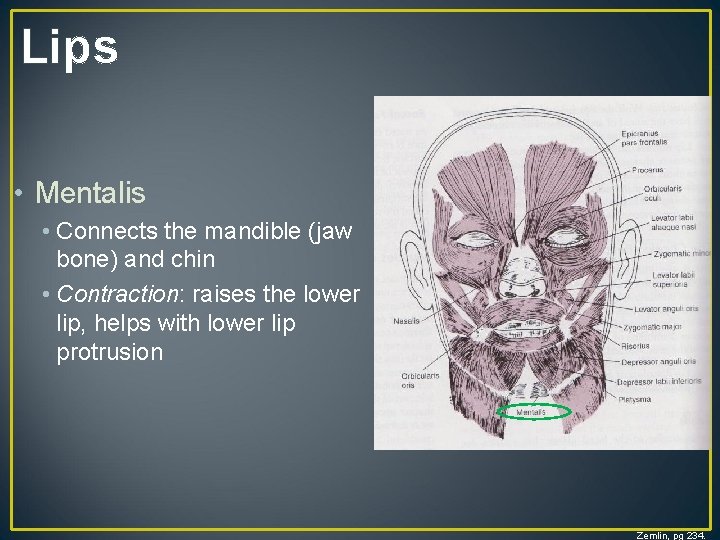
Lips • Mentalis • Connects the mandible (jaw bone) and chin • Contraction: raises the lower lip, helps with lower lip protrusion Zemlin, pg 234.
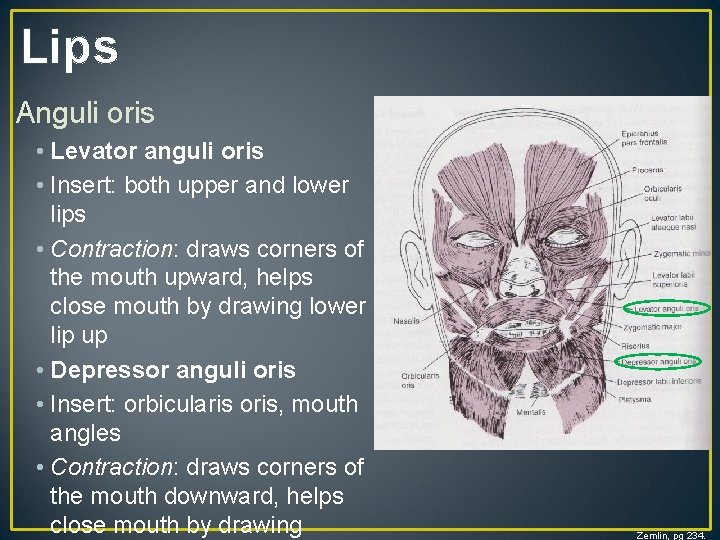
Lips Anguli oris • Levator anguli oris • Insert: both upper and lower lips • Contraction: draws corners of the mouth upward, helps close mouth by drawing lower lip up • Depressor anguli oris • Insert: orbicularis oris, mouth angles • Contraction: draws corners of the mouth downward, helps close mouth by drawing Zemlin, pg 234.
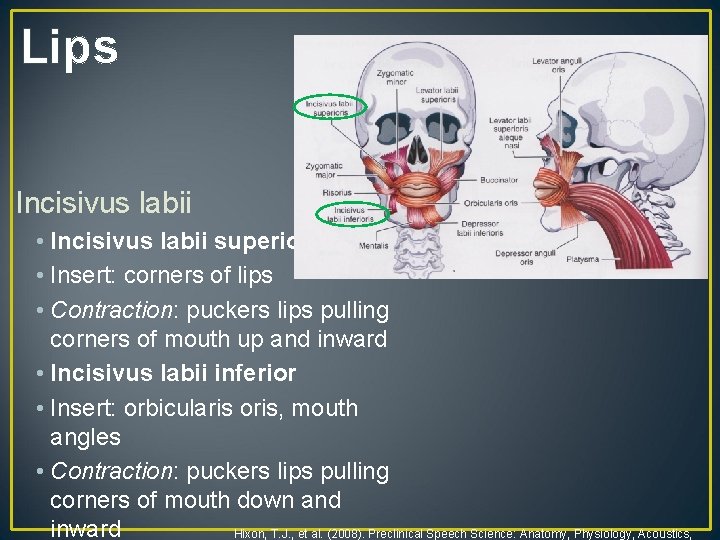
Lips Incisivus labii • Incisivus labii superior • Insert: corners of lips • Contraction: puckers lips pulling corners of mouth up and inward • Incisivus labii inferior • Insert: orbicularis oris, mouth angles • Contraction: puckers lips pulling corners of mouth down and inward Hixon, T. J. , et al. (2008). Preclinical Speech Science: Anatomy, Physiology, Acoustics,
Hixon, T. J. , et al. (2008). Preclinical Speech Science: Anatomy, Physiology, Acoustics,