
Resolving Conflicts Preventing Violence Chapter 9 Understanding Conflicts
- Slides: 10
Resolving Conflicts & Preventing Violence Chapter 9
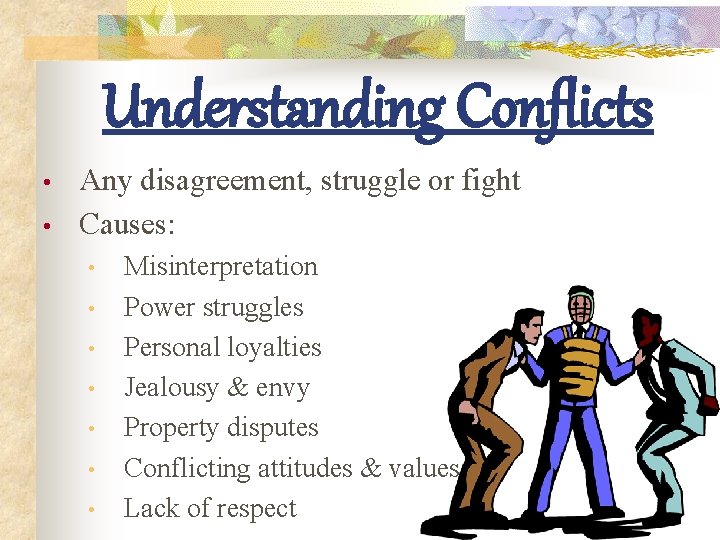
Understanding Conflicts • • Any disagreement, struggle or fight Causes: • • Misinterpretation Power struggles Personal loyalties Jealousy & envy Property disputes Conflicting attitudes & values Lack of respect
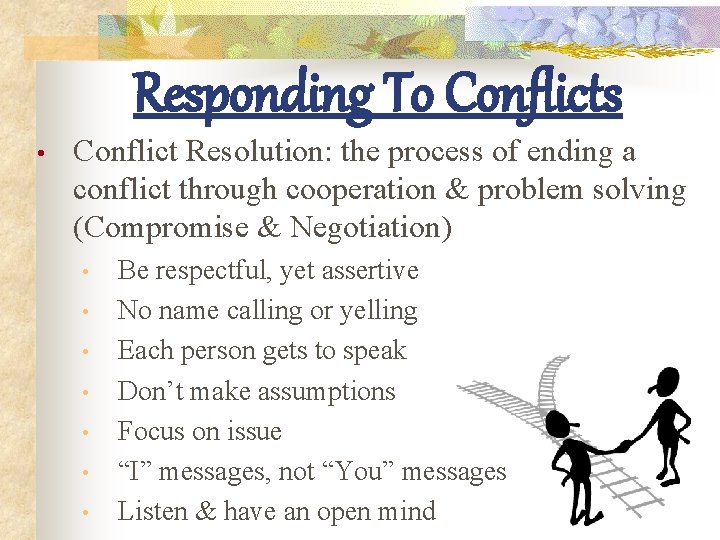
Responding To Conflicts • Conflict Resolution: the process of ending a conflict through cooperation & problem solving (Compromise & Negotiation) • • Be respectful, yet assertive No name calling or yelling Each person gets to speak Don’t make assumptions Focus on issue “I” messages, not “You” messages Listen & have an open mind
Understanding Violence n n The threatened or actual use of physical force to power or harm another person or to damage property 5 Types of Violence: n n n Assault Random violence Homicide Sexual violence Hate crimes
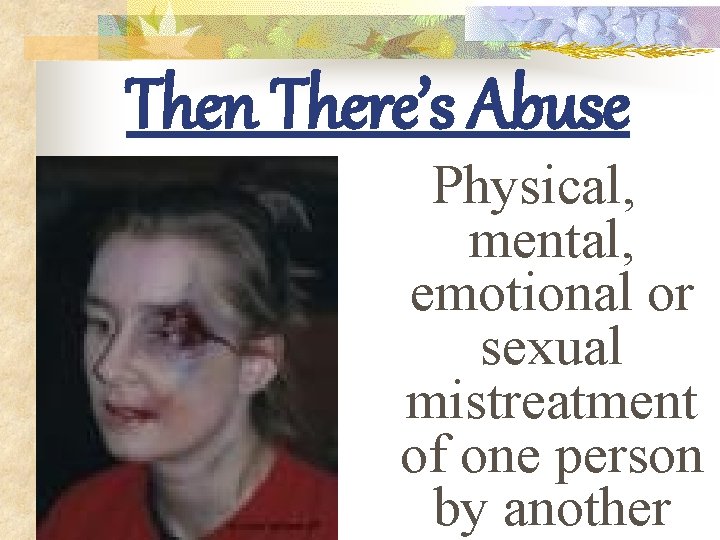
Then There’s Abuse Physical, mental, emotional or sexual mistreatment of one person by another
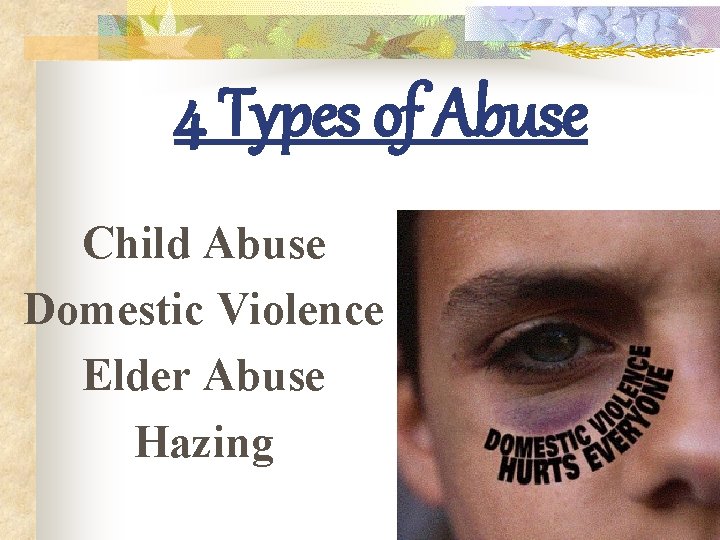
4 Types of Abuse Child Abuse Domestic Violence Elder Abuse Hazing
Protecting Yourself From Abuse *Only have positive & supportive friends & family *Avoid disrespectful people *Be assertive *At home: (Megan’s law) -lock up, don’t open doors to strangers, know neighbors *On the street: -don’t go out alone, be alert, yell of being threatened
Sexual Abuse • Any form of unwelcome sexual contact directed at an individual • • • Sexual Assault (forced kissing, pulling off clothing, grabbing body parts) Rape (Date/Acquaintance) Sexual Harassment
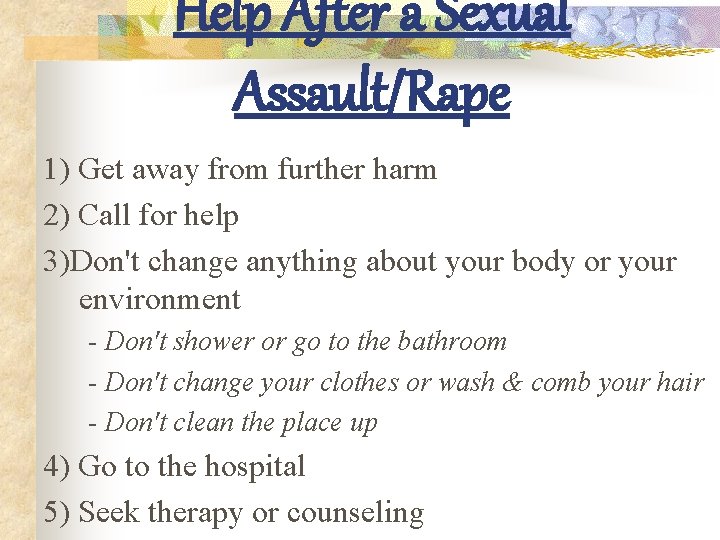
Help After a Sexual Assault/Rape 1) Get away from further harm 2) Call for help 3)Don't change anything about your body or your environment - Don't shower or go to the bathroom - Don't change your clothes or wash & comb your hair - Don't clean the place up 4) Go to the hospital 5) Seek therapy or counseling
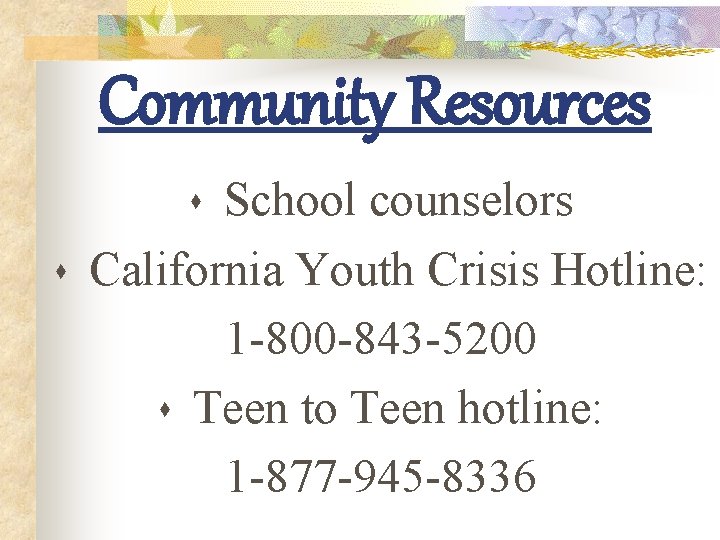
Community Resources School counselors California Youth Crisis Hotline: 1 -800 -843 -5200 s Teen to Teen hotline: 1 -877 -945 -8336 s s