
Resolution of Organic Compounds Name of Teacher Bhangare
Resolution of Organic Compounds Name of Teacher: Bhangare G. N Subject : Organic Stereochemistry Class : M. Sc. II Date : 25/07/2018
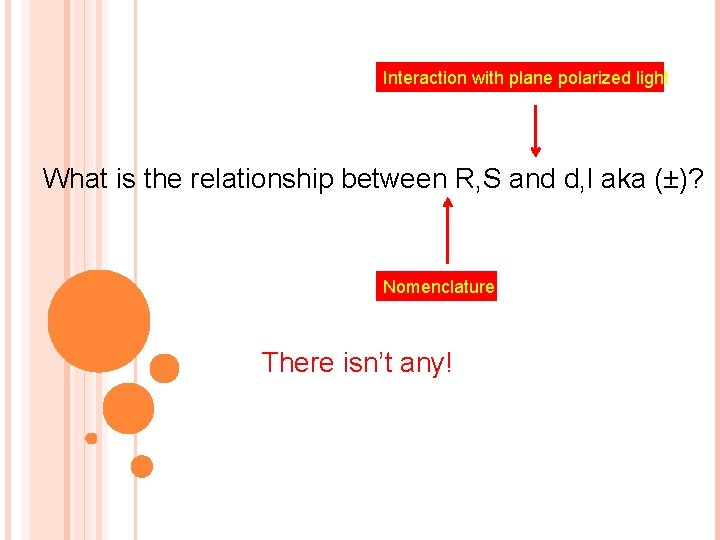
Interaction with plane polarized light What is the relationship between R, S and d, l aka (±)? Nomenclature There isn’t any!
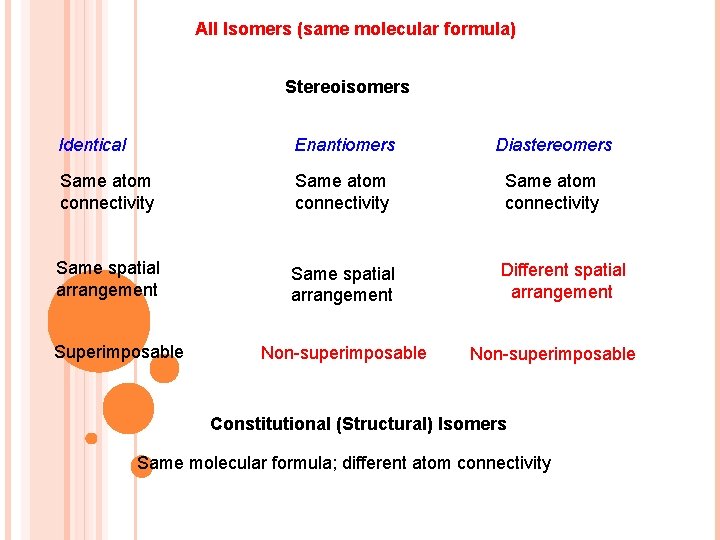
All Isomers (same molecular formula) Stereoisomers Identical Enantiomers Diastereomers Same atom connectivity Same spatial arrangement Different spatial arrangement Superimposable Non-superimposable Constitutional (Structural) Isomers Same molecular formula; different atom connectivity
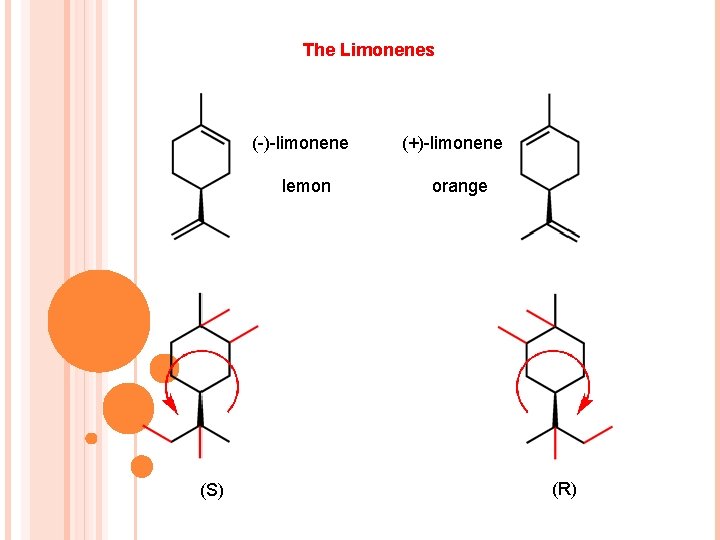
The Limonenes (-)-limonene lemon (S) (+)-limonene orange (R)
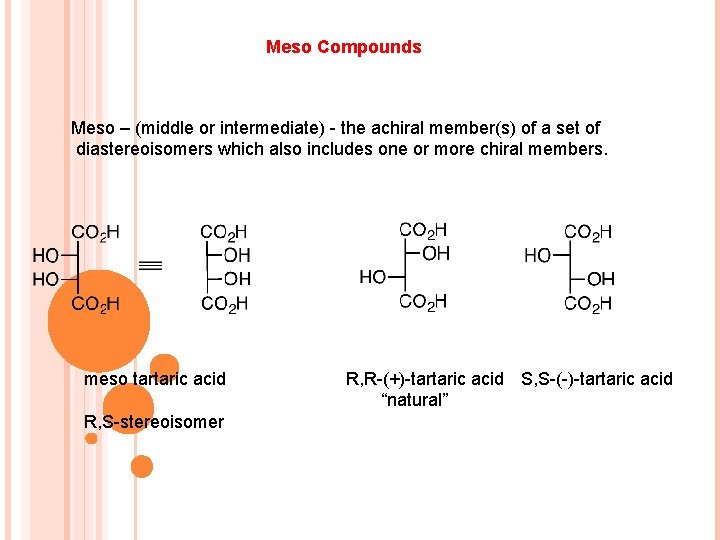
Meso Compounds Meso – (middle or intermediate) - the achiral member(s) of a set of diastereoisomers which also includes one or more chiral members. meso tartaric acid R, S-stereoisomer R, R-(+)-tartaric acid S, S-(-)-tartaric acid “natural”
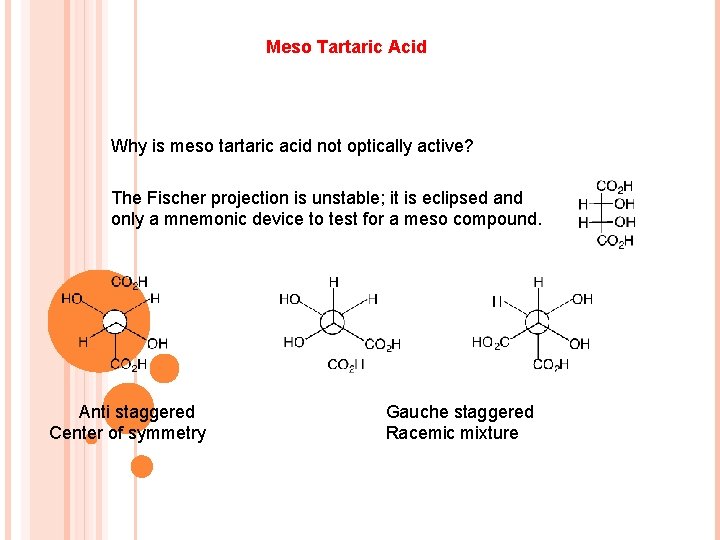
Meso Tartaric Acid Why is meso tartaric acid not optically active? The Fischer projection is unstable; it is eclipsed and only a mnemonic device to test for a meso compound. Anti staggered Center of symmetry Gauche staggered Racemic mixture
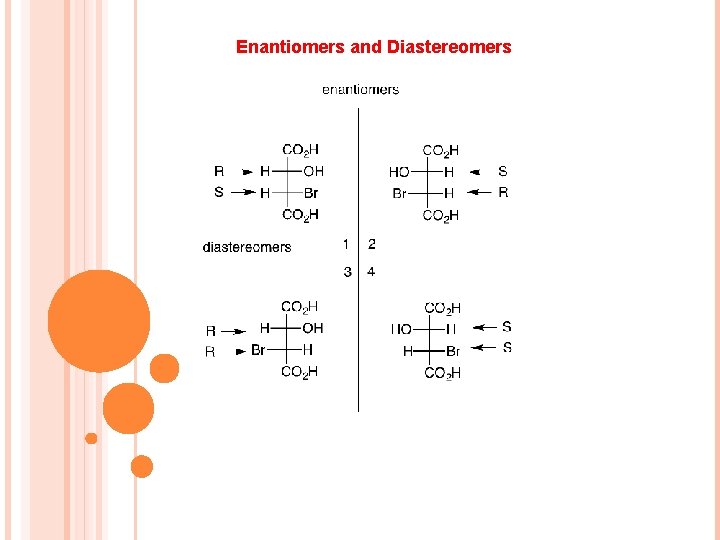
Enantiomers and Diastereomers
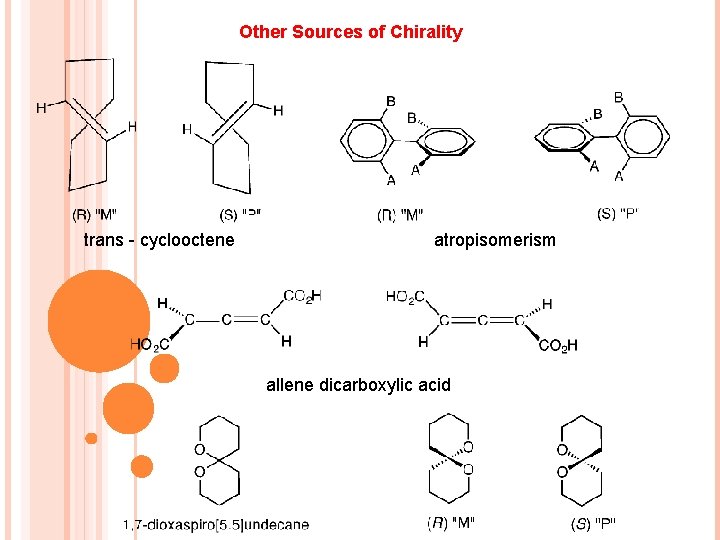
Other Sources of Chirality trans - cyclooctene atropisomerism allene dicarboxylic acid
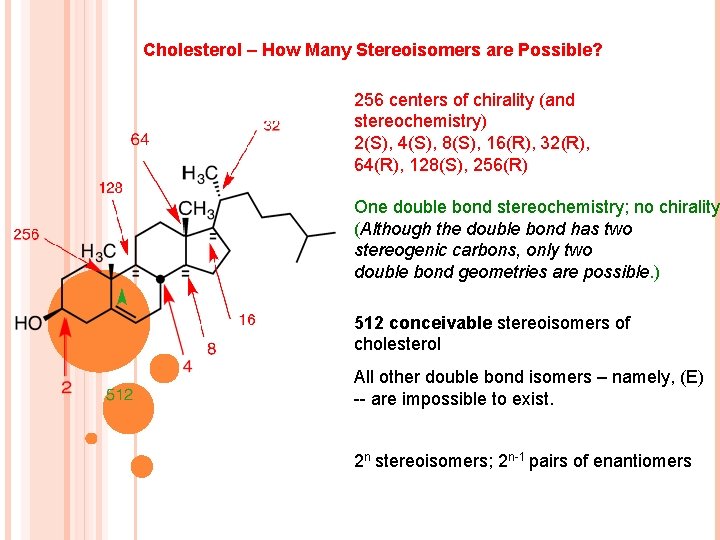
Cholesterol – How Many Stereoisomers are Possible? 256 centers of chirality (and stereochemistry) 2(S), 4(S), 8(S), 16(R), 32(R), 64(R), 128(S), 256(R) One double bond stereochemistry; no chirality (Although the double bond has two stereogenic carbons, only two double bond geometries are possible. ) 512 conceivable stereoisomers of cholesterol All other double bond isomers – namely, (E) -- are impossible to exist. 2 n stereoisomers; 2 n-1 pairs of enantiomers
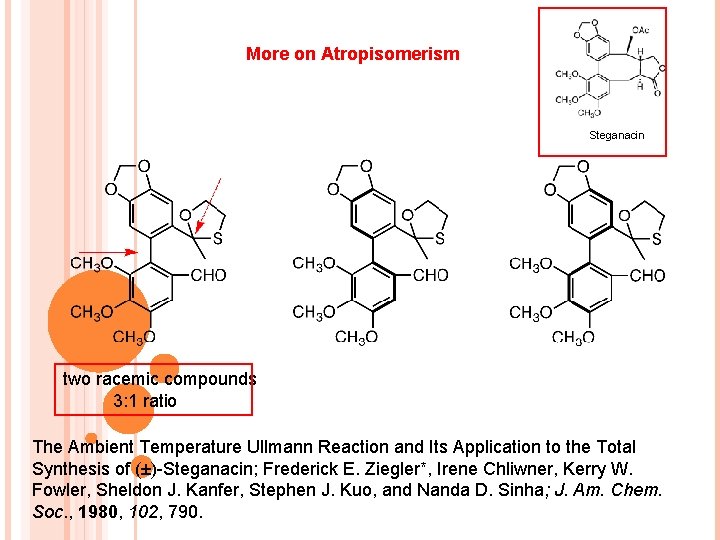
More on Atropisomerism Steganacin two racemic compounds 3: 1 ratio The Ambient Temperature Ullmann Reaction and Its Application to the Total Synthesis of (±)-Steganacin; Frederick E. Ziegler*, Irene Chliwner, Kerry W. Fowler, Sheldon J. Kanfer, Stephen J. Kuo, and Nanda D. Sinha; J. Am. Chem. Soc. , 1980, 102, 790.
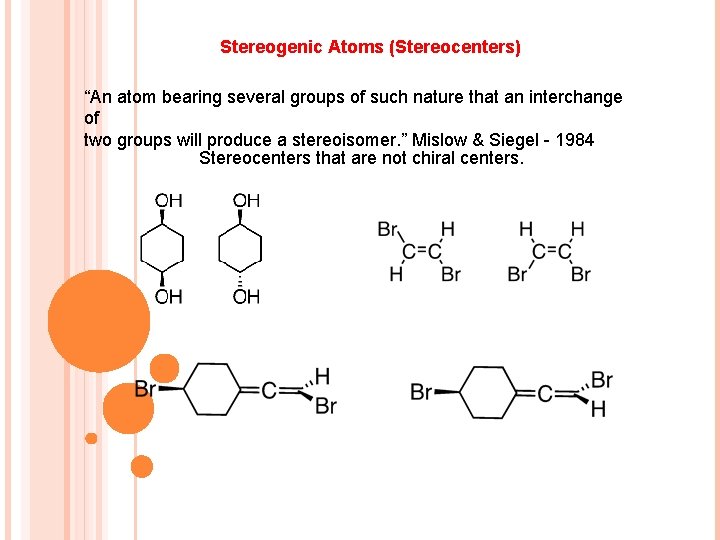
Stereogenic Atoms (Stereocenters) “An atom bearing several groups of such nature that an interchange of two groups will produce a stereoisomer. ” Mislow & Siegel - 1984 Stereocenters that are not chiral centers.
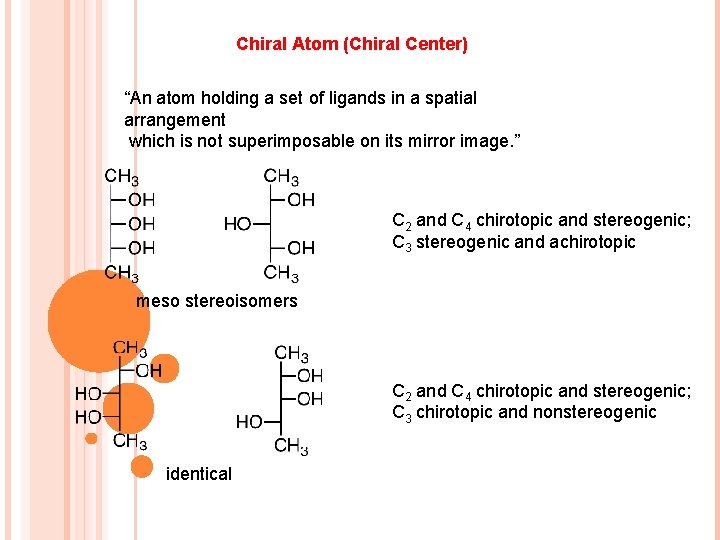
Chiral Atom (Chiral Center) “An atom holding a set of ligands in a spatial arrangement which is not superimposable on its mirror image. ” C 2 and C 4 chirotopic and stereogenic; C 3 stereogenic and achirotopic meso stereoisomers C 2 and C 4 chirotopic and stereogenic; C 3 chirotopic and nonstereogenic identical
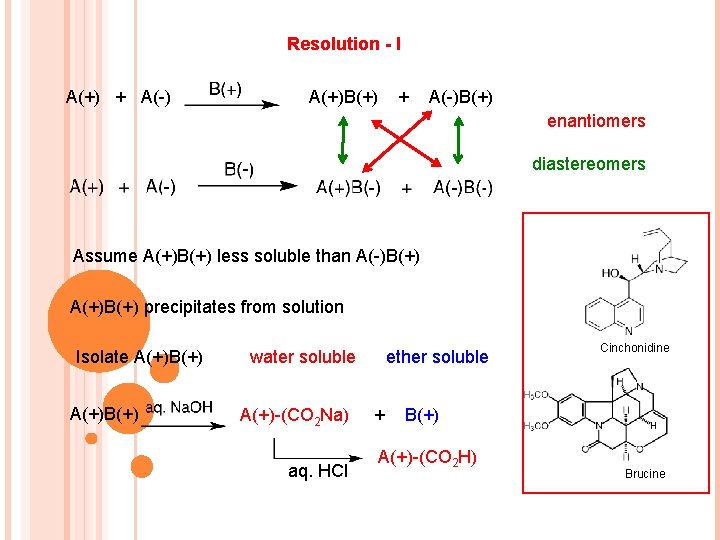
Resolution - I A(+) + A(-) A(+)B(+) + A(-)B(+) enantiomers diastereomers Assume A(+)B(+) less soluble than A(-)B(+) A(+)B(+) precipitates from solution Isolate A(+)B(+) water soluble A(+)-(CO 2 Na) aq. HCl ether soluble + Cinchonidine B(+) A(+)-(CO 2 H) Brucine
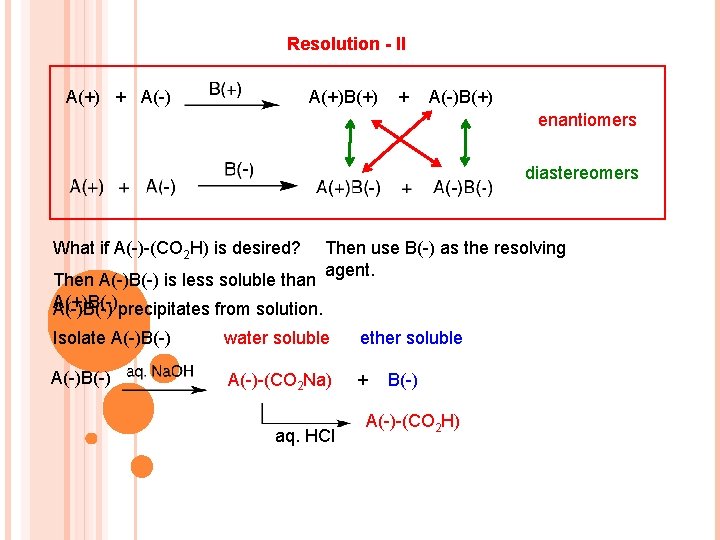
Resolution - II A(+) + A(-) A(+)B(+) + A(-)B(+) enantiomers diastereomers What if A(-)-(CO 2 H) is desired? Then A(-)B(-) is less soluble than A(+)B(-). A(-)B(-) precipitates from solution. Then use B(-) as the resolving agent. Isolate A(-)B(-) water soluble ether soluble A(-)B(-) A(-)-(CO 2 Na) + aq. HCl B(-) A(-)-(CO 2 H)
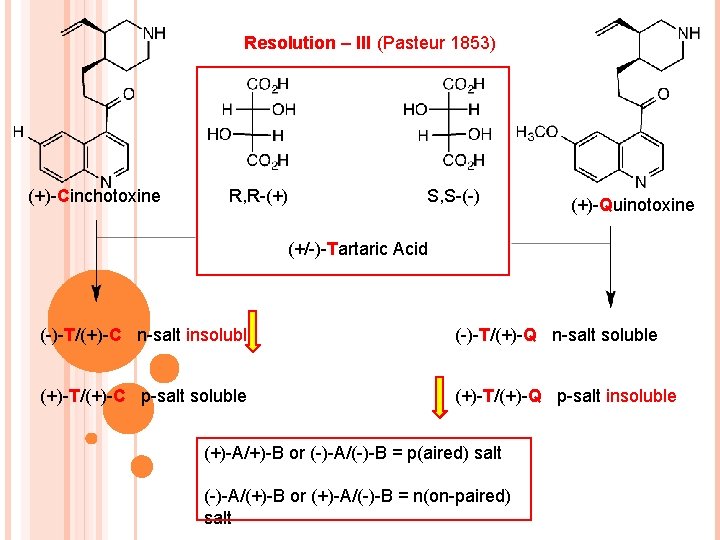
Resolution – III (Pasteur 1853) (+)-Cinchotoxine R, R-(+) S, S-(-) (+)-Quinotoxine (+/-)-Tartaric Acid (-)-T/(+)-C n-salt insoluble (-)-T/(+)-Q n-salt soluble (+)-T/(+)-C p-salt soluble (+)-T/(+)-Q p-salt insoluble (+)-A/+)-B or (-)-A/(-)-B = p(aired) salt (-)-A/(+)-B or (+)-A/(-)-B = n(on-paired) salt
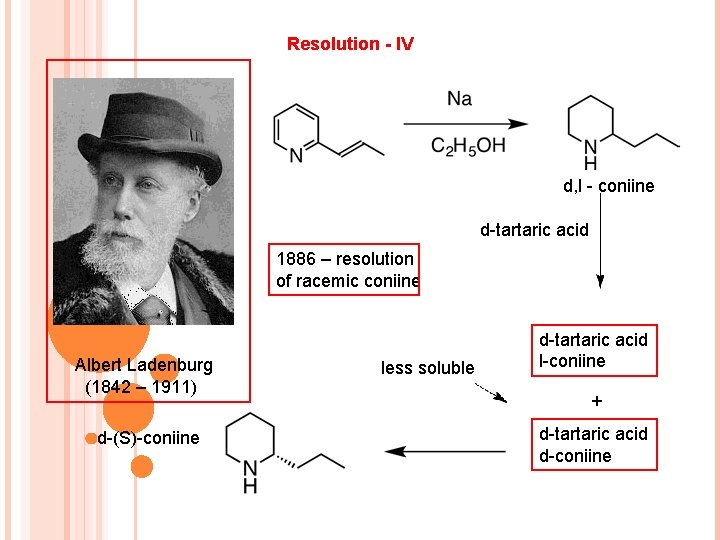
Resolution - IV d, l - coniine d-tartaric acid 1886 – resolution of racemic coniine Albert Ladenburg (1842 – 1911) d-(S)-coniine less soluble d-tartaric acid l-coniine + d-tartaric acid d-coniine
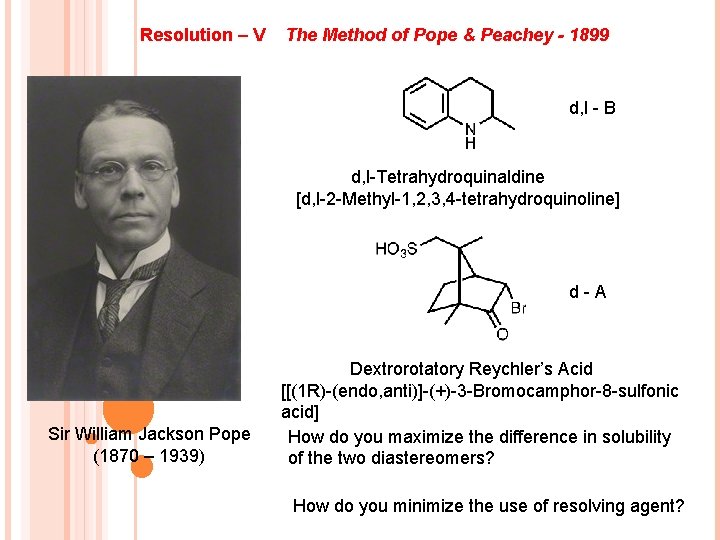
Resolution – V The Method of Pope & Peachey - 1899 d, l - B d, l-Tetrahydroquinaldine [d, l-2 -Methyl-1, 2, 3, 4 -tetrahydroquinoline] d-A Sir William Jackson Pope (1870 – 1939) Dextrorotatory Reychler’s Acid [[(1 R)-(endo, anti)]-(+)-3 -Bromocamphor-8 -sulfonic acid] How do you maximize the difference in solubility of the two diastereomers? How do you minimize the use of resolving agent?
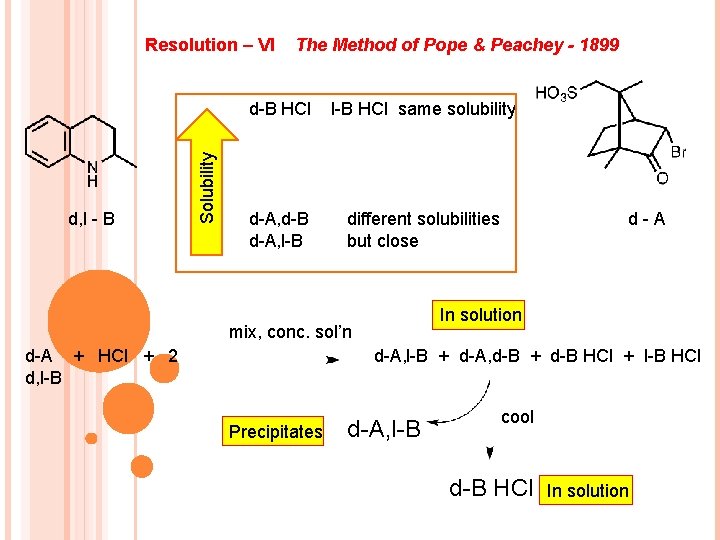
d, l - B Solubility Resolution – VI The Method of Pope & Peachey - 1899 d-B HCl l-B HCl same solubility d-A, d-B d-A, l-B different solubilities but close d-A In solution mix, conc. sol’n d-A, l-B + d-A, d-B + d-B HCl + l-B HCl d-A + HCl + 2 d, l-B Precipitates d-A, l-B cool d-B HCl In solution
Resolution - VII Is there a down side to resolution? You bet! The yield will always be less than 50%. Can not predict which enantiomer will be isolated. Mirror image resolving agents are not always available. Trial and error may be required.
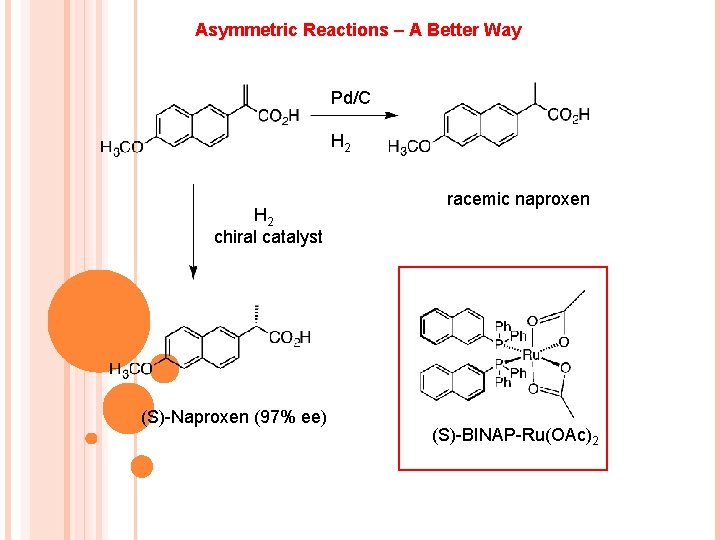
Asymmetric Reactions – A Better Way Pd/C H 2 chiral catalyst (S)-Naproxen (97% ee) racemic naproxen (S)-BINAP-Ru(OAc)2
The End
- Slides: 21