
Resolution issues and DOI doi doi NUMBERING extensible

Resolution issues and DOI doi>
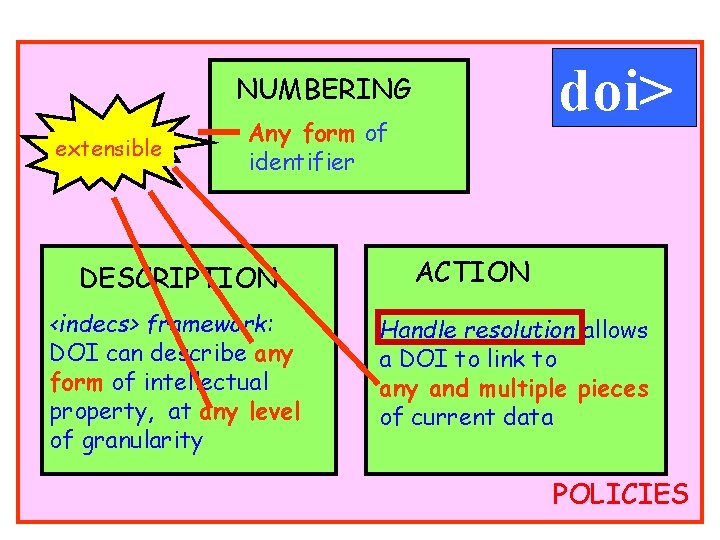
doi> NUMBERING extensible Any form of identifier DESCRIPTION <indecs> framework: DOI can describe any form of intellectual property, at any level of granularity ACTION Handle resolution allows a DOI to link to any and multiple pieces of current data POLICIES

Handle resolution Global Handle System DOI? abc Web Browser Local Client URL abc. doc www. pub. com

Handle resolution Handle query GHS Client LHS LHS Handle system: a collection of Handle services each of which consists of one or more Handle servers HS 1 HS 4 HS 2 HS 3 each of which may be replicated loc. ndlp/amrlp. 123456 URL http: //www. loc. gov/. . . URL http: //www. loc 2. gov/. . . Handle record
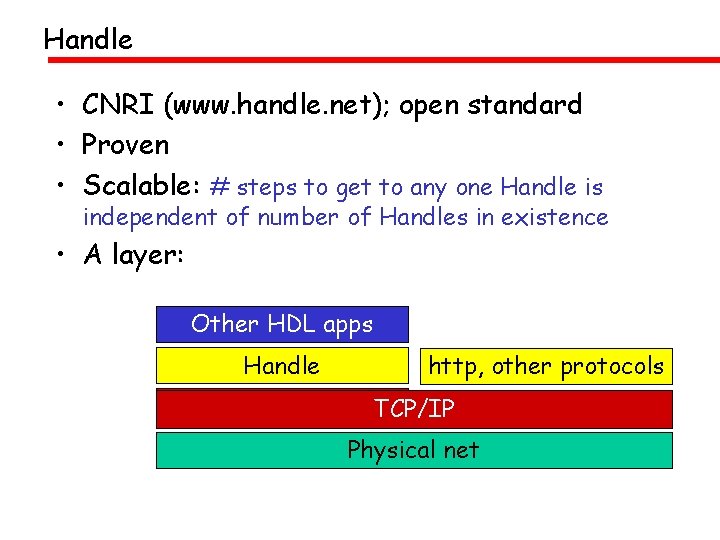
Handle • CNRI (www. handle. net); open standard • Proven • Scalable: # steps to get to any one Handle is independent of number of Handles in existence • A layer: Other. DOI HDL apps Handle TCP/IP http, other protocols TCP/IP Physical net

Handles (DOIs) resolve to Typed Data Handle DOI Handle data Data type Index 10. 123/456 URL DOI Handle data 3 3 2 http: //srv 1. pub. com/. . . 9 4 10. 456/789 http: //srv 2. pub. com/. . . URL http: //srv 3. pub. com/. . . URL 5 9 http: //lu. cr. com/10. 123. . MD 10 9 9 Accounts@pub. com EM 999 IP
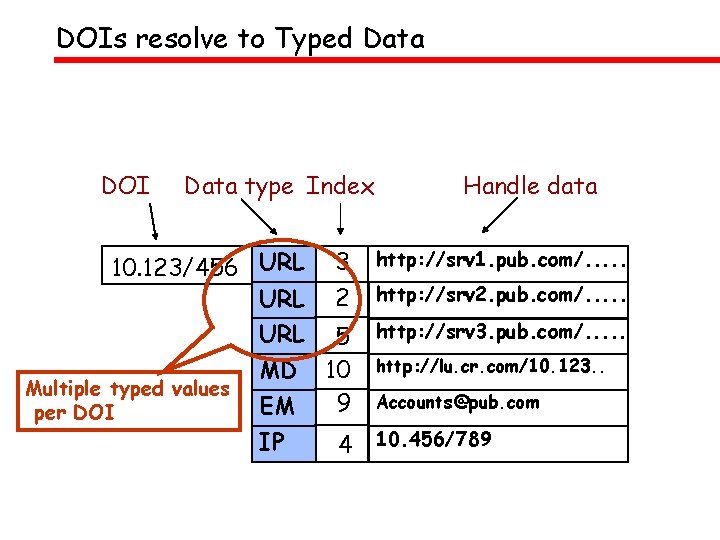
DOIs resolve to Typed Data DOI Data type Index Handle data http: //srv 1. pub. com/. . . 3 10. 123/456 URL 3 URL 2 http: //srv 2. pub. com/. . . http: //srv 3. pub. com/. . . URL 5 9 http: //lu. cr. com/10. 123. . MD 10 9 Multiple typed values 9 Accounts@pub. com EM 999 per DOI IP 9 4 10. 456/789
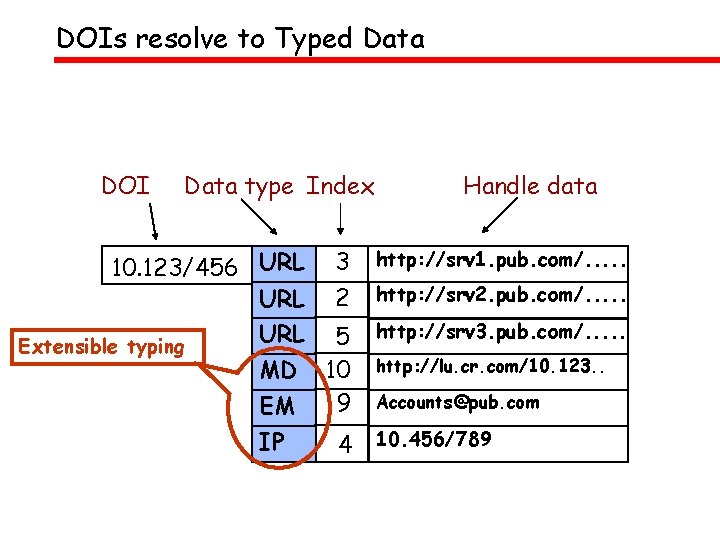
DOIs resolve to Typed Data DOI Data type Index Handle data http: //srv 1. pub. com/. . . 3 10. 123/456 URL 3 URL 2 http: //srv 2. pub. com/. . . http: //srv 3. pub. com/. . . URL 9 5 Extensible typing http: //lu. cr. com/10. 123. . MD 10 9 9 Accounts@pub. com EM 999 IP 9 4 10. 456/789
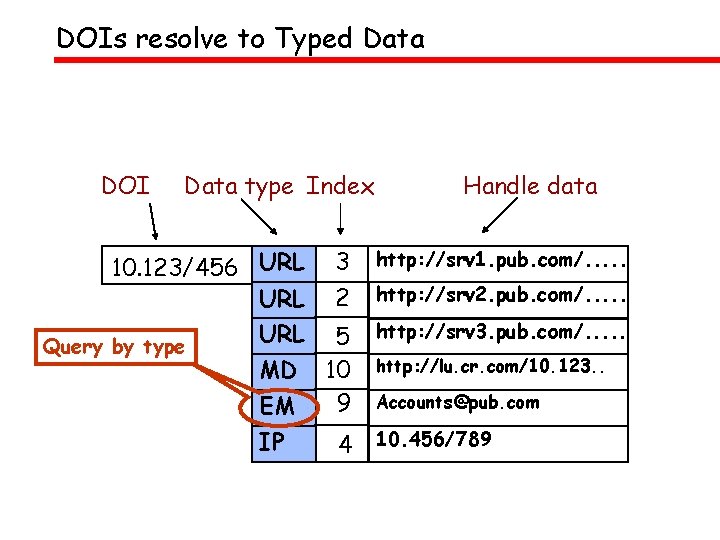
DOIs resolve to Typed Data DOI Data type Index Handle data http: //srv 1. pub. com/. . . 3 10. 123/456 URL 3 URL 2 http: //srv 2. pub. com/. . . http: //srv 3. pub. com/. . . URL 9 5 Query by type http: //lu. cr. com/10. 123. . MD 10 9 9 Accounts@pub. com EM 999 IP 9 4 10. 456/789

There are two types of Handle query 1. Request all data 2. Request all data of a given type (Because Handle is a lightweight efficient protocol)
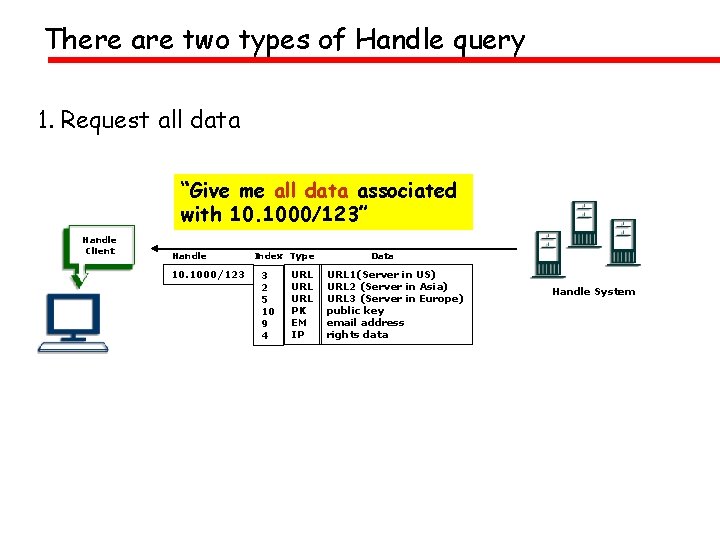
There are two types of Handle query 1. Request all data “Give me all data associated with 10. 1000/123” Handle Client Handle 10. 1000/123 Index Type 3 2 5 10 9 4 URL URL PK EM IP Data URL 1(Server in US) URL 2 (Server in Asia) URL 3 (Server in Europe) public key email address rights data Handle System
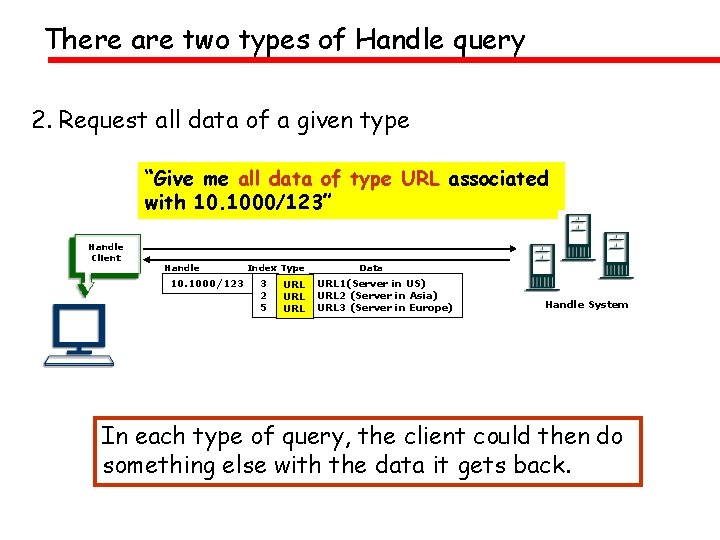
There are two types of Handle query 2. Request all data of a given type “Give me all data of type URL associated with 10. 1000/123” Handle Client Handle 10. 1000/123 Index Type 3 2 5 URL URL Data URL 1(Server in US) URL 2 (Server in Asia) URL 3 (Server in Europe) Handle System In each type of query, the client could then do something else with the data it gets back.
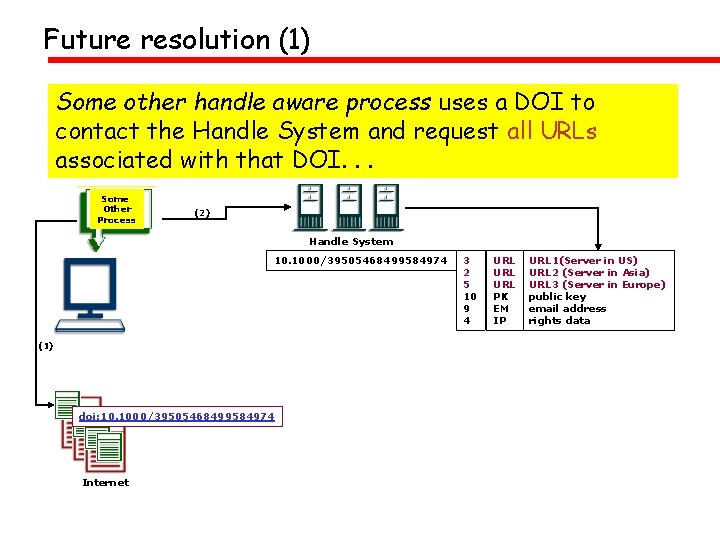
Future resolution (1) Some other handle aware process uses a DOI to contact the Handle System and request all URLs associated with that DOI. . . Some Other Process (2) Handle System 10. 1000/39505468499584974 (1) doi: 10. 1000/39505468499584974 Internet 3 2 5 10 9 4 URL URL PK EM IP URL 1(Server in US) URL 2 (Server in Asia) URL 3 (Server in Europe) public key email address rights data
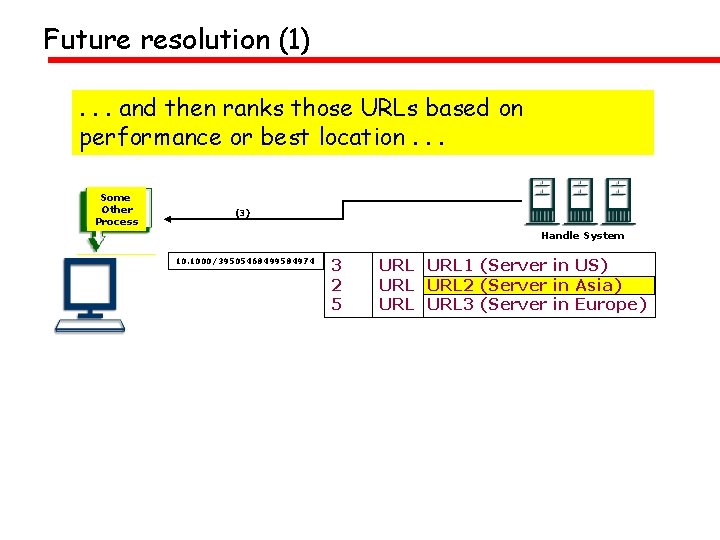
Future resolution (1). . . and then ranks those URLs based on performance or best location. . . Some Other Process (3) Handle System 10. 1000/39505468499584974 3 2 5 URL 1 (Server in US) URL 2 (Server in Asia) URL 3 (Server in Europe)
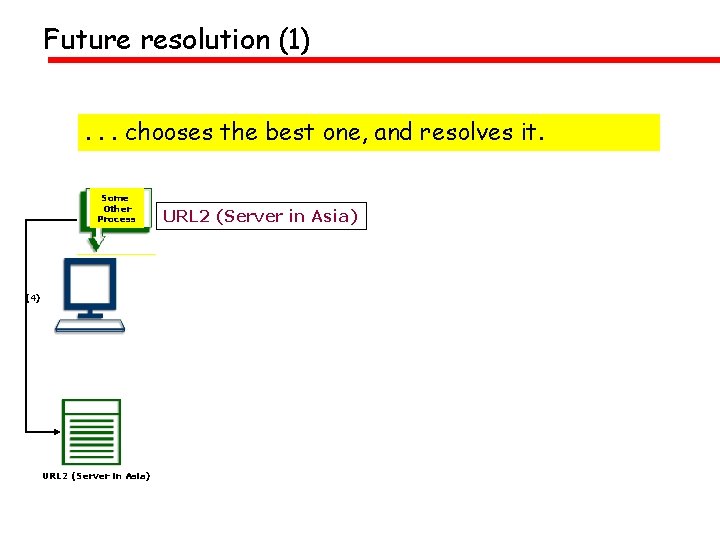
Future resolution (1). . . chooses the best one, and resolves it. Some Other Process (4) URL 2 (Server in Asia)

Future resolution (1) A process might use an email address, rights data, or any other “current state” data. Some Other Process (3) (2) Handle System 10. 1000/46578 (4) rights data (1) 3 2 5 10 9 4 URL URL PK EM IP URL 1(US) URL 2 (Asia) URL 3 (Europe) public key email address rights data doi: 10. 1000/46578 Interoperable metadata!
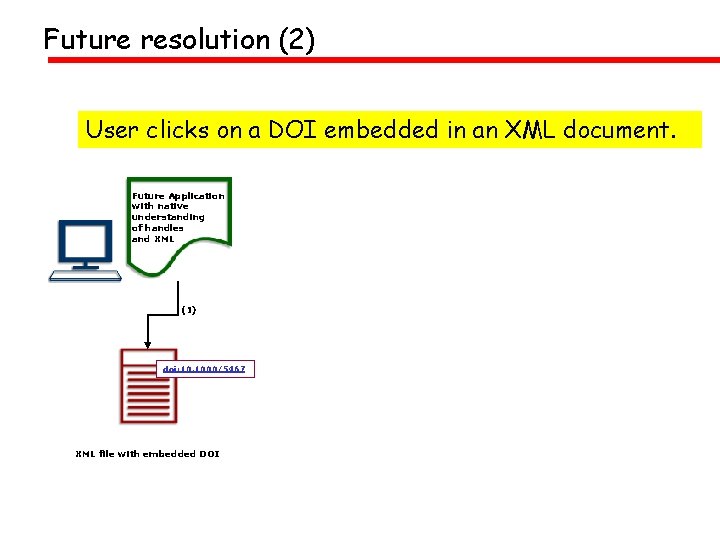
Future resolution (2) User clicks on a DOI embedded in an XML document. Future Application with native understanding of handles and XML (1) doi: 10. 1000/5467 XML file with embedded DOI
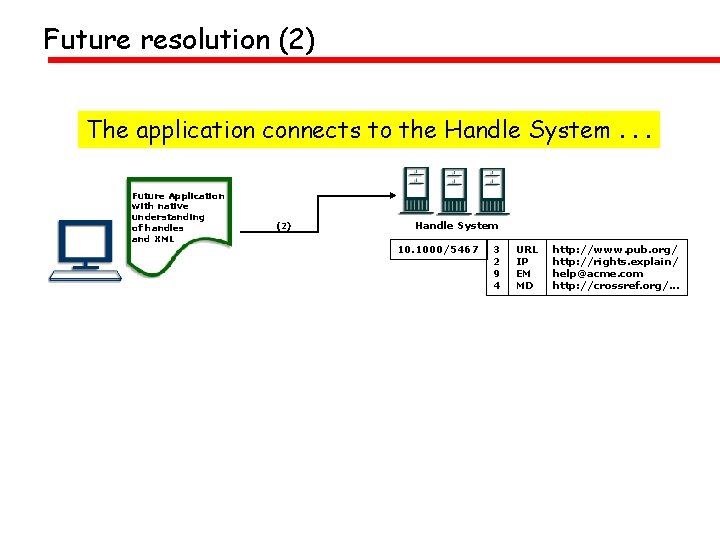
Future resolution (2) The application connects to the Handle System. . . Future Application with native understanding of handles and XML (2) Handle System 10. 1000/5467 3 2 9 4 URL IP EM MD http: //www. pub. org/ http: //rights. explain/ help@acme. com http: //crossref. org/. . .
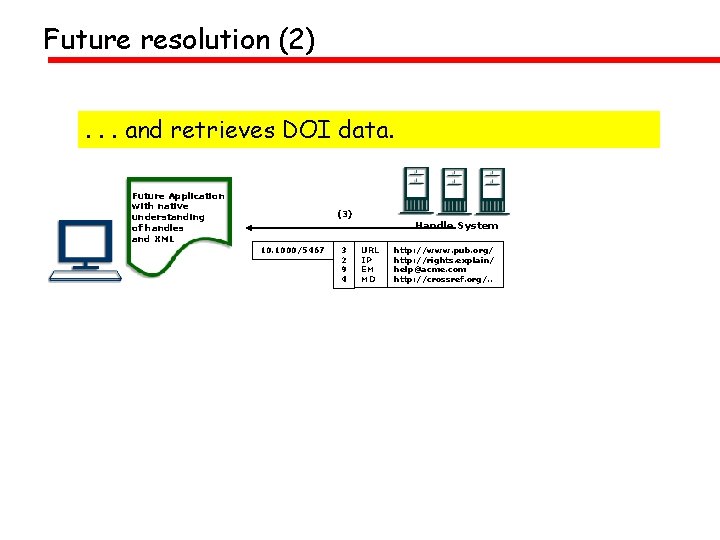
Future resolution (2). . . and retrieves DOI data. Future Application with native understanding of handles and XML (3) Handle System 10. 1000/5467 3 2 9 4 URL IP EM MD http: //www. pub. org/ http: //rights. explain/ help@acme. com http: //crossref. org/. .
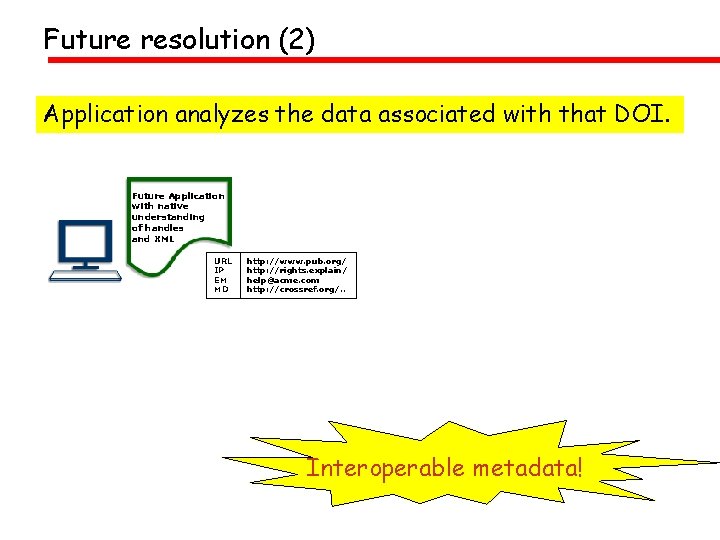
Future resolution (2) Application analyzes the data associated with that DOI. Future Application with native understanding of handles and XML URL IP EM MD http: //www. pub. org/ http: //rights. explain/ help@acme. com http: //crossref. org/. . Interoperable metadata!
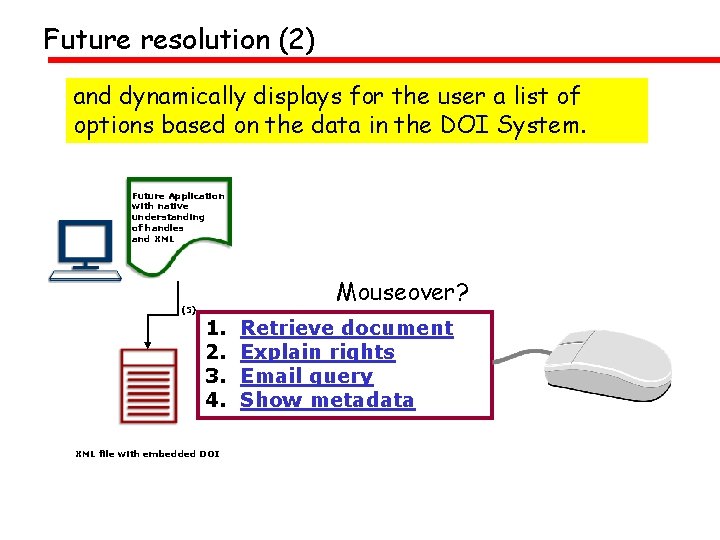
Future resolution (2) and dynamically displays for the user a list of options based on the data in the DOI System. Future Application with native understanding of handles and XML Mouseover? (5) 1. 2. 3. 4. XML file with embedded DOI Retrieve document Explain rights Email query Show metadata
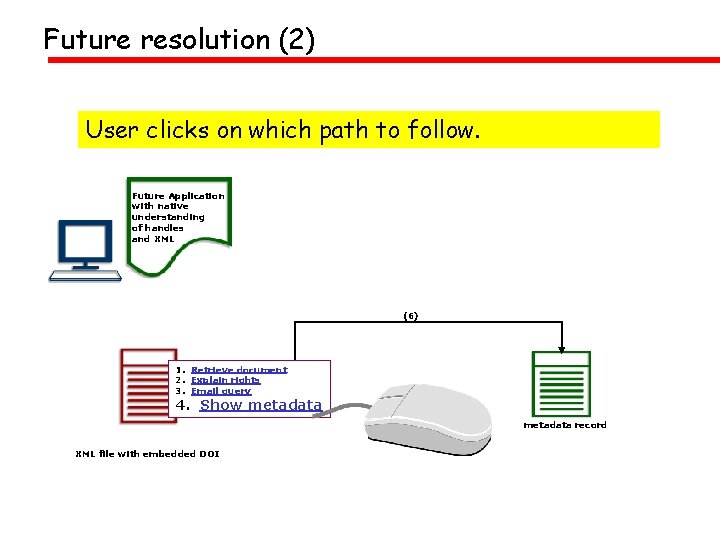
Future resolution (2) User clicks on which path to follow. Future Application with native understanding of handles and XML (6) 1. Retrieve document 2. Explain rights 3. Email query 4. Show metadata record XML file with embedded DOI
From theory to practice • We’ve published some analysis: – “One to many” • We’re working on implementations (MD type) • We’ve been doing some experiments: – CNRI + IDEAL + Cross. Ref + DLF + SFX Framework www. sfxit. com
Example issue: getting the appropriate copy • I have found what I want to link to, but: – I have a copy locally; or – I use an aggregator; or – The publisher provides alternative sources; (etc. ) • so I want to go to the “appropriate copy” – rights issues (access control) are implicit • wider issue is context (“contextualisation”) – other reasons (paper copies, other services, etc. )
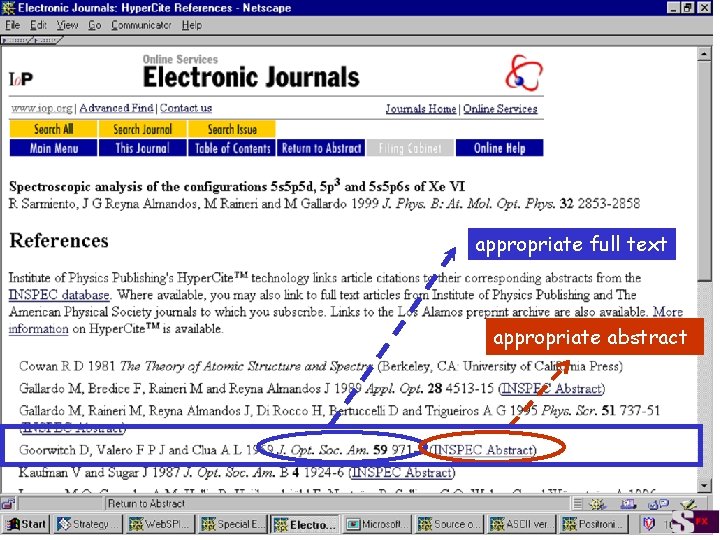
appropriate full text appropriate abstract
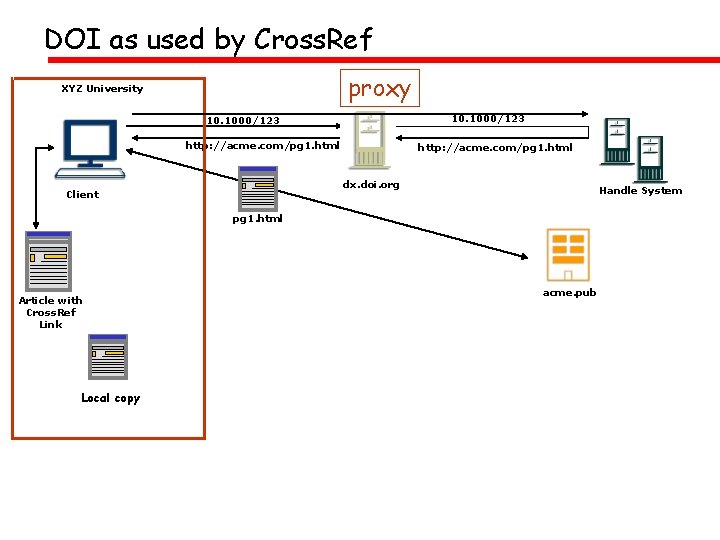
DOI as used by Cross. Ref proxy XYZ University 10. 1000/123 http: //acme. com/pg 1. html dx. doi. org Client Handle System pg 1. html Article with Cross. Ref Link Local copy acme. pub
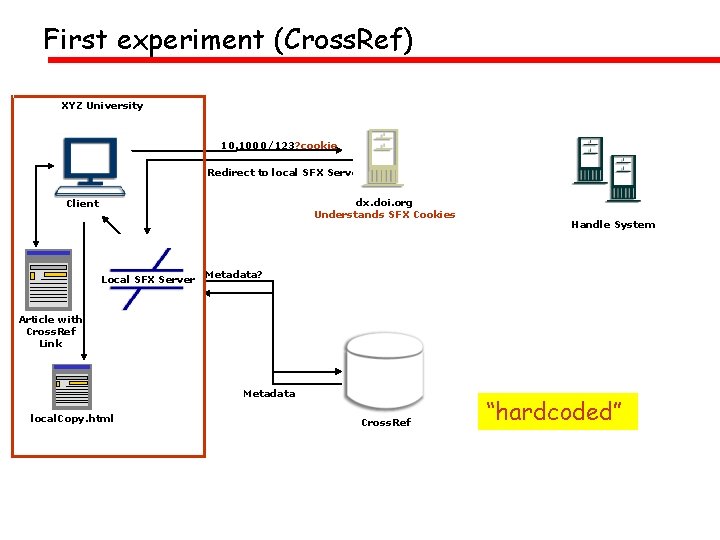
First experiment (Cross. Ref) XYZ University 10. 1000/123? cookie Redirect to local SFX Server dx. doi. org Understands SFX Cookies Client Local SFX Server Handle System Metadata? Article with Cross. Ref Link Metadata local. Copy. html Cross. Ref “hardcoded”
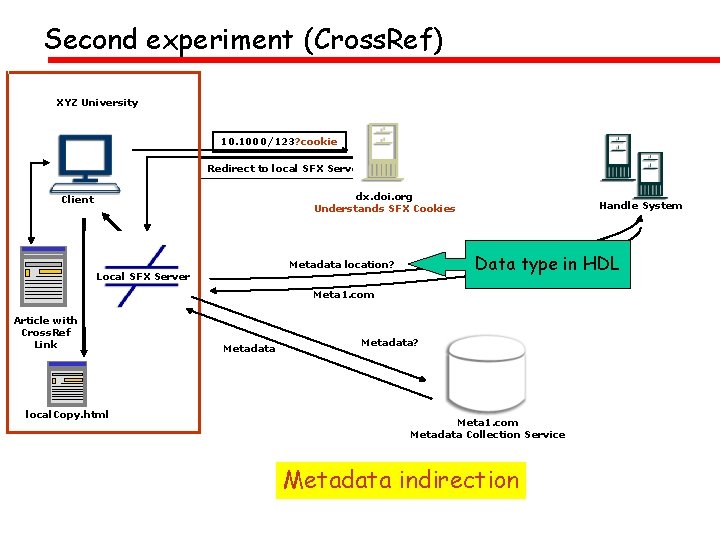
Second experiment (Cross. Ref) XYZ University 10. 1000/123? cookie Redirect to local SFX Server dx. doi. org Understands SFX Cookies Client Data type in HDL Metadata location? Local SFX Server Handle System Meta 1. com Article with Cross. Ref Link local. Copy. html Metadata? Meta 1. com Metadata Collection Service Metadata indirection
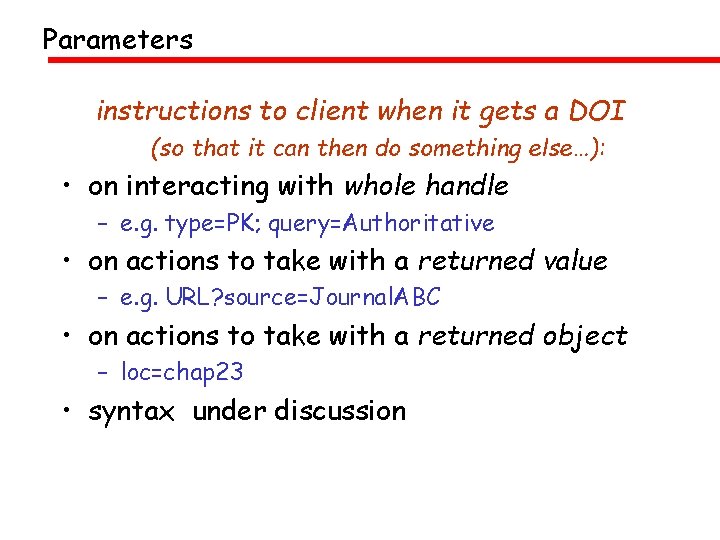
Parameters instructions to client when it gets a DOI (so that it can then do something else…): • on interacting with whole handle – e. g. type=PK; query=Authoritative • on actions to take with a returned value – e. g. URL? source=Journal. ABC • on actions to take with a returned object – loc=chap 23 • syntax under discussion
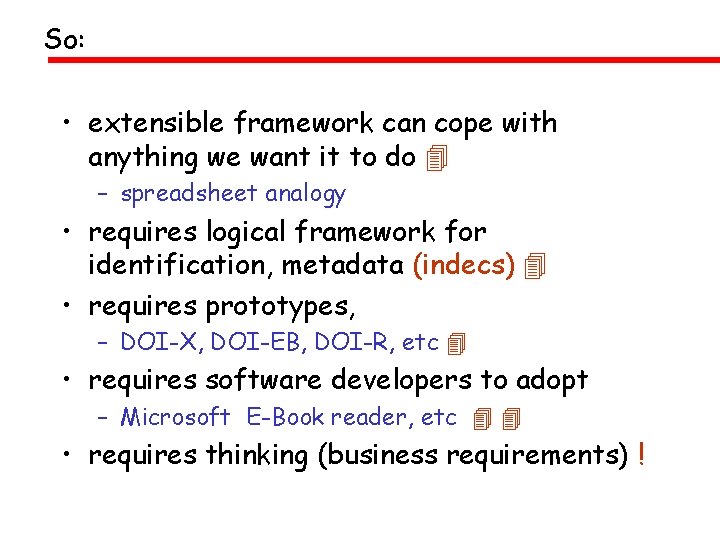
So: • extensible framework can cope with anything we want it to do – spreadsheet analogy • requires logical framework for identification, metadata (indecs) • requires prototypes, – DOI-X, DOI-EB, DOI-R, etc • requires software developers to adopt – Microsoft E-Book reader, etc • requires thinking (business requirements) !

- Slides: 31