
ResistanceStart SplitPhase Motor R Rext ECE 441 1



- Slides: 20
Resistance-Start Split-Phase Motor R = Rext ECE 441 1
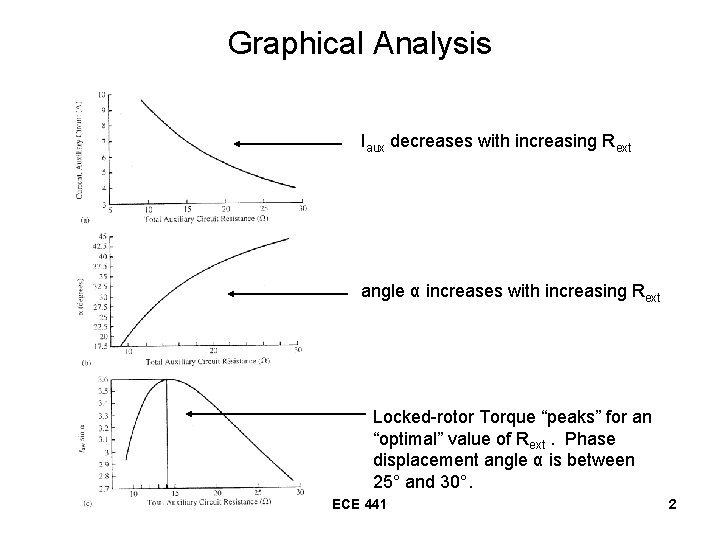
Graphical Analysis Iaux decreases with increasing Rext angle α increases with increasing Rext Locked-rotor Torque “peaks” for an “optimal” value of Rext. Phase displacement angle α is between 25° and 30°. ECE 441 2
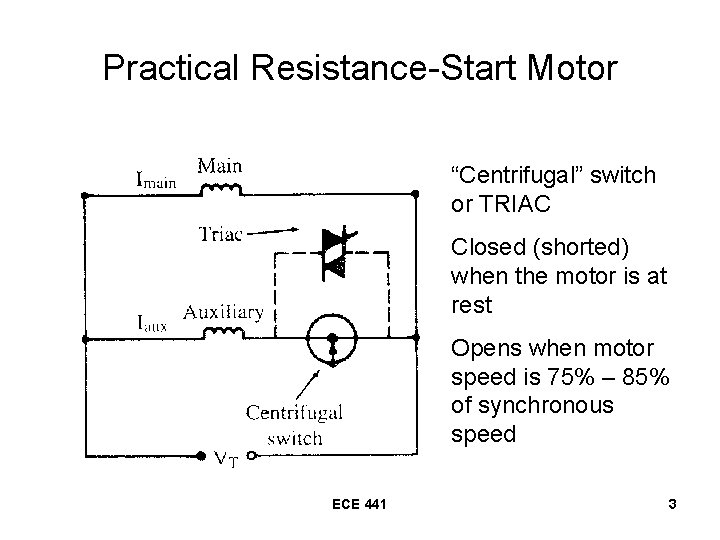
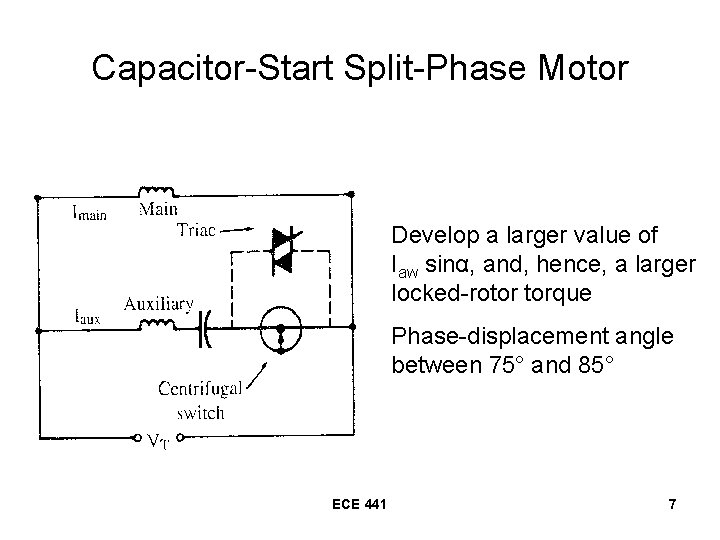
Practical Resistance-Start Motor “Centrifugal” switch or TRIAC Closed (shorted) when the motor is at rest Opens when motor speed is 75% – 85% of synchronous speed ECE 441 3
Practical Resistance-Start Motor Phasor Diagram at start-up ECE 441 4
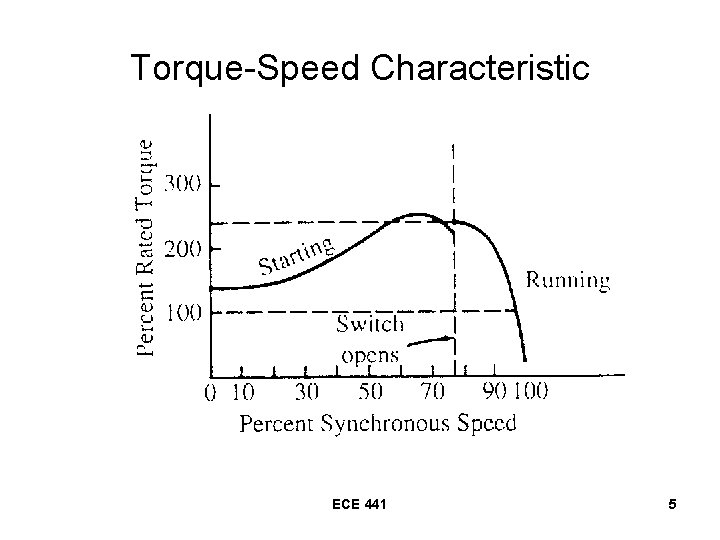
Torque-Speed Characteristic ECE 441 5
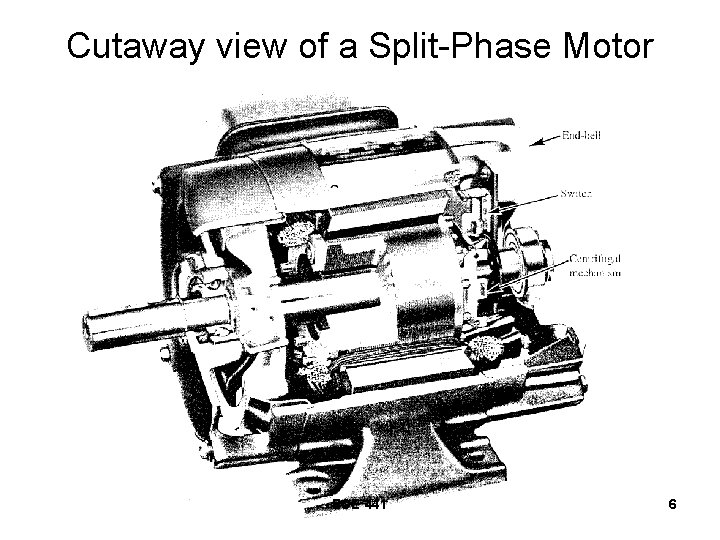
Cutaway view of a Split-Phase Motor ECE 441 6
Capacitor-Start Split-Phase Motor Develop a larger value of Iaw sinα, and, hence, a larger locked-rotor torque Phase-displacement angle between 75° and 85° ECE 441 7
Capacitor-Start Motor Phasor Diagram at start-up ECE 441 8
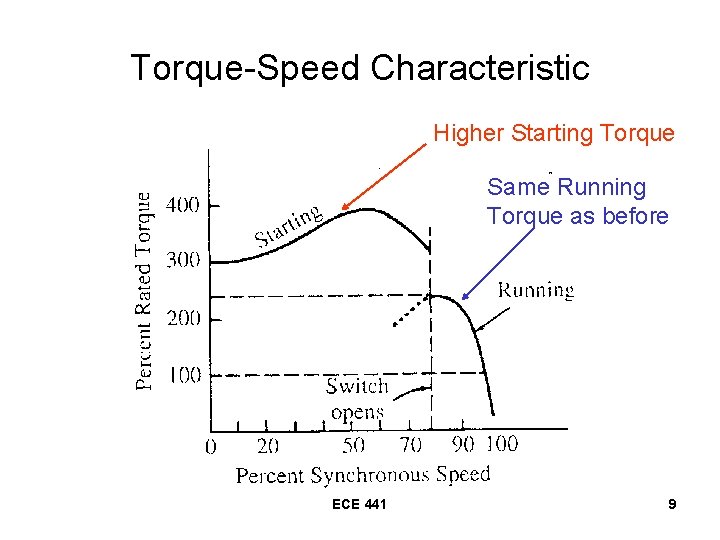
Torque-Speed Characteristic Higher Starting Torque Same Running Torque as before ECE 441 9
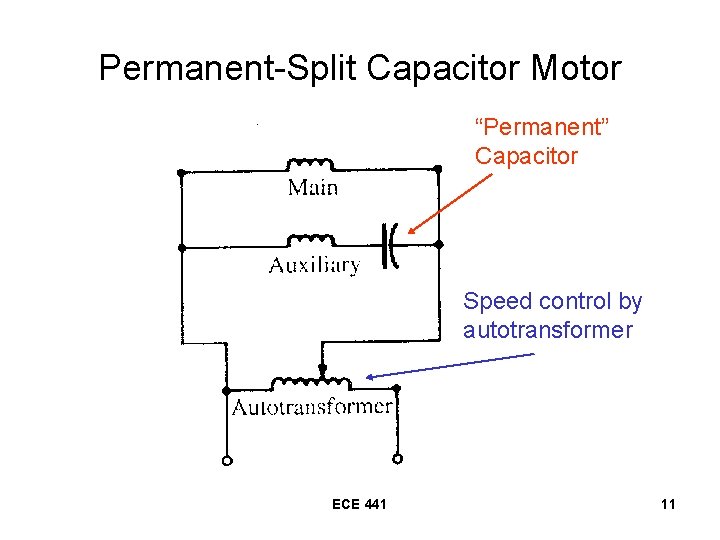
Permanent-Split Capacitor Motor • Uses a permanently-connected auxiliary circuit containing a capacitor. • Smoother and quieter operation than resistor or capacitor starting motor • Speed control by autotransformer across the line, or external resistor or reactor (inductor) in series with the main or auxiliary winding (or both). ECE 441 10
Permanent-Split Capacitor Motor “Permanent” Capacitor Speed control by autotransformer ECE 441 11
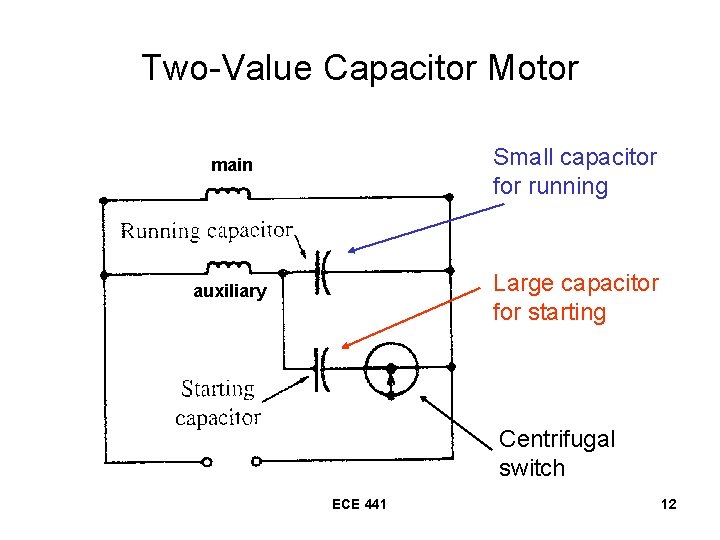
Two-Value Capacitor Motor main Small capacitor for running auxiliary Large capacitor for starting Centrifugal switch ECE 441 12
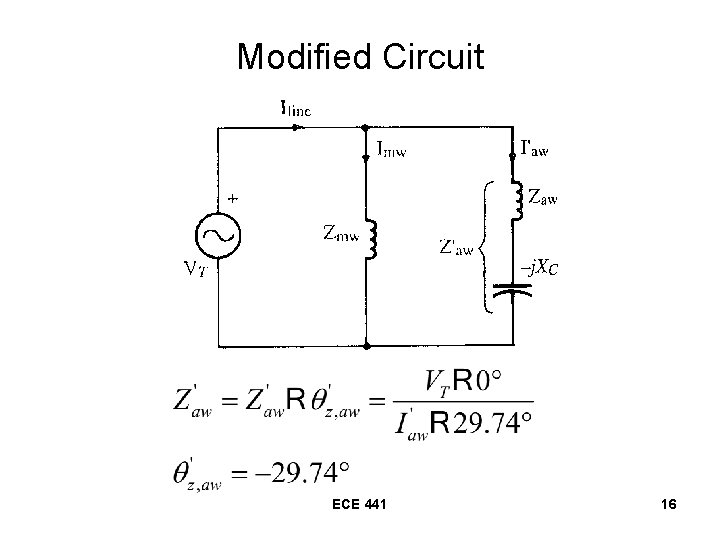
Example 6 -2 • Using the motor from Example 6 -1, determine the capacitance required in series with the auxiliary winding in order to obtain a 90° phase displacement between the current in the main winding and the current in the auxiliary winding at lockedrotor and the locked-rotor torque in terms of the machine constant. ECE 441 13
Example 6 -2 continued • From Example 6 -1 ECE 441 14
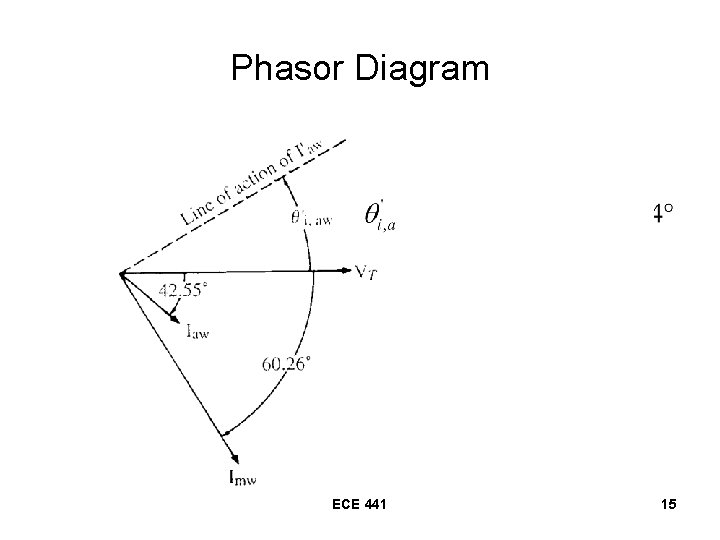
Phasor Diagram ECE 441 15
Modified Circuit ECE 441 16
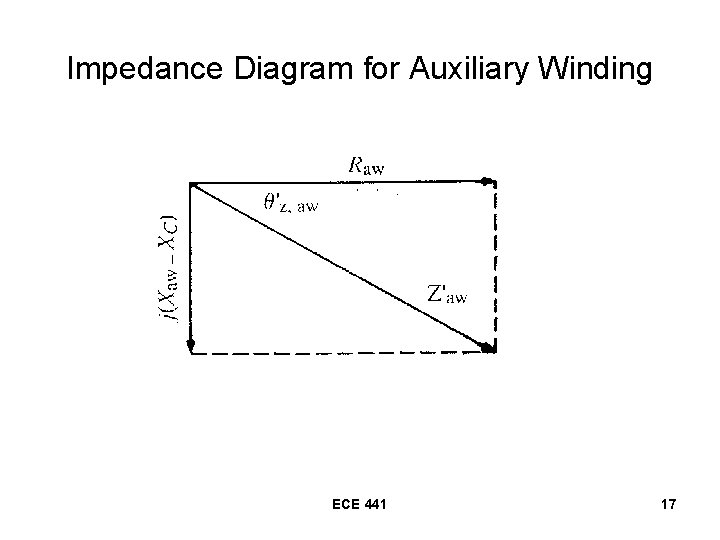
Impedance Diagram for Auxiliary Winding ECE 441 17
Calculation of Capacitance ECE 441 18
Locked-rotor Torque ECE 441 19
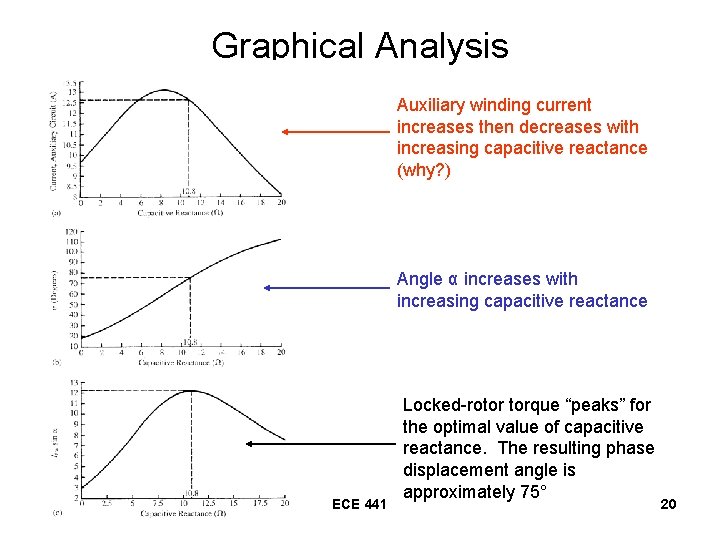
Graphical Analysis Auxiliary winding current increases then decreases with increasing capacitive reactance (why? ) Angle α increases with increasing capacitive reactance ECE 441 Locked-rotor torque “peaks” for the optimal value of capacitive reactance. The resulting phase displacement angle is approximately 75° 20