
Resistance Factors Equation Ohms Law Interpreting graphs Circuits
- Slides: 18
Resistance • Factors • Equation (Ohm’s Law) • Interpreting graphs • Circuits and Resistance
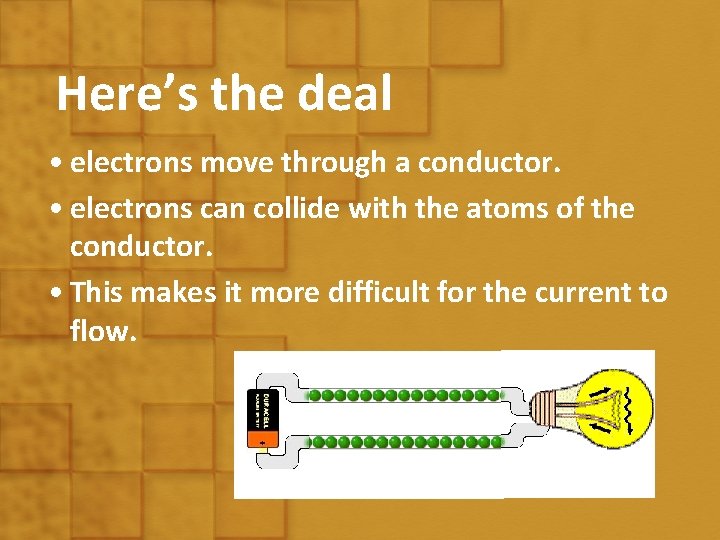
Here’s the deal • electrons move through a conductor. • electrons can collide with the atoms of the conductor. • This makes it more difficult for the current to flow.
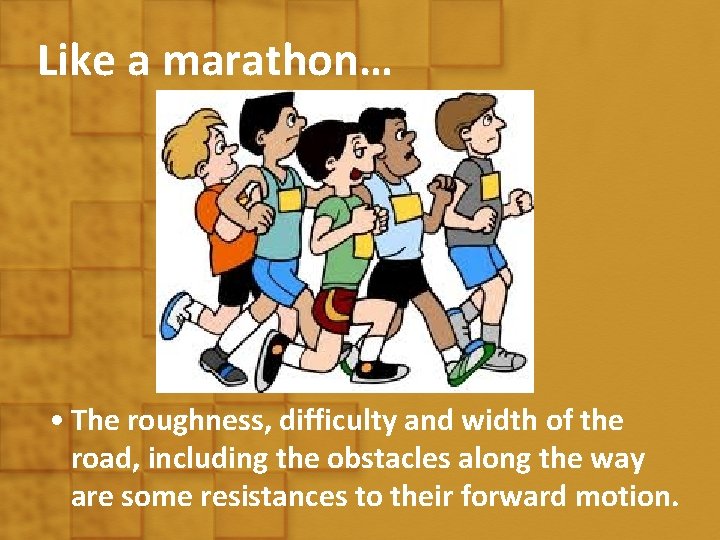
Like a marathon… • The roughness, difficulty and width of the road, including the obstacles along the way are some resistances to their forward motion.
So, in a conducting material, what factors affect the flow of electrons? • Length of wire • As length increases, resistance increases • Diameter of wire • As diameter increases, resistance decreases • Temperature • As temperature increases, resistance increases
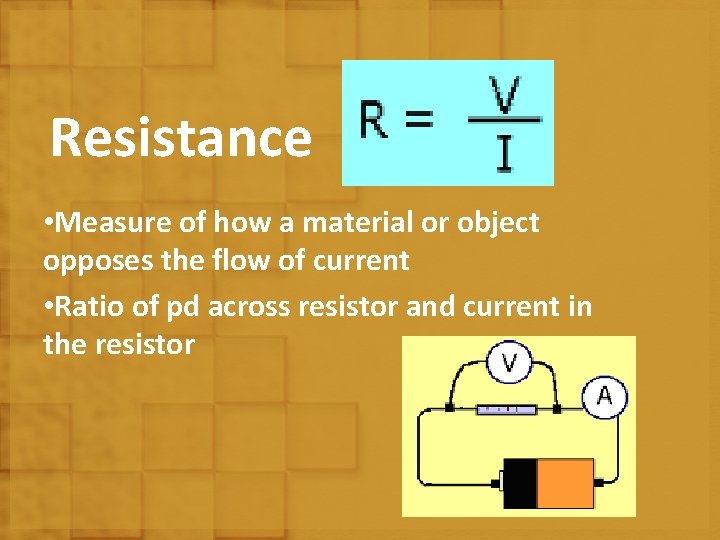
Resistance • Measure of how a material or object opposes the flow of current • Ratio of pd across resistor and current in the resistor
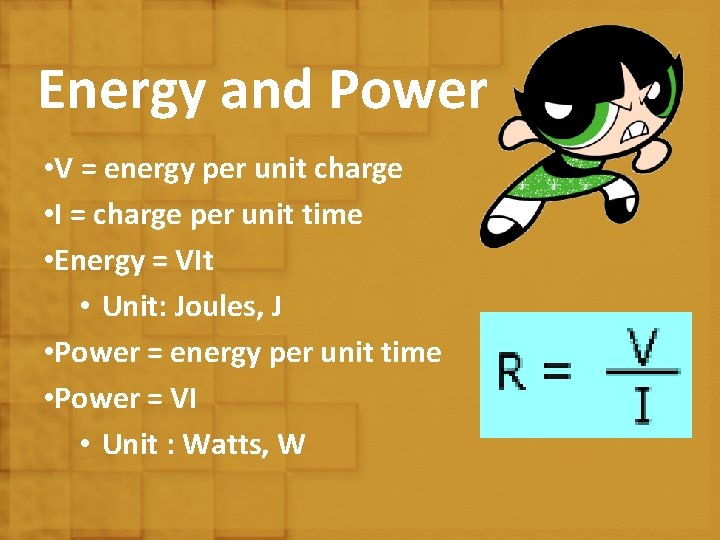
Energy and Power • V = energy per unit charge • I = charge per unit time • Energy = VIt • Unit: Joules, J • Power = energy per unit time • Power = VI • Unit : Watts, W
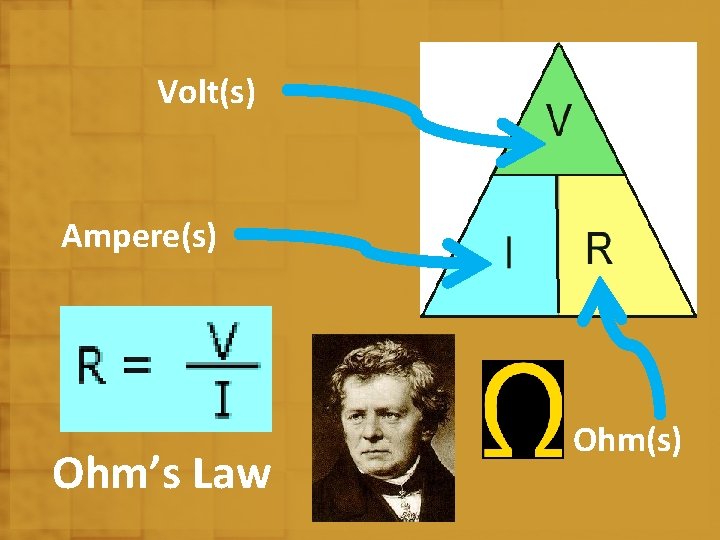
Volt(s) Ampere(s) Ohm’s Law Ohm(s)
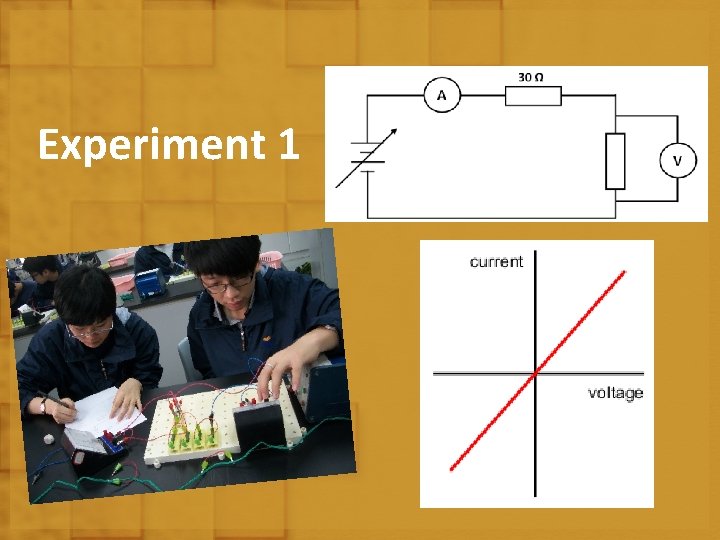
Experiment 1
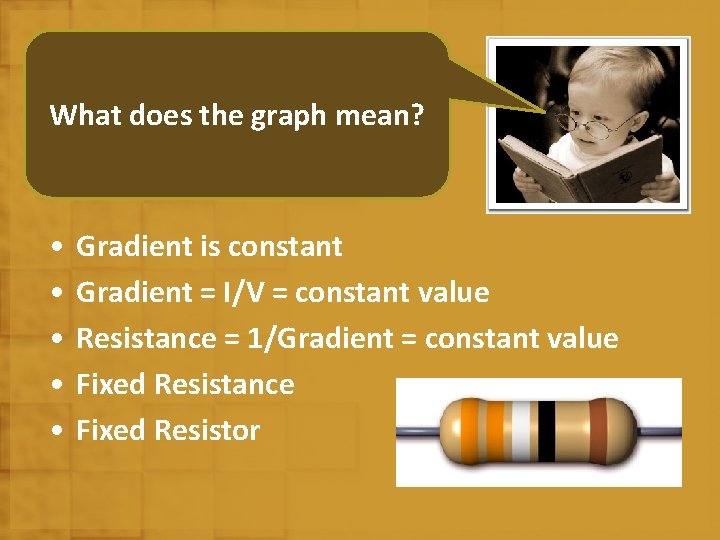
What does the graph mean? • • • Gradient is constant Gradient = I/V = constant value Resistance = 1/Gradient = constant value Fixed Resistance Fixed Resistor
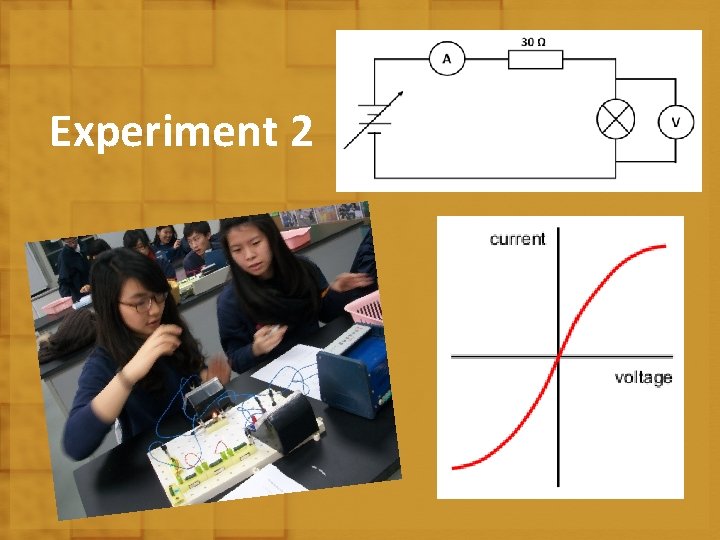
Experiment 2
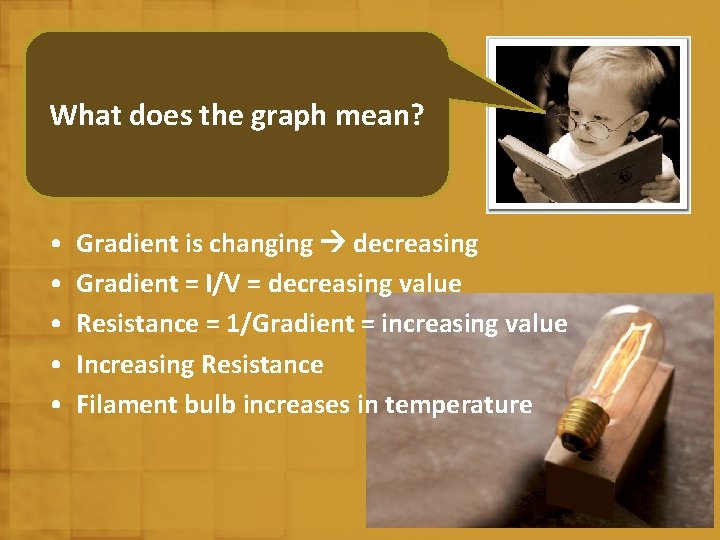
What does the graph mean? • • • Gradient is changing decreasing Gradient = I/V = decreasing value Resistance = 1/Gradient = increasing value Increasing Resistance Filament bulb increases in temperature
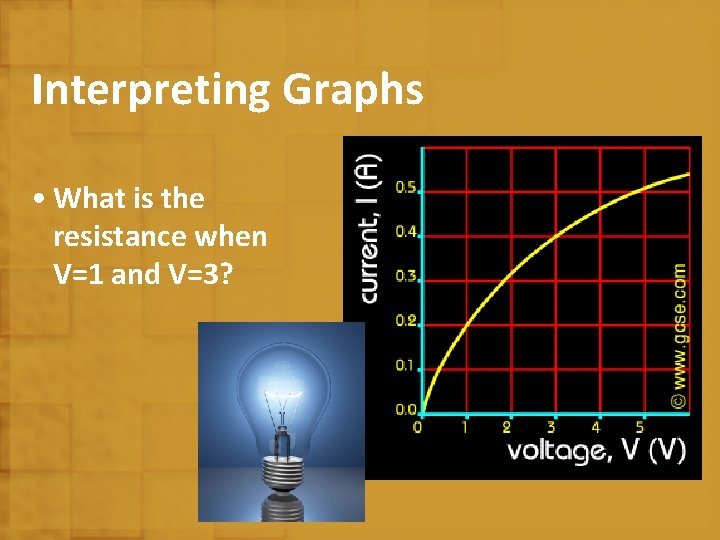
Interpreting Graphs • What is the resistance when V=1 and V=3?
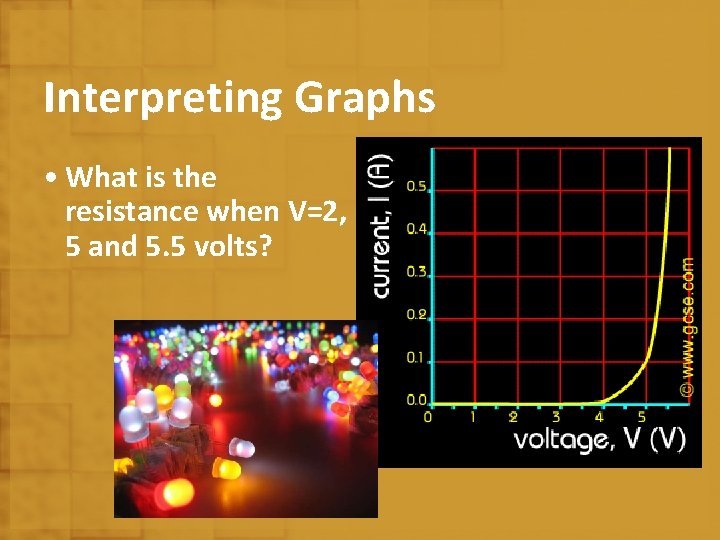
Interpreting Graphs • What is the resistance when V=2, 5 and 5. 5 volts?
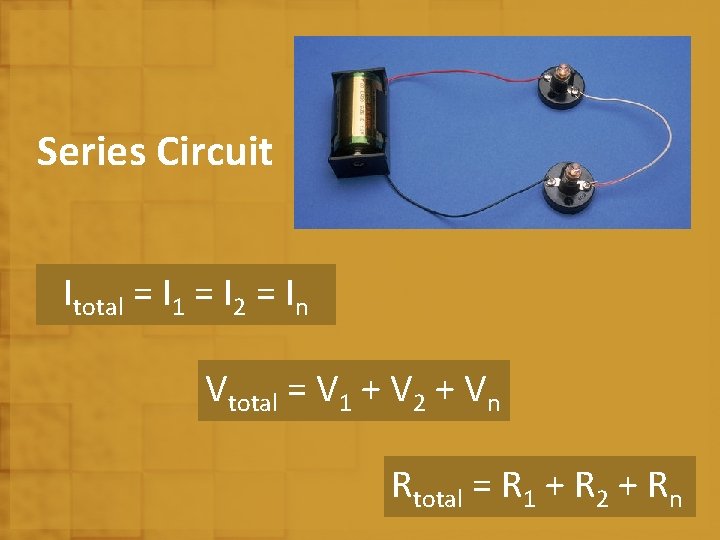
Series Circuit Itotal = I 1 = I 2 = In Vtotal = V 1 + V 2 + Vn Rtotal = R 1 + R 2 + Rn
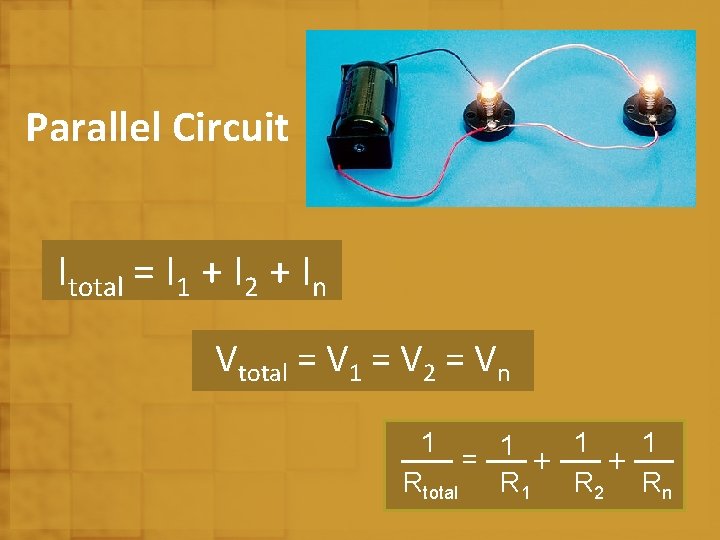
Parallel Circuit Itotal = I 1 + I 2 + In Vtotal = V 1 = V 2 = Vn 1 1 = + + Rtotal R 1 R 2 Rn
What happens to the current in the circuit when you add more resistors? • Series • The total resistance increases • The total current decreases • Parallel • The total resistance decreases • The total current increases
What happens to the brightness of the bulbs when more added? • Series • More bulbs divide energy between themselves • Brightness decreases • Parallel • Voltage or energy across each bulb is the same • Brightness is unaffected
What happens to the other bulbs in the circuit when one of the bulbs is busted? • Series • There is only one path for current • Since bulb is busted, there is an open in the circuit • Other bulbs don’t light • Parallel • The path for each bulb is independent • Other bulbs are lit; only busted bulb is unlit