
Resistance and Ohms law Objectives Characterize materials as
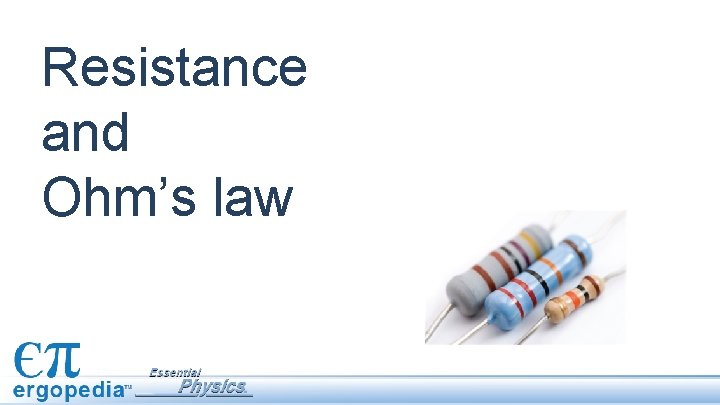
Resistance and Ohm’s law
Objectives • Characterize materials as conductors or insulators based on their electrical properties. • State and apply Ohm’s law to calculate current, voltage or resistance in an electric circuit involving a single resistor. • Investigate the use of multimeters, power supplies, and resistors.
Physics terms • resistance • resistor • ohm (Ω) • electrical conductor • electrical insulator
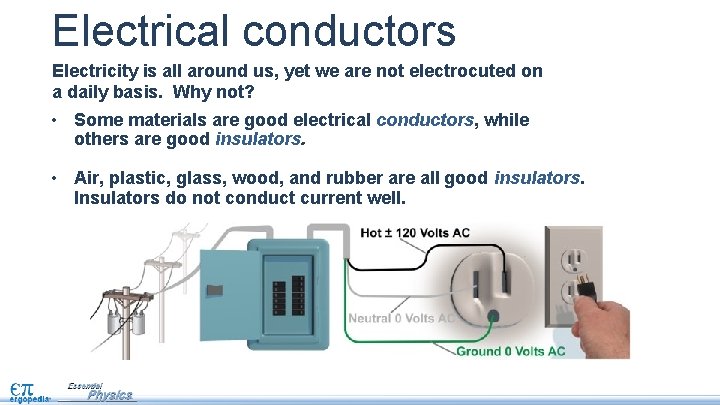
Electrical conductors Electricity is all around us, yet we are not electrocuted on a daily basis. Why not? • Some materials are good electrical conductors, while others are good insulators. • Air, plastic, glass, wood, and rubber are all good insulators. Insulators do not conduct current well.
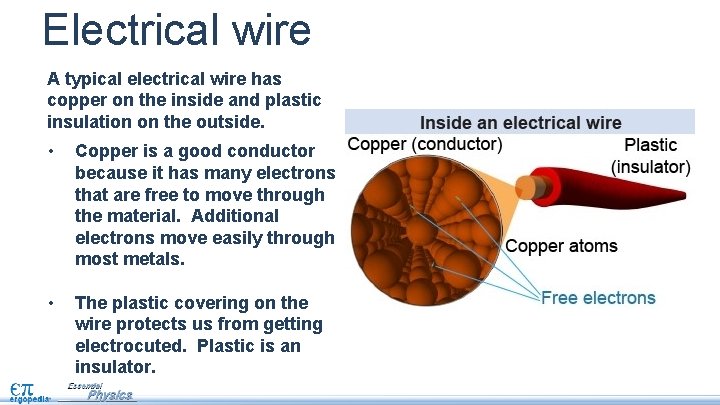
Electrical wire A typical electrical wire has copper on the inside and plastic insulation on the outside. • Copper is a good conductor because it has many electrons that are free to move through the material. Additional electrons move easily through most metals. • The plastic covering on the wire protects us from getting electrocuted. Plastic is an insulator.
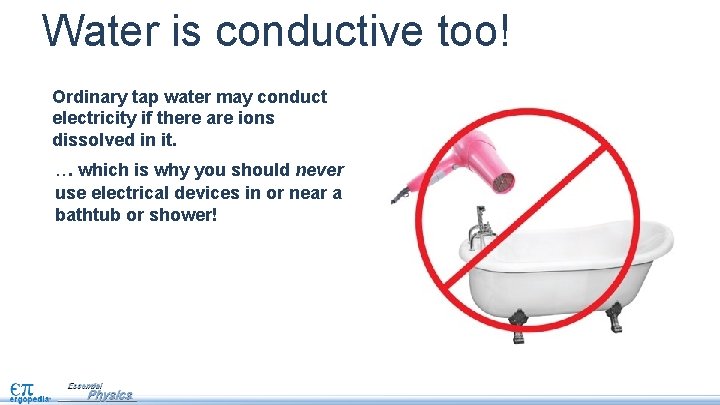
Water is conductive too! Ordinary tap water may conduct electricity if there are ions dissolved in it. . which is why you should never use electrical devices in or near a bathtub or shower!
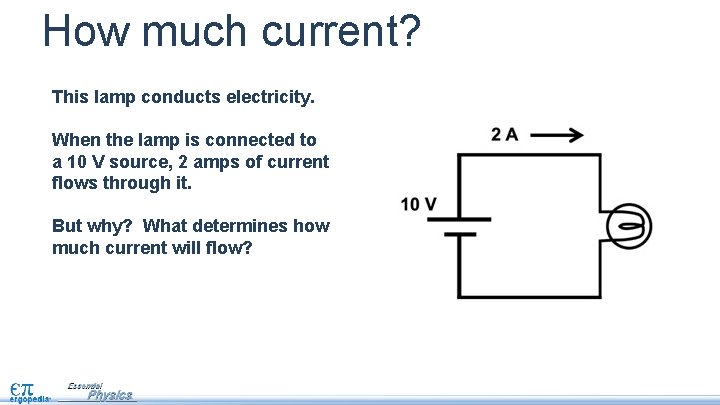
How much current? This lamp conducts electricity. When the lamp is connected to a 10 V source, 2 amps of current flows through it. But why? What determines how much current will flow?
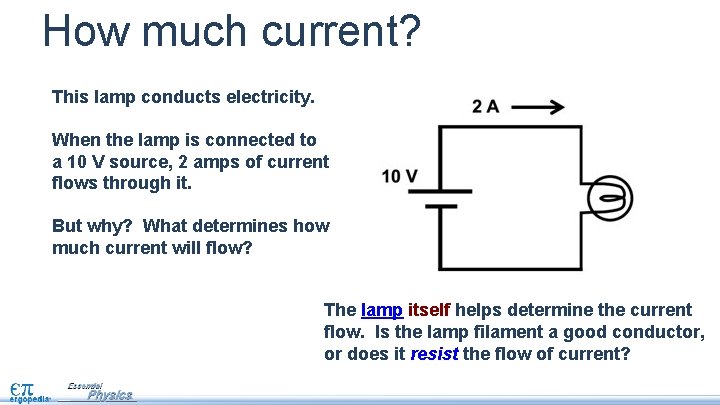
How much current? This lamp conducts electricity. When the lamp is connected to a 10 V source, 2 amps of current flows through it. But why? What determines how much current will flow? The lamp itself helps determine the current flow. Is the lamp filament a good conductor, or does it resist the flow of current?
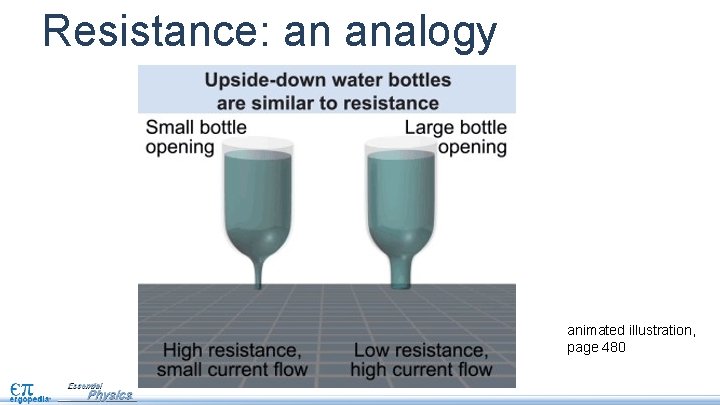
Resistance: an analogy animated illustration, page 480
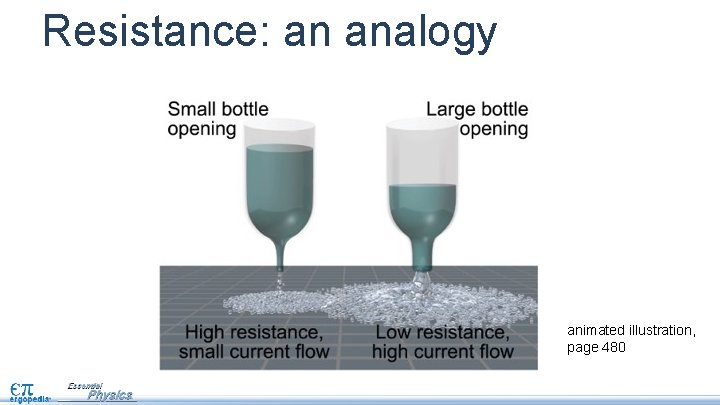
Resistance: an analogy animated illustration, page 480
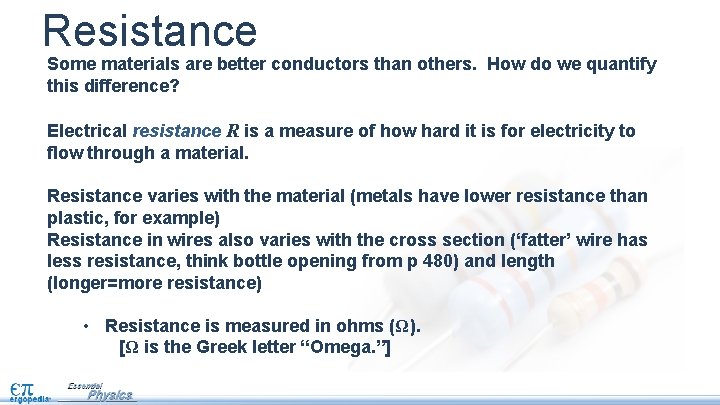
Resistance Some materials are better conductors than others. How do we quantify this difference? Electrical resistance R is a measure of how hard it is for electricity to flow through a material. Resistance varies with the material (metals have lower resistance than plastic, for example) Resistance in wires also varies with the cross section (‘fatter’ wire has less resistance, think bottle opening from p 480) and length (longer=more resistance) • Resistance is measured in ohms (Ω). [Ω is the Greek letter “Omega. ”]
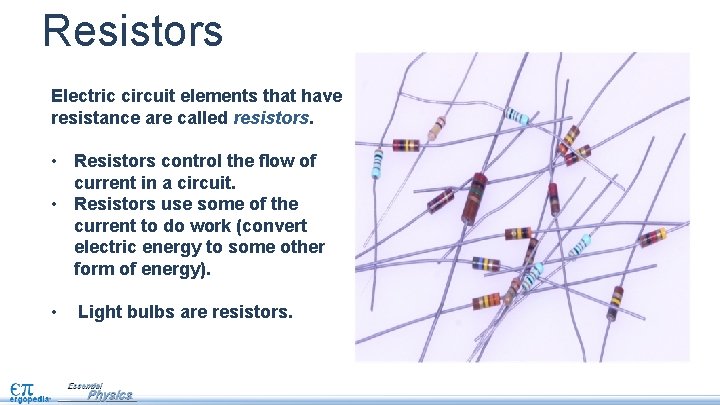
Resistors Electric circuit elements that have resistance are called resistors. • Resistors control the flow of current in a circuit. • Resistors use some of the current to do work (convert electric energy to some other form of energy). • Light bulbs are resistors.
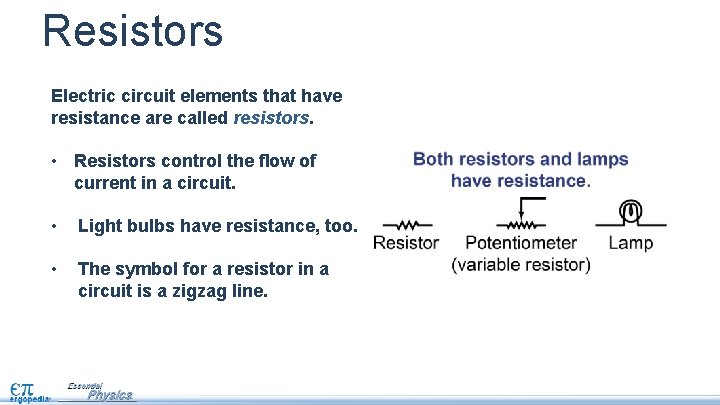
Resistors Electric circuit elements that have resistance are called resistors. • Resistors control the flow of current in a circuit. • Light bulbs have resistance, too. • The symbol for a resistor in a circuit is a zigzag line.
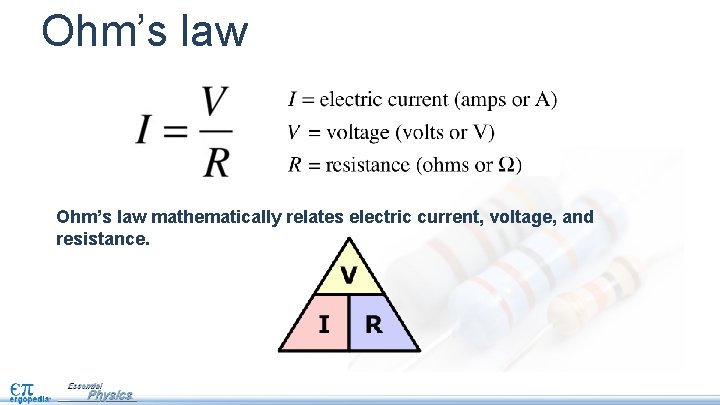
Ohm’s law mathematically relates electric current, voltage, and resistance.
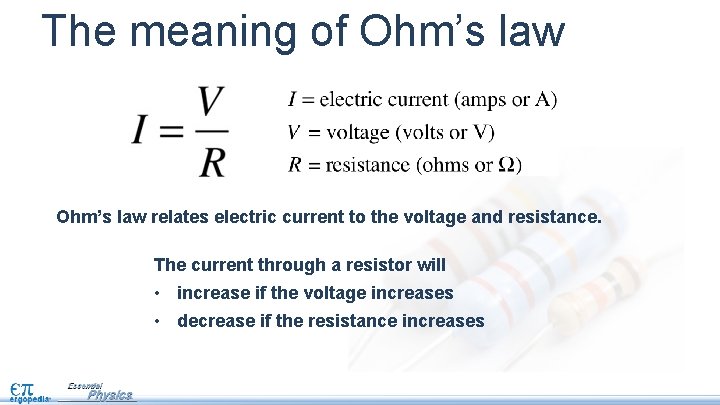
The meaning of Ohm’s law relates electric current to the voltage and resistance. The current through a resistor will • increase if the voltage increases • decrease if the resistance increases
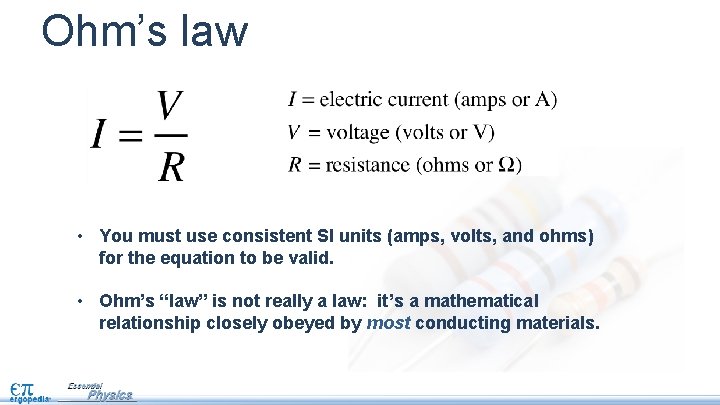
Ohm’s law • You must use consistent SI units (amps, volts, and ohms) for the equation to be valid. • Ohm’s “law” is not really a law: it’s a mathematical relationship closely obeyed by most conducting materials.
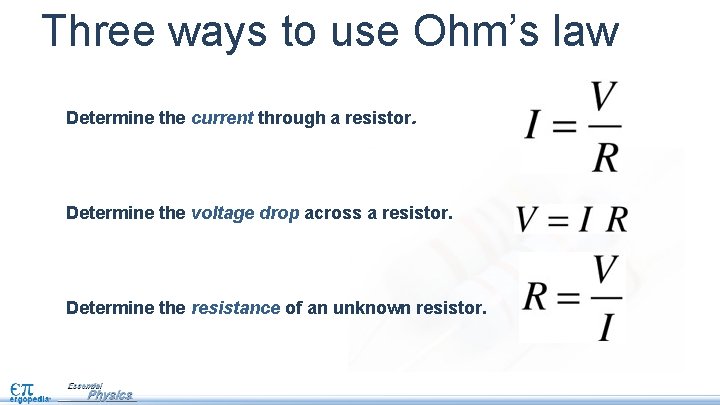
Three ways to use Ohm’s law Determine the current through a resistor. Determine the voltage drop across a resistor. Determine the resistance of an unknown resistor.
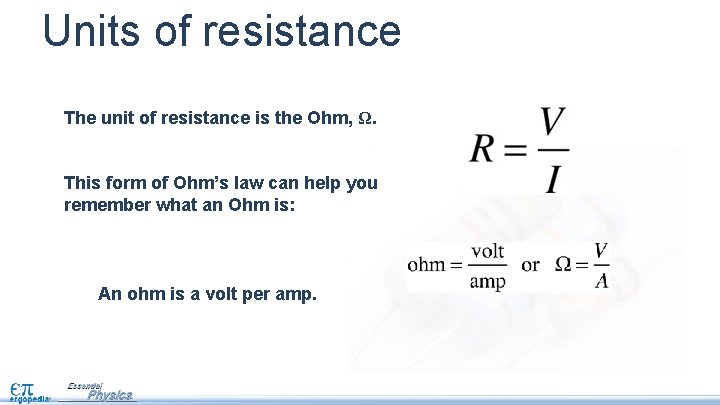
Units of resistance The unit of resistance is the Ohm, Ω. This form of Ohm’s law can help you remember what an Ohm is: An ohm is a volt per amp.
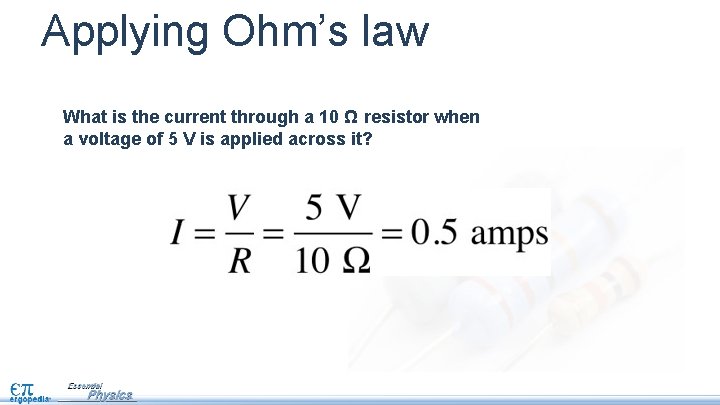
Applying Ohm’s law What is the current through a 10 Ω resistor when a voltage of 5 V is applied across it?
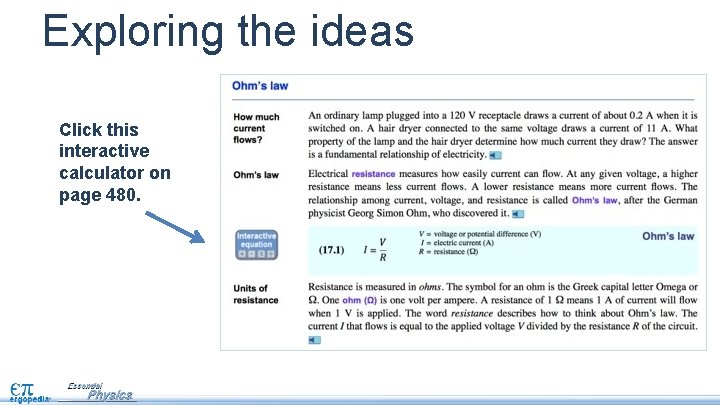
Exploring the ideas Click this interactive calculator on page 480.
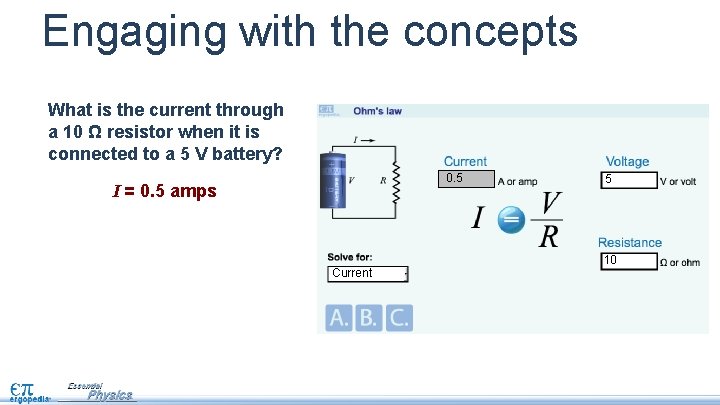
Engaging with the concepts What is the current through a 10 Ω resistor when it is connected to a 5 V battery? 0. 5 I = 0. 5 amps Current 5 10
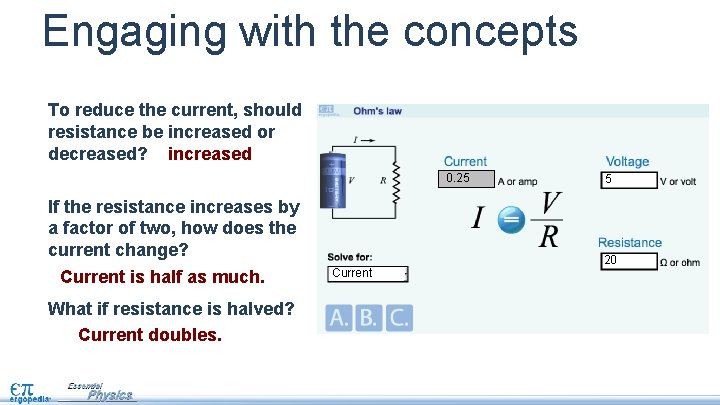
Engaging with the concepts To reduce the current, should resistance be increased or decreased? increased 0. 25 If the resistance increases by a factor of two, how does the current change? Current is halved. Current is half as much. What if resistance is halved? Current doubles. Current 5 20
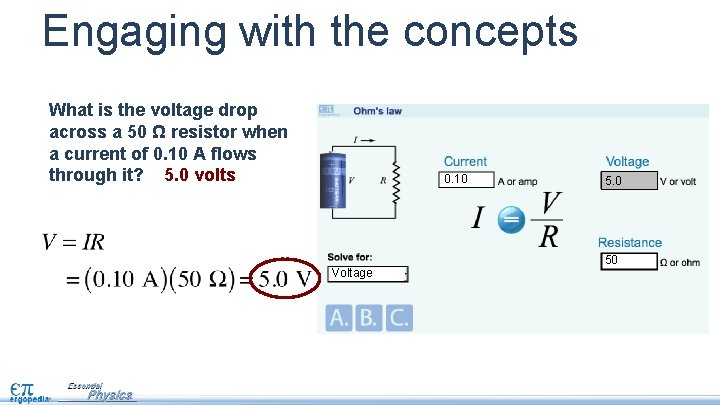
Engaging with the concepts What is the voltage drop across a 50 Ω resistor when a current of 0. 10 A flows through it? 5. 0 volts 0. 10 Voltage 5. 0 50
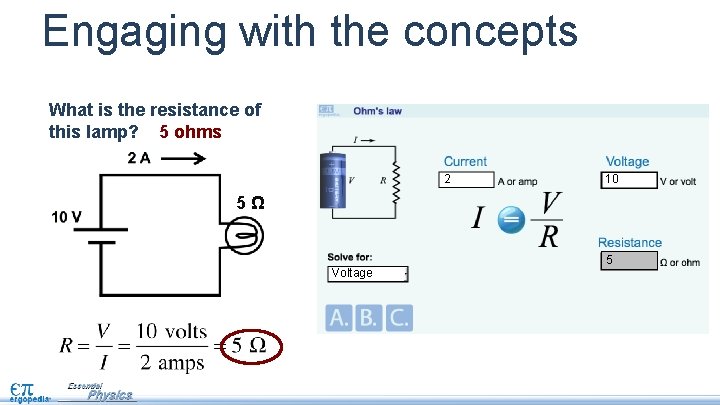
Engaging with the concepts What is the resistance of this lamp? 5 ohms 2 10 5Ω Voltage 5
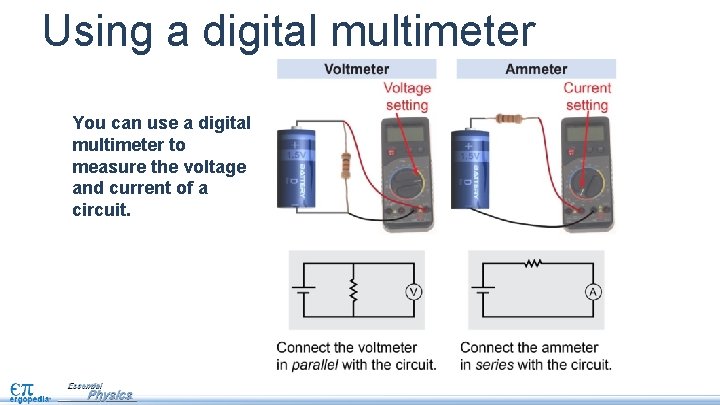
Using a digital multimeter You can use a digital multimeter to measure the voltage and current of a circuit.
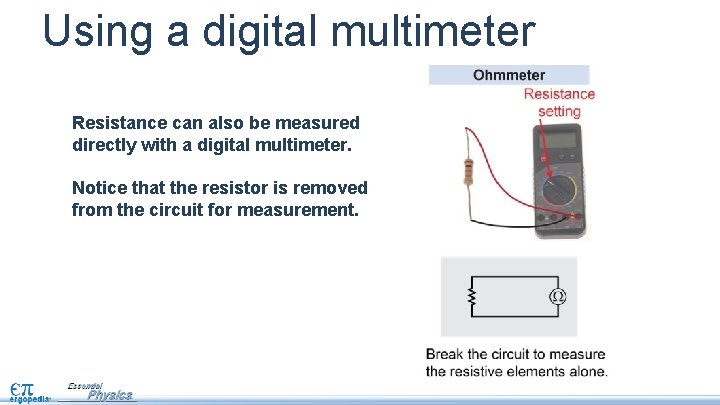
Using a digital multimeter Resistance can also be measured directly with a digital multimeter. Notice that the resistor is removed from the circuit for measurement.
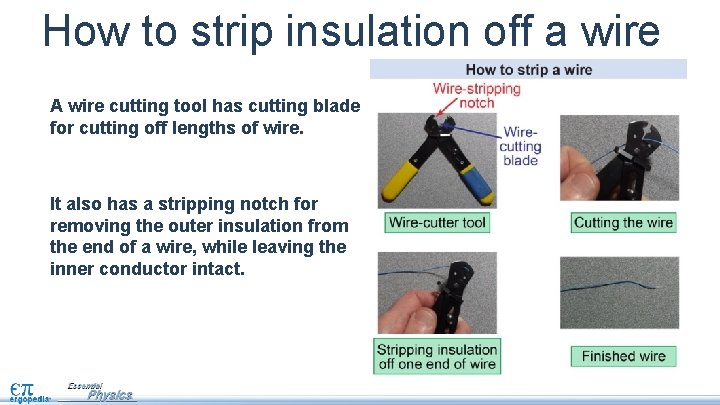
How to strip insulation off a wire A wire cutting tool has cutting blade for cutting off lengths of wire. It also has a stripping notch for removing the outer insulation from the end of a wire, while leaving the inner conductor intact.
- Slides: 27