
Resistance and Capacitance Electrostatic Boundary value problems Sandra
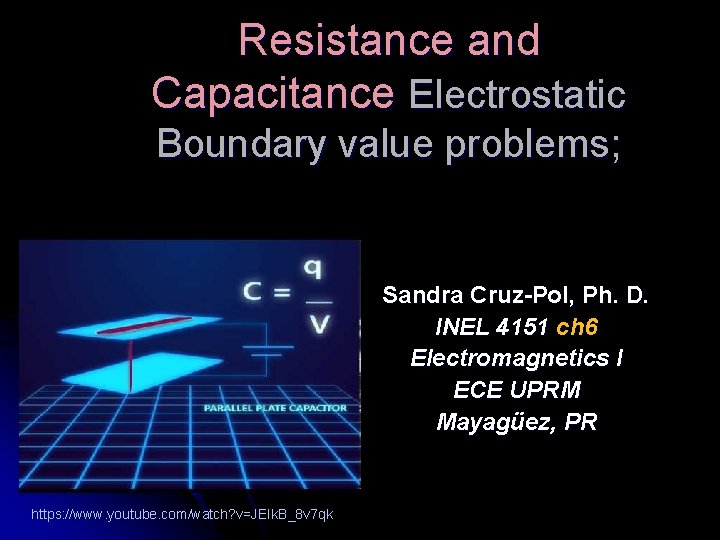
Resistance and Capacitance Electrostatic Boundary value problems; Sandra Cruz-Pol, Ph. D. INEL 4151 ch 6 Electromagnetics I ECE UPRM Mayagüez, PR https: //www. youtube. com/watch? v=JEIk. B_8 v 7 qk

Last Chapters: we knew either V or charge distribution, to find E, D. NOW: we only know values of V or Q at some places (boundaries).
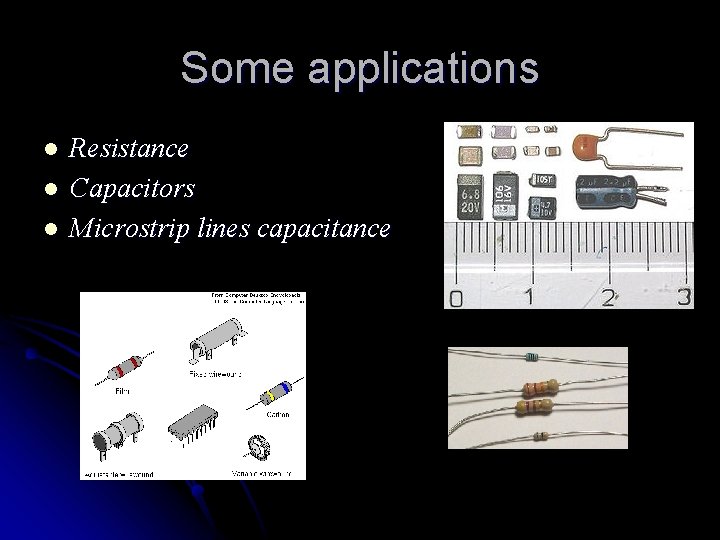
Some applications l l l Resistance Capacitors Microstrip lines capacitance
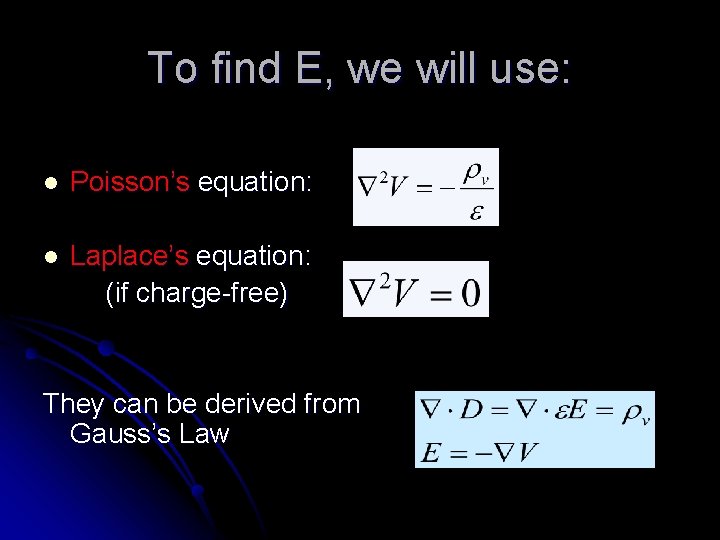
To find E, we will use: l Poisson’s equation: l Laplace’s equation: (if charge-free) They can be derived from Gauss’s Law
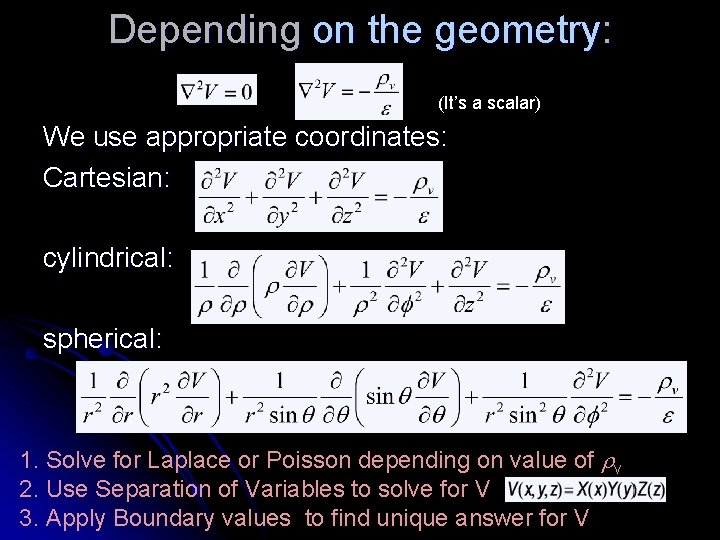
Depending on the geometry: (It’s a scalar) We use appropriate coordinates: Cartesian: cylindrical: spherical: 1. Solve for Laplace or Poisson depending on value of rv 2. Use Separation of Variables to solve for V 3. Apply Boundary values to find unique answer for V
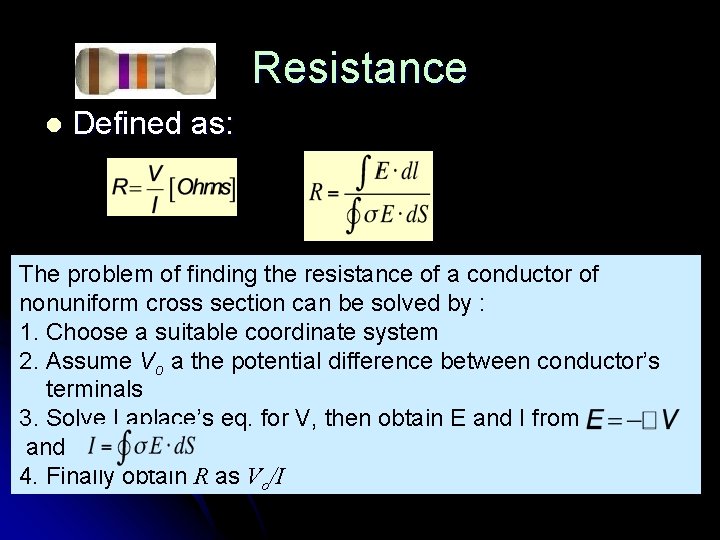
Resistance l Defined as: The problem of finding the resistance of a conductor of nonuniform cross section can be solved by : 1. Choose a suitable coordinate system 2. Assume Vo a the potential difference between conductor’s terminals 3. Solve Laplace’s eq. for V, then obtain E and I from and 4. Finally obtain R as Vo/I
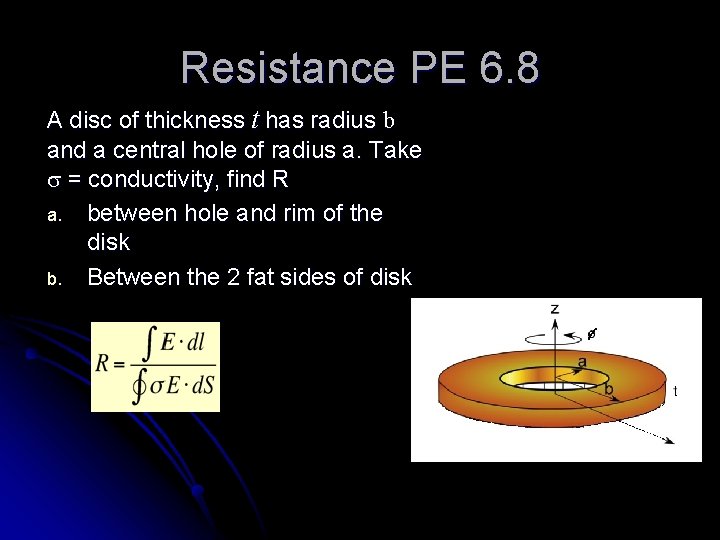
Resistance PE 6. 8 A disc of thickness t has radius b and a central hole of radius a. Take s = conductivity, find R a. between hole and rim of the disk b. Between the 2 fat sides of disk
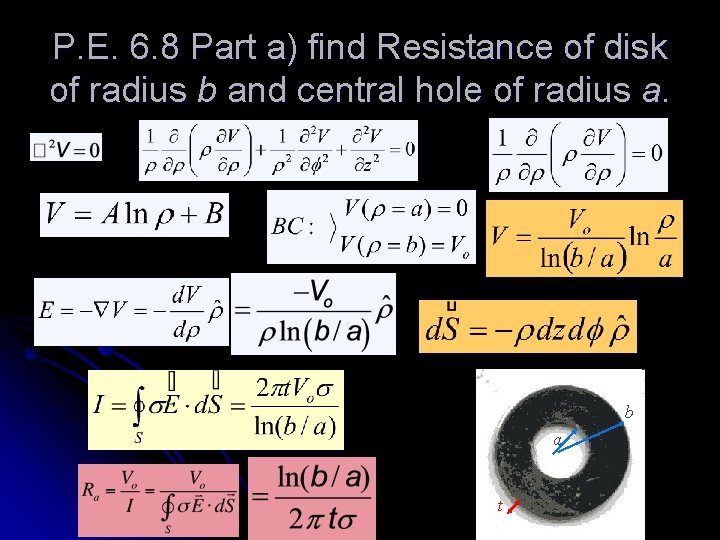
P. E. 6. 8 Part a) find Resistance of disk of radius b and central hole of radius a. b a t
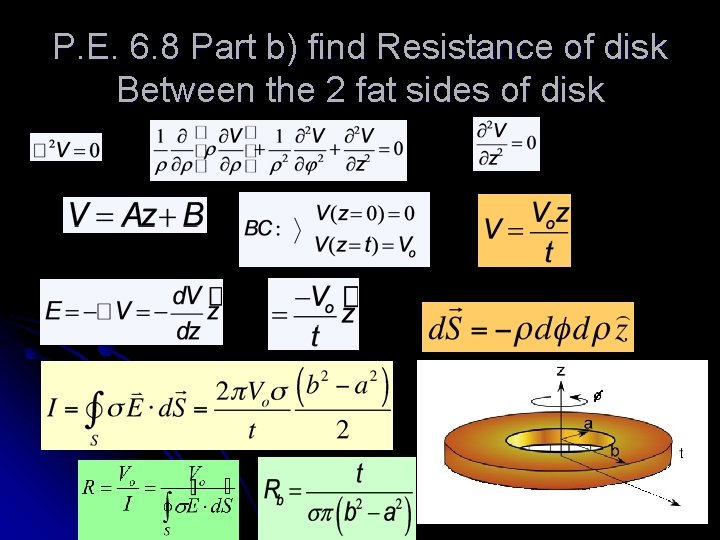
P. E. 6. 8 Part b) find Resistance of disk Between the 2 fat sides of disk b a t
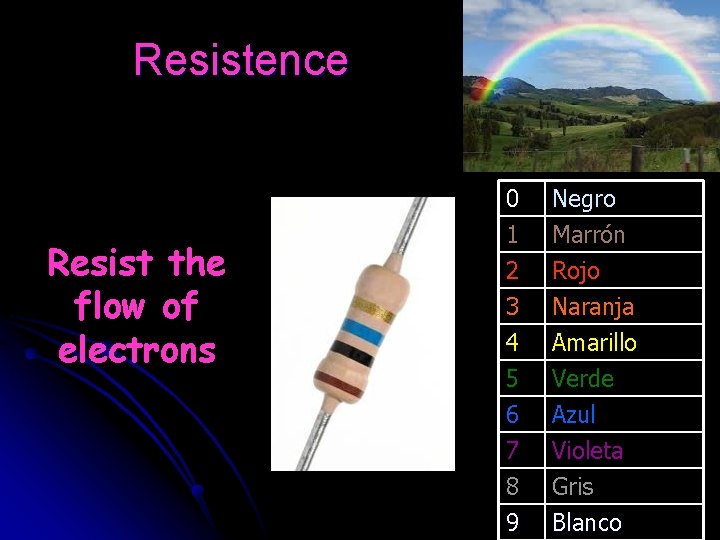
Resistence Resist the flow of electrons 0 1 2 3 Negro Marrón Rojo Naranja 4 5 6 7 8 Amarillo Verde Azul Violeta Gris 9 Blanco
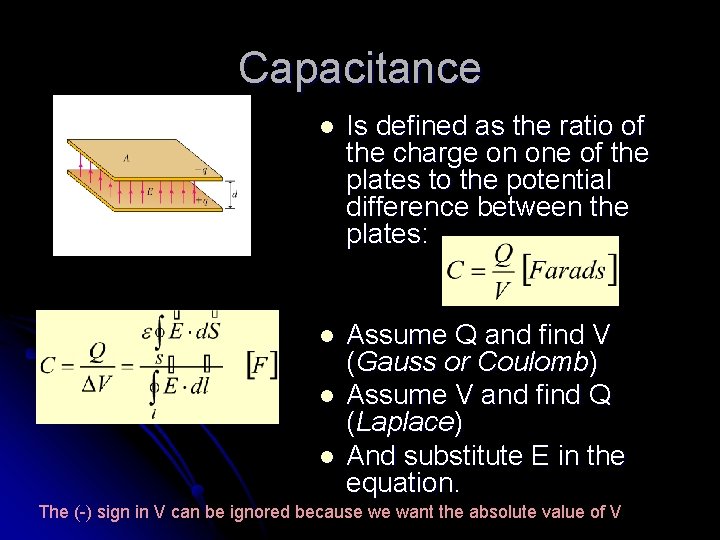
Capacitance l Is defined as the ratio of the charge on one of the plates to the potential difference between the plates: l Assume Q and find V (Gauss or Coulomb) Assume V and find Q (Laplace) And substitute E in the equation. l l The (-) sign in V can be ignored because we want the absolute value of V
Two cases: Capacitance 1. 2. Parallel plate Coaxial
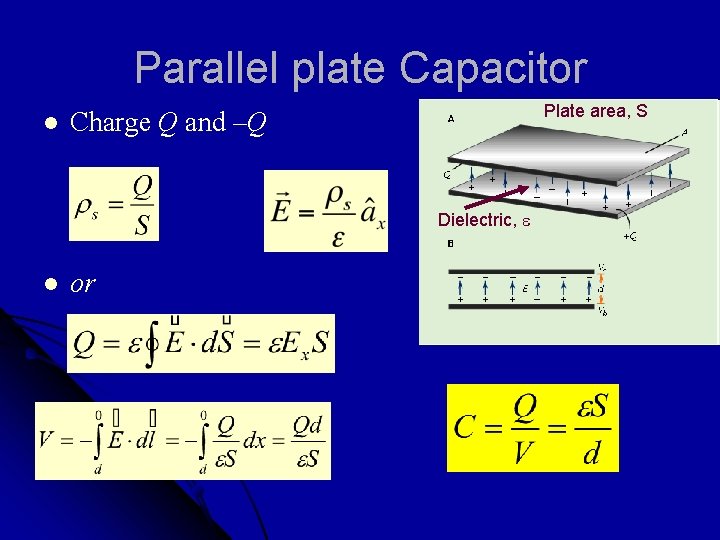
Parallel plate Capacitor l Plate area, S Charge Q and –Q Dielectric, e l or
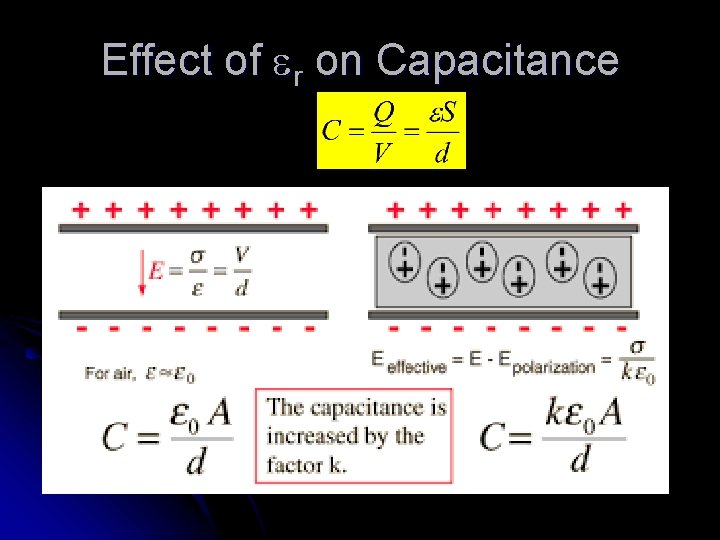
Effect of er on Capacitance
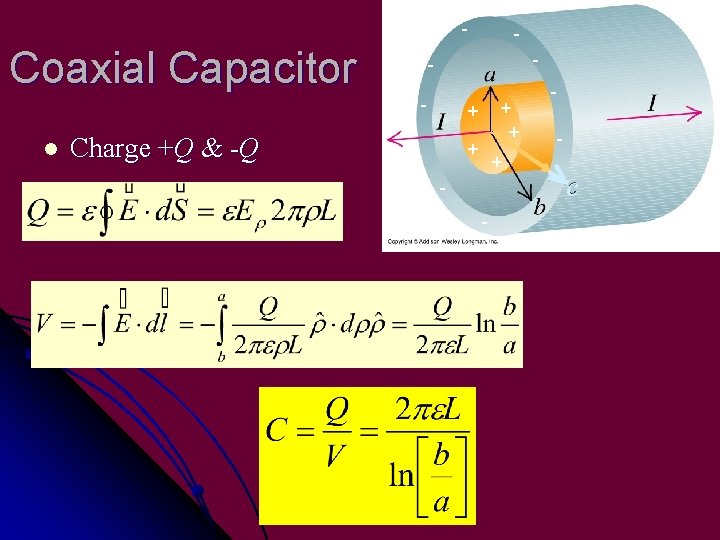
Plate area, S - Coaxial Capacitor - - Dielectric, e + + + - l - Charge +Q & -Q - - c
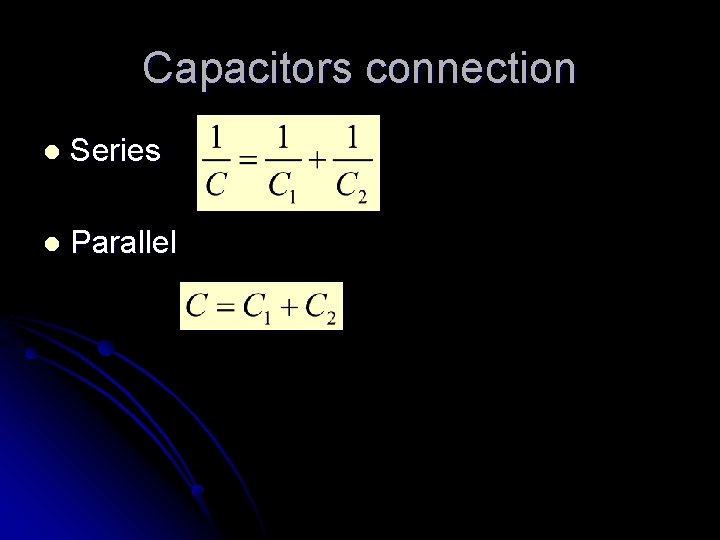
Capacitors connection l Series l Parallel
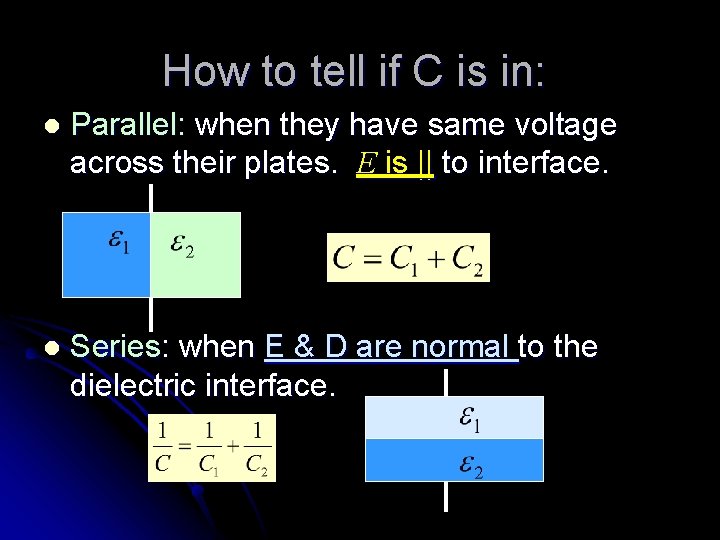
How to tell if C is in: l Parallel: when they have same voltage across their plates. E is || to interface. l Series: when E & D are normal to the dielectric interface.
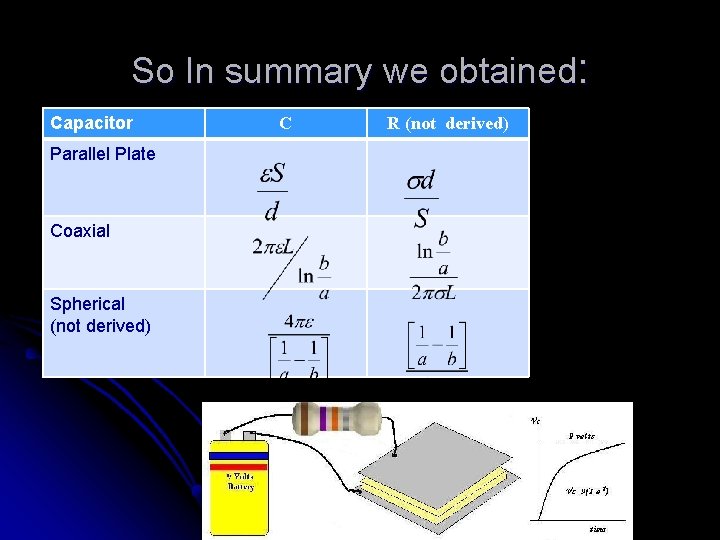
So In summary we obtained: Capacitor Parallel Plate Coaxial Spherical (not derived) C R (not derived)
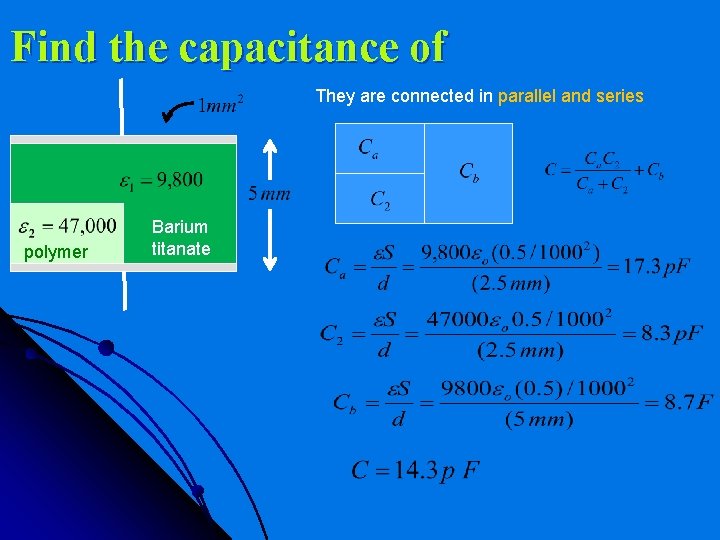
Find the capacitance of They are connected in parallel and series polymer Barium titanate
- Slides: 19