
Resin Cements Cementation of Aesthetic Resin Composite Indirect
- Slides: 42
Resin Cements Cementation of Aesthetic Resin Composite Indirect Restorations Dr. Rui Franco 27 July 2015
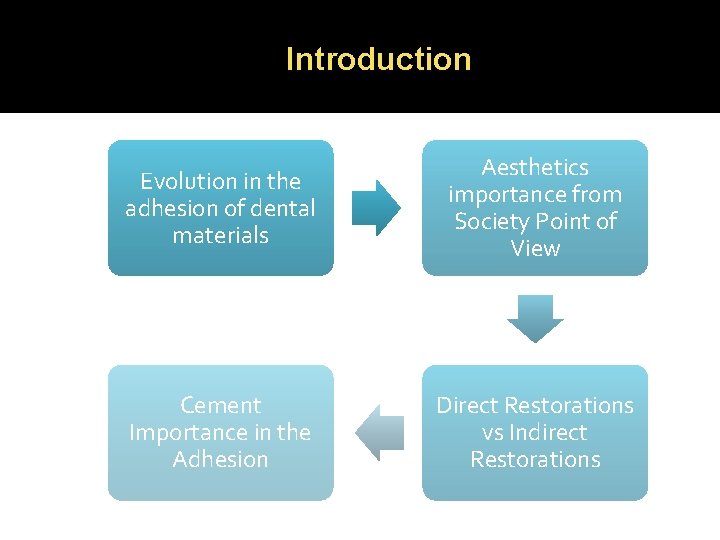
Introduction Evolution in the adhesion of dental materials Aesthetics importance from Society Point of View Cement Importance in the Adhesion Direct Restorations vs Indirect Restorations
Objectives � Resin Cements – State of the Art; � Cementing Technique in Indirect Composite Restoration: Polymerization type; Adhesive System.
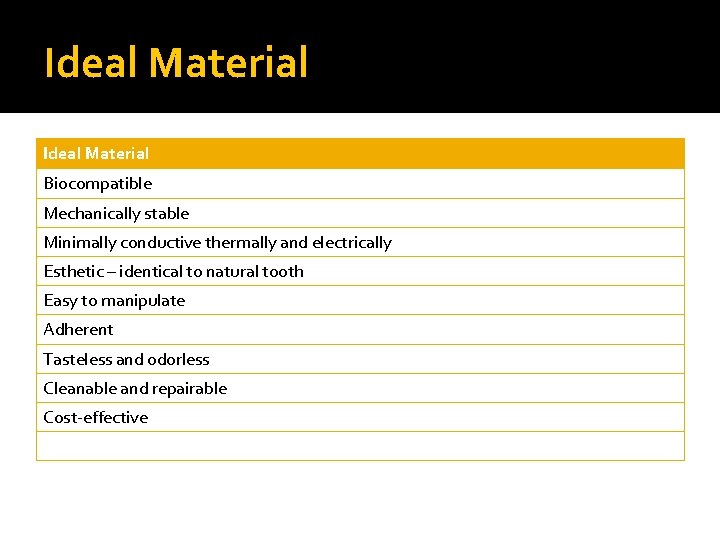
Ideal Material Biocompatible Mechanically stable Minimally conductive thermally and electrically Esthetic – identical to natural tooth Easy to manipulate Adherent Tasteless and odorless Cleanable and repairable Cost‐effective
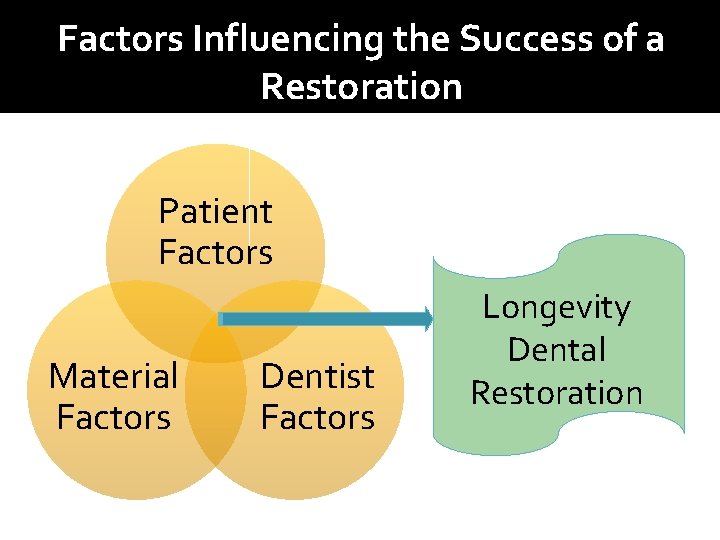
Factors Influencing the Success of a Restoration Patient Factors Material Factors Dentist Factors Longevity Dental Restoration
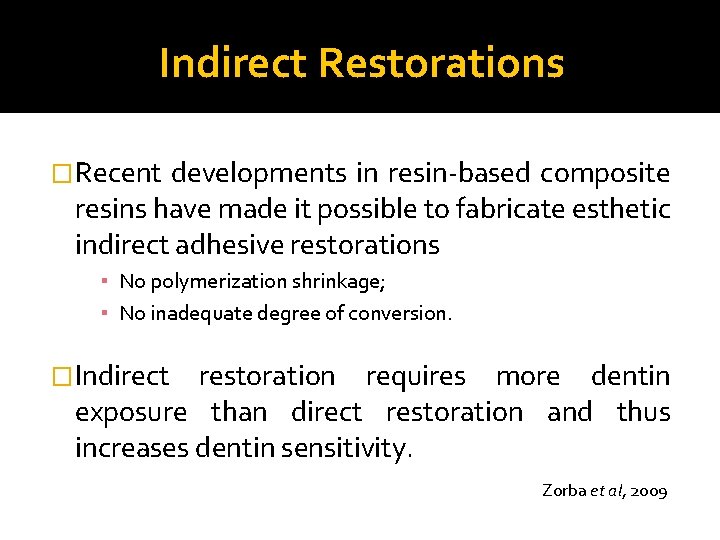
Indirect Restorations �Recent developments in resin‐based composite resins have made it possible to fabricate esthetic indirect adhesive restorations ▪ No polymerization shrinkage; ▪ No inadequate degree of conversion. �Indirect restoration requires more dentin exposure than direct restoration and thus increases dentin sensitivity. Zorba et al, 2009
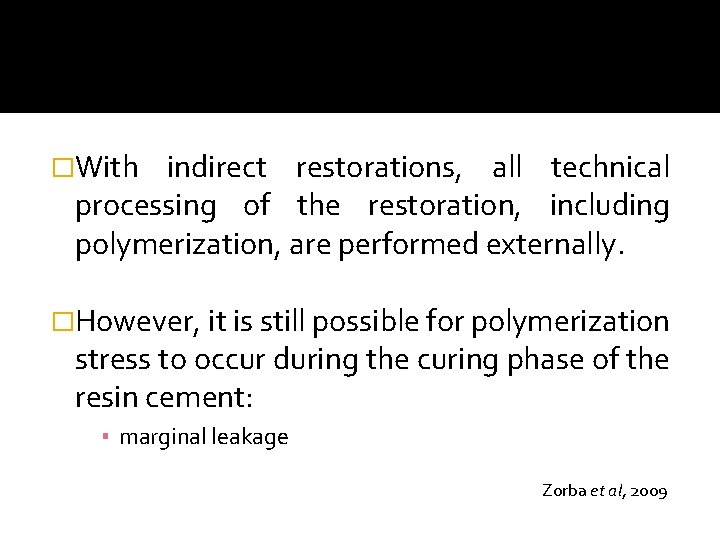
�With indirect restorations, all technical processing of the restoration, including polymerization, are performed externally. �However, it is still possible for polymerization stress to occur during the curing phase of the resin cement: ▪ marginal leakage Zorba et al, 2009
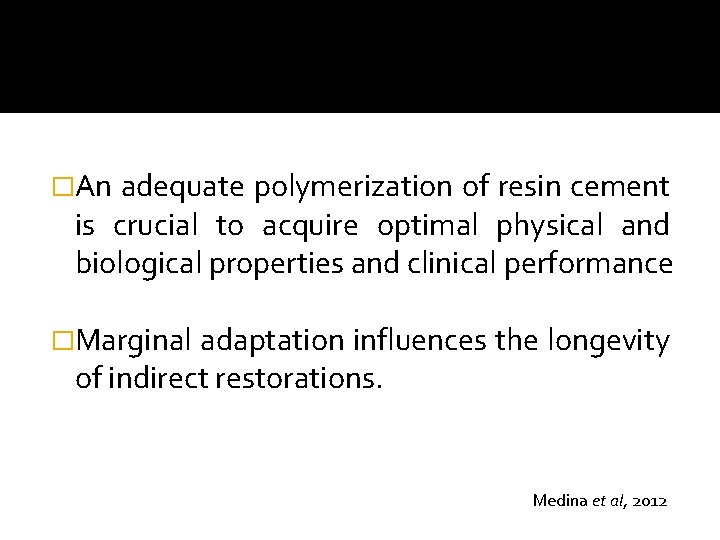
�An adequate polymerization of resin cement is crucial to acquire optimal physical and biological properties and clinical performance �Marginal adaptation influences the longevity of indirect restorations. Medina et al, 2012
Case Review Study
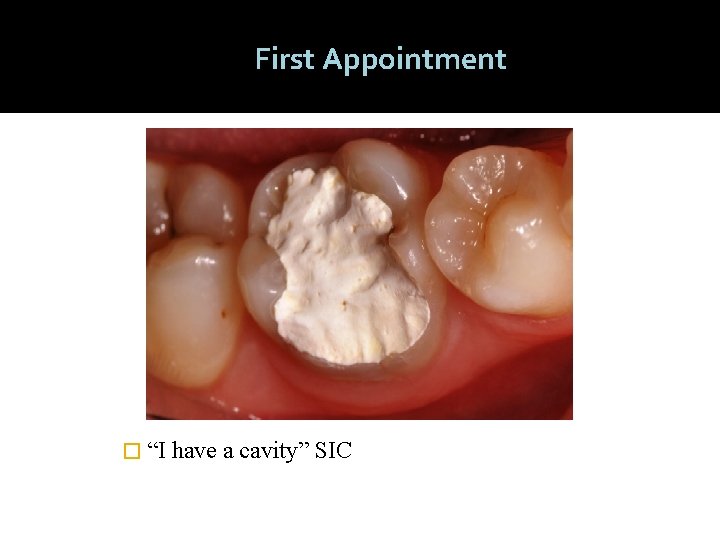
First Appointment � “I have a cavity” SIC
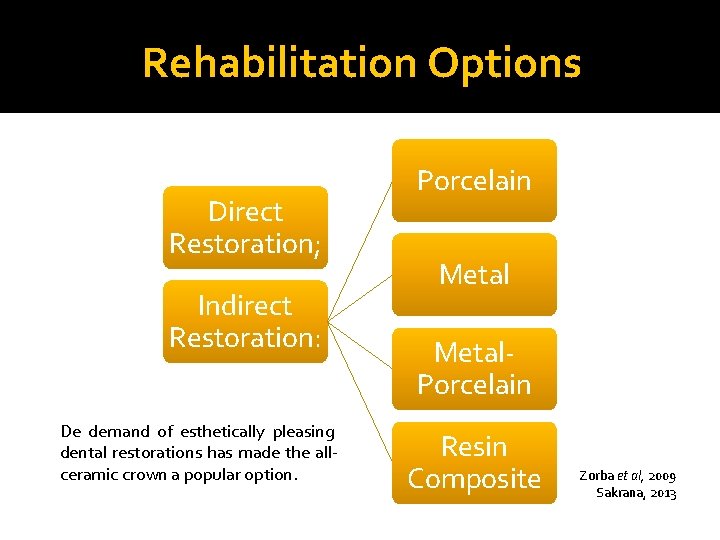
Rehabilitation Options Direct Restoration; Indirect Restoration: De demand of esthetically pleasing dental restorations has made the all‐ ceramic crown a popular option. Porcelain Metal‐ Porcelain Resin Composite Zorba et al, 2009 Sakrana, 2013
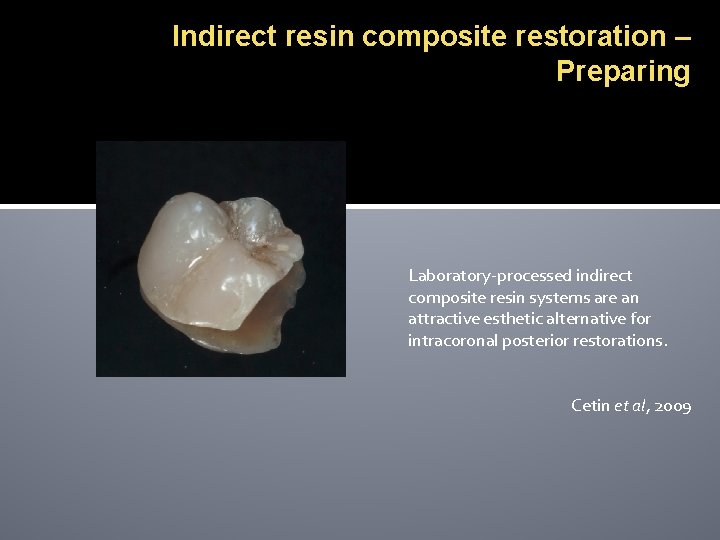
Indirect resin composite restoration – Preparing Laboratory‐processed indirect composite resin systems are an attractive esthetic alternative for intracoronal posterior restorations. Cetin et al, 2009
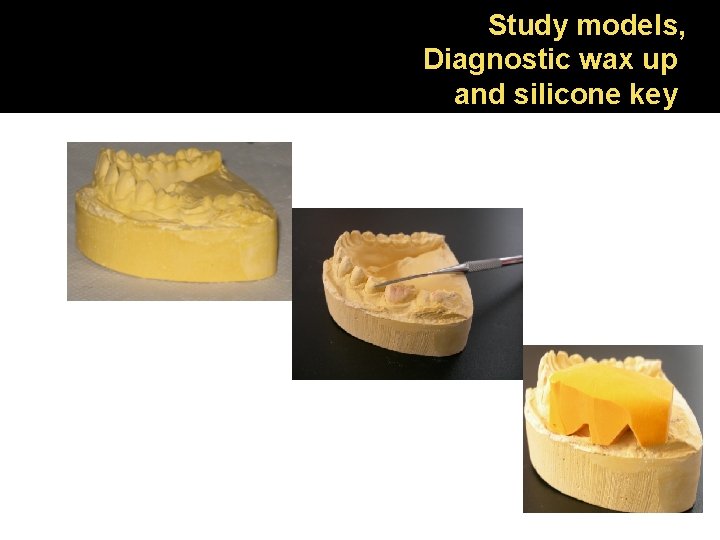
Study models, Diagnostic wax up and silicone key
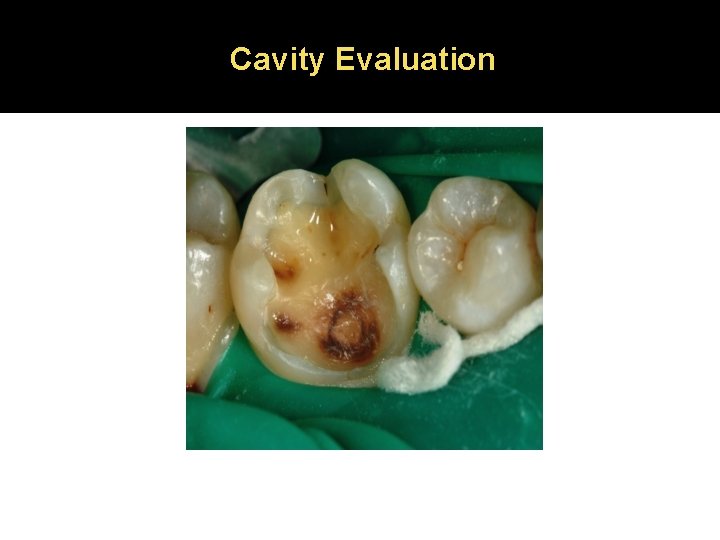
Cavity Evaluation
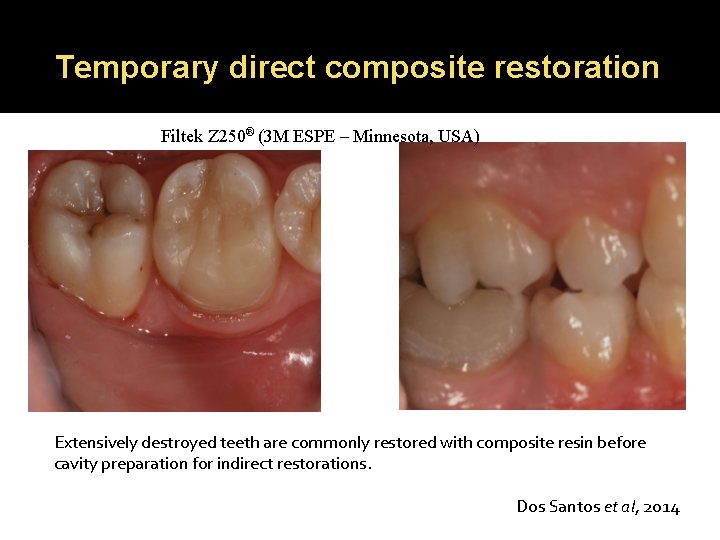
Temporary direct composite restoration Filtek Z 250® (3 M ESPE – Minnesota, USA) Extensively destroyed teeth are commonly restored with composite resin before cavity preparation for indirect restorations. Dos Santos et al, 2014
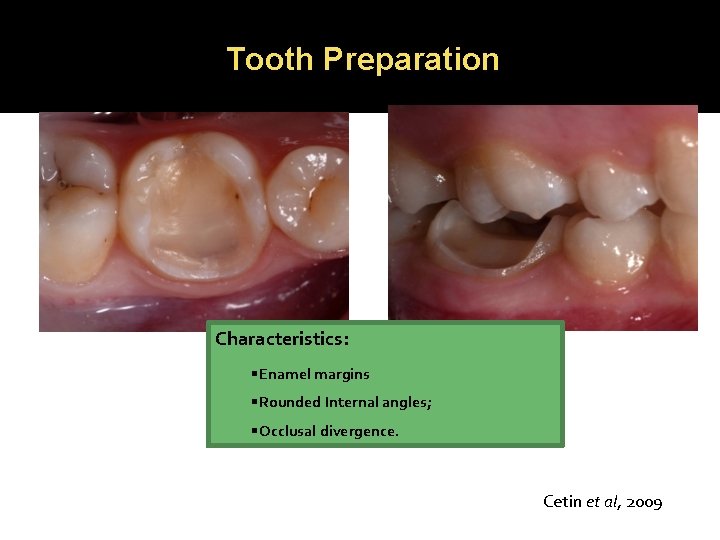
Tooth Preparation Characteristics: Enamel margins Rounded Internal angles; Occlusal divergence. Cetin et al, 2009
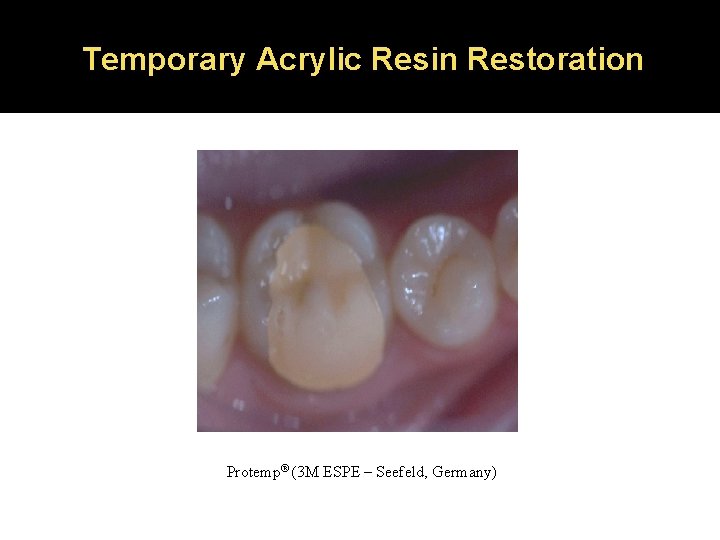
Temporary Acrylic Resin Restoration Protemp® (3 M ESPE – Seefeld, Germany)
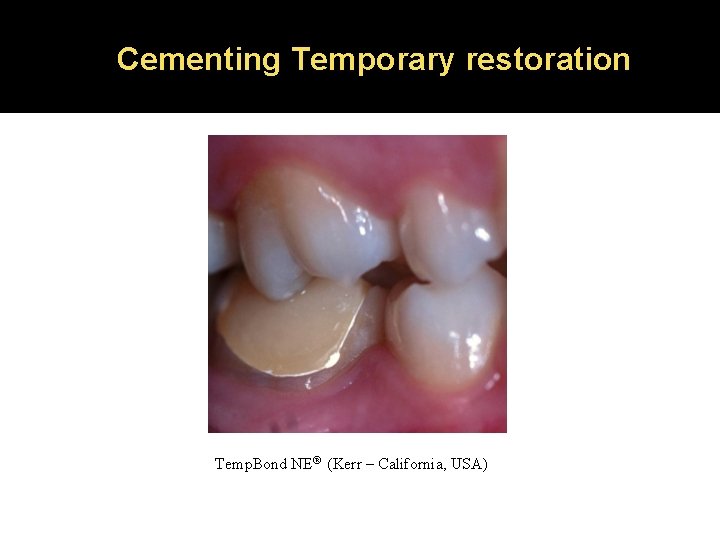
Cementing Temporary restoration Temp. Bond NE® (Kerr – California, USA)
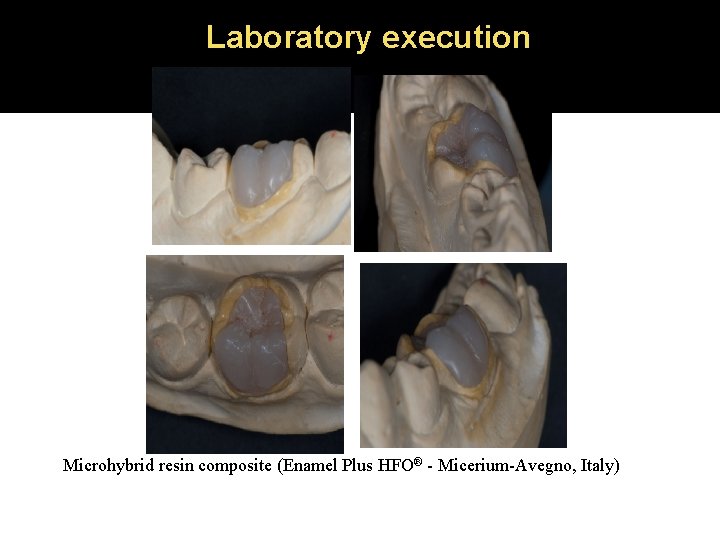
Laboratory execution Microhybrid resin composite (Enamel Plus HFO® - Micerium-Avegno, Italy)
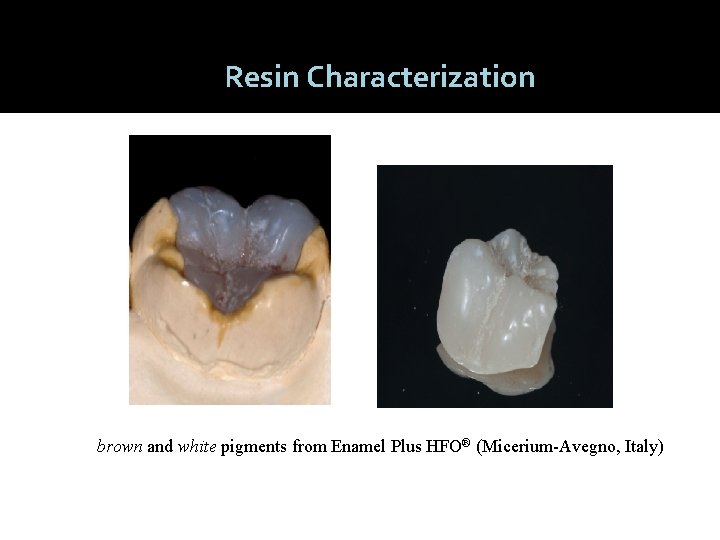
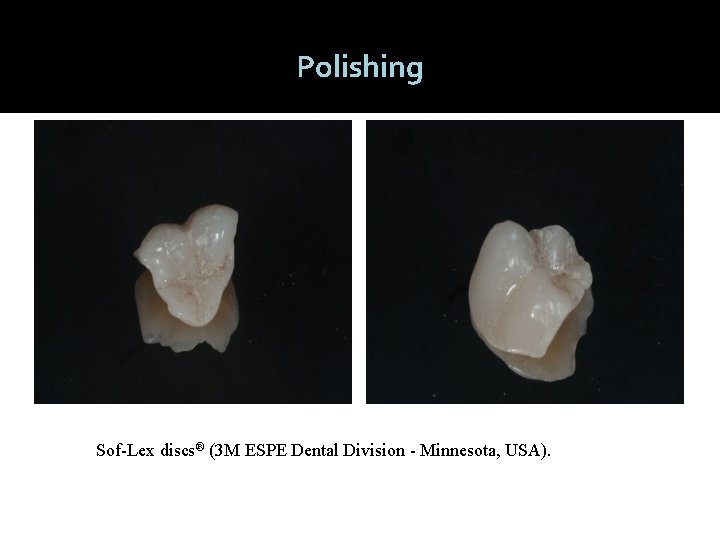
Resin Characterization brown and white pigments from Enamel Plus HFO® (Micerium-Avegno, Italy)
Polishing Sof-Lex discs® (3 M ESPE Dental Division - Minnesota, USA).
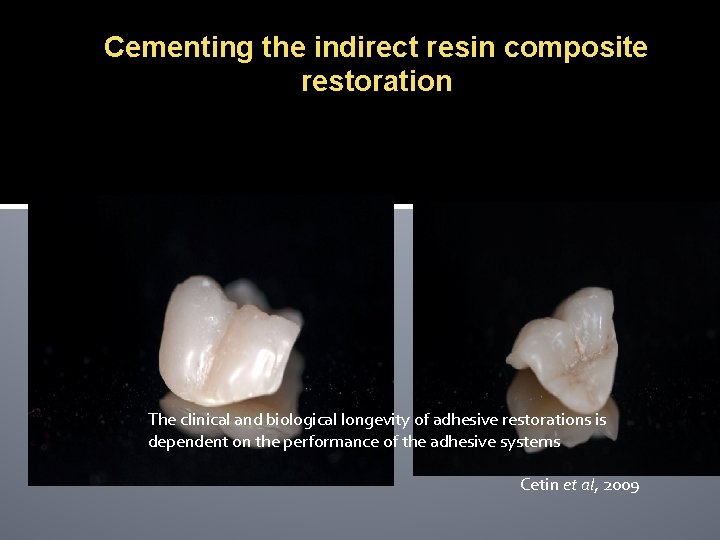
Cementing the indirect resin composite restoration The clinical and biological longevity of adhesive restorations is dependent on the performance of the adhesive systems Cetin et al, 2009
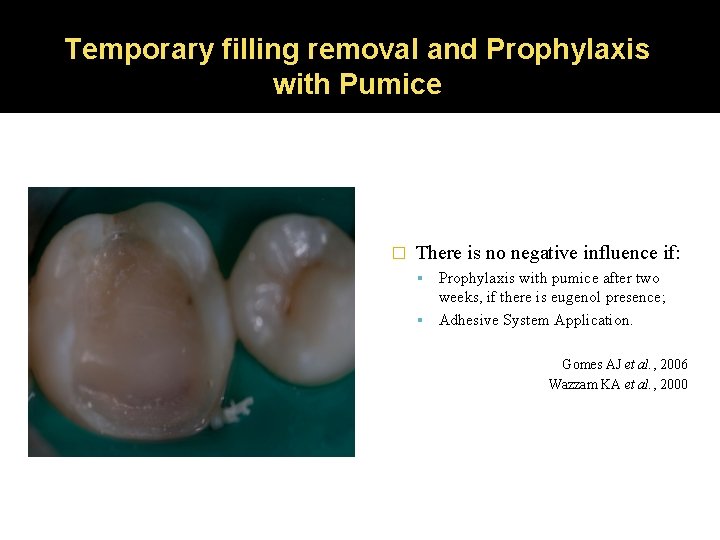
Temporary filling removal and Prophylaxis with Pumice � There is no negative influence if: Prophylaxis with pumice after two weeks, if there is eugenol presence; Adhesive System Application. Gomes AJ et al. , 2006 Wazzam KA et al. , 2000
Surface Treatment � If no surface treatment is done, the outcome can be: Microinfiltration; Margin discoloration. � With Aluminum Oxide jet as surface treatment it is believed to obtain the best adhesive properties. D’Arcangelo C e Vanini L, 2007 Dos Santos et al, 2014
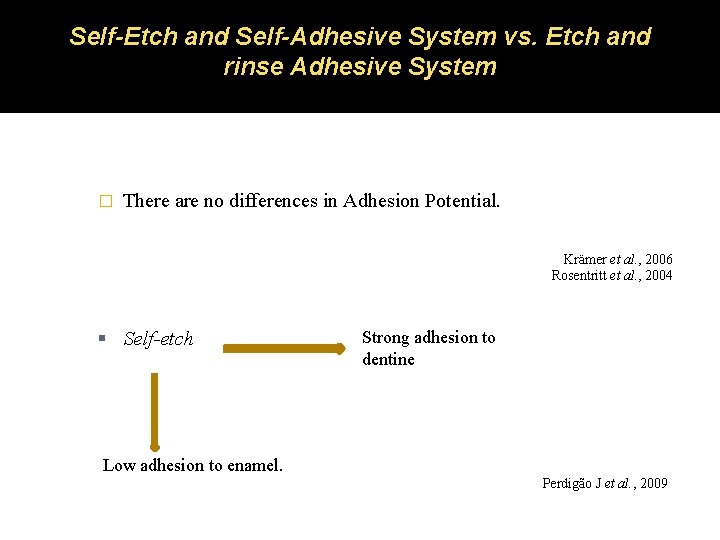
Self-Etch and Self-Adhesive System vs. Etch and rinse Adhesive System � There are no differences in Adhesion Potential. Krämer et al. , 2006 Rosentritt et al. , 2004 Self-etch Strong adhesion to dentine Low adhesion to enamel. Perdigão J et al. , 2009
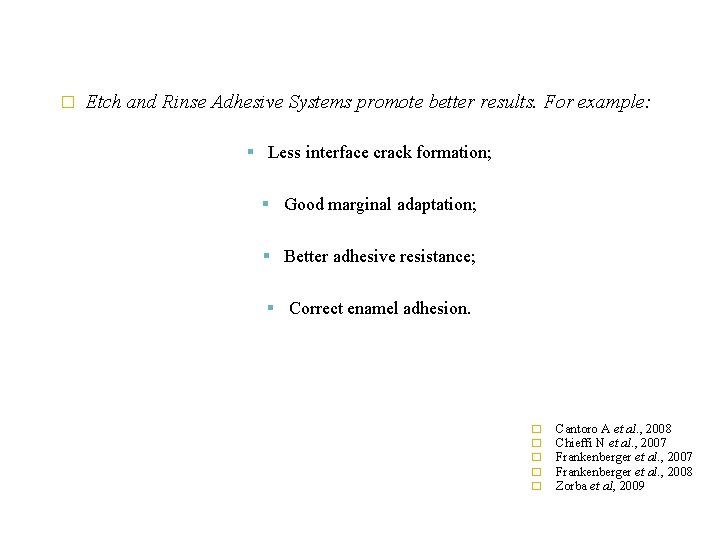
� Etch and Rinse Adhesive Systems promote better results. For example: Less interface crack formation; Good marginal adaptation; Better adhesive resistance; Correct enamel adhesion. � � � Cantoro A et al. , 2008 Chieffi N et al. , 2007 Frankenberger et al. , 2008 Zorba et al, 2009
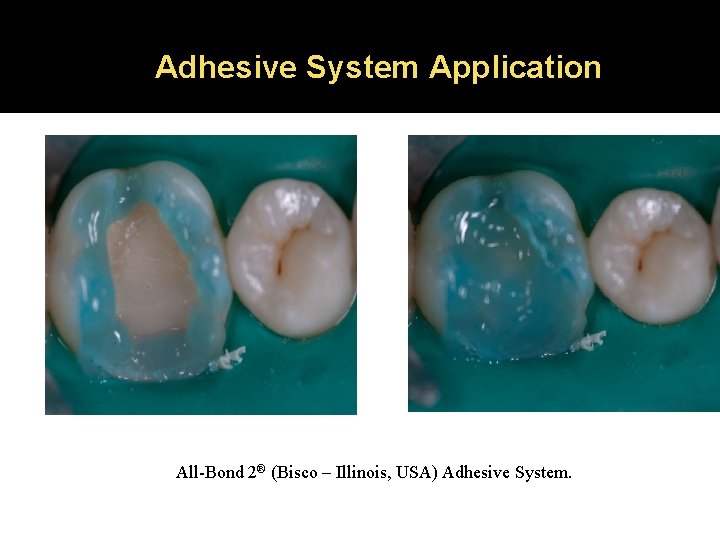
Adhesive System Application All-Bond 2® (Bisco – Illinois, USA) Adhesive System.
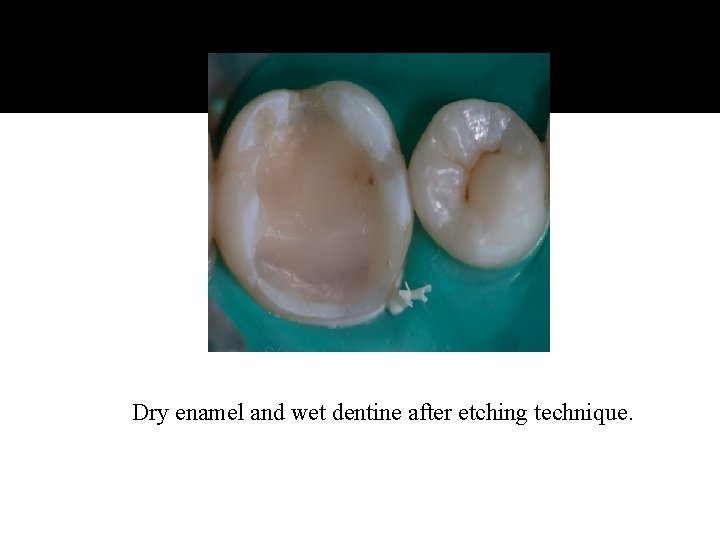
Dry enamel and wet dentine after etching technique.
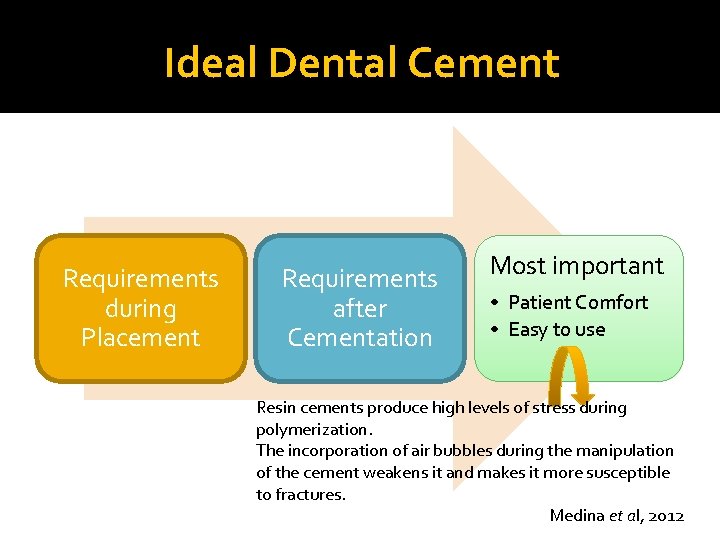
Ideal Dental Cement Requirements during Placement Requirements after Cementation Most important • Patient Comfort • Easy to use Resin cements produce high levels of stress during polymerization. The incorporation of air bubbles during the manipulation of the cement weakens it and makes it more susceptible to fractures. Medina et al, 2012
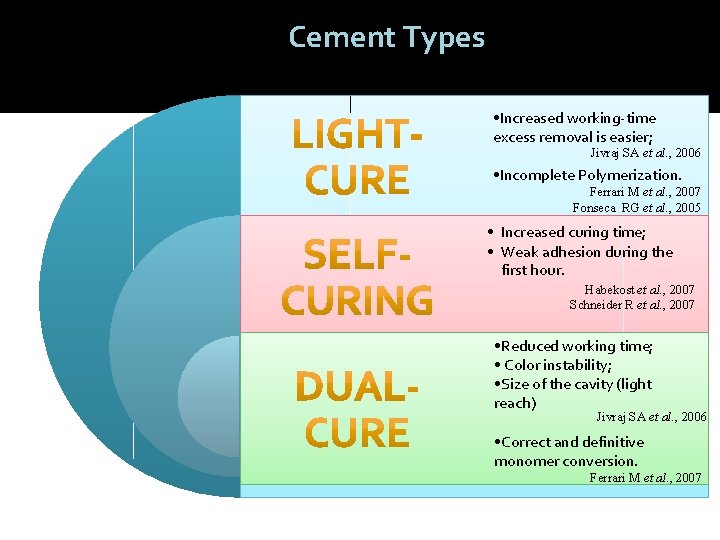
Cement Types • Increased working‐time excess removal is easier; Jivraj SA et al. , 2006 • Incomplete Polymerization. Ferrari M et al. , 2007 Fonseca RG et al. , 2005 • Increased curing time; • Weak adhesion during the first hour. Habekost et al. , 2007 Schneider R et al. , 2007 • Reduced working time; • Color instability; • Size of the cavity (light reach) Jivraj SA et al. , 2006 • Correct and definitive monomer conversion. Ferrari M et al. , 2007
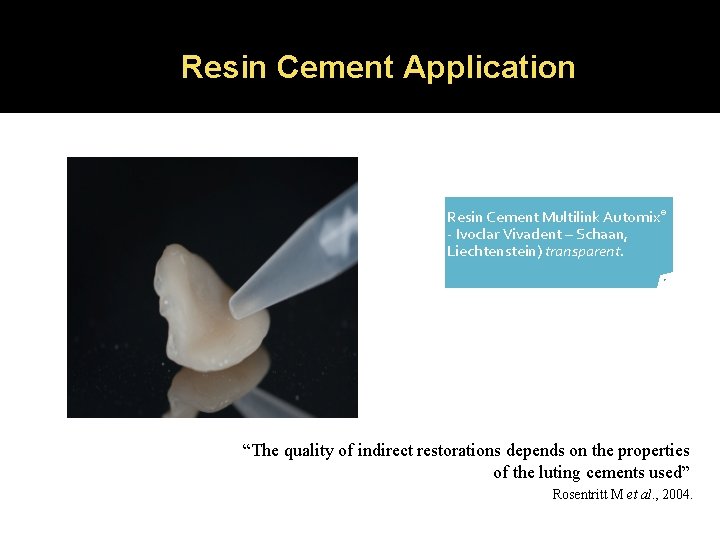
Resin Cement Application Resin Cement Multilink Automix® ‐ Ivoclar Vivadent – Schaan, Liechtenstein) transparent. “The quality of indirect restorations depends on the properties of the luting cements used” Rosentritt M et al. , 2004.
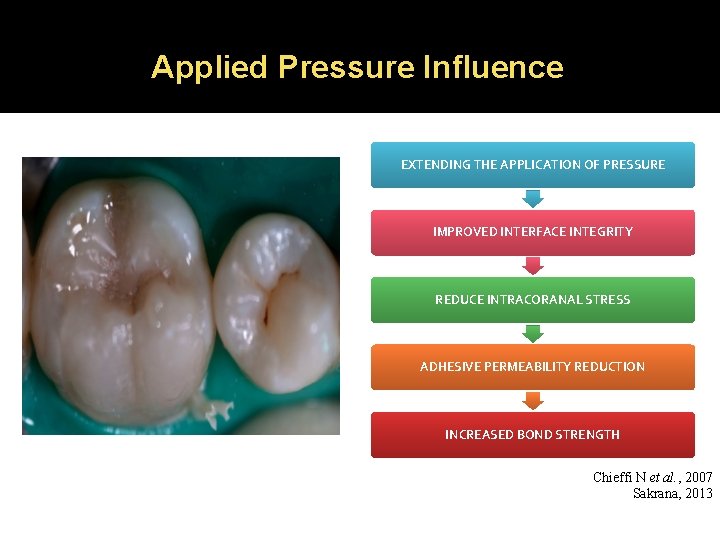
Applied Pressure Influence EXTENDING THE APPLICATION OF PRESSURE IMPROVED INTERFACE INTEGRITY REDUCE INTRACORANAL STRESS ADHESIVE PERMEABILITY REDUCTION INCREASED BOND STRENGTH Chieffi N et al. , 2007 Sakrana, 2013
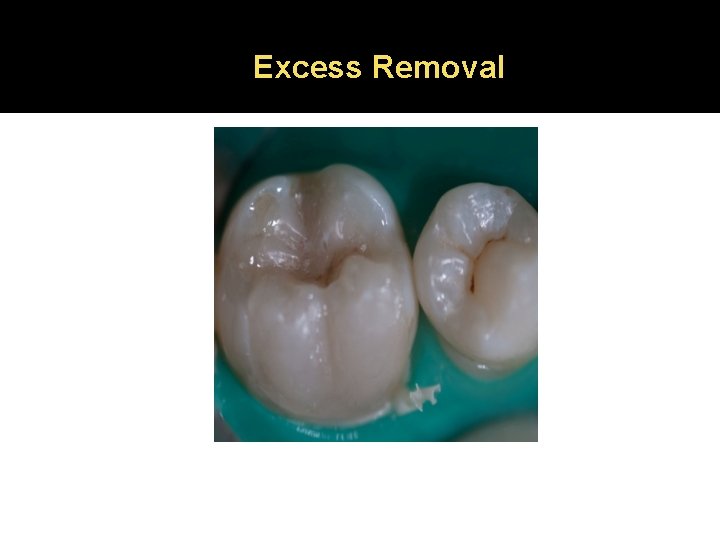
Excess Removal
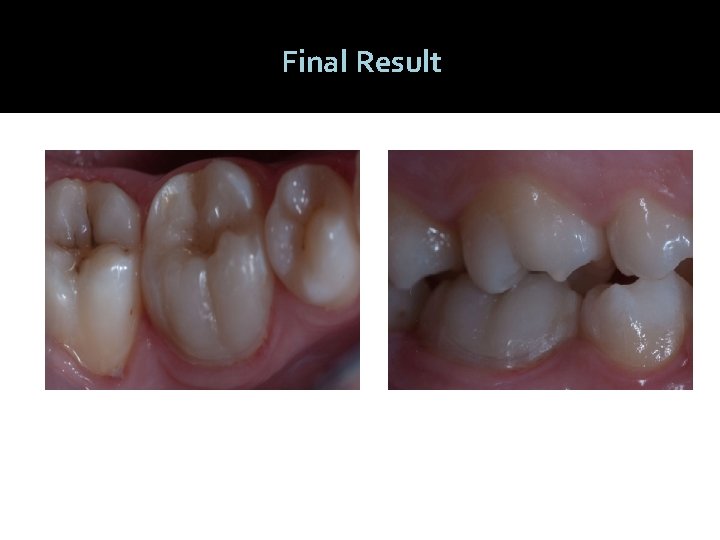
Final Result
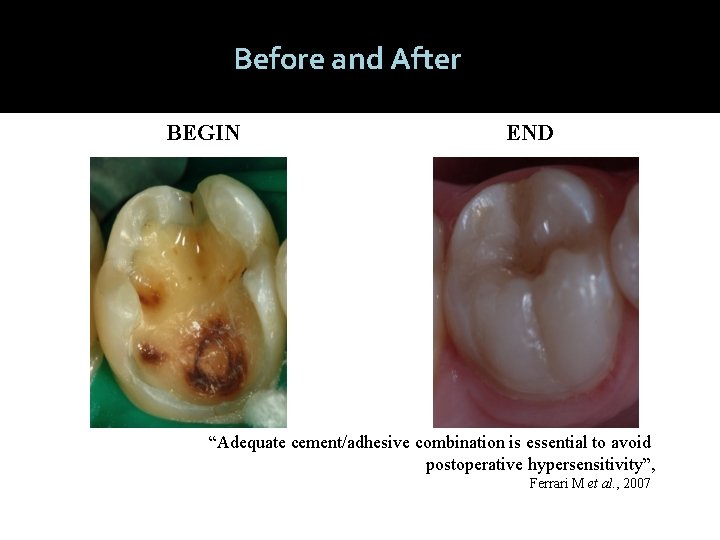
Before and After BEGIN END “Adequate cement/adhesive combination is essential to avoid postoperative hypersensitivity”, Ferrari M et al. , 2007
Discussion
Discussion � The extra-oral polymerization of composite resins increases the degree of conversion. Improved mechanical properties. Dejak B et al. , 2008 (in vitro) � The ceramic has low fracture resistance because it is harder than enamel and a low deformation limit. Lower cost in indirect composite resin restorations; Cannot withstand elastic deformation while resinous materials can; High levels of abrasion on antagonizing teeth with ceramics. Dejak B et al. , 2008 Sakrana, 2013 � On the other hand, the ceramic gets a superior stability on maintaining color and marginal discoloration. Fabianelli A et al. , 2006 (in vivo)
� Surface conditioning has a significant effect on the shear bond strength. Zorba et al, 2009 � Surface treatment can be carried out by chemical treatment silanization. Soares JC et al. , 2004 (in vitro) � If there is no prior mechanical treatment of the surface of the restoration, the silanization does not influence in any way the bonding. The hydrofluoric acid followed by silane application is plausible. The oxide aluminum jet gets the best adhesive properties. D’Arcangelo C e Vanini L, 2007 (in vitro)
� The self-etch adhesives are not as effective in enamel as etch and rinse are, but are relatively effective in dentin and post-operative sensitivity. Yoneda S et al. , 2005 � There is no difference between the postoperative sensitivity depending on the choice of adhesive system and is rather related to a good or bad technical execution. Perdigão et al. , 2003 � In cementing indirect restorations is advocated an etch and rinse adhesive system and resin cement application that is not only light-curing. Ritter AV et al. , 2009
Conclusions � Indirect restorations in composite resin are a current and rapidly developing technique. � With this work it is concluded that the growing clinical success of resin cements. Influence the aesthetics and longevity of this type of restorations. For this is necessary an effective adhesion to the remaining tooth.
� Yet to assess in the long-term: Secondary caries; Postoperative sensitivity; Color stability; Integrity of the restoration; Cement wear at marginal level.
Muito Obrigado! Hartelijke Dank! Thank you very much!