
Resilient Steel Plate Shear Walls Analysis of Performance
- Slides: 21
Resilient Steel Plate Shear Walls: Analysis of Performance Using Open. Sees and Tera. Grid Resources Patricia M. Clayton University of Washington Jeffrey Berman (PI) Laura Lowes (Co-PI)
NEES-SG: SPSW Research Jeff Berman and Laura Lowes Michel Bruneau • Tasks: Larry Fahnestock K. C. Tsai Jeff Dragovich Rafael Sabelli Sponsored by NSF through the George E. Brown NEES Program – Develop a resilient SPSW – Develop performance based design tools for SPSW – Develop a new model for SPSW web plates – Explore the behavior of coupled SPSWs and develop design recommendations
What is a Resilient Steel Wall? • Combines benefits of Steel Plate Shear Walls (SPSWs) with self-centering technologies • SPSW provides: – – – Ease of construction High strength and initial stiffness Ductility Yielding over many stories Replaceable energy dissipation elements (steel plates) • Post-Tensioned (PT) Connection provides: – Self-centering capabilities – Quick return to occupancy after earthquake
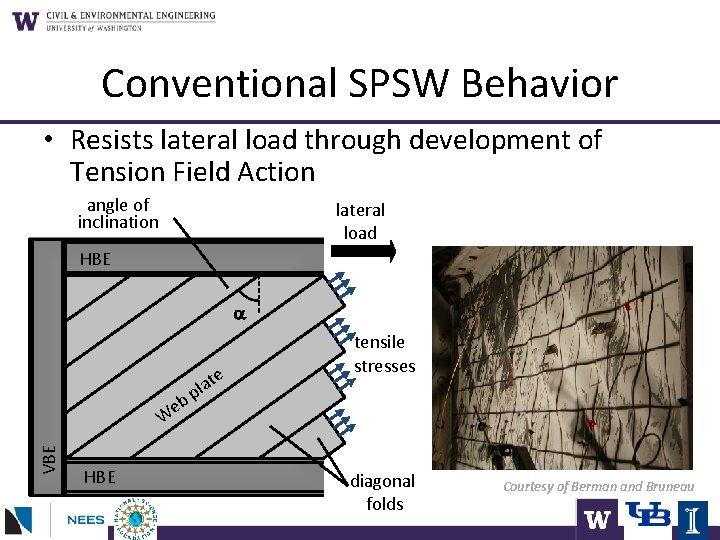
Conventional SPSW Behavior • Resists lateral load through development of Tension Field Action angle of inclination lateral load HBE a e eb t pla tensile stresses VBE W HBE diagonal folds Courtesy of Berman and Bruneau
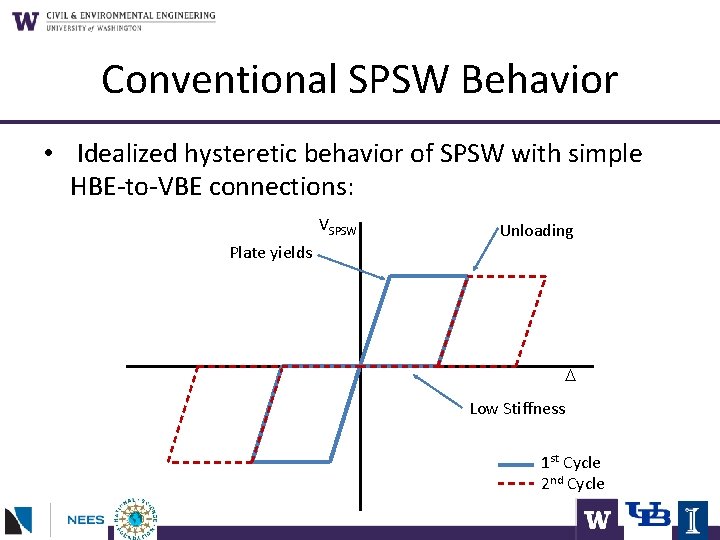
Conventional SPSW Behavior • Idealized hysteretic behavior of SPSW with simple HBE-to-VBE connections: VSPSW Plate yields Unloading D Low Stiffness 1 st Cycle 2 nd Cycle
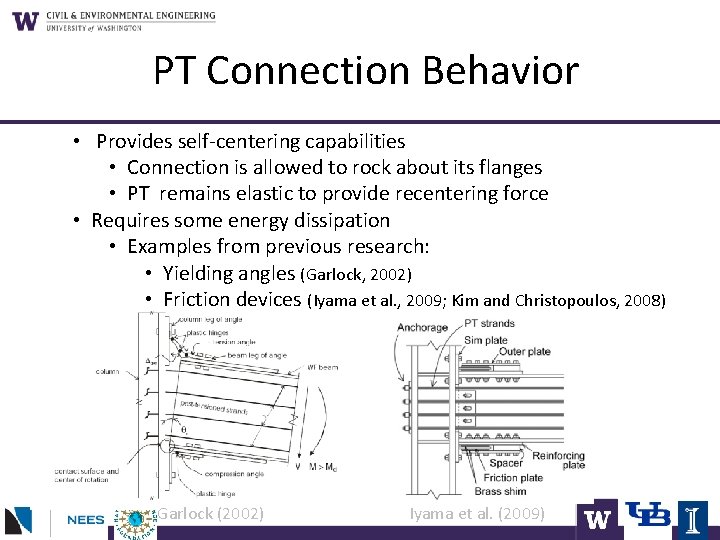
PT Connection Behavior • Provides self-centering capabilities • Connection is allowed to rock about its flanges • PT remains elastic to provide recentering force • Requires some energy dissipation • Examples from previous research: • Yielding angles (Garlock, 2002) • Friction devices (Iyama et al. , 2009; Kim and Christopoulos, 2008) Garlock (2002) Iyama et al. (2009)
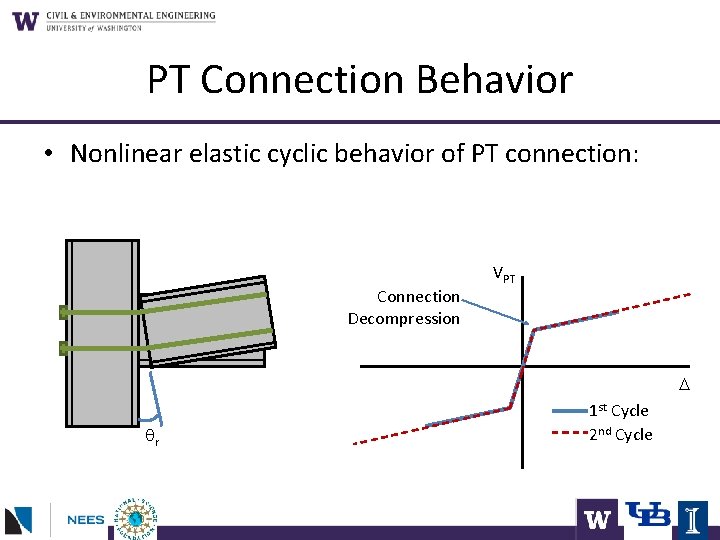
PT Connection Behavior • Nonlinear elastic cyclic behavior of PT connection: Connection Decompression VPT D qr 1 st Cycle 2 nd Cycle
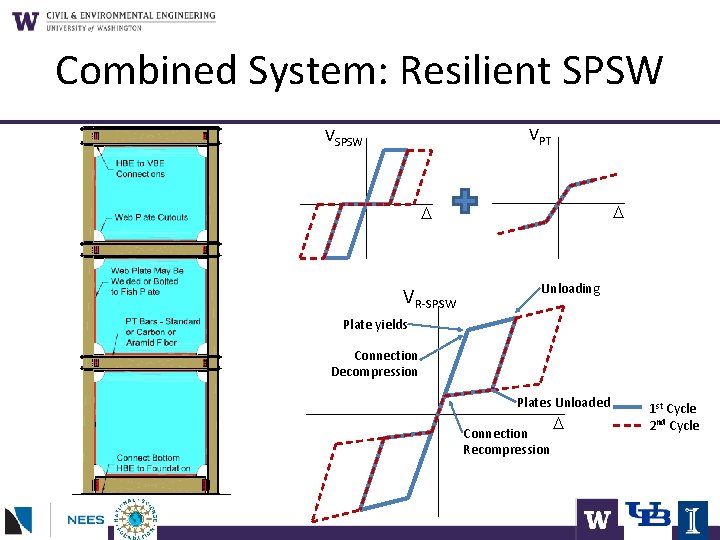
Combined System: Resilient SPSW VPT VSPSW D D VR-SPSW Unloading Plate yields Connection Decompression Plates Unloaded Connection Recompression D 1 st Cycle 2 nd Cycle
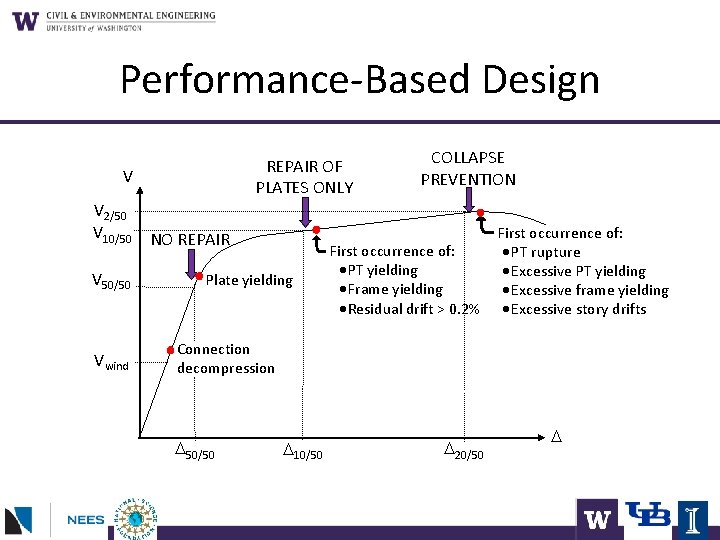
Performance-Based Design REPAIR OF PLATES ONLY V V 2/50 V 10/50 NO REPAIR V 50/50 Vwind Plate yielding COLLAPSE PREVENTION First occurrence of: · PT yielding · Frame yielding · Residual drift > 0. 2% First occurrence of: · PT rupture · Excessive PT yielding · Excessive frame yielding · Excessive story drifts Connection decompression D 50/50 D 10/50 D 20/50 D
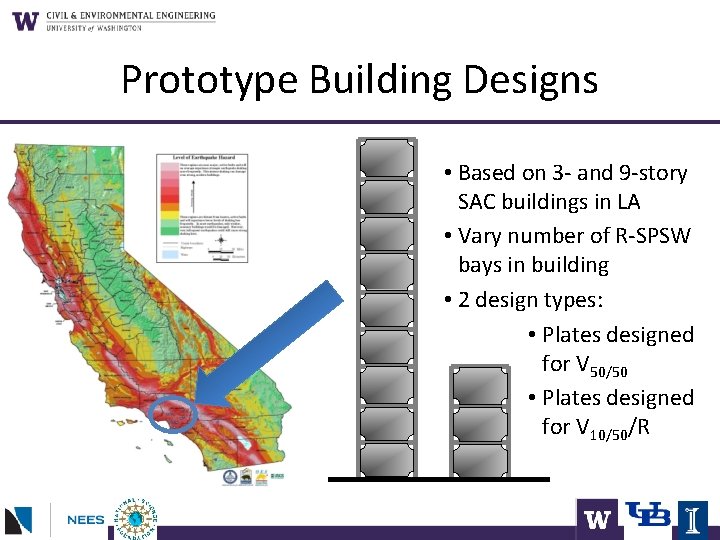
Prototype Building Designs • Based on 3 - and 9 -story SAC buildings in LA • Vary number of R-SPSW bays in building • 2 design types: • Plates designed for V 50/50 • Plates designed for V 10/50/R
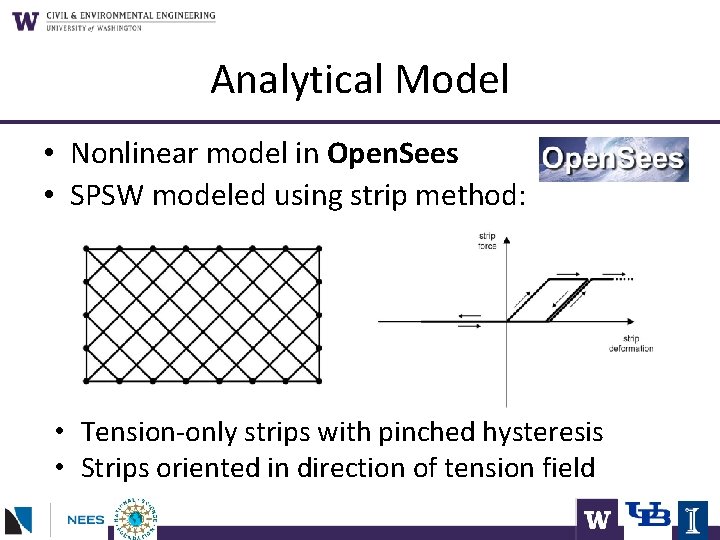
Analytical Model • Nonlinear model in Open. Sees • SPSW modeled using strip method: • Tension-only strips with pinched hysteresis • Strips oriented in direction of tension field
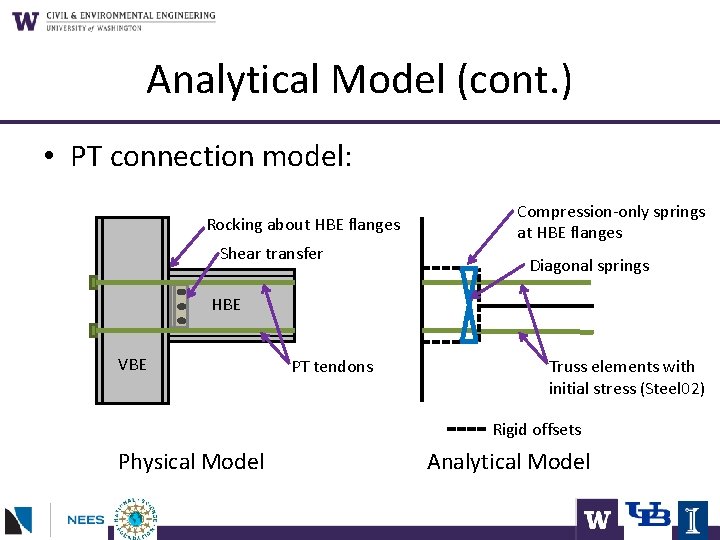
Analytical Model (cont. ) • PT connection model: Rocking about HBE flanges Shear transfer Compression-only springs at HBE flanges Diagonal springs HBE VBE PT tendons Truss elements with initial stress (Steel 02) Rigid offsets Physical Model Analytical Model
Dynamic Analyses • Each model subjected to 60 LA SAC ground motions representing 3 seismic hazard levels • 50% in 50 year • 10% in 50 year • 2% in 50 year • Used Open. Sees. MP to run ground motions in parallel on Tera. Grid machines
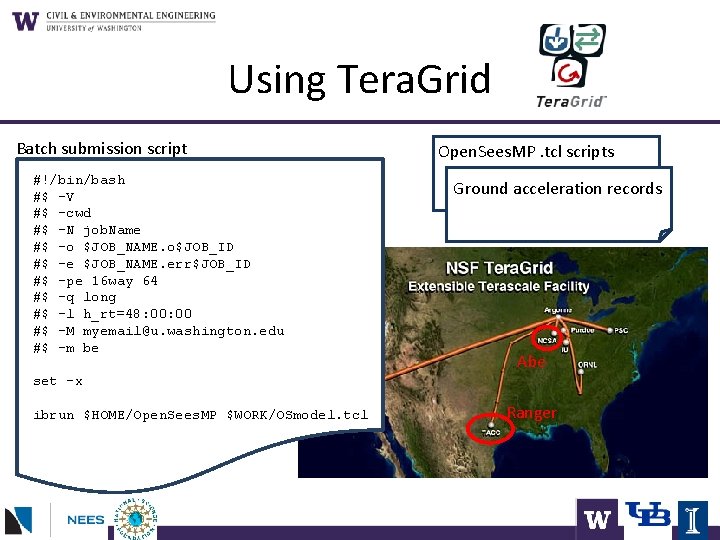
Using Tera. Grid Batch submission script #!/bin/bash #$ -V #$ -cwd #$ -N job. Name #$ -o $JOB_NAME. o$JOB_ID #$ -e $JOB_NAME. err$JOB_ID #$ -pe 16 way 64 #$ -q long #$ -l h_rt=48: 00 #$ -M myemail@u. washington. edu #$ -m be Open. Sees. MP. tcl scripts Ground acceleration records Abe set –x ibrun $HOME/Open. Sees. MP $WORK/OSmodel. tcl Ranger
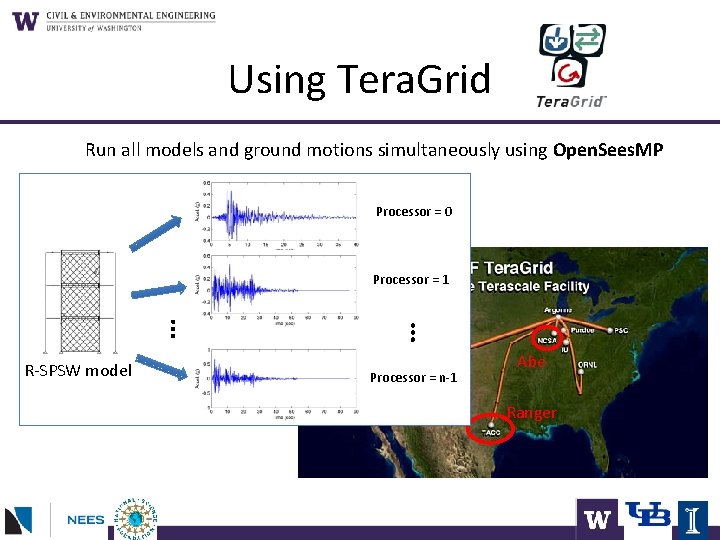
Using Tera. Grid Run all models and ground motions simultaneously using Open. Sees. MP Processor = 0 Processor = 1 R-SPSW model Processor = n-1 Abe Ranger
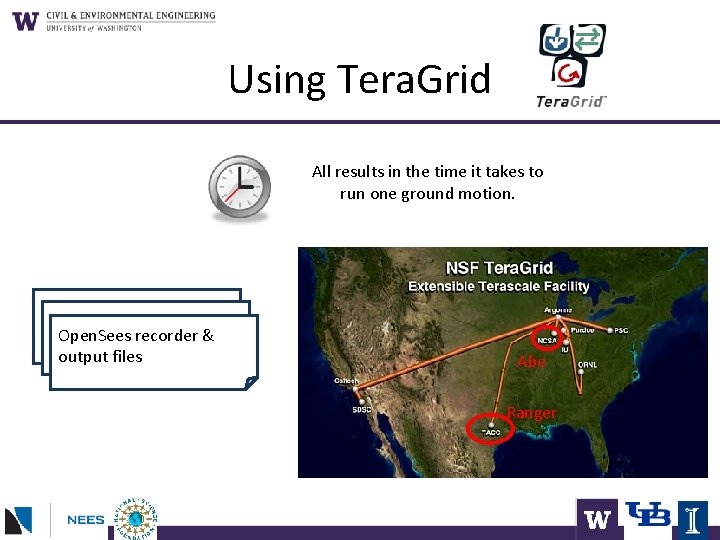
Using Tera. Grid All results in the time it takes to run one ground motion. Open. Sees recorder & output files Abe Ranger
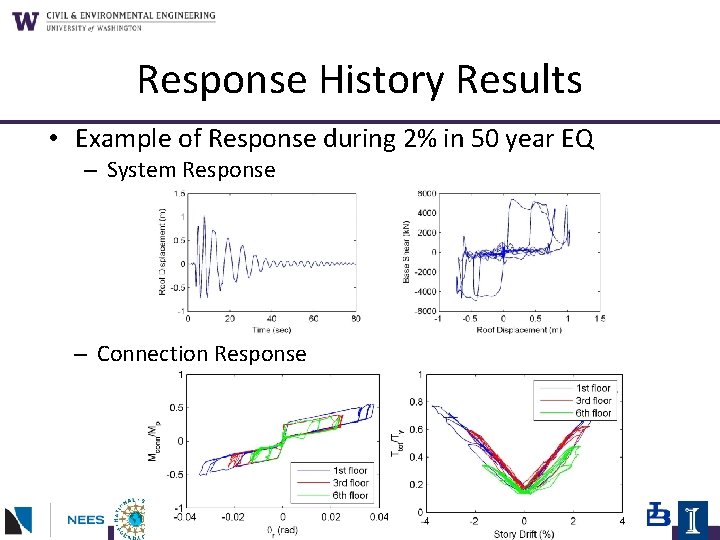
Response History Results • Example of Response during 2% in 50 year EQ – System Response – Connection Response
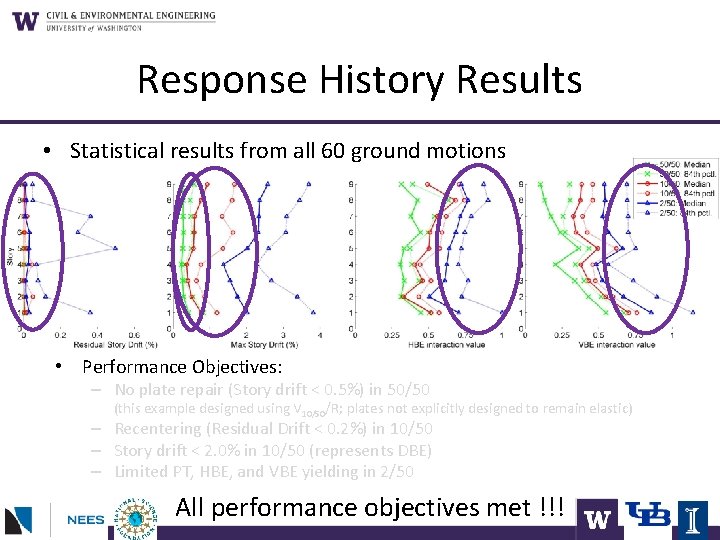
Response History Results • Statistical results from all 60 ground motions • Performance Objectives: – No plate repair (Story drift < 0. 5%) in 50/50 (this example designed using V 10/50/R; plates not explicitly designed to remain elastic) – Recentering (Residual Drift < 0. 2%) in 10/50 – Story drift < 2. 0% in 10/50 (represents DBE) – Limited PT, HBE, and VBE yielding in 2/50 All performance objectives met !!!
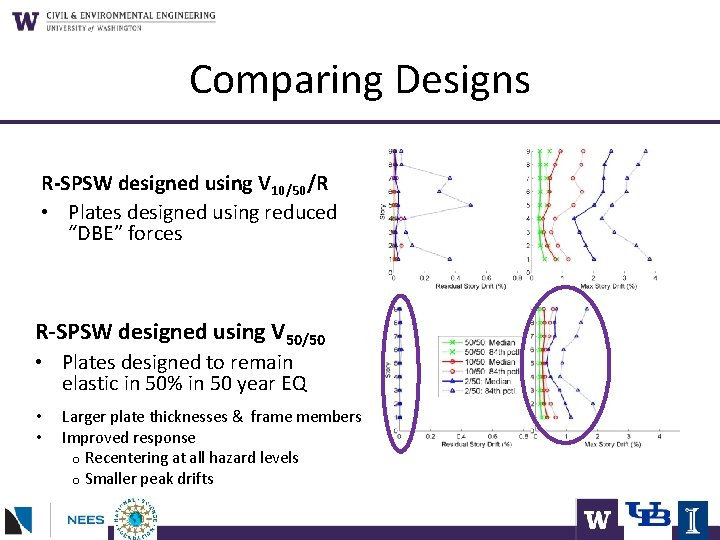
Comparing Designs R-SPSW designed using V 10/50/R • Plates designed using reduced “DBE” forces R-SPSW designed using V 50/50 • Plates designed to remain elastic in 50% in 50 year EQ • • Larger plate thicknesses & frame members Improved response o Recentering at all hazard levels o Smaller peak drifts
Conclusions • Preliminary design procedure developed for R-SPSW • Dynamic analyses show R-SPSW can meet proposed performance objectives – including recentering in 10% in 50 year EQ • Highly nonlinear model significant computational effort • Use of Tera. Grid resources reduced computational time by more than 90% • Experimental studies on R-SPSW currently taking place
Thank You