
resilient procedure use Halden Reactor Project Norway obey
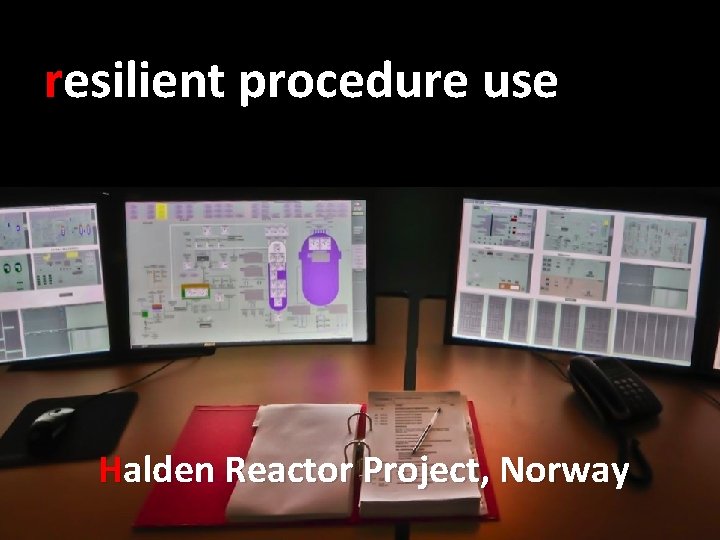
resilient procedure use Halden Reactor Project, Norway
obey the principles without being bound by them bruce lee
resilience is about… • the ability of a system to adapt to unforeseen, challenging situations (incl. but not limited to Fukushima-scale events) • the ability to mobilize additional resources when a system approaches its margin of maneuver • enabling smooth transfer of control
motivation • Balancing pre-planned responses and the ability to adapt to novel situations is not easy. These demands can be competing or contradictory. • Focusing solely on procedural adherence may undermine the crew’s ability to make autonomous assessments, to think ahead, and to keep a high-level overview of the situation (over-reliance on procedures). • Emergency response in complex scenarios requires reliability and resilience
motivation To respond to unanticipated situations that are not entirely covered by procedure, crews need – Cognitive capacity, expertise, questioning attitude – Understand procedure backgrounds and applicability – Monitor for anomalies, predict plant evolution – Avoid over-reliance on procedures Can we improve the ability to handle unexpected scenarios through staffing and support systems? – Shift technical advisor – Procedure overview tool – New large screen display with safety focus
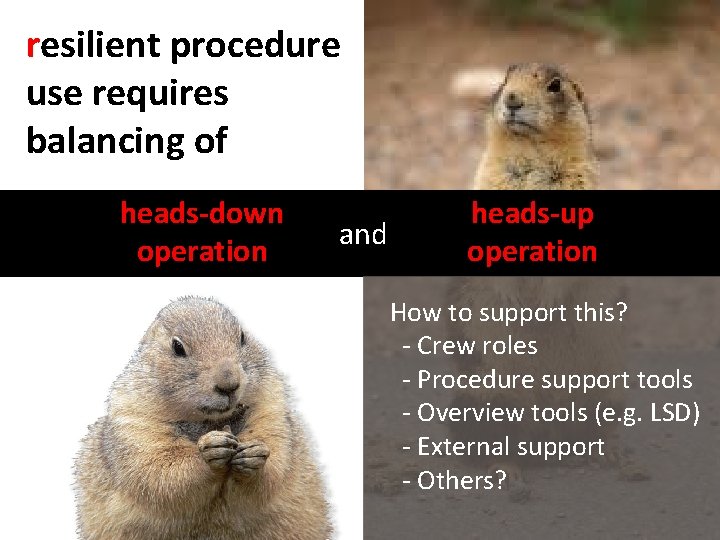
resilient procedure use requires balancing of heads-down operation and heads-up operation How to support this? - Crew roles - Procedure support tools - Overview tools (e. g. LSD) - External support - Others?
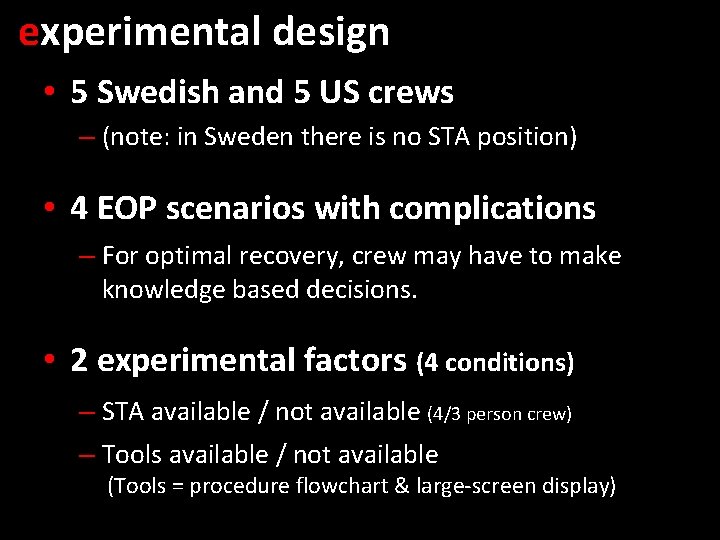
experimental design • 5 Swedish and 5 US crews – (note: in Sweden there is no STA position) • 4 EOP scenarios with complications – For optimal recovery, crew may have to make knowledge based decisions. • 2 experimental factors (4 conditions) – STA available / not available (4/3 person crew) – Tools available / not available (Tools = procedure flowchart & large-screen display)
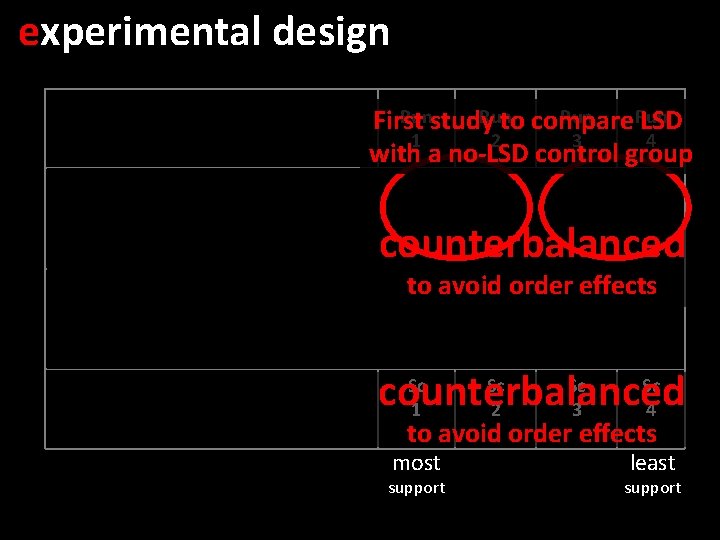
experimental design Experimental design Runstudy Run Run First to compare LSD 1 2 3 4 with a no-LSD control group ✔ ✔ ✗✗ Large-screen display, Procedure flowchart counterbalanced Shift technical advisor to avoid order effects ✔ ✗ ✔✗ counterbalanced Sc 1 Sc 2 Sc 3 Sc 4 to avoid order effects most support least support
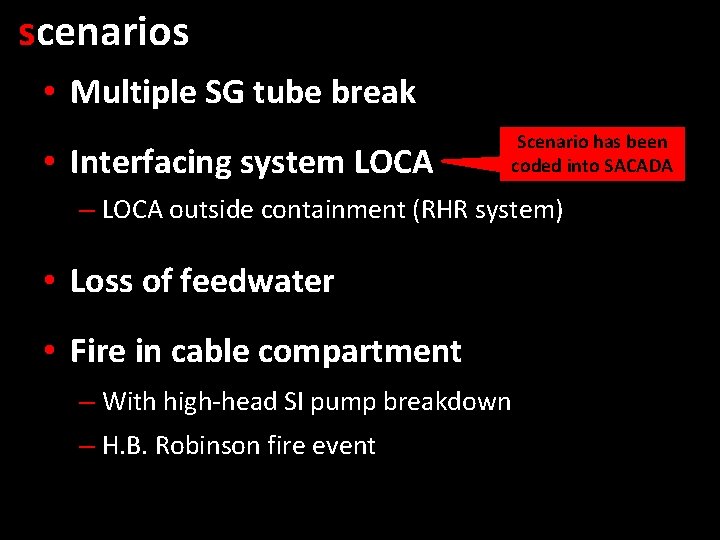
scenarios • Multiple SG tube break • Interfacing system LOCA Scenario has been coded into SACADA – LOCA outside containment (RHR system) • Loss of feedwater • Fire in cable compartment – With high-head SI pump breakdown – H. B. Robinson fire event
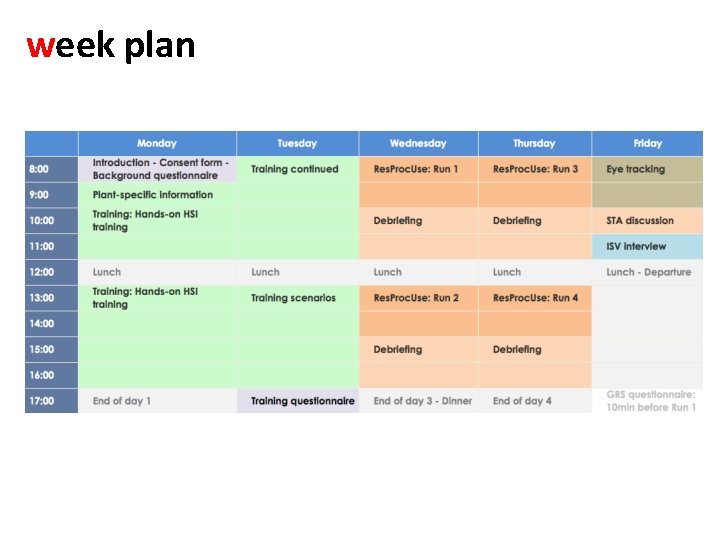
week plan
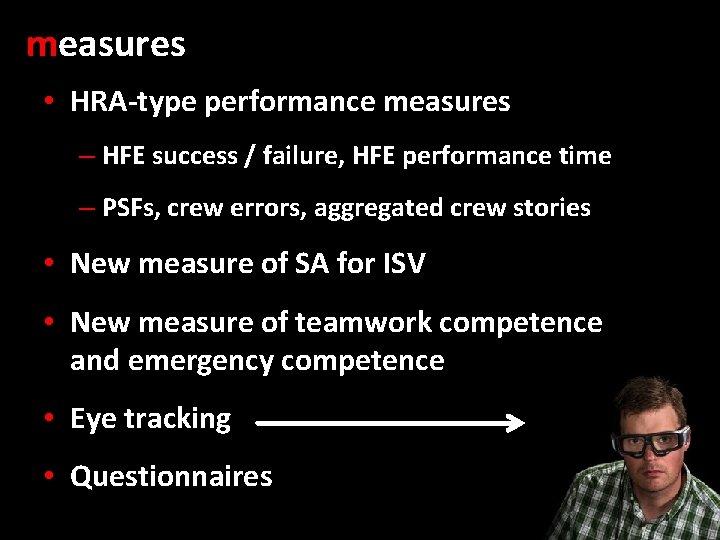
measures • HRA-type performance measures – HFE success / failure, HFE performance time – PSFs, crew errors, aggregated crew stories • New measure of SA for ISV • New measure of teamwork competence and emergency competence • Eye tracking • Questionnaires
tools for improving situation overview: new large-screen display and STA flowchart
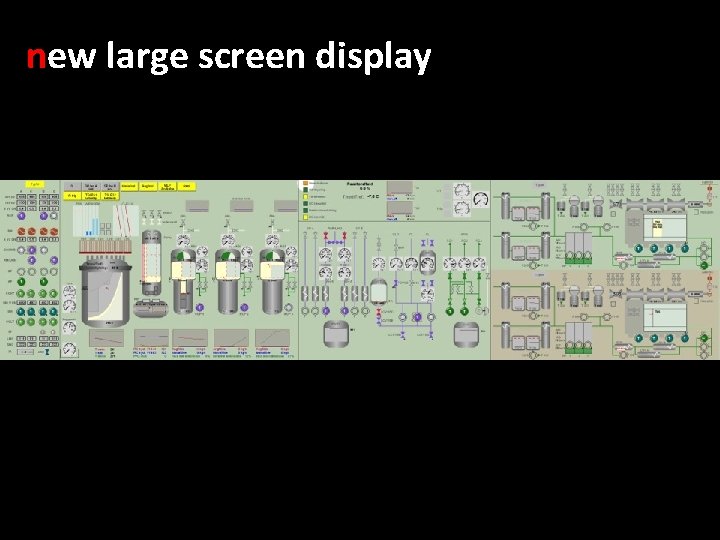
new large screen display
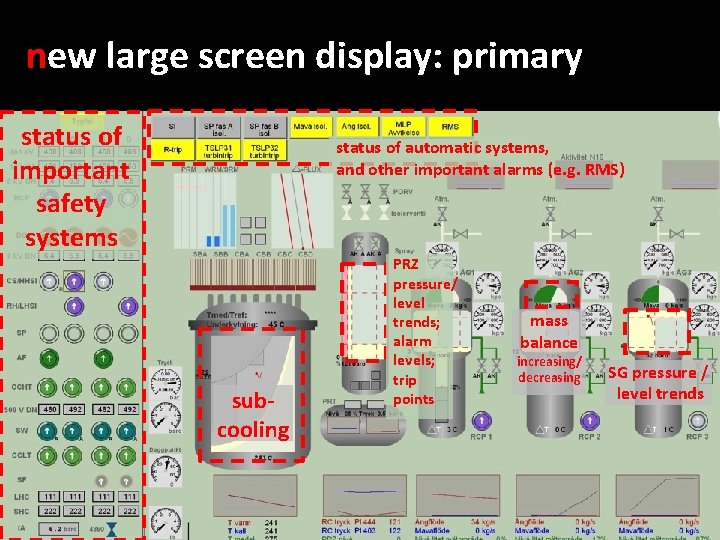
new large screen display: primary status of important safety systems status of automatic systems, and other important alarms (e. g. RMS) subcooling PRZ pressure/ level trends; alarm levels; trip points mass balance increasing/ decreasing SG pressure / level trends
procedure flowchart E-0 E-1 E-2 E-3 ECA-1. 1 ECA-1. 2 ECA-1. 3 ES-1. 2 FR-H. 1 FR-P. 1
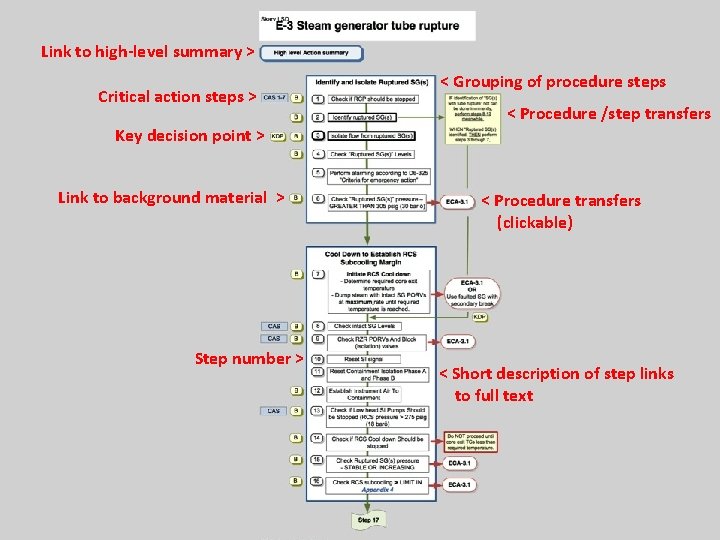
Link to high-level summary > Critical action steps > Key decision point > Link to background material > Step number > < Grouping of procedure steps < Procedure /step transfers < Procedure transfers (clickable) < Short description of step links to full text
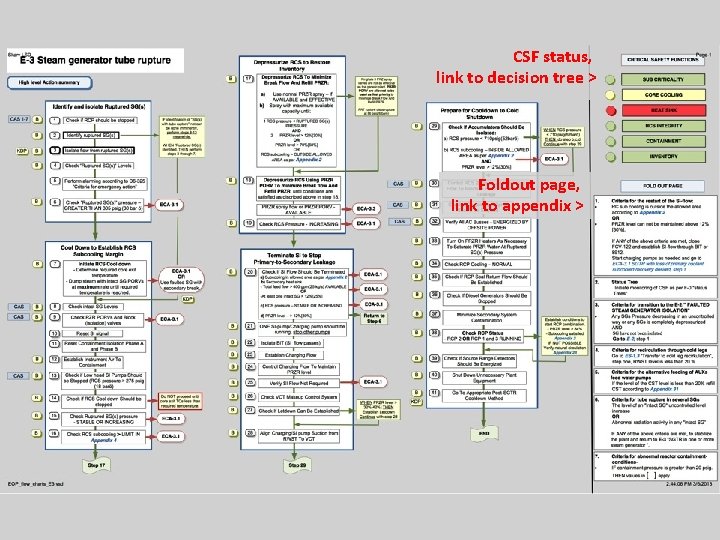
CSF status, link to decision tree > Foldout page, link to appendix >
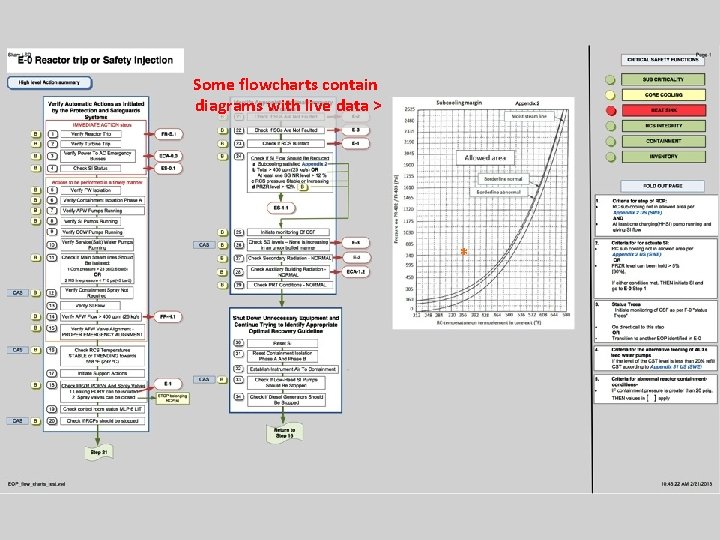
Some flowcharts contain diagrams with live data > *
Halden Reactor Project, Norway
contact Michael. Hildebrandt@hrp. no
- Slides: 20