
Reshaping Public Broadcasting the New Zealand experience 1988
Reshaping Public Broadcasting: the New Zealand experience 1988 -2003 IPPR Seminar 2004 Paul Norris Head, NZ Broadcasting School, CPIT norrisp@cpit. ac. nz 1
Outline • Overview of deregulation • NZo. A – the contestable funding model • Strengths and weaknesses • Any lessons for UK? 2
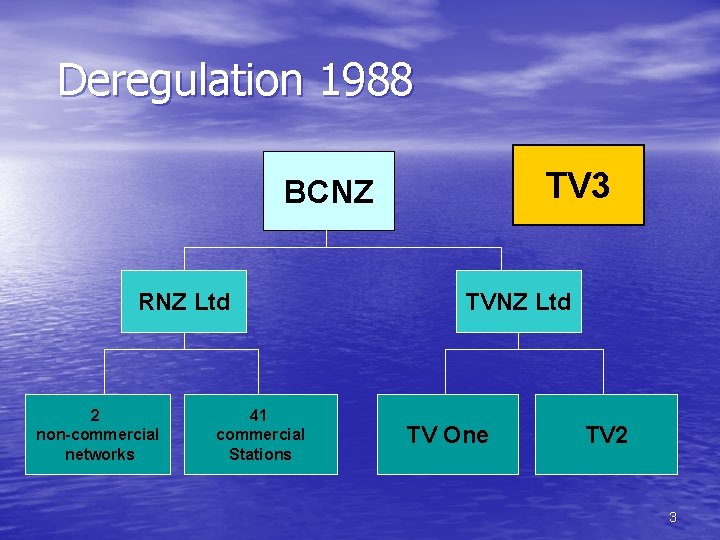
Deregulation 1988 TV 3 BCNZ RNZ Ltd 2 non-commercial networks 41 commercial Stations TVNZ Ltd TV One TV 2 3
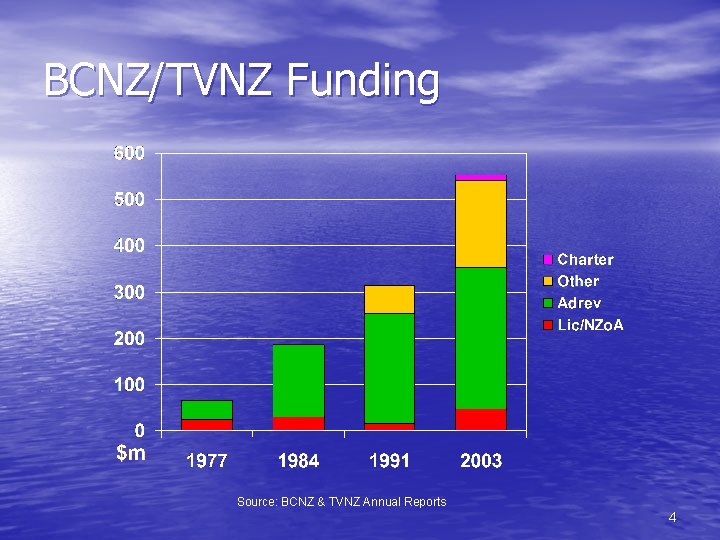
BCNZ/TVNZ Funding Source: BCNZ & TVNZ Annual Reports 4
Deregulation / competition • Frequencies auctioned to highest bidder • No programming requirements • Ownership controls relaxed, then abolished • Broadcasting Standards Authority to maintain programme standards 5
Broadcasting Act 1989 NZ On Air required to: • Reflect & develop NZ identity & culture • Promote programmes about NZ interests • Promote Maori language & culture • Ensure a range of broadcasts is available for women, children, the disabled and minorities, including ethnic minorities 6
Broadcasting Act 1989 Re TV, NZ On Air required to: • Ensure reasonable provision is made for the funding of television drama and documentaries Re funding, have regard to: • The level of contribution from the applicant • The potential size of the audience 7
NZ On Air 1989 - 2004 • Mission is local content (NZ programmes) • Populist programmes in prime time eg Shortland St – medical soap • Minority programmes – off peak 8
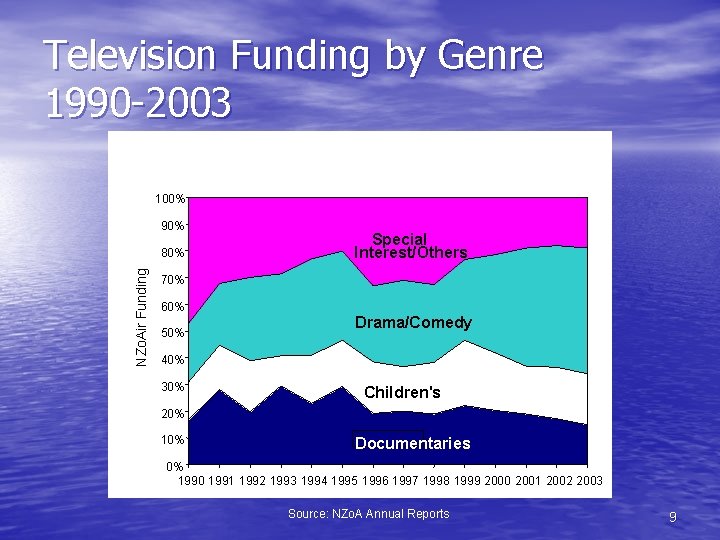
Television Funding by Genre 1990 -2003 100% 90% NZo. Air Funding 80% Special Interest/Others 70% 60% 50% Drama/Comedy 40% 30% Children's 20% 10% Documentaries 0% 1990 1991 1992 1993 1994 1995 1996 1997 1998 1999 2000 2001 2002 2003 Source: NZo. A Annual Reports 9
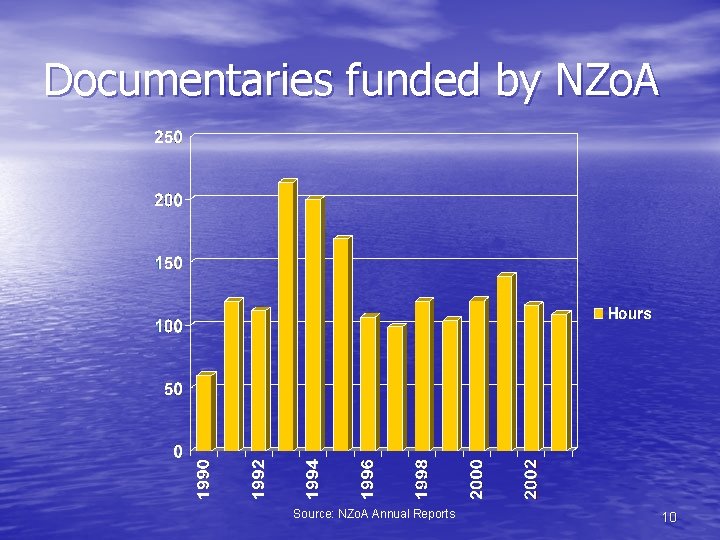
Documentaries funded by NZo. A Source: NZo. A Annual Reports 10
Documentaries Outputs: Range too narrow – commercial focus Impact: Ratings adequate for prime time 10 -15% Value: Valued for finding out how others face and overcome problems and challenges, also for the opportunity to learn something new and to be challenged intellectually 11
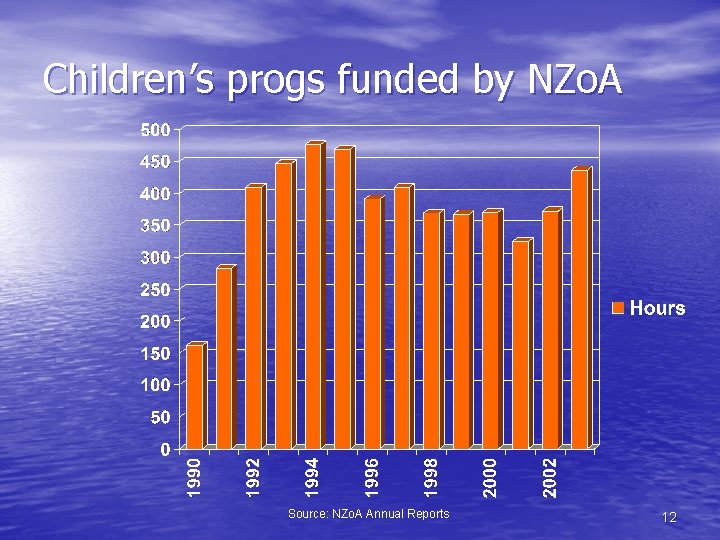
Children’s progs funded by NZo. A Source: NZo. A Annual Reports 12
Children’s programmes Outputs: • Stand-alone programmes or kiwi links within global cartoons? Impact: • Cartoons win the ratings Value: • Valued for giving children a sense of NZ identity • Also for not being hyped 13
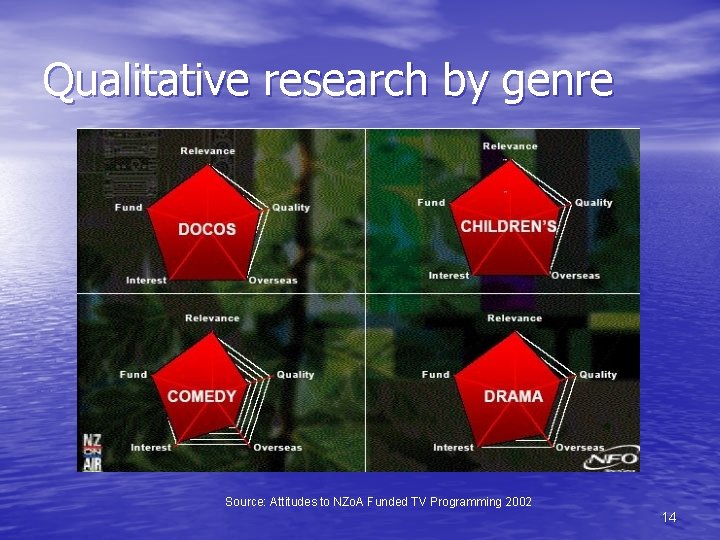
Qualitative research by genre Source: Attitudes to NZo. A Funded TV Programming 2002 14
NZ model - strengths • Contestability and competition • Diversity of programming • Growth of independent sector • Significant impact for $60 m 15
NZ model -weaknesses • Broadcasters are gatekeepers • Range of programmes inadequate • Emphasis on local content, not quality • Subsidises private commercial interests • Dilutes concept of public broadcasting • Public broadcaster seen as cash cow by government 16
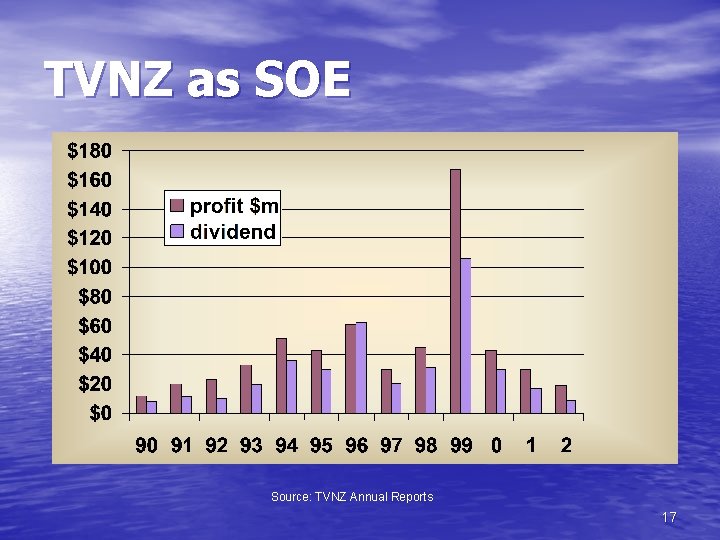
TVNZ as SOE Source: TVNZ Annual Reports 17
Reforms of 2000 -2003 • TVNZ – from SOE to Cr. OC • TVNZ Charter from March 2003 • TVNZ – direct govt. funding $11 -15 m • NZo. A – additional funding • Voluntary quotas for local content 18
Lessons from New Zealand? Caveats: • Ecology of broadcasting in NZ very different to that in UK • NZo. A has been public broadcasting • Quantum of public funding 19
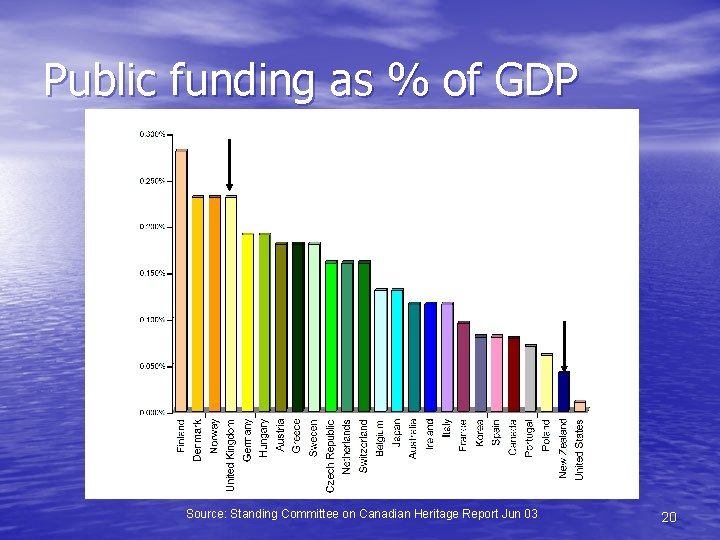
Public funding as % of GDP Source: Standing Committee on Canadian Heritage Report Jun 03 20
Lessons from New Zealand? • Use multiple mechanisms • Funding agency must be proactive • Contestability + competition • Efficiency – competitive tendering keeps costs transparent and under control 21
- Slides: 21