
Researching History Chapter 1 Lesson 3 Planning your

- Slides: 11
Researching History Chapter 1, Lesson 3
Planning your Project ► Step 1: Identify your Project § Should not be to broad (Middle Ages) or narrow (Middlebury, England, 1535) ► After you select your topic, you should attempt to answer the following questions over time:
Planning Your Project ► Who? ► What? ► When? ► Where? ► Why? ► How?
Choosing Research Material ► As you begin to research you should select your sources of information. ► Encyclopedias, textbooks, or your notes from class would be a good start. ► Your Research Material must be nonfiction, rather than fiction or persuasion!
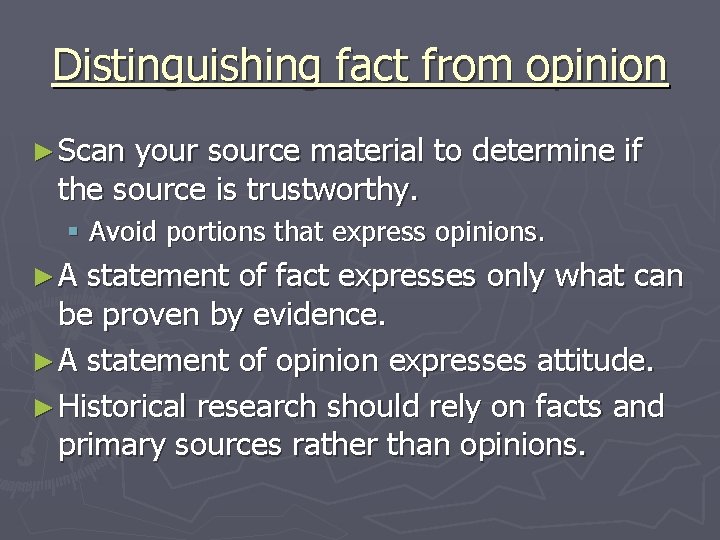
Distinguishing fact from opinion ► Scan your source material to determine if the source is trustworthy. § Avoid portions that express opinions. ►A statement of fact expresses only what can be proven by evidence. ► A statement of opinion expresses attitude. ► Historical research should rely on facts and primary sources rather than opinions.
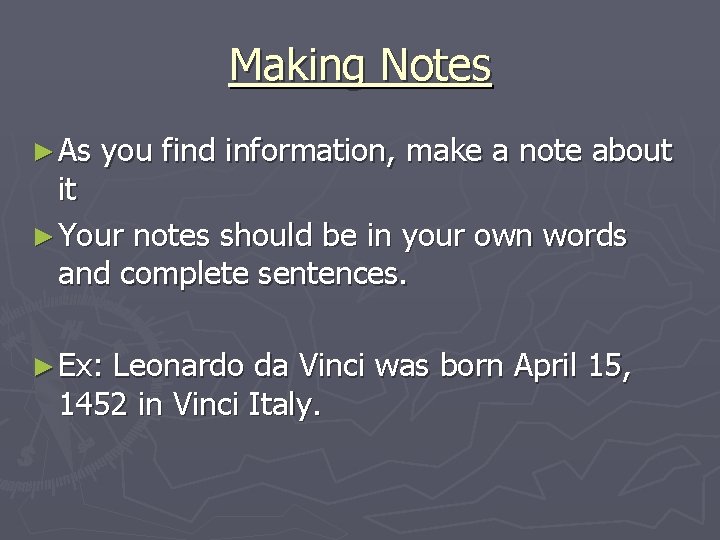
Making Notes ► As you find information, make a note about it ► Your notes should be in your own words and complete sentences. ► Ex: Leonardo da Vinci was born April 15, 1452 in Vinci Italy.
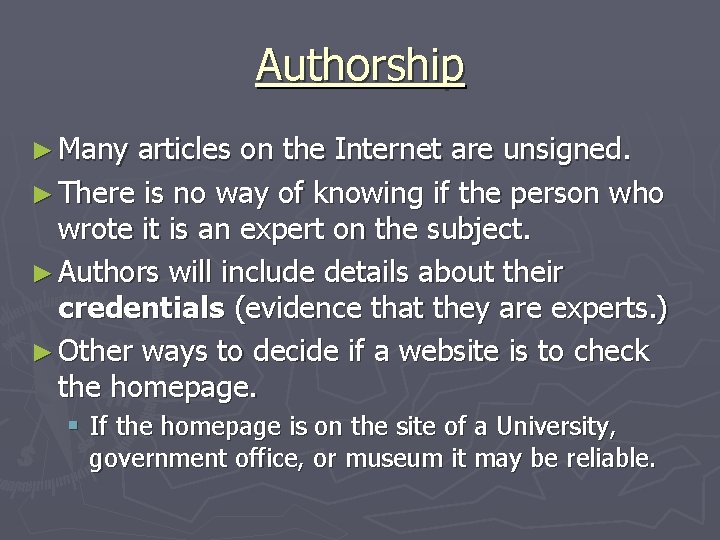
Authorship ► Many articles on the Internet are unsigned. ► There is no way of knowing if the person who wrote it is an expert on the subject. ► Authors will include details about their credentials (evidence that they are experts. ) ► Other ways to decide if a website is to check the homepage. § If the homepage is on the site of a University, government office, or museum it may be reliable.
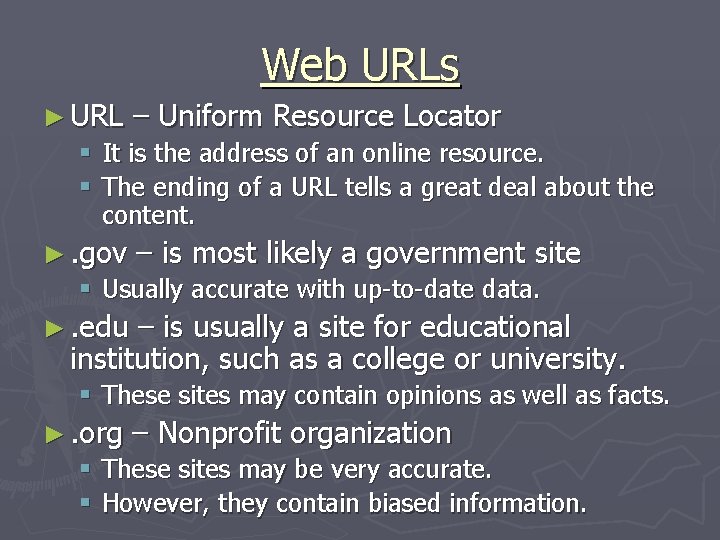
Web URLs ► URL – Uniform Resource Locator § It is the address of an online resource. § The ending of a URL tells a great deal about the content. ►. gov – is most likely a government site § Usually accurate with up-to-date data. ►. edu – is usually a site for educational institution, such as a college or university. § These sites may contain opinions as well as facts. ►. org – Nonprofit organization § These sites may be very accurate. § However, they contain biased information.
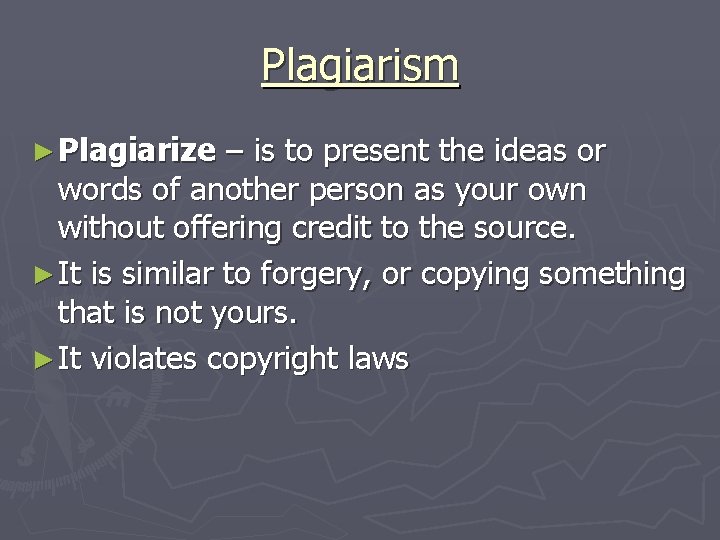
Plagiarism ► Plagiarize – is to present the ideas or words of another person as your own without offering credit to the source. ► It is similar to forgery, or copying something that is not yours. ► It violates copyright laws
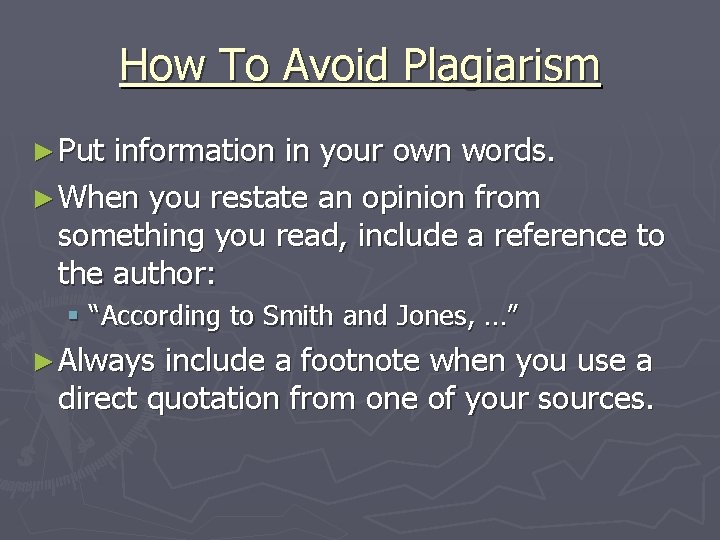
How To Avoid Plagiarism ► Put information in your own words. ► When you restate an opinion from something you read, include a reference to the author: § “According to Smith and Jones, …” ► Always include a footnote when you use a direct quotation from one of your sources.
Ancient History and Modern Values ► Avoid using modern ideas to evaluate a historical event. ► Ideas have changed over time. ► Your evaluations of history should be based on the evidence of the time, not on today’s understanding of rights and society.