
Research to Inform Planning Development of Recovery Services
- Slides: 21
Research to Inform Planning & Development of Recovery Services for Youth, Families, & Communities l l Mark D. Godley, Ph. D. Chestnut Health Systems l Bloomington, IL l Presentation at the SAMHSA Consultative Session on Recovery-Oriented Care for Youth November 13 -14, 2008, Rockville, MD. This presentation reports on treatment & research funded by the Center for Substance Abuse Treatment (CSAT), Substance Abuse and Mental Health Services Administration (SAMHSA) under contracts 270 -2003 -00006 and 270 -07 -0191, as well as several individual CSAT, NIAAA, NIDA and private foundation grants. The opinions are those of the author and do not reflect official positions of the government.
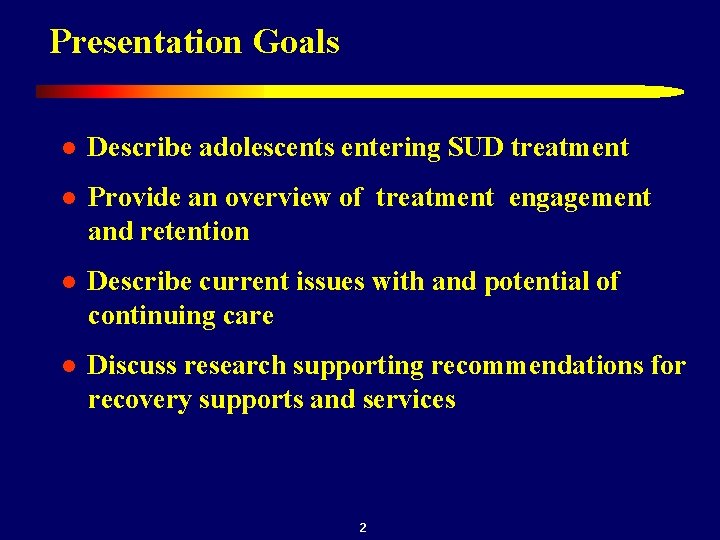
Presentation Goals l Describe adolescents entering SUD treatment l Provide an overview of treatment engagement and retention l Describe current issues with and potential of continuing care l Discuss research supporting recommendations for recovery supports and services 2
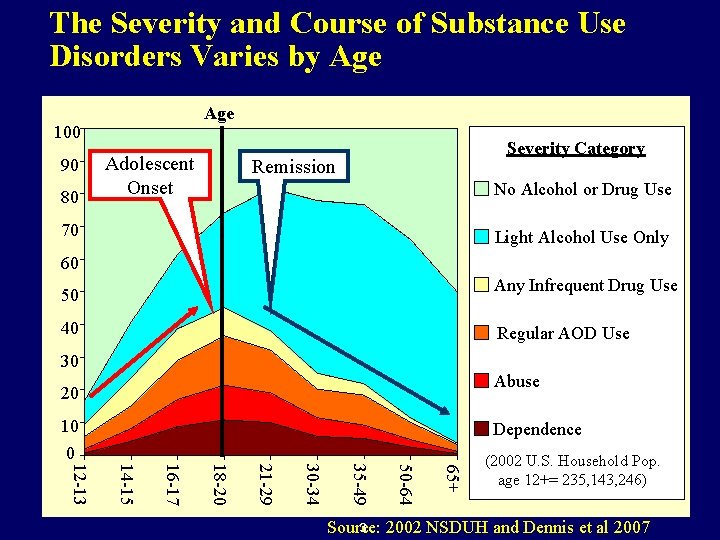
The Severity and Course of Substance Use Disorders Varies by Age 100 90 80 Adolescent Onset Severity Category Remission No Alcohol or Drug Use 70 Light Alcohol Use Only 60 Any Infrequent Drug Use 50 40 Regular AOD Use 30 Abuse 20 10 0 Dependence 65+ 50 -64 35 -49 30 -34 21 -29 18 -20 16 -17 14 -15 12 -13 (2002 U. S. Household Pop. age 12+= 235, 143, 246) 3 Source: 2002 NSDUH and Dennis et al 2007
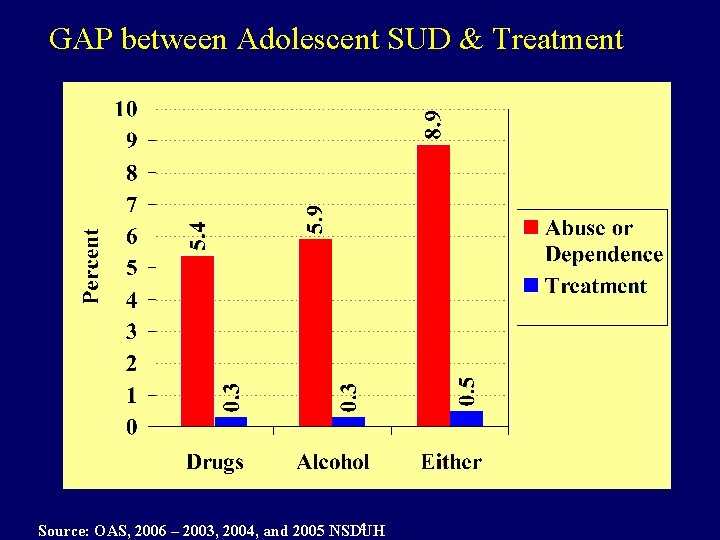
GAP between Adolescent SUD & Treatment 4 Source: OAS, 2006 – 2003, 2004, and 2005 NSDUH
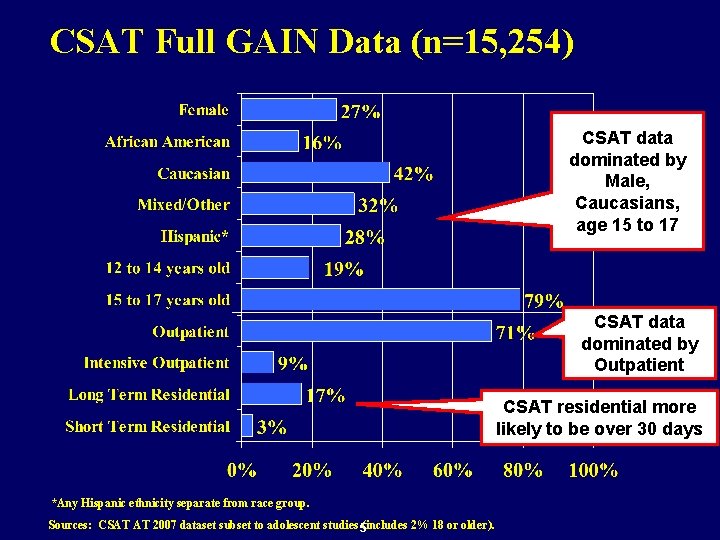
CSAT Full GAIN Data (n=15, 254) CSAT data dominated by Male, Caucasians, age 15 to 17 CSAT data dominated by Outpatient CSAT residential more likely to be over 30 days *Any Hispanic ethnicity separate from race group. Sources: CSAT AT 2007 dataset subset to adolescent studies 5(includes 2% 18 or older).
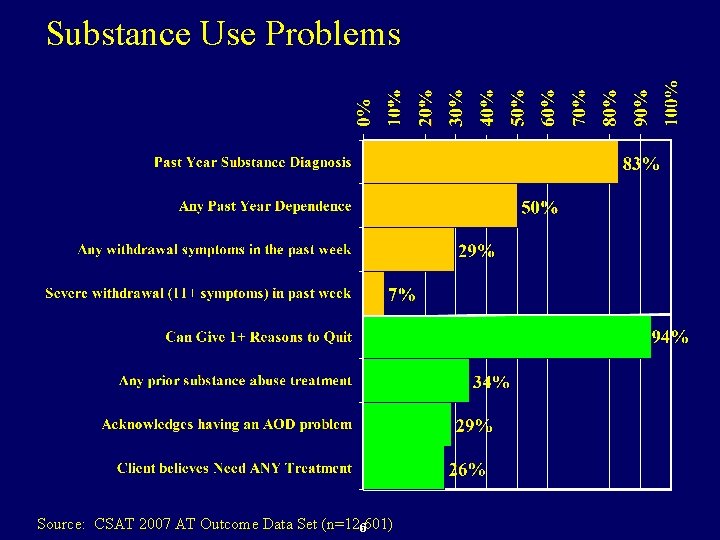
Substance Use Problems Source: CSAT 2007 AT Outcome Data Set (n=12, 601) 6
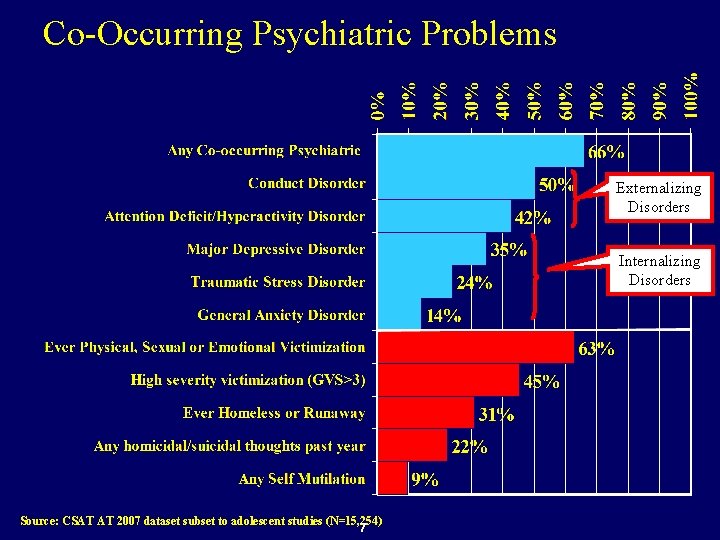
Co-Occurring Psychiatric Problems Externalizing Disorders Internalizing Disorders Source: CSAT AT 2007 dataset subset to adolescent studies (N=15, 254) 7
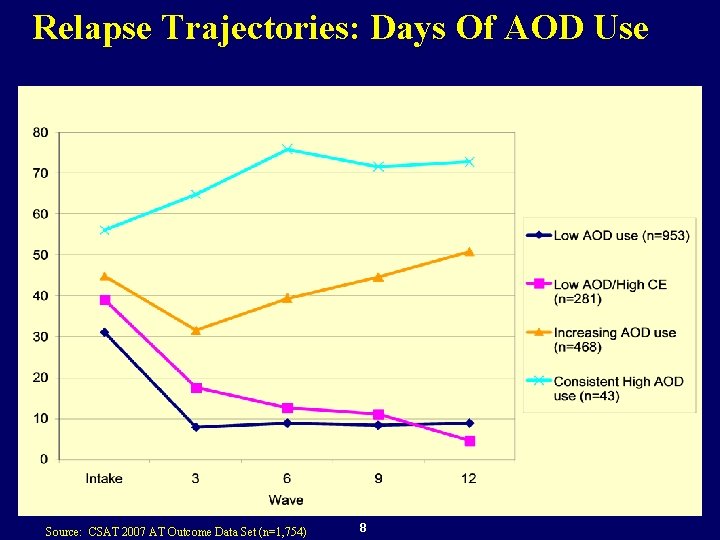
Relapse Trajectories: Days Of AOD Use Source: CSAT 2007 AT Outcome Data Set (n=1, 754) 8
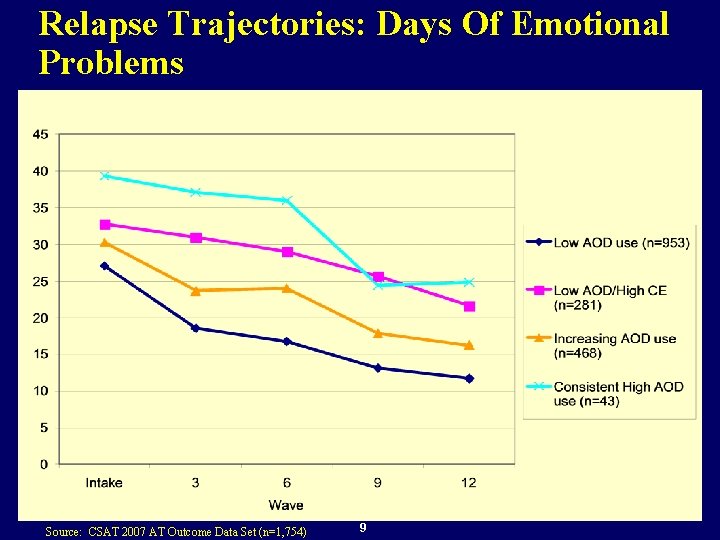
Relapse Trajectories: Days Of Emotional Problems Source: CSAT 2007 AT Outcome Data Set (n=1, 754) 9
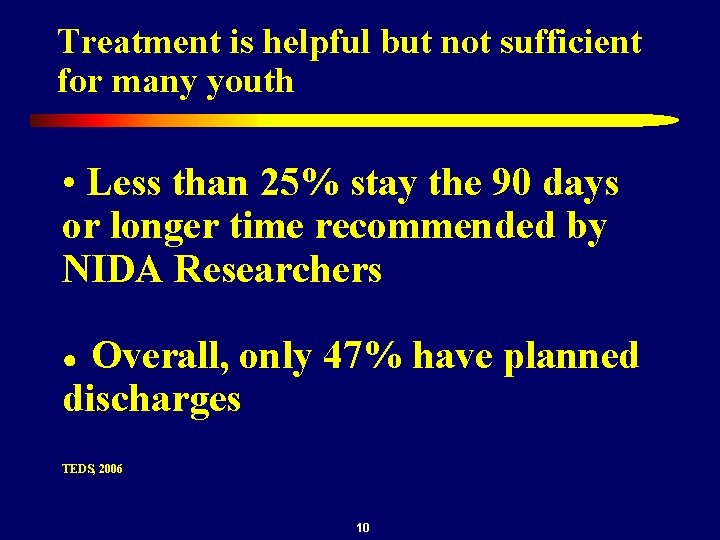
Treatment is helpful but not sufficient for many youth • Less than 25% stay the 90 days or longer time recommended by NIDA Researchers Overall, only 47% have planned discharges ● TEDS, 2006 10
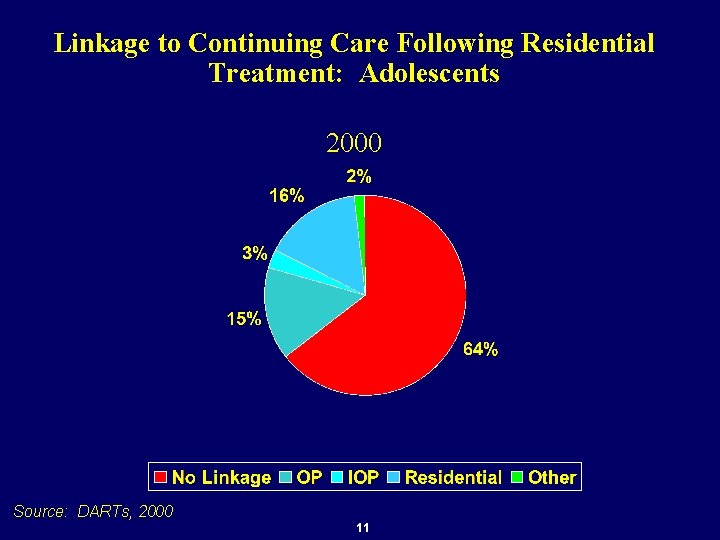
Linkage to Continuing Care Following Residential Treatment: Adolescents 2000 Source: DARTs, 2000 11
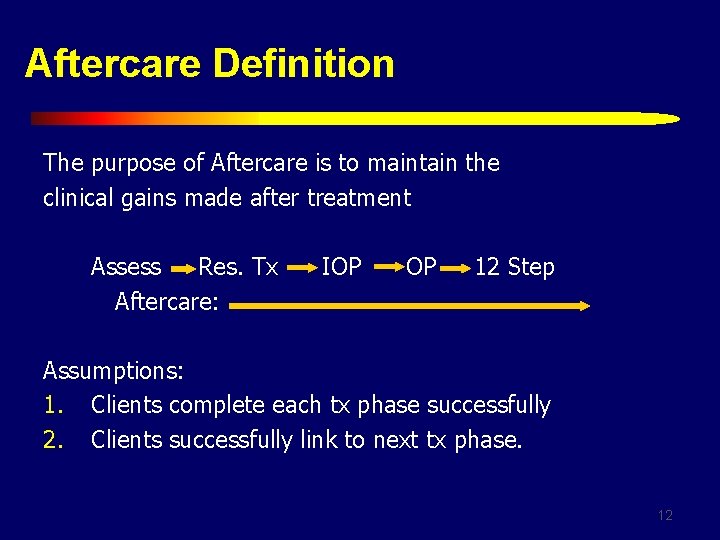
Aftercare Definition The purpose of Aftercare is to maintain the clinical gains made after treatment Assess Res. Tx Aftercare: IOP OP 12 Step Assumptions: 1. Clients complete each tx phase successfully 2. Clients successfully link to next tx phase. 12
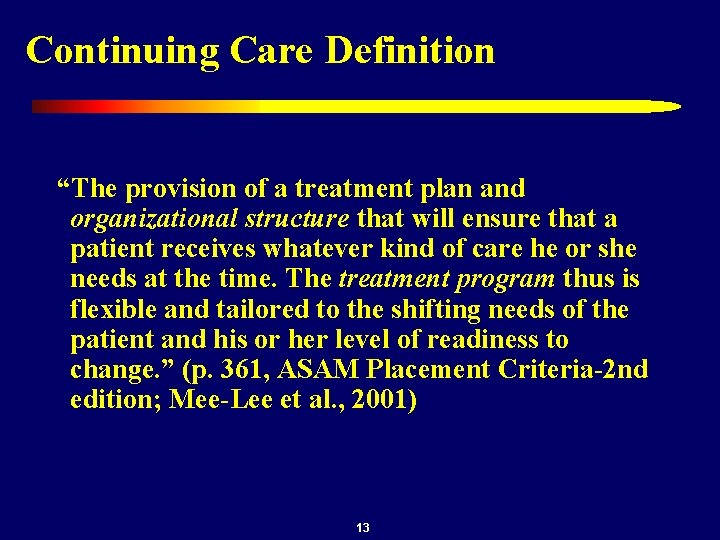
Continuing Care Definition “The provision of a treatment plan and organizational structure that will ensure that a patient receives whatever kind of care he or she needs at the time. The treatment program thus is flexible and tailored to the shifting needs of the patient and his or her level of readiness to change. ” (p. 361, ASAM Placement Criteria-2 nd edition; Mee-Lee et al. , 2001) 13
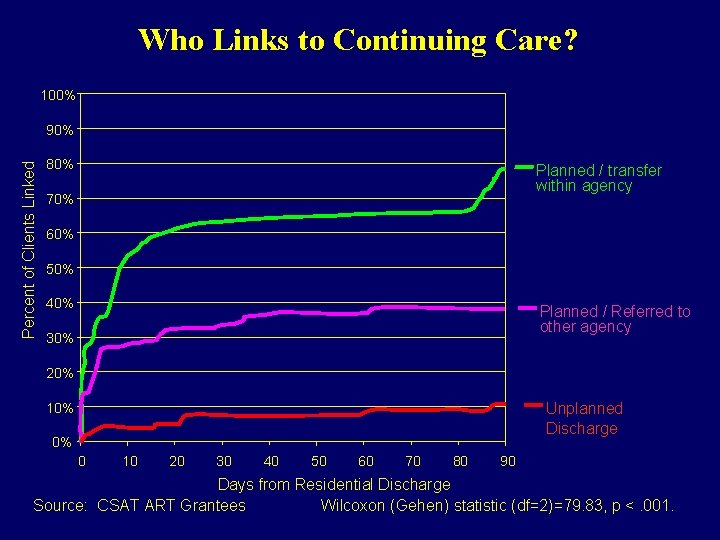
Who Links to Continuing Care? 100% Percent of Clients Linked 90% 80% Planned / transfer within agency 70% 60% 50% 40% Planned / Referred to other agency 30% 20% Unplanned Discharge 10% 0% 0 10 20 30 40 50 60 70 80 90 Days from Residential Discharge Source: CSAT ART Grantees Wilcoxon (Gehen) statistic (df=2)=79. 83, p <. 001.
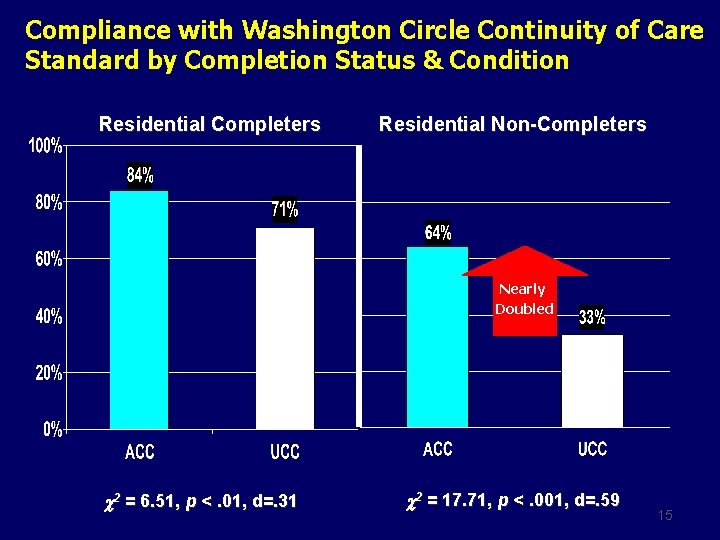
Compliance with Washington Circle Continuity of Care Standard by Completion Status & Condition Residential Completers Residential Non-Completers Nearly Doubled 2 = 6. 51, p <. 01, d=. 31 2 = 17. 71, p <. 001, d=. 59 15
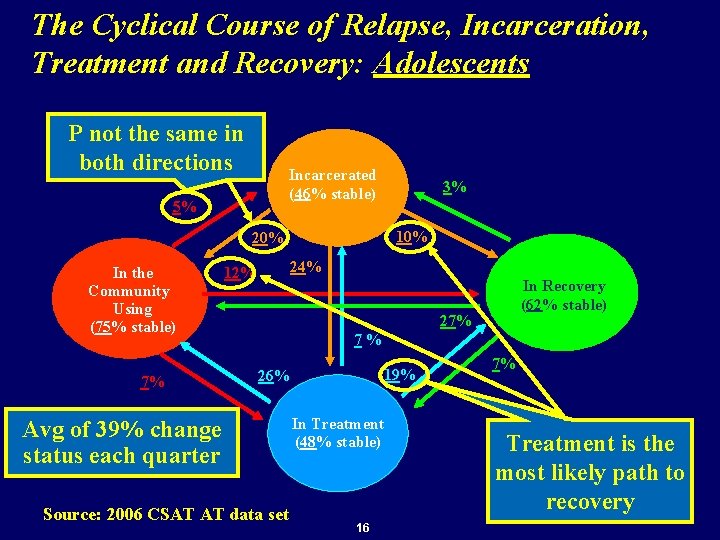
The Cyclical Course of Relapse, Incarceration, Treatment and Recovery: Adolescents P not the same in both directions Incarcerated (46% stable) 5% 10% 20% In the Community Using (75% stable) 7% 3% 24% 12% In Recovery (62% stable) 27% 7% 19% 26% Avg of 39% change status each quarter Source: 2006 CSAT AT data set In Treatment (48% stable) 16 7% Treatment is the most likely path to recovery
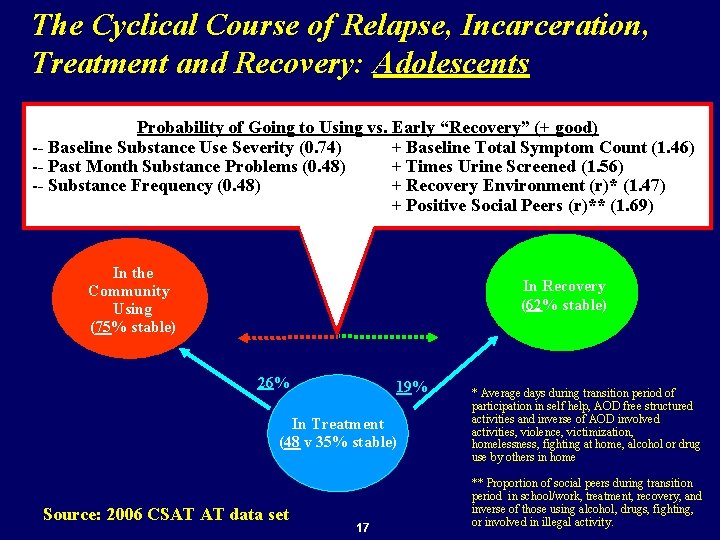
The Cyclical Course of Relapse, Incarceration, Treatment and Recovery: Adolescents Probability of Going to Using vs. Early “Recovery” (+ good) -- Baseline Substance Use Severity (0. 74) + Baseline Total Symptom Count (1. 46) -- Past Month Substance Problems (0. 48) + Times Urine Screened (1. 56) -- Substance Frequency (0. 48) + Recovery Environment (r)* (1. 47) + Positive Social Peers (r)** (1. 69) In the Community Using (75% stable) In Recovery (62% stable) 26% 19% In Treatment (48 v 35% stable) Source: 2006 CSAT AT data set 17 * Average days during transition period of participation in self help, AOD free structured activities and inverse of AOD involved activities, violence, victimization, homelessness, fighting at home, alcohol or drug use by others in home ** Proportion of social peers during transition period in school/work, treatment, recovery, and inverse of those using alcohol, drugs, fighting, or involved in illegal activity.
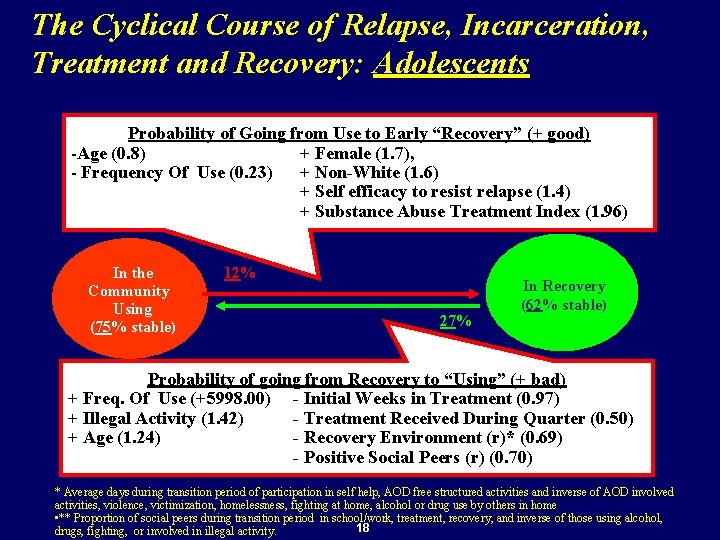
The Cyclical Course of Relapse, Incarceration, Treatment and Recovery: Adolescents Probability of Going from Use to Early “Recovery” (+ good) -Age (0. 8) + Female (1. 7), - Frequency Of Use (0. 23) + Non-White (1. 6) + Self efficacy to resist relapse (1. 4) + Substance Abuse Treatment Index (1. 96) In the Community Using (75% stable) 12% 27% In Recovery (62% stable) Probability of going from Recovery to “Using” (+ bad) + Freq. Of Use (+5998. 00) - Initial Weeks in Treatment (0. 97) + Illegal Activity (1. 42) - Treatment Received During Quarter (0. 50) + Age (1. 24) - Recovery Environment (r)* (0. 69) - Positive Social Peers (r) (0. 70) * Average days during transition period of participation in self help, AOD free structured activities and inverse of AOD involved activities, violence, victimization, homelessness, fighting at home, alcohol or drug use by others in home • ** Proportion of social peers during transition period in school/work, treatment, recovery, and inverse of those using alcohol, 18 drugs, fighting, or involved in illegal activity.
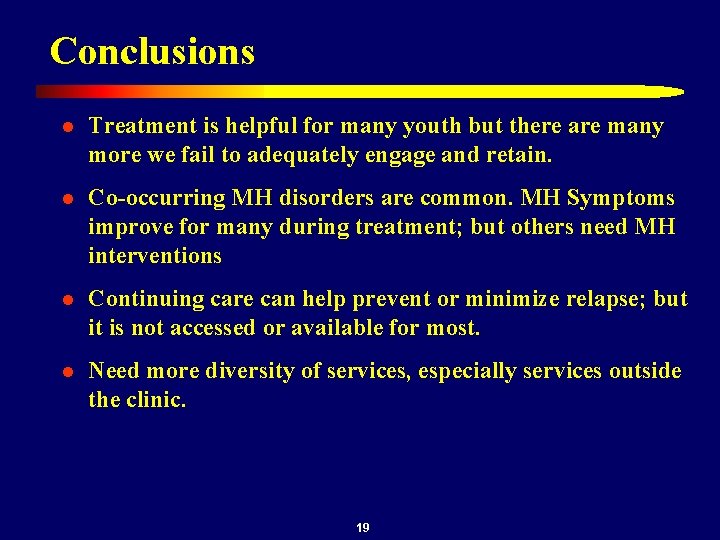
Conclusions l Treatment is helpful for many youth but there are many more we fail to adequately engage and retain. l Co-occurring MH disorders are common. MH Symptoms improve for many during treatment; but others need MH interventions l Continuing care can help prevent or minimize relapse; but it is not accessed or available for most. l Need more diversity of services, especially services outside the clinic. 19
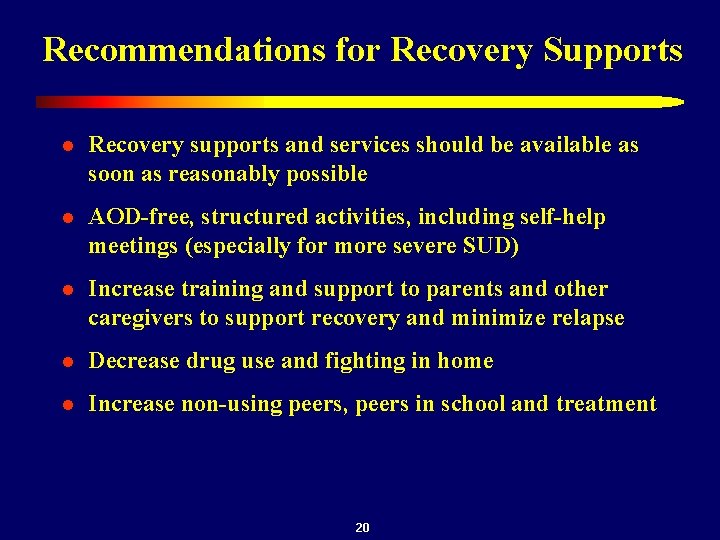
Recommendations for Recovery Supports l Recovery supports and services should be available as soon as reasonably possible l AOD-free, structured activities, including self-help meetings (especially for more severe SUD) l Increase training and support to parents and other caregivers to support recovery and minimize relapse l Decrease drug use and fighting in home l Increase non-using peers, peers in school and treatment 20
Questions? For more information or for a copy of this presentation please email me at: mgodley@chestnut. org