
RESEARCH QUESTIONS AND SOURCES WHAT MAKES A GOOD


- Slides: 24
RESEARCH QUESTIONS AND SOURCES
WHAT MAKES A GOOD TOPIC? • Broad enough to lend itself to investigation • Plenty of quality academic sources of both a primary and secondary nature • Be able to narrow the focus of your topic into a question that can be answered in depth and in an analytical way.
WHAT IS A RESEARCH QUESTION? • Serves the purpose of guiding your research • Question should be open ended and not simply answered. • Focused • Arguable • Be answerable within the paper’s requirements(2, 000 word min. - 2, 500 word max. )
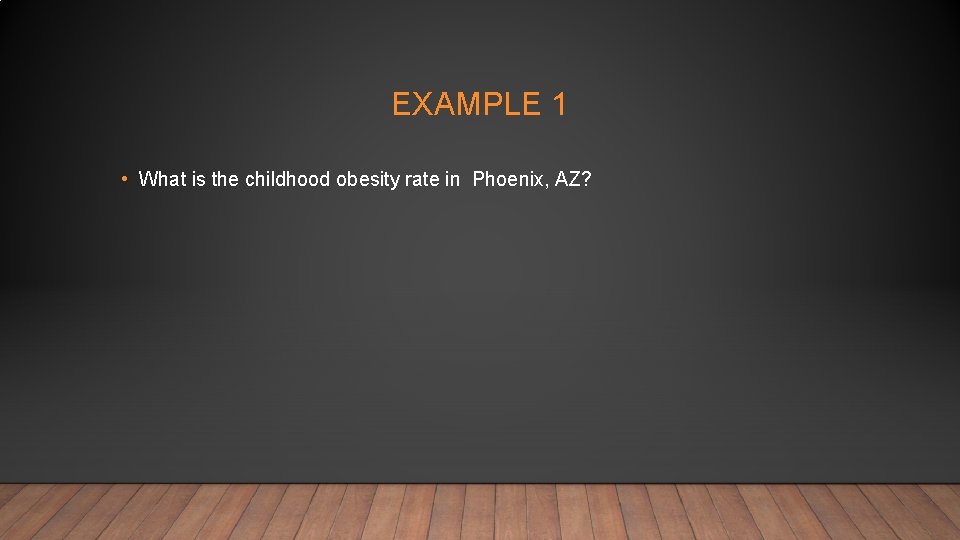
EXAMPLE 1 • What is the childhood obesity rate in Phoenix, AZ?
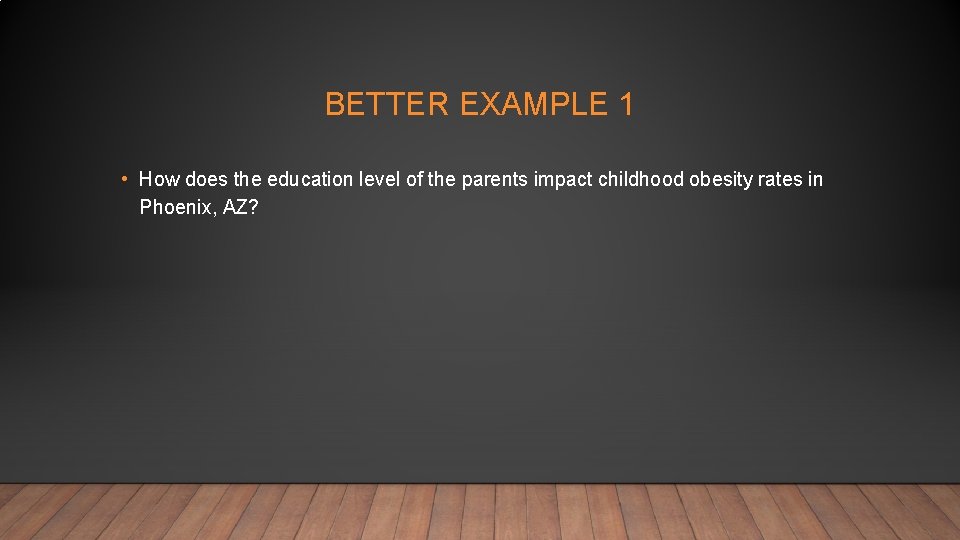
BETTER EXAMPLE 1 • How does the education level of the parents impact childhood obesity rates in Phoenix, AZ?
EXAMPLE 2 • What are the effects of childhood obesity in the United States?
BETTER EXAMPLE 2 • How does childhood obesity correlate with academic performance in elementary school children?
EXAMPLE 3 • How much time do young children spend doing physical activity per day?
BETTER EXAMPLE 3 • What is the relationship between physical activity levels and childhood obesity?
EXAMPLE 4 • How are school systems addressing childhood obesity?
BETTER EXAMPLE 4 • What are the effects of intervention programs in the elementary schools on the rate of childhood obesity among 3 rd - 6 th grade students?
WHAT IS AN ACADEMIC SOURCE? • Sources that have a credible academic standing • Published materials: Books, Historical Journals, articles that have been peered reviewed. • Websites: Be Careful! Articles published on. edu and through university websites tend to be the most reliable(stay away from Wikipedia and History Channel articles)
WHAT IS A PRIMARY SOURCE? • This is a source that is a first hand account of a historical period or event. • Journals • Letters • Testimony/Recordings • Business documentation
ALEXANDER FALCONBRIDGE, AN ACCOUNT OF THE SLAVE TRADE ON THE COAST OF AFRICA (LONDON, 1788). • During the voyages I made, I was frequently witness to the fatal effects of this exclusion of fresh air. I will give one instance, as it serves to convey some idea, though a very faint one, of their terrible sufferings. . Some wet and blowing weather having occasioned the portholes to be shut and the grating to be covered, fluxes and fevers among the Negroes ensued. While they were in this situation, I frequently went down among them till at length their room became so extremely hot as to be only bearable for a very short time. But the excessive heat was not the only thing that rendered their situation intolerable. The deck, that is the floor of their rooms, was so covered with the blood and mucus which had proceeded from them in consequence of the flux, that it resembled a slaughter- house. It is not in the power of the human imagination to picture a situation more dreadful or disgusting. Numbers of the slaves having fainted, they were carried upon deck where several of them died and the rest with great difficulty were restored. .
SECONDARY SOURCE? • Dependent on the primary sources • Provides context and analysis • Examples: Biographies, Documentaries, Histories
PAUL E. LOVEJOY, TRANSFORMATIONS IN SLAVERY A HISTORY OF SLAVERY IN AFRICA (CAMBRIDGE: CAMBRIDGE UNIVERSITY PRESS 1983), P. 1 • Slavery was one form of exploitation. Its special characteristics included the idea that slaves were property; that they were outsiders who were alien by origin or who had been denied their heritage through judicial or other sanctions; that coercion could be used at will; that their labor power was at the complete disposal of a master; that they did not have the right to their own sexuality and, by extension, to their own reproductive capacities; and that the slave status was inherited unless provision was made to ameliorate that status.
HOW TO COMPLETE SOURCE CARDS • Through the course of your research, your group will need to complete notecards that will serve as a way to organize your information. • You will need to pull information from your sources: one piece of information per card. • Information could be either paraphrased or a direct quote
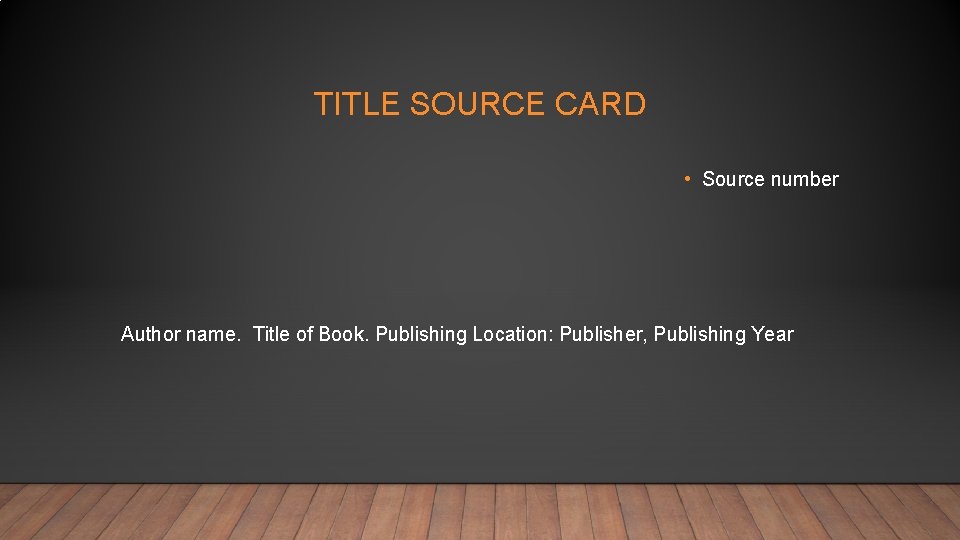
TITLE SOURCE CARD • Source number Author name. Title of Book. Publishing Location: Publisher, Publishing Year
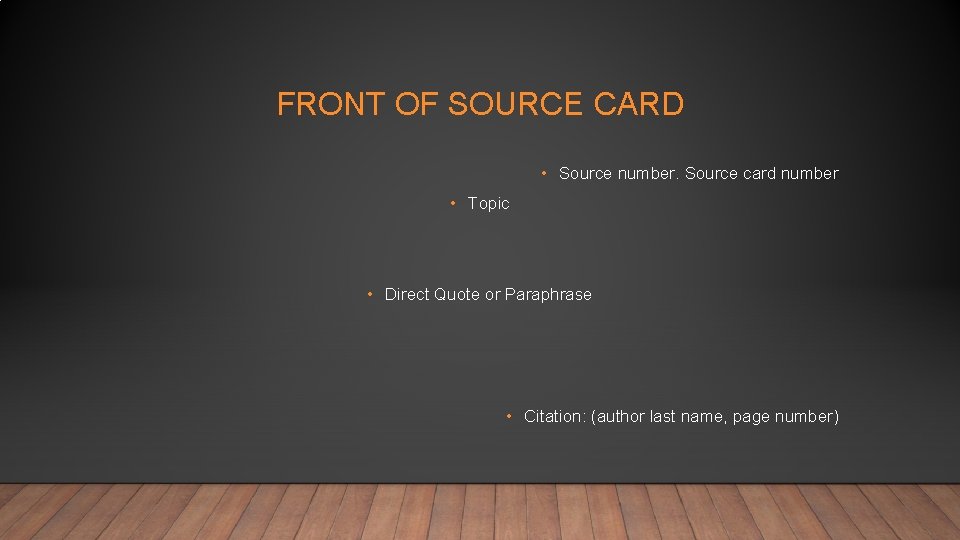
FRONT OF SOURCE CARD • Source number. Source card number • Topic • Direct Quote or Paraphrase • Citation: (author last name, page number)
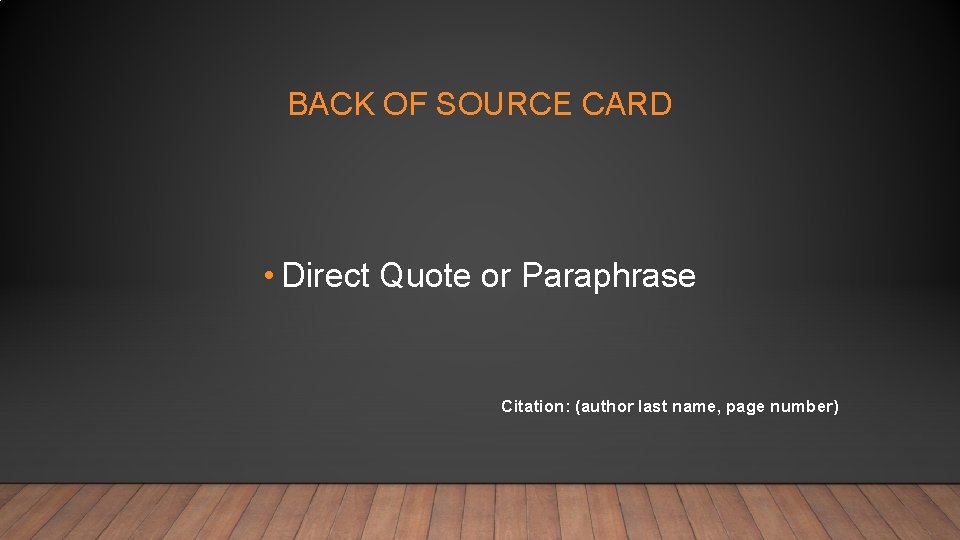
BACK OF SOURCE CARD • Direct Quote or Paraphrase Citation: (author last name, page number)
PARAPHRASE/ DIRECT QUOTES Please keep direct quoting to a maximum of three lines of text. If the information exceeds three lines, then a paraphrase becomes the appropriate way to reference the material. Paraphrase: Taking ideas that are not your own but phrasing it in your own words. MUST HAVE A CITATION
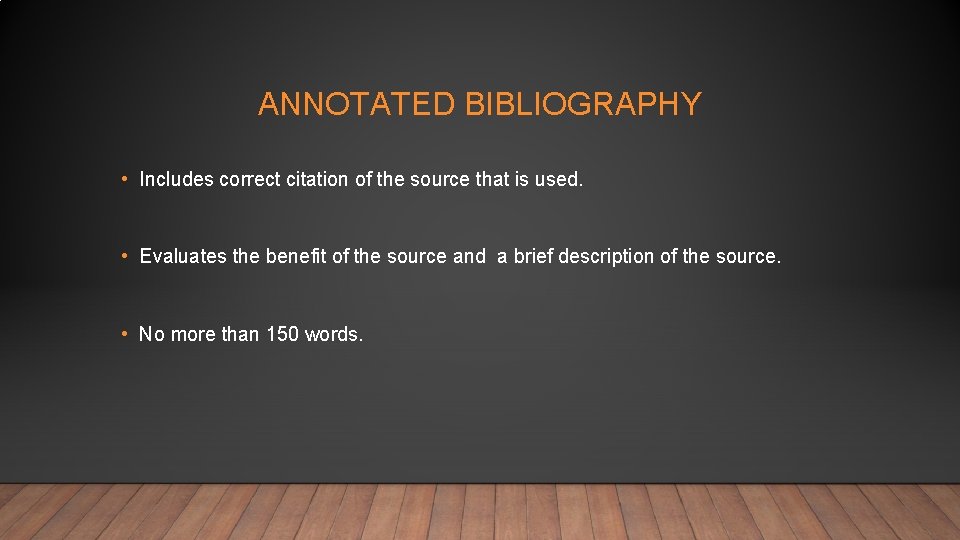
ANNOTATED BIBLIOGRAPHY • Includes correct citation of the source that is used. • Evaluates the benefit of the source and a brief description of the source. • No more than 150 words.
SOURCES Total: at least 6 academic sources Minimum of two MUST be books Sources must be either primary or secondary sources Examples: articles, books, websites, journals
WHAT’S DUE ? • Topic • Research question • 2 Sources • 6 note cards( 3 three from each source) not counting title cards • Annotated Bibliography (MLA format) of two sources. • Check my website for all the handouts.