
Research Process Note taking What Now Visualize your

- Slides: 15
Research Process Note taking
What Now… • Visualize your individual plan by way of a working outline • How do the parts of your objective statement/thesis outline your paper. • Create for yourself an ‘attack plan’ • What specifically will I research as evidence of my proposed thesis?
Gathering Sources Chicago Style (Turabian) method of citation (Not MLA or APA) Easy Bib School account will do this for you Consider books If your topic is more historical than contemporary your number of books should be greater. Also, be sure to identify the parts of the book than are appropriate to your paper/thesis. Consult the Table of Contents to identify relevance. Vary online sources and databases Look at your list, if 1/3 rd of your sources have been obtained by one method, such as ABC-CLIO or a particular website, then expand your search. Sources need to cover all aspects of paper/outline Of course the more significant detailed portions of your paper should have more sources, but all parts of the paper/outline should be represented on the bibliography. •
Annotated Bibliography Formatting
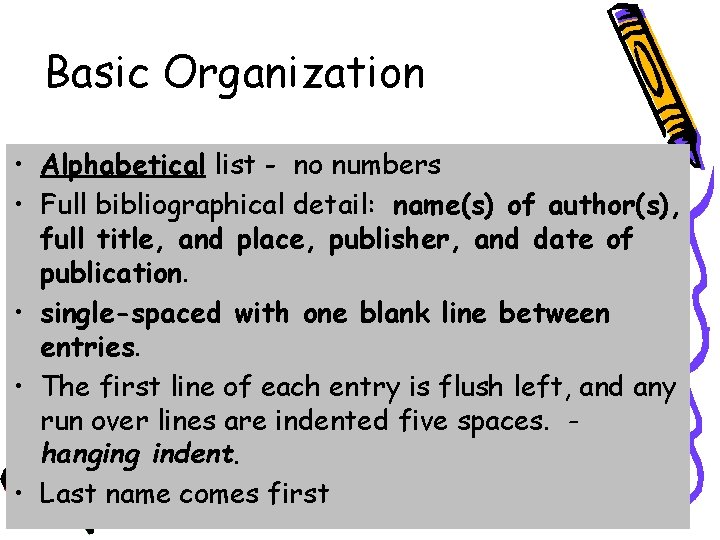
Basic Organization • Alphabetical list - no numbers • Full bibliographical detail: name(s) of author(s), full title, and place, publisher, and date of publication. • single-spaced with one blank line between entries. • The first line of each entry is flush left, and any run over lines are indented five spaces. hanging indent. • Last name comes first
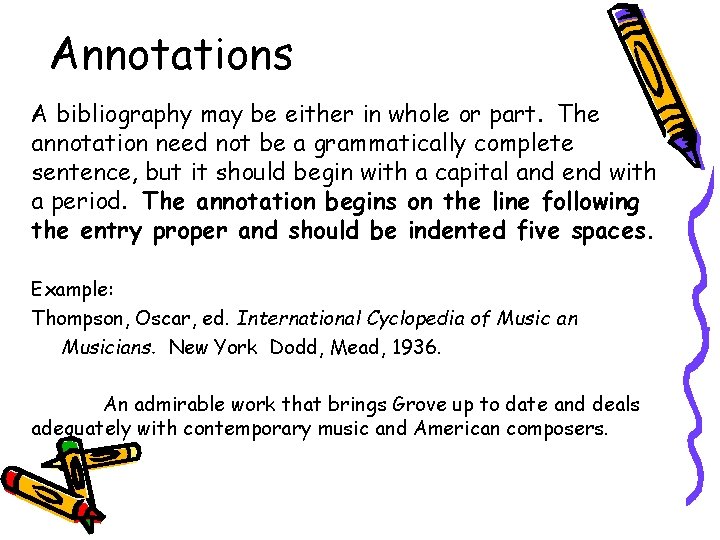
Annotations A bibliography may be either in whole or part. The annotation need not be a grammatically complete sentence, but it should begin with a capital and end with a period. The annotation begins on the line following the entry proper and should be indented five spaces. Example: Thompson, Oscar, ed. International Cyclopedia of Music an Musicians. New York Dodd, Mead, 1936. An admirable work that brings Grove up to date and deals adequately with contemporary music and American composers.
What should I be doing as I am reading/researching? Recording or Note taking for bibliography & citations
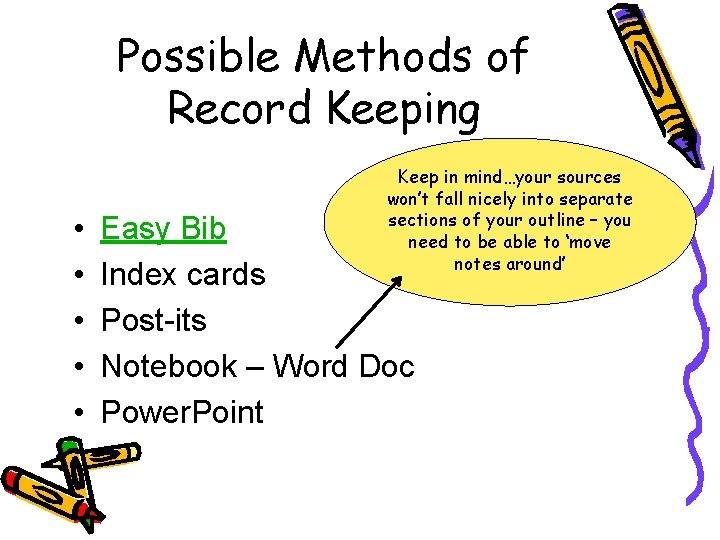
Possible Methods of Record Keeping • • • Keep in mind…your sources won’t fall nicely into separate sections of your outline – you need to be able to ‘move notes around’ Easy Bib Index cards Post-its Notebook – Word Doc Power. Point
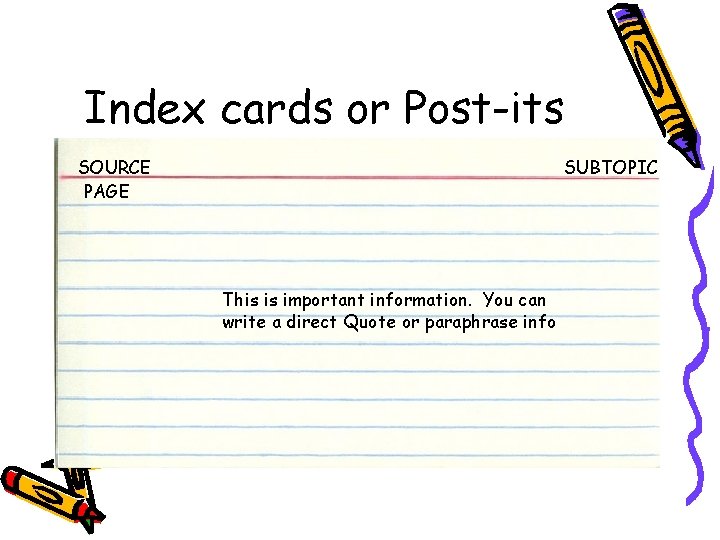
Index cards or Post-its SOURCE PAGE SUBTOPIC This is important information. You can write a direct Quote or paraphrase info
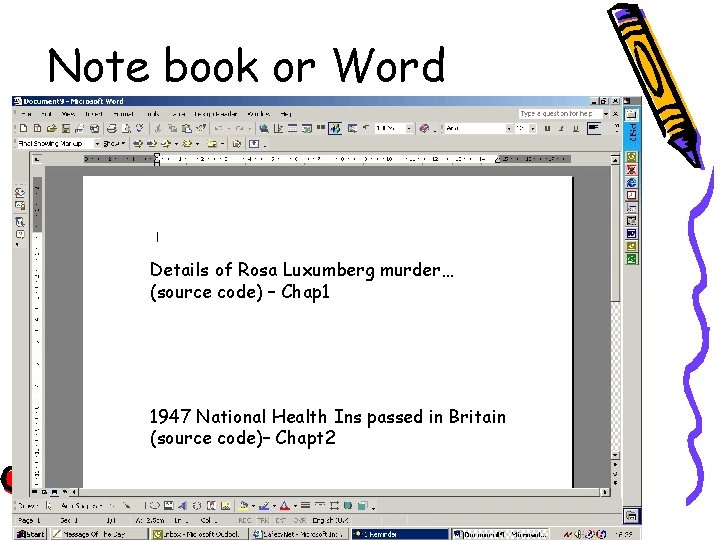
Note book or Word Details of Rosa Luxumberg murder… (source code) – Chap 1 1947 National Health Ins passed in Britain (source code)– Chapt 2
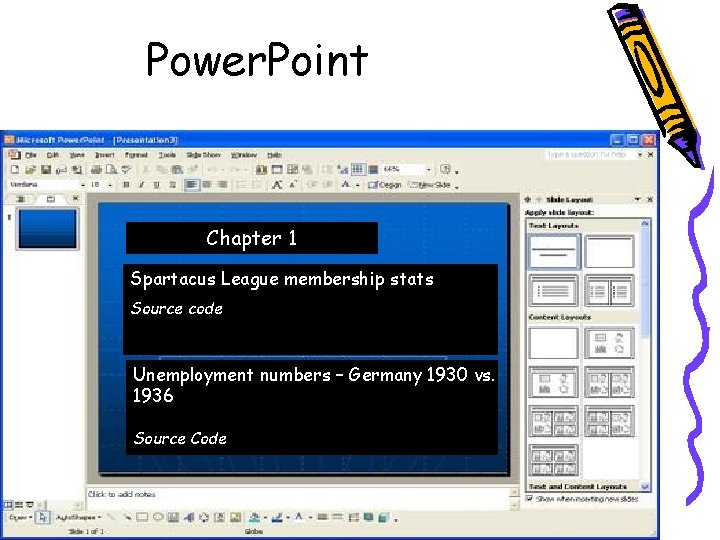
Power. Point Chapter 1 Spartacus League membership stats Source code Unemployment numbers – Germany 1930 vs. 1936 Source Code
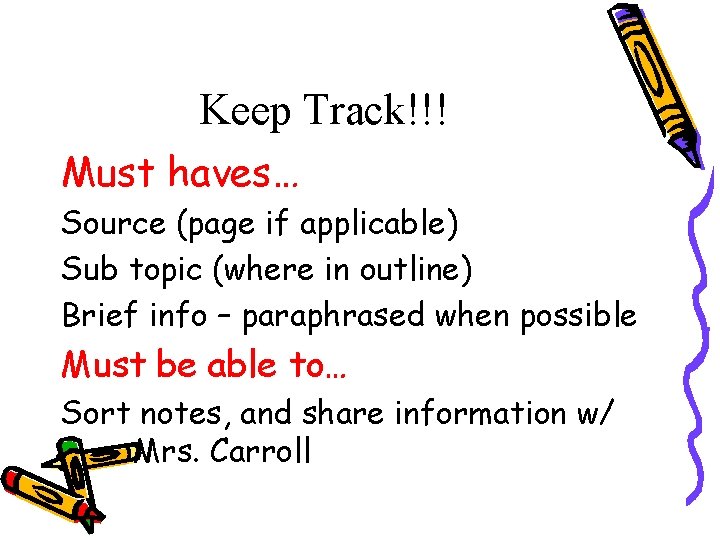
Keep Track!!! Must haves… Source (page if applicable) Sub topic (where in outline) Brief info – paraphrased when possible Must be able to… Sort notes, and share information w/ Mrs. Carroll
Trouble Shooting • Don’t pack too much info on one “card” • Paraphrase ahead of time – it makes it easier later…but be careful not to change meaning or leave yourself confused • Think ahead to groupings – be sure to hit on all parts • (Working outline is key here! – consult often)
Sorting • Arrange ‘cards’ /notes into groups • Direct research to one particular subtopic when possible • Arrange cards within group • WRITE! And CITE!
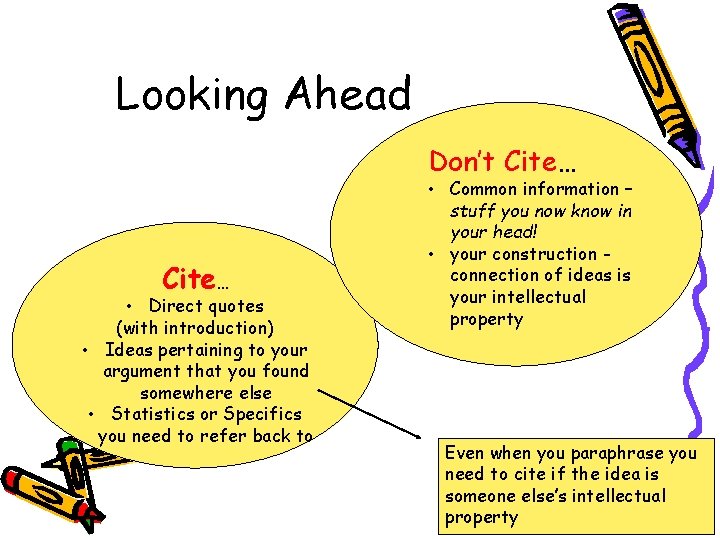
Looking Ahead Don’t Cite… • Direct quotes (with introduction) • Ideas pertaining to your argument that you found somewhere else • Statistics or Specifics you need to refer back to • Common information – stuff you now know in your head! • your construction connection of ideas is your intellectual property Even when you paraphrase you need to cite if the idea is someone else’s intellectual property