
Research Paradigms in Communication for Development and Social
- Slides: 16
Research Paradigms in Communication for Development and Social Change - 3 perspectives By Thomas Tufte, Roskilde University Presentation given at Nordic-Kenyan Ph. D Seminar 3 -9 May 2014, Eldoret, Kenya
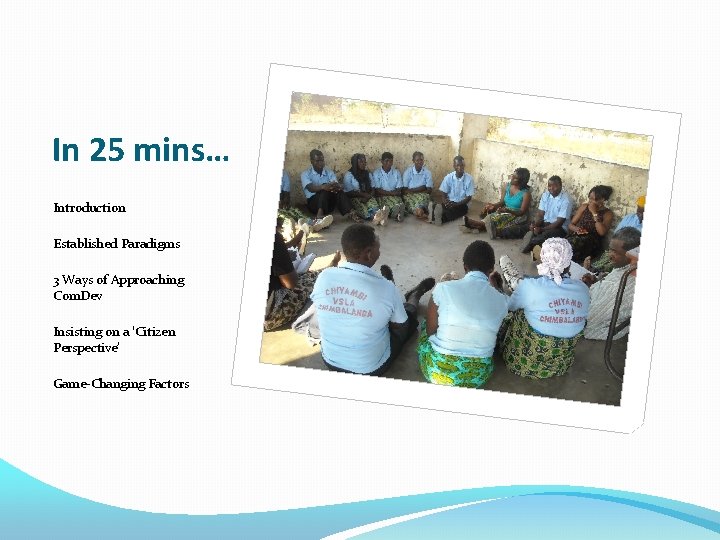
In 25 mins… Introduction Established Paradigms 3 Ways of Approaching Com. Dev Insisting on a ‘Citizen Perspective’ Game-Changing Factors
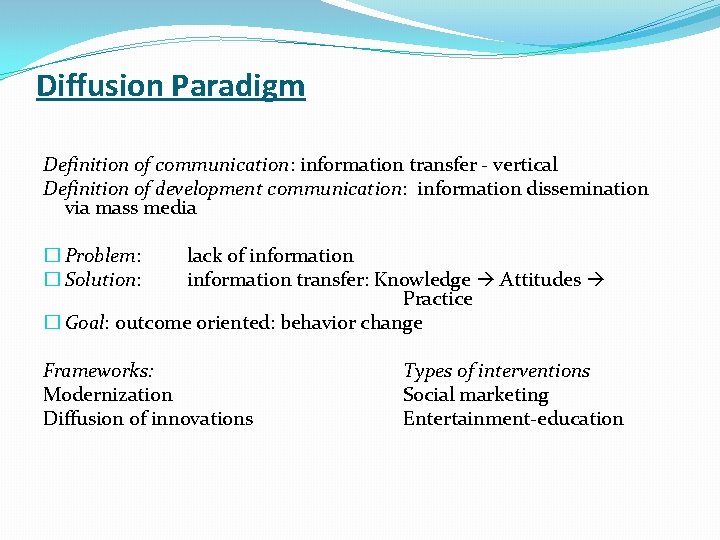
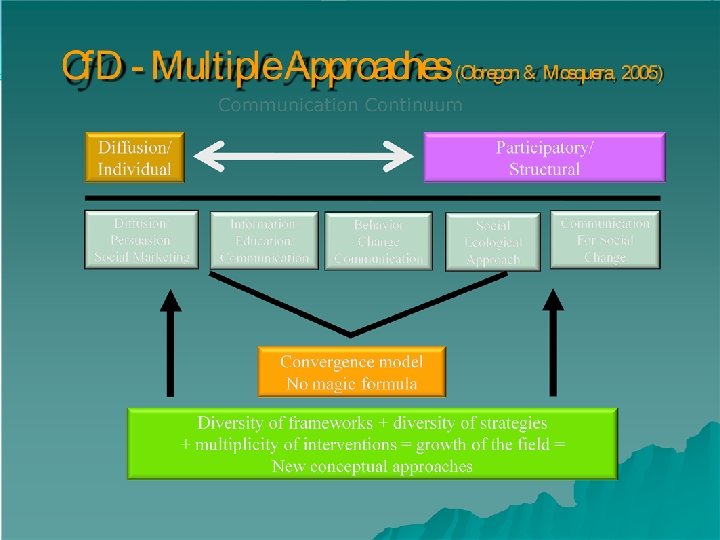
Diffusion Paradigm Definition of communication: information transfer - vertical Definition of development communication: information dissemination via mass media � Problem: � Solution: lack of information transfer: Knowledge Attitudes Practice � Goal: outcome oriented: behavior change Frameworks: Modernization Diffusion of innovations Types of interventions Social marketing Entertainment-education
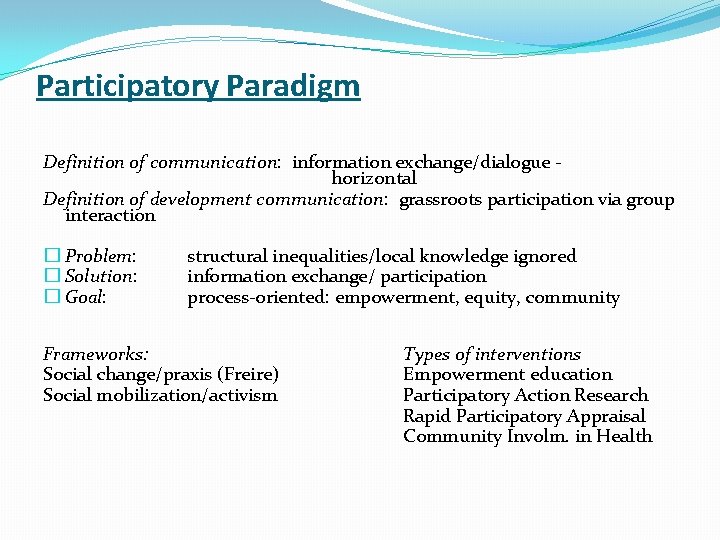
Participatory Paradigm Definition of communication: information exchange/dialogue horizontal Definition of development communication: grassroots participation via group interaction � Problem: � Solution: � Goal: structural inequalities/local knowledge ignored information exchange/ participation process-oriented: empowerment, equity, community Frameworks: Social change/praxis (Freire) Social mobilization/activism Types of interventions Empowerment education Participatory Action Research Rapid Participatory Appraisal Community Involm. in Health
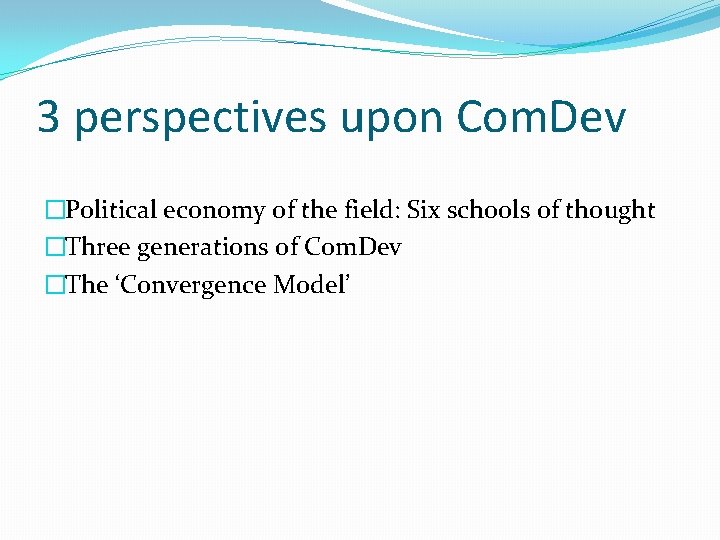
3 perspectives upon Com. Dev �Political economy of the field: Six schools of thought �Three generations of Com. Dev �The ‘Convergence Model’
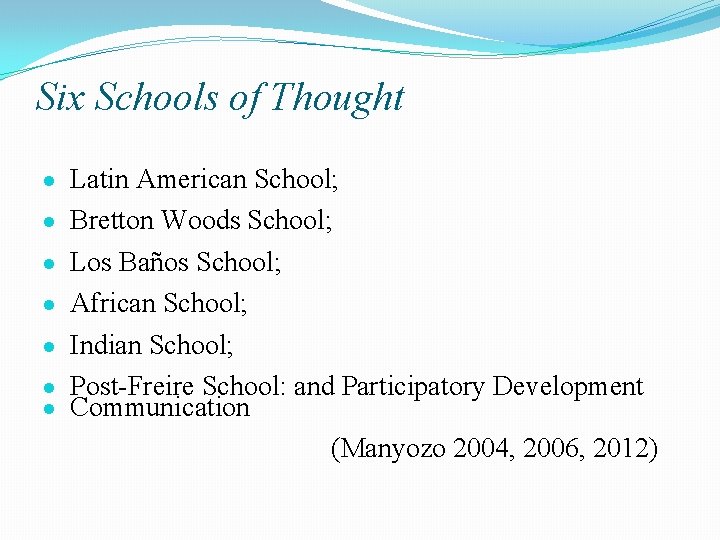
Six Schools of Thought Latin American School; Bretton Woods School; Los Baños School; African School; Indian School; Post-Freire School: and Participatory Development Communication (Manyozo 2004, 2006, 2012)
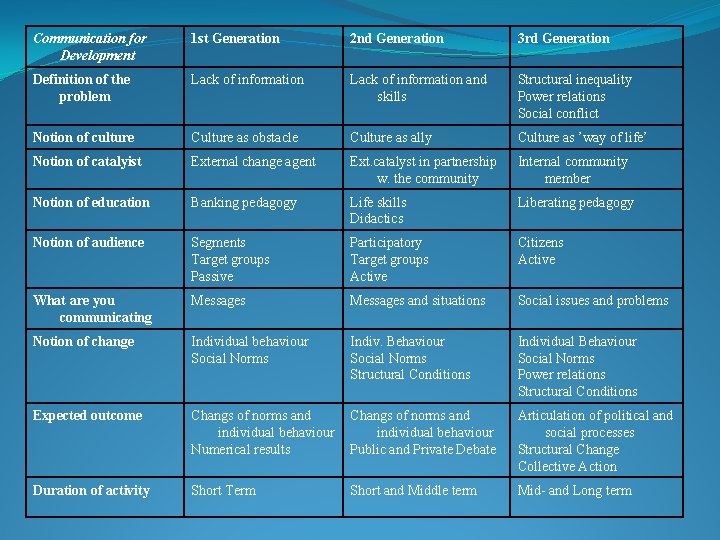
Communication for Development 1 st Generation 2 nd Generation 3 rd Generation Definition of the problem Lack of information and skills Structural inequality Power relations Social conflict Notion of culture Culture as obstacle Culture as ally Culture as ’way of life’ Notion of catalyist External change agent Ext. catalyst in partnership w. the community Internal community member Notion of education Banking pedagogy Life skills Didactics Liberating pedagogy Notion of audience Segments Target groups Passive Participatory Target groups Active Citizens Active What are you communicating Messages and situations Social issues and problems Notion of change Individual behaviour Social Norms Indiv. Behaviour Social Norms Structural Conditions Individual Behaviour Social Norms Power relations Structural Conditions Expected outcome Changs of norms and individual behaviour Numerical results Changs of norms and individual behaviour Public and Private Debate Articulation of political and social processes Structural Change Collective Action Duration of activity Short Term Short and Middle term Mid- and Long term
Common Traits - they all emerge from the institutionalized practice of communication: logic of thinking of an organization/system in which broader and deeper questions of development and social change often are left aside - they all tend to contain an implicit imperative of predefined goals. - to reach these predefined goals, the have a common concern for strategic communication which entails a systematic approach to the whole communication process. - Finally and most importantly, they all have a normative framing of development, committed to common concern of social justice, equity and human rights.
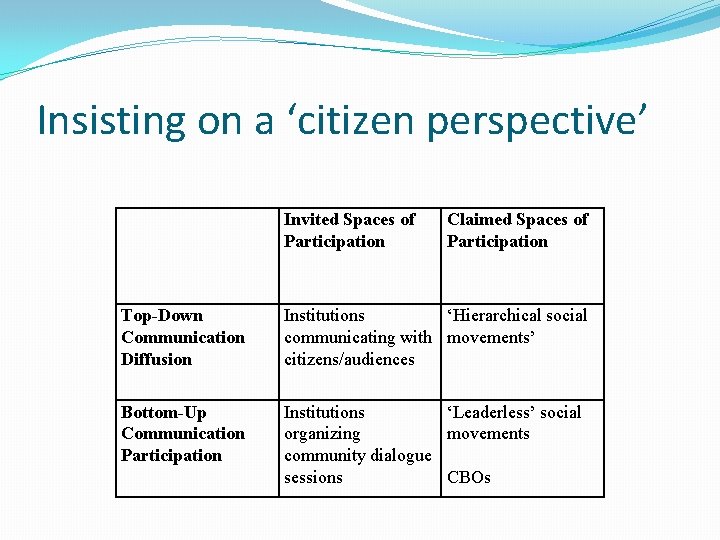
Insisting on a ‘citizen perspective’ Invited Spaces of Participation Claimed Spaces of Participation Top-Down Communication Diffusion Institutions ‘Hierarchical social communicating with movements’ citizens/audiences Bottom-Up Communication Participation Institutions ‘Leaderless’ social organizing movements community dialogue sessions CBOs
4 game-changing factors
1. The Growth and Expansion of Civil Society - A (global) process over 25 years - An evolution of the roles of civil society, with a growing emphasis on accountability issues. - The roles have evolved from the classic role of complementing government (mid/late 80 ies) a strong emphasis on civil society development associated with democracy and governance issues (early 1990 ies) - emphasis on good governance, legitimacy and establishing selfregulating mechanisms (late 1990 ies) - the return of supremacy of the state (since early 2000 s) and - a human rights-based approaches that focuses on balancing multiple responsibilities to different stakeholders, using a variety of approaches -
2. The Emergence of a New Generation of Social Movements Classical Social Movements of the Industrial Age New Social Movements (last 60 ies/early 70 ies and onwards) A new generation of social movements across the globe – questioning the dominant neo-liberal development paradigm.
3. Changing Political Economy of the Development ‘Industry’ and New Development Paradigms Emerging �New agents of change – new stakeholders, from private sectors’ CSR initiatives, the Chinese and other governments…and the general privatization of development cooperation in the form of a growing influence of private foundations as Bill and Melinda Gates, Clinton, Soros, and many others. �Changing development paradigms – Buen Vivir, Gross National Happiness, Confucianism, triple or quadruple bottom lines, etc…Post-colonial discourses od development.
4. Media Development and the Diffusion of New Information and Communication Technologies A lot going on – new relations emerging between decision makers and citizens, media and activists and between online and offline spaces of participation.
Conclusion New contexts New stakeholders New socio-cultural and political-economic dynamics New Subjectivities New Paradigm(s)?