
Research on the Organization Model of Ubiquitous Learning
Research on the Organization Model of Ubiquitous Learning Resource ——The Concept and Architecture of Leaning Cell Shengquan Yu yusq@bnu. edu. cn http: //www. etc. edu. cn Oct, 2011, Beijing School of Education Technology , Beijing Normal University
Sorry, my English is poor, but I’ll try my best.
Research Questions
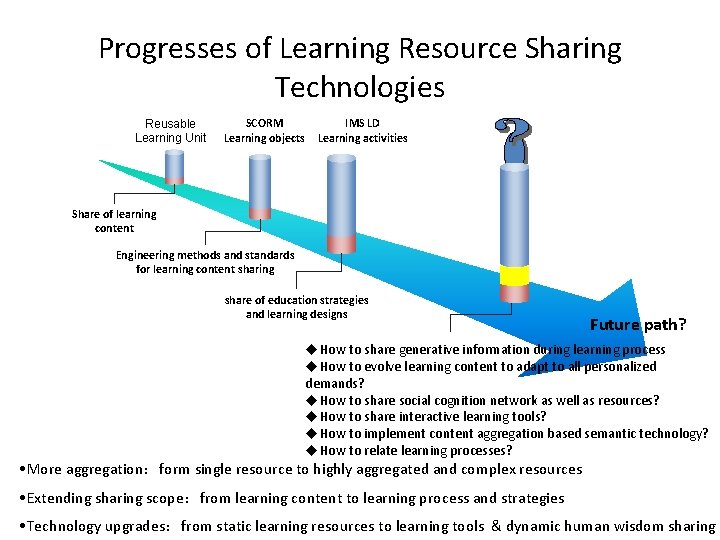
Progresses of Learning Resource Sharing Technologies Reusable Learning Unit SCORM Learning objects IMS LD Learning activities Share of learning content Engineering methods and standards for learning content sharing share of education strategies and learning designs Future path? u. How to share generative information during learning process u. How to evolve learning content to adapt to all personalized demands? u. How to share social cognition network as well as resources? u. How to share interactive learning tools? u. How to implement content aggregation based semantic technology? u. How to relate learning processes? • More aggregation:form single resource to highly aggregated and complex resources • Extending sharing scope:from learning content to learning process and strategies • Technology upgrades:from static learning resources to learning tools & dynamic human wisdom sharing
Ubiquitous Learning • On demand: Anytime, Anywhere, Mobile… But more: • Social • Situated • Context awareness • Adaptive

Learning Resource Needed in Ubiquitous Learning • Anything about everything • Adaptive: learning needs & all kinds of devices • Collective intelligences • Evolutive resources • Situated Knowledge: help learner solve real similar problems
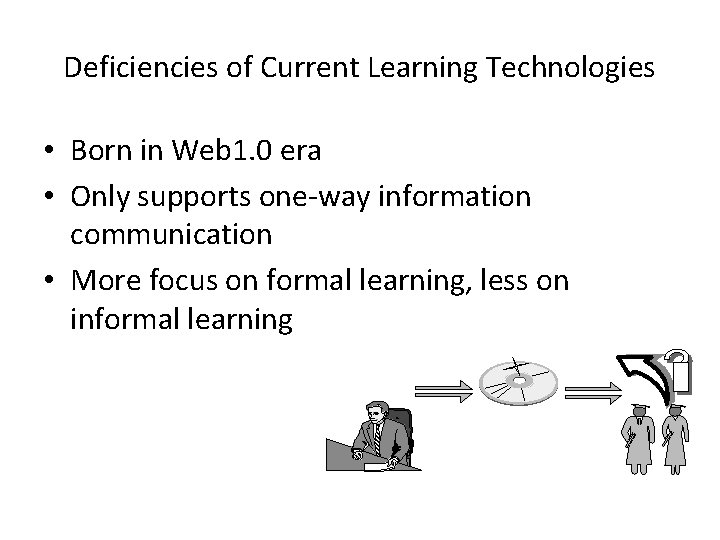
Deficiencies of Current Learning Technologies • Born in Web 1. 0 era • Only supports one-way information communication • More focus on formal learning, less on informal learning
Deficiencies of Current Learning Technologies • Emphasize learning resources and activities sharing in a close structure – Ignores the continuous updating of learning resources – Ignores dynamic and generative connection of learning resources – Ignores building up dynamic relationships between learners and teachers with learning resources

Proposal of Learning Cell This research try to proposal a new kind of learning source organizing model—— Learn Cell The organizational model and key technologies of u-Learning resource
The Concept and Architecture of Leaning Cell
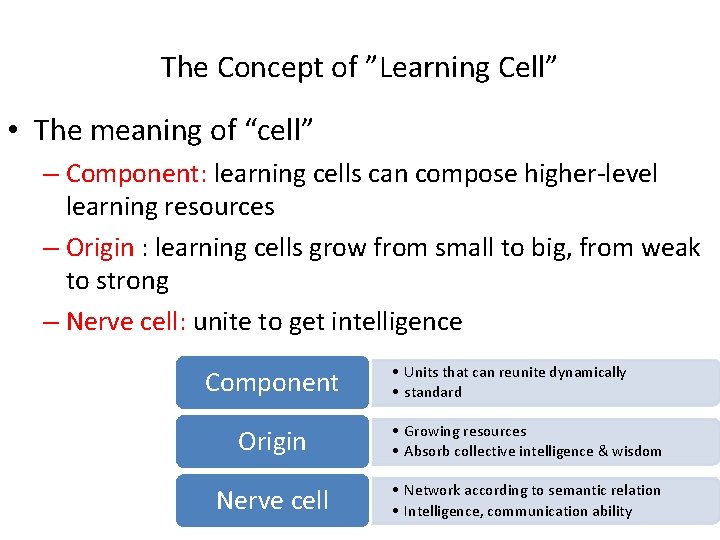
The Concept of ”Learning Cell” • The meaning of “cell” – Component: learning cells can compose higher-level learning resources – Origin : learning cells grow from small to big, from weak to strong – Nerve cell: unite to get intelligence Component • Units that can reunite dynamically • standard Origin • Growing resources • Absorb collective intelligence & wisdom Nerve cell • Network according to semantic relation • Intelligence, communication ability
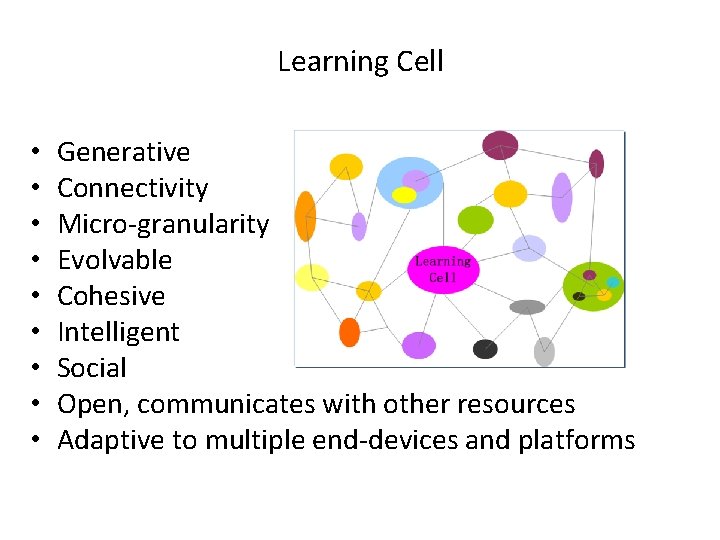
Learning Cell • • • Generative Connectivity Micro-granularity Evolvable Cohesive Intelligent Social Open, communicates with other resources Adaptive to multiple end-devices and platforms
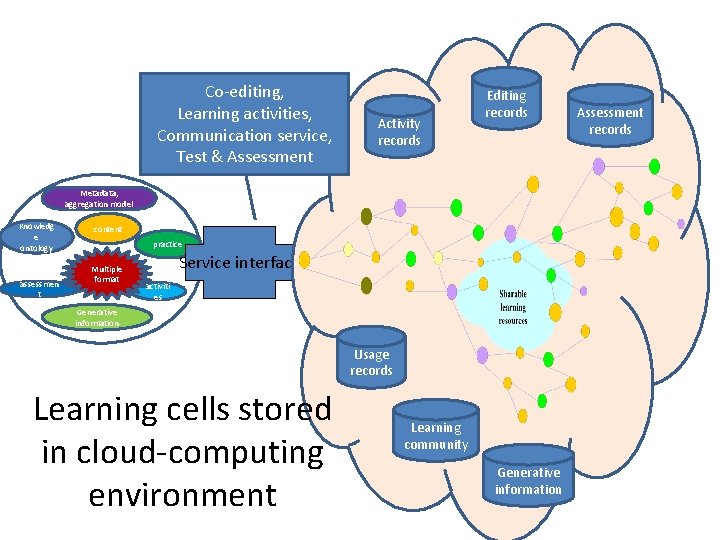
Co-editing, Learning activities, Communication service, Test & Assessment Activity records Editing records Metadata, aggregation model Knowledg e ontology assessmen t content practice Multiple format Service interface activiti es Generative information Usage records Learning cells stored in cloud-computing environment Learning community Generative information Assessment records
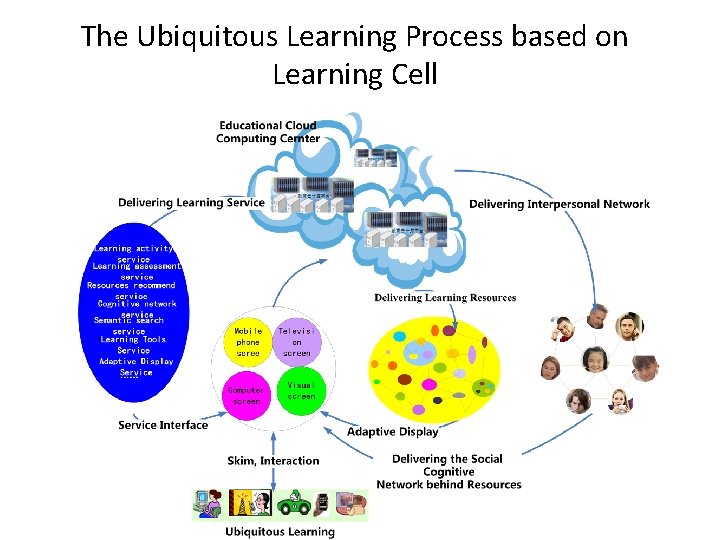
The Ubiquitous Learning Process based on Learning Cell
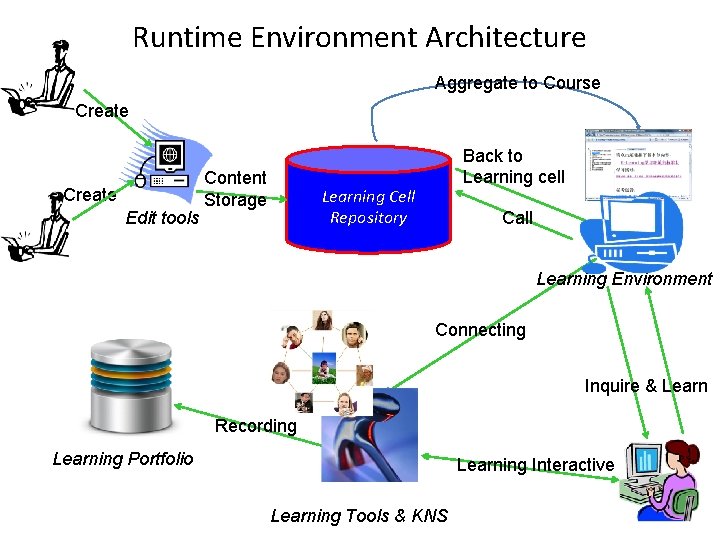
Runtime Environment Architecture Aggregate to Course Create Edit tools Content Storage Back to Learning cell Learning Cell Repository Call Learning Environment Connecting Inquire & Learn Recording Learning Portfolio Learning Interactive Learning Tools & KNS
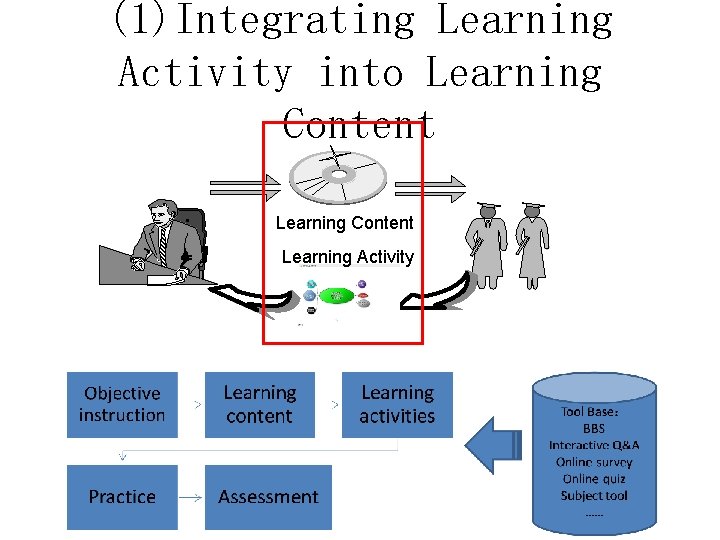
(1)Integrating Learning Activity into Learning Content Learning Activity
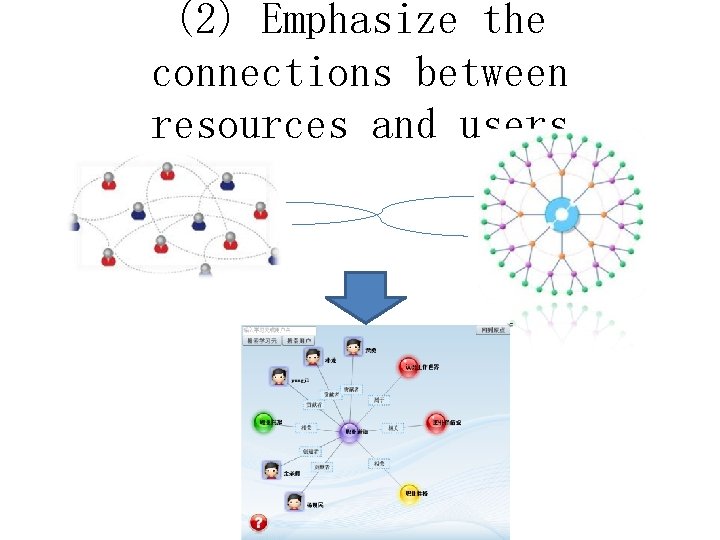
(2) Emphasize the connections between resources and users
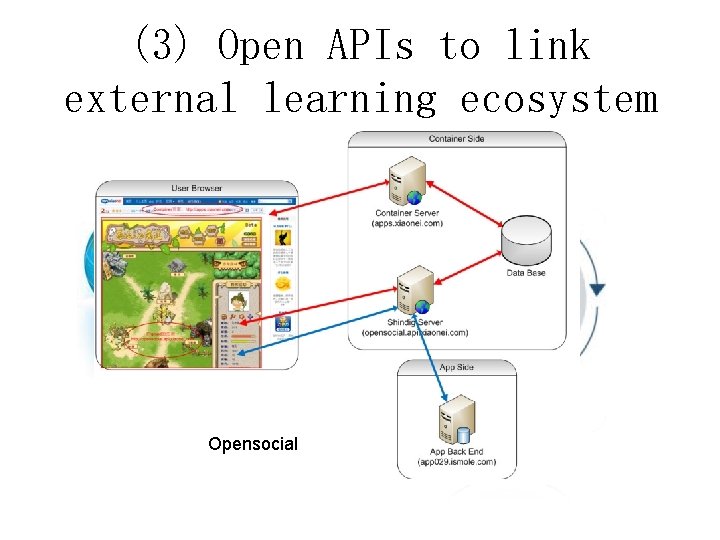
(3) Open APIs to link external learning ecosystem Opensocial
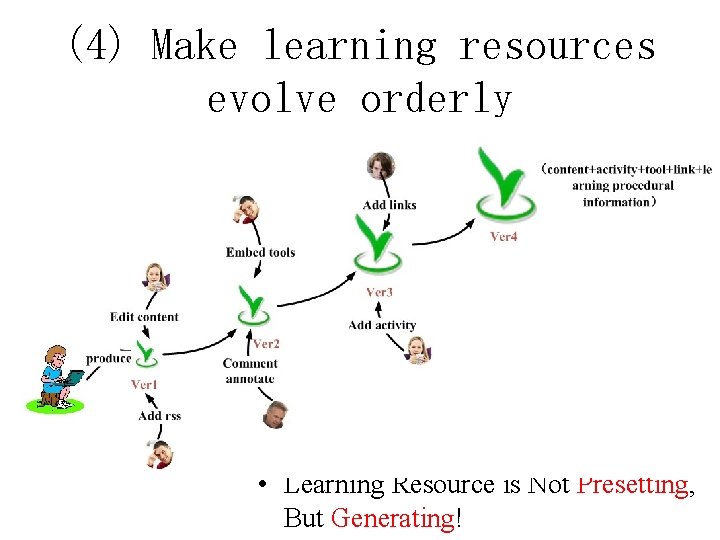
(4) Make learning resources evolve orderly • Learning Resource is Not Presetting, But Generating!
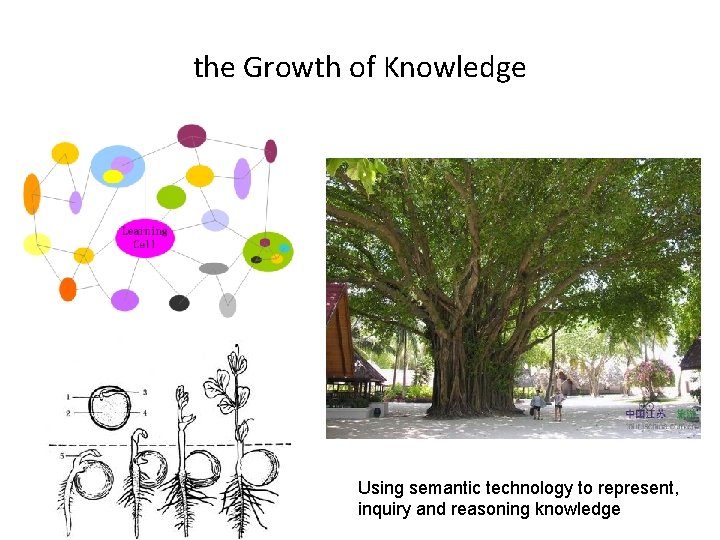
the Growth of Knowledge Using semantic technology to represent, inquiry and reasoning knowledge
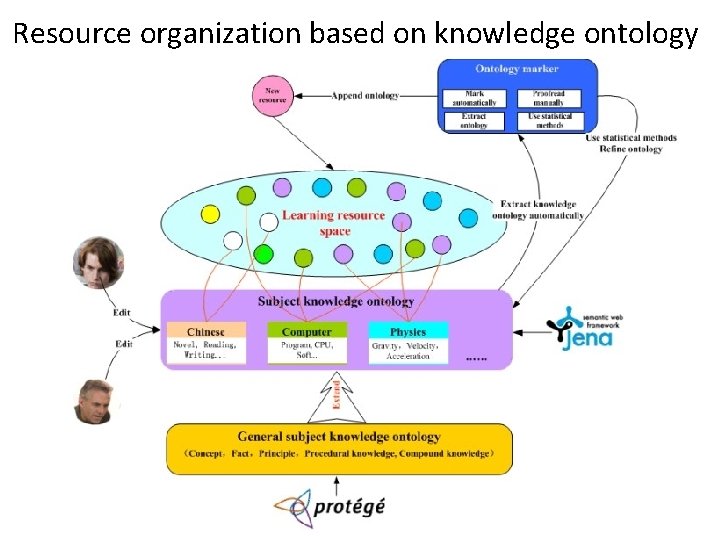
Resource organization based on knowledge ontology
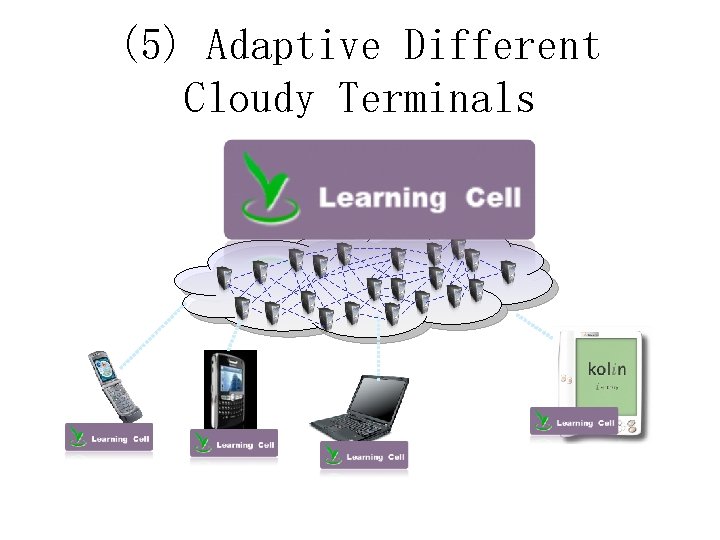
(5) Adaptive Different Cloudy Terminals
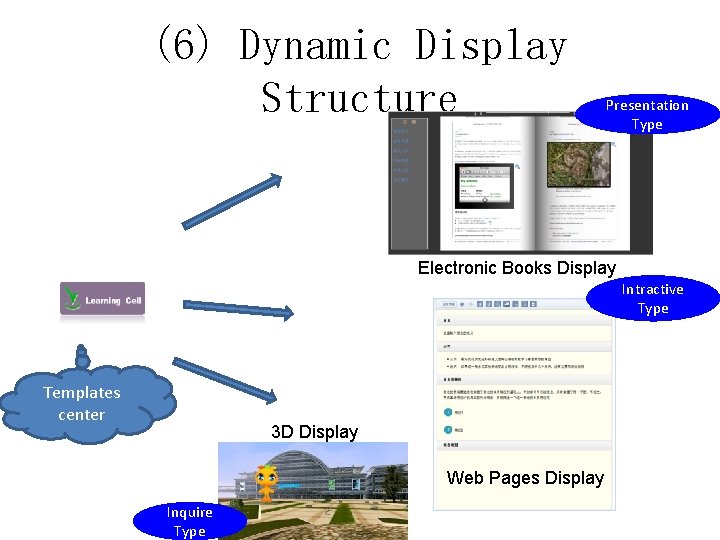
(6) Dynamic Display Structure Presentation Type Electronic Books Display Intractive Type Templates center 3 D Display Web Pages Display Inquire Type
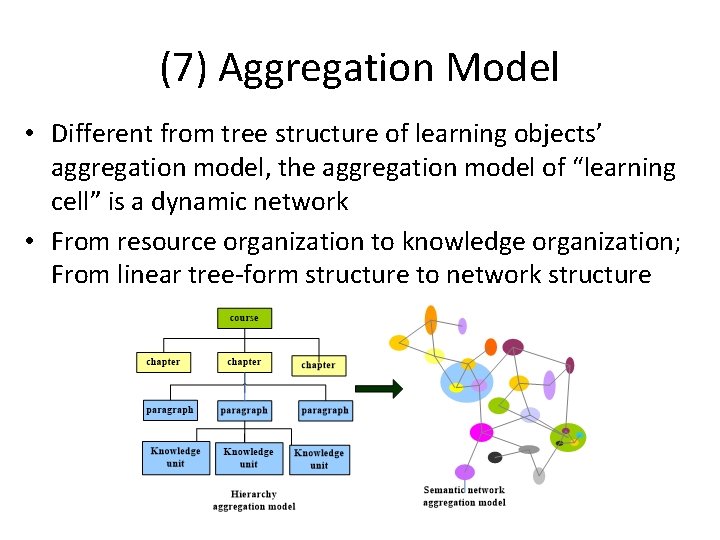
(7) Aggregation Model • Different from tree structure of learning objects’ aggregation model, the aggregation model of “learning cell” is a dynamic network • From resource organization to knowledge organization; From linear tree-form structure to network structure
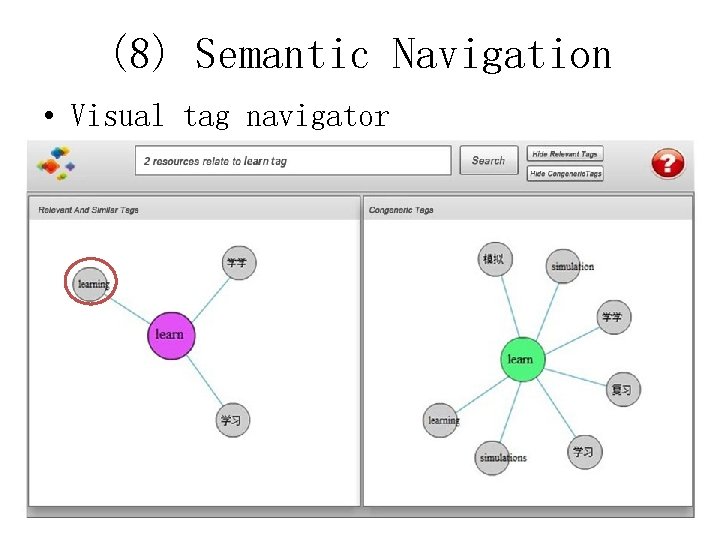
(8) Semantic Navigation • Visual tag navigator
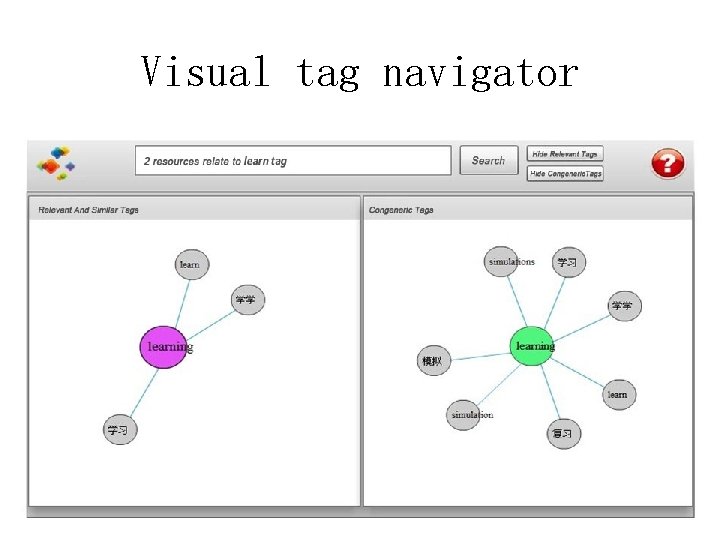
Visual tag navigator
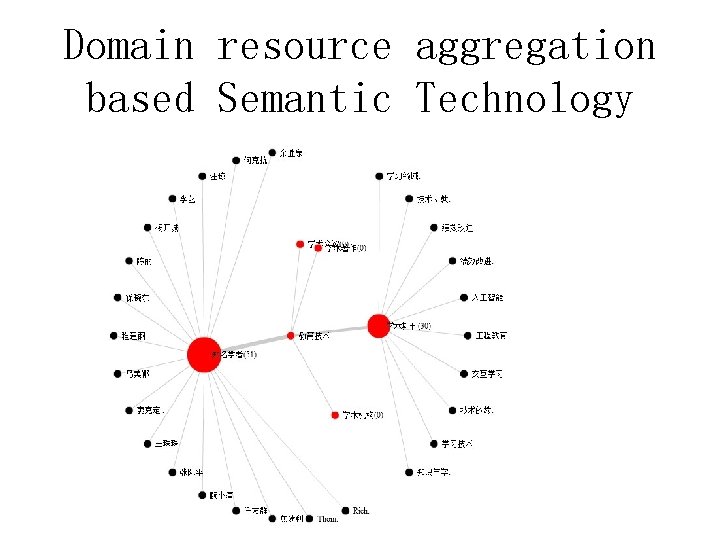
Domain resource aggregation based Semantic Technology
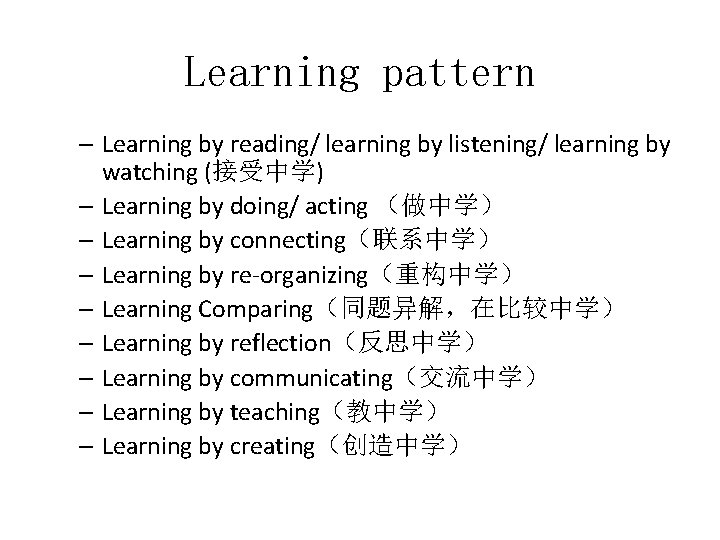
Learning pattern – Learning by reading/ learning by listening/ learning by watching (接受中学) – Learning by doing/ acting (做中学) – Learning by connecting(联系中学) – Learning by re-organizing(重构中学) – Learning Comparing(同题异解,在比较中学) – Learning by reflection(反思中学) – Learning by communicating(交流中学) – Learning by teaching(教中学) – Learning by creating(创造中学)
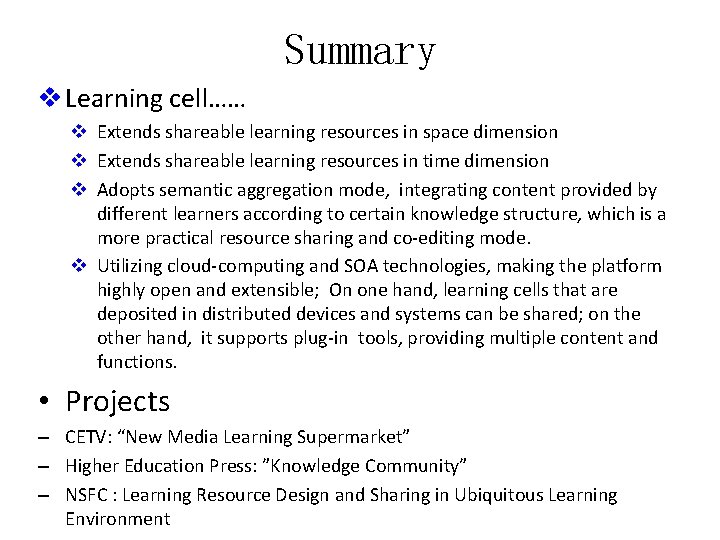
Summary v Learning cell…… v Extends shareable learning resources in space dimension v Extends shareable learning resources in time dimension v Adopts semantic aggregation mode, integrating content provided by different learners according to certain knowledge structure, which is a more practical resource sharing and co-editing mode. v Utilizing cloud-computing and SOA technologies, making the platform highly open and extensible; On one hand, learning cells that are deposited in distributed devices and systems can be shared; on the other hand, it supports plug-in tools, providing multiple content and functions. • Projects – CETV: “New Media Learning Supermarket” – Higher Education Press: ”Knowledge Community” – NSFC : Learning Resource Design and Sharing in Ubiquitous Learning Environment
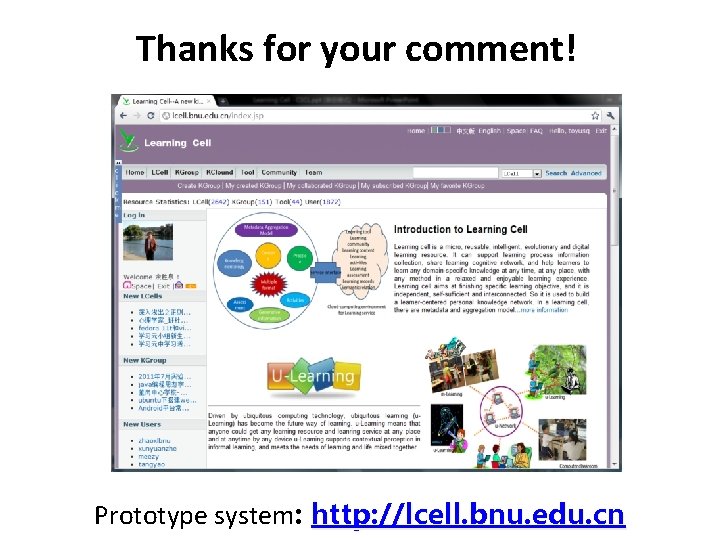
Thanks for your comment! Prototype system: http: //lcell. bnu. edu. cn
- Slides: 31