
Research on initiation methods of thermal runaway reaction

- Slides: 20
Research on initiation methods of thermal runaway reaction EVS-GTR 8 th meeting in Washington DC 2015/06/03
Topic • Sample information _ LFP+NCA • Method to initiate thermal runaway_ Overcharge + nail + heat • Contrast of three methods conducted on the cell level • Discussion on the method to do thermal propagation test on the pack level
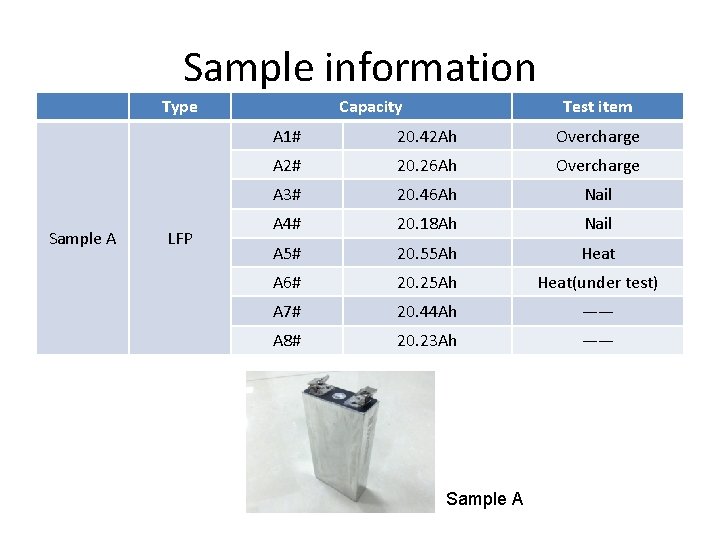
Sample information Type Sample A LFP Capacity Test item A 1# 20. 42 Ah Overcharge A 2# 20. 26 Ah Overcharge A 3# 20. 46 Ah Nail A 4# 20. 18 Ah Nail A 5# 20. 55 Ah Heat A 6# 20. 25 Ah Heat(under test) A 7# 20. 44 Ah —— A 8# 20. 23 Ah —— Sample A
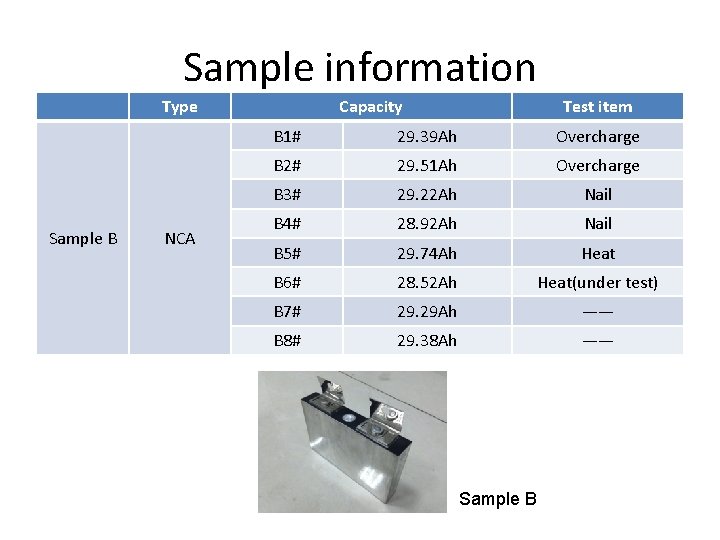
Sample information Type Sample B NCA Capacity Test item B 1# 29. 39 Ah Overcharge B 2# 29. 51 Ah Overcharge B 3# 29. 22 Ah Nail B 4# 28. 92 Ah Nail B 5# 29. 74 Ah Heat B 6# 28. 52 Ah Heat(under test) B 7# 29. 29 Ah —— B 8# 29. 38 Ah —— Sample B
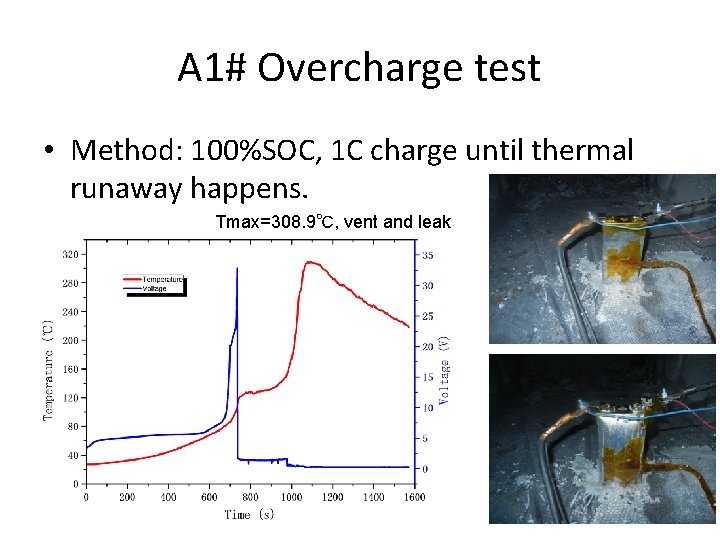
A 1# Overcharge test • Method: 100%SOC, 1 C charge until thermal runaway happens. Tmax=308. 9℃, vent and leak
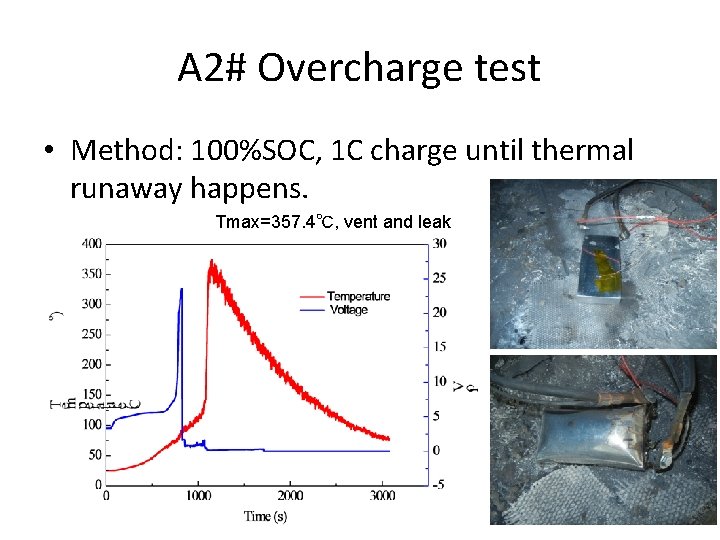
A 2# Overcharge test • Method: 100%SOC, 1 C charge until thermal runaway happens. Tmax=357. 4℃, vent and leak
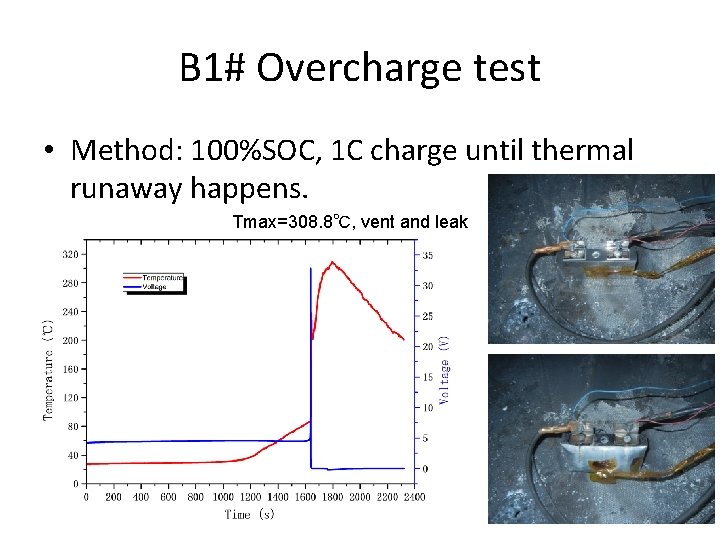
B 1# Overcharge test • Method: 100%SOC, 1 C charge until thermal runaway happens. Tmax=308. 8℃, vent and leak
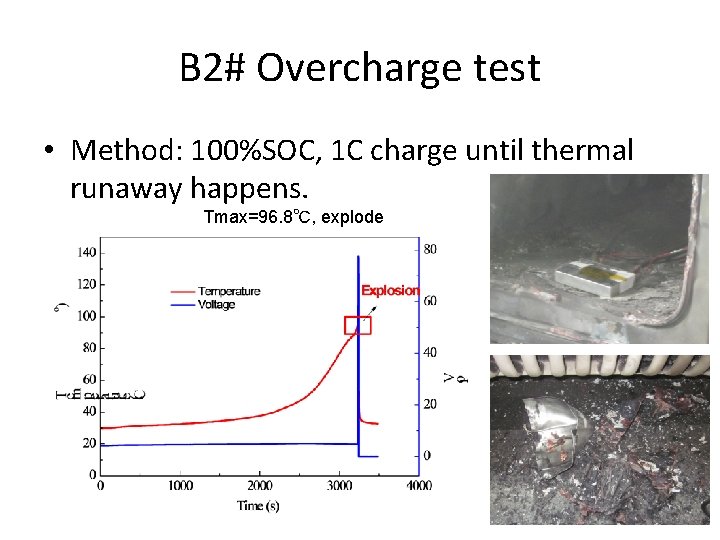
B 2# Overcharge test • Method: 100%SOC, 1 C charge until thermal runaway happens. Tmax=96. 8℃, explode
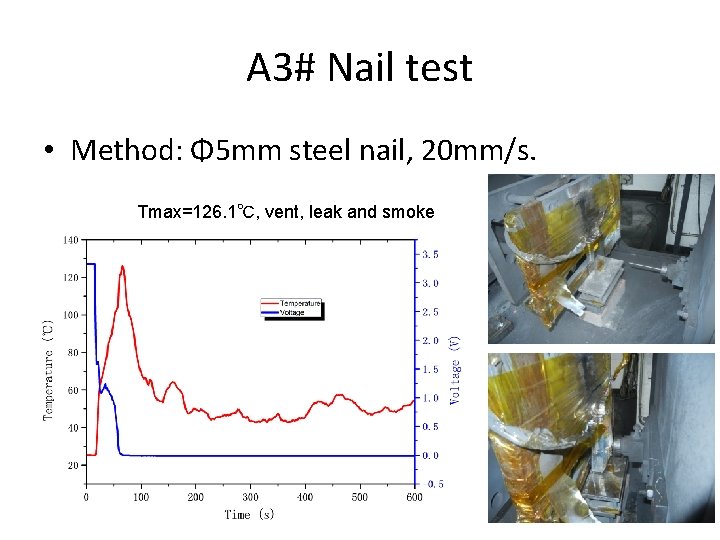
A 3# Nail test • Method: Φ 5 mm steel nail, 20 mm/s. Tmax=126. 1℃, vent, leak and smoke
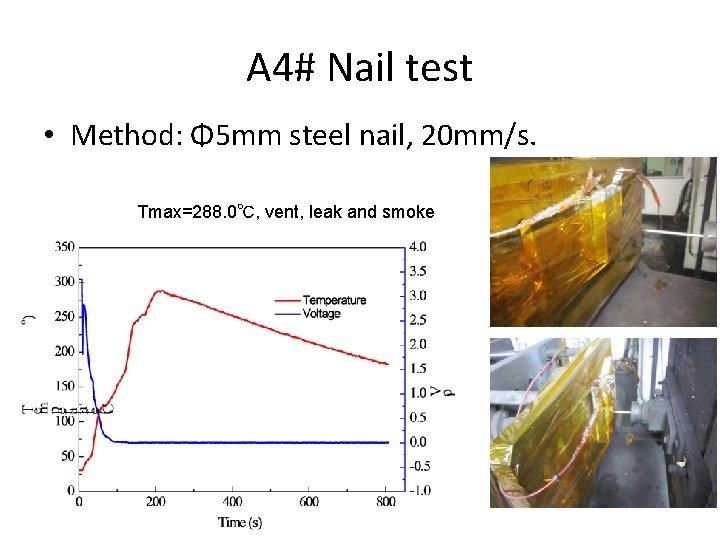
A 4# Nail test • Method: Φ 5 mm steel nail, 20 mm/s. Tmax=288. 0℃, vent, leak and smoke
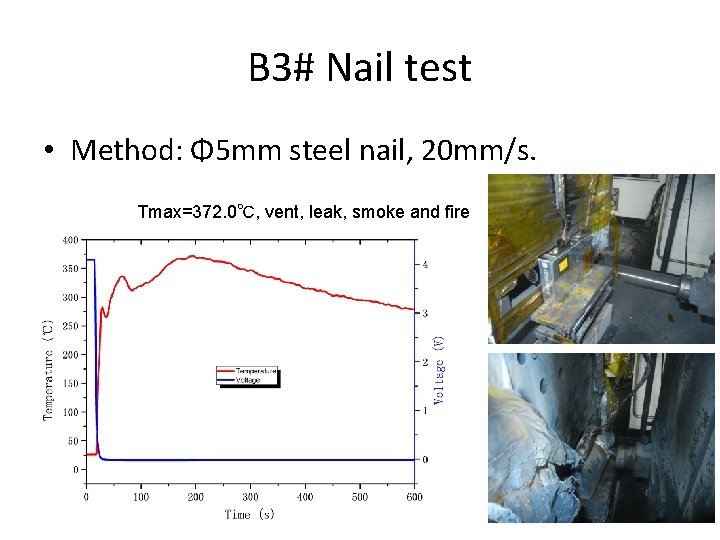
B 3# Nail test • Method: Φ 5 mm steel nail, 20 mm/s. Tmax=372. 0℃, vent, leak, smoke and fire
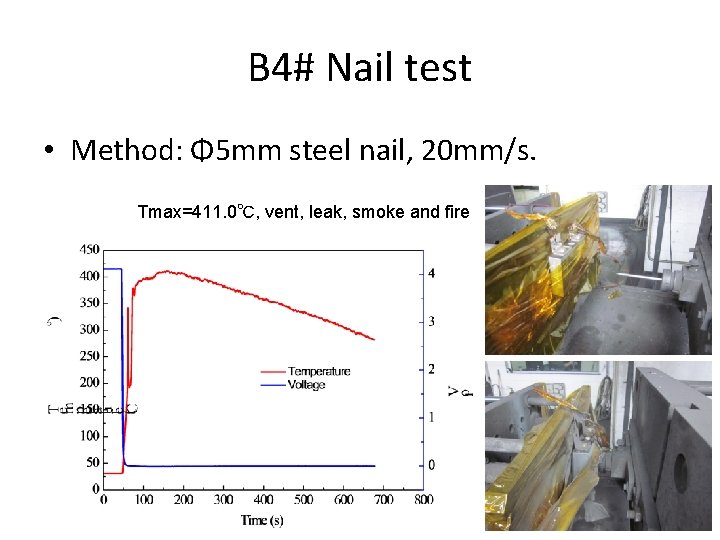
B 4# Nail test • Method: Φ 5 mm steel nail, 20 mm/s. Tmax=411. 0℃, vent, leak, smoke and fire
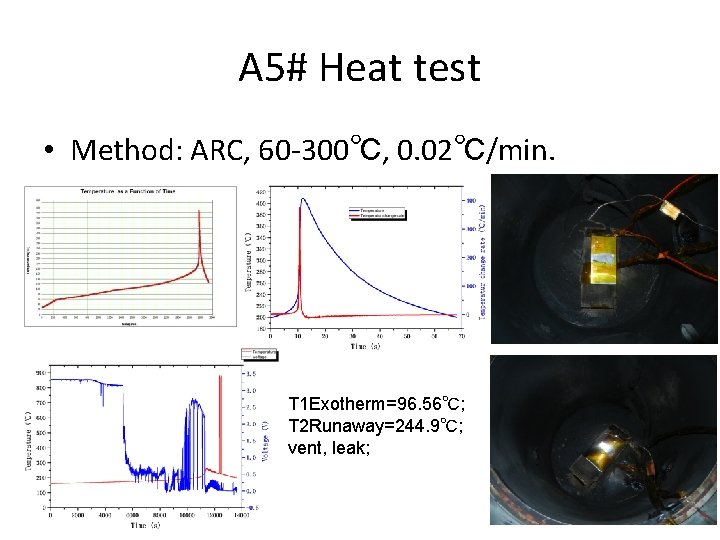
A 5# Heat test • Method: ARC, 60 -300℃, 0. 02℃/min. T 1 Exotherm=96. 56℃; T 2 Runaway=244. 9℃; vent, leak;
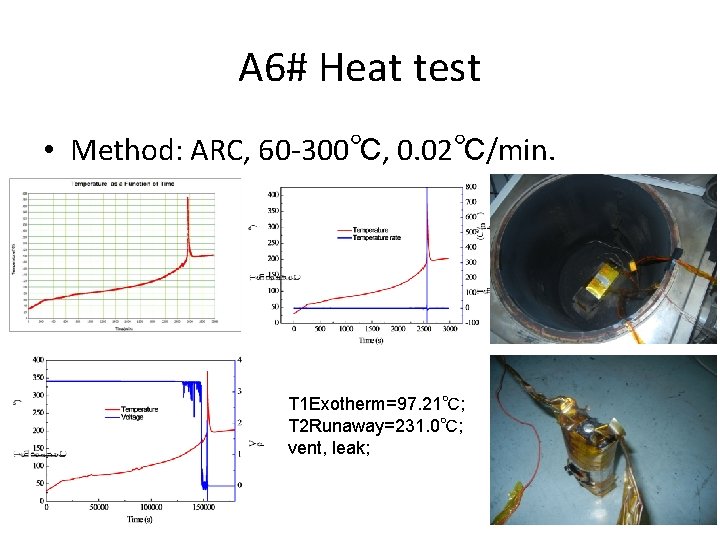
A 6# Heat test • Method: ARC, 60 -300℃, 0. 02℃/min. T 1 Exotherm=97. 21℃; T 2 Runaway=231. 0℃; vent, leak;
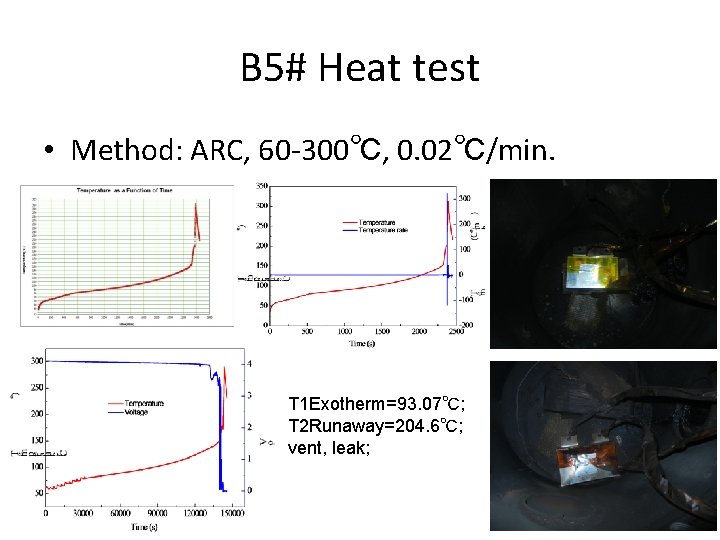
B 5# Heat test • Method: ARC, 60 -300℃, 0. 02℃/min. T 1 Exotherm=93. 07℃; T 2 Runaway=204. 6℃; vent, leak;
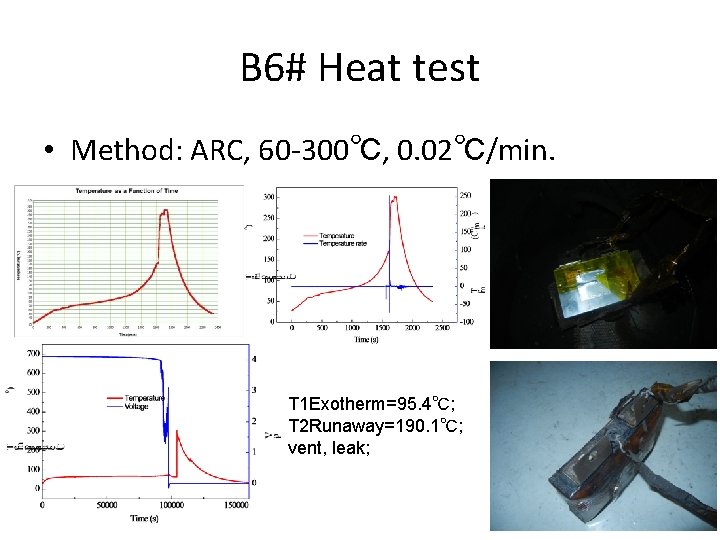
B 6# Heat test • Method: ARC, 60 -300℃, 0. 02℃/min. T 1 Exotherm=95. 4℃; T 2 Runaway=190. 1℃; vent, leak;
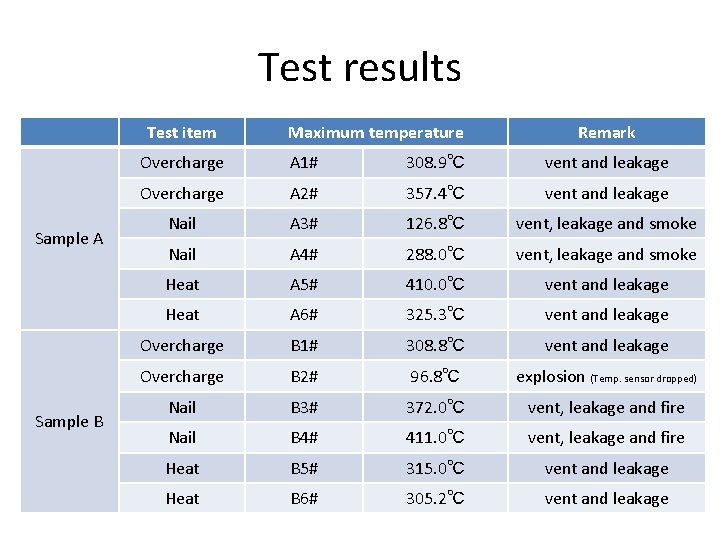
Test results Test item Sample A Sample B Maximum temperature Remark Overcharge A 1# 308. 9℃ vent and leakage Overcharge A 2# 357. 4℃ vent and leakage Nail A 3# 126. 8℃ vent, leakage and smoke Nail A 4# 288. 0℃ vent, leakage and smoke Heat A 5# 410. 0℃ vent and leakage Heat A 6# 325. 3℃ vent and leakage Overcharge B 1# 308. 8℃ vent and leakage Overcharge B 2# 96. 8℃ explosion (Temp. sensor dropped) Nail B 3# 372. 0℃ vent, leakage and fire Nail B 4# 411. 0℃ vent, leakage and fire Heat B 5# 315. 0℃ vent and leakage Heat B 6# 305. 2℃ vent and leakage
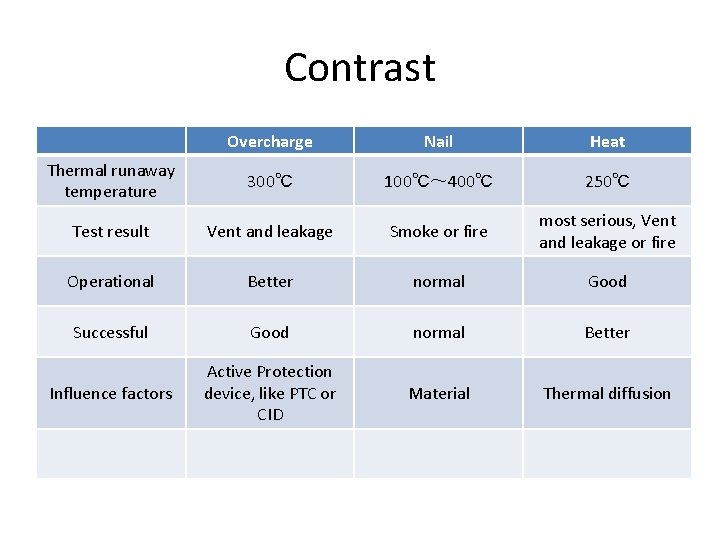
Contrast Overcharge Nail Heat Thermal runaway temperature 300℃ 100℃~ 400℃ 250℃ Test result Vent and leakage Smoke or fire most serious, Vent and leakage or fire Operational Better normal Good Successful Good normal Better Influence factors Active Protection device, like PTC or CID Material Thermal diffusion
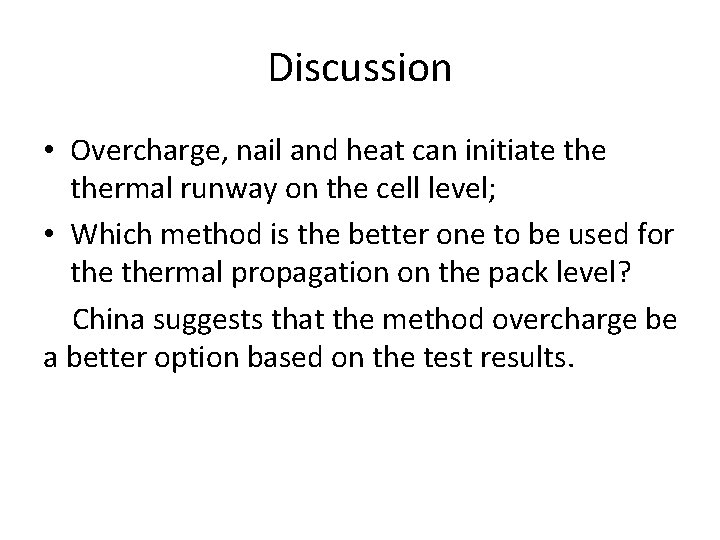
Discussion • Overcharge, nail and heat can initiate thermal runway on the cell level; • Which method is the better one to be used for thermal propagation on the pack level? China suggests that the method overcharge be a better option based on the test results.
Thanks !