
Research Methods Module 4 The Four Goals of



- Slides: 64
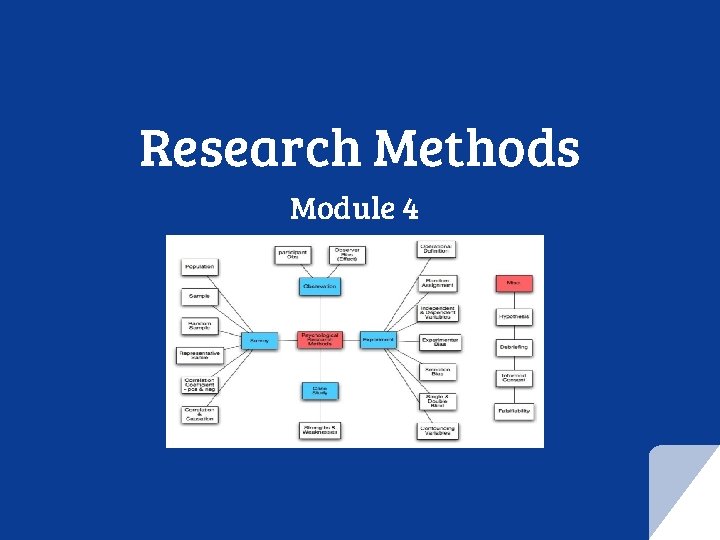
Research Methods Module 4
The Four Goals of Psychology 1. 2. 3. 4. Describe Behavior Explain Behavior Predict Behavior Control Behavior
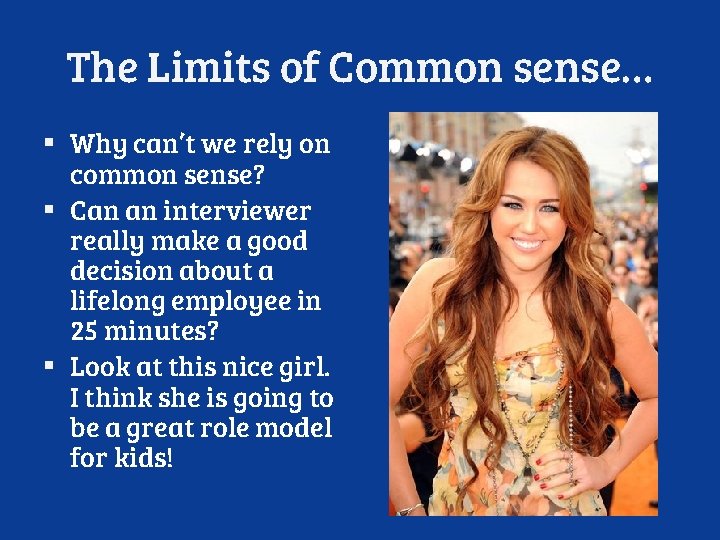
The Limits of Common sense… ▪ Why can’t we rely on common sense? ▪ Can an interviewer really make a good decision about a lifelong employee in 25 minutes? ▪ Look at this nice girl. I think she is going to be a great role model for kids!
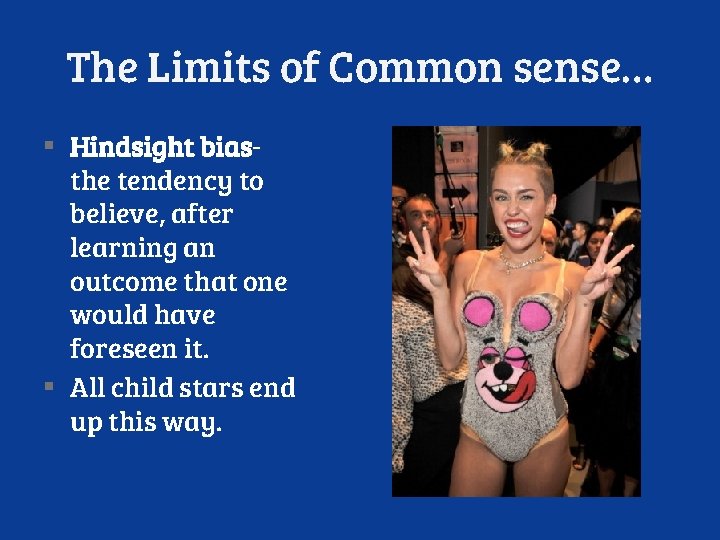
The Limits of Common sense… ▪ Hindsight bias- the tendency to believe, after learning an outcome that one would have foreseen it. ▪ All child stars end up this way.
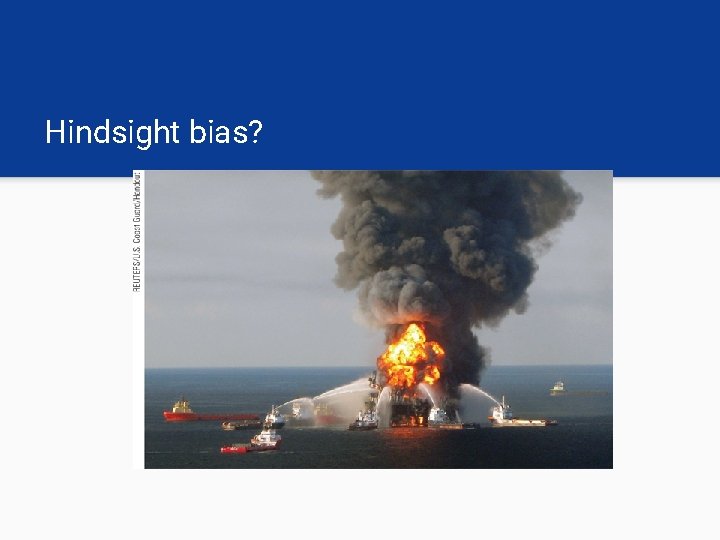
Hindsight bias?
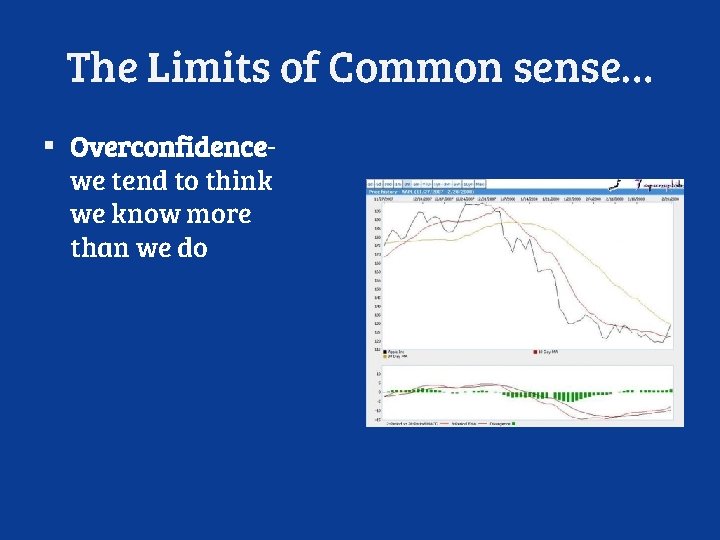
The Limits of Common sense… ▪ Overconfidencewe tend to think we know more than we do
The Scientific Attitude— Critical Thinking- thinking that does not blindly accept arguments. ▪ It examines assumptions, discerns hidden values, evaluates evidence, and assesses conclusions.
To believe with certainty we must begin by doubting… ▪ Parental behaviors determine their children’s sexual orientation. ▪ Lie detectors tell the truth. ▪ Astrologers can analyze your character and predict your future based on the position of the planets at your birth. ▪ Opposites attract.
From a random source… ▪ One in Four high school students have been or will be ▪ ▪ involved in an abusive relationship. 80% of assaults include but not limited too pushing, slapping, and grabbing. 70% of pregnant or parenting teens are beaten by their boyfriends/husbands. 40% of teenage girls in ages 14 to 17 report knowing someone their age who has been hit or beaten by a boyfriend. 26% of girls in grades 9 to 12 have been the victim of physical abuse, sexual abuse, or date rape.
What can we assume? ▪ About 2. 3 milion people each year in the U. S. are raped and/or ▪ ▪ ▪ physically assaulted by a current or former spouse or boyfriend/girlfriend. over 1, 200 women are murdered by a current or former intimat partner in the U. S. each year. At least 37% of female patients and 17% of all patients treated in hospital emergency departments for violence-related injuries were injured by a current or former spouse. Each year 1 million women suffer nonfatal violence by an intimate partner. 4 million American women experience a serious assualt by an intimate partner during an average 12 month period. Nearly 1 in 3 adult women experience at least one physical assualt by a partner during adulthood.
Who are these sources? They say that an apple a day… They say that girls who… They say that if you wash your hair… They say that cigarettes contain… They say it puts holes in your brain… They say that… Who is they? ▪ ▪ ▪
Module 5
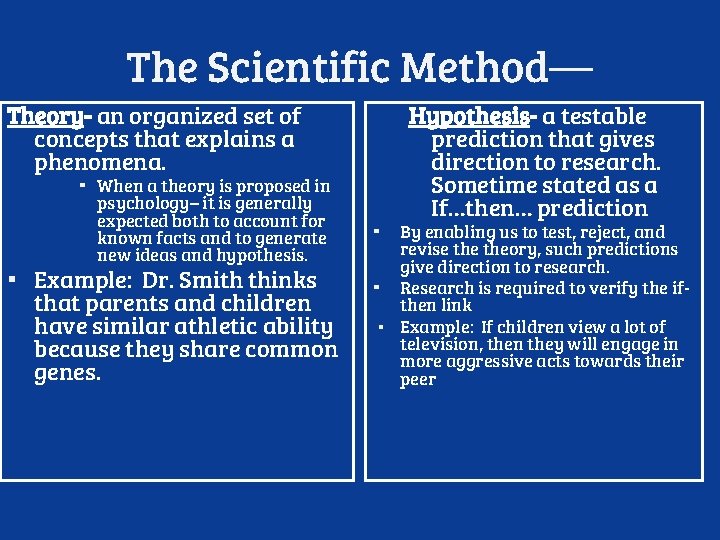
The Scientific Method— Theory- an organized set of concepts that explains a phenomena. ▪ When a theory is proposed in psychology– it is generally expected both to account for known facts and to generate new ideas and hypothesis. ▪ Example: Dr. Smith thinks that parents and children have similar athletic ability because they share common genes. Hypothesis- a testable prediction that gives direction to research. Sometime stated as a If…then… prediction ▪ By enabling us to test, reject, and revise theory, such predictions give direction to research. ▪ Research is required to verify the ifthen link ▪ Example: If children view a lot of television, then they will engage in more aggressive acts towards their peer
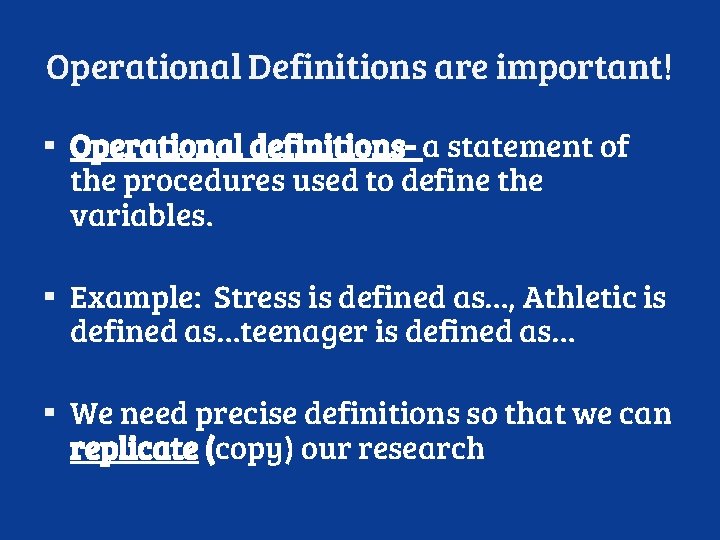
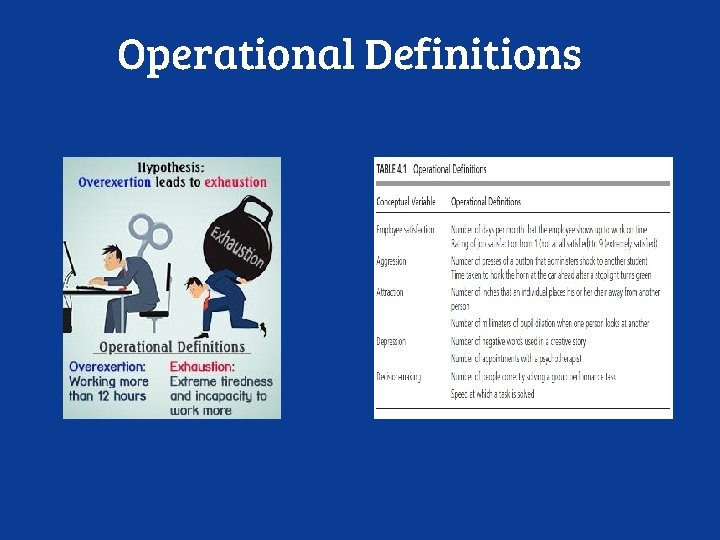
Operational Definitions are important! ▪ Operational definitions- a statement of the procedures used to define the variables. ▪ Example: Stress is defined as…, Athletic is defined as…teenager is defined as… ▪ We need precise definitions so that we can replicate (copy) our research
Operational Definitions
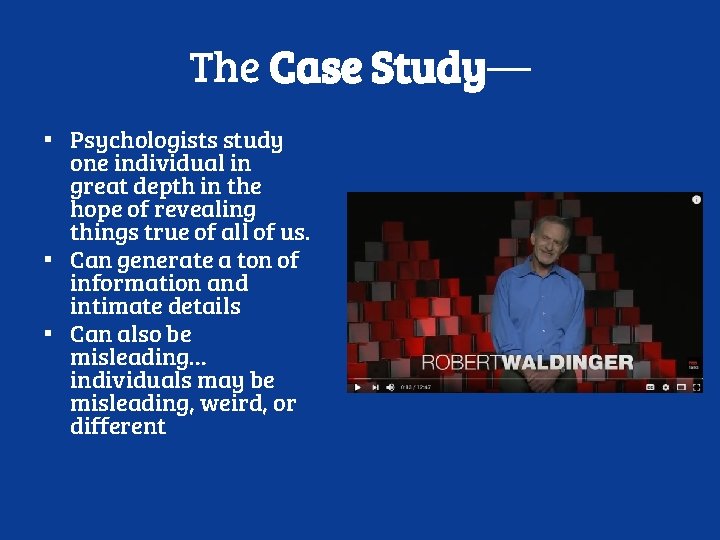
The Case Study— ▪ Psychologists study one individual in great depth in the hope of revealing things true of all of us. ▪ Can generate a ton of information and intimate details ▪ Can also be misleading… individuals may be misleading, weird, or different
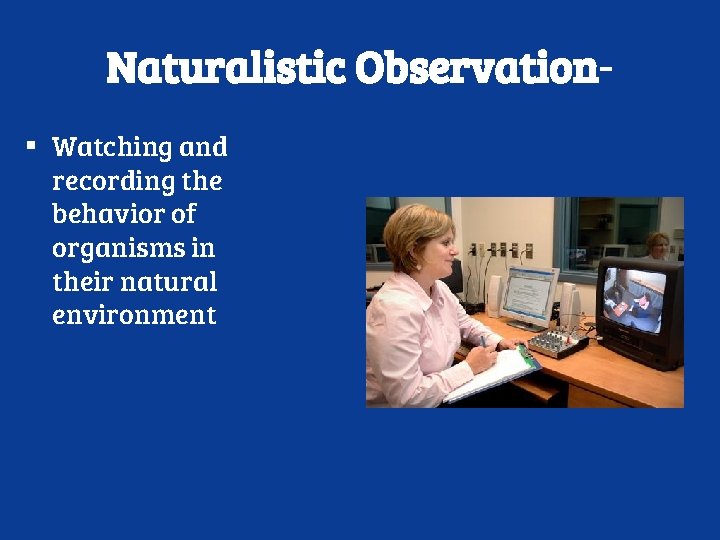
Naturalistic Observation▪ Watching and recording the behavior of organisms in their natural environment
The Survey Method▪ Used in both descriptive & correlational ▪ Looks at many cases in less depth ▪ Asks people to report their behavior or opinions ▪ Assumes that people are diligent, honest, intelligent, and have good reading skills
The Survey Method▪ ▪ ▪ YCSD should censor 12 th graders… YCSD should forbid 12 th graders… YCSD should not allow 12 th graders to… Our family gives food to support the needy Our family gives food to support those on welfare Be Careful…Wording effects… “not allowing” versus “censoring” or “forbidding things” “aid for the needy” versus “welfare”
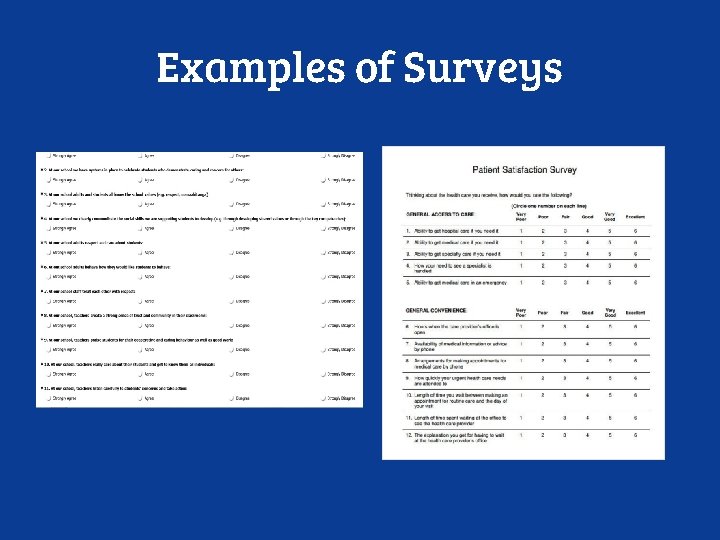
Examples of Surveys
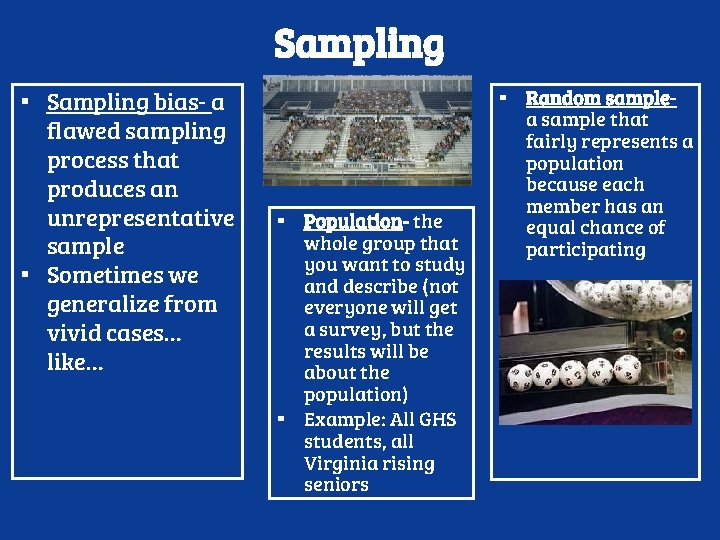
Sampling ▪ Random sample- ▪ Sampling bias- a flawed sampling process that produces an unrepresentative sample ▪ Sometimes we generalize from vivid cases… like… ▪ Population- the whole group that you want to study and describe (not everyone will get a survey, but the results will be about the population) ▪ Example: All GHS students, all Virginia rising seniors a sample that fairly represents a population because each member has an equal chance of participating
Module 6
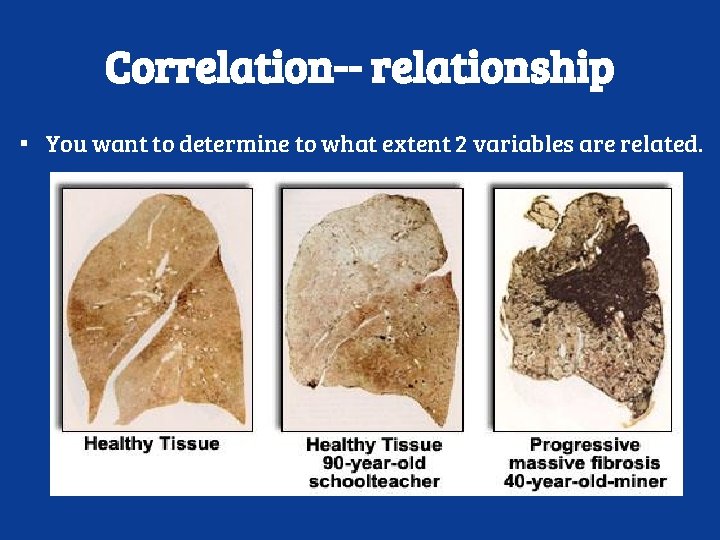
Correlation-- relationship ▪ You want to determine to what extent 2 variables are related.
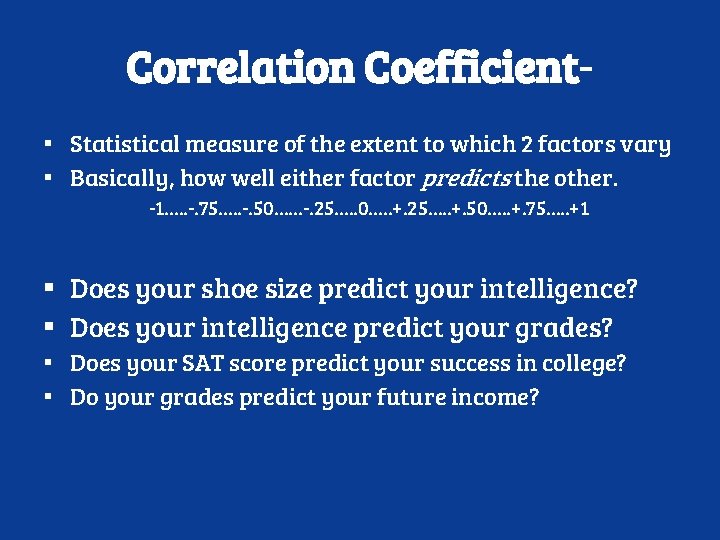
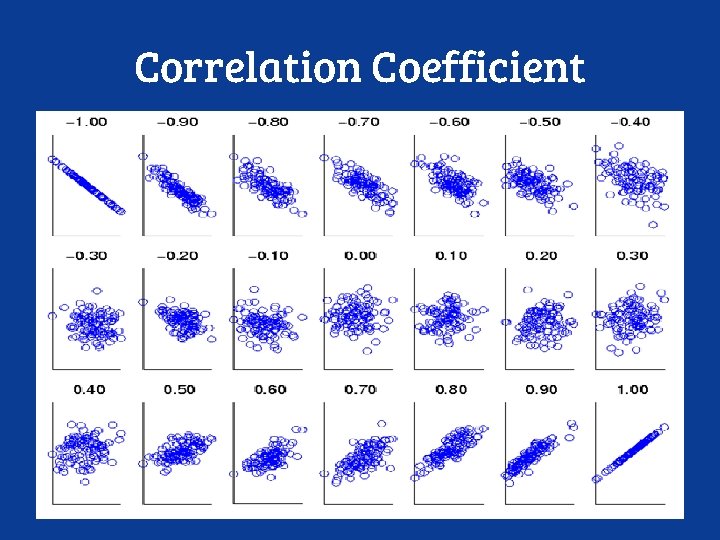
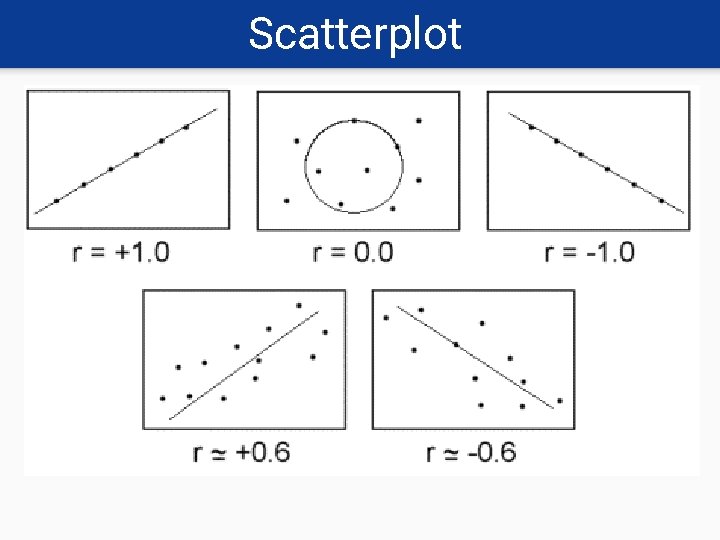
Correlation Coefficient▪ Statistical measure of the extent to which 2 factors vary ▪ Basically, how well either factor predicts the other. -1…. . -. 75…. . -. 50……-. 25…. . 0…. . +. 25…. . +. 50…. . +. 75…. . +1 ▪ Does your shoe size predict your intelligence? ▪ Does your intelligence predict your grades? ▪ Does your SAT score predict your success in college? ▪ Do your grades predict your future income?
Correlation Coefficient
Scatterplot
Think about it… ▪ ▪ Hours of sleep per night and GPA Height and IQ? ? GPA and future income Age at marriage and marriage length
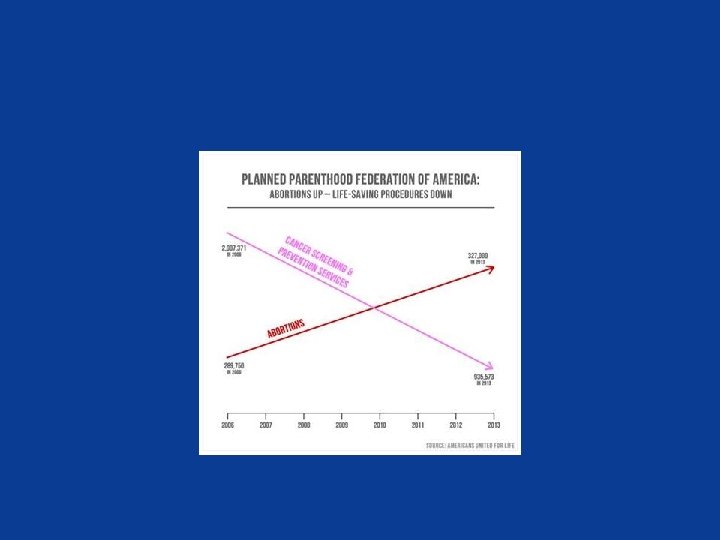
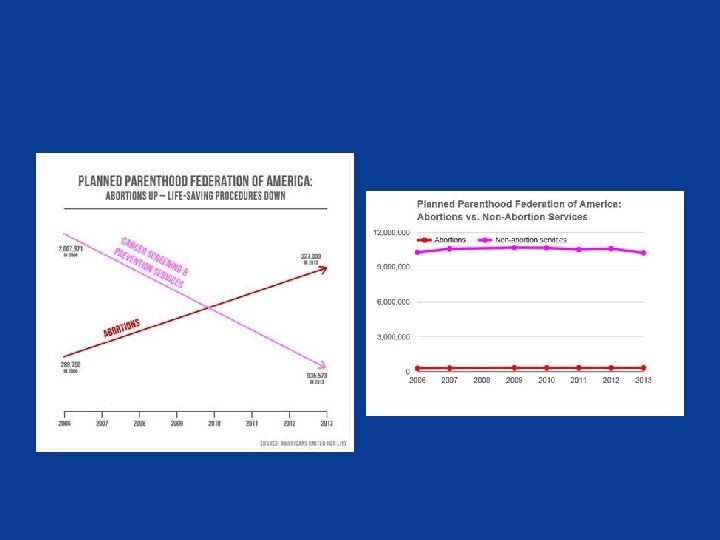
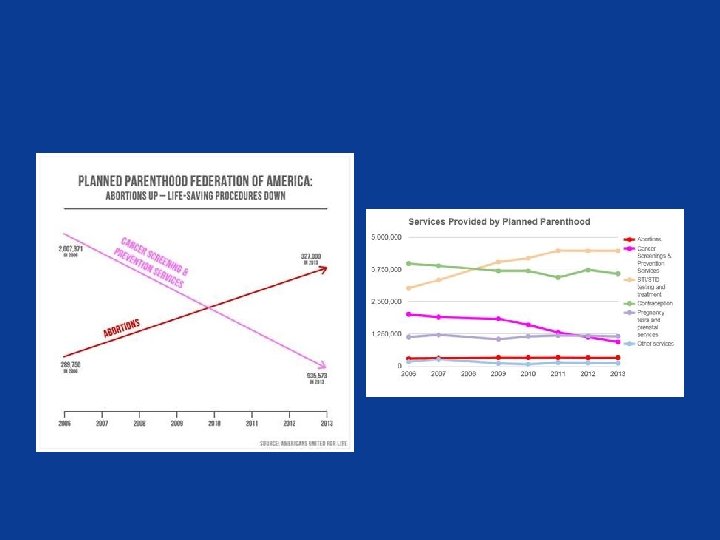
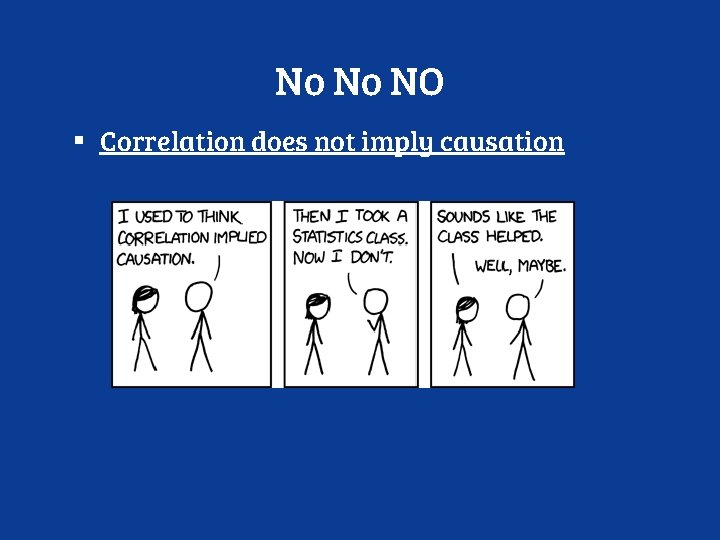
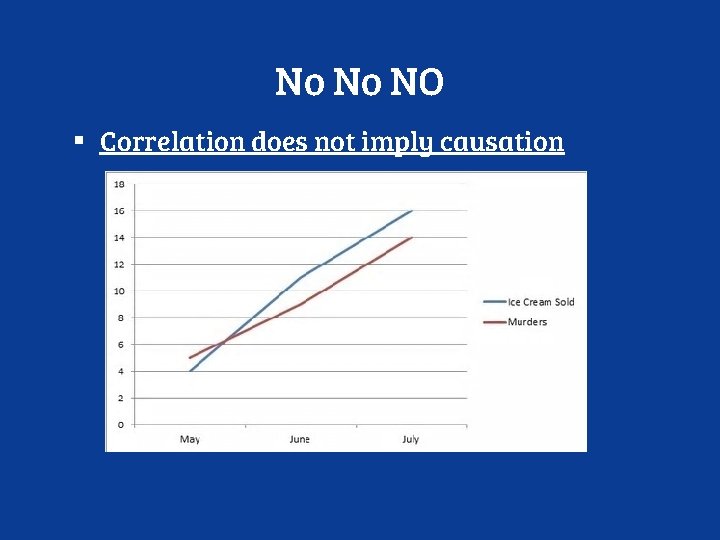
No No NO ▪ Correlation does not imply causation
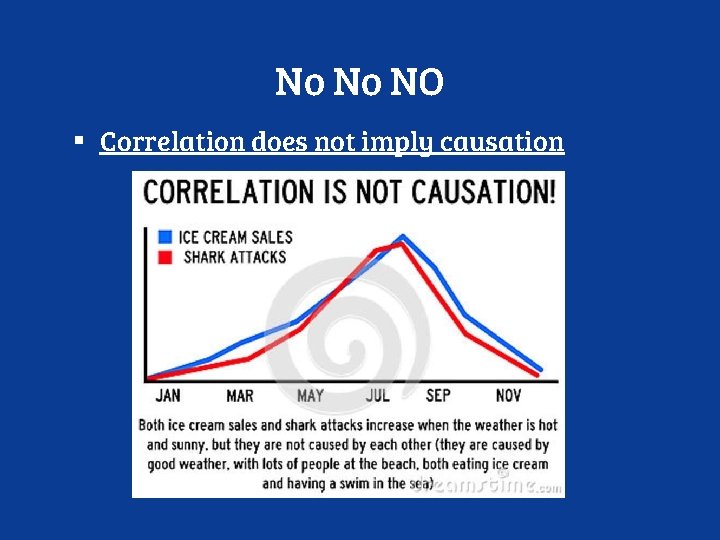
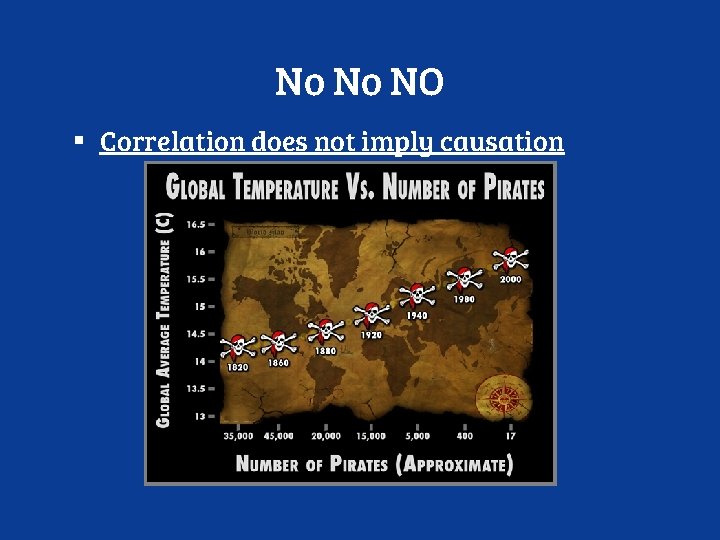
No No NO ▪ Correlation does not imply causation
No No NO ▪ Correlation does not imply causation
No No NO ▪ Correlation does not imply causation
Correlation and Causation▪ Sometimes things can predict behavior but can we prove cause? ▪ Like watching violence correlates with aggression but does it cause aggression. ▪ Remember…correlation indicates the possibility of causeeffect relationship, but it doesn't prove causation. Illusory Correlations- a perceived nonexistent correlation ▪ Remember… When we notice random coincidences, we may forget that they are random and instead see them as correlated. Perceiving Order in Random Events ▪ Random sequences often do not look random
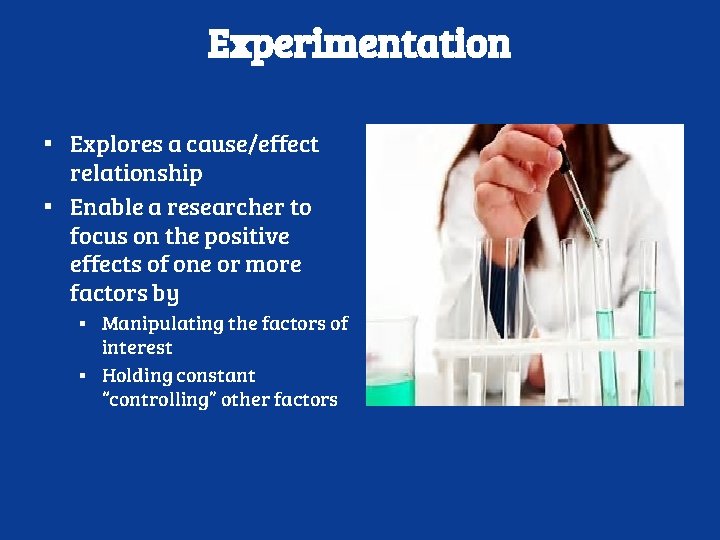
Experimentation ▪ Explores a cause/effect relationship ▪ Enable a researcher to focus on the positive effects of one or more factors by ▪ Manipulating the factors of interest ▪ Holding constant “controlling” other factors
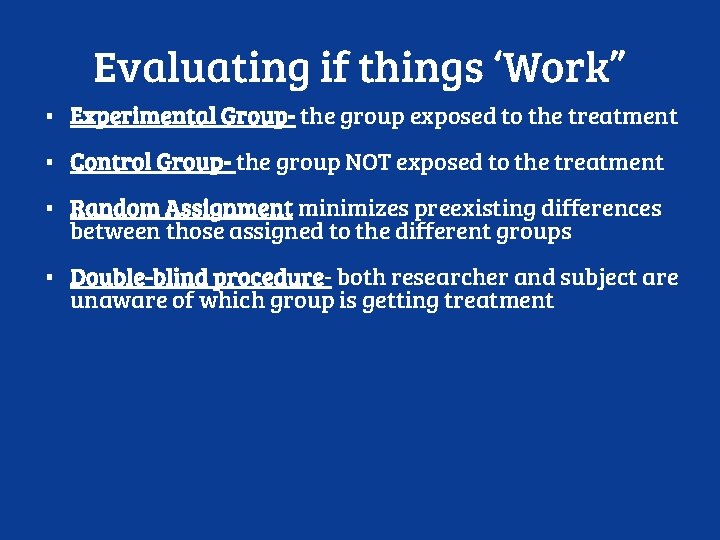
Evaluating if things ‘Work” ▪ Experimental Group- the group exposed to the treatment ▪ Control Group- the group NOT exposed to the treatment ▪ Random Assignment minimizes preexisting differences between those assigned to the different groups ▪ Double-blind procedure- both researcher and subject are unaware of which group is getting treatment
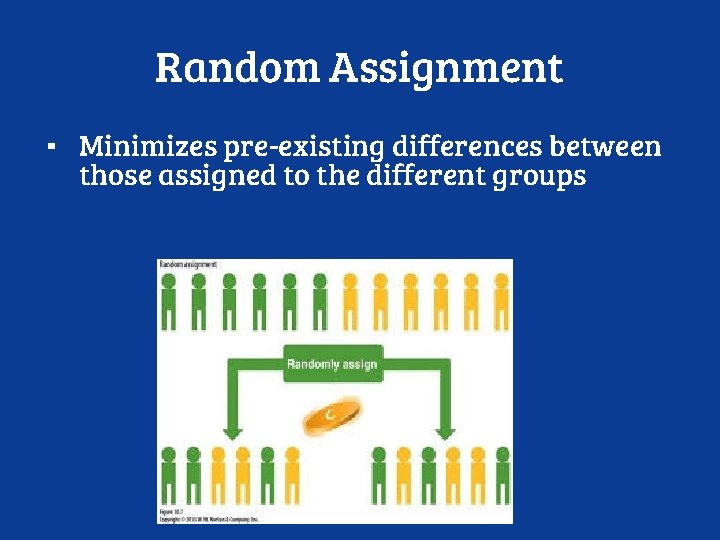
Random Assignment ▪ Minimizes pre-existing differences between those assigned to the different groups
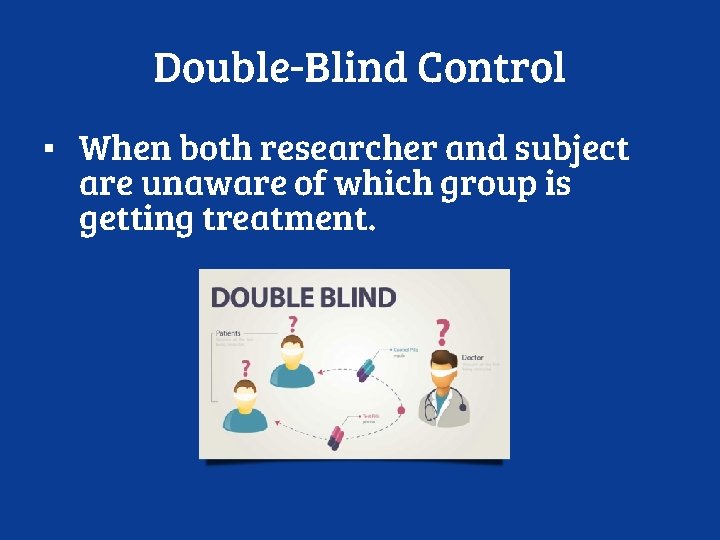
Double-Blind Control ▪ When both researcher and subject are unaware of which group is getting treatment.
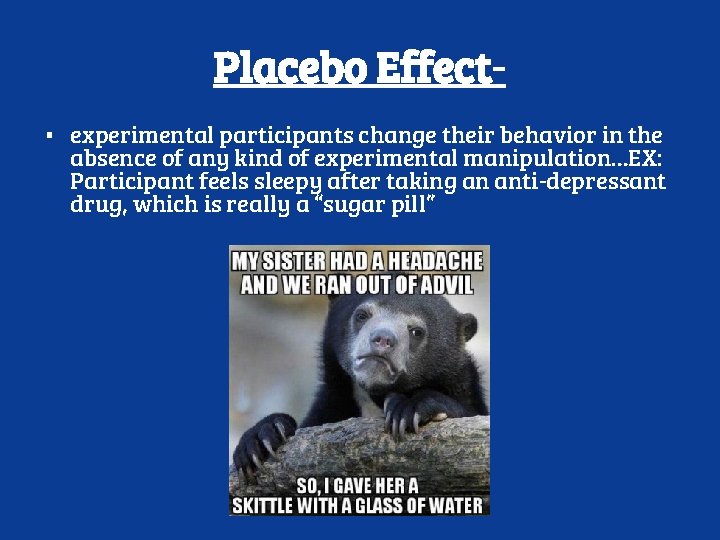
Placebo Effect▪ experimental participants change their behavior in the absence of any kind of experimental manipulation…EX: Participant feels sleepy after taking an anti-depressant drug, which is really a “sugar pill”
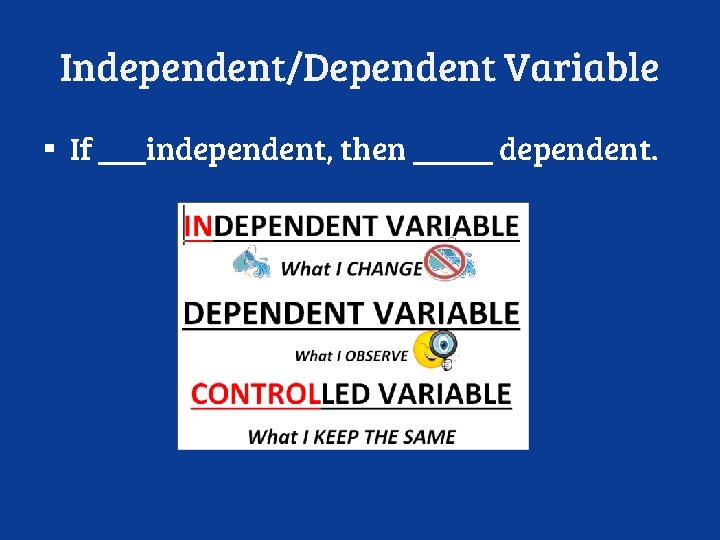
Variables ▪ A variable is any factor that varies in amount or kind ▪ Independent variable is the factor that the researcher manipulates; it functions as the causal part of the relationship. ▪ Dependent Variable is the effect part, or what the research is measuring. ▪ Example: In a study of children who watch violent TV…are they more aggressive… IV is how much TV, the DV is Aggression.
Independent/Dependent Variable ▪ If ___independent, then _____ dependent.
If…(independent), than…(dependent) The following examples are not real studies! ▪ If you read with the lights off you will attain bad vision. ▪ Blondes have a lower IQ than brunettes. ▪ People who are athletic live longer ▪ If you cross your eyes, they will stick that way.
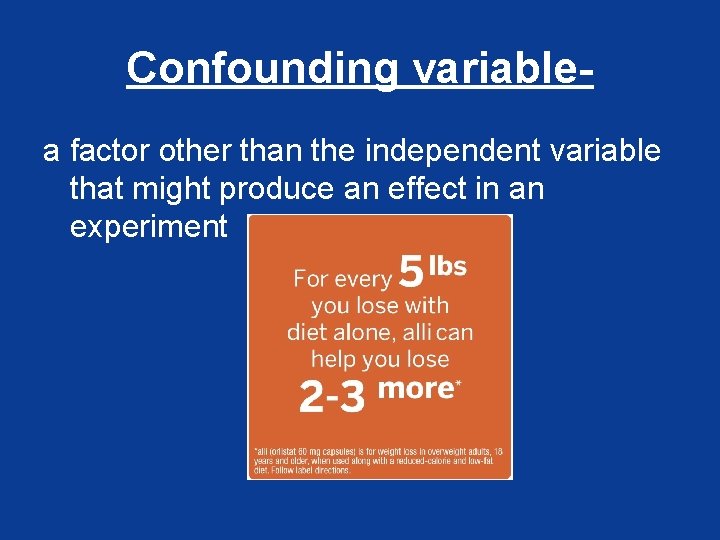
Confounding variablea factor other than the independent variable that might produce an effect in an experiment
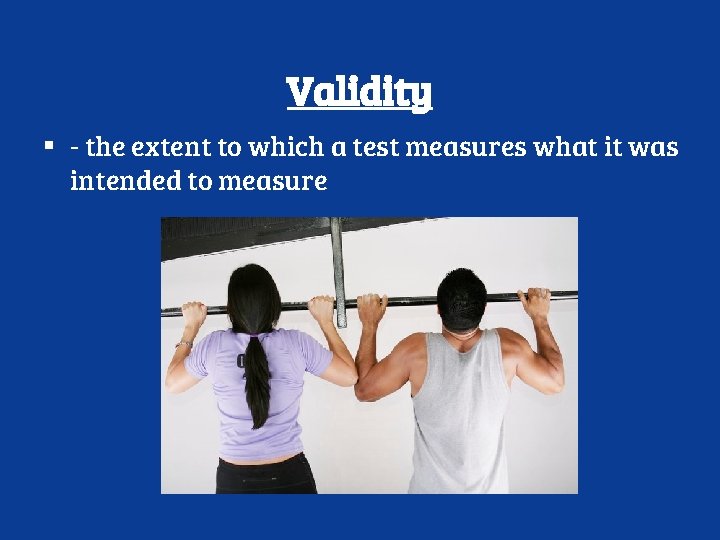
Validity ▪ - the extent to which a test measures what it was intended to measure
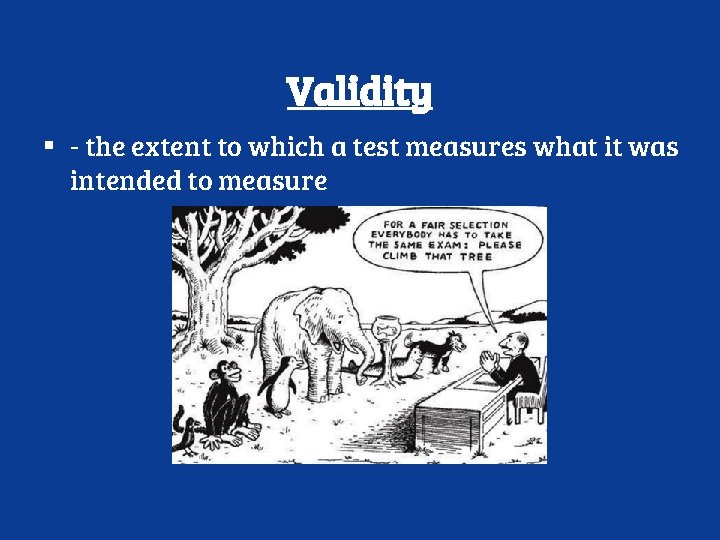
Validity ▪ - the extent to which a test measures what it was intended to measure
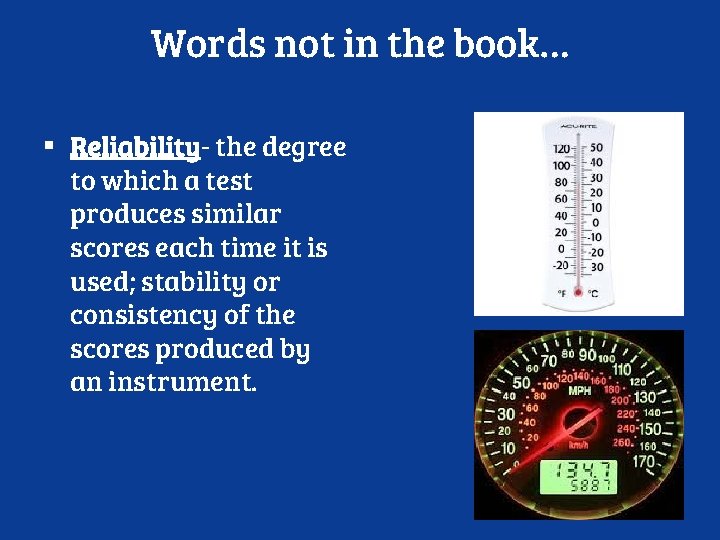
Words not in the book… ▪ Reliability- the degree to which a test produces similar scores each time it is used; stability or consistency of the scores produced by an instrument.
Module 7
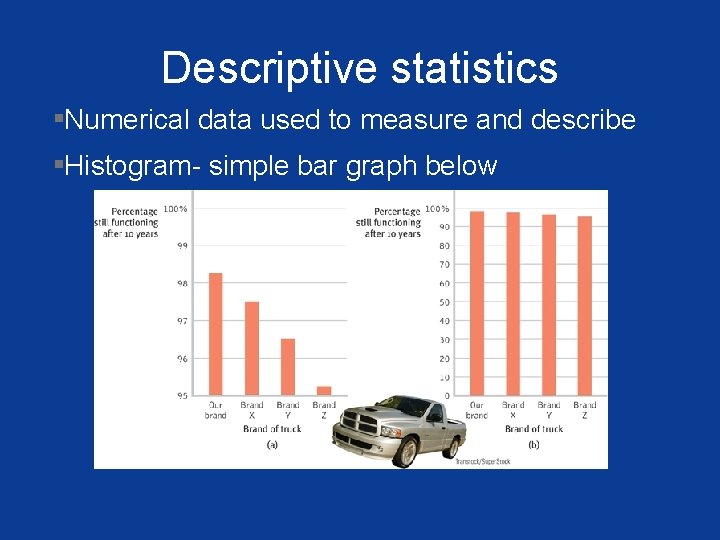
Descriptive statistics ▪Numerical data used to measure and describe ▪Histogram- simple bar graph below
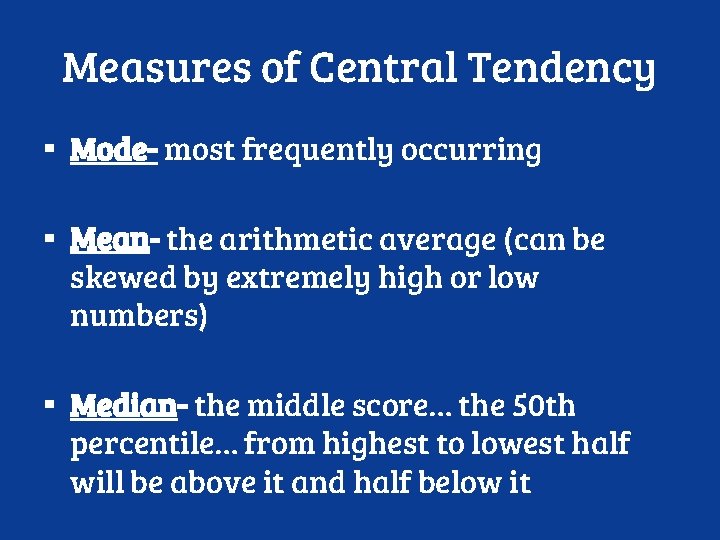
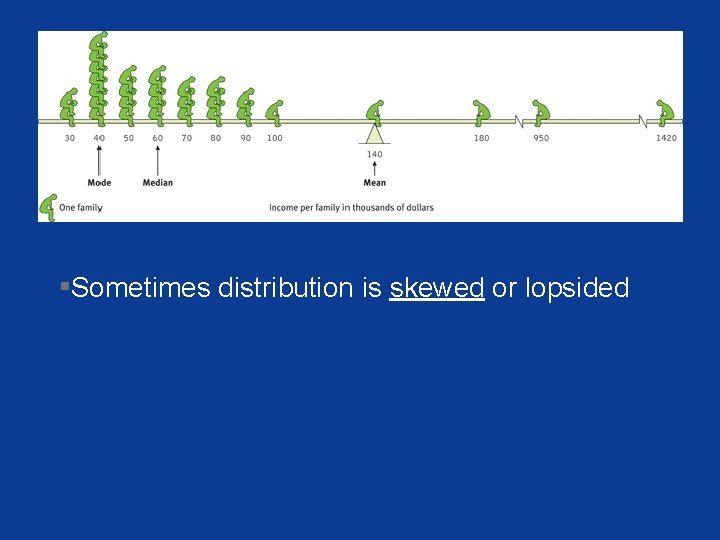
Measures of Central Tendency ▪ Mode- most frequently occurring ▪ Mean- the arithmetic average (can be skewed by extremely high or low numbers) ▪ Median- the middle score… the 50 th percentile… from highest to lowest half will be above it and half below it
▪Sometimes distribution is skewed or lopsided
▪ Range- the difference between the highest and lowest scores in a distribution ▪ Standard Deviation- a computed measure of how much scores vary around the mean score
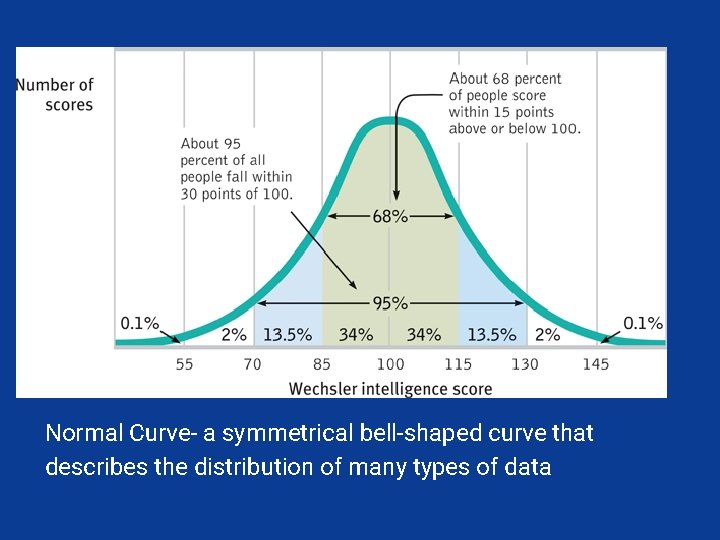
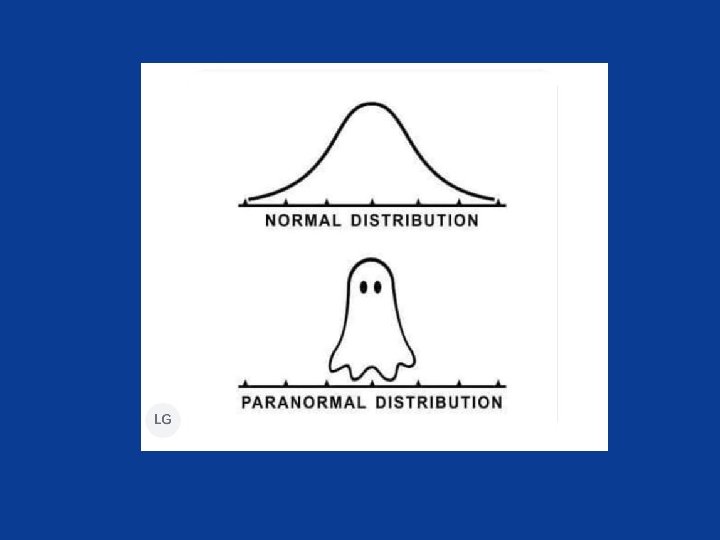
Normal Curve- a symmetrical bell-shaped curve that describes the distribution of many types of data
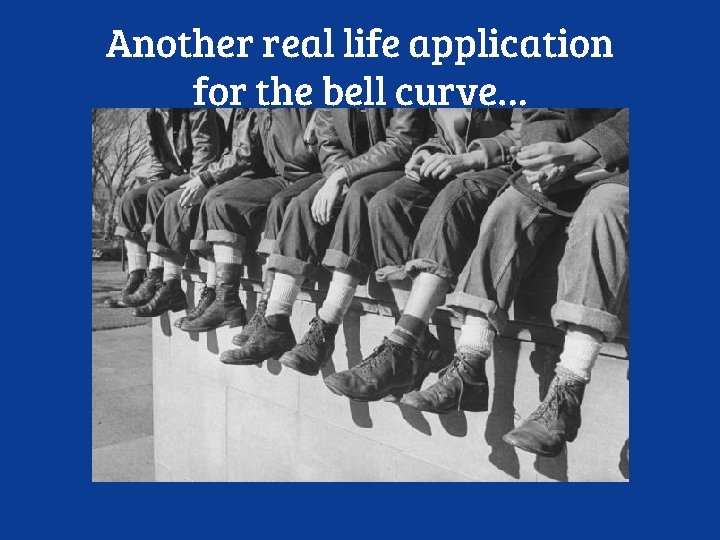
Another real life application for the bell curve…
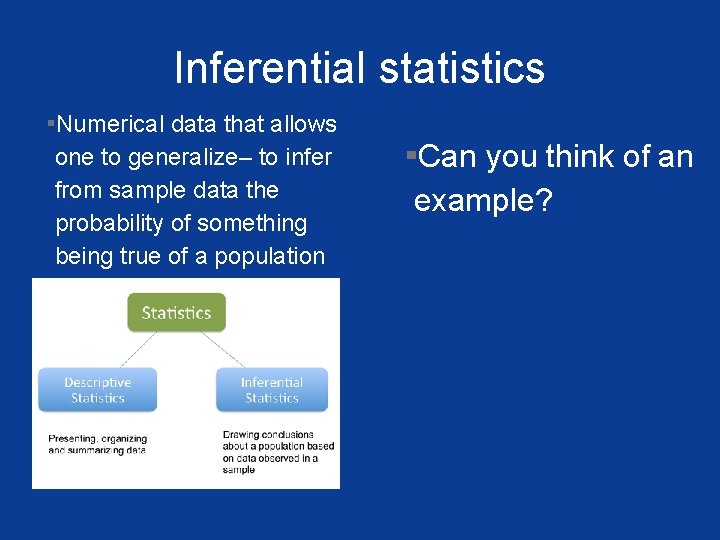
Inferential statistics ▪Numerical data that allows one to generalize– to infer from sample data the probability of something being true of a population ▪Can you think of an example?
Is it statistically significant? ▪ This indicates the likelihood that a result will happen by chance. ▪ It does not indicate the importance of the result.
Is it statistically significant? ▪ We are confident when ▪ Our samples are representative of the population we wish to study ▪ Our samples give us consistent rather than variable data ▪ Our samples are large instead of small
Is it statistically significant? ▪ When the sample averages are reliable and the differences between them is large – then the difference has statistical significance. ▪ Probably NOT due to chance
Module 8 Applied Psychology
Does behavior depend on ones culture and gender? ▪Culture- the enduring behaviors, ideas, attitudes, values, and traditions shared by a group of people and transmitted from one generation to the next ▪What behaviors are strictly American? ▪How do we know?
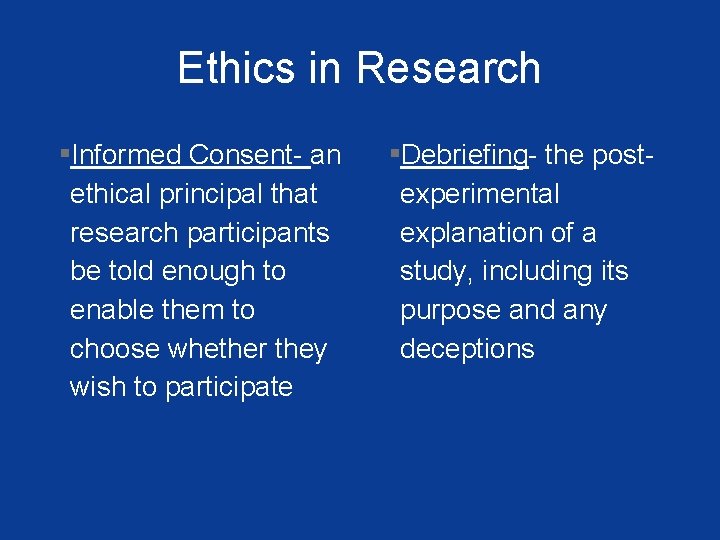
Ethics in Research ▪Informed Consent- an ▪Debriefing- the post- ethical principal that research participants be told enough to enable them to choose whether they wish to participate experimental explanation of a study, including its purpose and any deceptions