
RESEARCH METHODS Lecture 13 ETHICAL ISSUES IN RESEARCH




- Slides: 13
RESEARCH METHODS Lecture 13
ETHICAL ISSUES IN RESEARCH
Codes of ethic applicable at each stage of the research.
Goal • To ensure that no one is harmed or suffers adverse consequences from research activities.
Unethical activities • • • Violating nondisclosure agreements. Breaking respondent confidentiality. Misrepresenting results. Deceiving people. Invoicing irregularities. Avoiding legal liability.
Ethical Issues • Remain to be issues. • Local norms suggest what ought to be done under the given circumstances. • Codes of ethics developed to guide researchers and sponsors. • Review Boards and peer groups help sorting out ethical dilemmas.
Anticipate ethical dilemmas • Adjust the design, procedures, and protocols accordingly. • Research ethics require personal integrity of the researcher, the project manager, and research sponsor.
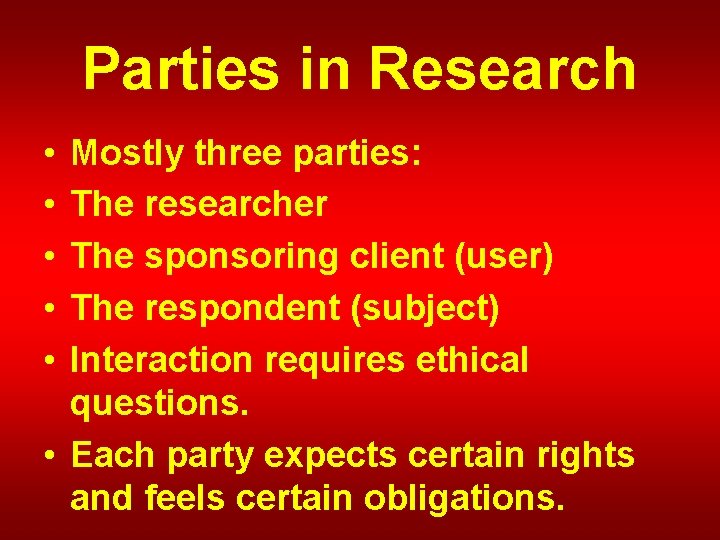
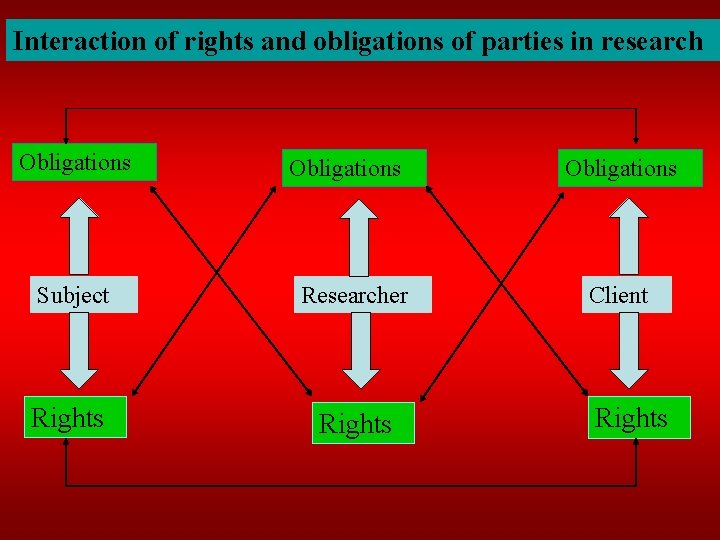
Parties in Research • • • Mostly three parties: The researcher The sponsoring client (user) The respondent (subject) Interaction requires ethical questions. • Each party expects certain rights and feels certain obligations.
Interaction of rights and obligations of parties in research Obligations Subject Researcher Rights Obligations Client Rights
Ethical Treatment of Participants
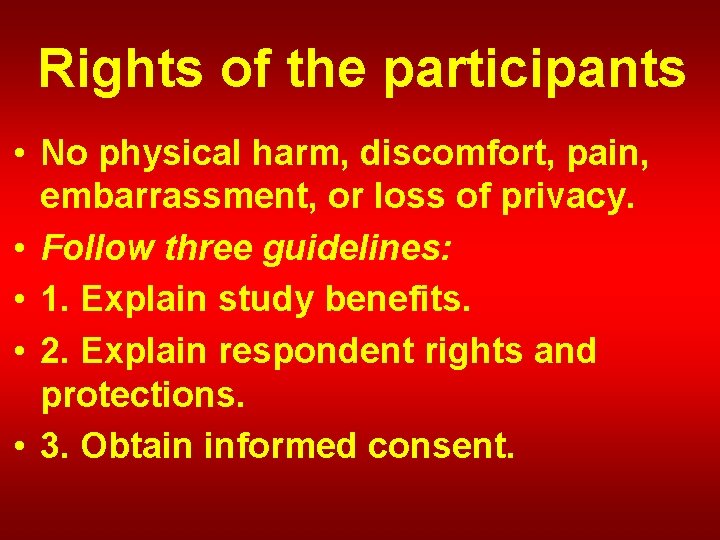
Rights of the participants • No physical harm, discomfort, pain, embarrassment, or loss of privacy. • Follow three guidelines: • 1. Explain study benefits. • 2. Explain respondent rights and protections. • 3. Obtain informed consent.
Benefits • Discuss the study’s benefits. • Can be part of establishing rapport. • Further inducements to participate. Should not be used as coercive measure. • Note that sometime actual purpose is concealed jut to avoid the bias. This deception.
RESEARCH METHODS Lecture 13