
RESEARCH METHODS IN ENGINEERING PHYSICS Understanding nature basic
RESEARCH METHODS IN ENGINEERING PHYSICS: Understanding nature, basic principles (Physics includes chemistry, in principle) MATHEMATICS: The language of physics ENGINEERING: Apply scientific principles to practical problems
TOOLS OF AN ENGINEER • PHYSICS (the basic tool) therefore MATHEMATICS • OTHERS (non-important; economy, environmetal concerns, etc. ) • GREAT THING IS THAT THE BASIC PRINCIPLES OF PHYSICS ARE VERY COMPACT
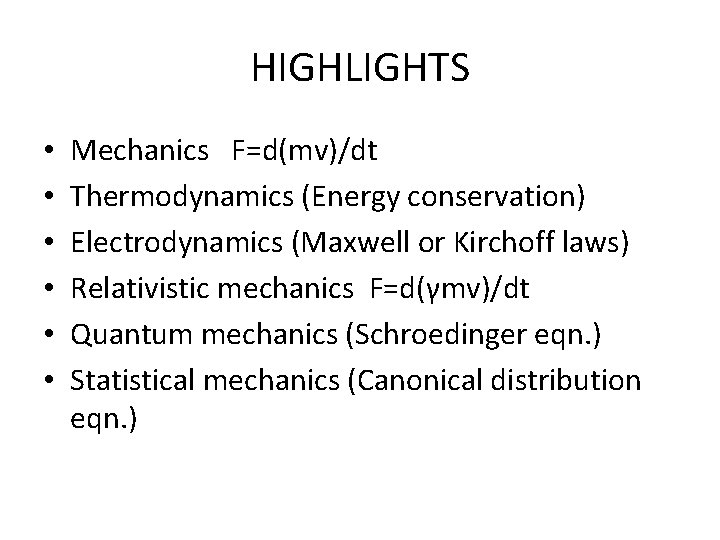
HIGHLIGHTS • • • Mechanics F=d(mv)/dt Thermodynamics (Energy conservation) Electrodynamics (Maxwell or Kirchoff laws) Relativistic mechanics F=d(γmv)/dt Quantum mechanics (Schroedinger eqn. ) Statistical mechanics (Canonical distribution eqn. )
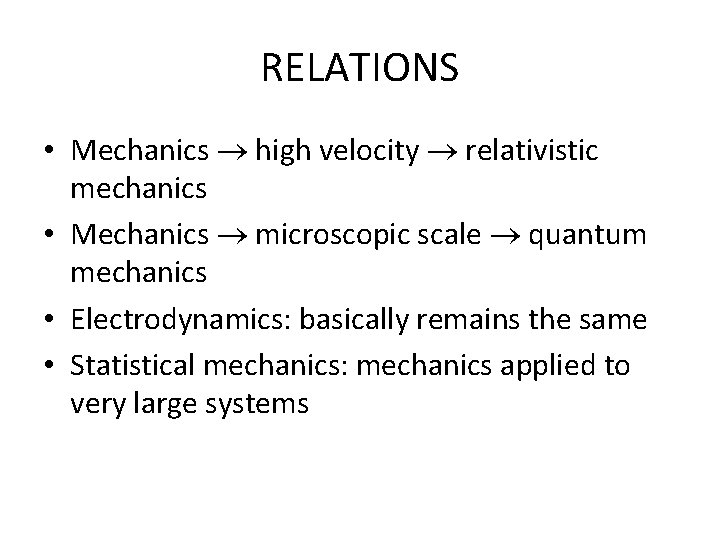
RELATIONS • Mechanics high velocity relativistic mechanics • Mechanics microscopic scale quantum mechanics • Electrodynamics: basically remains the same • Statistical mechanics: mechanics applied to very large systems
MECHANICAL ENGINEERING • Mechanics and Thermodynamics • Electrodynamics: Electrical Engineering • In the future: Quantum Engineering (MEMS, Nanotechnology, Superconductivity, Superfluidity, quantum computers, quantum teleportation, atomic force microscopy, etc) • Spooky quantum effects
MECHANICS AND THERMODYNAMICS APPLIED TO SPECIFIC PROBLEMS Fluids: Navier-Stokes equations Solids: Navier equations (elasticity) Vibrations of solids located within a moving fluid: AEROELASTICITY, FLOW-INDUCED VIBRATIONS • SHOW CLIP • •
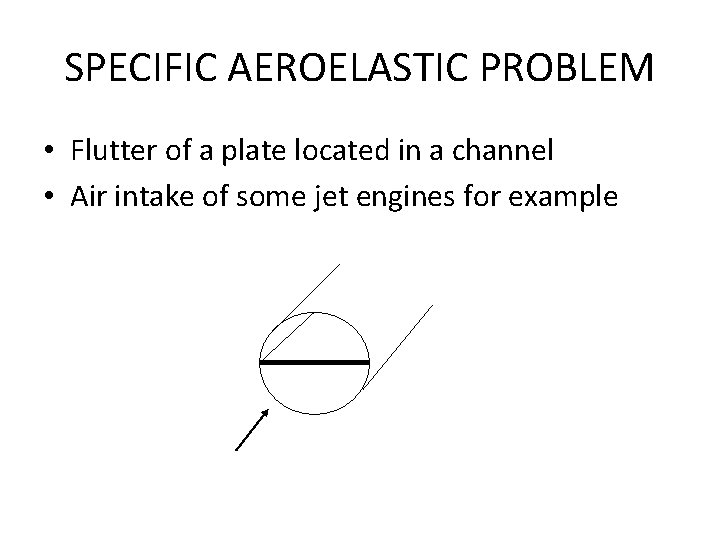
SPECIFIC AEROELASTIC PROBLEM • Flutter of a plate located in a channel • Air intake of some jet engines for example
HOW TO SOLVE THIS PROBLEM • Given all dimensions, plate properties, etc. , at what speed the plate will “flutter” • Experiment; not very useful by itself • Modelling: Go back to physics and pick equations
• FLUID: Linearized, inviscid, unsteady, potential equation • PLATE: Plate vibration equation • COUPLING: Fluid pressure on plate, fluid does not leave the plate surface • BOUNDARY CONDITIONS
SOLUTION METHODS • Expressed as a system of PARTIAL DIFFERENTIAL EQUATIONS • Analytical solution • Numerical solution (Finite difference, finite element, finite volume, boundary elements, so on) • This problem can be solved analytically and an implicit expression for the flutter speed can be found.
• This could be useful • But needs to be verified by experiment first
NONDESTRUCTIVE TESTING (NDT) NONDESTRUCTIVE EVALUATION (NDE) TAHRİBATSIZ MUAYENE • Reason: Little cracks or flaws within a material causes the structure to fail in time • Corrosion in aircraft lap joints • Cracks in welds, in a nuclear power plant for ex. • Cracks on gas turbine blades • Inhomogeneities in solid-state integrated circuits
OTHER EXAMPLES • Looking at internal organs (ultrasongraphy, Xray, tomography, etc. ) • Metal ores or oil within the earth • Sonar, Radar • ALL USE SIMILAR TECHNIQUES • SHOW CLIP
MAIN METHODS • • • Ultrasonic Eddy current X-ray Magnetic particle Penetrant liquid (dye) Others (Barkhausen noise for ex. )
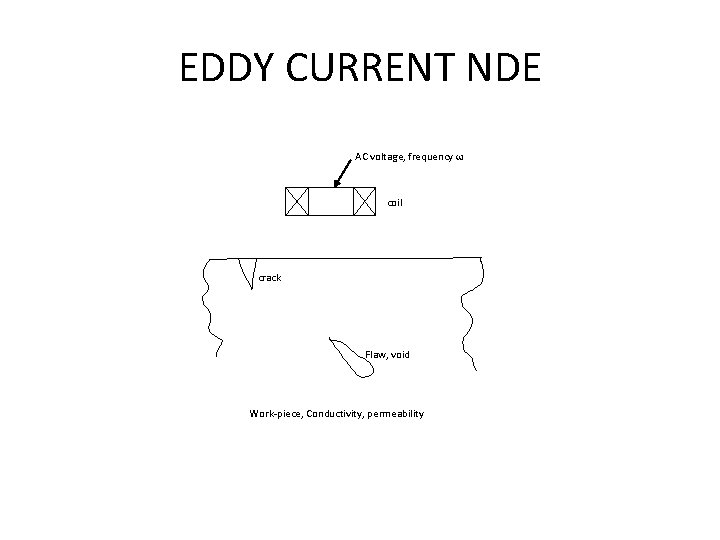
EDDY CURRENT NDE AC voltage, frequency ω coil crack Flaw, void Work-piece, Conductivity, permeability
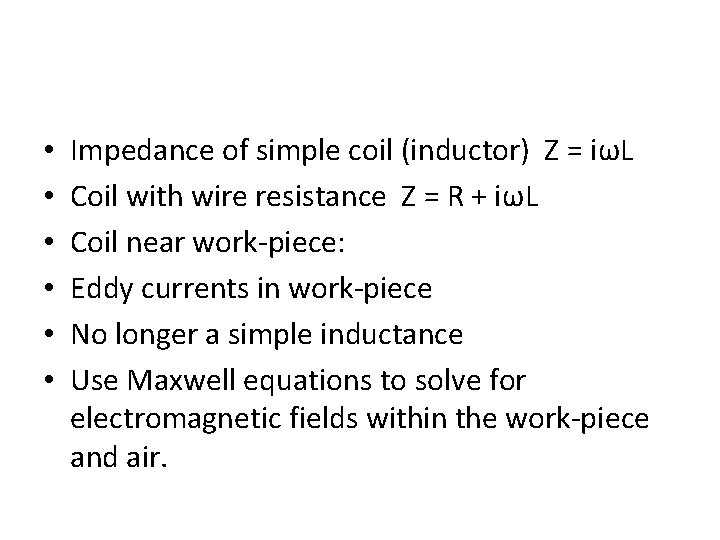
• • • Impedance of simple coil (inductor) Z = iωL Coil with wire resistance Z = R + iωL Coil near work-piece: Eddy currents in work-piece No longer a simple inductance Use Maxwell equations to solve for electromagnetic fields within the work-piece and air.
• From this solution develop an expression for impedance • (Numerical solution) • Can be analytically solved for some geometries • Practical use: measure impedance at several frequencies and infer the shape of crack or flaw (called an inverse problem)
• Measure thickness of a layer on a workpiece • Measure the properties of a heat-treated or modified layer • THAT’S ALL
- Slides: 18