
Research Methods Hypotheses and Variables To start write
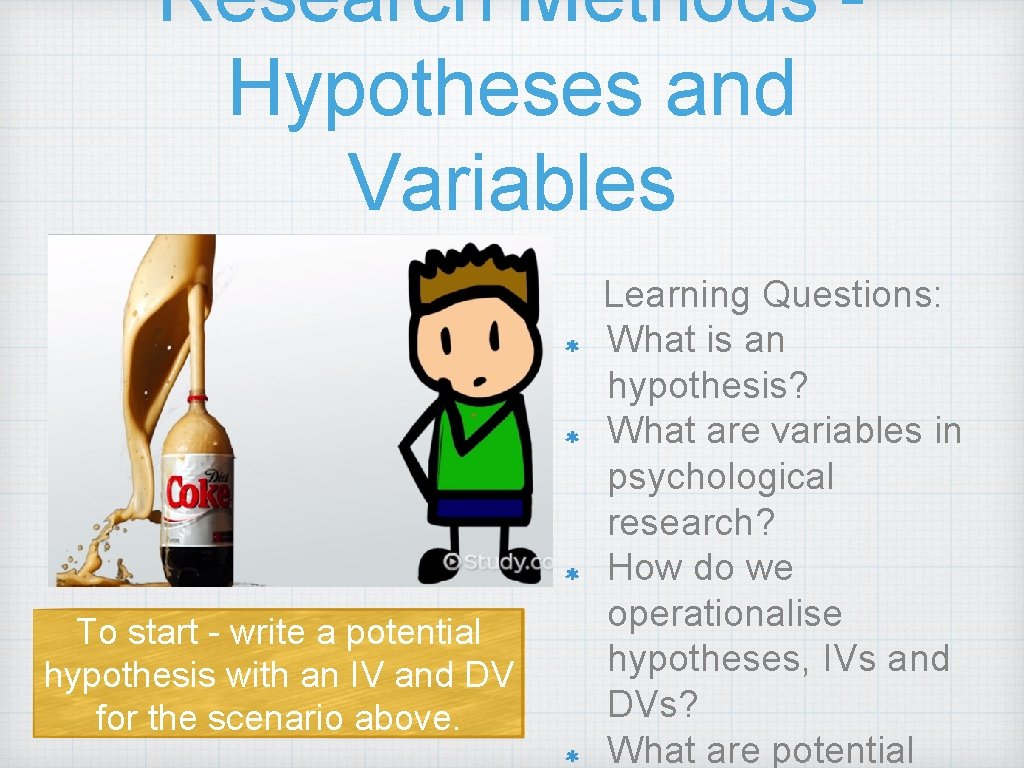
Research Methods Hypotheses and Variables To start - write a potential hypothesis with an IV and DV for the scenario above. Learning Questions: What is an hypothesis? What are variables in psychological research? How do we operationalise hypotheses, IVs and DVs? What are potential
Hypotheses An hypothesis is a prediction are predictions about the relationship among two or more variables or groups based on a theory or previous research Hypotheses are assumptions or theories that a researcher makes and tests. Why are hypotheses important?
Hypotheses: Direct our observations Identifies the variables examined and data to be collected Describe a relationship among variables Can state that as one variable increases, the other will decrease; as one variables increases, the other will increase, and so on. Refer to populations Hypotheses help researchers infer that results of a sample will translate to a population
Variables A variable is anything that can VARY among the participants in a study. There are 2 main types of variables: Independent Variable: The variable that is changed by the experimenter; the ‘I control’ variable Dependent variable: The variable that might change because of what the researcher changes – what is being measured. It is DEPENDENT on the IV.
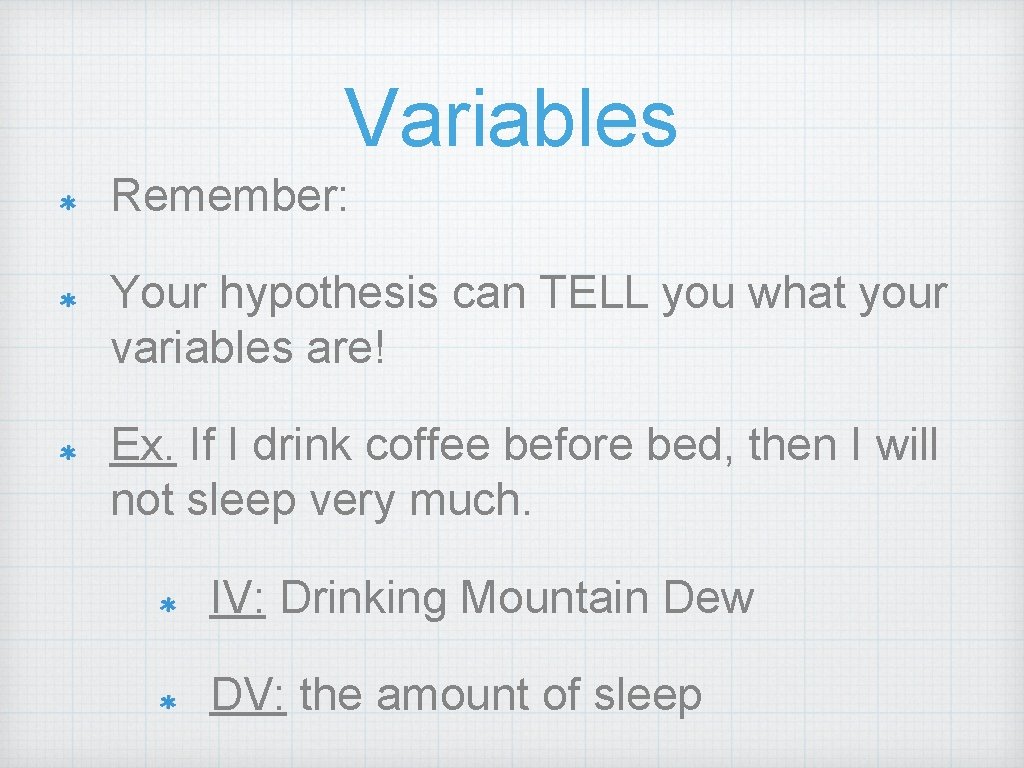
Variables Remember: Your hypothesis can TELL you what your variables are! Ex. If I drink coffee before bed, then I will not sleep very much. IV: Drinking Mountain Dew DV: the amount of sleep
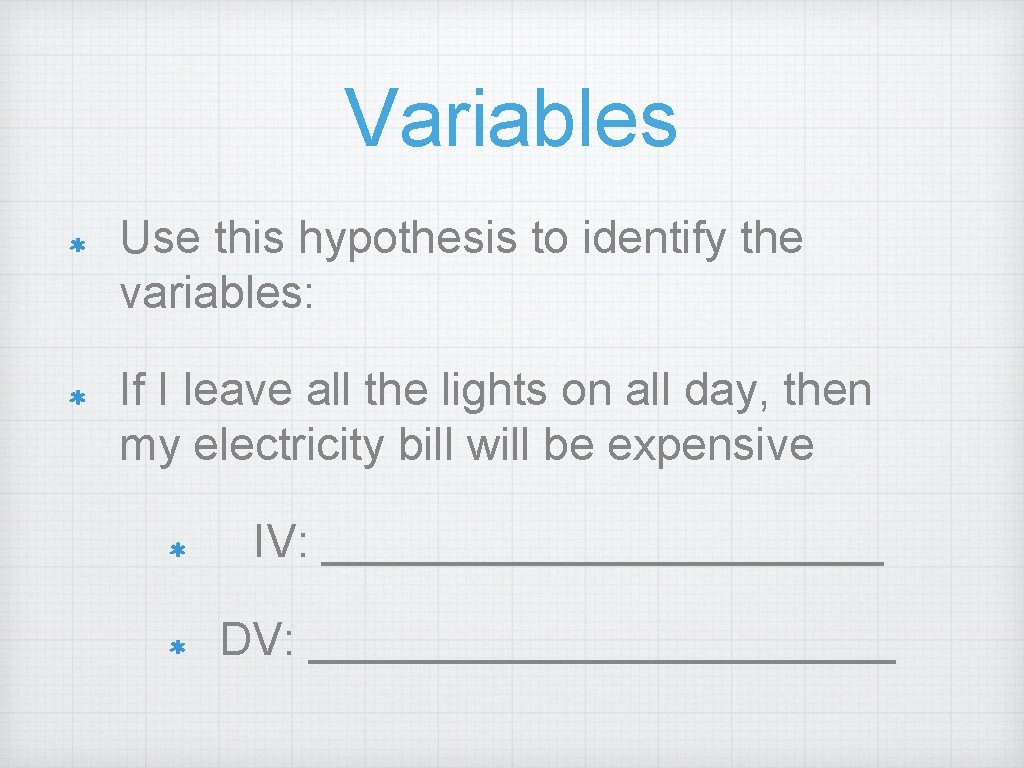
Variables Use this hypothesis to identify the variables: If I leave all the lights on all day, then my electricity bill will be expensive IV: ___________ DV: ____________
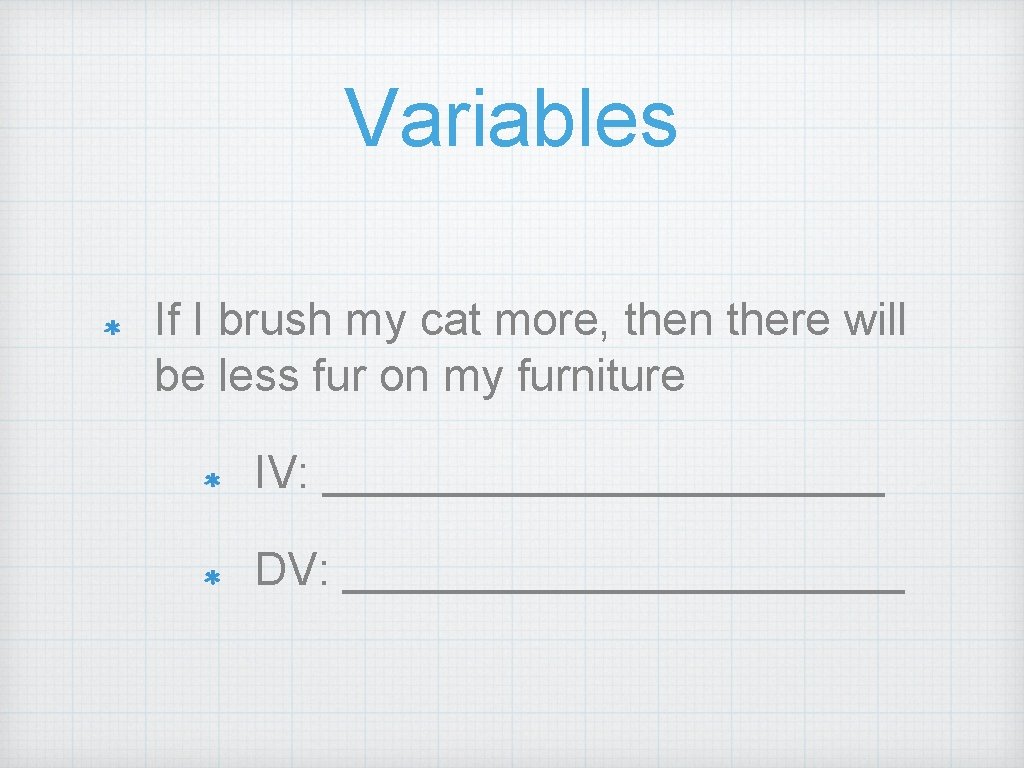
Variables If I brush my cat more, then there will be less fur on my furniture IV: ___________ DV: ___________
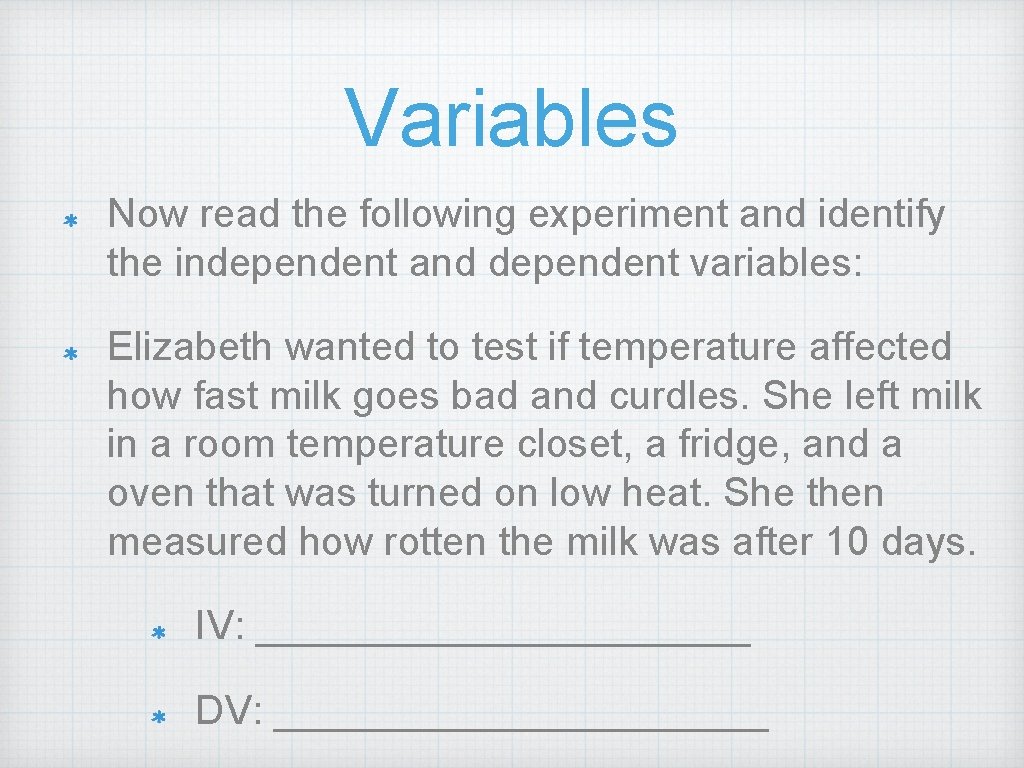
Variables Now read the following experiment and identify the independent and dependent variables: Elizabeth wanted to test if temperature affected how fast milk goes bad and curdles. She left milk in a room temperature closet, a fridge, and a oven that was turned on low heat. She then measured how rotten the milk was after 10 days. IV: ___________ DV: ___________
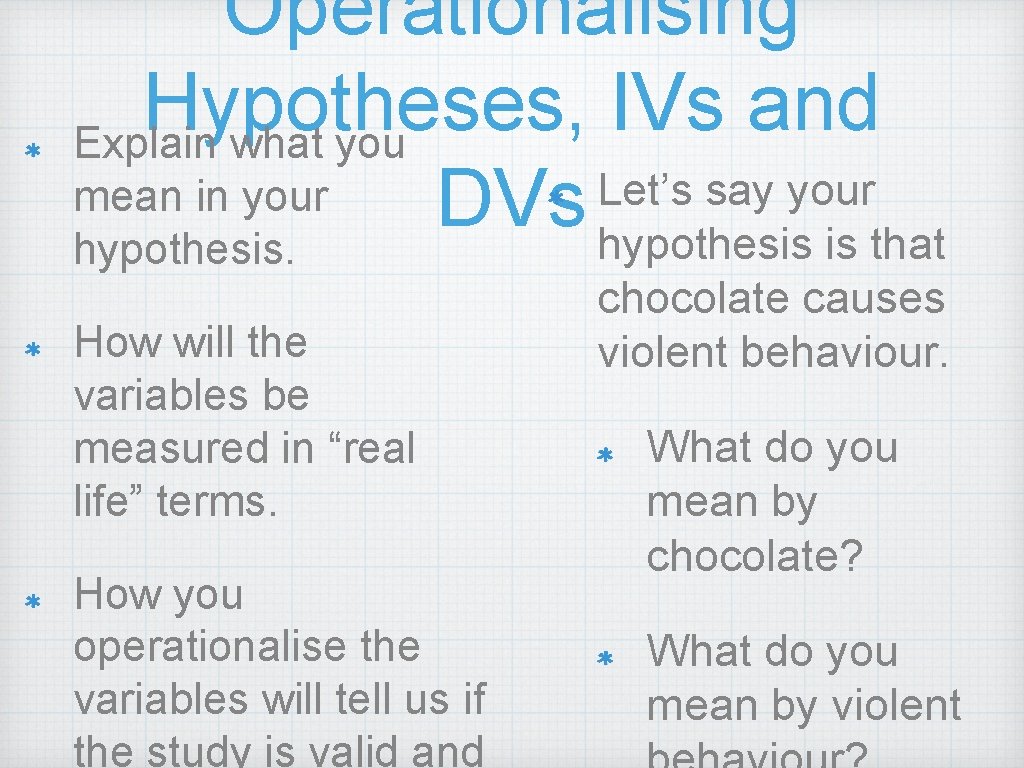
Operationalising Hypotheses, IVs and Explain what you Let’s say your mean in your DVs hypothesis is that hypothesis. How will the variables be measured in “real life” terms. How you operationalise the variables will tell us if the study is valid and chocolate causes violent behaviour. What do you mean by chocolate? What do you mean by violent

Operationalising Hypotheses, IVs and Opertationalising the IV and DV involves stating HOW they. DVs will be measured (what operations will you use? ) Why do you think this is useful and important? How can you operationalise the variables in the following experiment: Does playing classical music to your baby when in the womb increase intelligence?
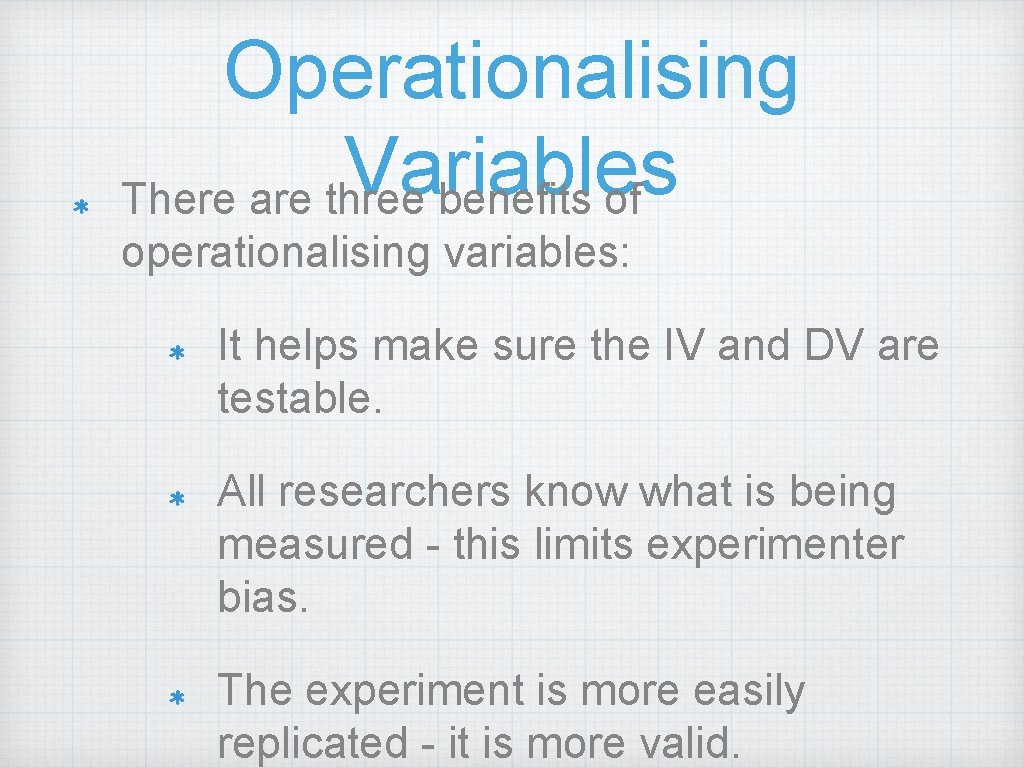
Operationalising Variables There are three benefits of operationalising variables: It helps make sure the IV and DV are testable. All researchers know what is being measured - this limits experimenter bias. The experiment is more easily replicated - it is more valid.
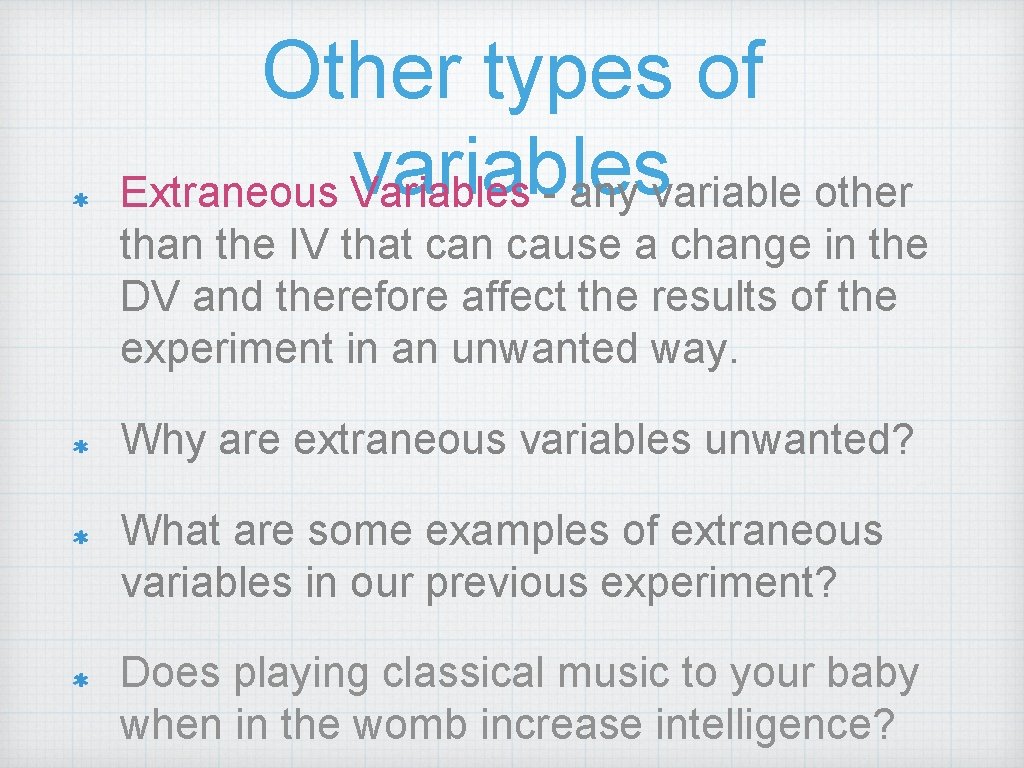
Other types of variables Extraneous Variables - any variable other than the IV that can cause a change in the DV and therefore affect the results of the experiment in an unwanted way. Why are extraneous variables unwanted? What are some examples of extraneous variables in our previous experiment? Does playing classical music to your baby when in the womb increase intelligence?
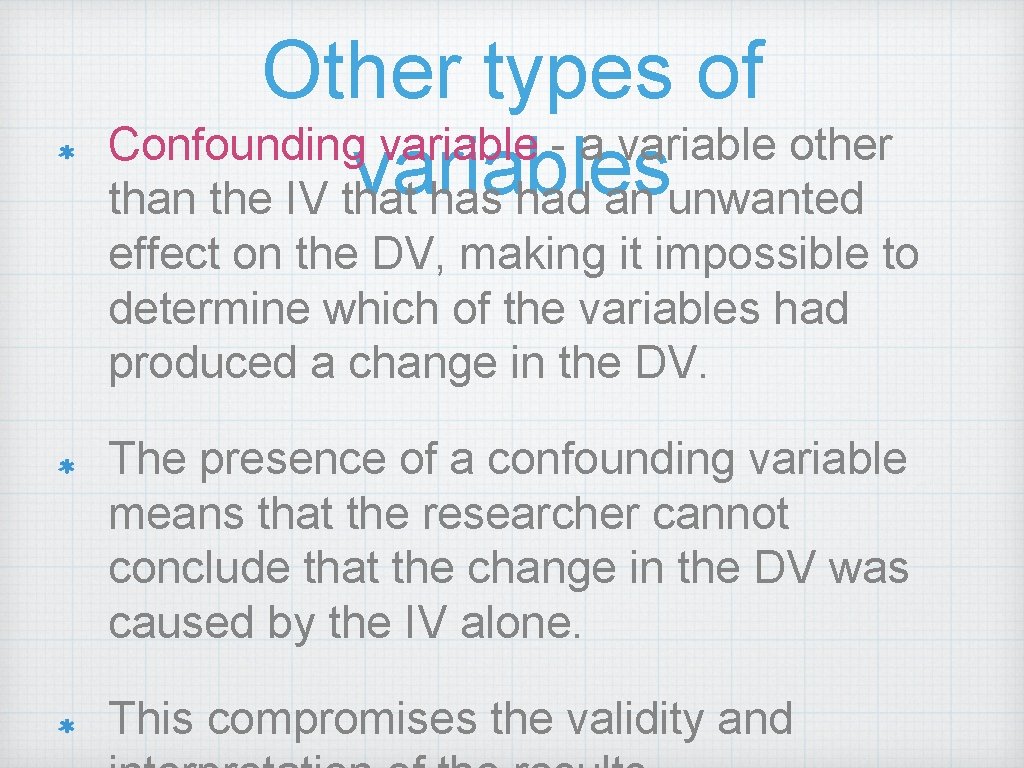
Other types of Confounding variable - a variable other variables than the IV that has had an unwanted effect on the DV, making it impossible to determine which of the variables had produced a change in the DV. The presence of a confounding variable means that the researcher cannot conclude that the change in the DV was caused by the IV alone. This compromises the validity and
Identifying extraneous and potentially confounding variables There are 5 particular variables that could be identified as extraneous or potentially confounding that we will look at: Individual participant differences use of non-standardised instructions and procedures Order effects Experimenter effect Placebo effect Can you tell me what any of these mean?
Individual Participant Differences Each participant brings a unique combination of personal characteristics, abilities and backgrounds to the experiment. What individual differences might play a part in our classical music example? How might individual differences affect the DV?
Use of non-standardised instructions and Let’s readprocedures through the example at the top of page 26. Procedures are everything a researcher does in conducting their research study e. g. … Non-standardised means that the instructions and procedures used by the researcher are not the same for all participants (except for exposure to the IV for participants in the experimental group).
Order Effects An order effect occurs when performance, as measured by the DV, is influences by the specific order in which the experimental tasks, treatments or conditions are presented, rather than the IV. The performance of one task affects the performance of the next task. E. g. Practice effects occur if the participant has practiced a memory task in one condition, then are exposed to the IV and do another memory task. E. g. Carry-over effects arise simply from experiencing a task. Knowledge or even emotions from performing a task once, can ‘carry over’ to the next task. Come up with your own specific examples for practice and carry over effects.
Experimenter Effect The experimenter effect is an unwanted influence or influences on the results which is produced consciously or unconsciously by the person who is carrying out the research. How might this happen?
Experimenter Effect Experimenter Expectancy - the experimenter provides hints or cues about the responses that the participant should make in the experiment. This can be verbal or non-verbal This can lead to a self-fulfilling prophecy the experimenter obtains the results that they expect to obtain. How might this happen?
Experimenter Effect Experimenter bias - unintentional bias in the collection and/or treatment of data. If the experimenter knows what they are supposed to be looking for in the data, they may unconsciously misread or misinterpret data.
Placebo Effect A placebo is a fake treatment or substance which substitutes for the real substance or treatment. The placebo effect occurs when there is a change in the responses of the participants due to their belief that they are receiving some sort of experimental treatment and they respond in accordance with that belief, rather than to the effect of the IV.
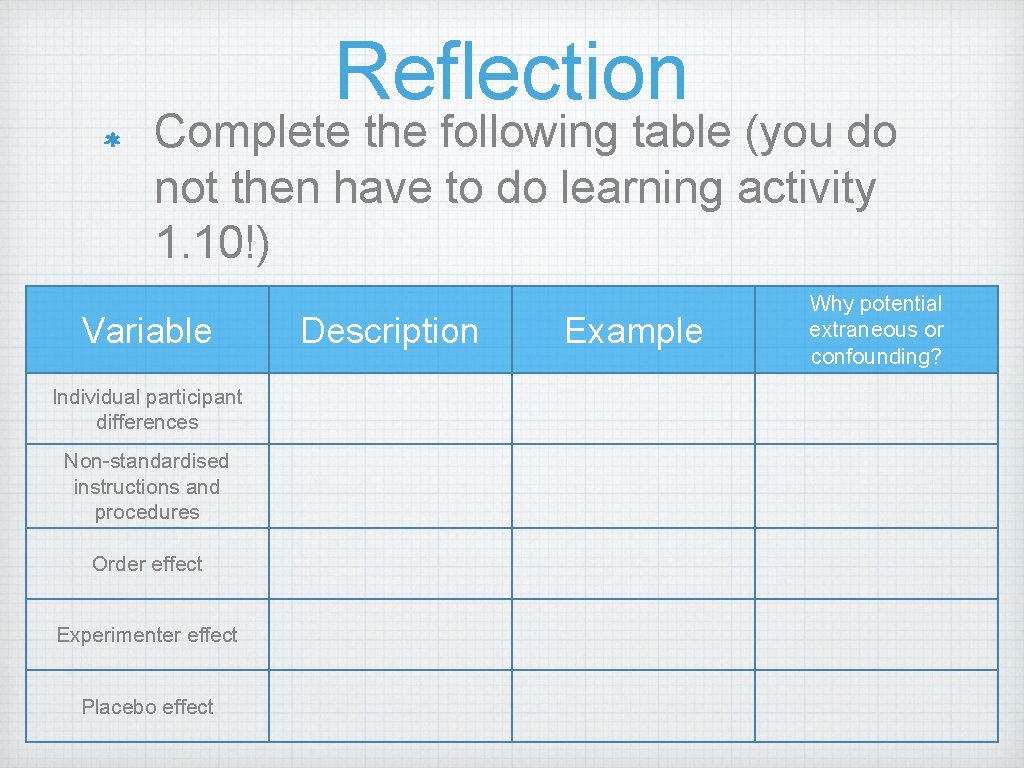
Reflection Complete the following table (you do not then have to do learning activity 1. 10!) Variable Individual participant differences Non-standardised instructions and procedures Order effect Experimenter effect Placebo effect Description Example Why potential extraneous or confounding?
- Slides: 22