
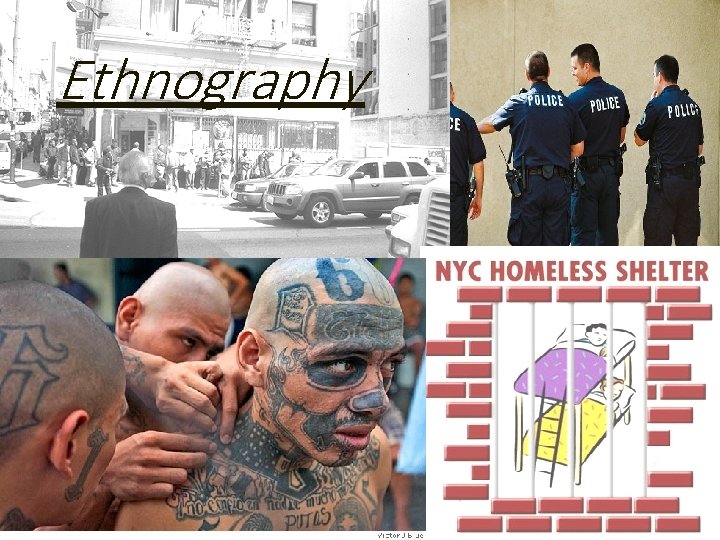
Research Methods Ethnography EthnographyObservational Firsthand studies of people
Research Methods
Ethnography
Ethnography/Observational -Firsthand studies of people using actual observations or interviewing. -From this research and researchers can get clear first person accounts and evidence of how a specific group functions within a larger society -Weaknesses are that only small populations can be studied and results cannot be applied to diff. groups even if they hold the same title -Another issue is if the researcher becomes to comfortable they stop being the researcher
Ethnography: Observation = observing people in actual social settings • An Observation can be done with the participant being aware of the study or with them completely unaware of the researcher
Surveys A research method in which subjects respond to a series of statements or questions in a questionnaire or interview -Interview = Asking people directly specific questions and recording their answers -Questionnaire = Asking people to respond to questions in writing. Could be in person, through the mail etc.
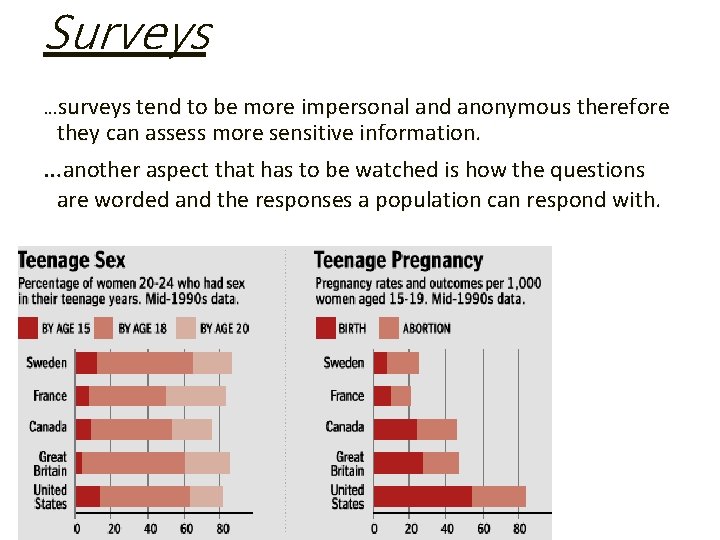
Surveys …surveys tend to be more impersonal and anonymous therefore they can assess more sensitive information. …another aspect that has to be watched is how the questions are worded and the responses a population can respond with.
Survey Research Other important terms: • Population • The people who are the focus of the research • Sample • The part of the population that represents the whole • Sample must be large enough to make conclusions • Random Sample • Drawing a sample from a population so that every element of the population has an equal chance of being selected
Case Study • Intensive analysis of a person, group, event, or problem. • Usually rely on observational techniques, surveys, or existing source material • Useful in analyzing infrequent events (ex: riots or natural disasters) • They give in-depth analysis of the subject • They are not usually generalizable. In other words, they don’t tell us a lot about broader society. • Ex: The Up Series
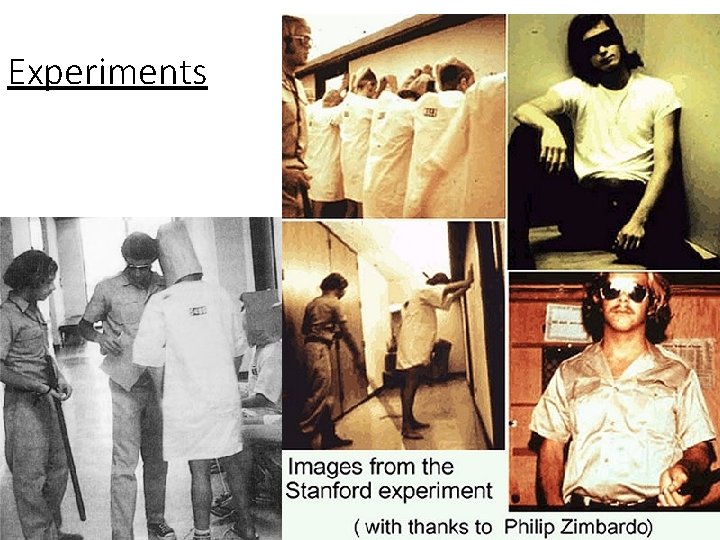
Experiments
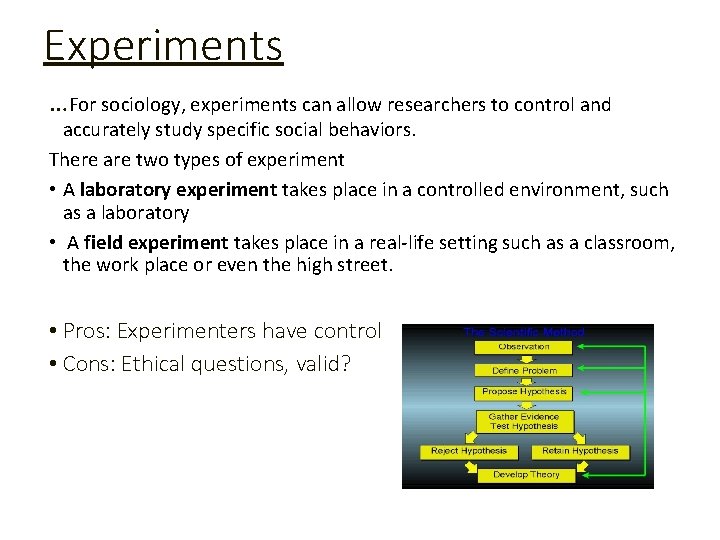
Experiments …For sociology, experiments can allow researchers to control and accurately study specific social behaviors. There are two types of experiment • A laboratory experiment takes place in a controlled environment, such as a laboratory • A field experiment takes place in a real-life setting such as a classroom, the work place or even the high street. • Pros: Experimenters have control • Cons: Ethical questions, valid?
Historical/Content Analysis • By analyzing past research, or materials (e. g. newspapers, records, arrests) a sociologists might be able to develop a theory or support an existing one. • By analyzing current sources of communication (e. g. news reports, music) researchers may once again be able to support or develop theories of study. • Ex: Are nightly news programs more likely to report and visualize minority crimes than white Caucasian crimes? • Pros: Allows for both quantitative and qualitative analysis, low cost, no ethical issues • Cons: less personal, time consuming, difficult to draw meaning from, theoretically questionable
Scientific Sociology Terminology • Reliability–Consistency in measurement • Does an instrument provide for a consistent measure of the subject matter? • Validity–Precision in measuring exactly what one intends to measure • Does an instrument actually measure what it sets out to measure?
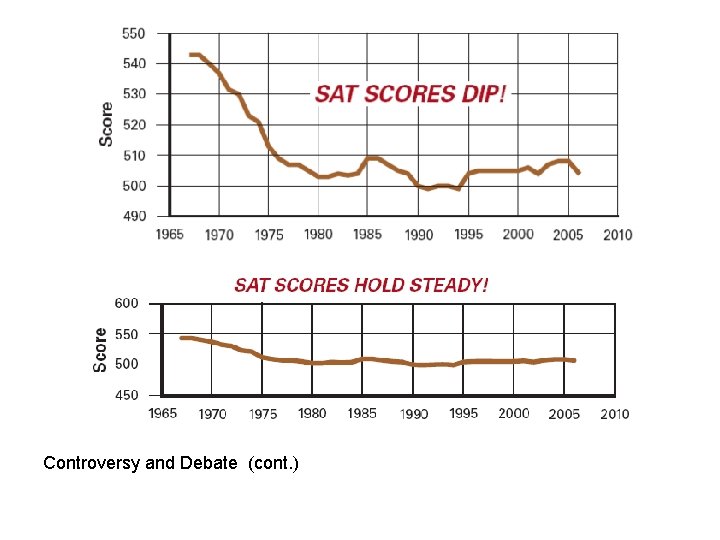
Controversy and Debate (cont. )


Ethical Guidelines for Research • Must strive to be technically competent & fair-minded • Must disclose findings in full without omitting significant data & be willing to share their data • Must protect the safety, rights, and privacy of subjects • Must obtain informed consent; subjects are aware of of risks and responsibilities and agree • Must disclose all sources of funding & avoid conflicts of interest • Must demonstrate cultural sensitivity
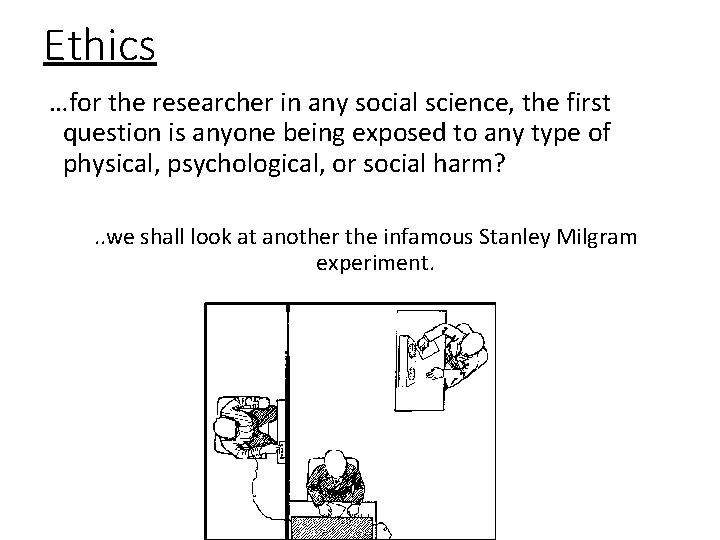
Ethics …for the researcher in any social science, the first question is anyone being exposed to any type of physical, psychological, or social harm? . . we shall look at another the infamous Stanley Milgram experiment.
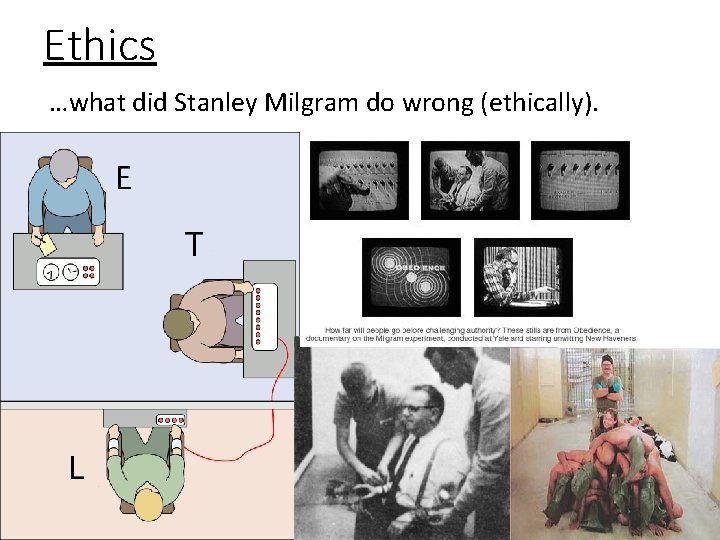
Ethics …what did Stanley Milgram do wrong (ethically).
- Slides: 18