
Research Methods AP Psych Chapter 2 Psychologys Scientific
- Slides: 34
Research Methods AP Psych – Chapter 2 Psychology’s Scientific Method Alice F. Short Hilliard Davidson High School
Psychology Majors • 2 Most Commonly Required Classes: – Research – Statistics A SHORT Time to Ponder Why would these be the two most required classes for psychology majors across the country?
Chapter Preview • • Psychology’s Scientific Method Types of Psychological Research Samples and Settings Analyzing and Interpreting Data Conducting Ethical Research Thinking Critically About Research Scientific Method and Health and Wellness
A SHORT Time to Ponder • As a society, do we value critical thinking? • Is critical thinking uncomfortable sometimes?
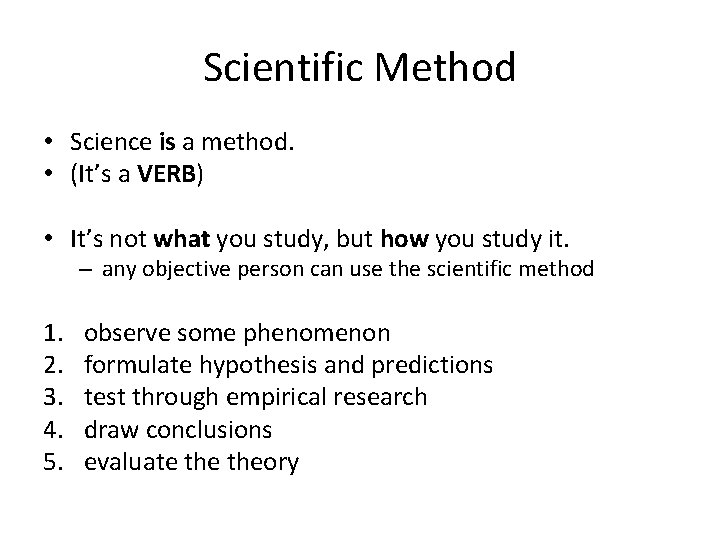
Scientific Method • Science is a method. • (It’s a VERB) • It’s not what you study, but how you study it. – any objective person can use the scientific method 1. 2. 3. 4. 5. observe some phenomenon formulate hypothesis and predictions test through empirical research draw conclusions evaluate theory
Scientific Method – 1. Observe • Step 1: Observe some phenomenon – curiosity – variables – theory
Scientific Method – 2. Hypothesize • Step 2: Formulate hypotheses and predictions – testable prediction – derived from theory
Scientific Method – 3. Research • Step 3: Test through empirical research – operational definition of variables – analyze data using statistical procedures
Scientific Method – 4. Conclusions • Step 4: Draw conclusions – replication of results → reliability – If other people cannot replicate your study, then your result are unreliable. – What could this potentially mean for your study? (Think critically!)
Scientific Method – 5. Evaluate • Step 5: Evaluate theory – change theory? – peer review and publication • publish or perish – meta-analysis – method by which researchers combine results across studies to establish the strength of an effect – theory = broad umbrella category which can either be supported or refuted by testable hypotheses
Descriptive Research • Goal: Describing a phenomenon – observation – surveys and interviews – case studies • Descriptive research does not answer questions about how and why things are the way they are
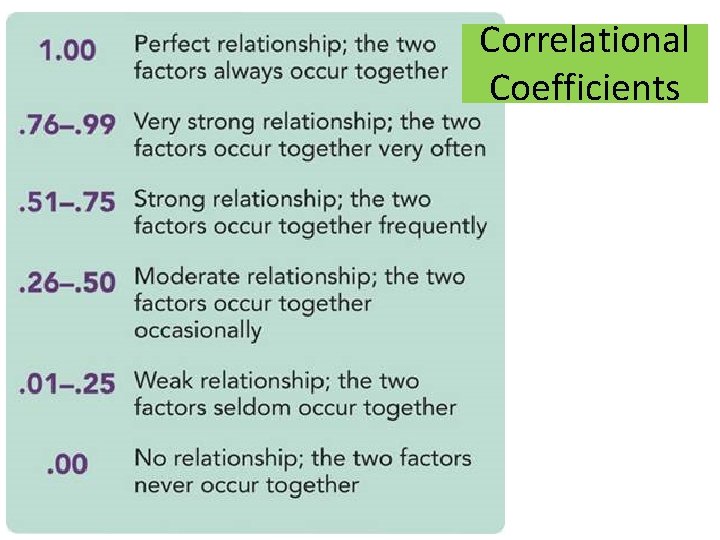
Correlational Research • Goal: Identify relationships (does not mean there is a causal relationships) – correlation coefficient: r • -1. 00 ≤ r ≤ 1. 00 – strength of relationship: magnitude – direction of relationship: + / -
Correlational Coefficients
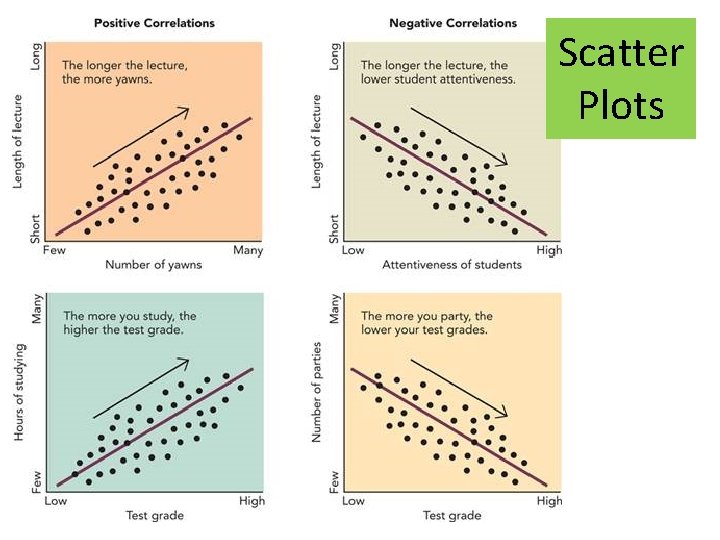
Scatter Plots
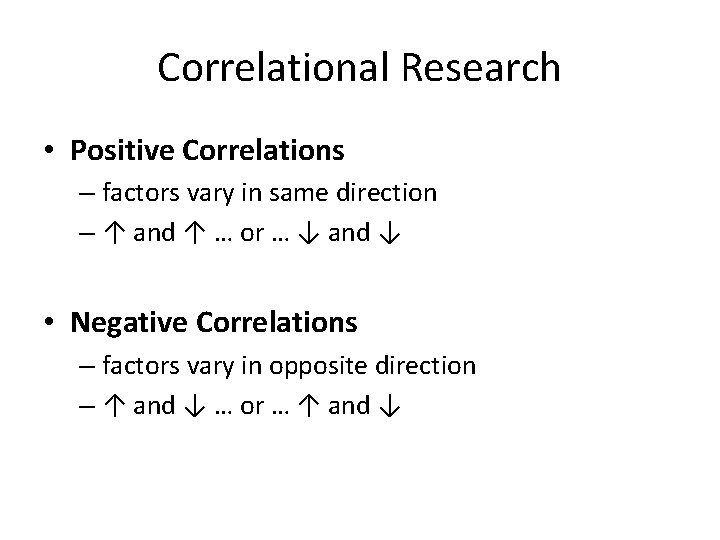
Correlational Research • Positive Correlations – factors vary in same direction – ↑ and ↑ … or … ↓ and ↓ • Negative Correlations – factors vary in opposite direction – ↑ and ↓ … or … ↑ and ↓
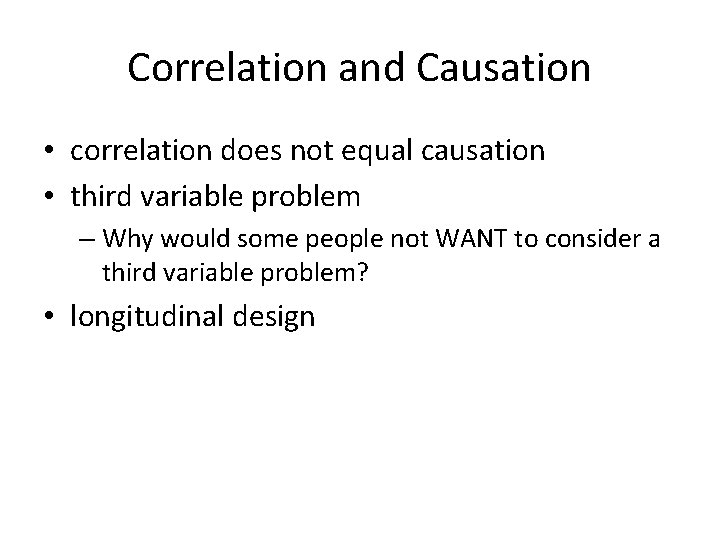
Correlation and Causation • correlation does not equal causation • third variable problem – Why would some people not WANT to consider a third variable problem? • longitudinal design
Experimental Research • Goal: Determine causation – random assignment – extremely important in experimental design – independent variable(s) – manipulation – dependent variable(s) – measurement • All of these vocabulary terms are very important to KNOW!
Experimental Research • Experimental Group – independent variable is manipulated • Control Group – treated equally, except no manipulation of independent variable
Validity • External Validity – representative of real world issues? – do results generalize to the real world? • Internal Validity – are dependent variable changes the result of independent variable manipulation? – bias? logical errors?
Bias and Expectations • • • experimenter bias demand characteristics research participant bias placebo effect double-blind experiment
Example of Experimental Research: Self Esteem • Baumeister’s research findings: – “high self esteem leads to aggression” • Donnellan & Trzesniewski’s research findings: – “low self esteem leads to aggression” • What accounts for these different findings? – lab-only aggression? – type of self esteem?
Applying Different Research Methods to the Same Phenomenon • Example: Election of President Barack Obama • Possible Research Methods: – – – observation survey and interview case studies correlational research experimental research
Research Sample • Population – entire group about whom conclusion drawn • Sample – portion of population actually observed • Representative Sample – characteristics similar to population – opposite of “biased sample” • Random Sample – equal chance of being selected
Research Settings • “Artificial” world – laboratory setting – controlled setting • Real world - natural setting – naturalistic observation • DISCUSSION: What are the advantages and disadvantages of each setting?
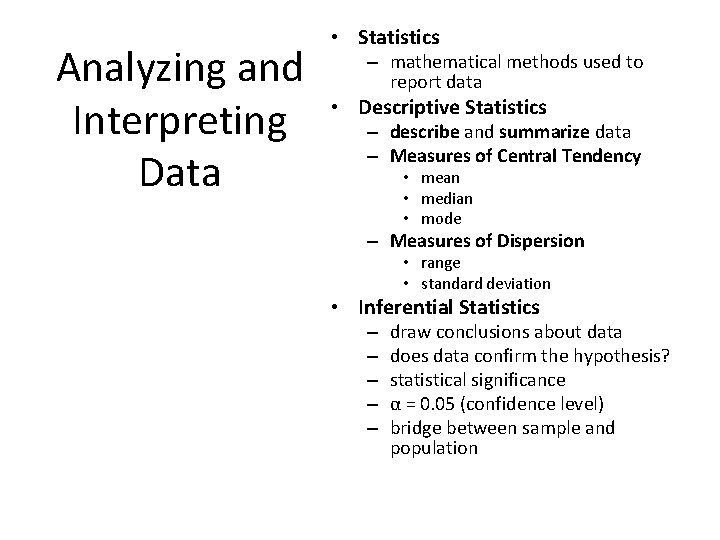
Analyzing and Interpreting Data • Statistics – mathematical methods used to report data • Descriptive Statistics – describe and summarize data – Measures of Central Tendency • mean • median • mode – Measures of Dispersion • range • standard deviation • Inferential Statistics – – – draw conclusions about data does data confirm the hypothesis? statistical significance α = 0. 05 (confidence level) bridge between sample and population
A SHORT Time to Ponder • What is the difference between descriptive statistics and inferential statistics?
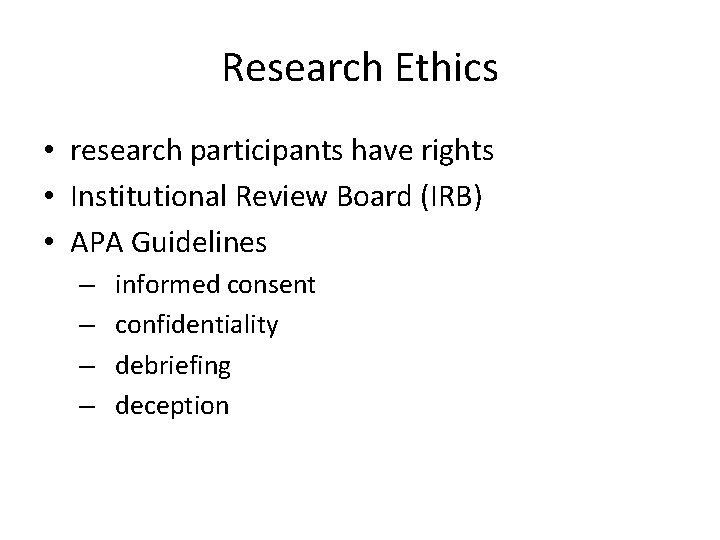
Research Ethics • research participants have rights • Institutional Review Board (IRB) • APA Guidelines – – informed consent confidentiality debriefing deception
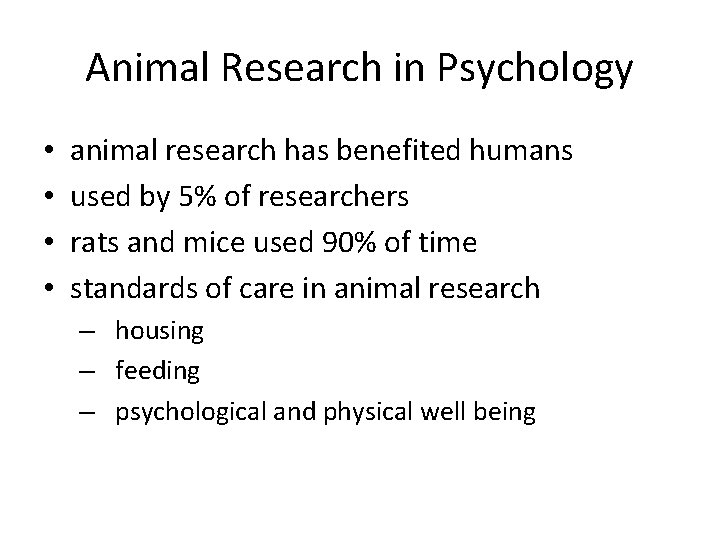
Animal Research in Psychology • • animal research has benefited humans used by 5% of researchers rats and mice used 90% of time standards of care in animal research – housing – feeding – psychological and physical well being
Reality TV – Ethical Issues? • • informed consent? Deception? psychological and/or physical risk? is the behavior real? • DISCUSSION: What do YOU think?
A Wise Consumer… is skeptical yet open-minded! • Cautions – exercise caution in applying group trends to individual experience – avoid overgeneralizing results – look for converging evidence – question causal inferences – consider the source
Expressive Writing and Health • Results of study on suicide v. accidental death – different survivor health – different survivor rate of talking about the loss • Results lead to study on writing – those assigned to write about a trauma experienced better physical health
Chapter Summary • Explain what makes psychology a science. • Discuss common research settings and the main types of research that are used in psychology. • Distinguish between descriptive statistics and inferential statistics. • Discuss some challenges that involve ethics, bias, and information. • Discuss scientific studies on the effect of writing about ones trauma.
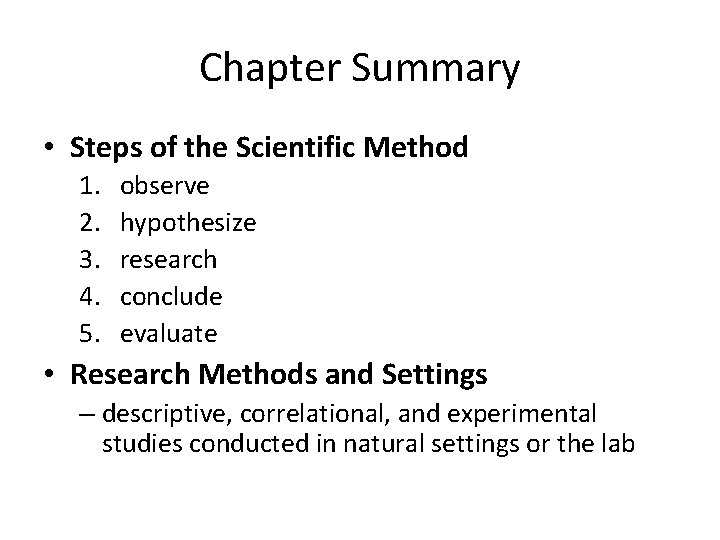
Chapter Summary • Steps of the Scientific Method 1. 2. 3. 4. 5. observe hypothesize research conclude evaluate • Research Methods and Settings – descriptive, correlational, and experimental studies conducted in natural settings or the lab
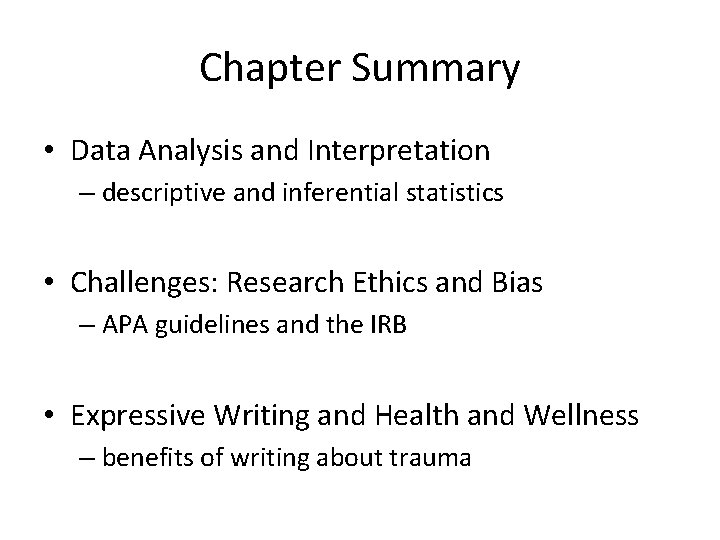
Chapter Summary • Data Analysis and Interpretation – descriptive and inferential statistics • Challenges: Research Ethics and Bias – APA guidelines and the IRB • Expressive Writing and Health and Wellness – benefits of writing about trauma