
Research Methodology What is a Research According to
- Slides: 16
Research Methodology
What is a Research? • According to John W. Best (2002), Research is the systematic and objective analysis and recording of controlled observations that may lead to the development of generalizations, principles or theories resulting in prediction and possibly ultimate control of events. • Research Methodology v/s Research Methods
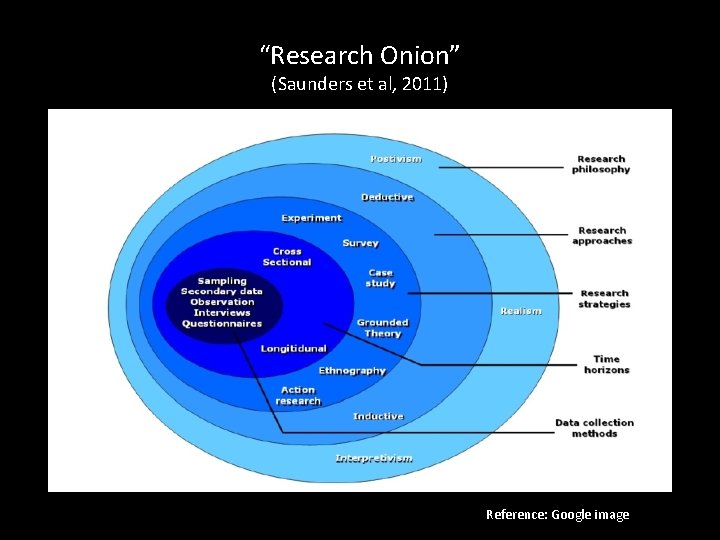
“Research Onion” (Saunders et al, 2011) Reference: Google image
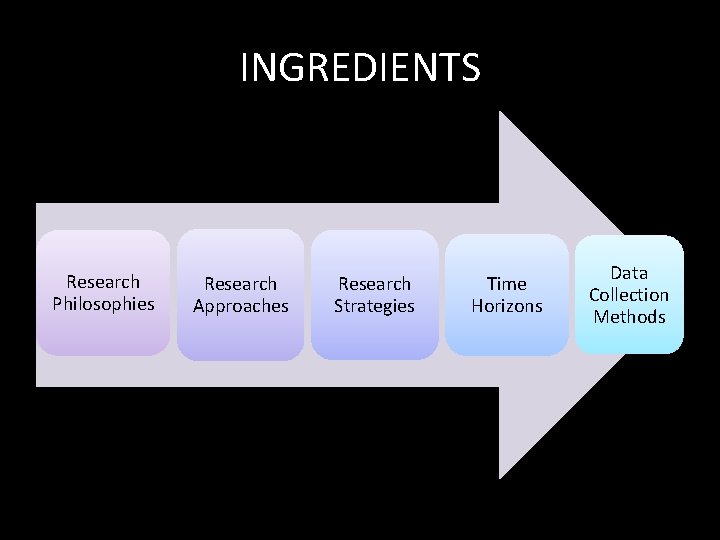
INGREDIENTS Research Philosophies Research Approaches Research Strategies Time Horizons Data Collection Methods
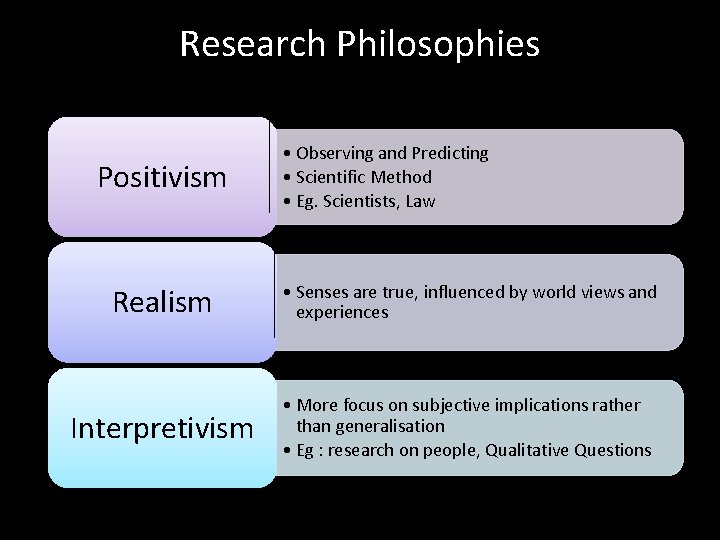
Research Philosophies Positivism • Observing and Predicting • Scientific Method • Eg. Scientists, Law Realism • Senses are true, influenced by world views and experiences Interpretivism • More focus on subjective implications rather than generalisation • Eg : research on people, Qualitative Questions
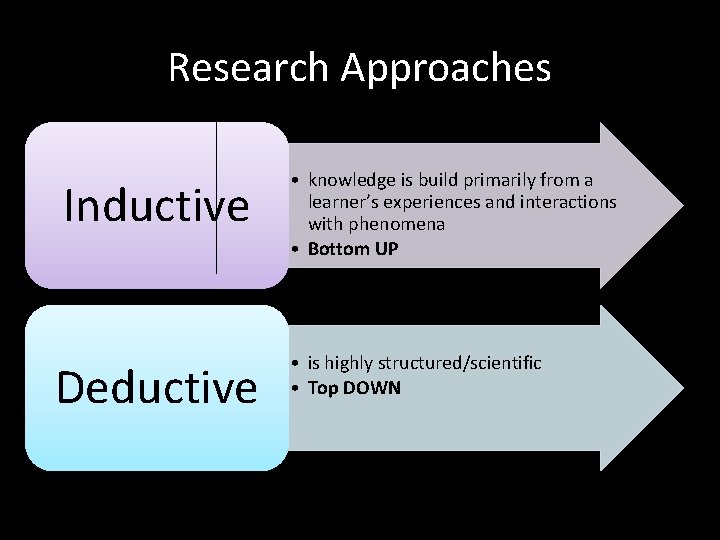
Research Approaches Inductive Deductive • knowledge is build primarily from a learner’s experiences and interactions with phenomena • Bottom UP • is highly structured/scientific • Top DOWN
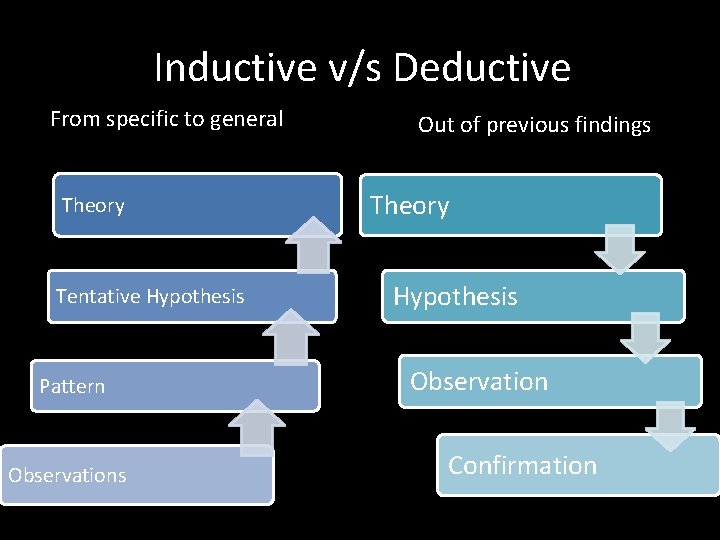
Inductive v/s Deductive From specific to general Theory Tentative Hypothesis Pattern Observations Out of previous findings Theory Hypothesis Observation Confirmation
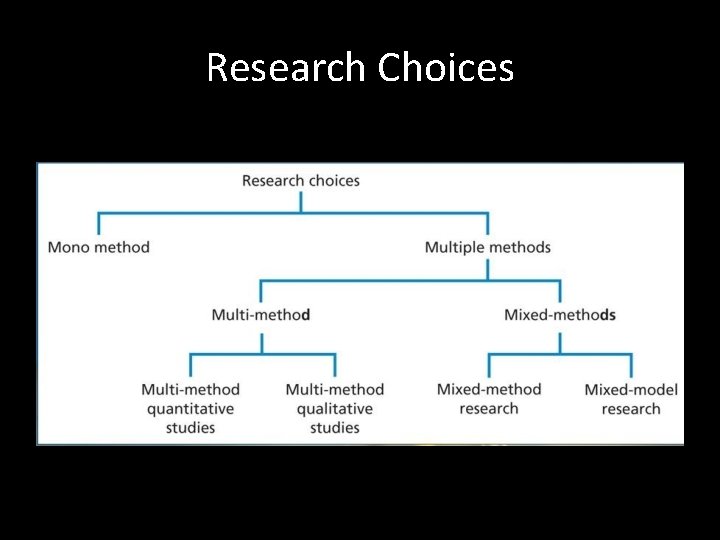
Research Choices
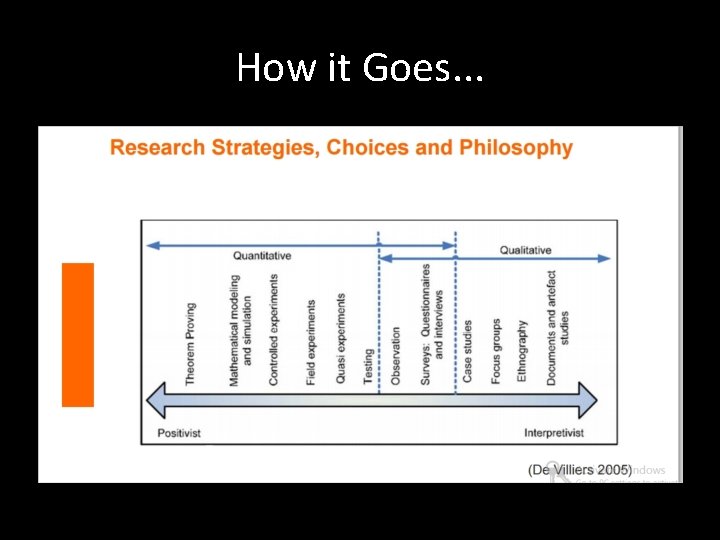
How it Goes. . .
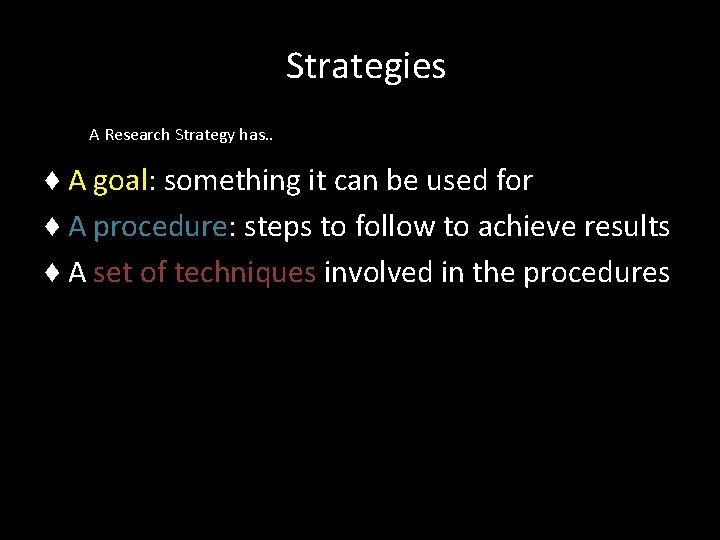
Strategies A Research Strategy has. . ♦ A goal: something it can be used for ♦ A procedure: steps to follow to achieve results ♦ A set of techniques involved in the procedures
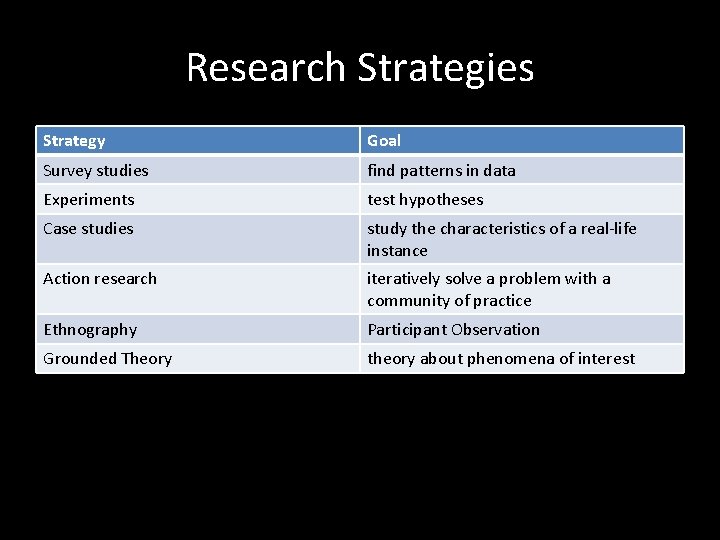
Research Strategies Strategy Goal Survey studies find patterns in data Experiments test hypotheses Case studies study the characteristics of a real-life instance Action research iteratively solve a problem with a community of practice Ethnography Participant Observation Grounded Theory theory about phenomena of interest
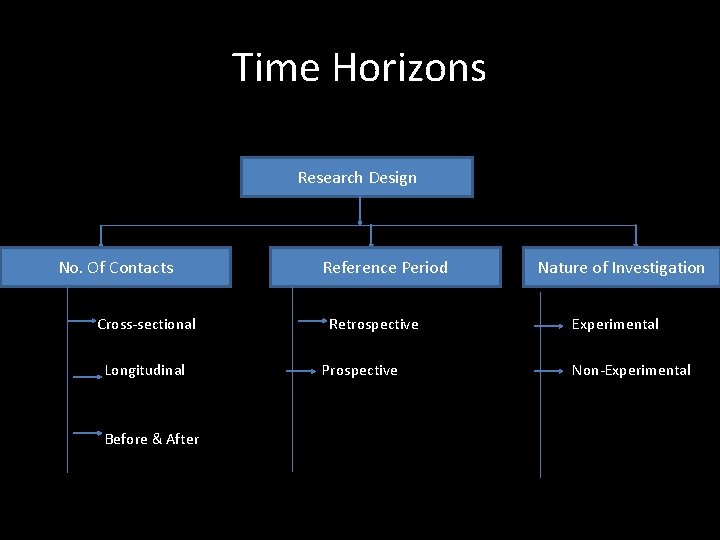
Time Horizons Research Design No. Of Contacts Cross-sectional Longitudinal Before & After Reference Period Retrospective Prospective Nature of Investigation Experimental Non-Experimental
Data Collection • Secondary Data Existing Records • Primary Data Majorly collected using Questionnaires, Experiments, Simulation, etc.
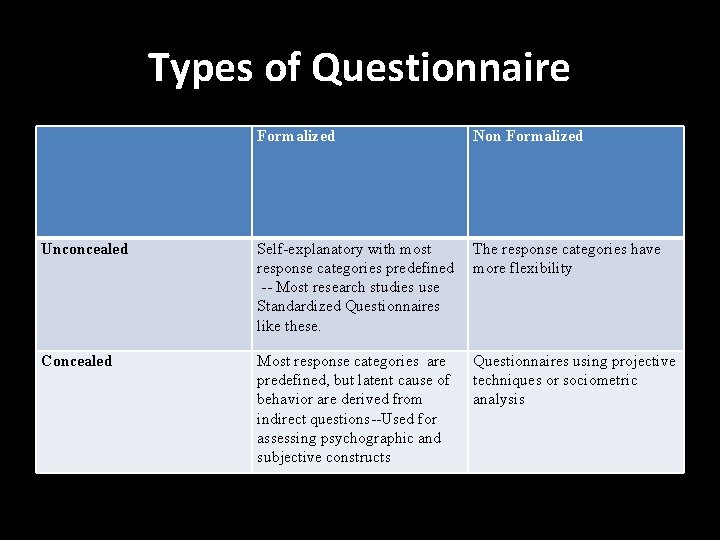
Types of Questionnaire Formalized Non Formalized Unconcealed Self-explanatory with most response categories predefined -- Most research studies use Standardized Questionnaires like these. The response categories have more flexibility Concealed Most response categories are predefined, but latent cause of behavior are derived from indirect questions--Used for assessing psychographic and subjective constructs Questionnaires using projective techniques or sociometric analysis
t. Triangulation • "the combination of methodologies in the study of the same phenomenon“ (Denzin, 1978)
References • http: //knut. hinkelmann. ch/lectures/project 2013/p 1_5 _how-to-choose-a-research-methodology. pdf • http: //www. academia. edu/4107831/The_Layers_of_R esearch_Design • https: //engage. intel. com/docs/DOC-19370 • http: //www. socialresearchmethods. net/kb/qual. php • Saunders, M, Lewis, P and Thornhill, A (2012) Research Methods for Business Students, 6 th edition, Pearson • Jick, T. D. (1979). Mixing Qualitative and Quantitative Methods: Triangulation in Action. Administrative Science Quarterly, 602(24).