
RESEARCH METHODOLOGY UNIT3 METHODS OF DATA COLLECTION Presented

- Slides: 18
RESEARCH METHODOLOGY UNIT-3 METHODS OF DATA COLLECTION Presented by MAHALAKSHMI NISHA PADMASRI RANJANI AISHWARYA PAVITHRA GAYATHRI
DATA COLLECTION � Data collection is the process of gathering and measuring information on variables of interest, in an established systematic fashion that enables one to answer stated research questions, test hypotheses, and evaluate outcomes
Methods of data collection � Collection of Primary data Observation method Interview method Questionnaire method Schedule method � Collection of secondary data Published data Unpublished data
PRIMARY DATA � The primary data are those which are collected a fresh and for the first time, and thus happen to be original in character.
OBSERVATION METHOD � The observation method involves human or mechanical observation of what people actually do or what events take place during a buying or consumption situation. ”Information is collected by observing process at work.
TYPES OF OBSEVATION � Participant Observation � Non participant Observation � Direct Observation � Indirect Observation � Control Observation � Un control Observation � Non behavioral Observation � Behavioral Observation
INTERVIEW METHOD � An interview is generally a qualitative research technique which involves asking open ended questions to converse with respondents and collect elicit data about a subject.
CLASSIFICATION OF INTERVIEW METHOD Ø Ø Ø Classification according to formality Formal interview Informal interview Classification according to number personal interview Group interview Classification according to purpose Diagnostic interview Treatment interview Research interview Interview to fulfill curiosity Classification according to period of contract Short contract interview Pro longed contract interview Classification according to Subject matter Qualitative interview Quantitative interview Mixed interview Focused interview Repeated interview
QUESTIONNAIRE METHOD � This method of data collection is quite popular , particularly in case of big enquiries. It is being adopted by private individuals , research workers, private and public organization and even by government
SCHEDULE METHOD � This method of data collection is very much like the collection of data through questionnaire, with little difference while lies in the fact the schedules ( porforma containing a set of questions) are being filled in by the enumerators who are specially appointed for the purpose.
SECONDARY DATA � Secondary data means data that are already available i. e. , they refer to the data which have already been collected analyzed by someone else.
SECONDARY DATA � Published data a) various publication of the central , state and local government b)Technical and trade journals c)books, magazines and newspapers. d)reports and publication e)Historical documents � Unpublished data Diaries, letters, unpublished biographies and auto biographies.
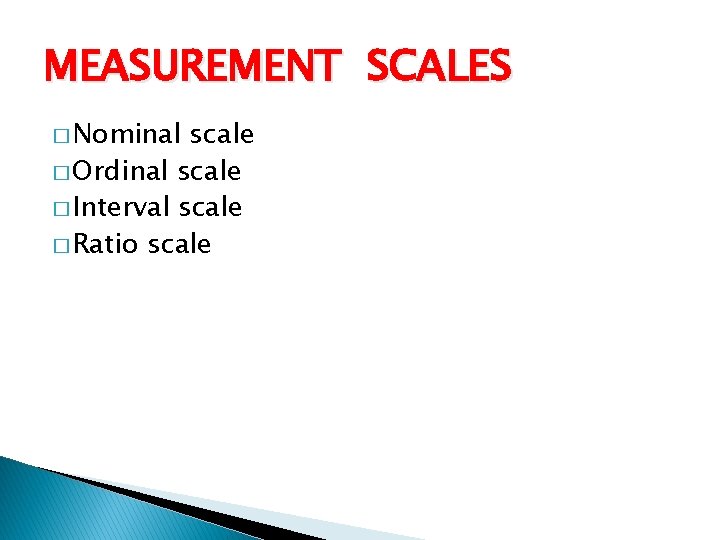
MEASUREMENT SCALES � Nominal scale � Ordinal scale � Interval scale � Ratio scale
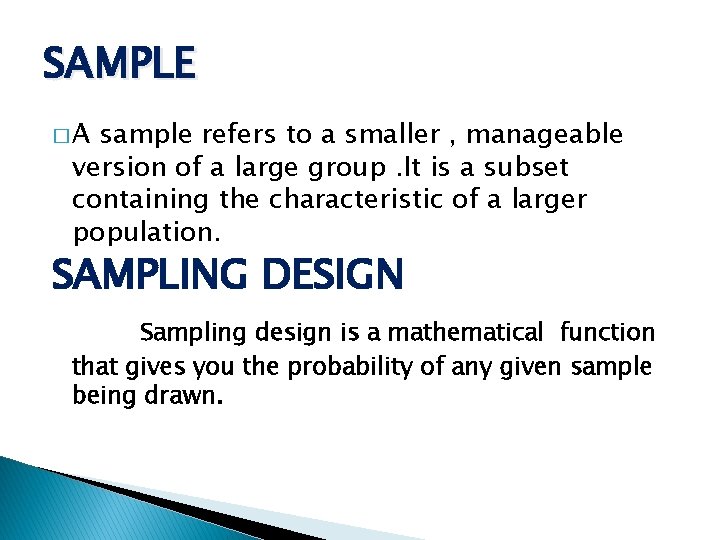
SAMPLE �A sample refers to a smaller , manageable version of a large group. It is a subset containing the characteristic of a larger population. SAMPLING DESIGN Sampling design is a mathematical function that gives you the probability of any given sample being drawn.
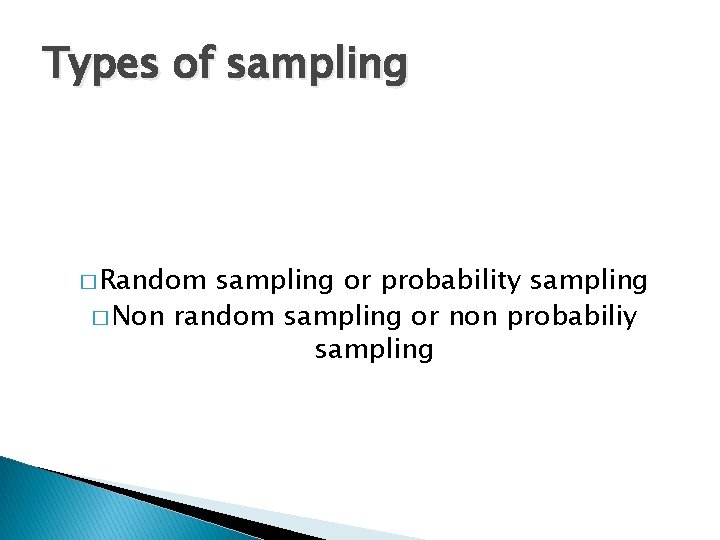
Types of sampling � Random sampling or probability sampling � Non random sampling or non probabiliy sampling
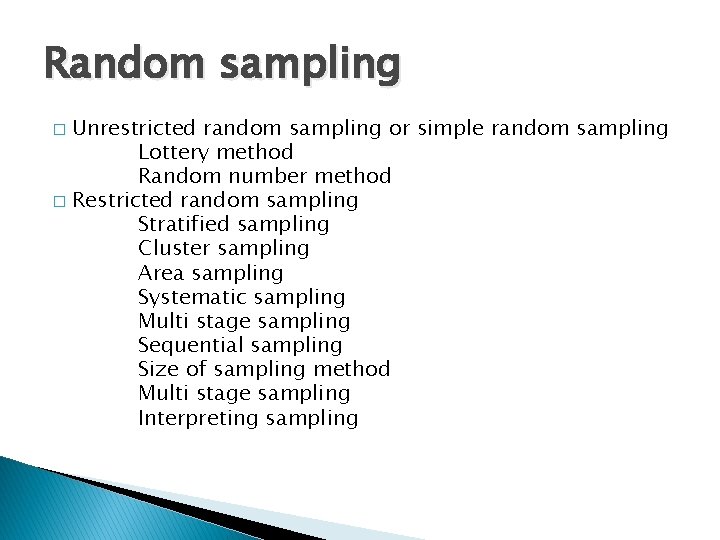
Random sampling Unrestricted random sampling or simple random sampling Lottery method Random number method � Restricted random sampling Stratified sampling Cluster sampling Area sampling Systematic sampling Multi stage sampling Sequential sampling Size of sampling method Multi stage sampling Interpreting sampling �
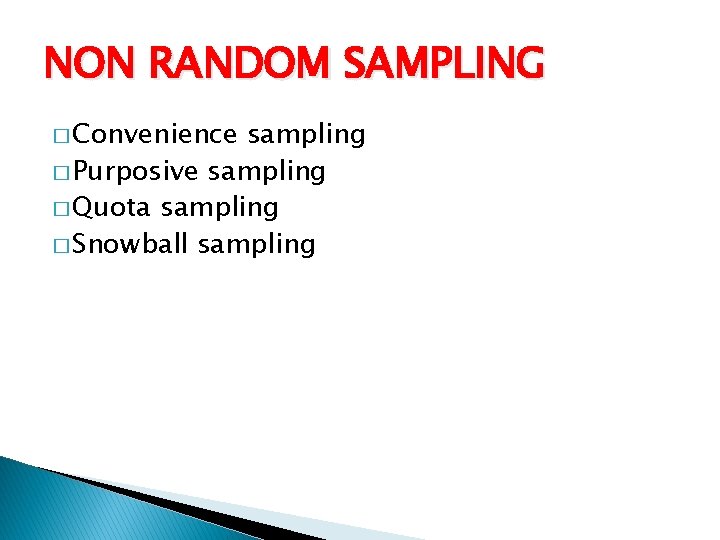
NON RANDOM SAMPLING � Convenience sampling � Purposive sampling � Quota sampling � Snowball sampling
THANK YOU