
Research Hypotheses Dr Asha P Shetty Principal Yenepoya



- Slides: 27
Research Hypotheses Dr Asha P Shetty Principal, Yenepoya Nursing College Yenepoya University, Mangalore
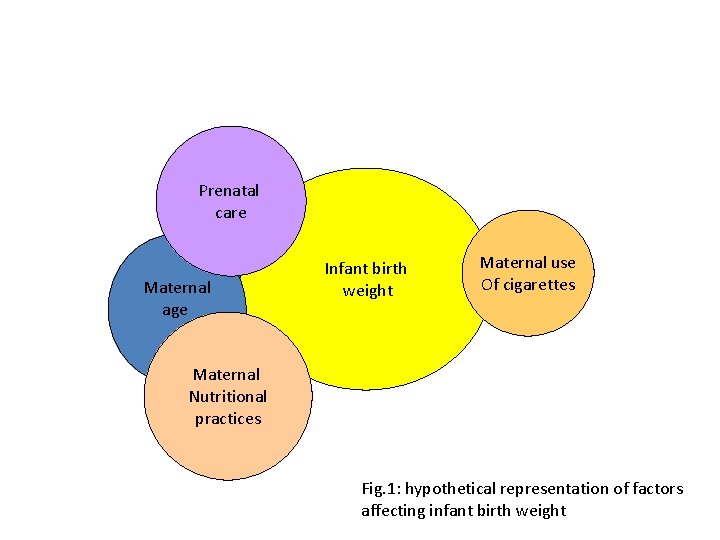
Prenatal care Maternal age Infant birth weight Maternal use Of cigarettes Maternal Nutritional practices Fig. 1: hypothetical representation of factors affecting infant birth weight
Hypotheses • The researcher’s predictions about relationships among variables • The term derives from the Greek, hypotithenai meaning "to put under" or "to suppose. “ • Translates the research problem and purpose into clear explanation or prediction of the expected results or outcomes of the study
Cont… • A hypothesis is a specific statement of prediction. It describes in concrete (rather than theoretical) terms what you expect will happen in your study. • Not all studies have hypotheses. • A single study may have one or many hypotheses.
Cont… The scientific method requires that one can test a scientific hypothesis. Generally based on previous observations or on extensions of scientific theories. A hypothesis has some logical or empirical possibility for its testing, so that we can determine exactly how true/ false, how relevant/ irrelevant and how correct/ incorrect it is.
Definition: • Research hypothesis is a prediction of the relationship between two or more variables. • A hypothesis is a formal statement of the expected relationships between two or more variable in a specified population • Hypothesis can be considered as intelligent hunches, educated guesses or predictions that can assist the researcher in seeking the solution or answer to the research questions
A Hypothesis: • States a prediction • Must always involve at least 2 variables • Must suggest a predicted relationship between the independent variable and the dependent variable • Must contain terms that indicate a relationship (e. g. , more than, different from, associated with) • Hypothesis are always in declarative sentence form and they relate either generally or specifically variables to variables
CHARACTERISTICS OF A GOOD HYPOTHESIS • • It is testable i. e. , Variables, should be measurable It is logical It is directly related to the research problem It is simple, clear and concise It represents a single unit or subset of the problem. It is factually and theoretically based. It states a relationship between Variables. It sets the limits of the study.
PURPOSE OF HYPOTHESIS: • To guide scientific enquiry • Hypothesis testing is a means of generating knowledge • Provide bridge between theory and reality they unify two domains. • It provides a statement about a specific relationship between phenomena that allows this relationship to be tested empirically
ELEMENTS OF HYPOTHESIS: • • • Dependent and independent variables. Some type of relationship between independent and dependent variable. the direction of change , ie. stating “ more or less”, “higher or lower” increased or decreased it mentions the subjects ie, the population being studied Level of significance
Hypotheses how do I go about developing hypotheses? Processes are • Induction • Deduction
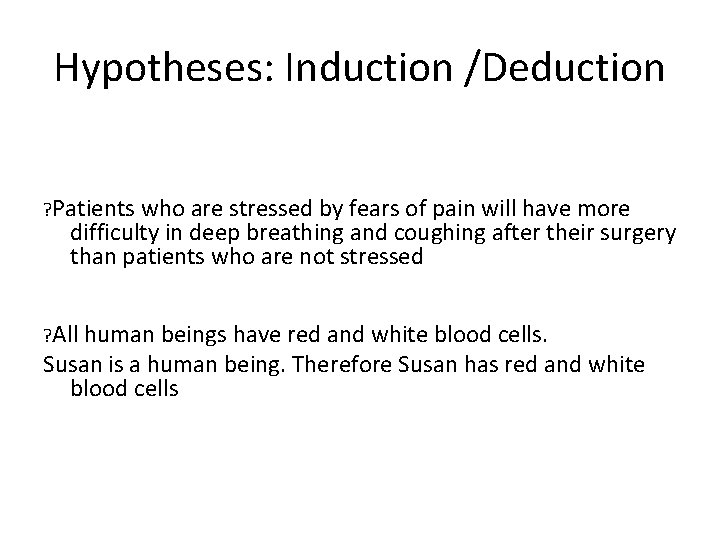
Hypotheses: Induction /Deduction ? Patients who are stressed by fears of pain will have more difficulty in deep breathing and coughing after their surgery than patients who are not stressed ? All human beings have red and white blood cells. Susan is a human being. Therefore Susan has red and white blood cells
Types of hypothesis 1. Simple vs. complex or multivariate 2. Directional vs. non- directional 3. Research vs. statistical
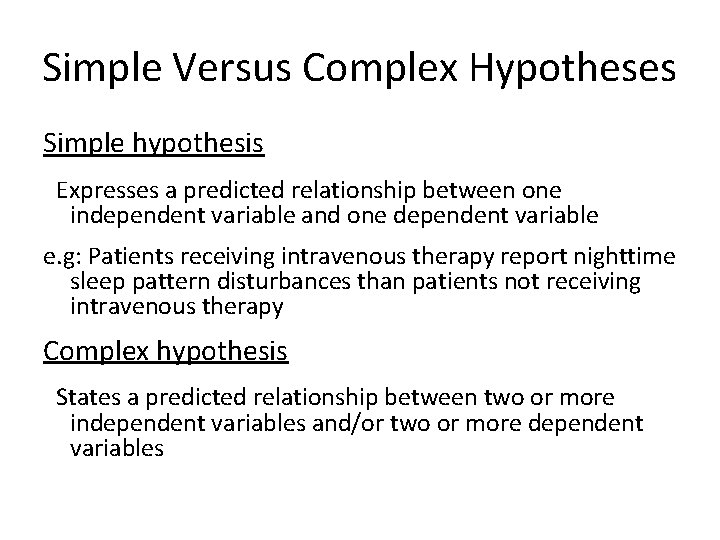
Simple Versus Complex Hypotheses Simple hypothesis Expresses a predicted relationship between one independent variable and one dependent variable e. g: Patients receiving intravenous therapy report nighttime sleep pattern disturbances than patients not receiving intravenous therapy Complex hypothesis States a predicted relationship between two or more independent variables and/or two or more dependent variables
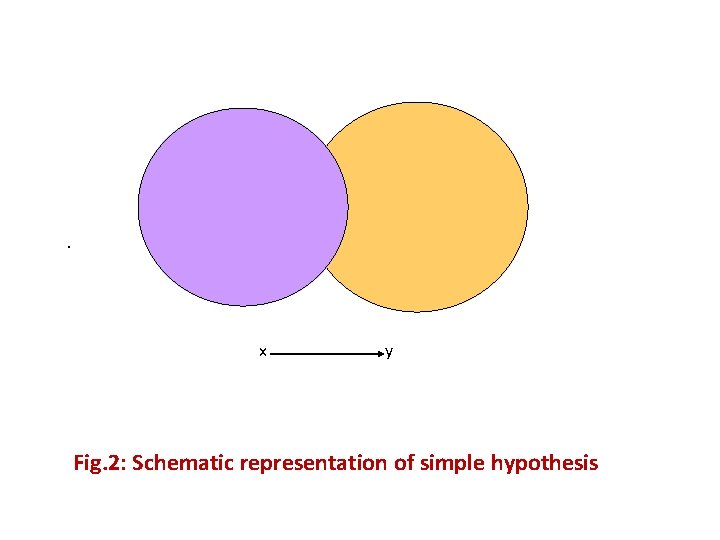
. x y Fig. 2: Schematic representation of simple hypothesis
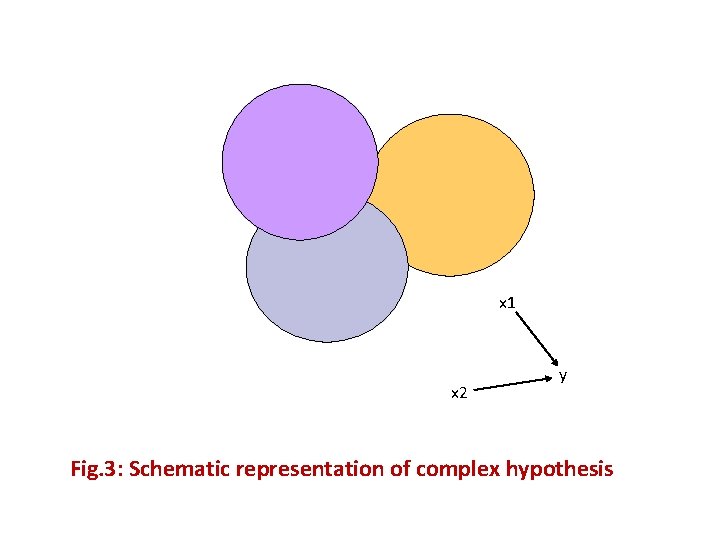
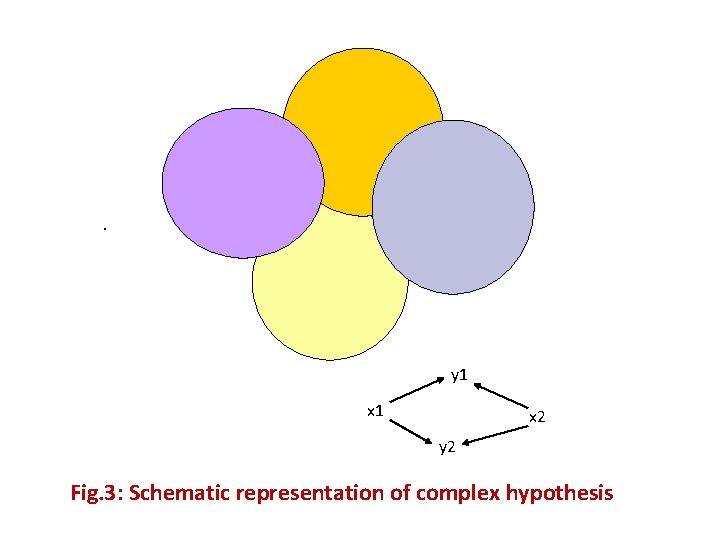
x 1 x 2 y Fig. 3: Schematic representation of complex hypothesis
Two or more independent /dependent variables • Smoking and consumption of alcohol during pregnancy might lead to lower birth weights and lower Apgar scores in infants.
. y 1 x 2 y 2 Fig. 3: Schematic representation of complex hypothesis
Directional Versus Non directional Hypotheses Directional hypothesis Specific prediction about the direction of a relationship. (+ve or – ve) • A directional hypothesis is one that specifies not only the existence but the expected direction of the relationship between variables. E. g. Older patients are at a greater risk of falling than younger ones
It can also be stated as. . • There is a relationship between the age of a patient and the risk of falling. • The older the patient, the greater the risk that he or she will fall • Older patients differ from younger ones with respect to their risk of falling • Younger patients tend to be less at risk for a fall than oler patients. • The risk of falling increases with age of th e patient
Non Directional hypothesis Predicts the existence of a relationship, not its direction Does not stipulate in advance the direction • E. g. There is a significant relationship between patient’s age and the risk of falling
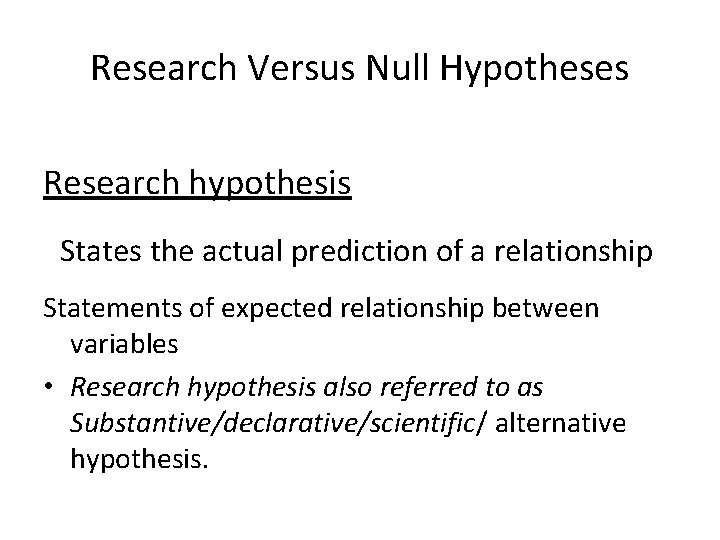
Research Versus Null Hypotheses Research hypothesis States the actual prediction of a relationship Statements of expected relationship between variables • Research hypothesis also referred to as Substantive/declarative/scientific/ alternative hypothesis.
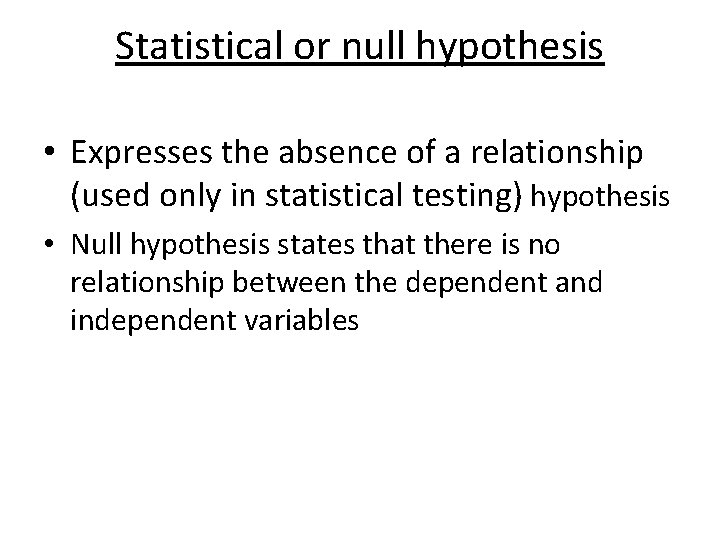
Statistical or null hypothesis • Expresses the absence of a relationship (used only in statistical testing) hypothesis • Null hypothesis states that there is no relationship between the dependent and independent variables
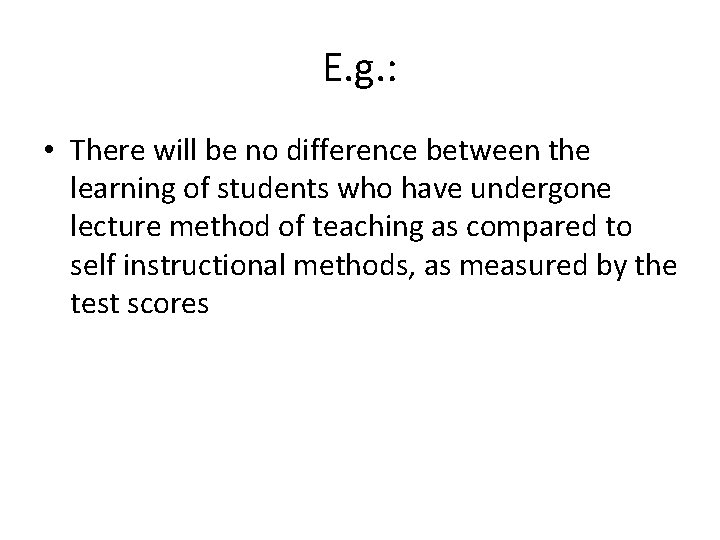
E. g. : • There will be no difference between the learning of students who have undergone lecture method of teaching as compared to self instructional methods, as measured by the test scores
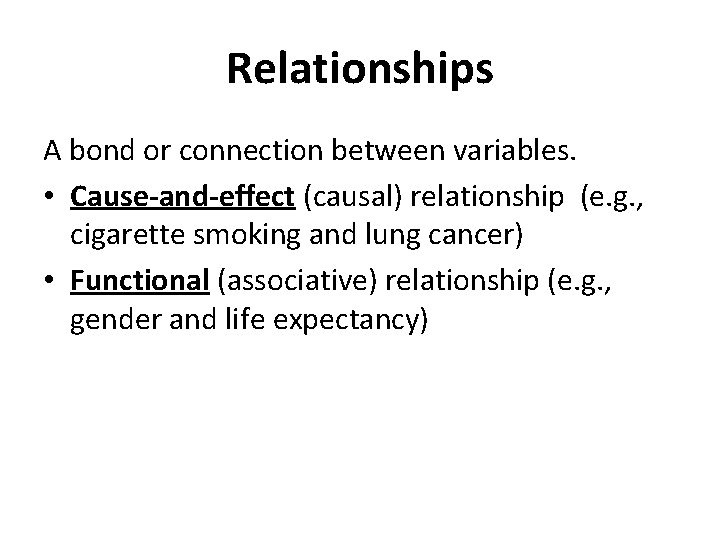
Relationships A bond or connection between variables. • Cause-and-effect (causal) relationship (e. g. , cigarette smoking and lung cancer) • Functional (associative) relationship (e. g. , gender and life expectancy)
Doubts ? ? ?