
Research data workshop Research Data Leeds and Prof
- Slides: 26
Research data workshop Research Data Leeds and Prof Bren Neale On behalf of Research Data Management teams Universities of Leeds, Sheffield and York Libraries
Running order These slides will be shared • Scene setting • Academic perspective on data management • Exercise – writing your own data management plan • • What data will you generate? Practical housekeeping What challenges do you anticipate? Who can help? • Research data repositories, WREO • Your workshop – what topics do you want to discuss? “Ask the room”
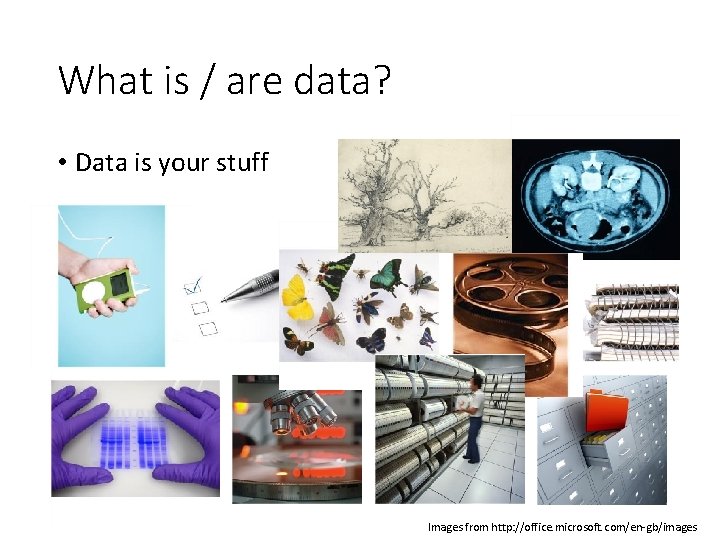
What is / are data? • Data is your stuff Images from http: //office. microsoft. com/en-gb/images
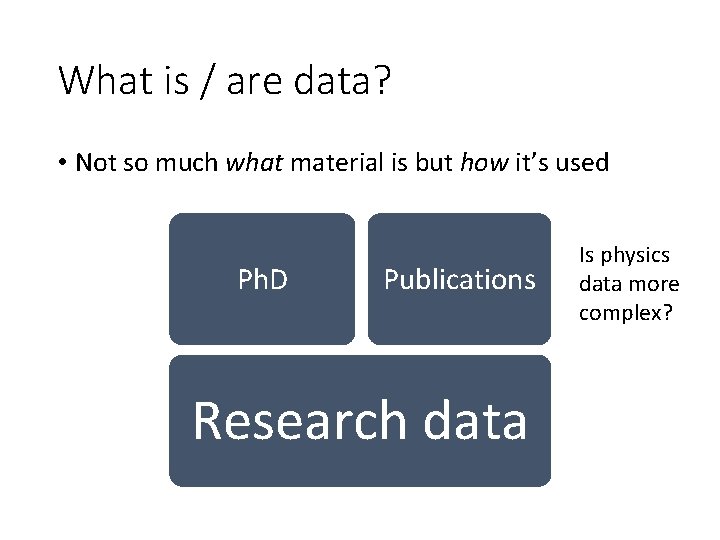
What is / are data? • Not so much what material is but how it’s used Ph. D Publications Research data Is physics data more complex?
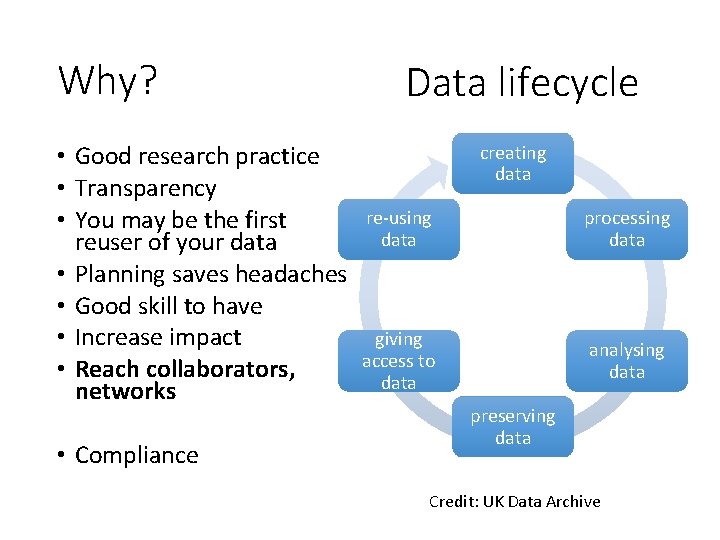
Why? • Good research practice • Transparency • You may be the first reuser of your data • Planning saves headaches • Good skill to have • Increase impact • Reach collaborators, networks • Compliance Data lifecycle creating data re-using data processing data giving access to data analysing data preserving data Credit: UK Data Archive
Over to Bren. . • Useful links • The Timescapes Repository: • http: //timescapes. researchdata. leeds. ac. uk/ • The Timescapes website which includes several methodological guides: • http: //www. timescapes. leeds. ac. uk/
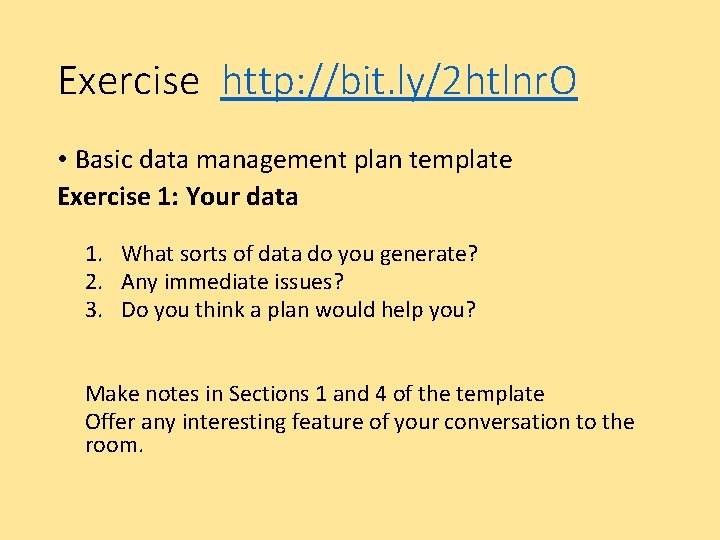
Exercise http: //bit. ly/2 htlnr. O • Basic data management plan template Exercise 1: Your data 1. What sorts of data do you generate? 2. Any immediate issues? 3. Do you think a plan would help you? Make notes in Sections 1 and 4 of the template Offer any interesting feature of your conversation to the room.
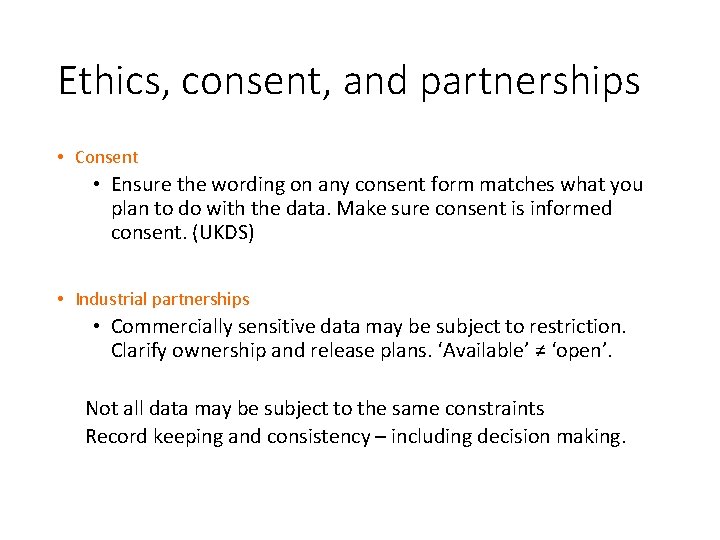
Ethics, consent, and partnerships • Consent • Ensure the wording on any consent form matches what you plan to do with the data. Make sure consent is informed consent. (UKDS) • Industrial partnerships • Commercially sensitive data may be subject to restriction. Clarify ownership and release plans. ‘Available’ ≠ ‘open’. Not all data may be subject to the same constraints Record keeping and consistency – including decision making.
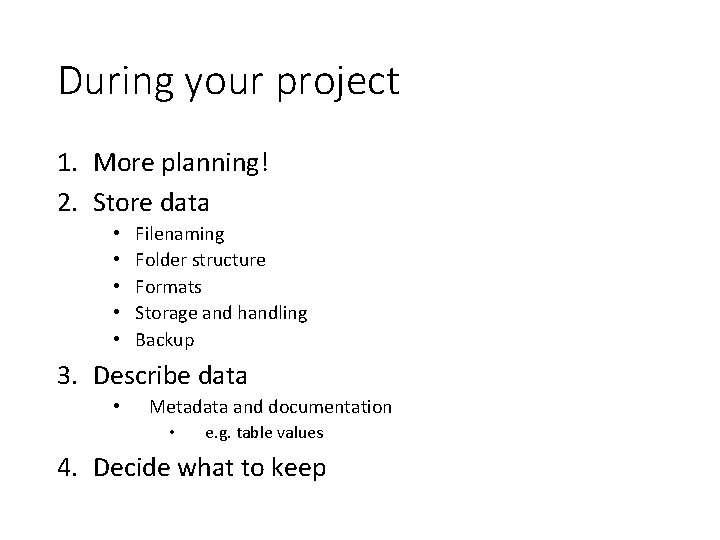
During your project 1. More planning! 2. Store data • • • Filenaming Folder structure Formats Storage and handling Backup 3. Describe data • Metadata and documentation • e. g. table values 4. Decide what to keep
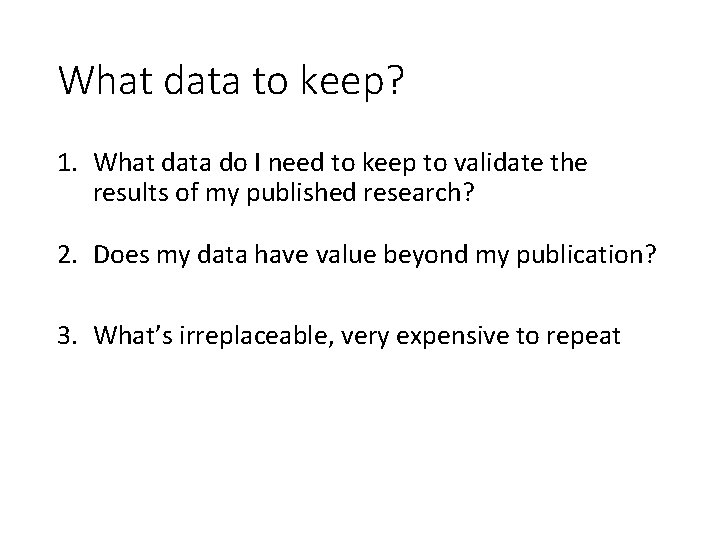
What data to keep? 1. What data do I need to keep to validate the results of my published research? 2. Does my data have value beyond my publication? 3. What’s irreplaceable, very expensive to repeat
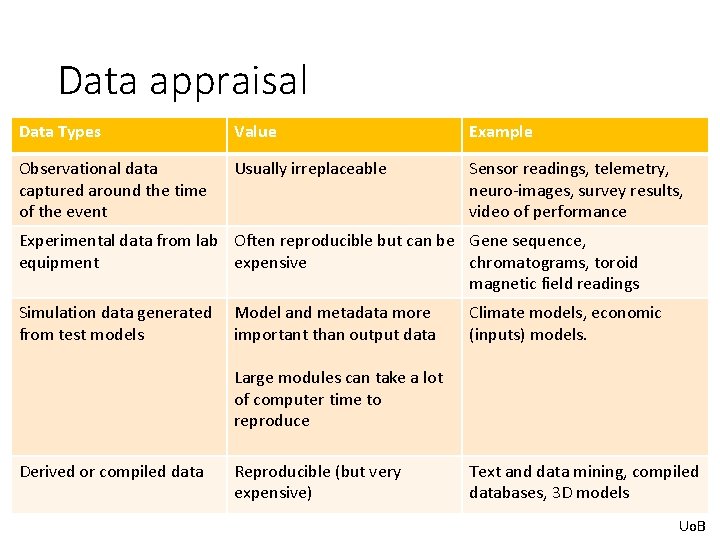
Data appraisal Data Types Value Example Observational data captured around the time of the event Usually irreplaceable Sensor readings, telemetry, neuro-images, survey results, video of performance Experimental data from lab Often reproducible but can be Gene sequence, equipment expensive chromatograms, toroid magnetic field readings Simulation data generated from test models Model and metadata more important than output data Climate models, economic (inputs) models. Large modules can take a lot of computer time to reproduce Derived or compiled data Reproducible (but very expensive) Text and data mining, compiled databases, 3 D models Uo. B
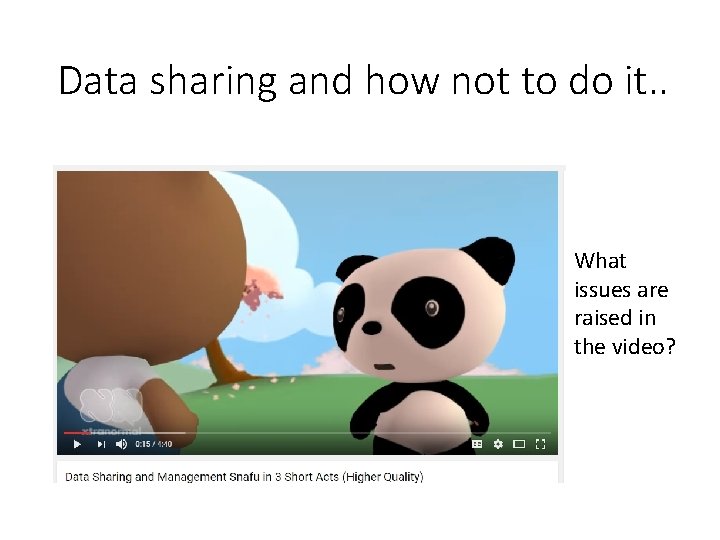
Data sharing and how not to do it. . What issues are raised in the video?
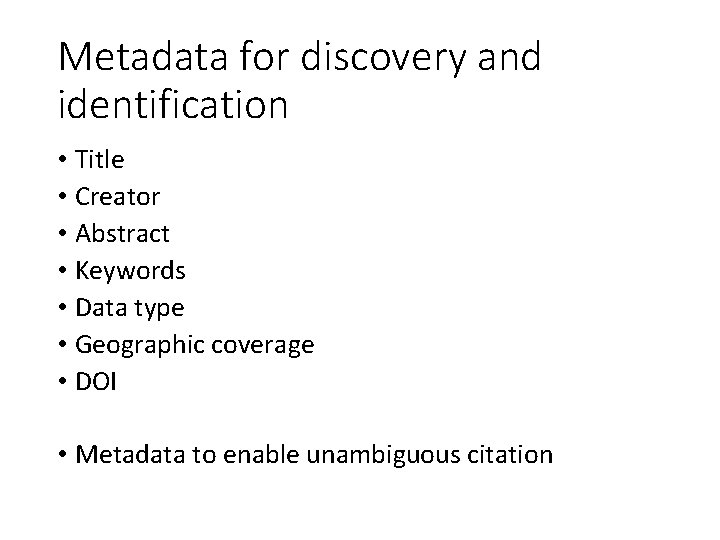
Metadata for discovery and identification • Title • Creator • Abstract • Keywords • Data type • Geographic coverage • DOI • Metadata to enable unambiguous citation
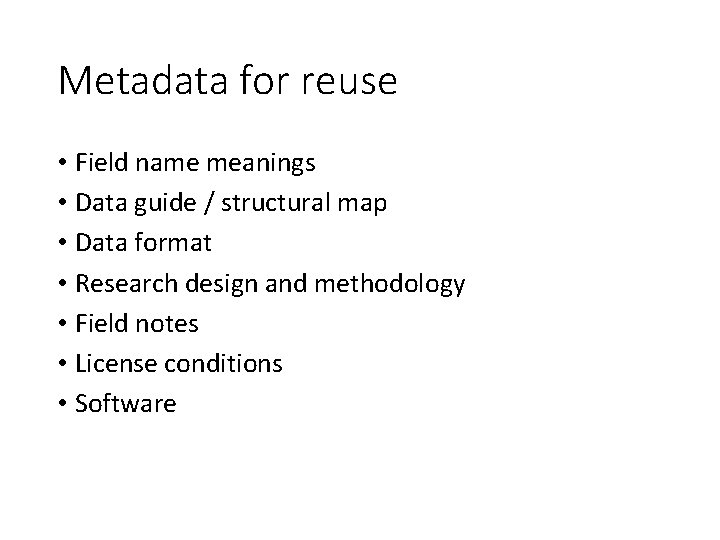
Metadata for reuse • Field name meanings • Data guide / structural map • Data format • Research design and methodology • Field notes • License conditions • Software
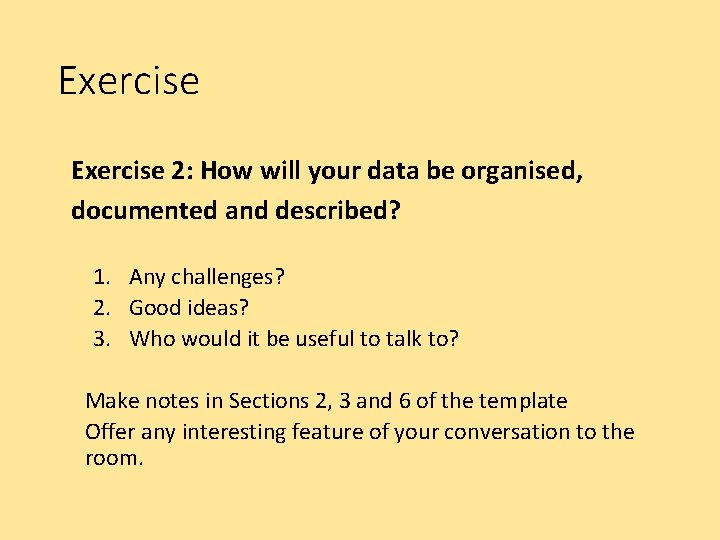
Exercise 2: How will your data be organised, documented and described? 1. Any challenges? 2. Good ideas? 3. Who would it be useful to talk to? Make notes in Sections 2, 3 and 6 of the template Offer any interesting feature of your conversation to the room.
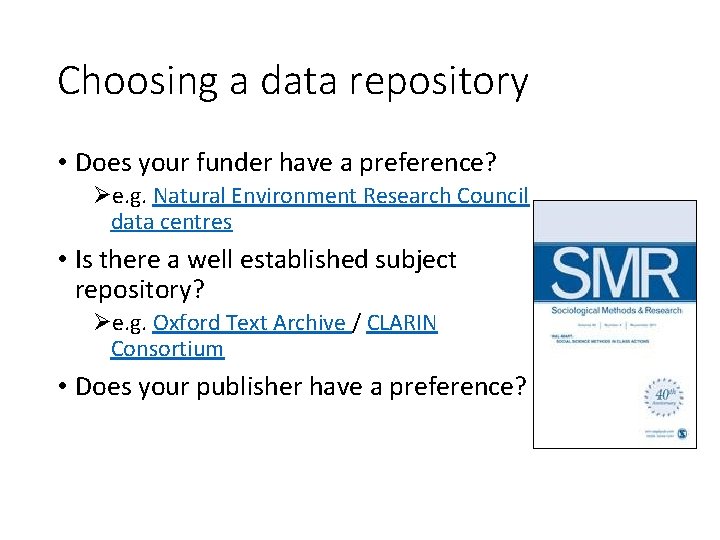
Choosing a data repository • Does your funder have a preference? Øe. g. Natural Environment Research Council data centres • Is there a well established subject repository? Øe. g. Oxford Text Archive / CLARIN Consortium • Does your publisher have a preference?
• Do you? (Figshare, Zenodo? ) • Each White Rose institution has a locally supported data repository service
Theses and data • Hind Abdullah Alsiary • http: //etheses. whiterose. ac. uk/15304/ • Possible to link from thesis to data • Have the conversation sooner rather than later… • Permissions and third party materials. • Record keeping
A word about identifiers. . • What’s a DOI? • Digital object identifier • What’s an ORCi. D? • Open Researcher and Contributor ID • Dataset citation
Exercise 3: What are the plans for data sharing and access in the short and long term? 1. Who needs access to your data? 2. Would you share your data? When? Make notes in Section 5 of the template Offer any interesting feature of your conversation to the room.
Training and Support • MOOC – Research Data Management and Sharing – free, Coursera platform, videos, quizzes. Registration required. (Uni of Edinburgh and Univ of Carolina at North Chapel Hill) • MANTRA – free, self paced, online (Uni of Edinburgh) • Coursera • Examples of data management plans
Training and Support • UK Data Service – practical guidance on all aspects of data management, including handling sensitive data • Digital Curation Centre – online data management planning tool (DMPOnline), How-To guides Data management planning tool • DMPOnline: https: //dmponline. dcc. ac. uk/ • Templates for major research funders
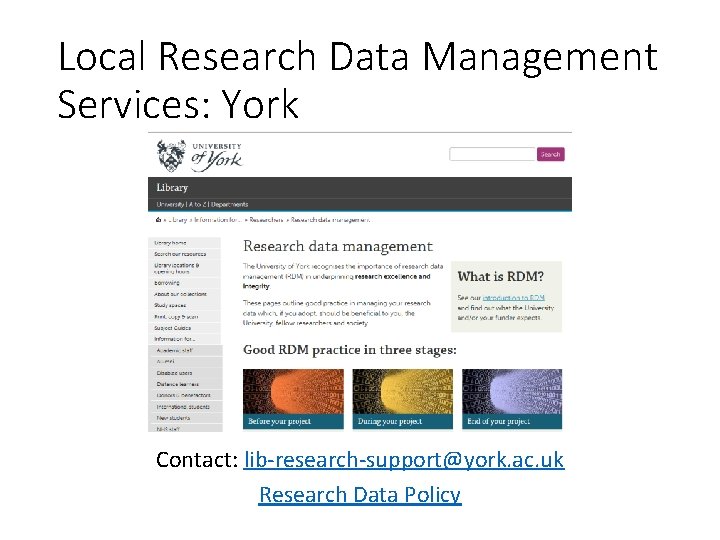
Local Research Data Management Services: York Contact: lib-research-support@york. ac. uk Research Data Policy
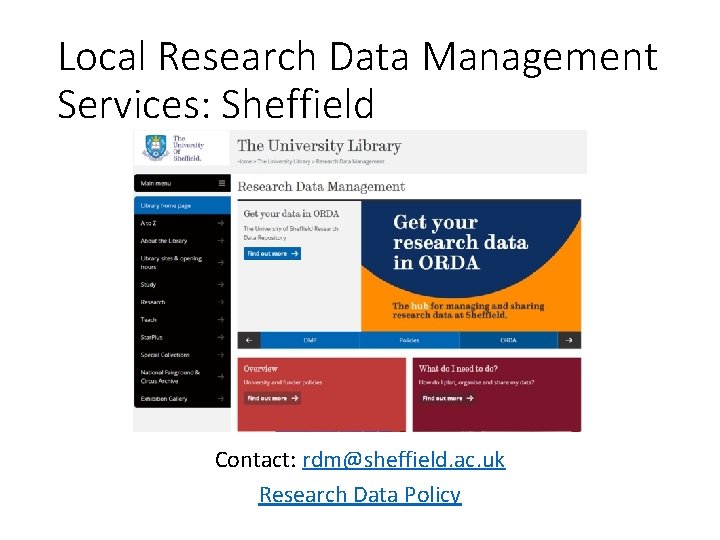
Local Research Data Management Services: Sheffield Contact: rdm@sheffield. ac. uk Research Data Policy
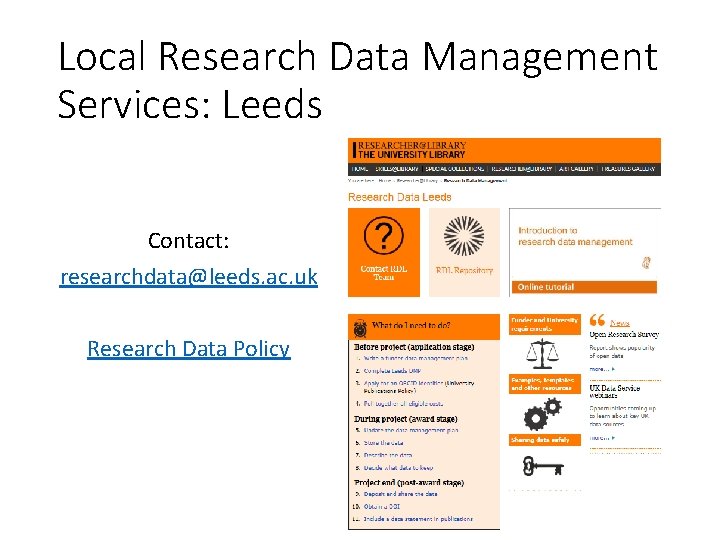
Local Research Data Management Services: Leeds Contact: researchdata@leeds. ac. uk Research Data Policy
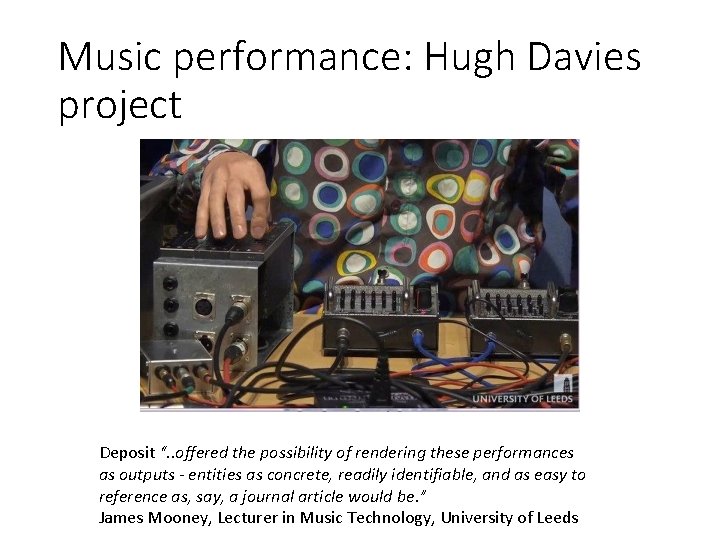
Music performance: Hugh Davies project Deposit “. . offered the possibility of rendering these performances as outputs - entities as concrete, readily identifiable, and as easy to reference as, say, a journal article would be. ” James Mooney, Lecturer in Music Technology, University of Leeds