
Research Assignments and the Web Where do I
Research Assignments and the Web Where do I get the information? How do I cite the information?
All Websites are NOT Created Equally!!
Reliable Websites for Research /. gov (government websites) /. org (organization websites) /. edu (educational websites) /Galileo
www. galileo. usg. edu /Georgia’s academic search engine /Access to over 150 databases in all subject areas /Reliable
Use With Care /www. wikipedia. com /Information can not be trusted to be valid and accurate. /ANYONE /Pepsi can edit an entry on wikipedia /Wal-mart

www. wikipedia. com
Even the founder of Wikipedia says it is not for research! /“The site is a wonderful starting point for research. But it’s only a starting point because there’s always a chance that there’s something wrong, and you should check your sources if you are writing a paper. ” (Time Magazine, April 2, 2007, pg. 6)
Now that I have my research, how do I cite it? How to Avoid Plagiarism
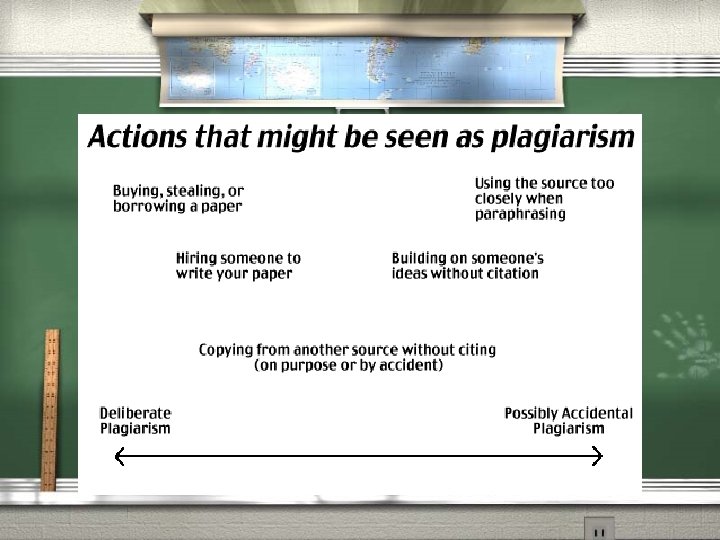
Plagiarism /What is it? /Why is it important to correctly cite? /Legal and ethical issues http: //library. austincc. edu/gen-info/plagiarism_theft. jpg
The act of presenting another’s work or ideas as your own. http: //info. library. unsw. edu. au/psl/skills/direct/itet_lilt/module 3/images/plagiarism. GIF
Why is it important to cite correctly? /Intellectual property Give credit where credit is due! /REMEMBER - Some day someone will quote you and you will want credit! /Academic standards /Legal consequences / http: //www. cmu. edu/teaching/resources/images/p lagiarismdeadweb. gif
What needs to be cited? /When you are using or referring to somebody else’s words or ideas from a magazine, book, newspaper, song, TV program, movie, Web page, computer program, letter, advertisement, or any other medium
/When you use information gained through interviewing another person /When you copy the exact words or a "unique phrase" from somewhere
/When you reprint any diagrams, illustrations, charts, and pictures including web graphics /When you use ideas that others have given you in conversations or over email
What does NOT need to be cited? /When you are compiling generally accepted facts /When you are writing up your own experimental results /When you are using "common knowledge" — folklore, common sense observations, shared information within your field of study or cultural group
/When you are writing your own experiences, your own observations, your own insights, your own thoughts, your own conclusions about a subject
How to Cite /MLA format /http: //owl. english. purdue. edu/owl/re source/557/01/ /Citation generators /http: //www. palomar. edu/dsps/actc/mla / /http: //info. library. unsw. edu. au/psl/skill s/direct/itet_lilt/module 3/images/plagia rism. GIF
Legal and Ethical Issues /Plagiarism is STEALING! /Plagiarism leads to failing a class, expulsion, losing scholarships, losing jobs, etc. /Even unintentional plagiarism is punishable!
Don’t think you will not get caught! http: //www. swansea. ac. uk/mediastudies/images/ detect. jpg http: //www. esl-lessonplan. com/archives/images/Plagiarized%20 ESL% 20 Paper. jpg
http: //www. insidehighered. com/var/ihe/storage/images/media/news_images/cartoons/f/1760125 -1 eng-US/f. png
Final Words /When CITE!!! in doubt….
- Slides: 22