
Research areas and challenges for mobile information systems
Research areas and challenges for mobile information systems John Krogstie, Kalle Lyytinen, Andreas Lothe Opdahl, Barbara Pernici, Keng Siau, Kari Smolander 2004
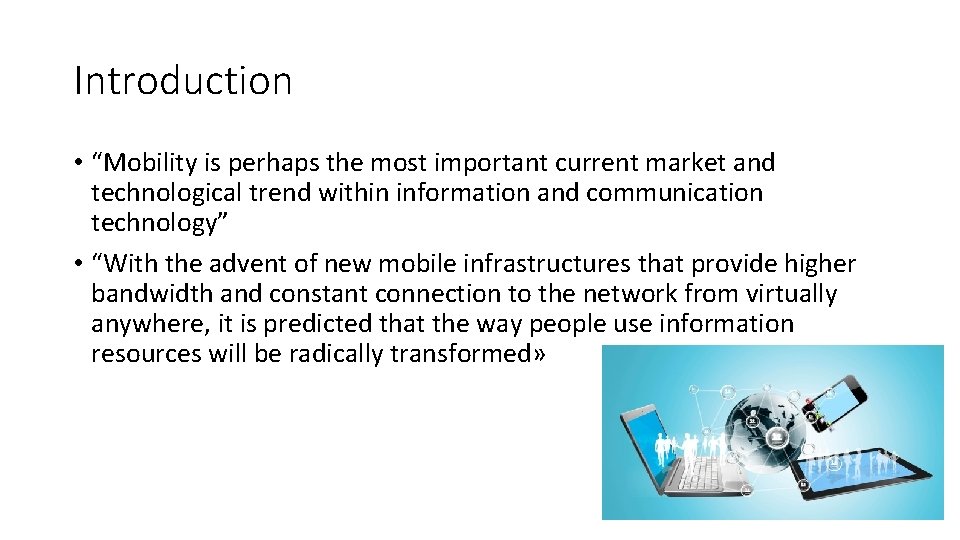
Introduction • “Mobility is perhaps the most important current market and technological trend within information and communication technology” • “With the advent of new mobile infrastructures that provide higher bandwidth and constant connection to the network from virtually anywhere, it is predicted that the way people use information resources will be radically transformed»

What is mobile information systems? • Mobile computing systems entail end-user terminals that are easily movable in space, are operable independent of location and typically have wireless access to information resources and services
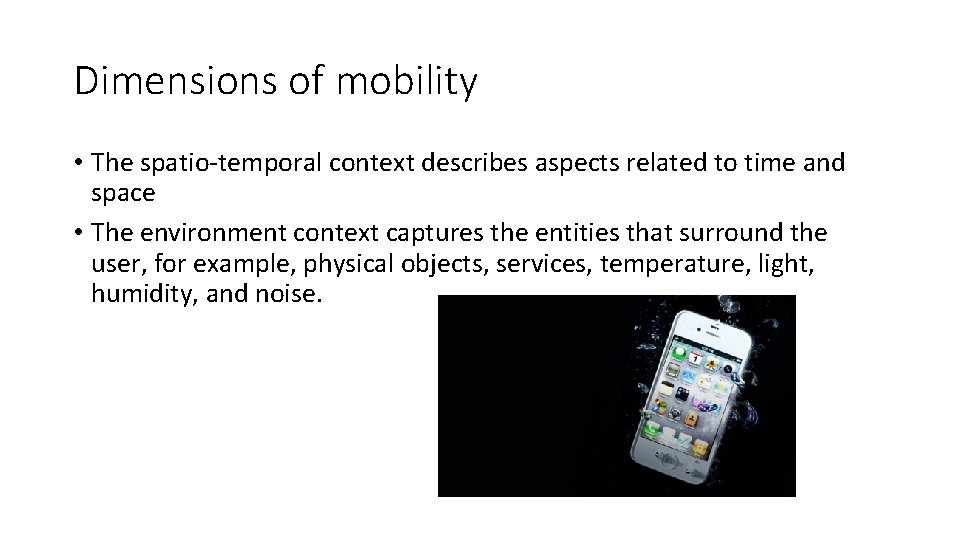
Dimensions of mobility • The spatio-temporal context describes aspects related to time and space • The environment context captures the entities that surround the user, for example, physical objects, services, temperature, light, humidity, and noise.
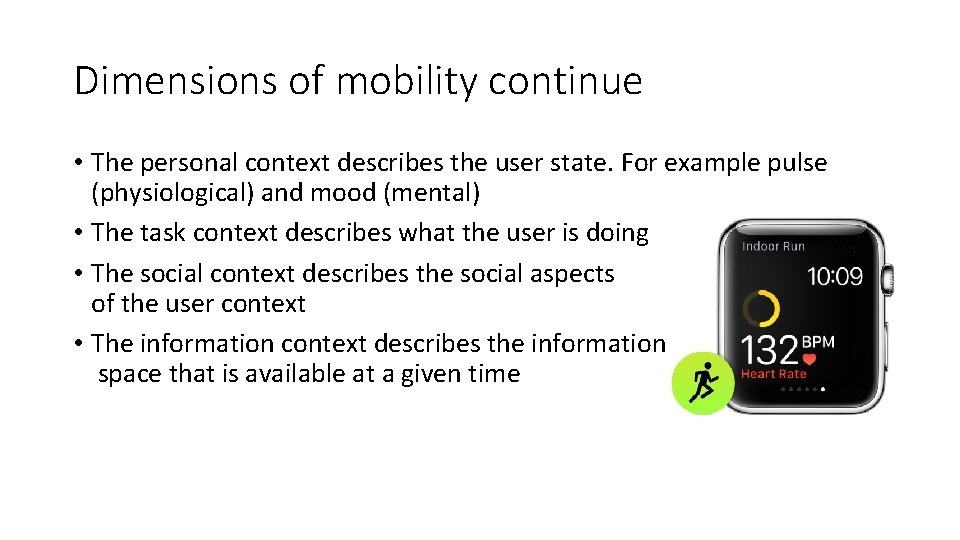
Dimensions of mobility continue • The personal context describes the user state. For example pulse (physiological) and mood (mental) • The task context describes what the user is doing • The social context describes the social aspects of the user context • The information context describes the information space that is available at a given time

Differences between mobile and traditional information systems • User orientation and personalisation • Hardware differences • Tailored user interface • Wider user group • Technological aspects • Limited computational power • Use of mobile network • Methodology for development and operations. • Ideas should not be limited by technological limitations
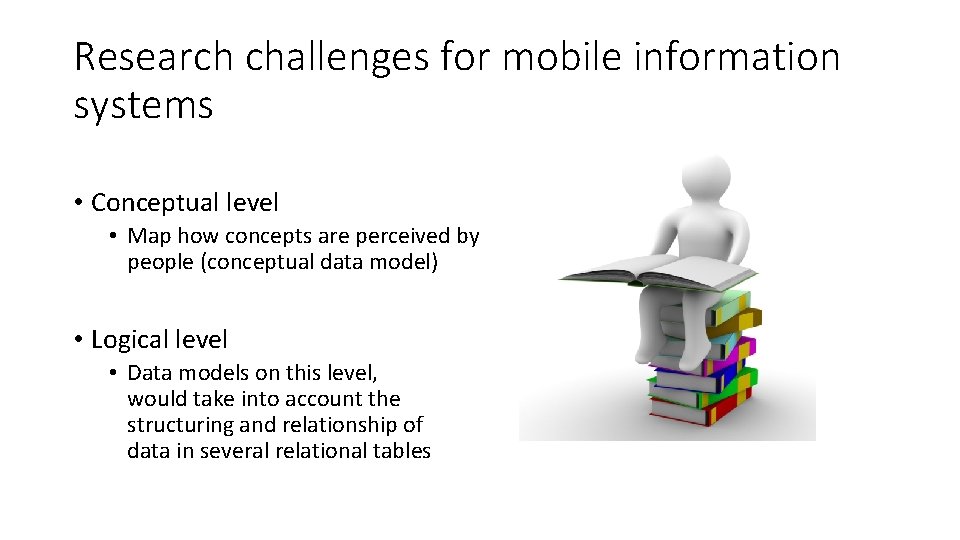
Research challenges for mobile information systems • Conceptual level • Map how concepts are perceived by people (conceptual data model) • Logical level • Data models on this level, would take into account the structuring and relationship of data in several relational tables
Conceptual level • User orientation and personalisation • Support teamwork • Interaction machines on multi-channel platform • Interactive models • Methodology for development to ensure organisational return • Applications and services can be accessed with ease and at little cost. • Support for change is vital
Logical level • User orientation and personalisation • Separation between content and medium • Create common models for user interface • Technological aspects including convergence and multi-channel support • Breath of implementation platforms warrent generalization and specialization • Methodology for development to ensure organisational return • Not limited to current technology
Research areas and mobility dimensions • Modelling-related aspects • User-related aspects. • Technological aspects
- Slides: 10