
Research and Conservation on the Lower Brule Indian
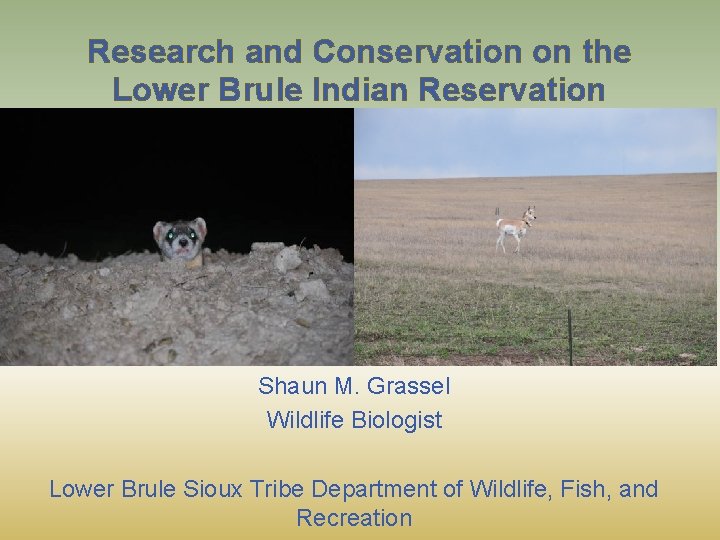
Research and Conservation on the Lower Brule Indian Reservation Shaun M. Grassel Wildlife Biologist Lower Brule Sioux Tribe Department of Wildlife, Fish, and Recreation
Outline of Presentation • • Location Department information Management activities overview Research and Projects • Black-footed ferrets • Pronghorn
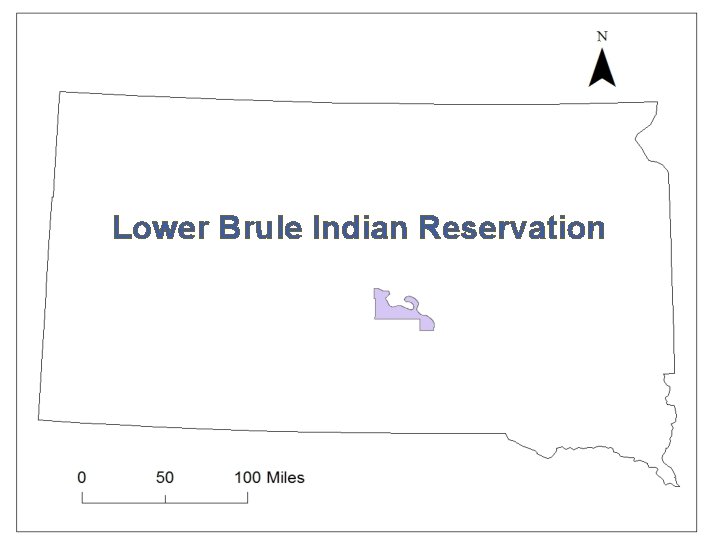
Lower Brule Indian Reservation
Department of Wildlife, Fish, and Recreation • 9 full-time staff: Director, 2 administrative assistants, 3 Biologists (Habitat, Wildlife, Assistant), 2 Conservation Officers, 1 Bison Manager • Created in the early 1980’s as an outfitter/hunting lodge • Focus changed to wildlife management in 1993
Management Activities • Big Game (Mule deer, white-tailed deer, pronghorn) Aerial surveys to estimate population size, recruitment surveys, estimate harvest, hunting recommendations • Upland Game (Greater prairie chicken, sharp-tailed grouse, pheasant) – lek surveys, roadside brood surveys, estimate harvest, hunting recommendations • Habitat – noxious weed and cedar control, grassland wetland restoration, shelterbelt and food plot plantings • Bison and elk management
Conservation Projects • Prairie dog conservation – colony mapping, estimate harvest, plague management, translocations, sylvatic plague vaccine field trials • Swift fox reintroduction • Black-footed ferret reintroduction
Research Activities • Ecological relationships of black-footed ferrets, badgers, and black-tailed prairie dogs • Resource selection, survival rates, and seasonal movements of a declining pronghorn population • Habitat characteristics of chestnut-collared longspurs • Demographics of burrowing owls and recreational prairie dog shooting
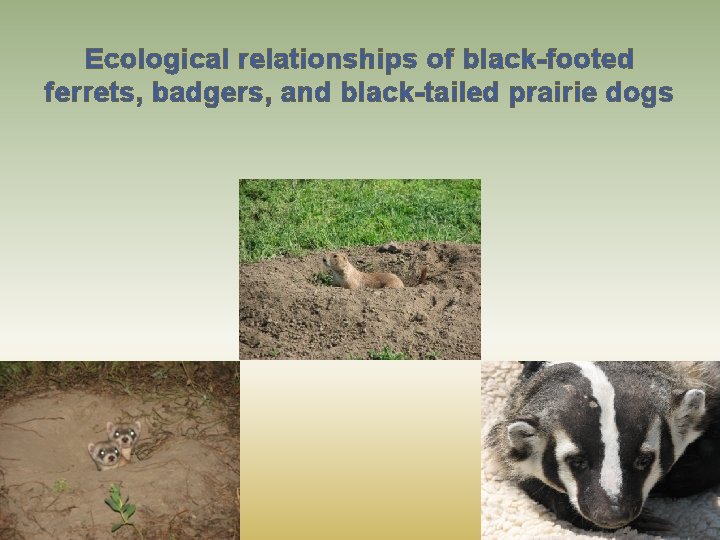
Ecological relationships of black-footed ferrets, badgers, and black-tailed prairie dogs
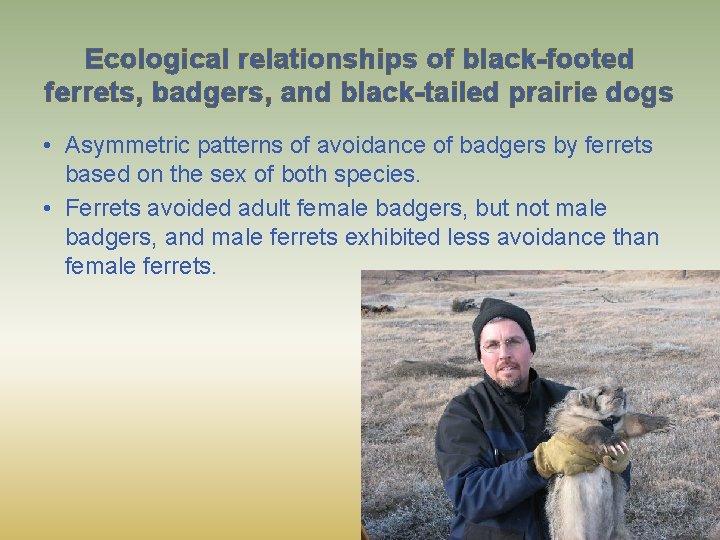
Ecological relationships of black-footed ferrets, badgers, and black-tailed prairie dogs • Asymmetric patterns of avoidance of badgers by ferrets based on the sex of both species. • Ferrets avoided adult female badgers, but not male badgers, and male ferrets exhibited less avoidance than female ferrets.
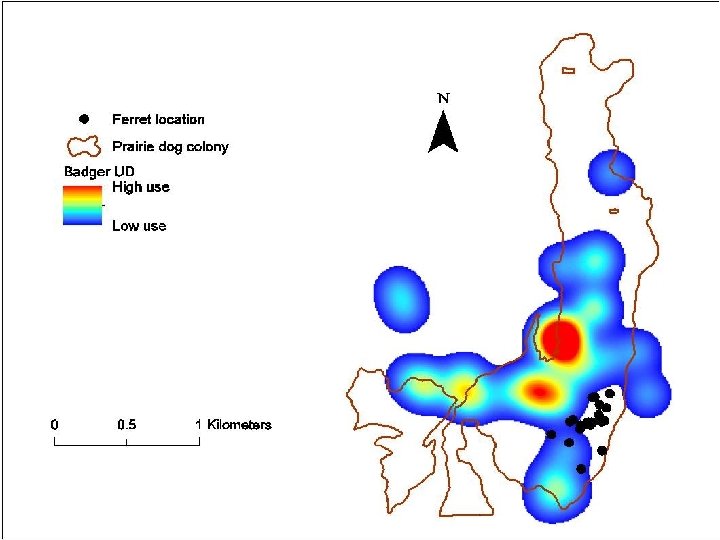
Ecological relationships of black-footed ferrets, badgers, and black-tailed prairie dogs • Asymmetric patterns of avoidance of badgers by ferrets based on the sex of both species. • Ferrets avoided adult female badgers, but not male badgers, and male ferrets exhibited less avoidance than female ferrets. • Additionally, avoidance decreased with increasing densities of prairie dogs.
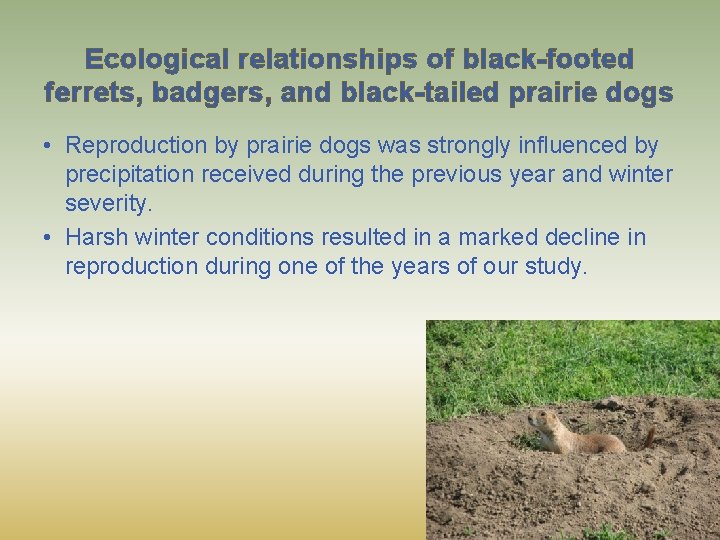
Ecological relationships of black-footed ferrets, badgers, and black-tailed prairie dogs • Reproduction by prairie dogs was strongly influenced by precipitation received during the previous year and winter severity. • Harsh winter conditions resulted in a marked decline in reproduction during one of the years of our study.
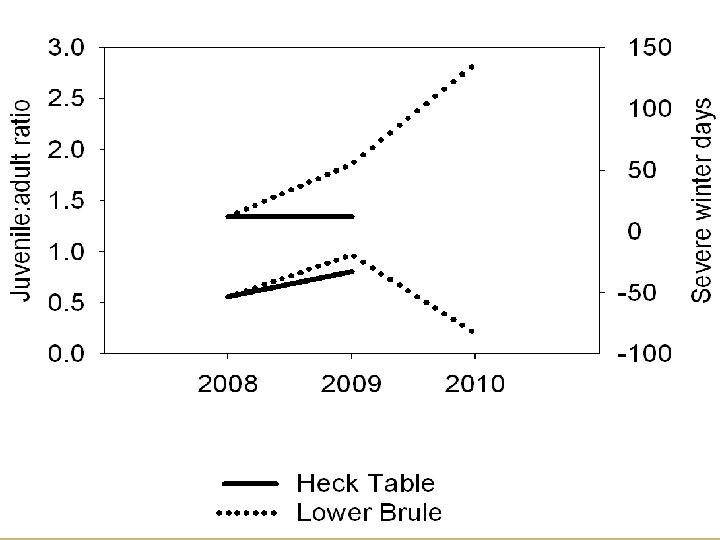
Ecological relationships of black-footed ferrets, badgers, and black-tailed prairie dogs • Reproduction by prairie dogs was strongly influenced by precipitation received during the previous year and winter severity. • Harsh winter conditions resulted in a marked decline in reproduction during one of the years of our study. • Despite a marked decrease in the reproduction of prairie dogs, reproduction by ferrets varied little across years of our study.
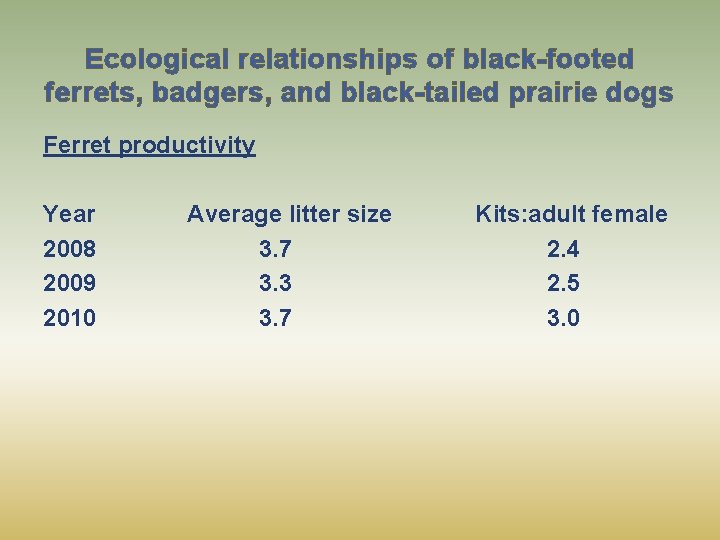
Ecological relationships of black-footed ferrets, badgers, and black-tailed prairie dogs Ferret productivity Year 2008 2009 2010 Average litter size 3. 7 3. 3 3. 7 Kits: adult female 2. 4 2. 5 3. 0
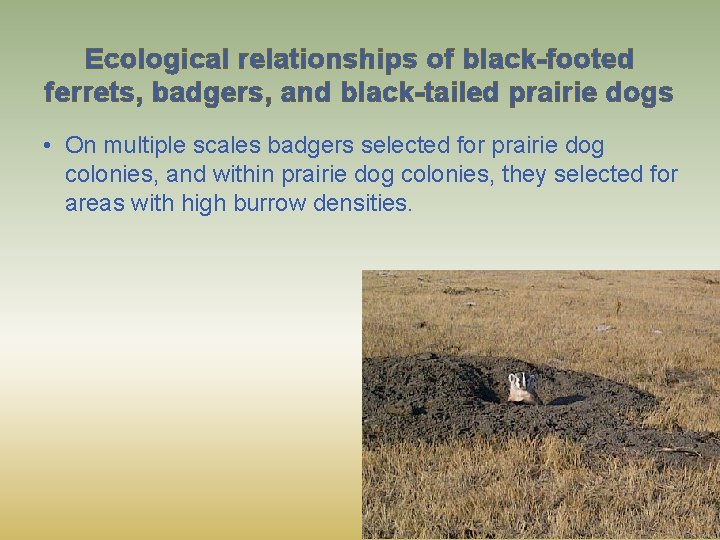
Ecological relationships of black-footed ferrets, badgers, and black-tailed prairie dogs • On multiple scales badgers selected for prairie dog colonies, and within prairie dog colonies, they selected for areas with high burrow densities.
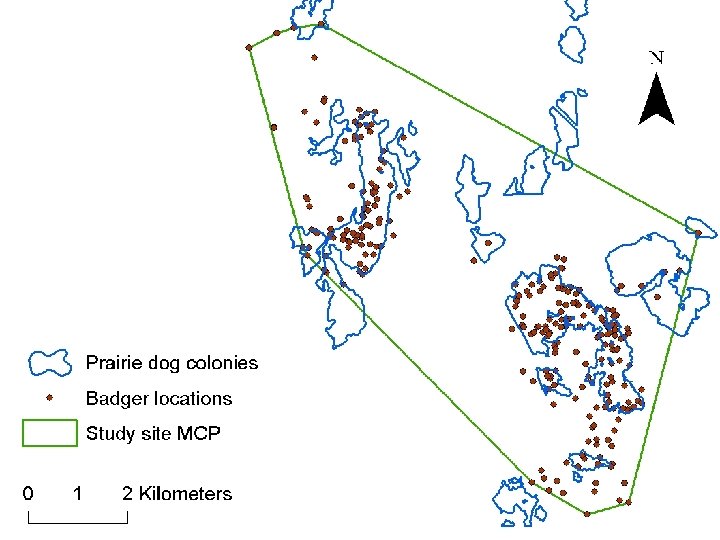
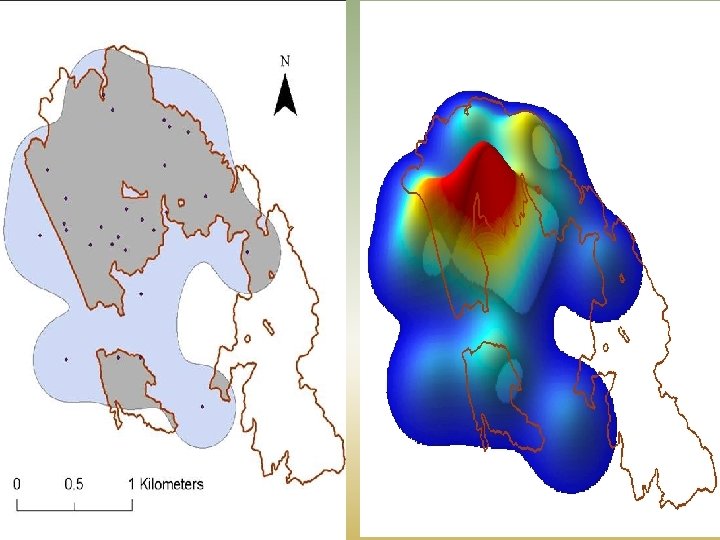
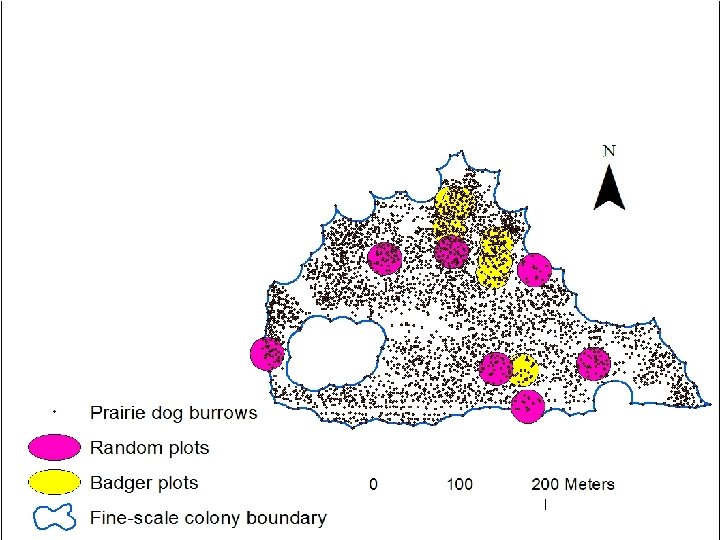
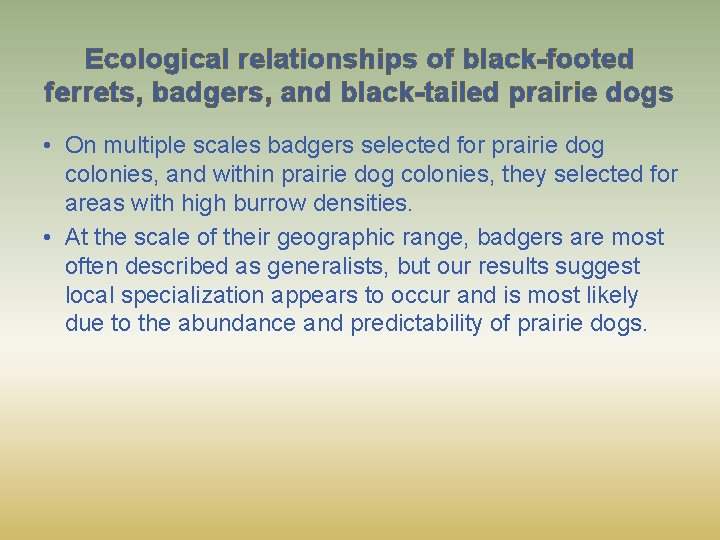
Ecological relationships of black-footed ferrets, badgers, and black-tailed prairie dogs • On multiple scales badgers selected for prairie dog colonies, and within prairie dog colonies, they selected for areas with high burrow densities. • At the scale of their geographic range, badgers are most often described as generalists, but our results suggest local specialization appears to occur and is most likely due to the abundance and predictability of prairie dogs.
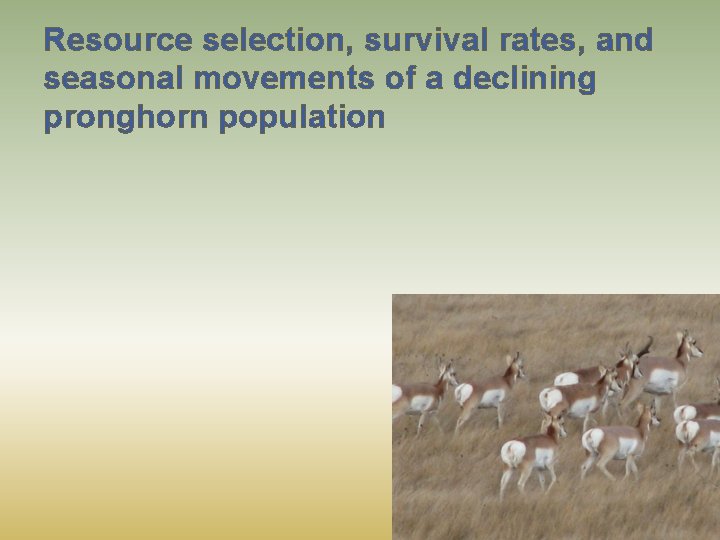
Resource selection, survival rates, and seasonal movements of a declining pronghorn population
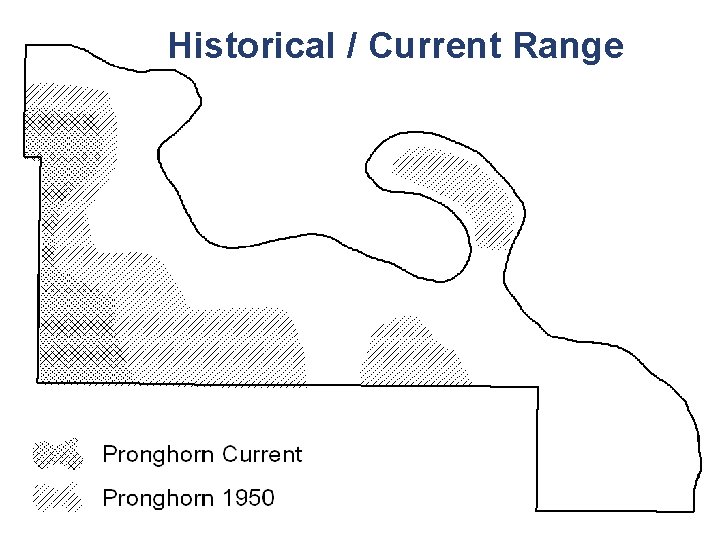
Historical / Current Range
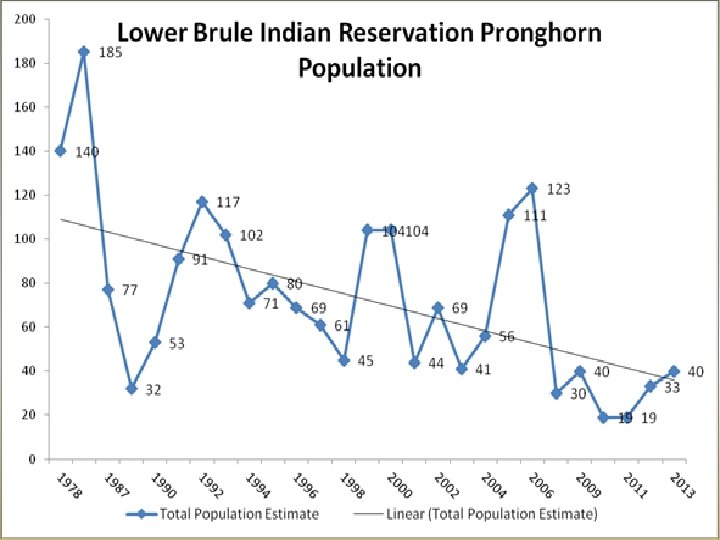
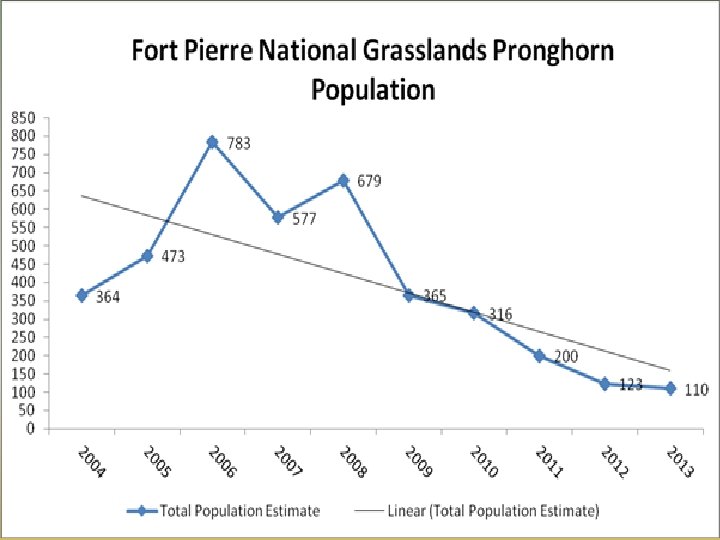
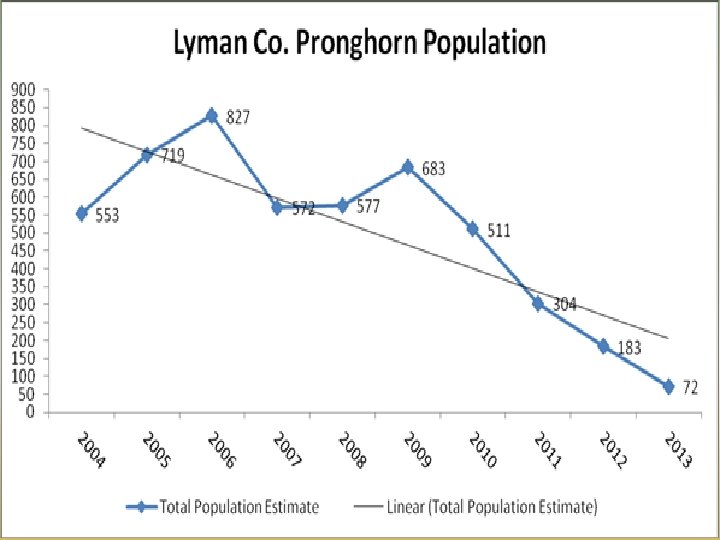
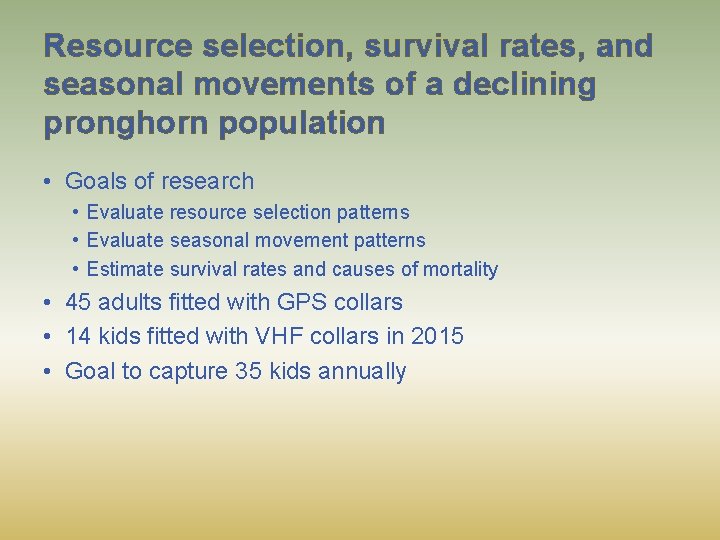
Resource selection, survival rates, and seasonal movements of a declining pronghorn population • Goals of research • Evaluate resource selection patterns • Evaluate seasonal movement patterns • Estimate survival rates and causes of mortality • 45 adults fitted with GPS collars • 14 kids fitted with VHF collars in 2015 • Goal to capture 35 kids annually
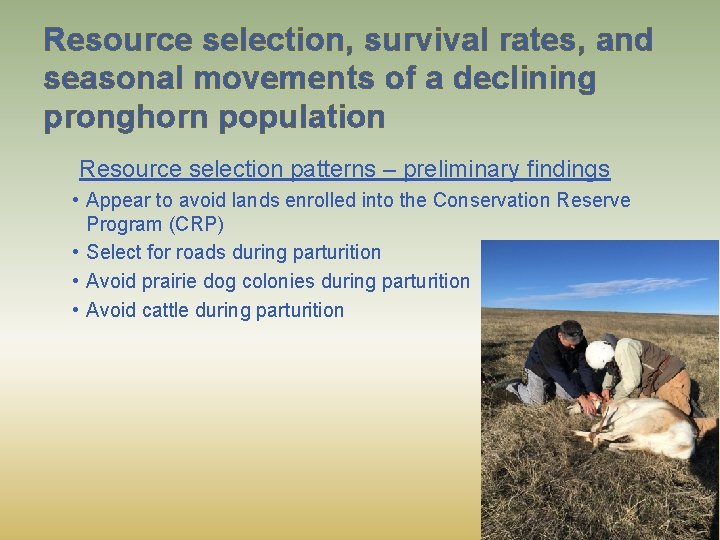
Resource selection, survival rates, and seasonal movements of a declining pronghorn population Resource selection patterns – preliminary findings • Appear to avoid lands enrolled into the Conservation Reserve Program (CRP) • Select for roads during parturition • Avoid prairie dog colonies during parturition • Avoid cattle during parturition
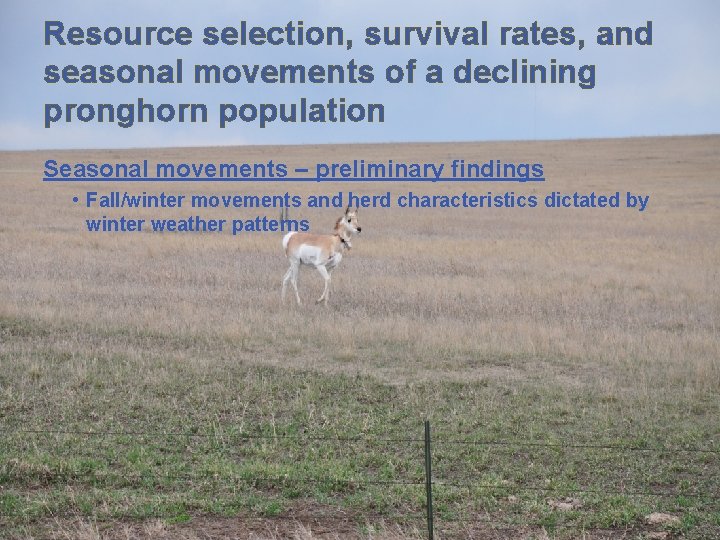
Resource selection, survival rates, and seasonal movements of a declining pronghorn population Seasonal movements – preliminary findings • Fall/winter movements and herd characteristics dictated by winter weather patterns
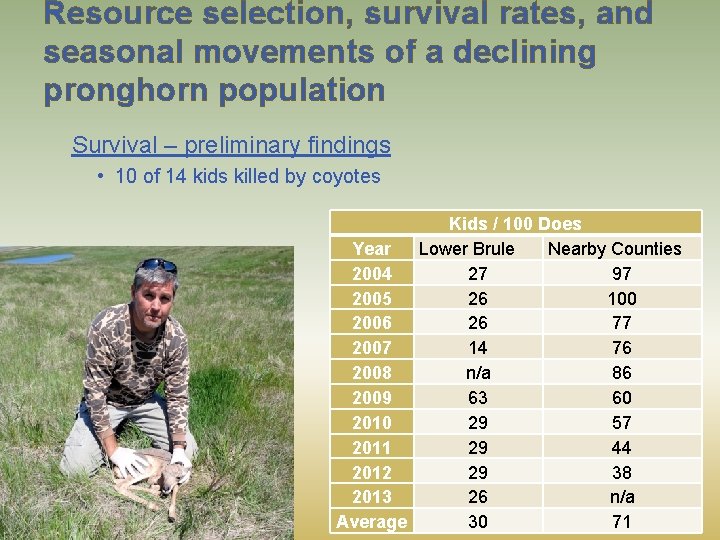
Resource selection, survival rates, and seasonal movements of a declining pronghorn population Survival – preliminary findings • 10 of 14 kids killed by coyotes Kids / 100 Does Year Lower Brule Nearby Counties 2004 27 97 2005 26 100 2006 26 77 2007 14 76 2008 n/a 86 2009 63 60 2010 29 57 2011 29 44 2012 29 38 2013 26 n/a Average 30 71
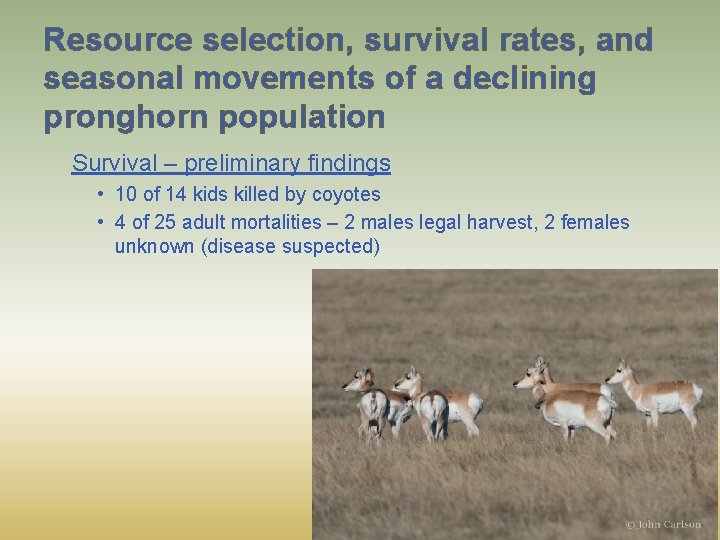
Resource selection, survival rates, and seasonal movements of a declining pronghorn population Survival – preliminary findings • 10 of 14 kids killed by coyotes • 4 of 25 adult mortalities – 2 males legal harvest, 2 females unknown (disease suspected)
- Slides: 31