
Rescue Simulation http ce sharif eduariance sharif edu
- Slides: 36
Rescue Simulation http: //ce. sharif. edu/~arian@ce. sharif. edu
Overview of Presentation n n Why do we use simulation? Rescue simulation problem. The system overview. Open Projects.
Simulation systems in Action: Why do we Simulate? n n Gaining extra information from the system. Experience upon the simulated system.
Simulation Systems in Action: n n Building low level simulated system. Applying the algorithms based upon the below level.
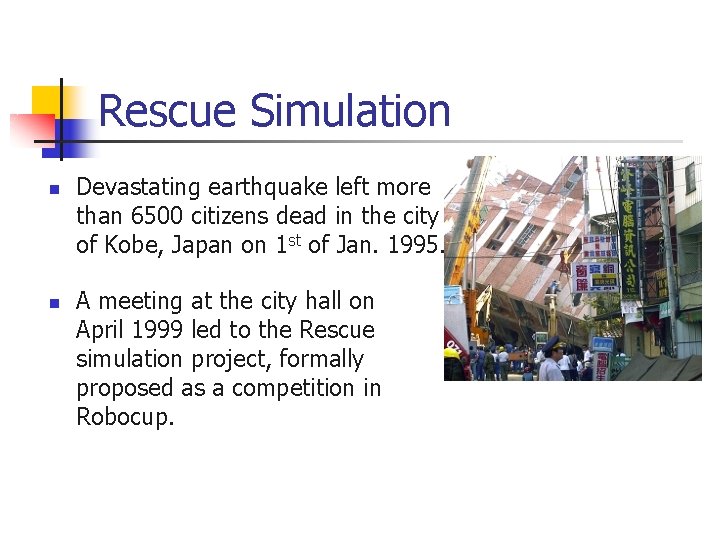
Rescue Simulation n n Devastating earthquake left more than 6500 citizens dead in the city of Kobe, Japan on 1 st of Jan. 1995. A meeting at the city hall on April 1999 led to the Rescue simulation project, formally proposed as a competition in Robocup.
Rescue simulation design issues n n n We need a general world model(city simulation issue). We need to model the disaster (disaster formulation). We need to act upon the situation.
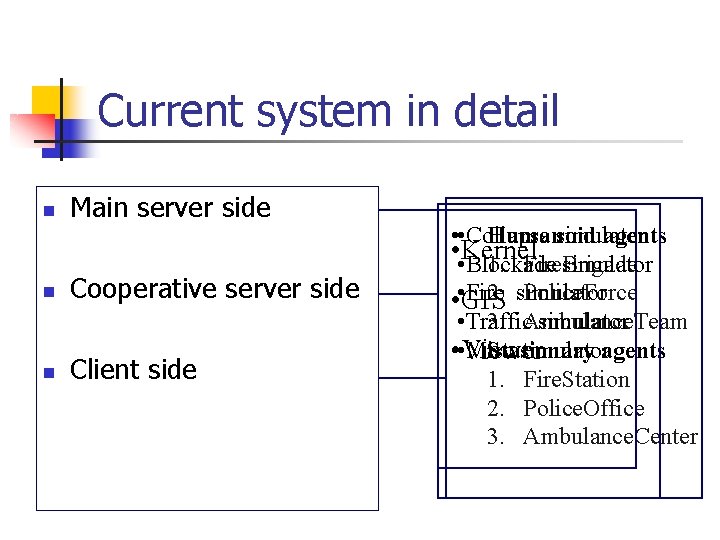
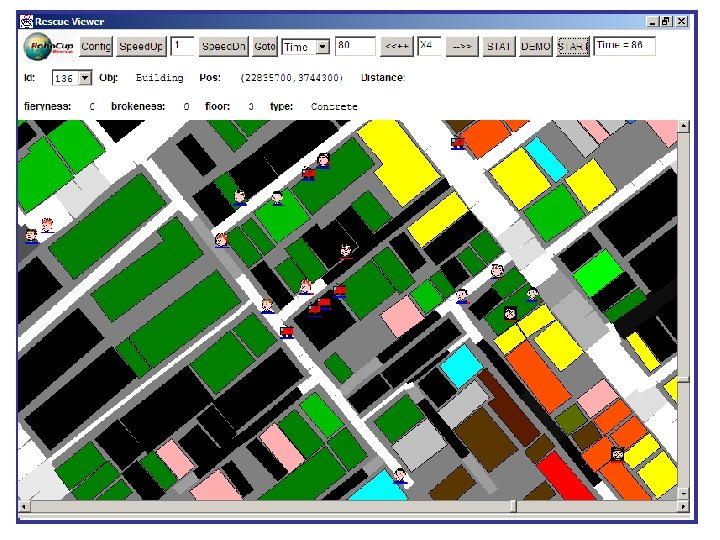
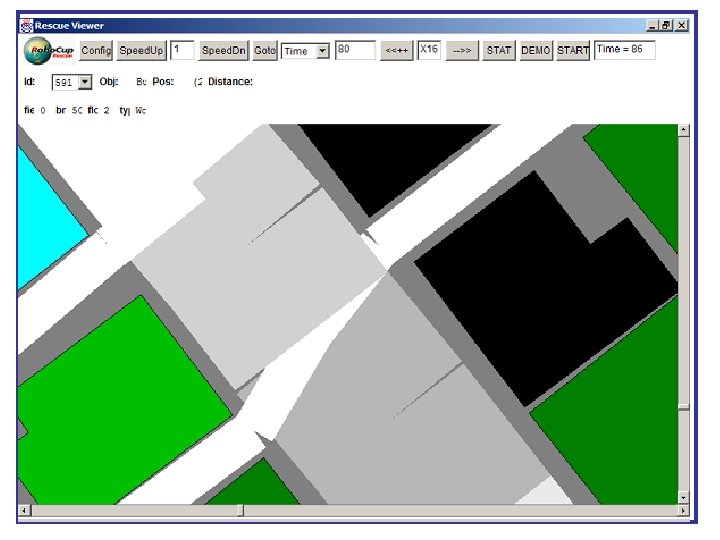
Current system in detail n Main server side n Cooperative server side n Client side • • Collapse Humanoid simulator agents • • Kernel Blockade 1. Fire. Brigade simulator Fire 2. simulator Police. Force • • GIS • Traffic 3. Ambulance. Team simulator Misc Stationary simulatoragents • • Viewer 1. Fire. Station 2. Police. Office 3. Ambulance. Center
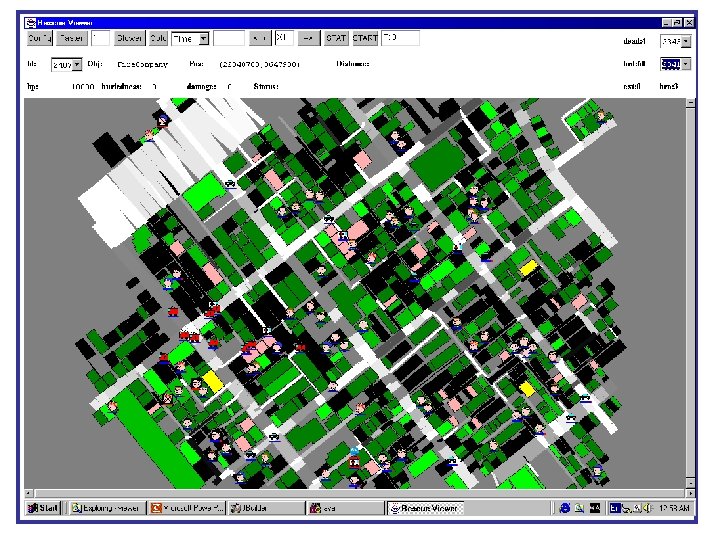
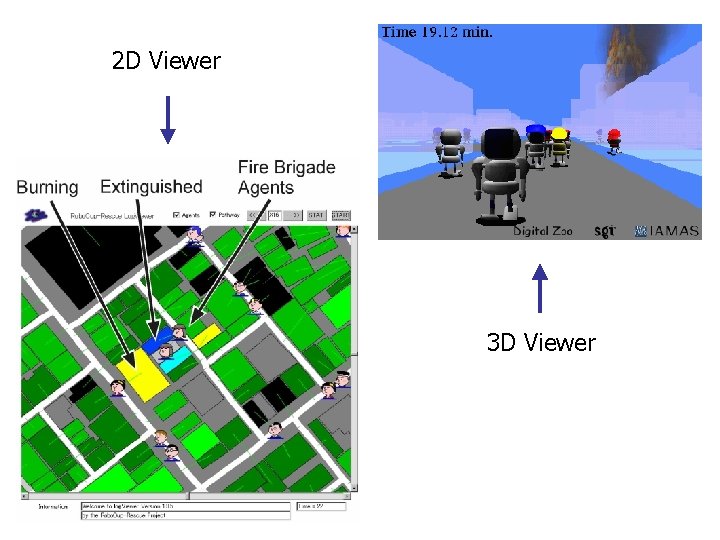
2 D Viewer 3 D Viewer
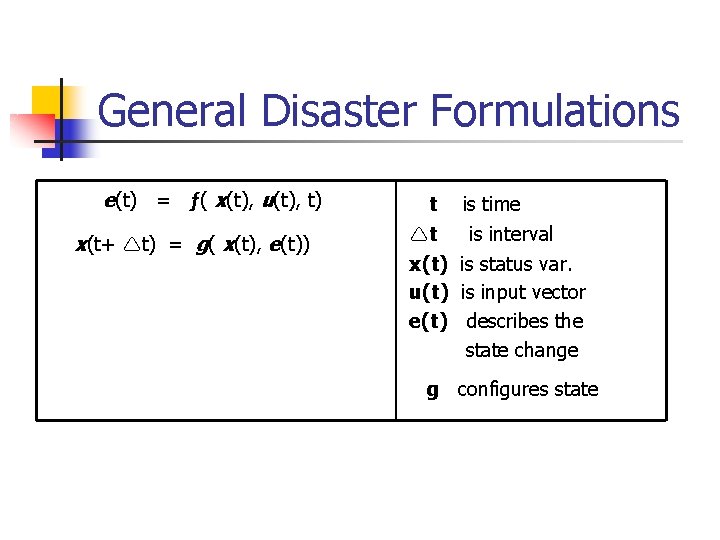
General Disaster Formulations e(t) = ƒ( x(t), u(t), t) x(t+ t) = g( x(t), e(t)) t t x(t) u(t) e(t) is time is interval is status var. is input vector describes the state change g configures state
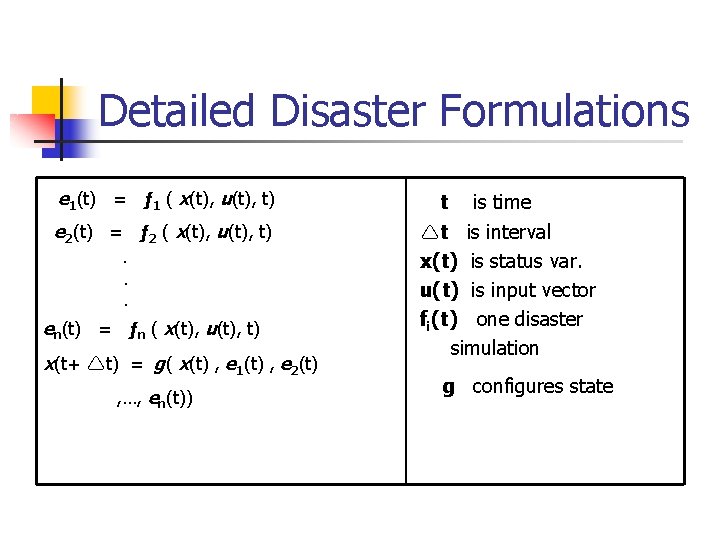
Detailed Disaster Formulations e 1(t) = ƒ 1 ( x(t), u(t), t) e 2(t) = ƒ 2 ( x(t), u(t), t). . . en(t) = ƒn ( x(t), u(t), t) x(t+ t) = g( x(t) , e 1(t) , e 2(t) , …, en(t)) t is time t is interval x(t) is status var. u(t) is input vector fi(t) one disaster simulation g configures state
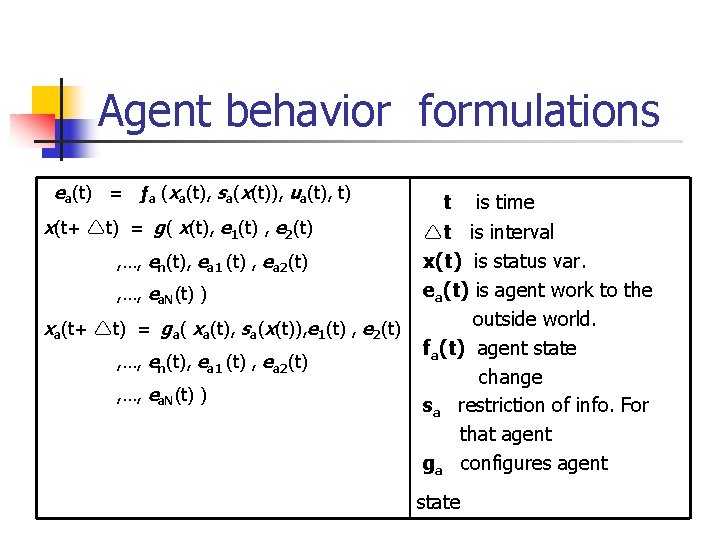
Agent behavior formulations ea(t) = ƒa (xa(t), sa(x(t)), ua(t), t) x(t+ t) = g( x(t), e 1(t) , e 2(t) , …, en(t), ea 1 (t) , ea 2(t) , …, ea. N(t) ) xa(t+ t) = ga( xa(t), sa(x(t)), e 1(t) , e 2(t) , …, en(t), ea 1 (t) , ea 2(t) , …, ea. N(t) ) t is time t is interval x(t) is status var. ea(t) is agent work to the outside world. fa(t) agent state change sa restriction of info. For that agent ga configures agent state
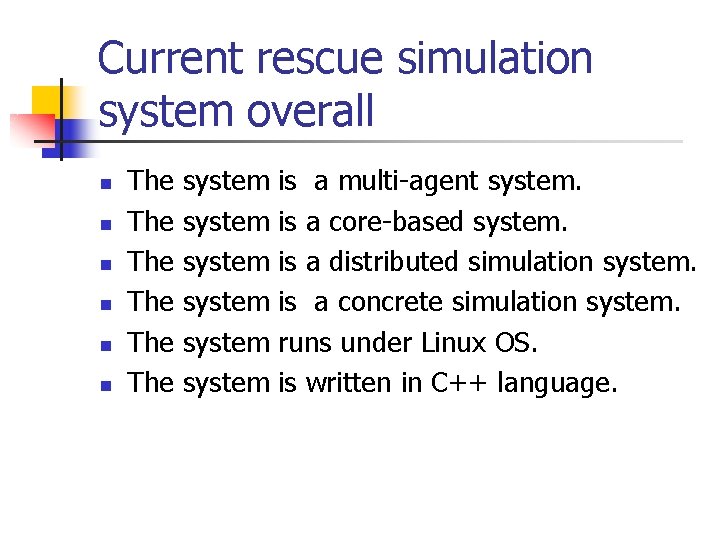
Current rescue simulation system overall n n n The The The system system is a multi-agent system. is a core-based system. is a distributed simulation system. is a concrete simulation system. runs under Linux OS. is written in C++ language.
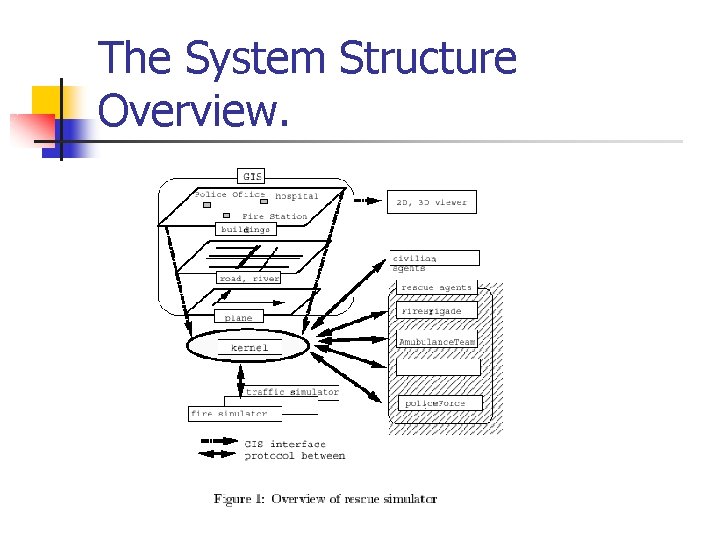
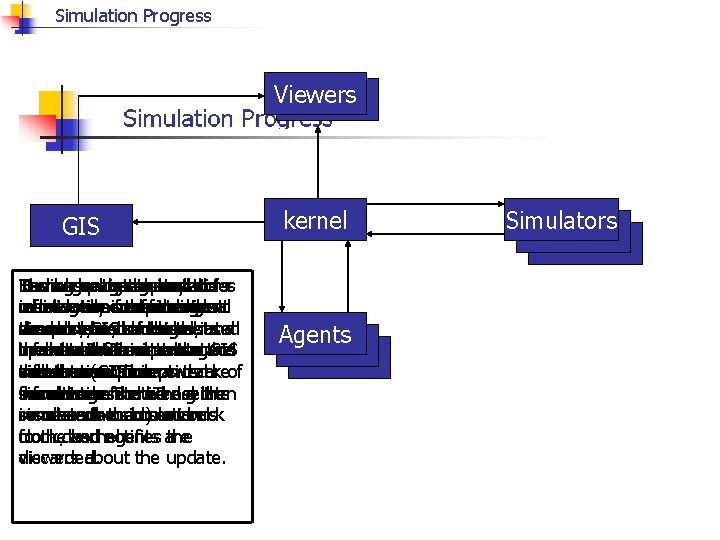
The System Structure Overview.
Simulation Progress Viewers kernel GIS Having Kernel Each The component kernel agent sends being gathers integrates module sensory requested simulators all decides thefor what actions messages individually results information received sent compute tothe from each from individual theagent how the module. most should modules, the component viewers, world take, GIS and will simulators, and sends of change broadcasts this send thebased itand to information them upon broadcasts updated kernel. its to the internal information This them is component visual message status to the to and the GIS is information. called simulators. the and viewers. commands the command. component (GIS Commands This keeps received track areof information sometimes from simulators. the changes the kernel. filtered The isinmixed the kernel These e. g with then late some errors. commands results increase simulated are the world). then orsimulation commands sent back from to clock, thedead and kernel notifies agents are the discarded. viewers about the update. kernel Agents kernel Simulators
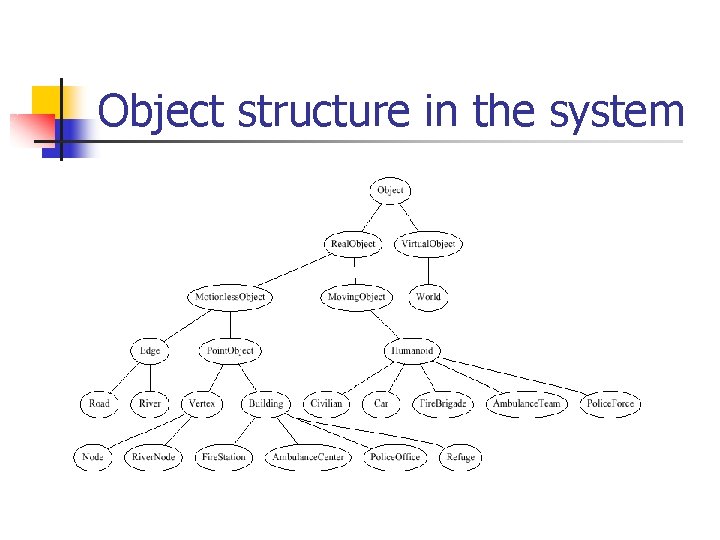
Object structure in the system
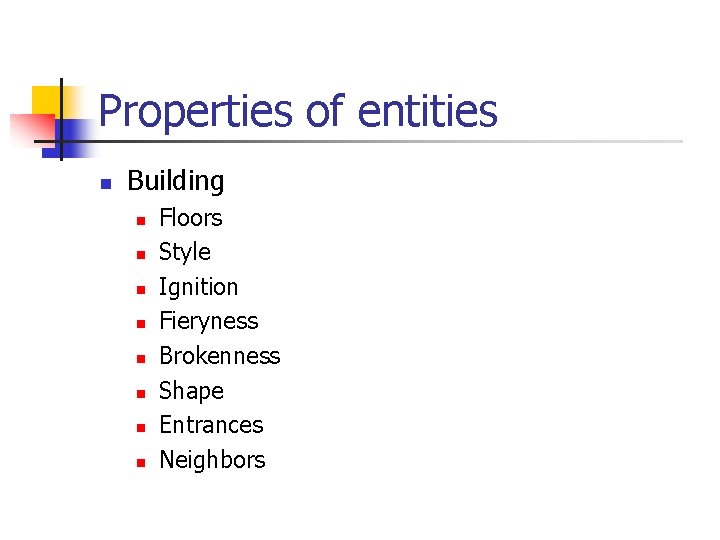
Properties of entities n Building n n n n Floors Style Ignition Fieryness Brokenness Shape Entrances Neighbors
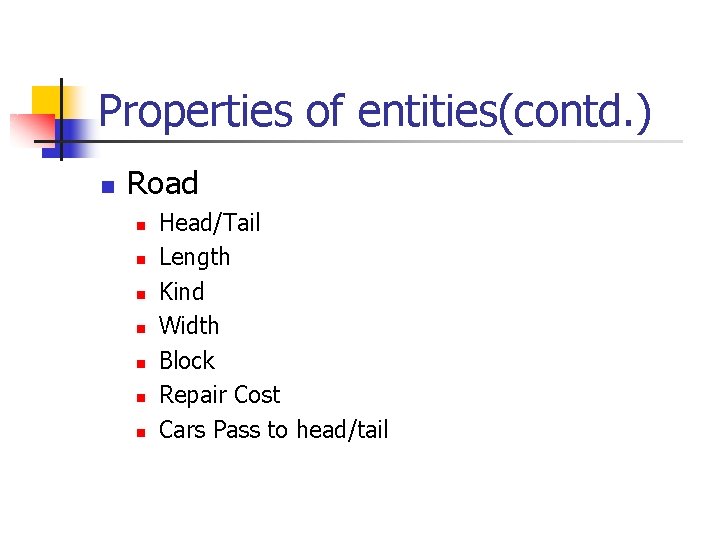
Properties of entities(contd. ) n Road n n n n Head/Tail Length Kind Width Block Repair Cost Cars Pass to head/tail
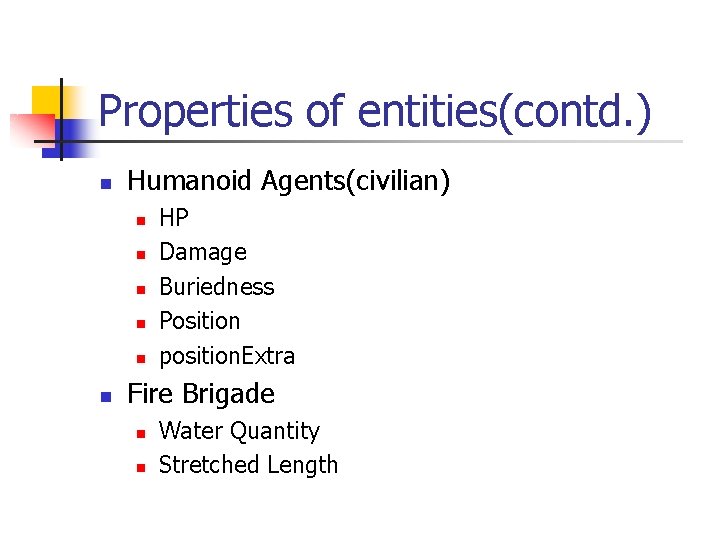
Properties of entities(contd. ) n Humanoid Agents(civilian) n n n HP Damage Buriedness Position position. Extra Fire Brigade n n Water Quantity Stretched Length
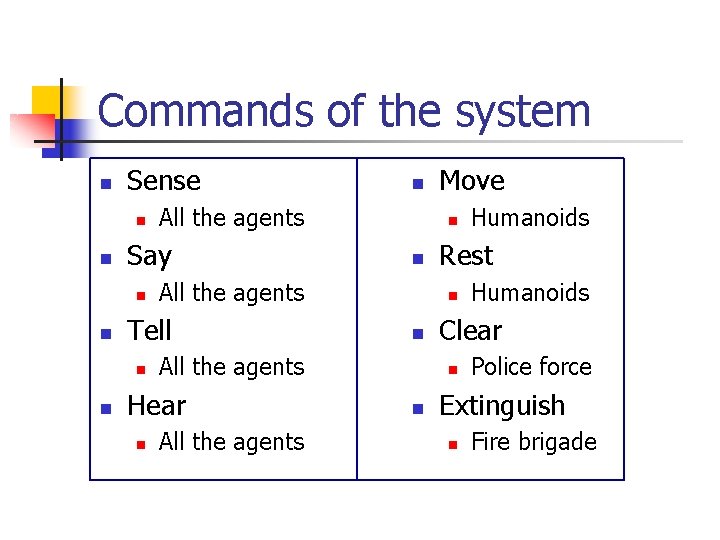
Commands of the system n Sense n n n All the agents Humanoids Clear n n Humanoids Rest n All the agents Hear Move n All the agents Tell n n All the agents Say n n Police force Extinguish n Fire brigade
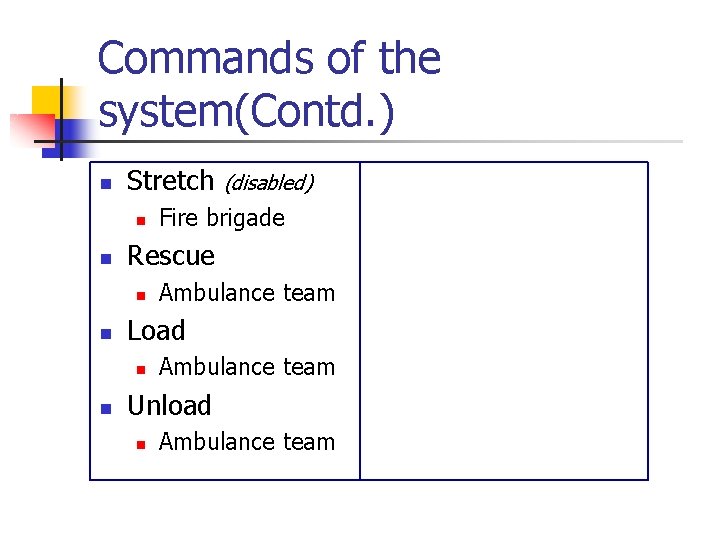
Commands of the system(Contd. ) n Stretch n n Ambulance team Load n n Fire brigade Rescue n n (disabled) Ambulance team Unload n Ambulance team
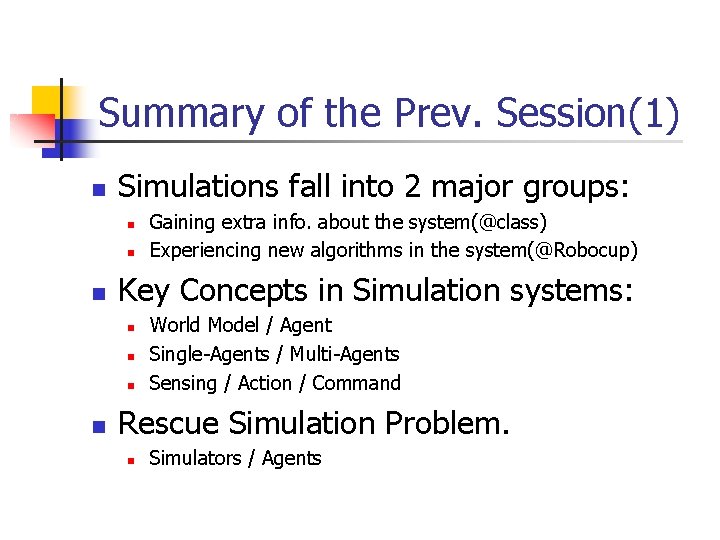
Summary of the Prev. Session(1) n Simulations fall into 2 major groups: n n n Key Concepts in Simulation systems: n n Gaining extra info. about the system(@class) Experiencing new algorithms in the system(@Robocup) World Model / Agent Single-Agents / Multi-Agents Sensing / Action / Command Rescue Simulation Problem. n Simulators / Agents
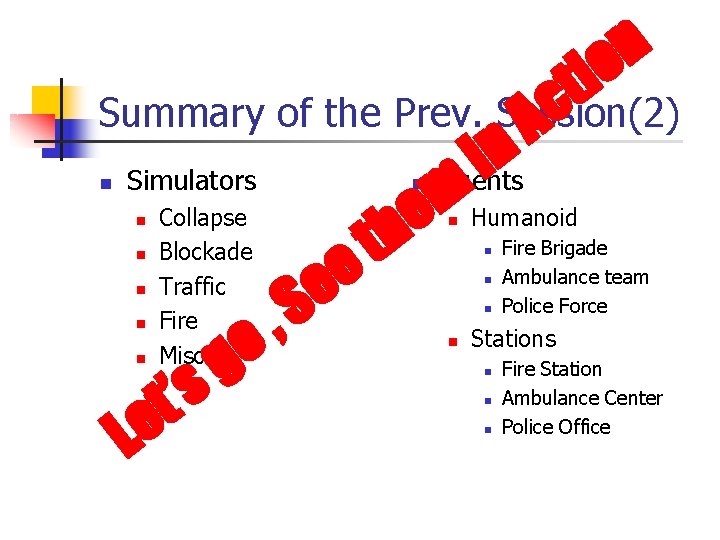
n io t c Summary of the Prev. Session(2) A n i Simulators Agents m e h t e e S , o g ’t s Le n n n n Collapse Blockade Traffic Fire Misc n Humanoid n n Fire Brigade Ambulance team Police Force Stations n n n Fire Station Ambulance Center Police Office
Our side of the story
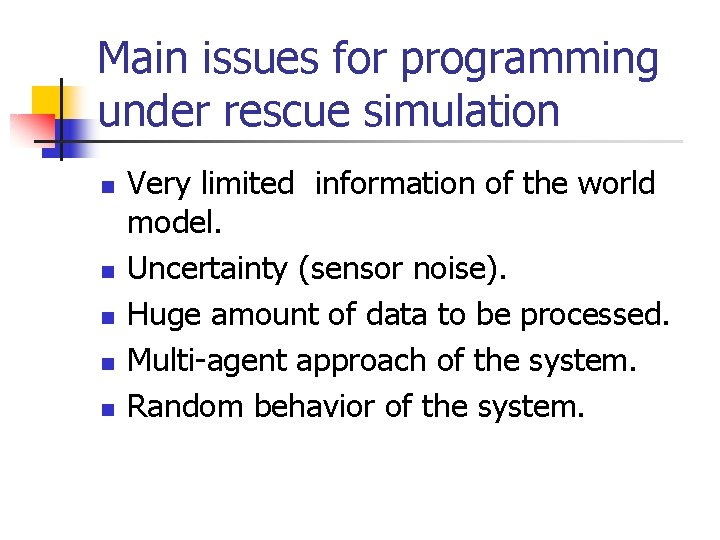
Main issues for programming under rescue simulation n n Very limited information of the world model. Uncertainty (sensor noise). Huge amount of data to be processed. Multi-agent approach of the system. Random behavior of the system.
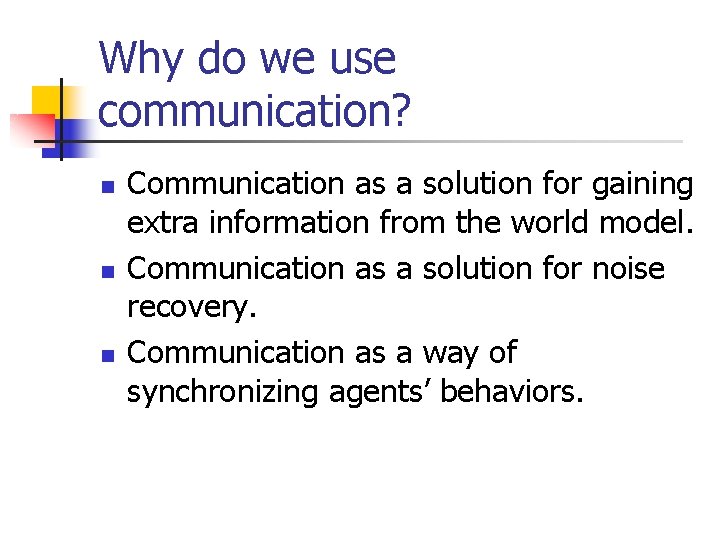
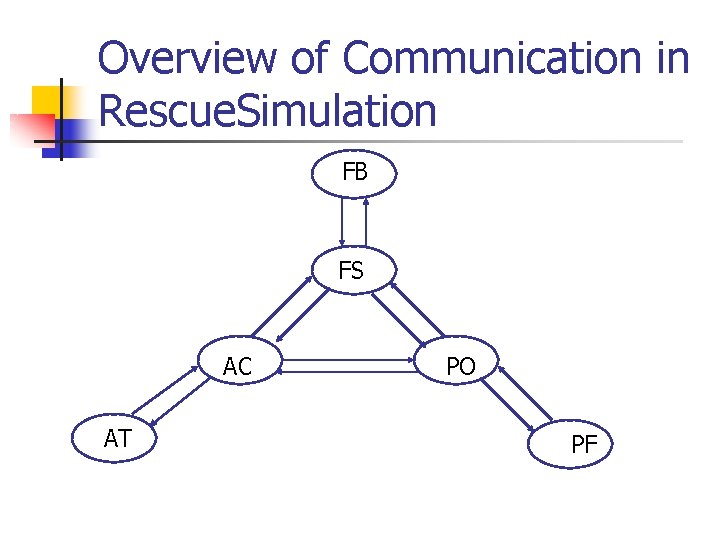
Why do we use communication? n n n Communication as a solution for gaining extra information from the world model. Communication as a solution for noise recovery. Communication as a way of synchronizing agents’ behaviors.
Overview of Communication in Rescue. Simulation FB FS AC AT PO PF
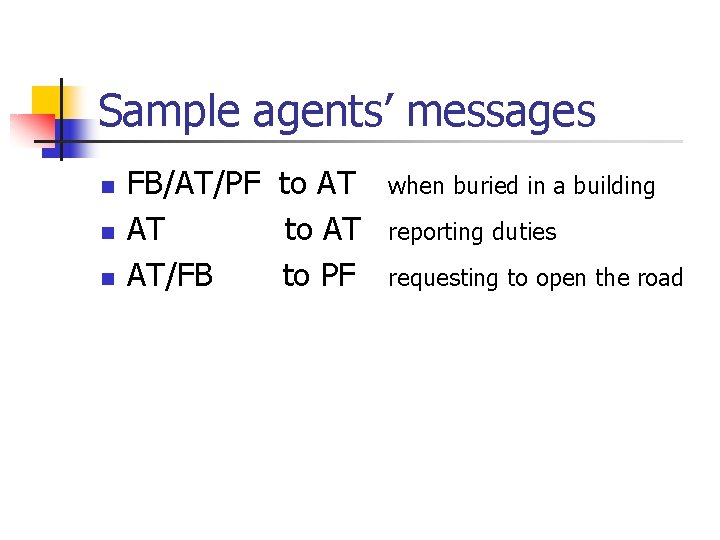
Sample agents’ messages n n n FB/AT/PF to AT AT/FB to PF when buried in a building reporting duties requesting to open the road
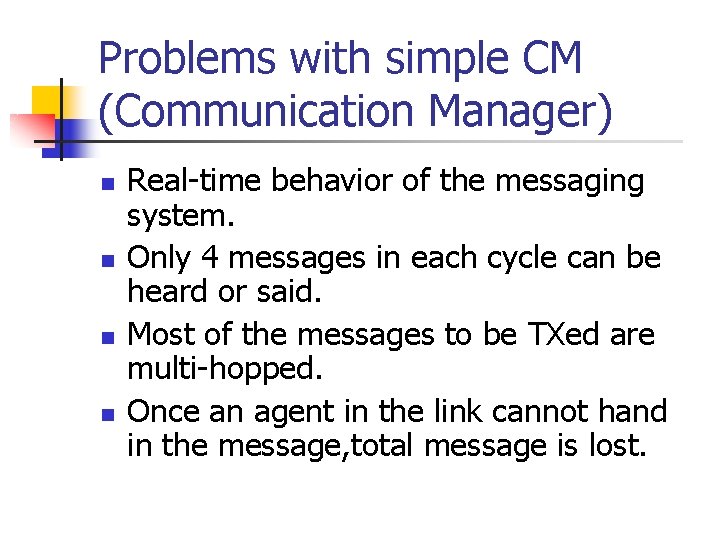
Problems with simple CM (Communication Manager) n n Real-time behavior of the messaging system. Only 4 messages in each cycle can be heard or said. Most of the messages to be TXed are multi-hopped. Once an agent in the link cannot hand in the message, total message is lost.
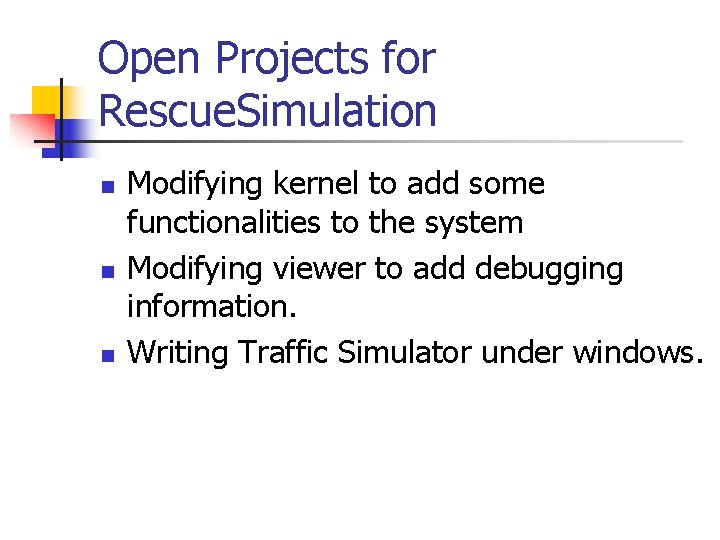
Open Projects for Rescue. Simulation n Modifying kernel to add some functionalities to the system Modifying viewer to add debugging information. Writing Traffic Simulator under windows.
Kernel Modification n Current kernel: n n n Sends position information to each agent Representable information is sent only to the viewers(it’s complete & noiseless). Id of objects is not unique for different agents.
Kernel Modification n New kernel should: n n n Send path information to each agent & the debugger. Represent able information is sent to each agent also (convert sensible information to representable information). Provide the uniqueness of Ids among the different type of agents.
Viewer Modification n Debugging info. n n Showing the path taken by each agent. (needs kernel support). A tool for comparing the noiseless information sent to viewers with noisy info sent to the agents(needs the kernel support).
Thank You! You can download this presentation at : http: //ce. sharif. edu/~arian/present. ppt Ali Nouri : http: //ce. sharif. edu/~nouri@ce. sharif. edu Arian rescue simulation team: http: //ce. sharif. edu/~arian@ce. sharif. edu