
Resale price maintenance RPM The Economics of Regulation
- Slides: 9
Resale price maintenance (RPM) The Economics of Regulation and Competition Asst. Prof. Tunç Durmaz Economics Dept. / Yildiz Technical University 30. 04. 2020
Uses of RPM 1. Solve double marginalization 2. Cope with horizontal externalities in service provision 3. Fix prices among manufacturers 4. Fix prices among retailers ▪ WHAT ARE THE WELFARE IMPLICATIONS OF THESE USES OF RPM?
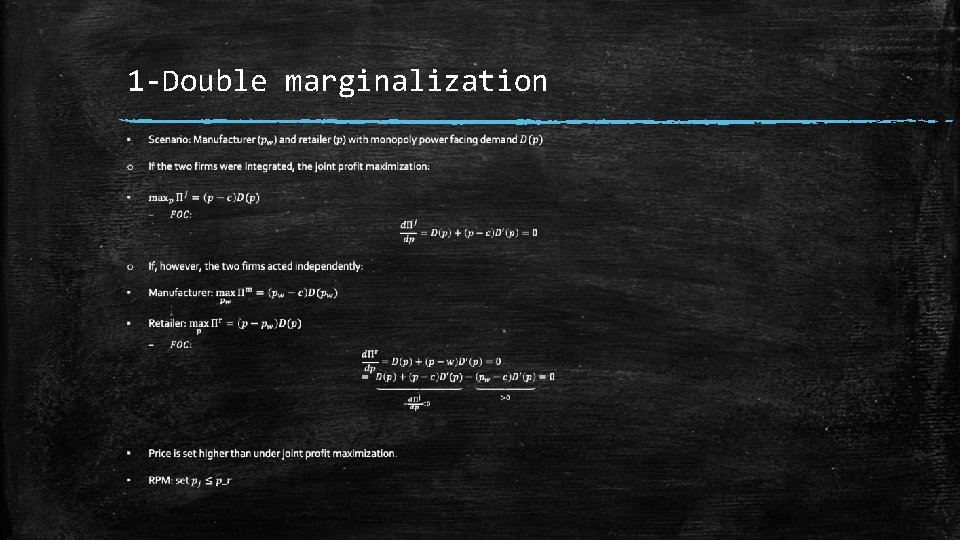
1 -Double marginalization ▪
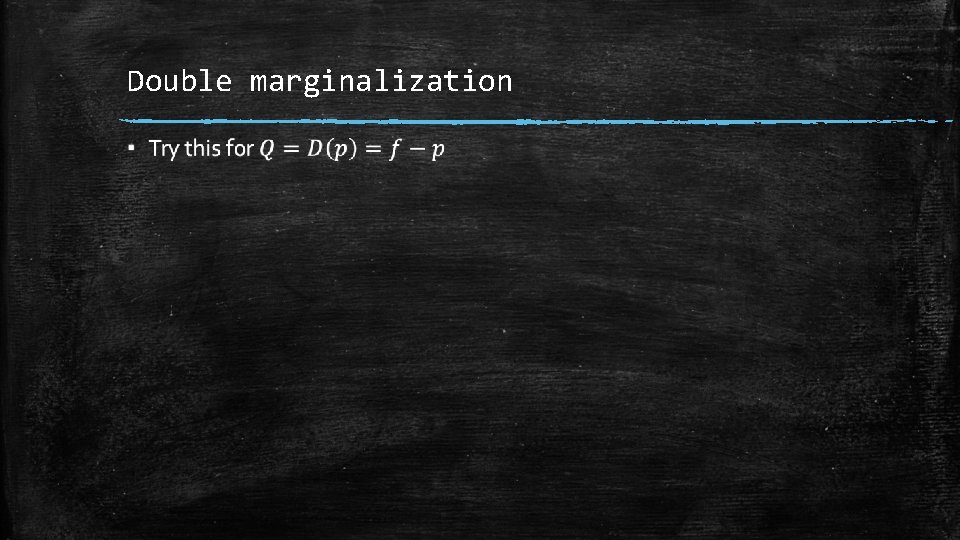
Double marginalization ▪
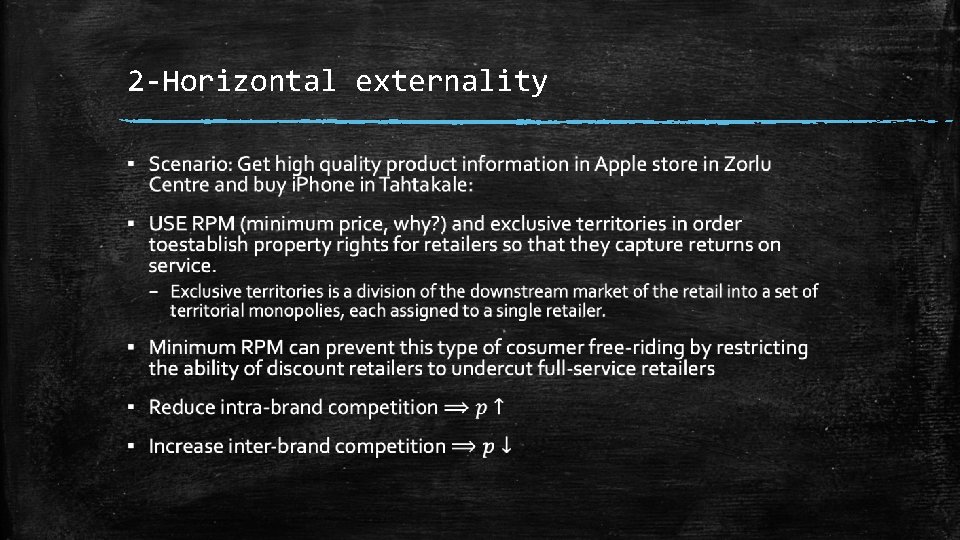
2 -Horizontal externality ▪
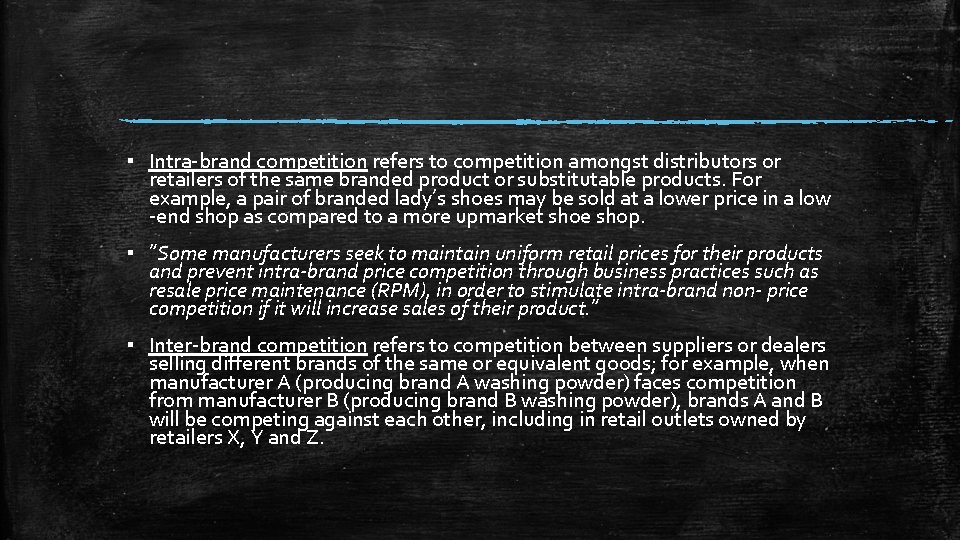
▪ Intra-brand competition refers to competition amongst distributors or retailers of the same branded product or substitutable products. For example, a pair of branded lady’s shoes may be sold at a lower price in a low -end shop as compared to a more upmarket shoe shop. ▪ ”Some manufacturers seek to maintain uniform retail prices for their products and prevent intra-brand price competition through business practices such as resale price maintenance (RPM), in order to stimulate intra-brand non- price competition if it will increase sales of their product. ” ▪ Inter-brand competition refers to competition between suppliers or dealers selling different brands of the same or equivalent goods; for example, when manufacturer A (producing brand A washing powder) faces competition from manufacturer B (producing brand B washing powder), brands A and B will be competing against each other, including in retail outlets owned by retailers X, Y and Z.
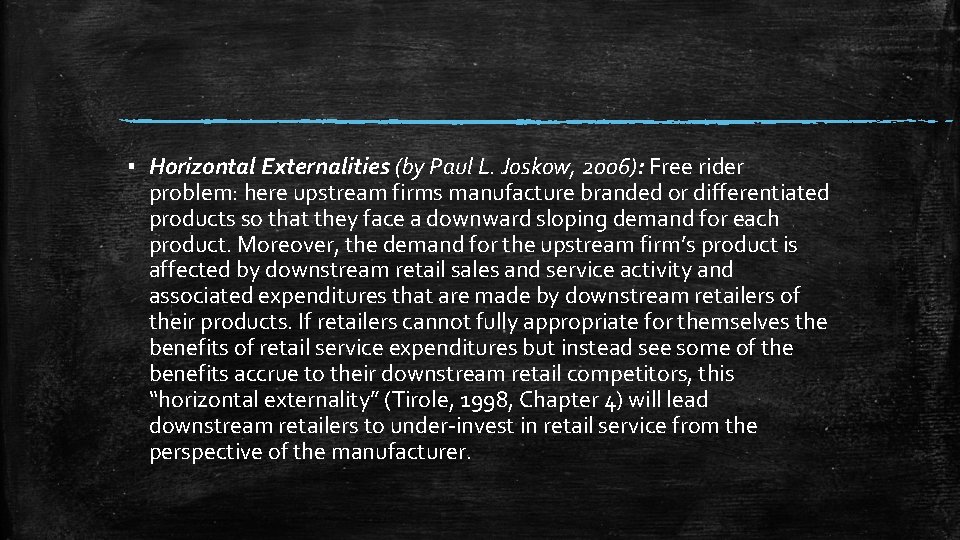
▪ Horizontal Externalities (by Paul L. Joskow, 2006): Free rider problem: here upstream firms manufacture branded or differentiated products so that they face a downward sloping demand for each product. Moreover, the demand for the upstream firm’s product is affected by downstream retail sales and service activity and associated expenditures that are made by downstream retailers of their products. If retailers cannot fully appropriate for themselves the benefits of retail service expenditures but instead see some of the benefits accrue to their downstream retail competitors, this “horizontal externality” (Tirole, 1998, Chapter 4) will lead downstream retailers to under-invest in retail service from the perspective of the manufacturer.
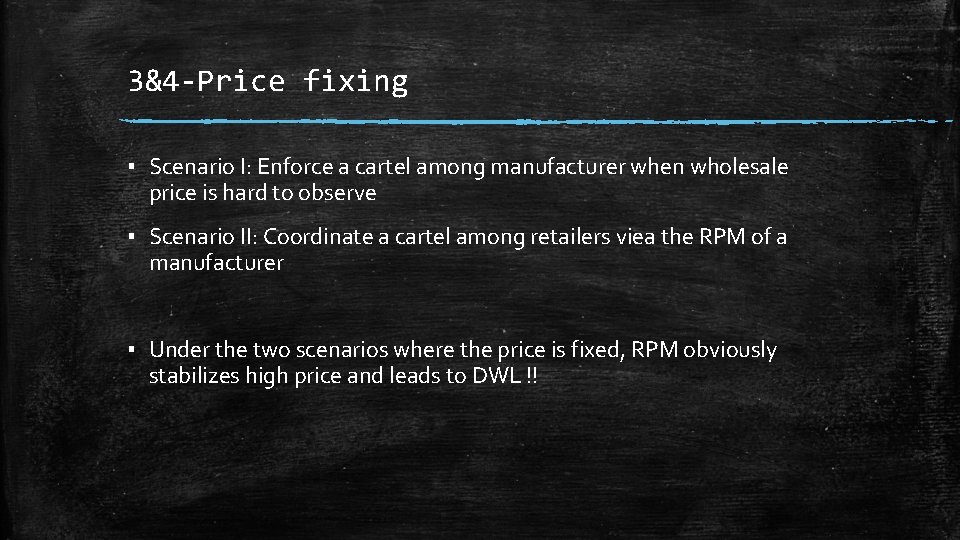
3&4 -Price fixing ▪ Scenario I: Enforce a cartel among manufacturer when wholesale price is hard to observe ▪ Scenario II: Coordinate a cartel among retailers viea the RPM of a manufacturer ▪ Under the two scenarios where the price is fixed, RPM obviously stabilizes high price and leads to DWL !!
Legal rules ▪ If RPM was used for – 1. and 2. only: we would want RPM to be per se legal – 3. and 4. only : we wold want RPM to be per se illegal – Thus, 1. – 4: RPM should be treated under the rule of reason