
Requirements Use Case Models and Narratives Dr William
- Slides: 20
Requirements: Use Case Models and Narratives Dr. William L. Honig Associate Professor Department of Computer Science Use Case Models and Narratives William L. Honig, Ph. D. , 2015 1
Requirements Tool and Technique • Use Case Model and Narratives – Alternative to natural language documents • Why? – Deep understanding of the system and how it works, what it needs to do, relationship between step and actions – Process of careful thinking / communication Some materials here incorporated and adapted from Robert V. Stumpf, Lavette C. Teague, Object-Oriented Systems Analysis and Design With UML, Pearson/Prentice Hall 2005, ISBN 013 -143406 -3 Use Case Models and Narratives William L. Honig, Ph. D. , 2015 2
Overview (continued) Use case diagrams show the use cases within the scope of the system and the actors in the environment with which each use case is associated. There is a least one use case narrative for each use case. A use case narrative is a structured narrative showing what the system must do to respond to a specific event. © 2005 Prentice Hall 1 -3
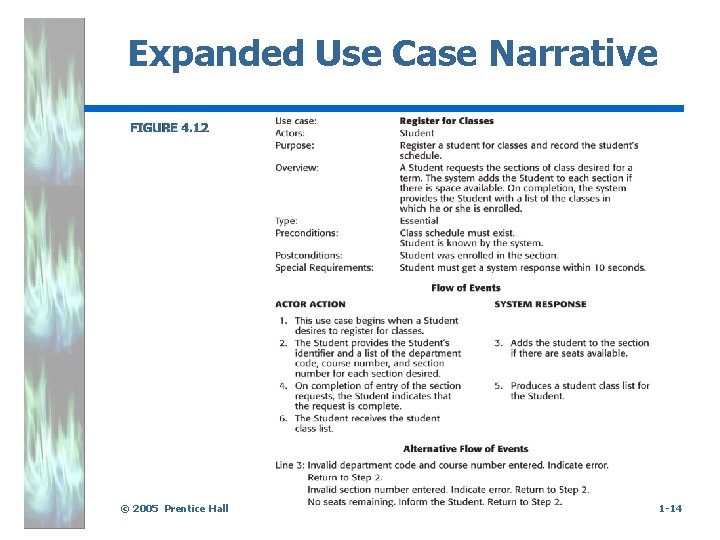
Overview (continued) We write an expanded use case narrative for every use case corresponding to an external event; these are the use cases in which there is input to the system. An expanded use case narrative captures the sequence of messages from an actor to the system as well as the system’s response to each message. The narrative also reveals the structure and content of the messages. © 2005 Prentice Hall 1 -4
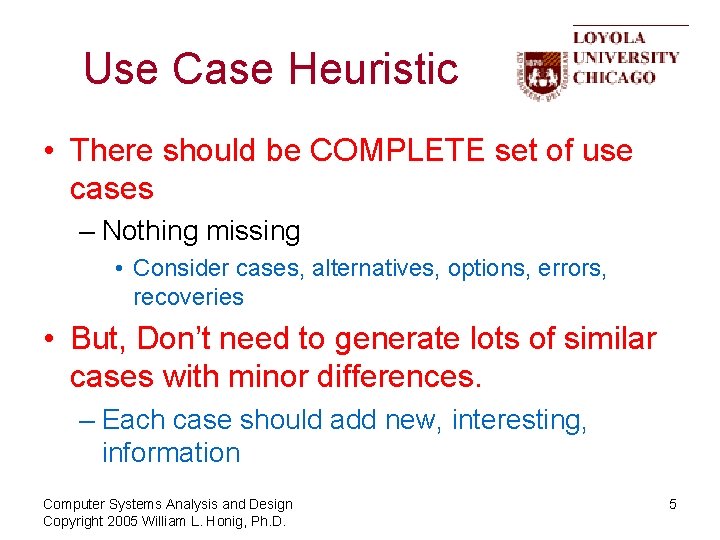
Use Case Heuristic • There should be COMPLETE set of use cases – Nothing missing • Consider cases, alternatives, options, errors, recoveries • But, Don’t need to generate lots of similar cases with minor differences. – Each case should add new, interesting, information Computer Systems Analysis and Design Copyright 2005 William L. Honig, Ph. D. 5
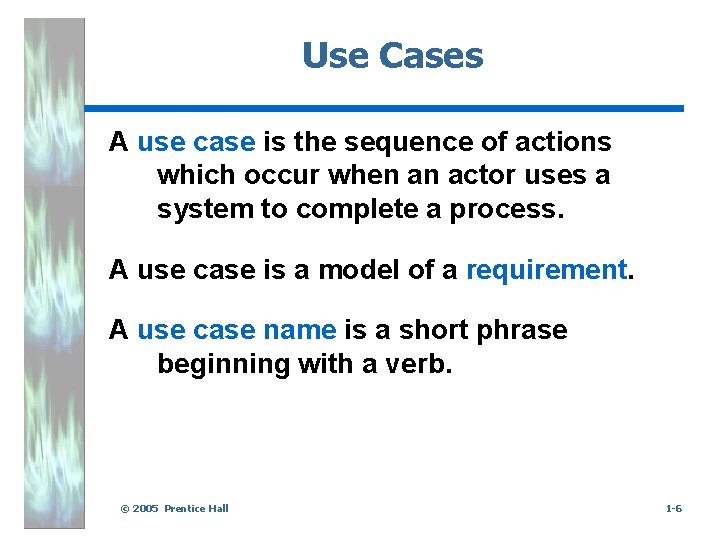
Use Cases A use case is the sequence of actions which occur when an actor uses a system to complete a process. A use case is a model of a requirement. A use case name is a short phrase beginning with a verb. © 2005 Prentice Hall 1 -6
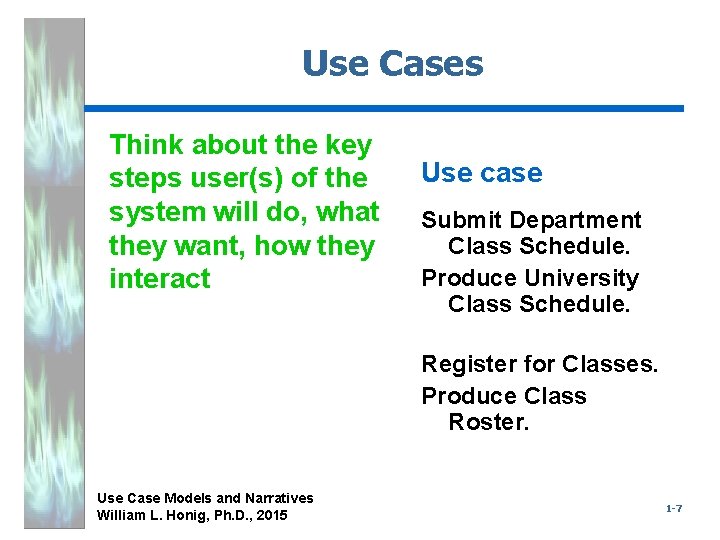
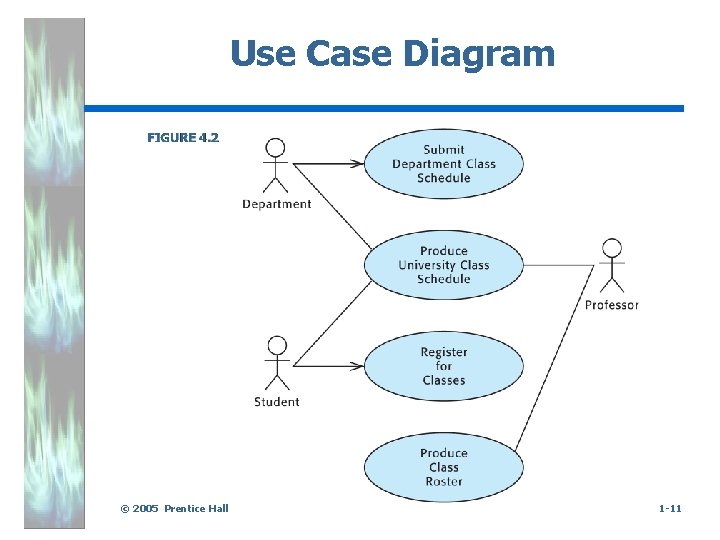
Use Cases Think about the key steps user(s) of the system will do, what they want, how they interact Use case Submit Department Class Schedule. Produce University Class Schedule. Register for Classes. Produce Class Roster. Use Case Models and Narratives William L. Honig, Ph. D. , 2015 1 -7
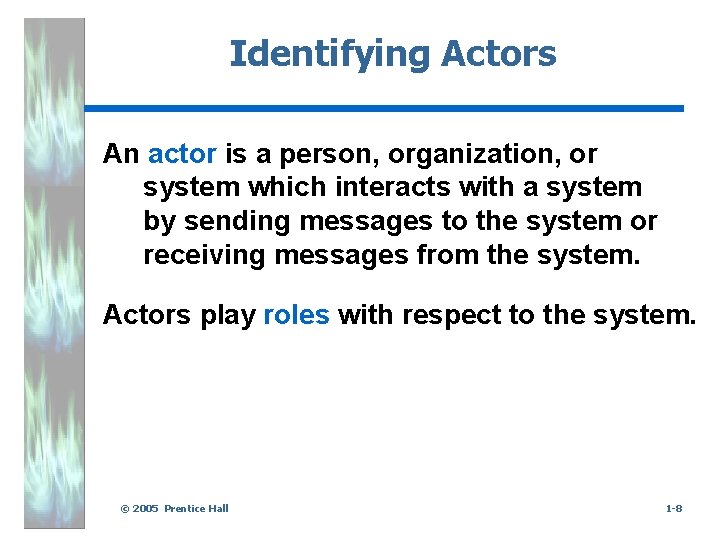
Identifying Actors An actor is a person, organization, or system which interacts with a system by sending messages to the system or receiving messages from the system. Actors play roles with respect to the system. © 2005 Prentice Hall 1 -8
Types of Actors An initiating actor initiates a use case by initiating an external event. Thus, initiating actors provide system inputs. A participating actor is involved in a use case but does not initiate it. Thus, participating actors receive system outputs. © 2005 Prentice Hall 1 -9
The Use Case Model 1. A use case diagram for the entire system – a graphic model 2. One or more use case narratives for each use case – descriptions in text • high-level • expanded © 2005 Prentice Hall 1 -10
Use Case Diagram. © 2005 Prentice Hall 1 -11
Components of a Use Case Diagram © 2005 Prentice Hall 1 -12
Show Off Time • Who here is a good requirements thinker? – Willing to answer a few questions • Let’s make a use case diagram – Think like a careful customer for a new system…. Computer Systems Analysis and Design Copyright 2005 William L. Honig, Ph. D. 13
Expanded Use Case Narrative. © 2005 Prentice Hall 1 -14
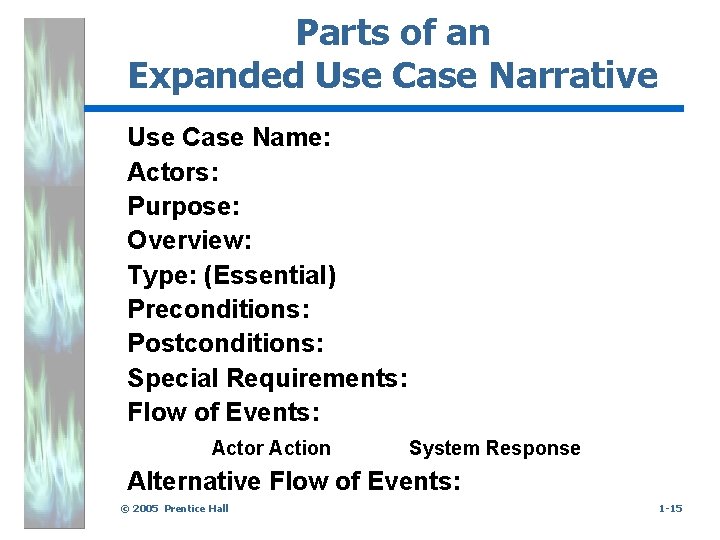
Parts of an Expanded Use Case Narrative Use Case Name: Actors: Purpose: Overview: Type: (Essential) Preconditions: Postconditions: Special Requirements: Flow of Events: Actor Action System Response Alternative Flow of Events: © 2005 Prentice Hall 1 -15
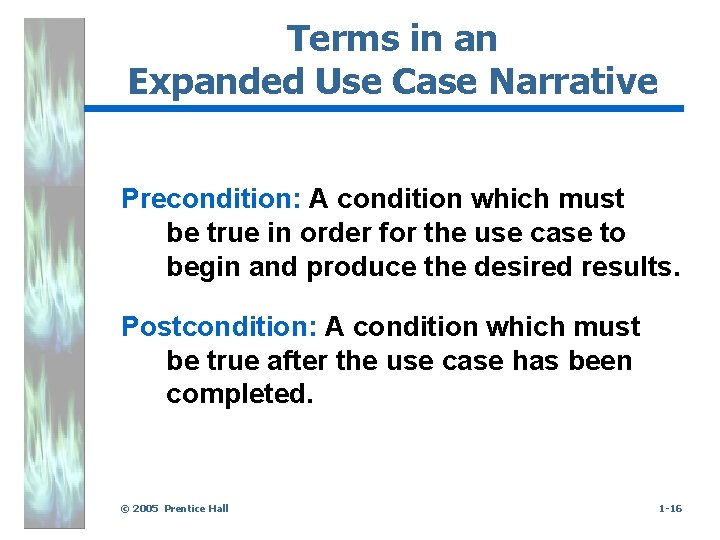
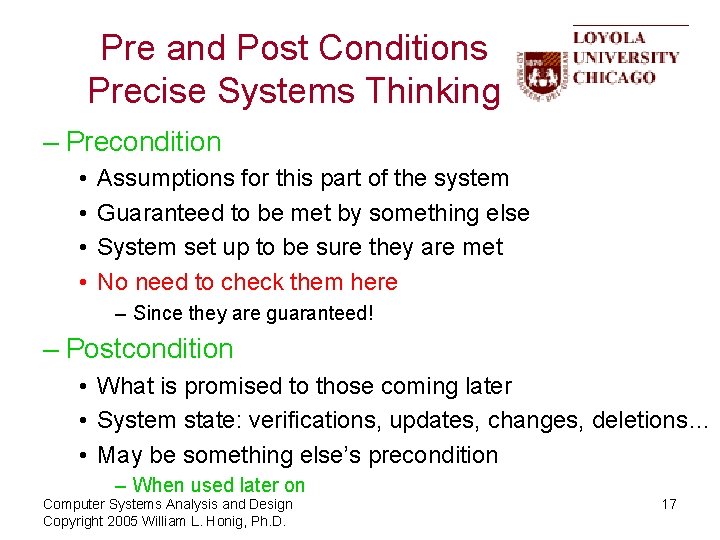
Terms in an Expanded Use Case Narrative Precondition: A condition which must be true in order for the use case to begin and produce the desired results. Postcondition: A condition which must be true after the use case has been completed. © 2005 Prentice Hall 1 -16
Pre and Post Conditions Precise Systems Thinking – Precondition • • Assumptions for this part of the system Guaranteed to be met by something else System set up to be sure they are met No need to check them here – Since they are guaranteed! – Postcondition • What is promised to those coming later • System state: verifications, updates, changes, deletions… • May be something else’s precondition – When used later on Computer Systems Analysis and Design Copyright 2005 William L. Honig, Ph. D. 17
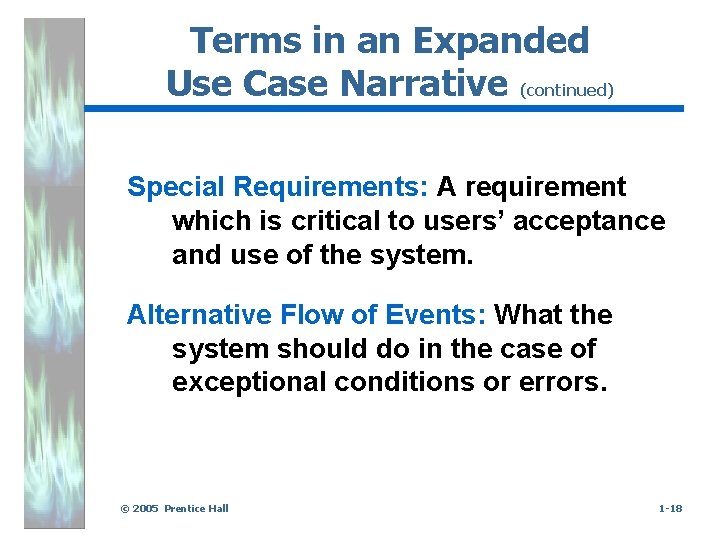
Terms in an Expanded Use Case Narrative (continued) Special Requirements: A requirement which is critical to users’ acceptance and use of the system. Alternative Flow of Events: What the system should do in the case of exceptional conditions or errors. © 2005 Prentice Hall 1 -18
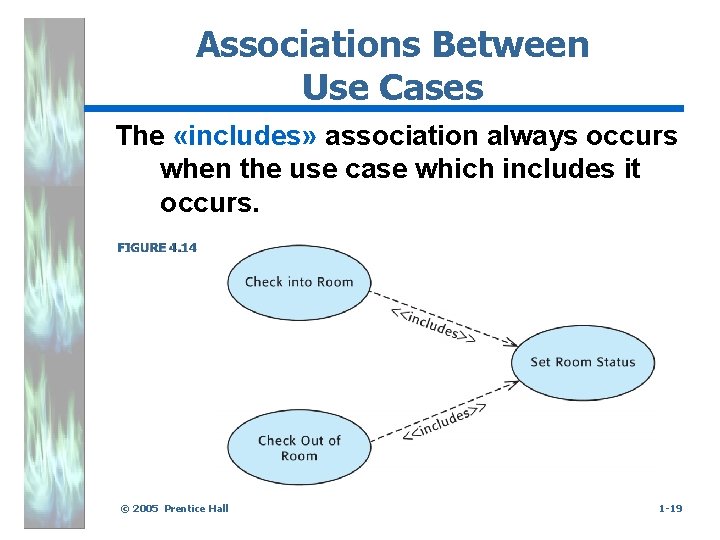
Associations Between Use Cases The «includes» association always occurs when the use case which includes it occurs. © 2005 Prentice Hall 1 -19
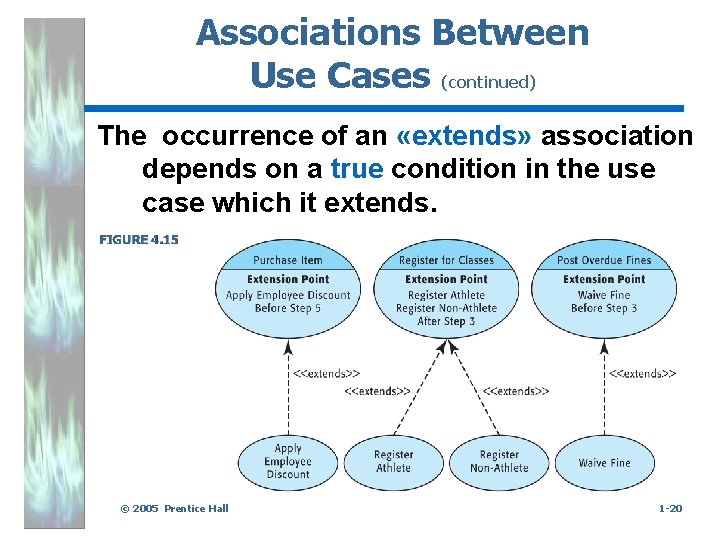
Associations Between Use Cases (continued) The occurrence of an «extends» association depends on a true condition in the use case which it extends. © 2005 Prentice Hall 1 -20