
Requirements of validation of packaging systems and sterility






- Slides: 28
Requirements of validation of packaging systems and sterility assurance Hartmut Dunkelberg University Medical Center, Goettingen, Germany 16 th World Sterilization Congress & Annual conference of AFS 7 -10 October 2015, Lille, France
Topics 1. Emptying catheter bags: an example of validation of basic operations 2. Risk of infection when using sterilized products contaminated with a low count of environmental microbes 3. Validation of visual inspection of sterile barrier systems as one of the methods to detect compromised sterility; relevance of punctures, wet bursting strength, bursting strength and tearing resistance 4. Validation of maintenance of sterility: compatibility of airborne microbial filtration efficiency of sterile barrier systems with airborne microbial challenge 5. Responsibility for the handling of terminally sterilized products
Emptying catheter bags – an example for validation of basic operations
Risks of cross contamination when emptying catheter bags • Contamination of the doorhandles • Contamination of the washer-disinfector handle • Contamination of the clean container found in the washer-disinfector • Contamination of the on/off button
Validation of the procedure for emptying catheter bags Predetermined acceptance criterion: strict hygienic isolation of work steps with pathogen contact from those without
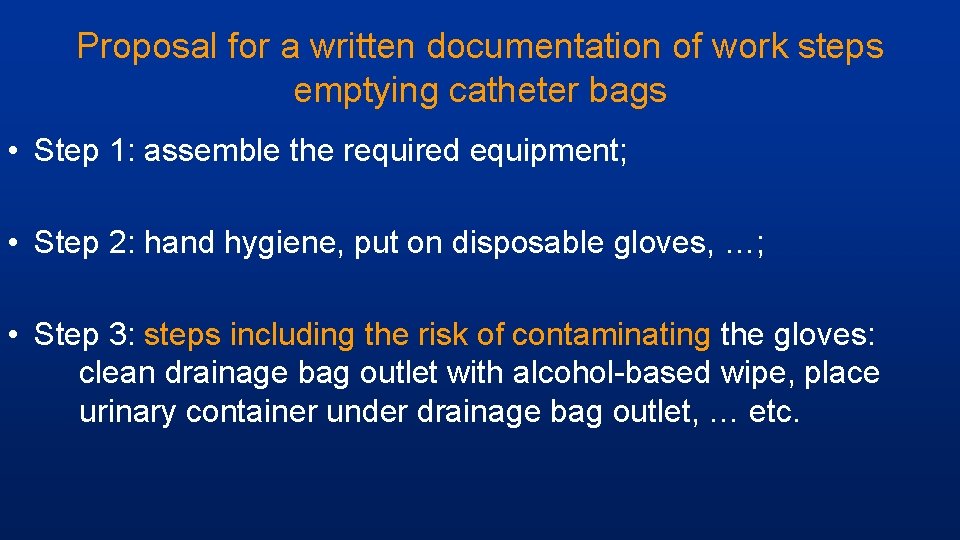
Proposal for a written documentation of work steps emptying catheter bags • Step 1: assemble the required equipment; • Step 2: hand hygiene, put on disposable gloves, …; • Step 3: steps including the risk of contaminating the gloves: clean drainage bag outlet with alcohol-based wipe, place urinary container under drainage bag outlet, … etc.
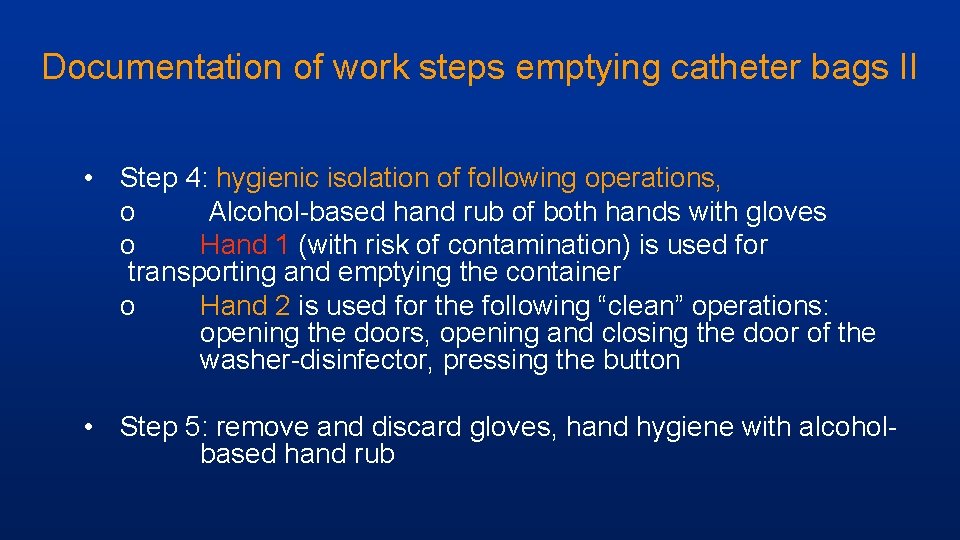
Documentation of work steps emptying catheter bags II • Step 4: hygienic isolation of following operations, o Alcohol-based hand rub of both hands with gloves o Hand 1 (with risk of contamination) is used for transporting and emptying the container o Hand 2 is used for the following “clean” operations: opening the doors, opening and closing the door of the washer-disinfector, pressing the button • Step 5: remove and discard gloves, hand hygiene with alcoholbased hand rub
Risk of infection when using sterilized products contaminated with a low count of environmental microbes
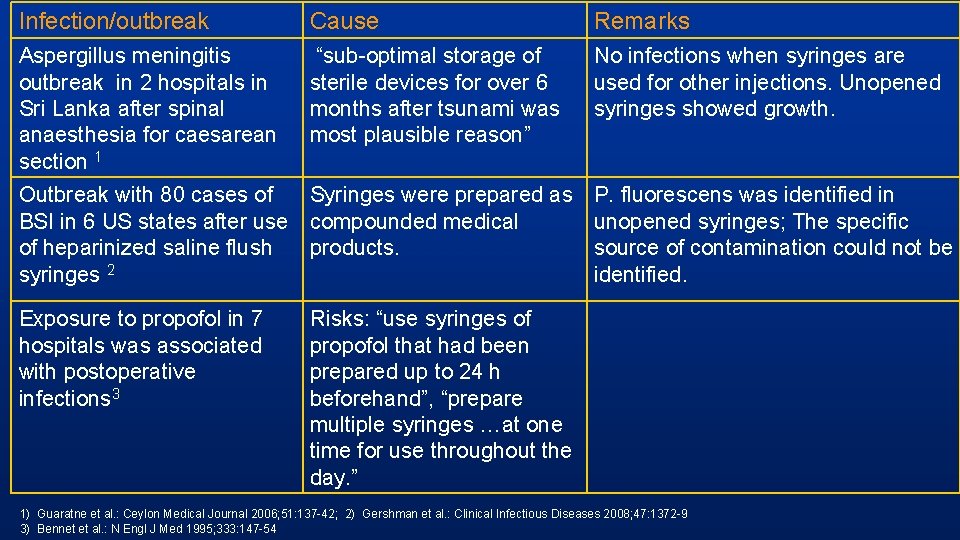
Infection/outbreak Cause Remarks Aspergillus meningitis outbreak in 2 hospitals in Sri Lanka after spinal anaesthesia for caesarean section 1 “sub-optimal storage of sterile devices for over 6 months after tsunami was most plausible reason” No infections when syringes are used for other injections. Unopened syringes showed growth. Outbreak with 80 cases of Syringes were prepared as BSI in 6 US states after use compounded medical of heparinized saline flush products. syringes 2 Exposure to propofol in 7 hospitals was associated with postoperative infections 3 P. fluorescens was identified in unopened syringes; The specific source of contamination could not be identified. Risks: “use syringes of propofol that had been prepared up to 24 h beforehand”, “prepare multiple syringes …at one time for use throughout the day. ” 1) Guaratne et al. : Ceylon Medical Journal 2006; 51: 137 -42; 2) Gershman et al. : Clinical Infectious Diseases 2008; 47: 1372 -9 3) Bennet et al. : N Engl J Med 1995; 333: 147 -54
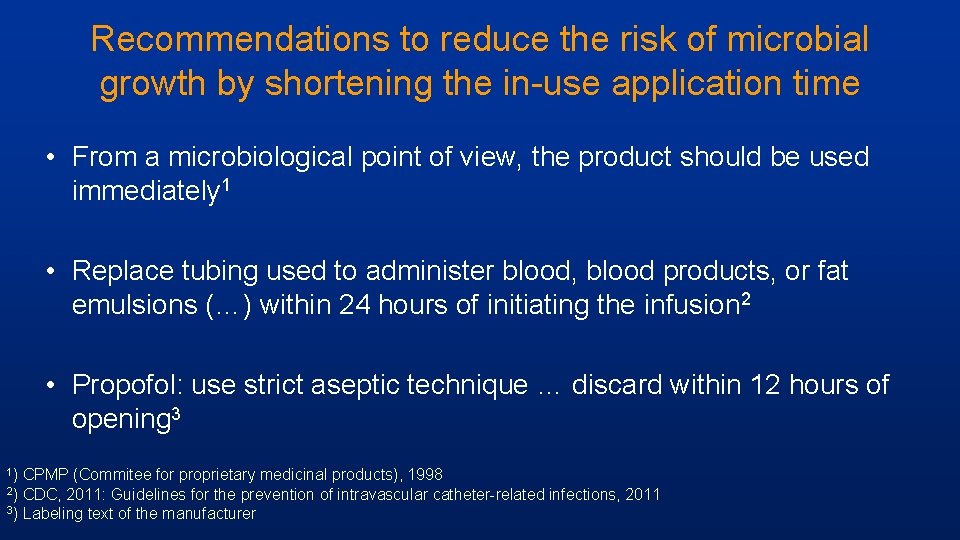
Recommendations to reduce the risk of microbial growth by shortening the in-use application time • From a microbiological point of view, the product should be used immediately 1 • Replace tubing used to administer blood, blood products, or fat emulsions (…) within 24 hours of initiating the infusion 2 • Propofol: use strict aseptic technique … discard within 12 hours of opening 3 1) CPMP (Commitee for proprietary medicinal products), 1998 CDC, 2011: Guidelines for the prevention of intravascular catheter-related infections, 2011 3) Labeling text of the manufacturer 2)
Validation of visual inspection as one of methods to detect compromised sterility; relevance of puntcures, wet bursting strength, bursting strength and tearing resistance
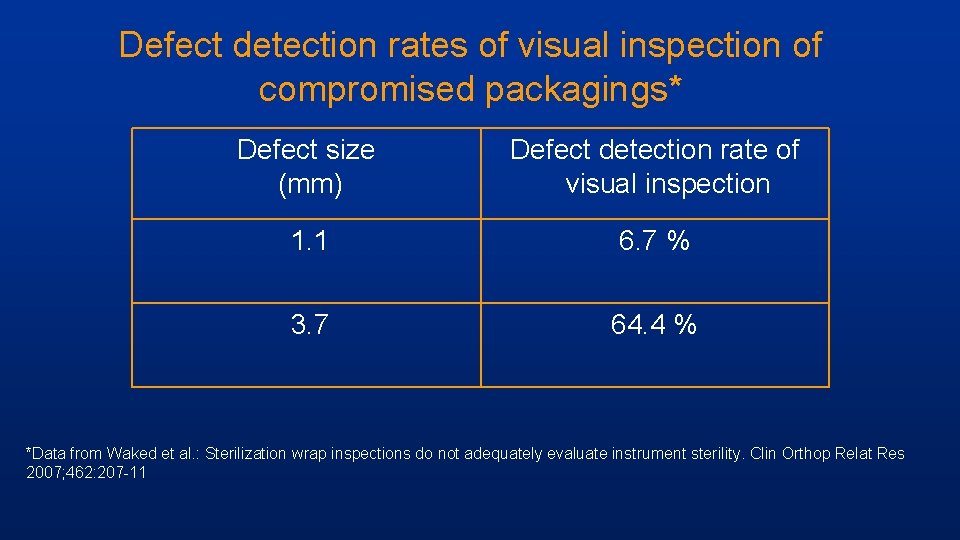
Defect detection rates of visual inspection of compromised packagings* Defect size (mm) Defect detection rate of visual inspection 1. 1 6. 7 % 3. 7 64. 4 % *Data from Waked et al. : Sterilization wrap inspections do not adequately evaluate instrument sterility. Clin Orthop Relat Res 2007; 462: 207 -11
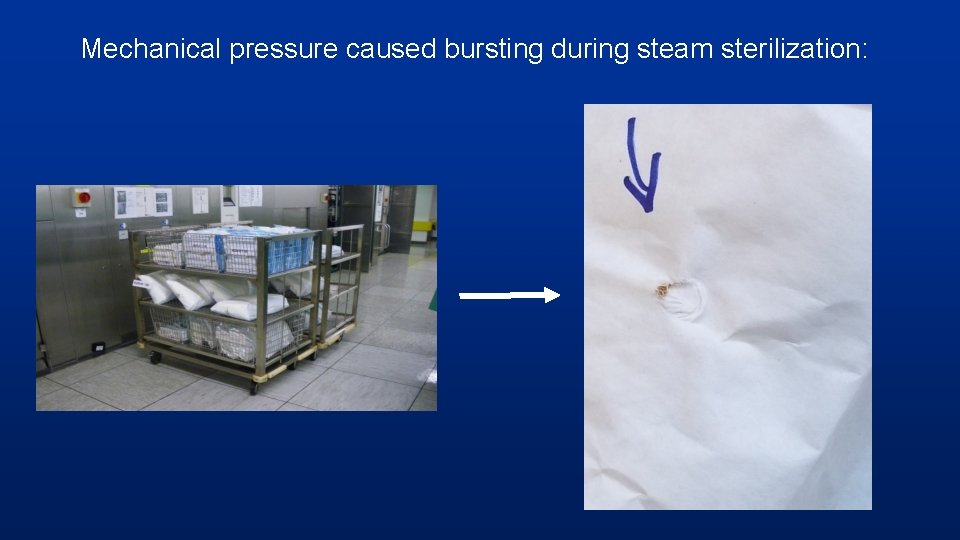
Mechanical pressure caused bursting during steam sterilization:
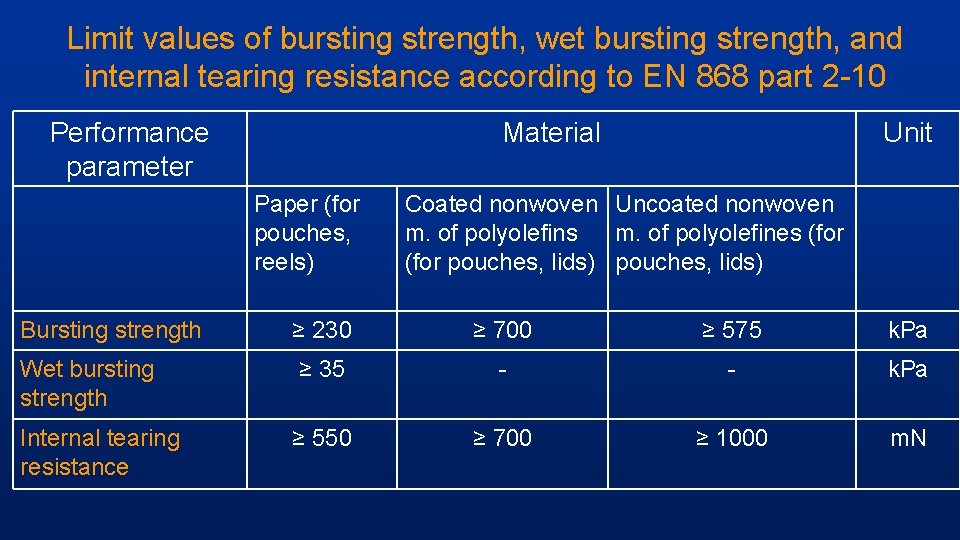
Limit values of bursting strength, wet bursting strength, and internal tearing resistance according to EN 868 part 2 -10 Performance parameter Material Paper (for pouches, reels) Unit Coated nonwoven Uncoated nonwoven m. of polyolefins m. of polyolefines (for pouches, lids) Bursting strength ≥ 230 ≥ 700 ≥ 575 k. Pa Wet bursting strength ≥ 35 - - k. Pa Internal tearing resistance ≥ 550 ≥ 700 ≥ 1000 m. N
Sporadic device-associated infections caused by compromised packaging integrity are difficult to identify • because the microbiological status of the unopened device can no longer be examined, • because exposures and patients are scattered or isolated in time and location.
Validation of maintenance of sterility: compatibility of airborne microbial filtration efficiency of sterile barrier systems with airborne microbial challenge
ISO 11607 -1 “Porous materials shall provide an adequate microbial barrier to microorganisms in order to provide integrity of the sterile barrier system and product safety. ” *) *ISO 11607 -1, 2006, clause 5. 2. 2
ISO 11607 -1 “the conditions under which the … preformed sterile barrier system are handled shall be established, controlled and recorded…to ensure that the conditions are compatible with the use for which the material and/or sterile barrier system is designed …. ”: *) • Temperature range • Pressure range, … • Maximum rate of change of the above. … • Bioburden. The property of the microbial barrier of the packaging material shall be evaluated. *) ISO 11607 -1, 2006, subclauses 5. 1. 3 - 5. 1. 6
Knowing data of barrier efficiency against airborne microbes is absolutely necessary for: • comparing and selecting the suitable and best packaging material, • for assessing the compatibility of the packaging material with provided storage conditions.
Validation of compatibility of the sterile barrier system with events caused by airborne microbial challenge Predetermined quality attributes Maintenance of sterility based on quantitative risk analysis Performance parameter Airborne microbial retention capacity Relevant factors to be considered Level and relevant sizes of airborne particles bearing microorganisms Flow rate of air through the layers of packaging material
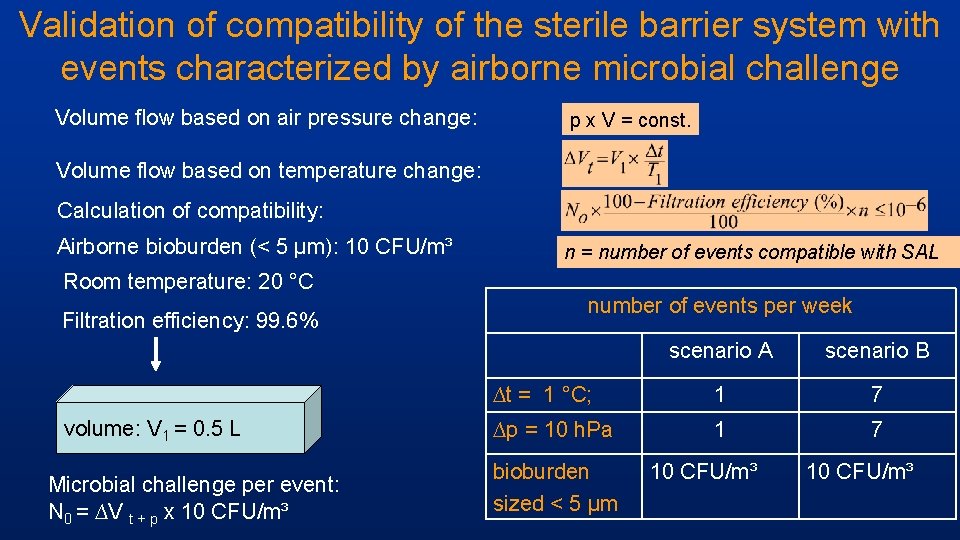
Validation of compatibility of the sterile barrier system with events characterized by airborne microbial challenge Volume flow based on air pressure change: p x V = const. Volume flow based on temperature change: Calculation of compatibility: Airborne bioburden (< 5 µm): 10 CFU/m³ Room temperature: 20 °C Filtration efficiency: 99. 6% volume: V 1 = 0. 5 L Microbial challenge per event: N 0 = ∆V t + p x 10 CFU/m³ n = number of events compatible with SAL number of events per week scenario A scenario B ∆t = 1 °C; 1 7 ∆p = 10 h. Pa 1 7 bioburden sized < 5 µm 10 CFU/m³
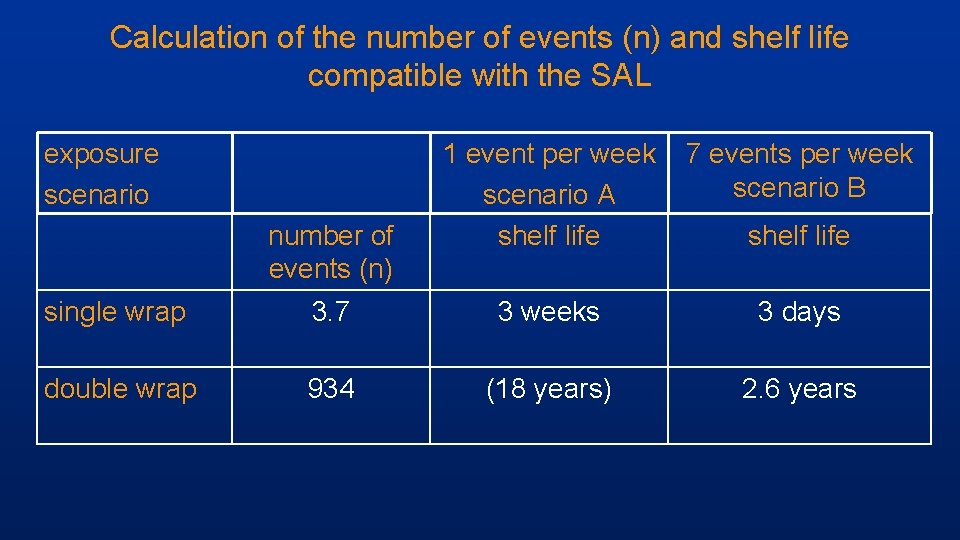
Calculation of the number of events (n) and shelf life compatible with the SAL exposure scenario number of events (n) 1 event per week scenario A shelf life 7 events per week scenario B shelf life single wrap 3. 7 3 weeks 3 days double wrap 934 (18 years) 2. 6 years
Consequences of the proposed validation procedure • Low variations of temperature and low rates of their changes reduce the microbial challenge; • Transports (containership, transport plane) with relevant temperature changes and atmospheric pressure changes raise the microbial challenge; • Outsourcing of sterilization can increase the risk of recontamination through transport routes with convulsions, temperature variations, changes in air pressure (different altitudes).
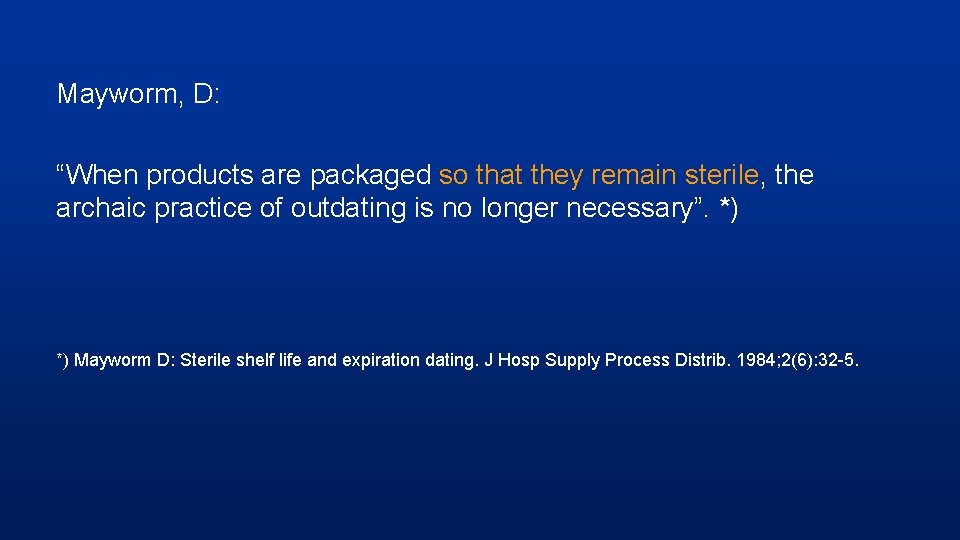
Mayworm, D: “When products are packaged so that they remain sterile, the archaic practice of outdating is no longer necessary”. *) *) Mayworm D: Sterile shelf life and expiration dating. J Hosp Supply Process Distrib. 1984; 2(6): 32 -5.
Responsibilities for the handling with terminally sterilized products
Responsibility for the handling of terminally sterilized products “In general the responsibility for the quality of the packaging material is divided accordingly, where: 1) the manufacturer of the packaging material and/or system is responsible for the quality of the packaging material as it is being supplied, and the identification of the intended use; 2) the user of the packaging material and /or system for its proper application, and by implication for the final quality of the packaging design or system. ” *) *) EN 868 -1, 1997, Annex A. 1. 2
Summary • The use of the best possible validation methods can help prevent hospital acquired infections. • Event-Related Sterility Maintenance Policy is wellaccepted and should be practised consistently according to International Standards.
Thank you for your attention