
Republics of the Soviet Union Fig 7 11
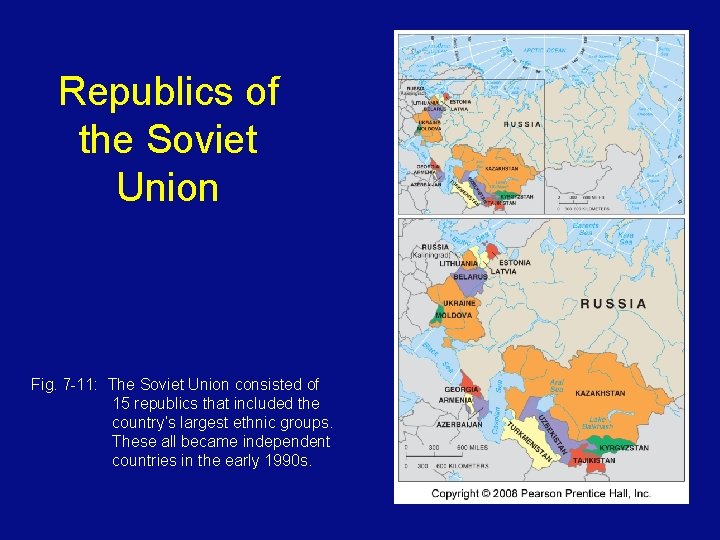
Republics of the Soviet Union Fig. 7 -11: The Soviet Union consisted of 15 republics that included the country’s largest ethnic groups. These all became independent countries in the early 1990 s.

Republics of the Soviet Union Fig. 7 -11: The Soviet Union consisted of 15 republics that included the country’s largest ethnic groups. These all became independent countries in the early 1990 s.
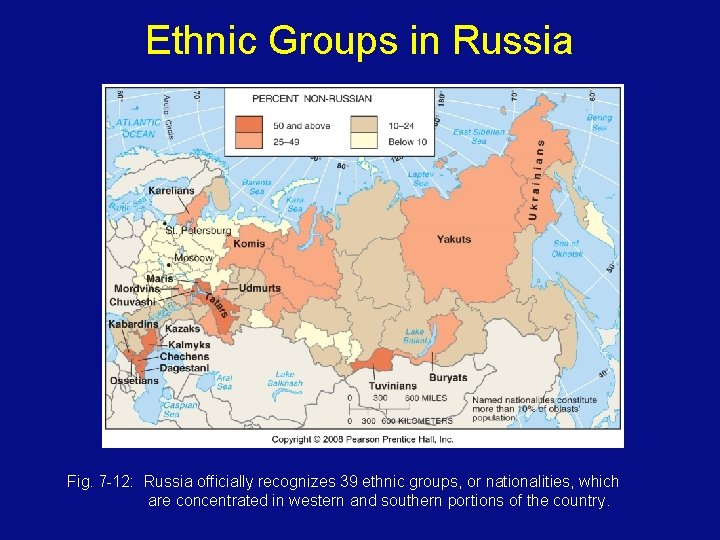
Ethnic Groups in Russia Fig. 7 -12: Russia officially recognizes 39 ethnic groups, or nationalities, which are concentrated in western and southern portions of the country.
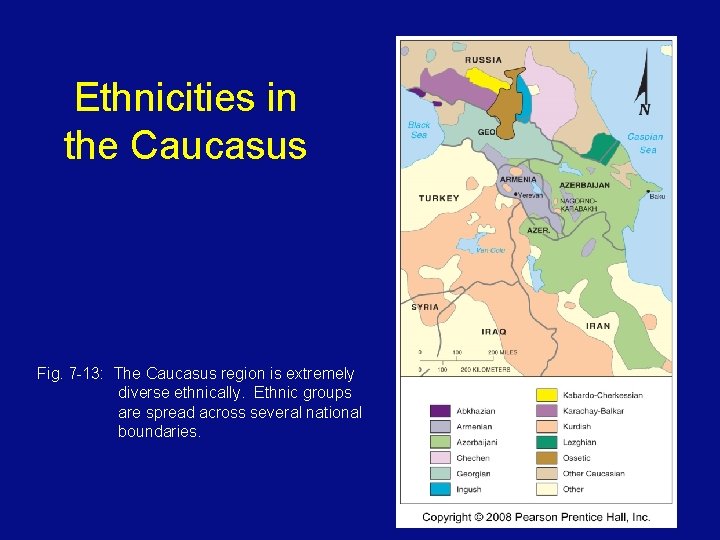
Ethnicities in the Caucasus Fig. 7 -13: The Caucasus region is extremely diverse ethnically. Ethnic groups are spread across several national boundaries.
Clashes of Ethnicities • Ethnic competition to dominate nationality – Ethnic competition in the Horn of Africa – Ethnic competition in Lebanon • Dividing ethnicities among more than one state – Dividing ethnicities in South Asia – Dividing Sri Lanka among ethnicities
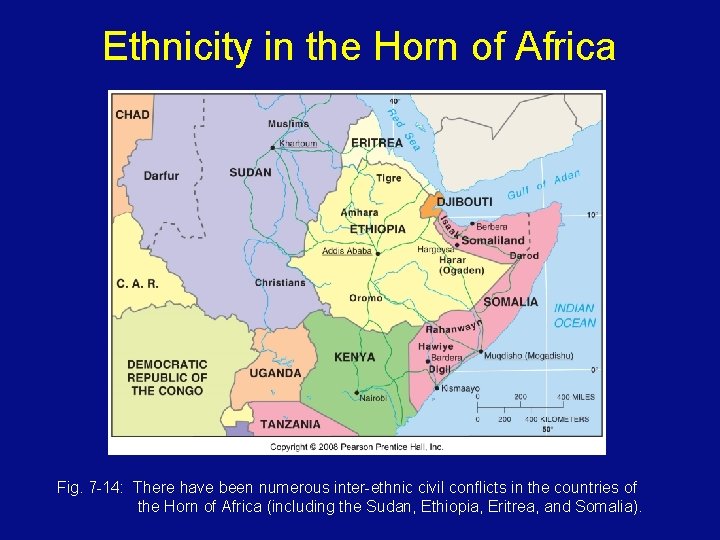
Ethnicity in the Horn of Africa Fig. 7 -14: There have been numerous inter-ethnic civil conflicts in the countries of the Horn of Africa (including the Sudan, Ethiopia, Eritrea, and Somalia).
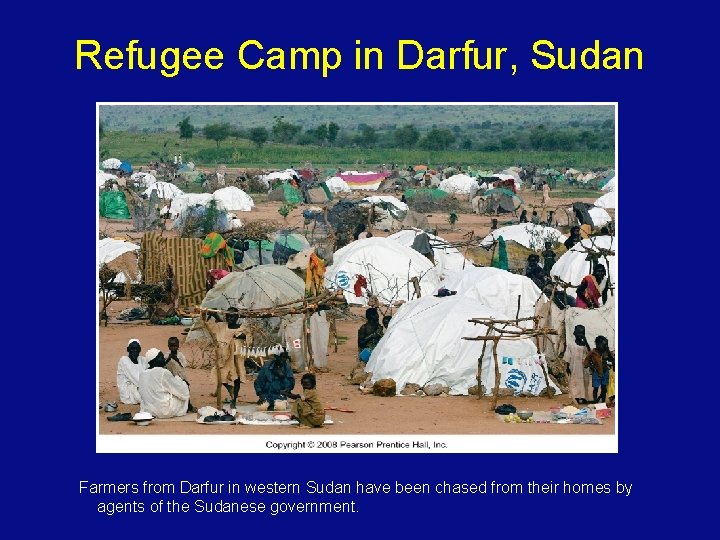
Refugee Camp in Darfur, Sudan Farmers from Darfur in western Sudan have been chased from their homes by agents of the Sudanese government.
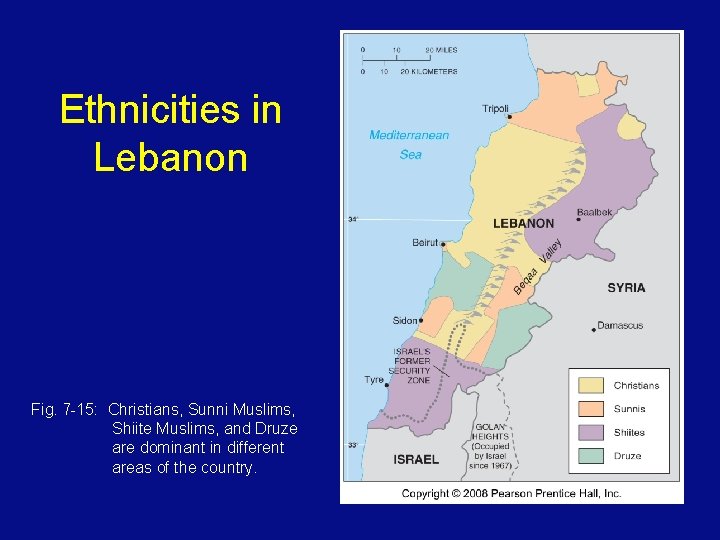
Ethnicities in Lebanon Fig. 7 -15: Christians, Sunni Muslims, Shiite Muslims, and Druze are dominant in different areas of the country.
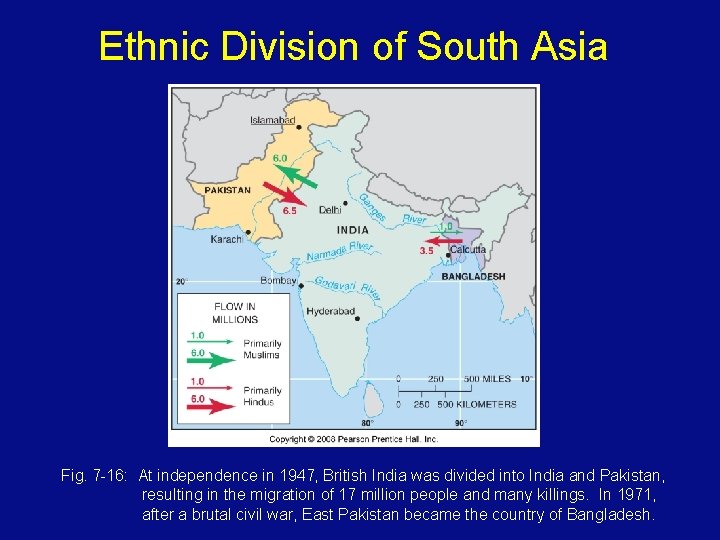
Ethnic Division of South Asia Fig. 7 -16: At independence in 1947, British India was divided into India and Pakistan, resulting in the migration of 17 million people and many killings. In 1971, after a brutal civil war, East Pakistan became the country of Bangladesh.
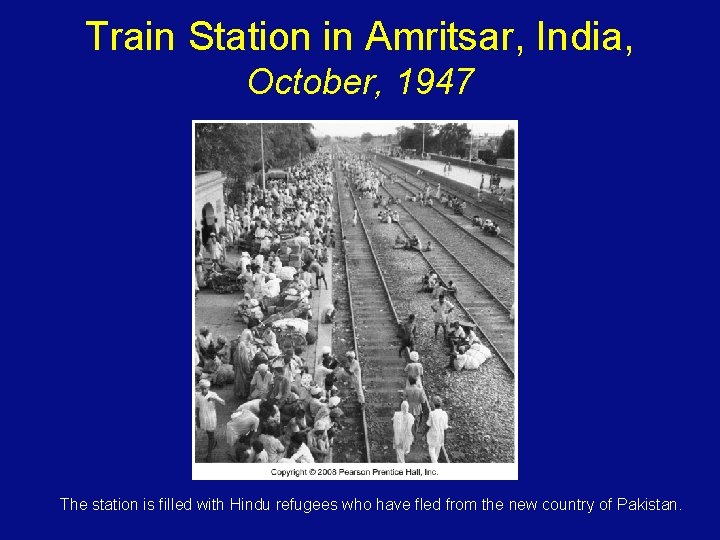
Train Station in Amritsar, India, October, 1947 The station is filled with Hindu refugees who have fled from the new country of Pakistan.
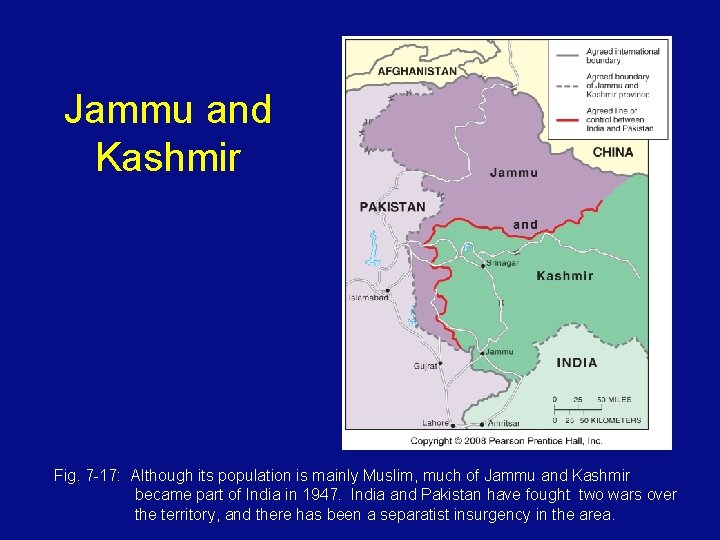
Jammu and Kashmir Fig. 7 -17: Although its population is mainly Muslim, much of Jammu and Kashmir became part of India in 1947. India and Pakistan have fought two wars over the territory, and there has been a separatist insurgency in the area.
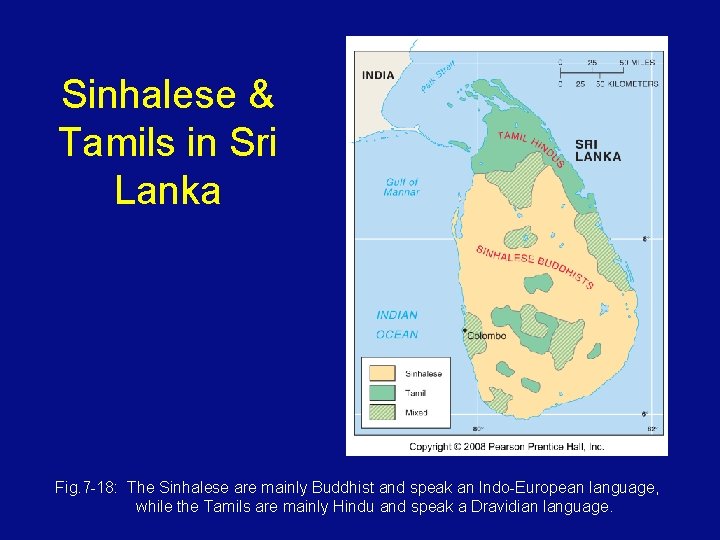
Sinhalese & Tamils in Sri Lanka Fig. 7 -18: The Sinhalese are mainly Buddhist and speak an Indo-European language, while the Tamils are mainly Hindu and speak a Dravidian language.
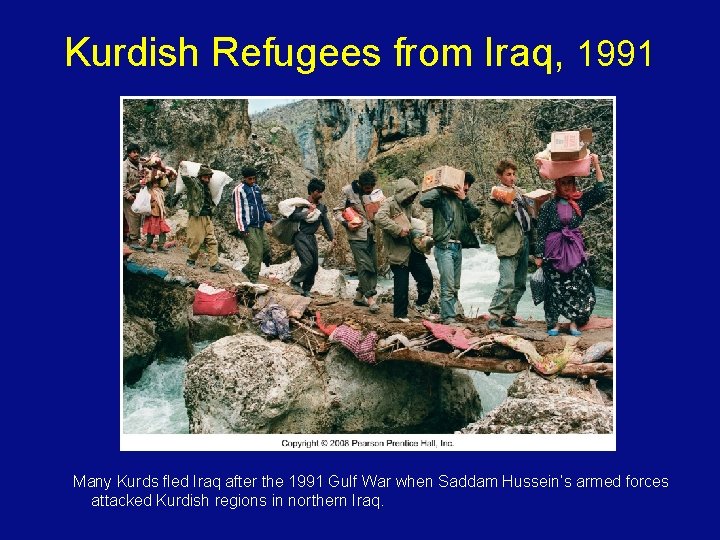
Kurdish Refugees from Iraq, 1991 Many Kurds fled Iraq after the 1991 Gulf War when Saddam Hussein’s armed forces attacked Kurdish regions in northern Iraq.
Ethnic Cleansing • Ethnic cleansing in Yugoslavia – Creation of multi-ethnic Yugoslavia – Destruction of multi-ethnic Yugoslavia • Ethnic cleansing in central Africa
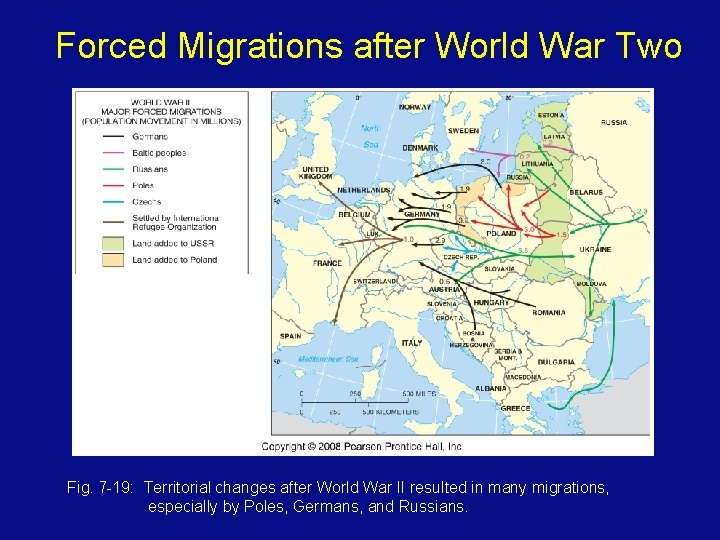
Forced Migrations after World War Two Fig. 7 -19: Territorial changes after World War II resulted in many migrations, especially by Poles, Germans, and Russians.
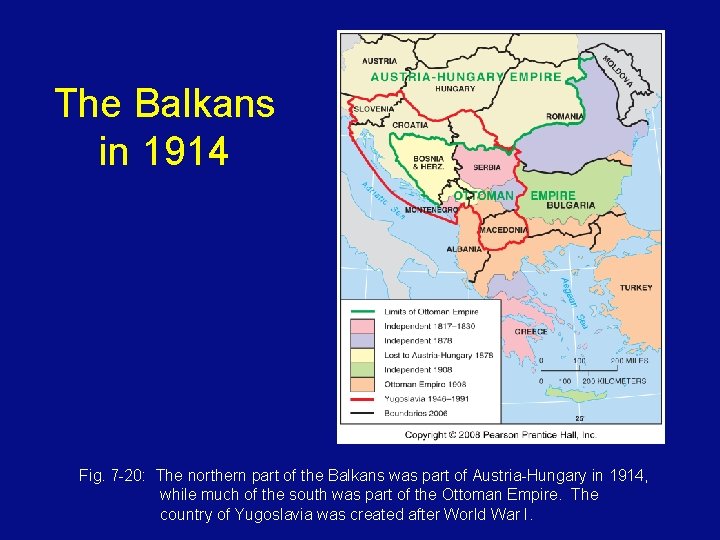
The Balkans in 1914 Fig. 7 -20: The northern part of the Balkans was part of Austria-Hungary in 1914, while much of the south was part of the Ottoman Empire. The country of Yugoslavia was created after World War I.
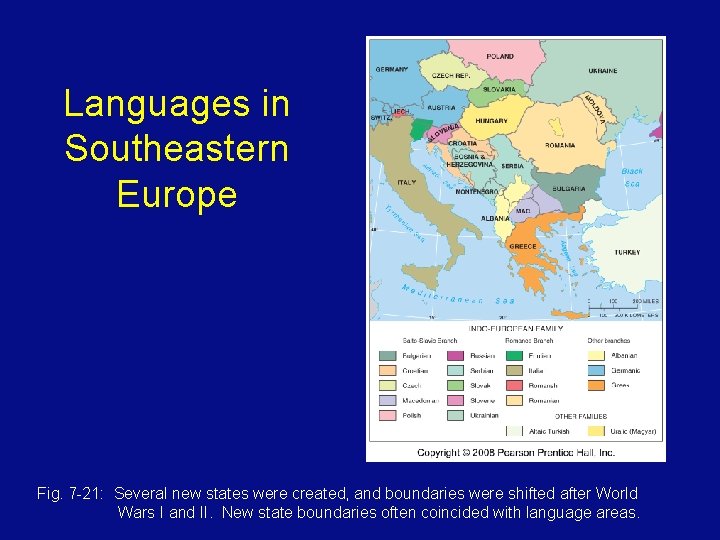
Languages in Southeastern Europe Fig. 7 -21: Several new states were created, and boundaries were shifted after World Wars I and II. New state boundaries often coincided with language areas.
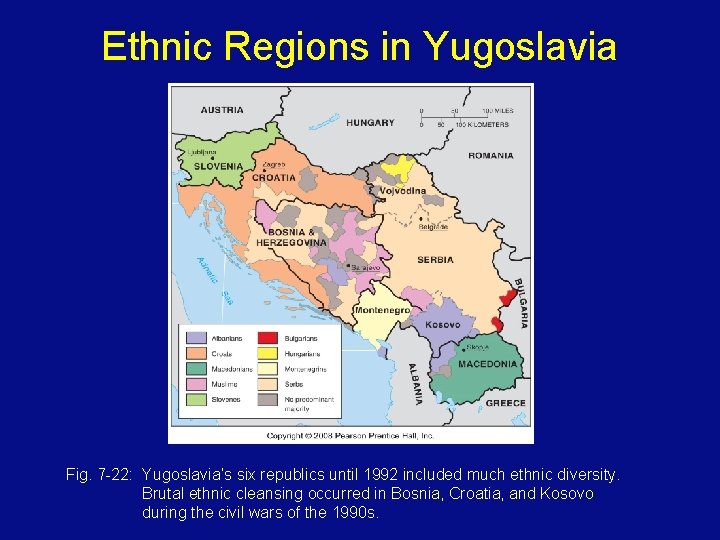
Ethnic Regions in Yugoslavia Fig. 7 -22: Yugoslavia’s six republics until 1992 included much ethnic diversity. Brutal ethnic cleansing occurred in Bosnia, Croatia, and Kosovo during the civil wars of the 1990 s.
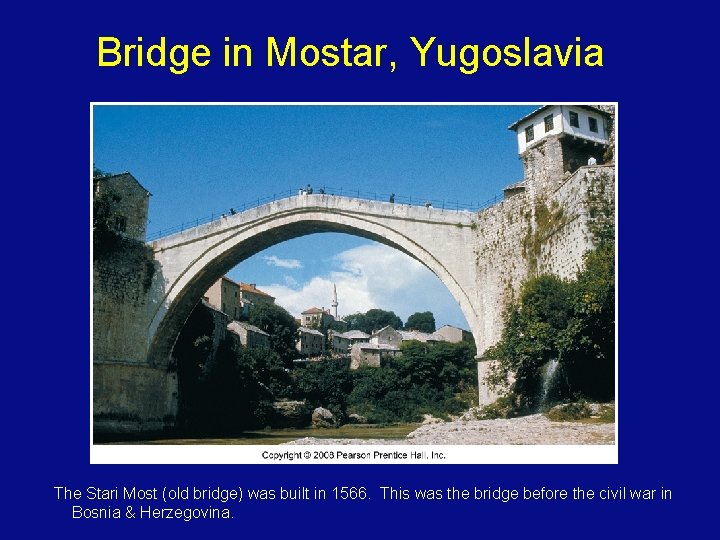
Bridge in Mostar, Yugoslavia The Stari Most (old bridge) was built in 1566. This was the bridge before the civil war in Bosnia & Herzegovina.
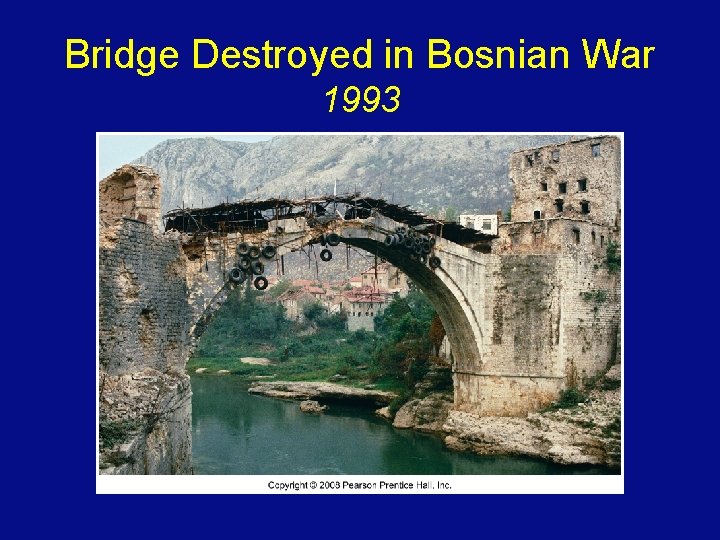
Bridge Destroyed in Bosnian War 1993
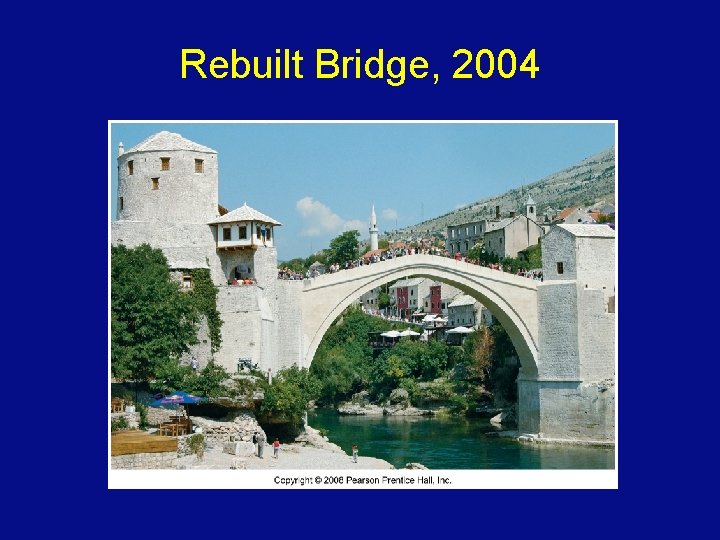
Rebuilt Bridge, 2004
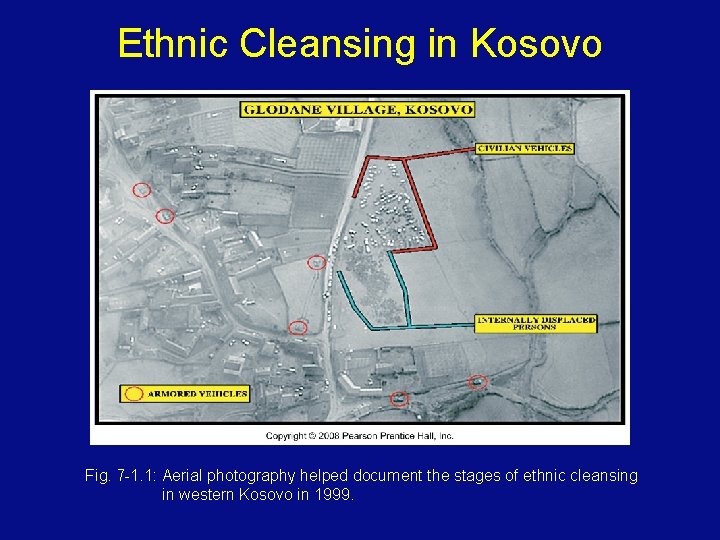
Ethnic Cleansing in Kosovo Fig. 7 -1. 1: Aerial photography helped document the stages of ethnic cleansing in western Kosovo in 1999.
- Slides: 22