
Republic of Turkey Ministry of Health Inspection Board
Republic of Turkey Ministry of Health Inspection Board
Content Ø Quality System in Health Ø Historical Process of Quality Evaluations Ø Who Performs Quality Evaluations? Ø Health Quality Standards Ø Process of Determination of Health Quality Standards Ø Transactions as a result of quality evaluations Ø Relationship between Quality Evaluations and Performance System Ø Inspection Board-Quality Inspection

Republic of Turkey Ministry of Health General Directorate of Health Services Department of Efficiency, Quality and Accreditation in Health
Health Transformation Program 1. Ministry of Health, as a Planner and Supervisor, 2. General Health Insurance that brings everyone under one roof, 3. Widespread, Easy-to-Access, Smiling Faced Health Service, 4. Equipped with Knowledge and Skills, Highly Motivated Healthy Human power, 5. Educational and Scientific Institutions to Support the System, 6. Quality / Accreditation for Qualified, Effective Health Services, 7. Institutional Structure in Rational Drug and Material Management, 8. Health Information System for Access to Effective Information in Decision Process
Purpose of Quality System in Health: Ensuring patient and staff safety and patient and staff satisfaction Efficient, effective, timely and fair service delivery
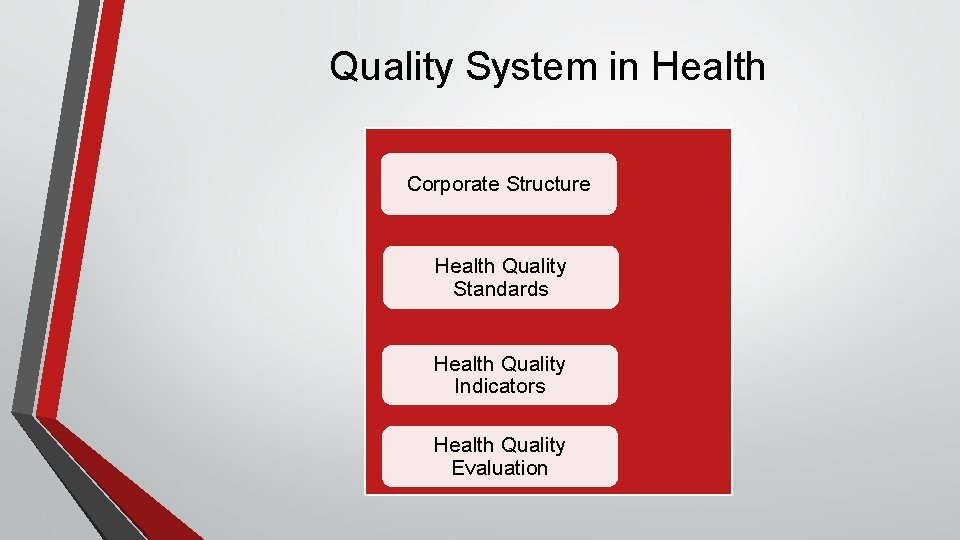
Quality System in Health Corporate Structure Health Quality Standards Health Quality Indicators Health Quality Evaluation
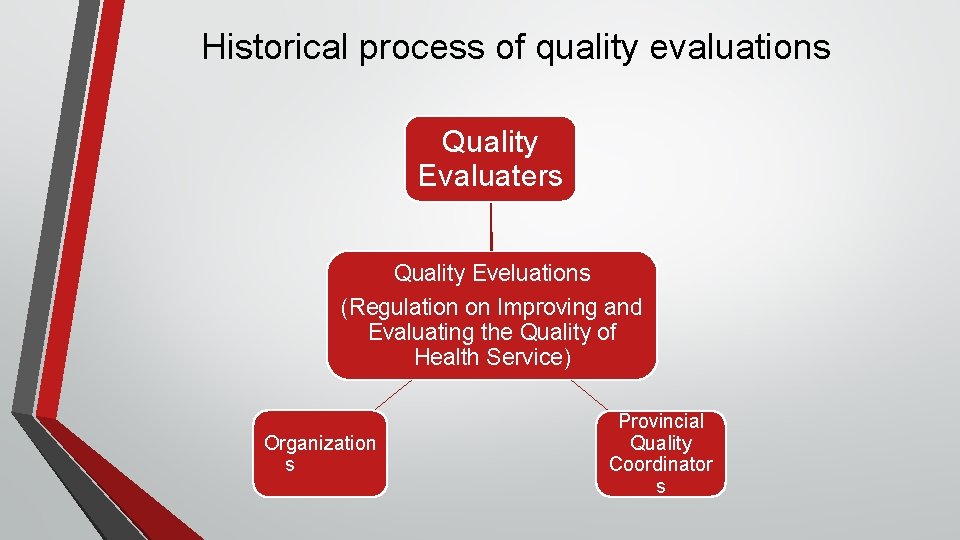
Historical process of quality evaluations Quality Evaluaters Quality Eveluations (Regulation on Improving and Evaluating the Quality of Health Service) Organization s Provincial Quality Coordinator s
Historical process of quality evaluations With the Health Transformation Program, “quality” issue was brought to the agenda for the first time in our health system. With “The Quality and Accreditation for Qualified and Effective Health Services” component of the transformation program qualitfied health care is targeted. . The studies within this scope were implemented in 2005 in a systematic and institutional manner by the Ministry.
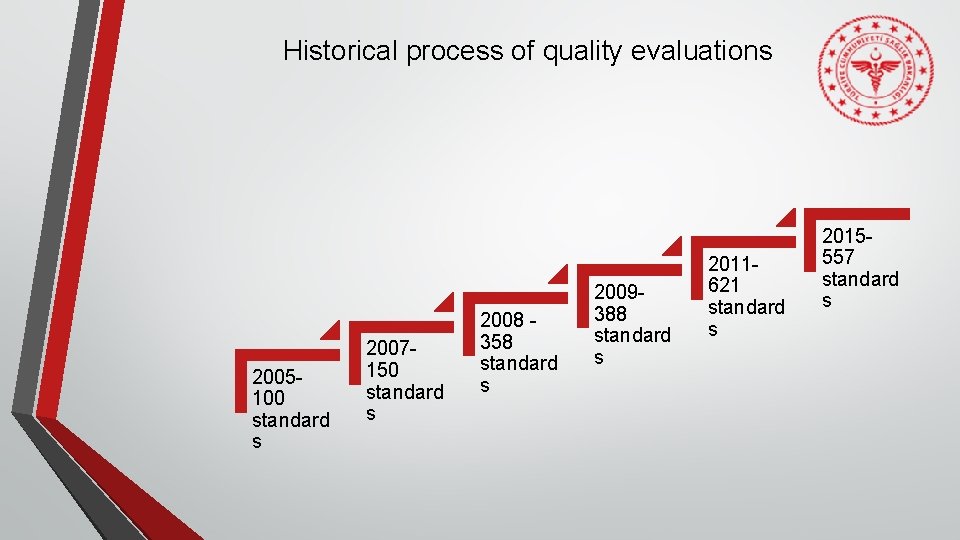
Historical process of quality evaluations 2005100 standard s 2007150 standard s 2008 358 standard s 2009388 standard s 2011621 standard s 2015557 standard s
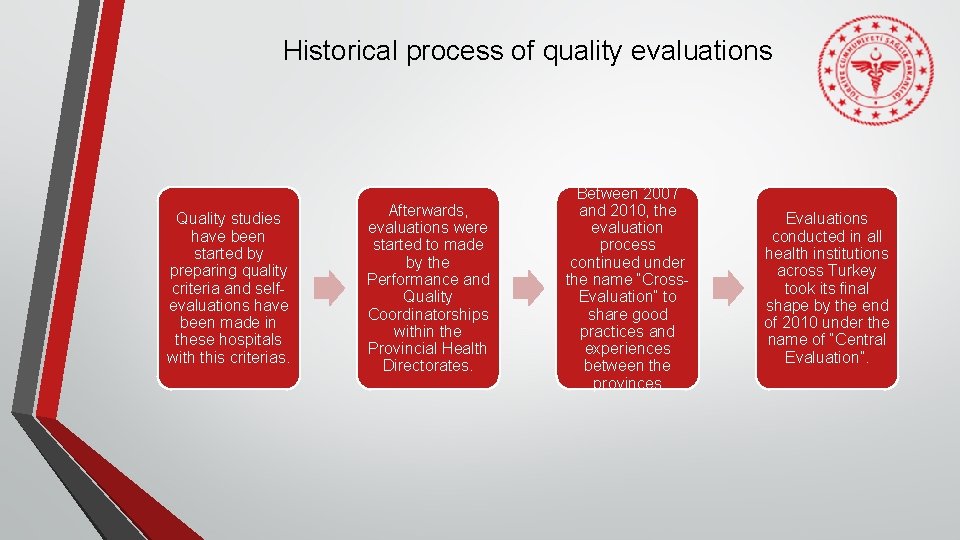
Historical process of quality evaluations Quality studies have been started by preparing quality criteria and selfevaluations have been made in these hospitals with this criterias. Afterwards, evaluations were started to made by the Performance and Quality Coordinatorships within the Provincial Health Directorates. Between 2007 and 2010, the evaluation process continued under the name “Cross. Evaluation” to share good practices and experiences between the provinces Evaluations conducted in all health institutions across Turkey took its final shape by the end of 2010 under the name of “Central Evaluation”.
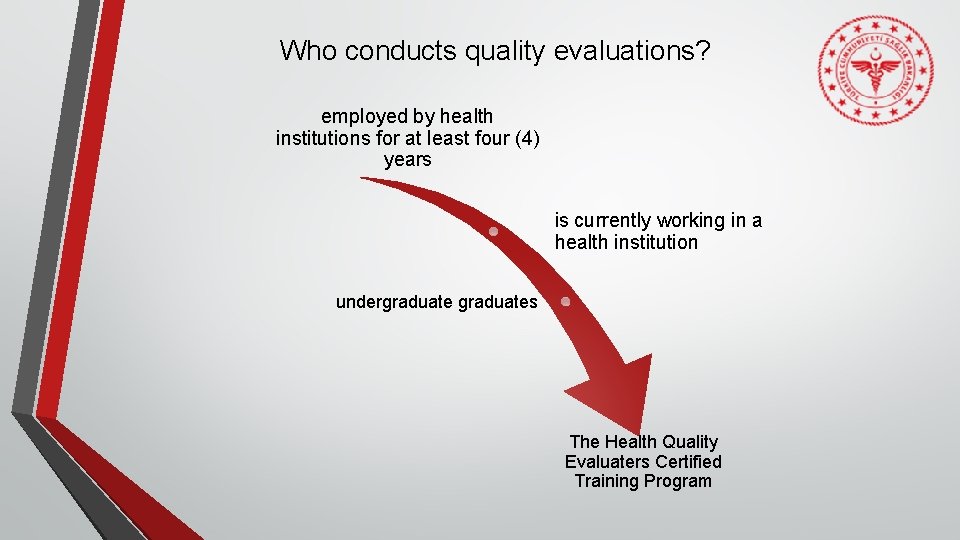
Who conducts quality evaluations? employed by health institutions for at least four (4) years is currently working in a health institution undergraduates The Health Quality Evaluaters Certified Training Program
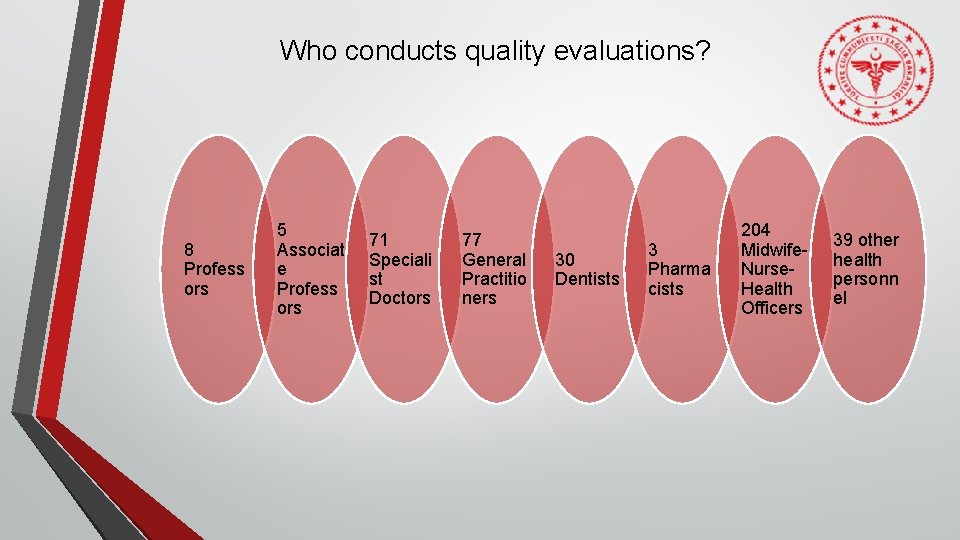
Who conducts quality evaluations? 8 Profess ors 5 Associat e Profess ors 71 Speciali st Doctors 77 General Practitio ners 30 Dentists 3 Pharma cists 204 Midwife. Nurse. Health Officers 39 other health personn el
Health Quality Standarts To reveal the targeted level of quality for all health institutions and organizations offering services in Turkey To provide guidance for implementation for all health institutions and organizations offering services in Turkey
Health Quality Standards Has a structure that sets common and acceptable targets and supports continuity in development with a common perspective. Also aim to promote cultural change in the health sector by creating incentives or sanctions.
Health Quality Standards Øshould not be in the form of instructions or checklists Øshould be inclusive of processes ØShould be compatible with scientific developments. Øshould also follow a policy that promotes and guides development in line with national and international priorities Øshould not be restrictive
Health Quality Standards HQS set is a tool that minimizes the risks that may be encountered during health care and provides the management of the risks together with the scoring systematics, guidance statements for the standards and evaluation criteria and the supporting documents included in the annexes.
Standard Development Process Opinions and suggestions of the users and the relevant experts are taken by various methods and especially the field practitioners are included in all processes related to the quality studies. Through the “HQS Opinion and Suggestion Platform”, it is ensured that various stakeholders at the institutional and individual level communicate their opinions and suggestions regarding the existing standards and suggestions on the new standards and evaluation criteria In addition, feedback is received from evaluators and users in order to evaluate the newly developed standards and evaluation criteria in terms of comprehensibility, measurability, inclusiveness, suitability for purpose, applicability and achievability. All works for the HQS are evaluated in the “HQS Workshops” and the final draft of the set is prepared, all findings and feedbacks are evaluated and the necessary adjustments are made on the final set and submitted to the approval of the senior management.
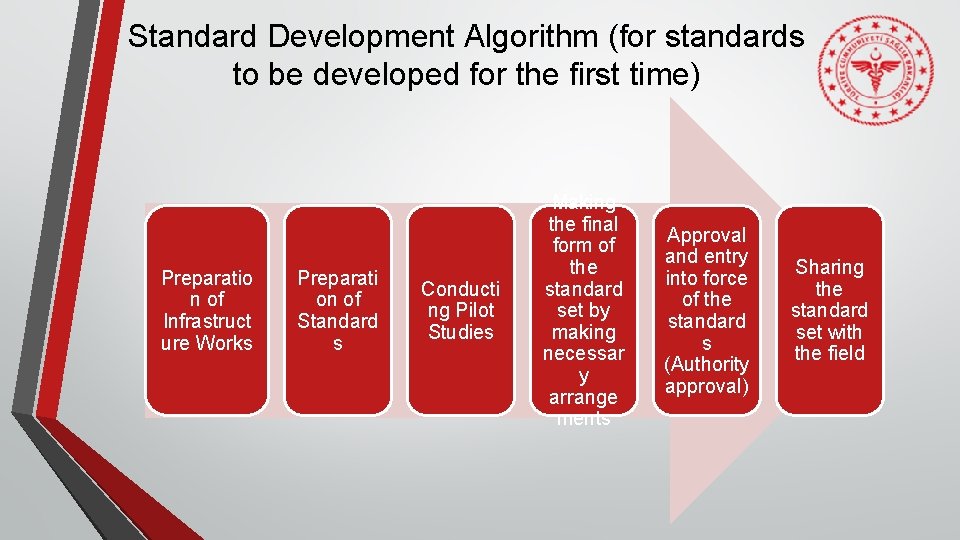
Standard Development Algorithm (for standards to be developed for the first time) Preparatio n of Infrastruct ure Works Preparati on of Standard s Conducti ng Pilot Studies Making the final form of the standard set by making necessar y arrange ments Approval and entry into force of the standard s (Authority approval) Sharing the standard set with the field
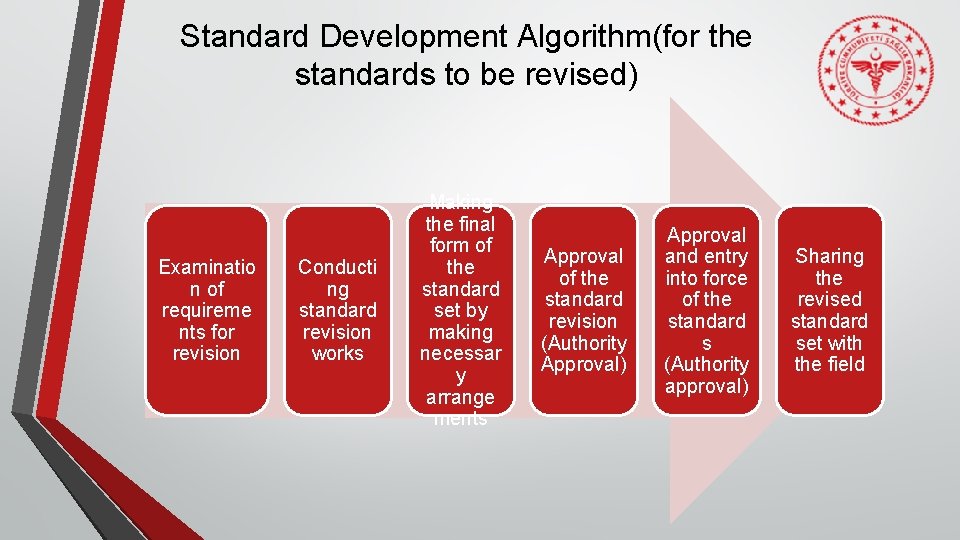
Standard Development Algorithm(for the standards to be revised) Examinatio n of requireme nts for revision Conducti ng standard revision works Making the final form of the standard set by making necessar y arrange ments Approval of the standard revision (Authority Approval) Approval and entry into force of the standard s (Authority approval) Sharing the revised standard set with the field
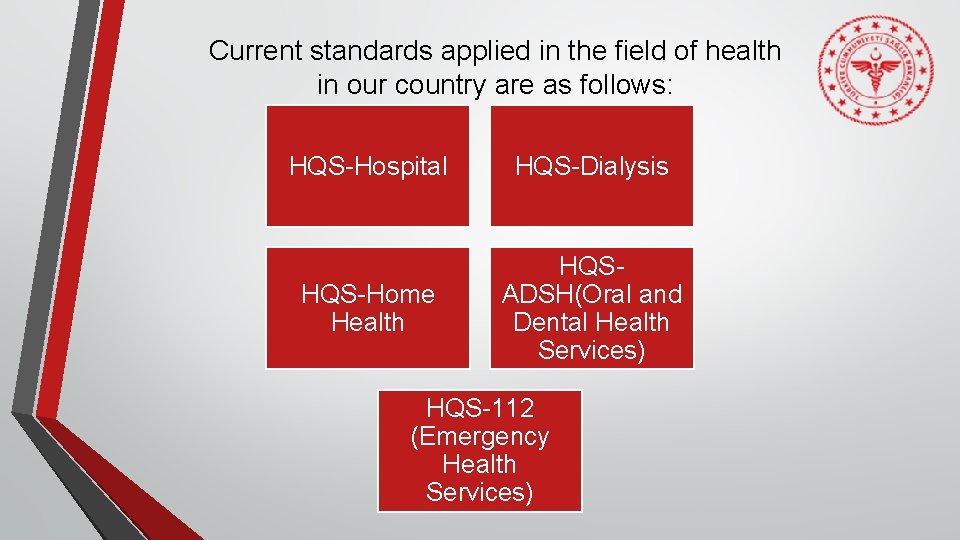
Current standards applied in the field of health in our country are as follows: HQS-Hospital HQS-Dialysis HQS-Home Health HQSADSH(Oral and Dental Health Services) HQS-112 (Emergency Health Services)
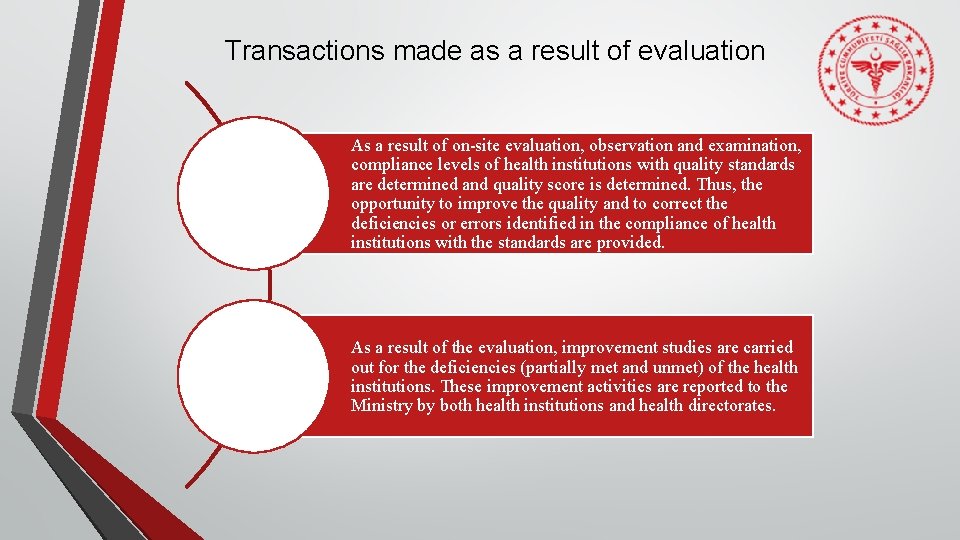
Transactions made as a result of evaluation As a result of on-site evaluation, observation and examination, compliance levels of health institutions with quality standards are determined and quality score is determined. Thus, the opportunity to improve the quality and to correct the deficiencies or errors identified in the compliance of health institutions with the standards are provided. As a result of the evaluation, improvement studies are carried out for the deficiencies (partially met and unmet) of the health institutions. These improvement activities are reported to the Ministry by both health institutions and health directorates.
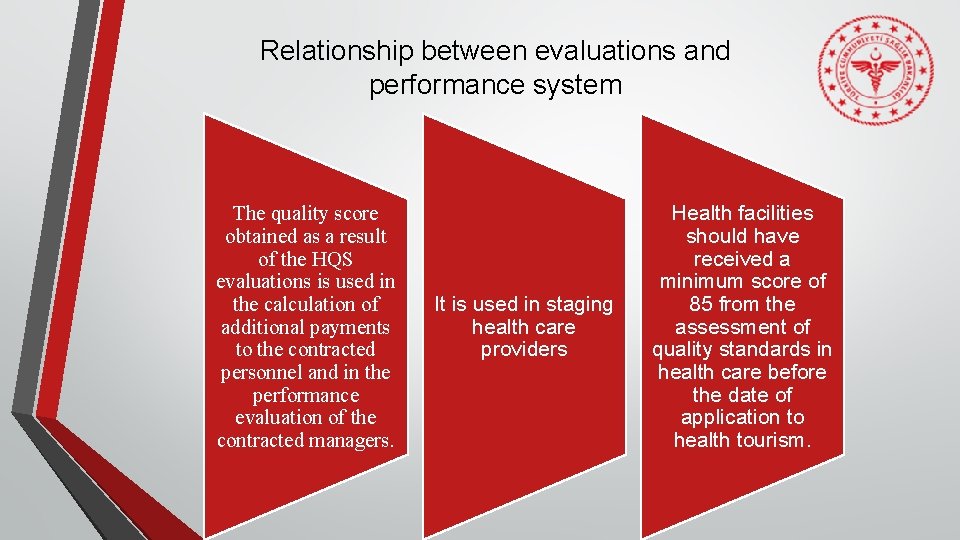
Relationship between evaluations and performance system The quality score obtained as a result of the HQS evaluations is used in the calculation of additional payments to the contracted personnel and in the performance evaluation of the contracted managers. It is used in staging health care providers Health facilities should have received a minimum score of 85 from the assessment of quality standards in health care before the date of application to health tourism.
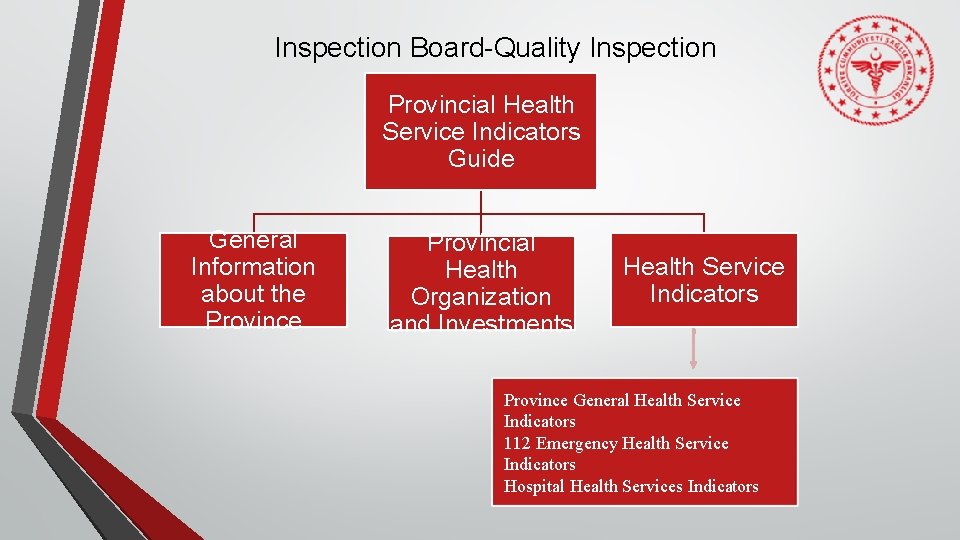
Inspection Board-Quality Inspection Provincial Health Service Indicators Guide General Information about the Provincial Health Organization and Investments Health Service Indicators Province General Health Service Indicators 112 Emergency Health Service Indicators Hospital Health Services Indicators
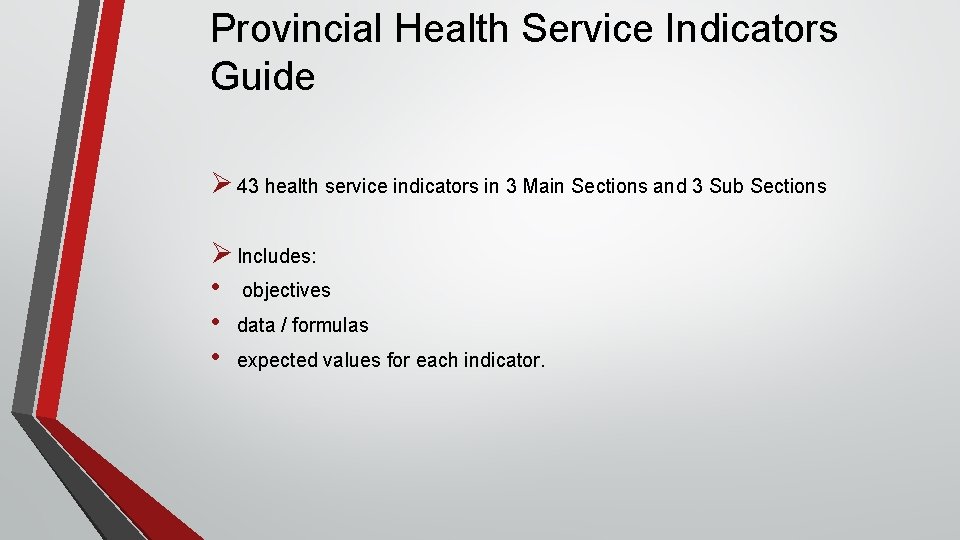
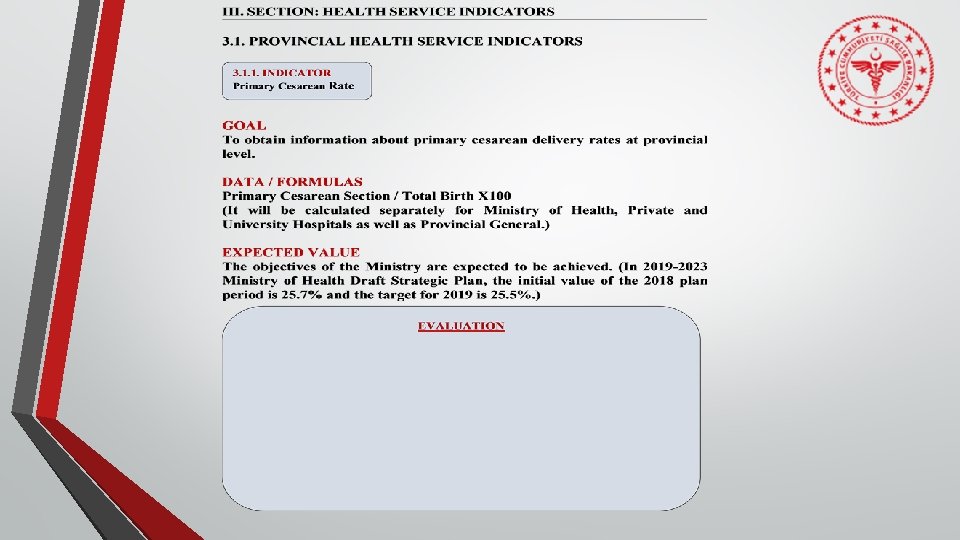
Provincial Health Service Indicators Guide Ø 43 health service indicators in 3 Main Sections and 3 Sub Sections Ø Includes: • objectives • data / formulas • expected values for each indicator.
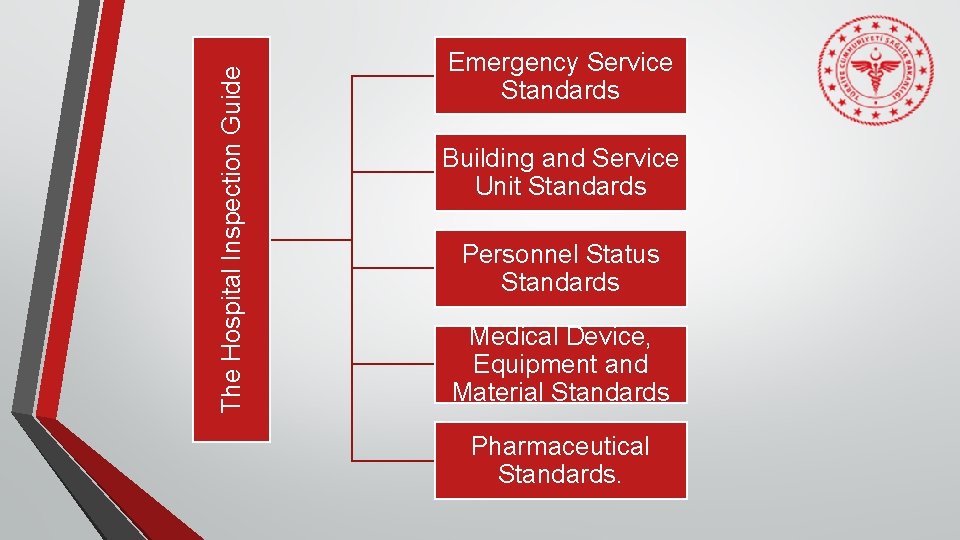
The Hospital Inspection Guide Emergency Service Standards Building and Service Unit Standards Personnel Status Standards Medical Device, Equipment and Material Standards Pharmaceutical Standards.
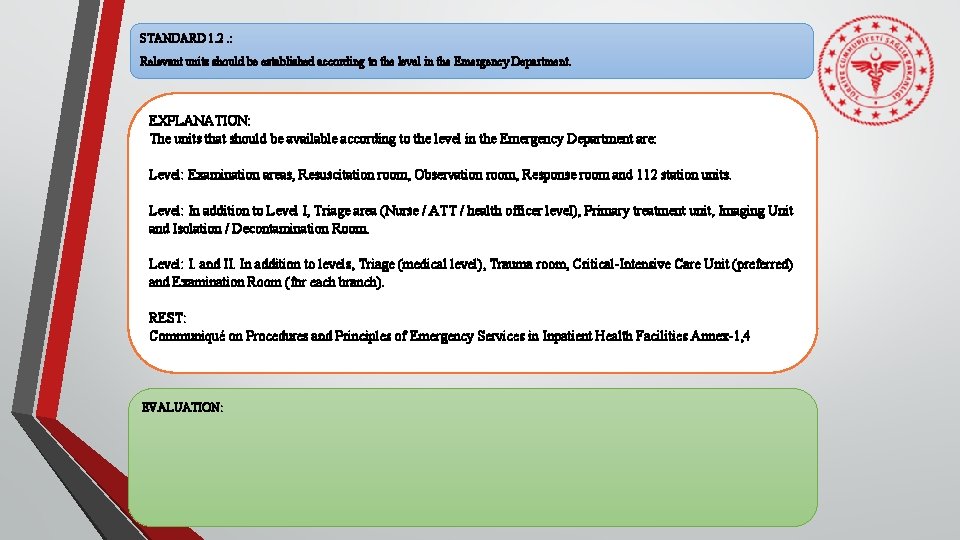
STANDARD 1. 2. : Relevant units should be established according to the level in the Emergency Department. EXPLANATION: The units that should be available according to the level in the Emergency Department are: Level: Examination areas, Resuscitation room, Observation room, Response room and 112 station units. Level: In addition to Level I, Triage area (Nurse / ATT / health officer level), Primary treatment unit, Imaging Unit and Isolation / Decontamination Room. Level: I. and II. In addition to levels, Triage (medical level), Trauma room, Critical-Intensive Care Unit (preferred) and Examination Room (for each branch). REST: Communiqué on Procedures and Principles of Emergency Services in Inpatient Health Facilities Annex-1, 4 EVALUATION:
Inspection in Kütahya province Data on indicators included in the Provincial Health Service Indicators Guide were provided. Hospitals have been inspected in line with the standards in the Hospital Inspection Guide Findings and recommendations obtained as a result of the evaluation are included in the report
Example of Findings and Recommendations: Physical Therapy and Rehabilitation health services and thermal tourism potential of Kütahya province, which cannot be utilized sufficiently, should be handled as soon as possible by our Ministry in coordination with the Ministry of Culture and Tourism. The necessary thermal treatment and hydrotherapy and qualified accommodation facilities investment planning is important in terms of thermal health tourism.
Inspection Board Thank you for your time
- Slides: 31