
REPUBLIC OF THE FIJI ISLANDS COUNTRY REPORT Presented
REPUBLIC OF THE FIJI ISLANDS COUNTRY REPORT Presented by Mr. Jovilisi Tabuyaqona Email: jtabu_007@yahoo. com Phone: +679 9022566 Ministry of Agriculture Animal Health & Production Division
CONTENTS 1. Background on Fiji 2. Available sources of Energy
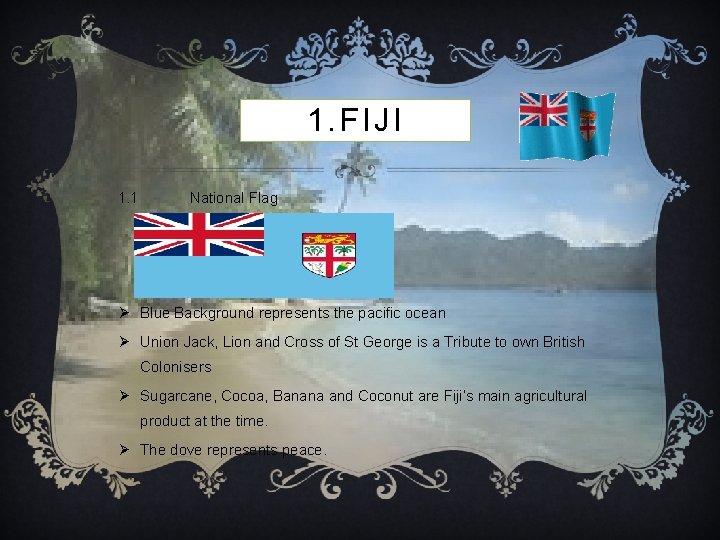
1. FIJI 1. 1 National Flag Ø Blue Background represents the pacific ocean Ø Union Jack, Lion and Cross of St George is a Tribute to own British Colonisers Ø Sugarcane, Cocoa, Banana and Coconut are Fiji’s main agricultural product at the time. Ø The dove represents peace.
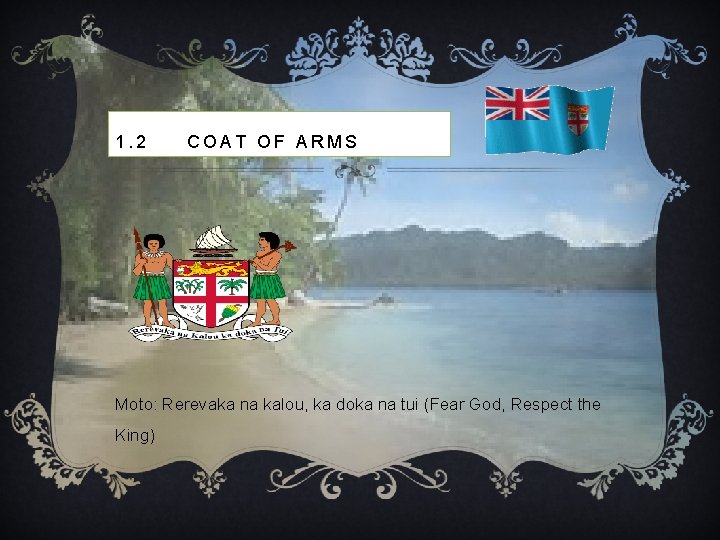
1. 2 COAT OF ARMS Moto: Rerevaka na kalou, ka doka na tui (Fear God, Respect the King)
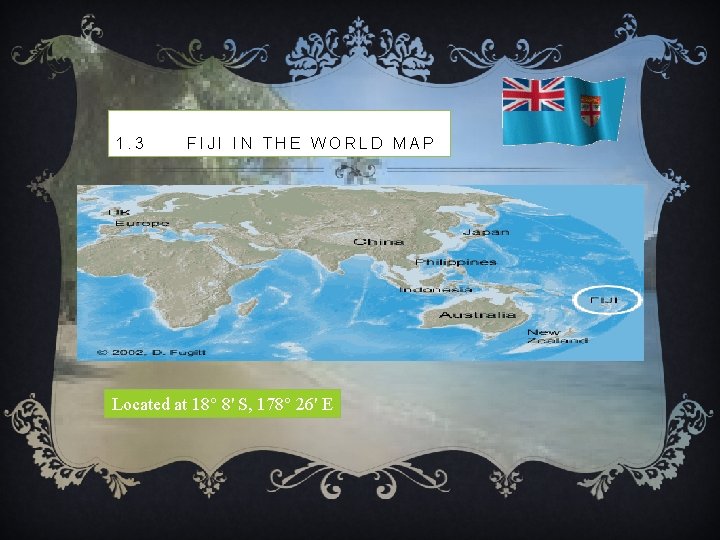
1. 3 FIJI IN THE WORLD MAP Located at 18° 8' S, 178° 26' E
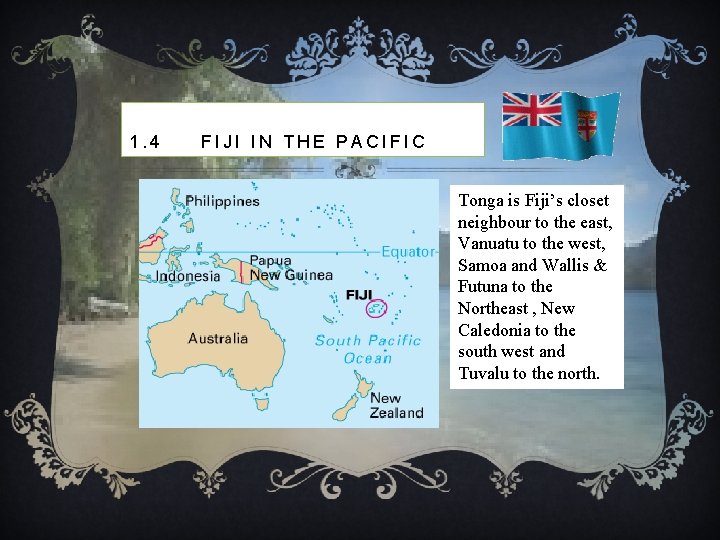
1. 4 FIJI IN THE PACIFIC Tonga is Fiji’s closet neighbour to the east, Vanuatu to the west, Samoa and Wallis & Futuna to the Northeast , New Caledonia to the south west and Tuvalu to the north.
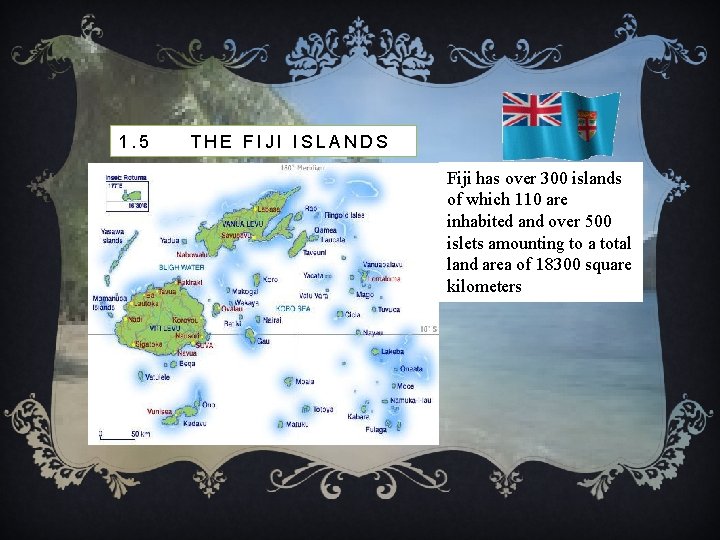
1. 5 THE FIJI ISLANDS Fiji has over 300 islands of which 110 are inhabited and over 500 islets amounting to a total land area of 18300 square kilometers
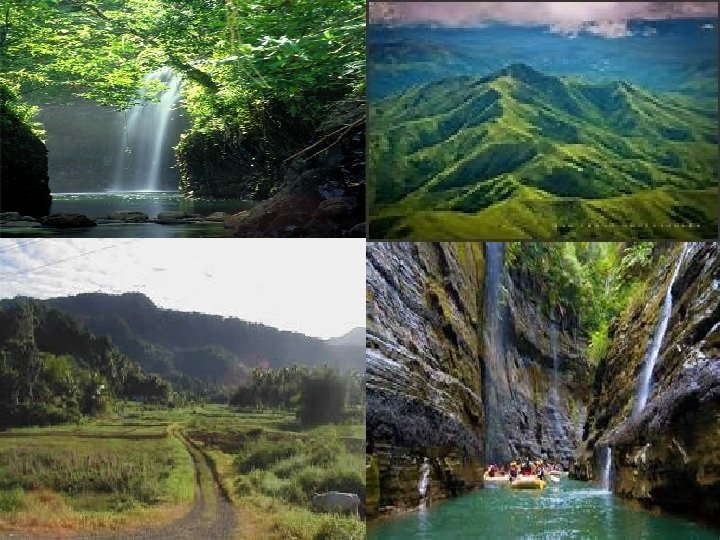
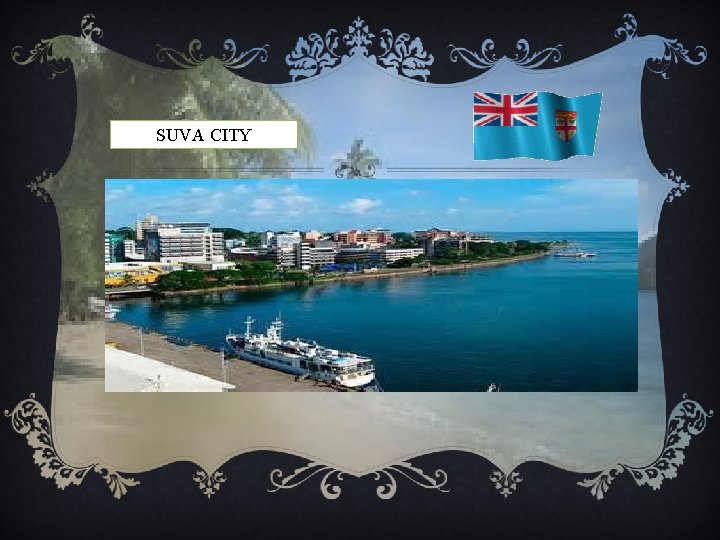
SUVA CITY
1. 6 PEOPLE v Referred to as “Fijians” v Different ethnic groups make up Fijians v Total population of 837, 000 which consists of “itaukei” (54. 3 %), “indians” (38. 1%), “rotumans” (1. 2%) and chinese, europeans and other pacific islanders make up the remaining 6. 4% of the total population
v Main Religions are Christianity, Hinduism, Islam. v Language: English, itaukei, Hindustani v Life expectancy is 72 years v 85% literacy rate.
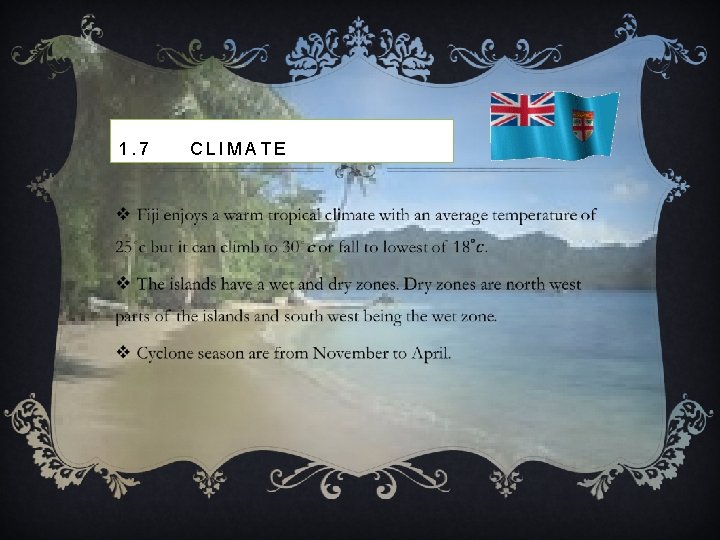
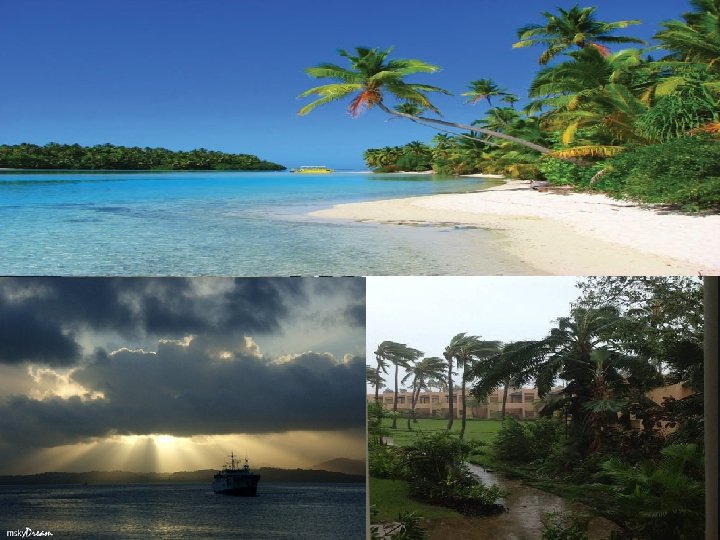
1. 7 v CLIMATE
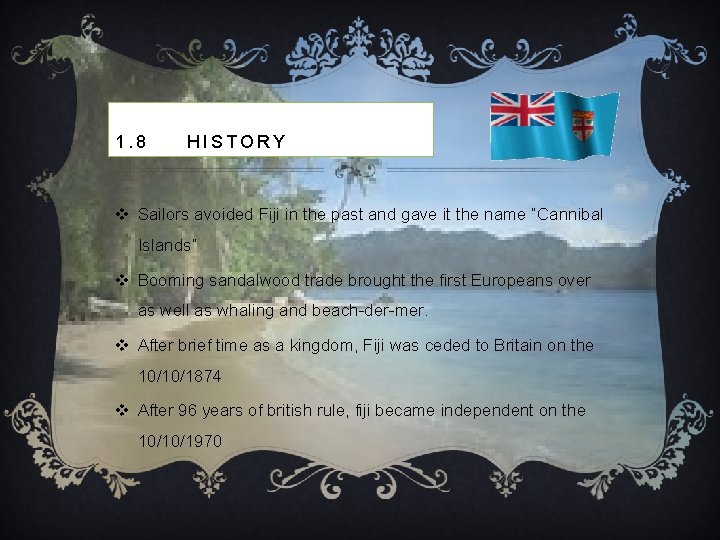
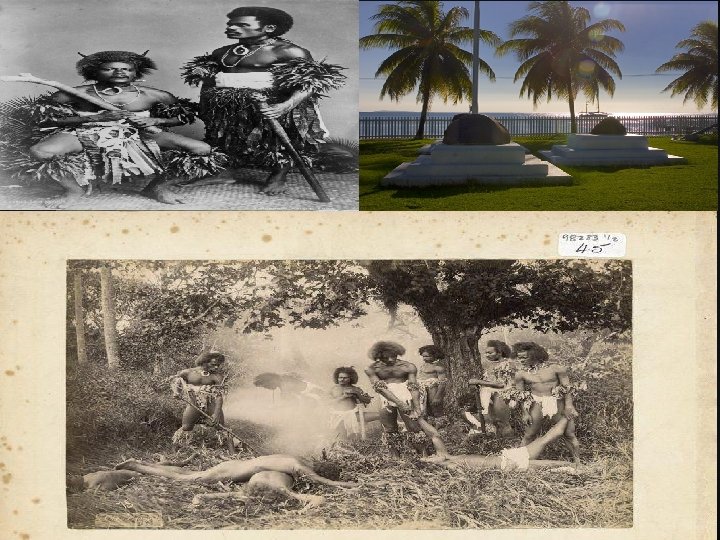
1. 8 HISTORY v Sailors avoided Fiji in the past and gave it the name “Cannibal Islands” v Booming sandalwood trade brought the first Europeans over as well as whaling and beach-der-mer. v After brief time as a kingdom, Fiji was ceded to Britain on the 10/10/1874 v After 96 years of british rule, fiji became independent on the 10/10/1970
1. 9 POLITICS v Fiji has a democratic government since November 2014 v Had a military regime since December 2006 v Has had 4 coup-de-tats since 1987
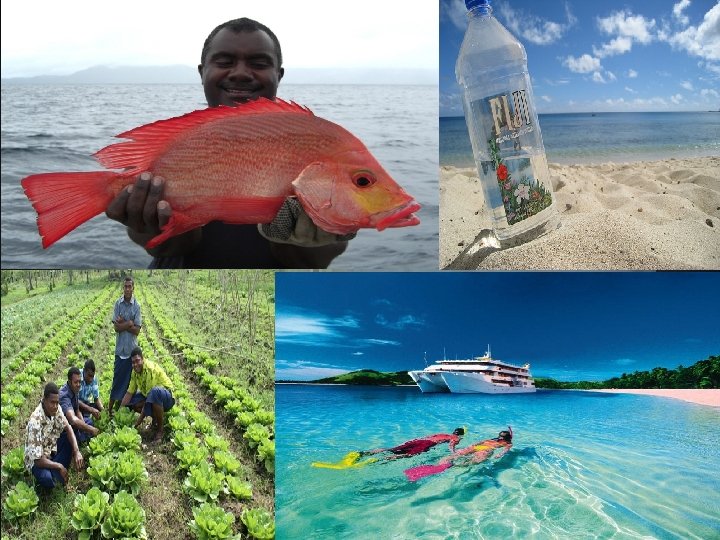
1. 10 ECONOMY v Fiji is one of the more advanced of the South Pacific Island economies, it is still a developing country with a large subsistence agriculture sector. v Agriculture and the textile industry used to be fiji’s major contributor to the economy but in recent years it has being taken over by the tourism industry v Fiji is also rich in mahogany timber reserves as well as fish, gold and mineral water.
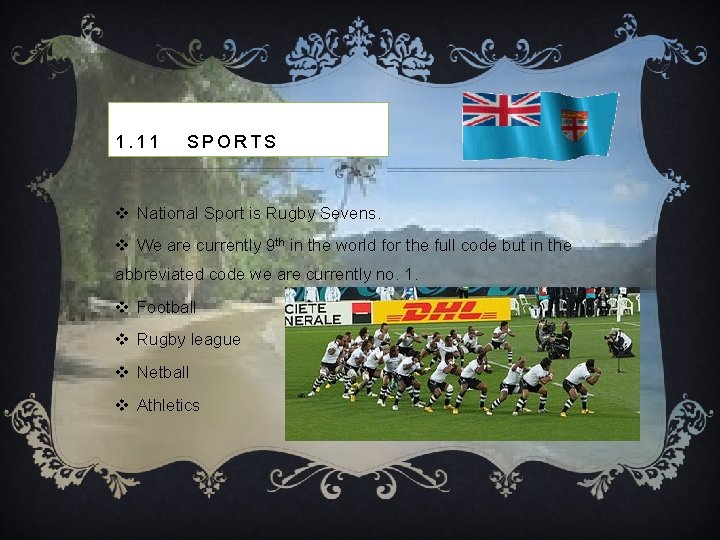
1. 11 SPORTS v National Sport is Rugby Sevens. v We are currently 9 th in the world for the full code but in the abbreviated code we are currently no. 1. v Football v Rugby league v Netball v Athletics

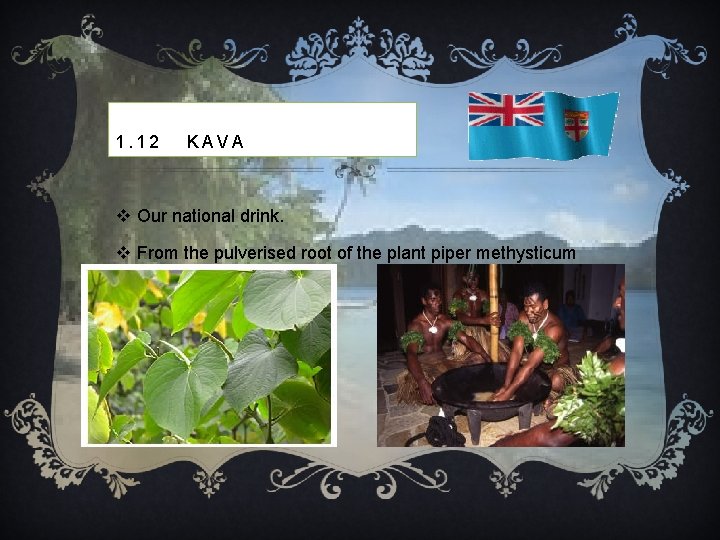
1. 12 KAVA v Our national drink. v From the pulverised root of the plant piper methysticum

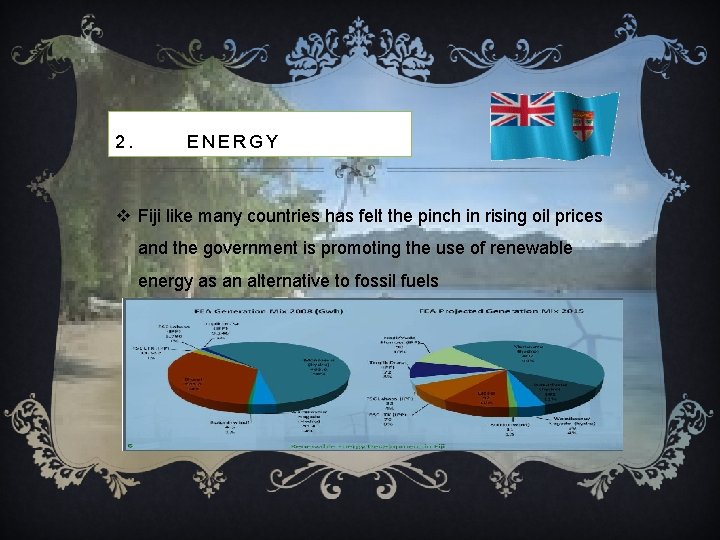
2. ENERGY v Fiji like many countries has felt the pinch in rising oil prices and the government is promoting the use of renewable energy as an alternative to fossil fuels
2. 1 RESOURCES v Fiji has investigated certain resources and their potential in energy production i. Hydro ii. Biomass iii. Solar iv. Wind v. Geothermal vi. Ocean Energy
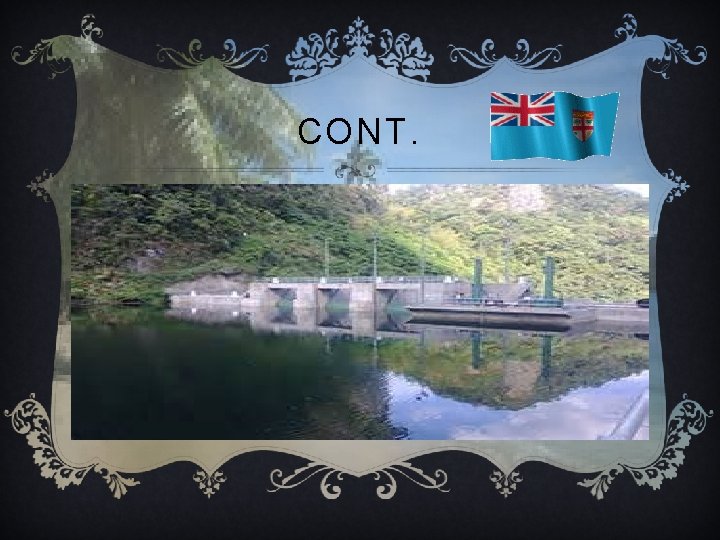
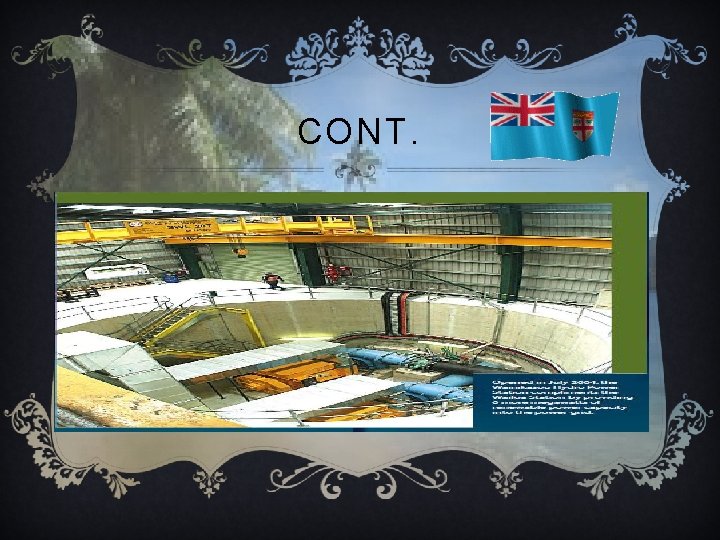
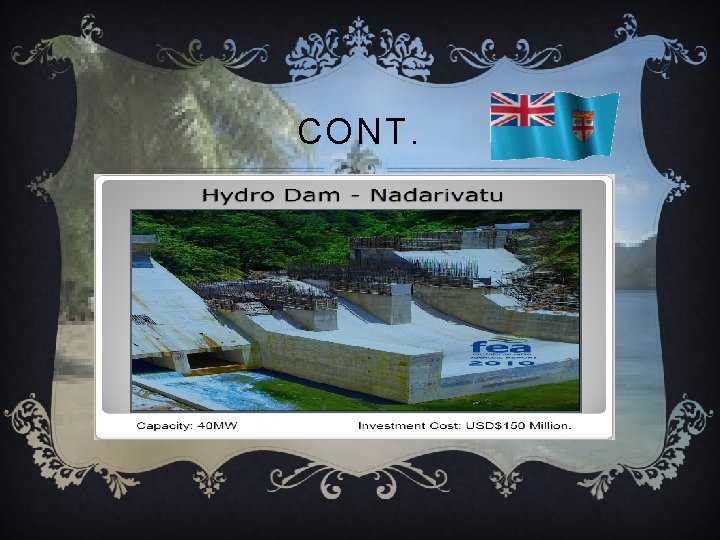
2. 2 HYDRO POWER v In 1992, 92% of fiji’s electricity came from hydro power, this figure dropped to 49% in 2006. v Fiji has five hydro dams, the biggest being the Monasavu Dam (80 MW) Nadarivatu (40 MW) Wainikasau (6. 5 MW) Nagado (3 MW) Wainiqeu(0. 8 MW) with a sixth, Wailoa (10 MW) to be completed later this year.
CONT.
CONT.
CONT.
2. 3 BIOMASS v Mainly crop and forestry residue. v Tropic woods LTD uses forestry residue to generate 9. 3 MW v Fiji Sugar Corperation uses Bagasse as feedstock. v IPP project in the works is the Vuda Biomass Plant with a capacity of 17 MW
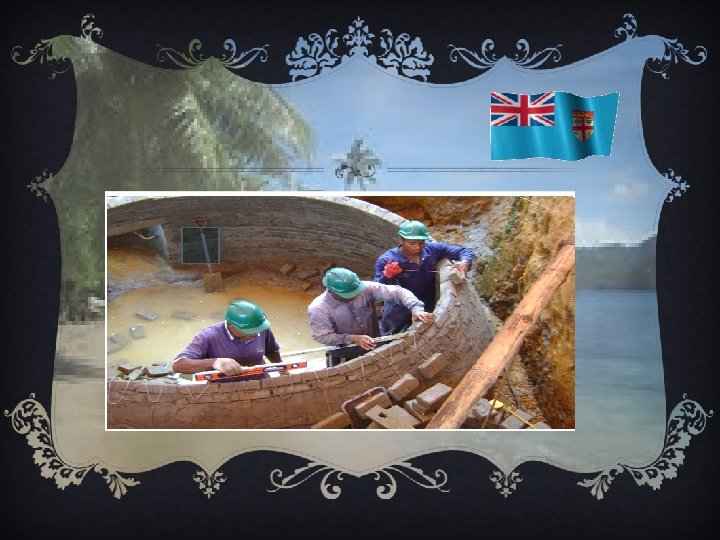
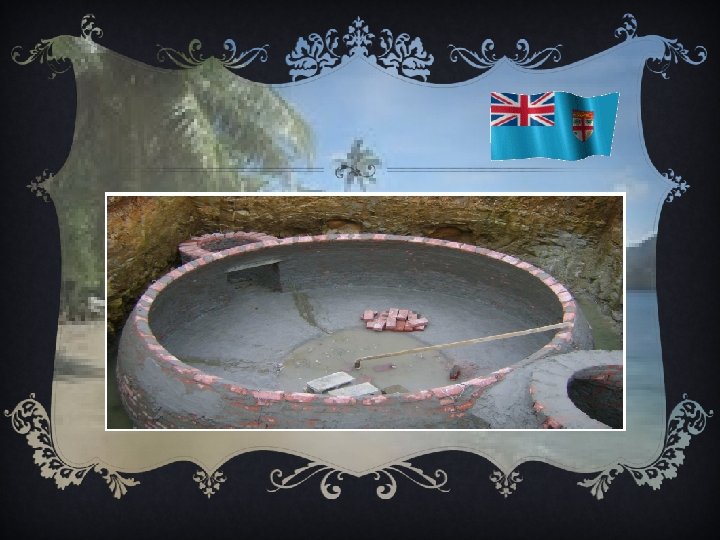
2. 3. 1 BIOGAS v Biogas were introduced into fiji in the mid eighties by an expatriate , Mr. Herbert Raedler v It was developed mainly as a form of waste management for piggeries and dairy farms. v The use of methane gas for cooking and digestate for fertilizers was seen as incentives for farmers. v Constraints faced by this technology is a lack of knowledge on the part of the users or recruited builders
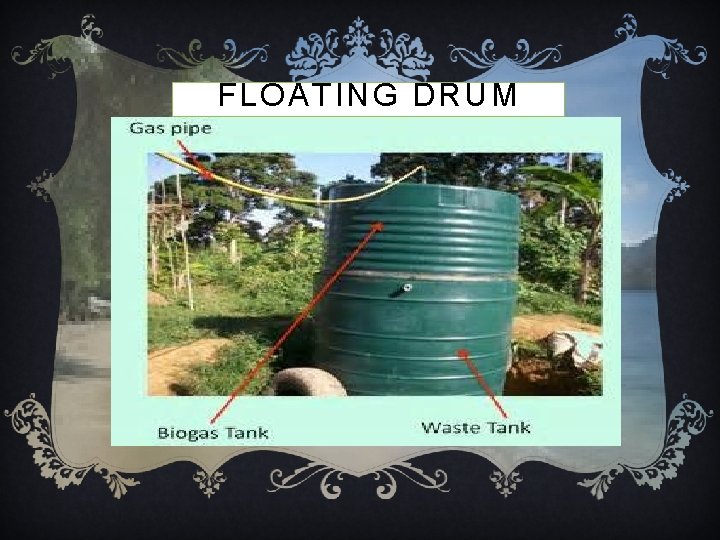
FLOATING DRUM
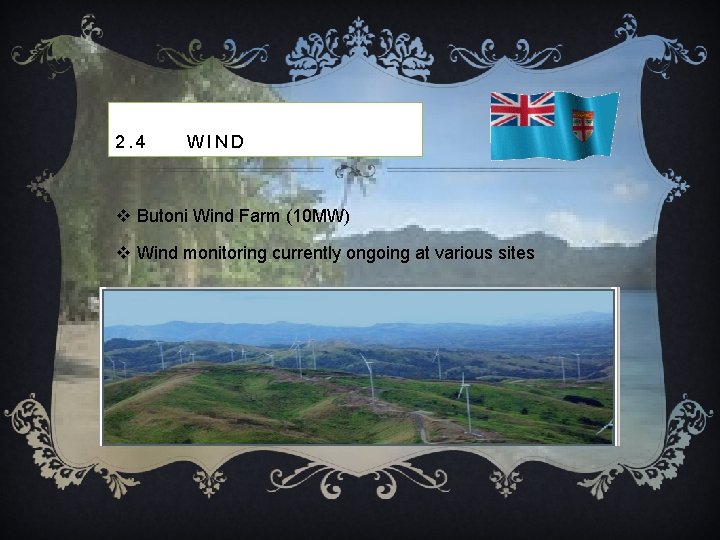
2. 4 WIND v Butoni Wind Farm (10 MW) v Wind monitoring currently ongoing at various sites
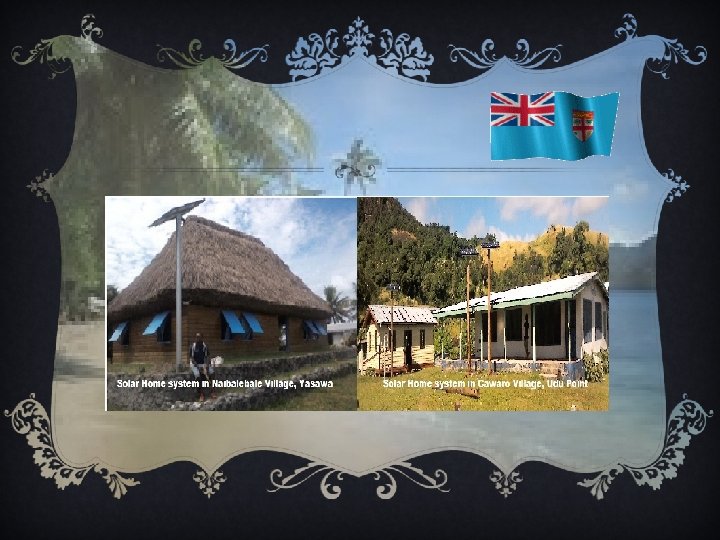
2. 5 SOLAR v The Fiji Meteorological has 10 pyronometers all over fiji and is recording data on a daily basis. v Solar energy is mostly employed in the rural electrification scheme where power is not available. v In rural areas, solar radiation is utilised by way of solar photovaltic. For light and charging of batteries. v In urban areas, solar is best used in the form of water heaters.
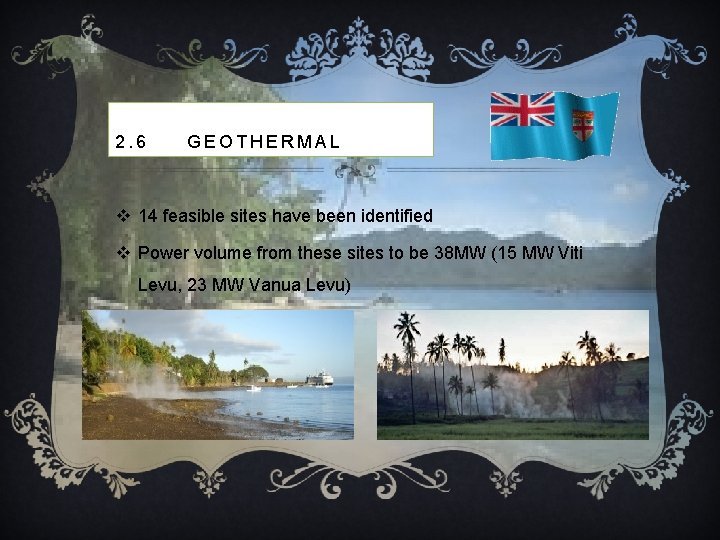
2. 6 GEOTHERMAL v 14 feasible sites have been identified v Power volume from these sites to be 38 MW (15 MW Viti Levu, 23 MW Vanua Levu)
2. 7 OCEAN THERMAL v Still in the process of data gathering
CONCLUSION v With the increase in price of fossil fuels, the fiji government is slowly but steadily shifting its priorities towards renewable energy. This is evident in the commissioning of new hydro dams in the last decade. v Hopefully we reach our target of 90% power generation from renewable energy by 2020.

……. . VINAKA……. XIE…… THANK YOU DON’T ASK QUESTIONS
- Slides: 40