
Republic Act No 9003 or the Philippine Ecological
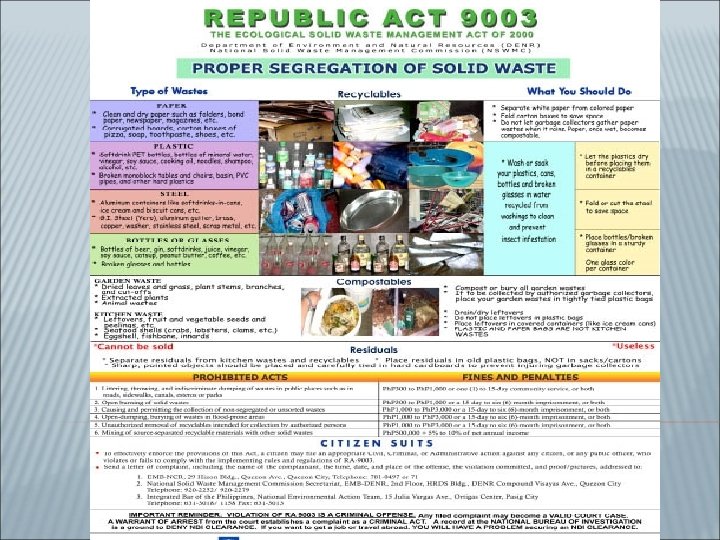
Republic Act No. 9003 or the Philippine Ecological Solid Waste Management Act of 2000 provides the legal framework for the country’s systematic, comprehensive, and ecological solid waste management program that shall ensure protection of public health and the environment. It emphasizes the need to create the necessary mechanisms and incentives to pursue an effective solid waste management at the local government levels. RA 9003 Solid Waste Management Act
WHAT IS ECOLOGICAL SOLID WASTE MANAGEMENT? ” - A systematic administration of activities which provide for segregation at source, segregated transportation, storage, transfer, processing, treatment, and disposal of solid waste and all other waste management activities which do not harm the environment.
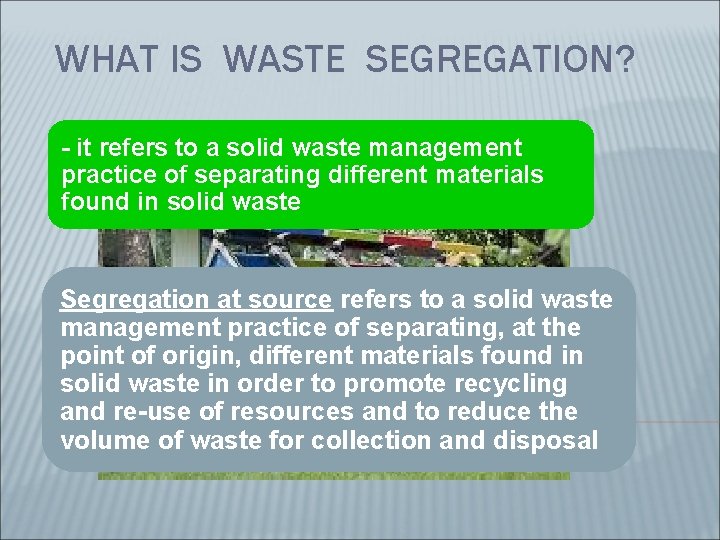
WHAT IS WASTE SEGREGATION? - it refers to a solid waste management practice of separating different materials found in solid waste Segregation at source refers to a solid waste management practice of separating, at the point of origin, different materials found in solid waste in order to promote recycling and re-use of resources and to reduce the volume of waste for collection and disposal
IMPORTANCE OF WASTE SEGREGATION to promote recycling and re-use of resources which reduces the drain on resources and energy when new stuff is being produced to reduce the volume of waste for collection and disposal therefore reducing the amount of wastes that has to go to landfills
Things to remember: Segregate garbagebased on classification Reduce waste
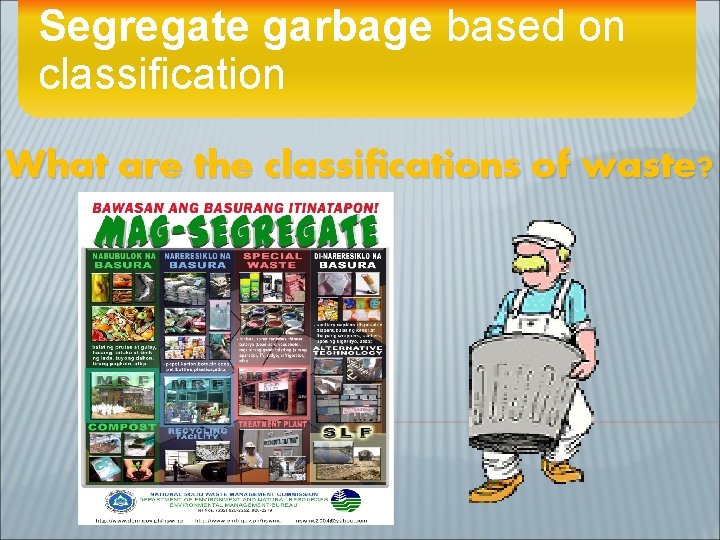
Segregate garbage based on classification What are the classifications of waste?
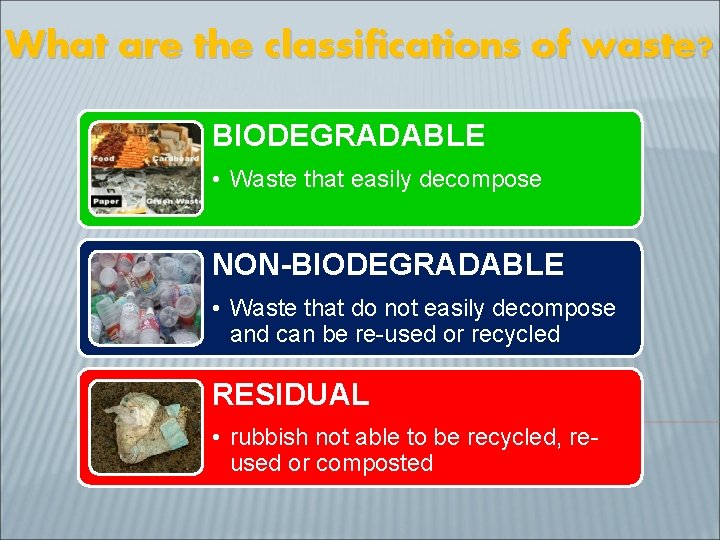
What are the classifications of waste? BIODEGRADABLE • Waste that easily decompose NON-BIODEGRADABLE • Waste that do not easily decompose and can be re-used or recycled RESIDUAL • rubbish not able to be recycled, reused or composted
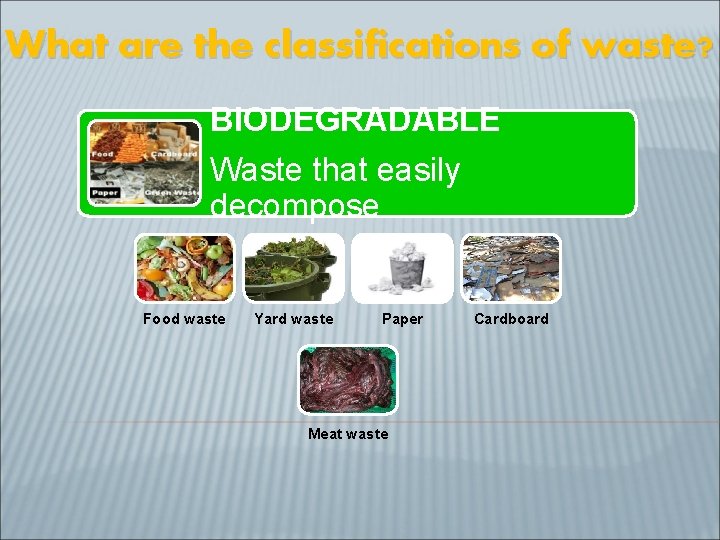
What are the classifications of waste? BIODEGRADABLE Waste that easily decompose Food waste Yard waste Paper Meat waste Cardboard
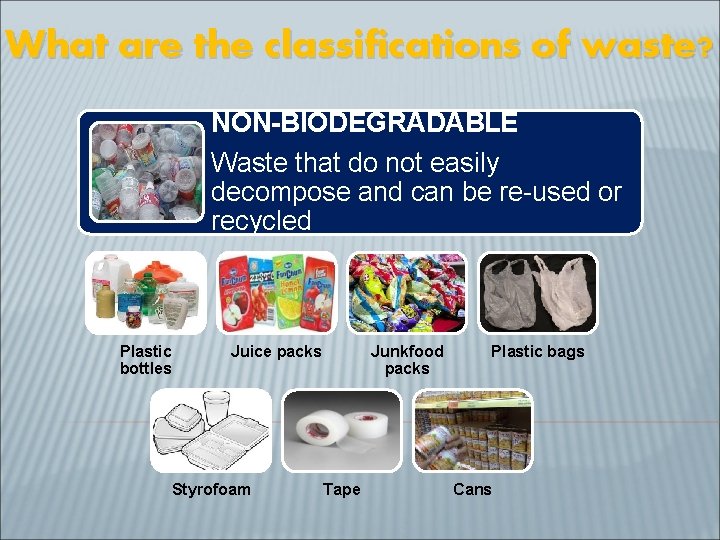
What are the classifications of waste? NON-BIODEGRADABLE Waste that do not easily decompose and can be re-used or recycled Plastic bottles Juice packs Styrofoam Junkfood packs Tape Plastic bags Cans
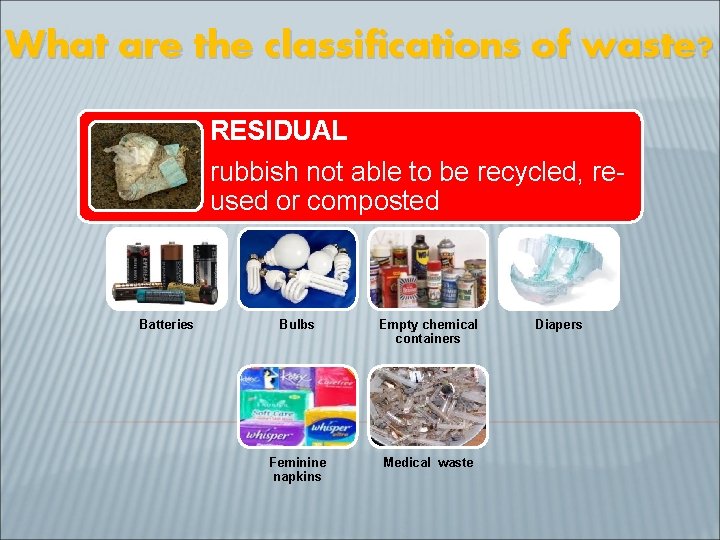
What are the classifications of waste? RESIDUAL rubbish not able to be recycled, reused or composted Batteries Bulbs Empty chemical containers Feminine napkins Medical waste Diapers
Things to remember: Reduce waste What are some ways to reduce waste?
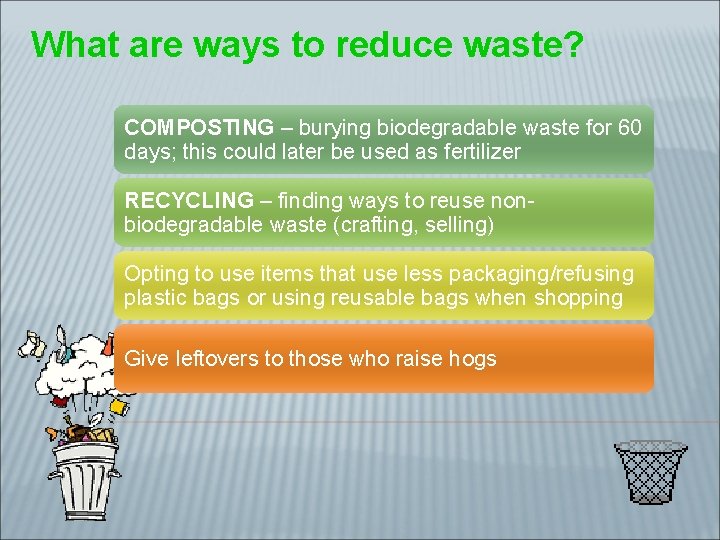
What are ways to reduce waste? COMPOSTING – burying biodegradable waste for 60 days; this could later be used as fertilizer RECYCLING – finding ways to reuse nonbiodegradable waste (crafting, selling) Opting to use items that use less packaging/refusing plastic bags or using reusable bags when shopping Give leftovers to those who raise hogs
- Slides: 13