
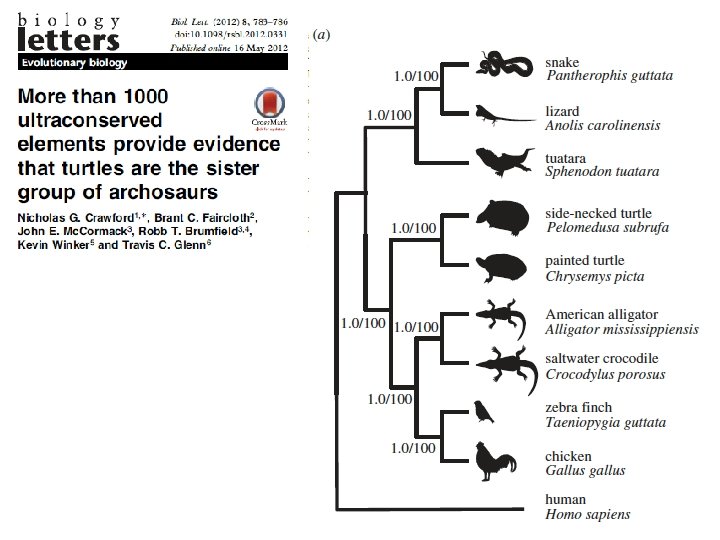
REPTILES Testudines 341 species Turtles Testudines Pleurodira Testudines



- Slides: 39
REPTILES
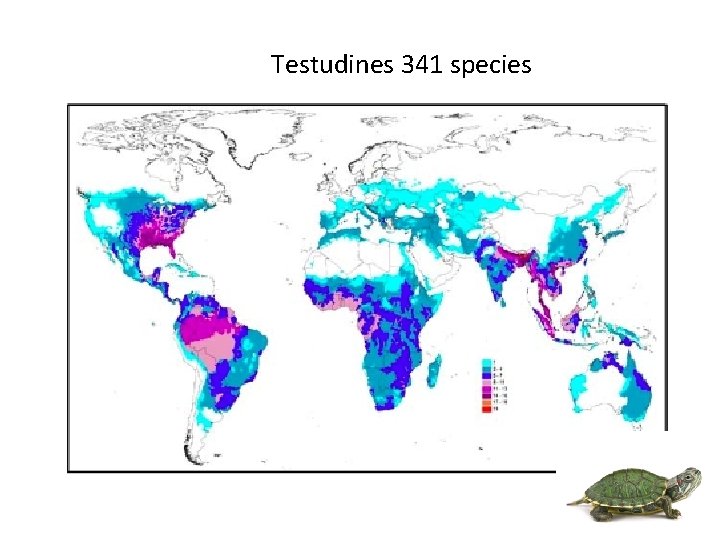
Testudines 341 species
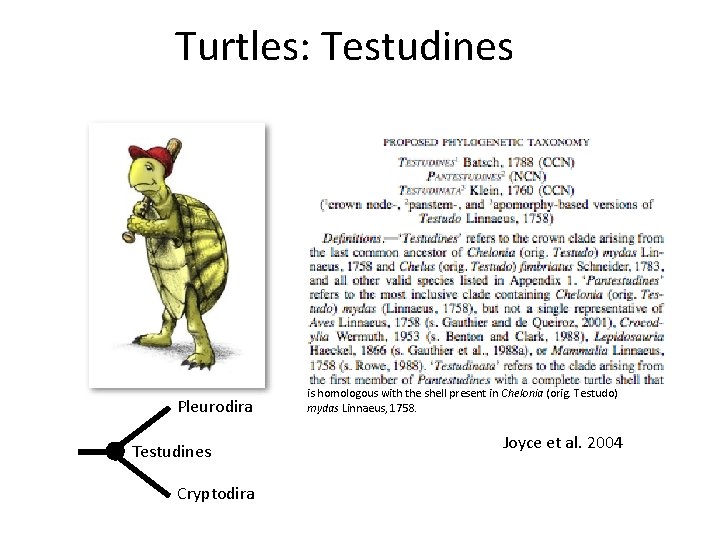
Turtles: Testudines Pleurodira Testudines Cryptodira is homologous with the shell present in Chelonia (orig. Testudo) mydas Linnaeus, 1758. Joyce et al. 2004
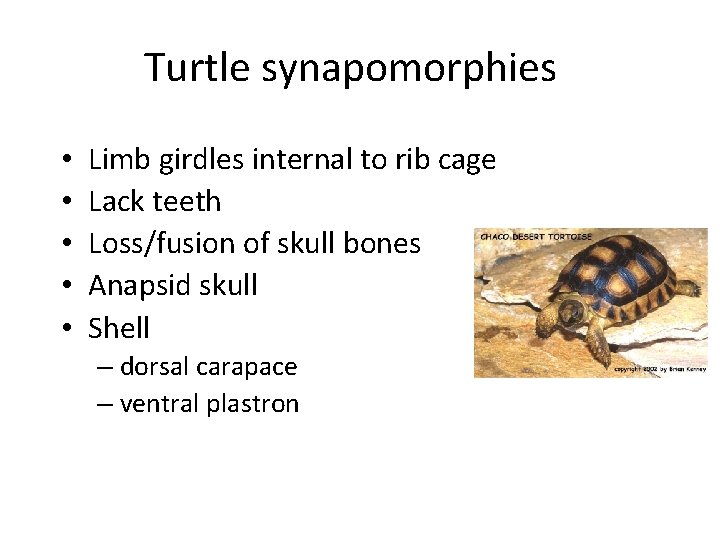
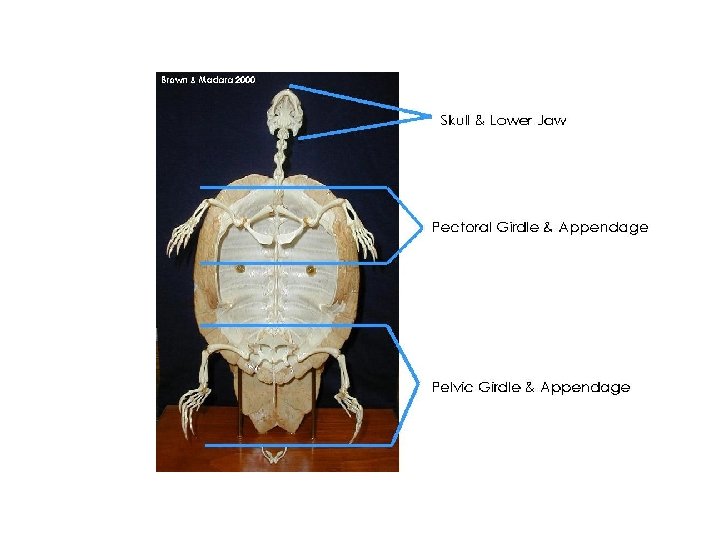
Turtle synapomorphies • • • Limb girdles internal to rib cage Lack teeth Loss/fusion of skull bones Anapsid skull Shell – dorsal carapace – ventral plastron
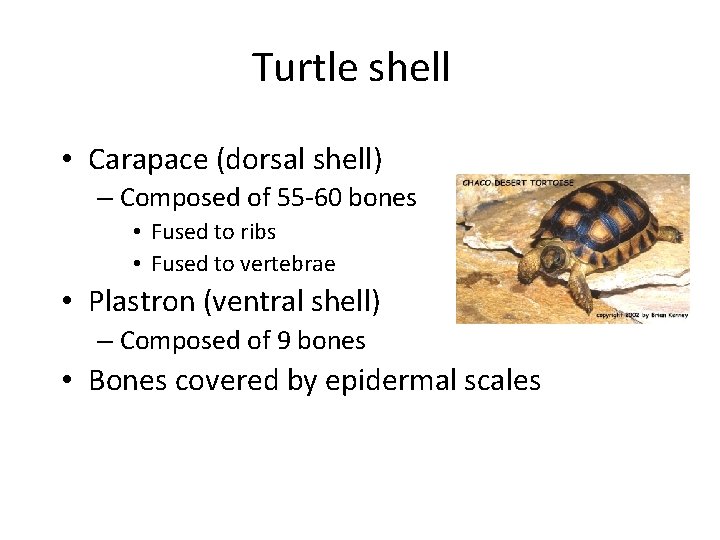
Turtle shell • Carapace (dorsal shell) – Composed of 55 -60 bones • Fused to ribs • Fused to vertebrae • Plastron (ventral shell) – Composed of 9 bones • Bones covered by epidermal scales
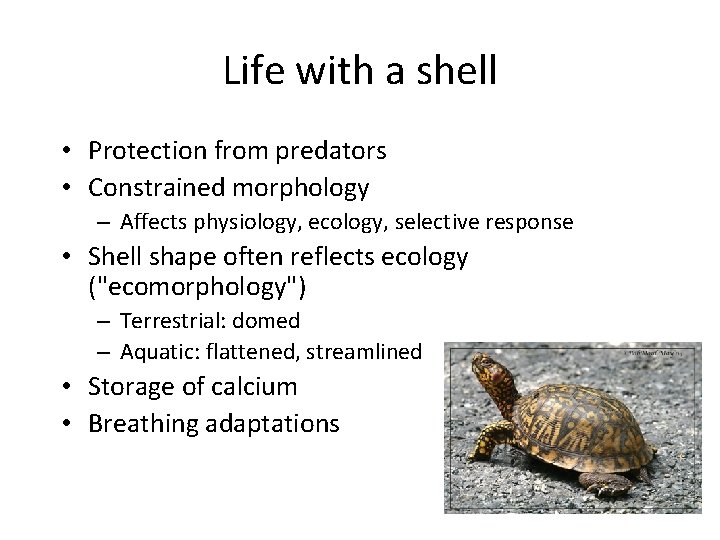
Life with a shell • Protection from predators • Constrained morphology – Affects physiology, ecology, selective response • Shell shape often reflects ecology ("ecomorphology") – Terrestrial: domed – Aquatic: flattened, streamlined • Storage of calcium • Breathing adaptations
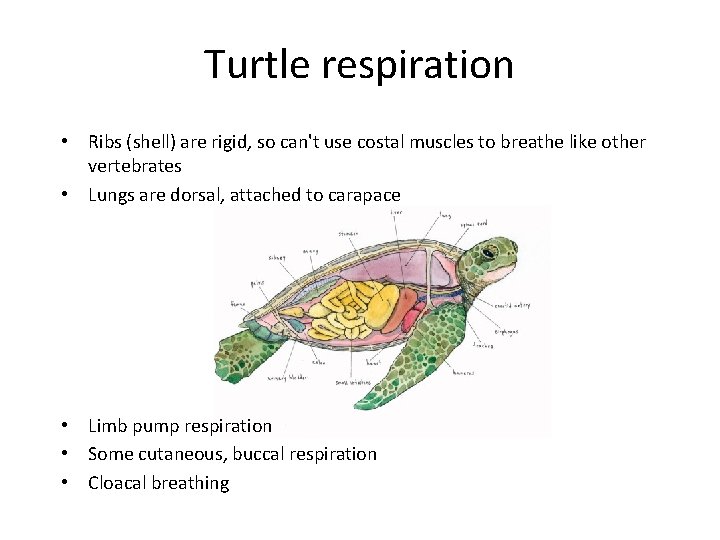
Turtle respiration • Ribs (shell) are rigid, so can't use costal muscles to breathe like other vertebrates • Lungs are dorsal, attached to carapace • Limb pump respiration • Some cutaneous, buccal respiration • Cloacal breathing
A turtle can breathe through its ass! 'One of our vivid early impressions of Rheodytes was that adults of both sexes swam with a widely gaping cloacal orifice (up to 30 mm in diameter). The orifice remains open when individuals are out of the water. We first became aware of the large cloacal bursae when a female was examined in bright sunlight; the carapace transmitted enough light to illuminate the coelomic cavity and produce a spectacular view internally for at least 100 mm, via the cloaca, revealing a large sac lined with vascular, villose mucosa. . Water is pumped in and out of the bursae of captives and experimental animals at rates of 15 to 60 times per minute' (Legler and Cann 1980)
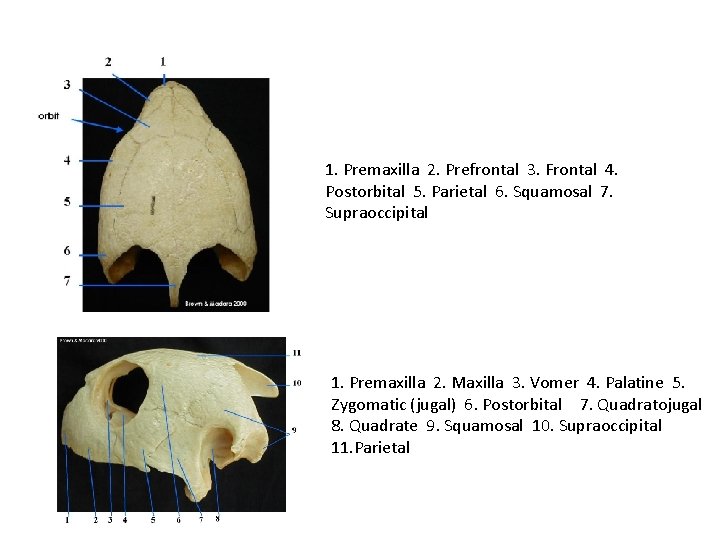
1. Premaxilla 2. Prefrontal 3. Frontal 4. Postorbital 5. Parietal 6. Squamosal 7. Supraoccipital 1. Premaxilla 2. Maxilla 3. Vomer 4. Palatine 5. Zygomatic (jugal) 6. Postorbital 7. Quadratojugal 8. Quadrate 9. Squamosal 10. Supraoccipital 11. Parietal
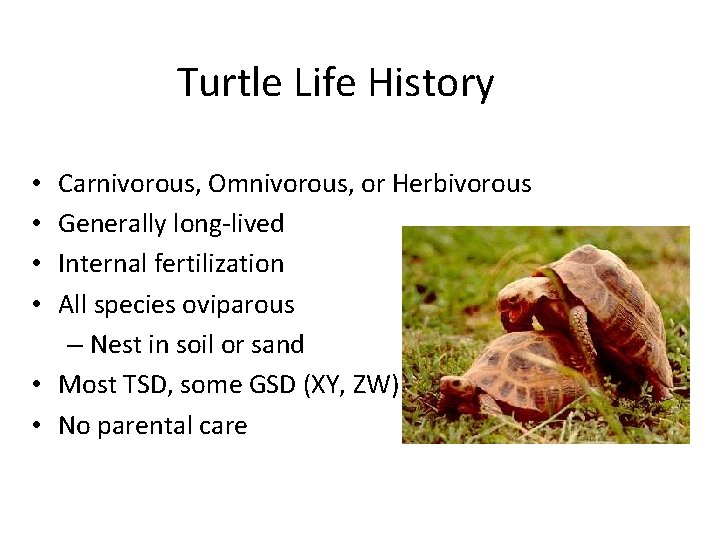
Turtle Life History Carnivorous, Omnivorous, or Herbivorous Generally long-lived Internal fertilization All species oviparous – Nest in soil or sand • Most TSD, some GSD (XY, ZW) • No parental care • •
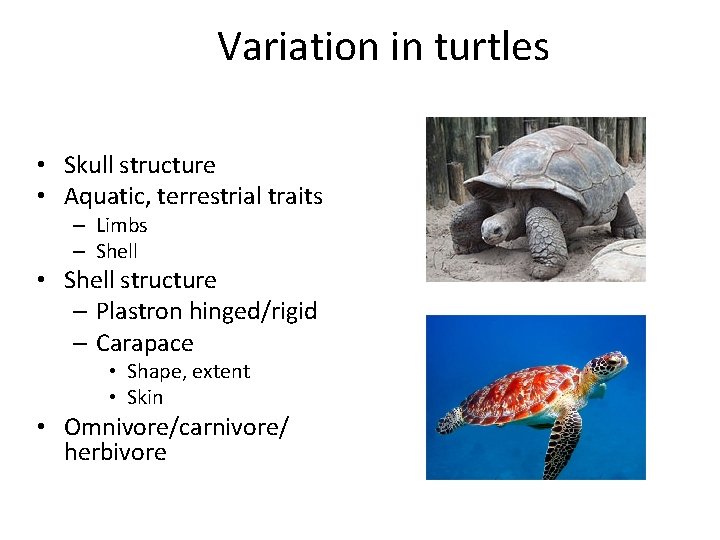
Variation in turtles • Skull structure • Aquatic, terrestrial traits – Limbs – Shell • Shell structure – Plastron hinged/rigid – Carapace • Shape, extent • Skin • Omnivore/carnivore/ herbivore
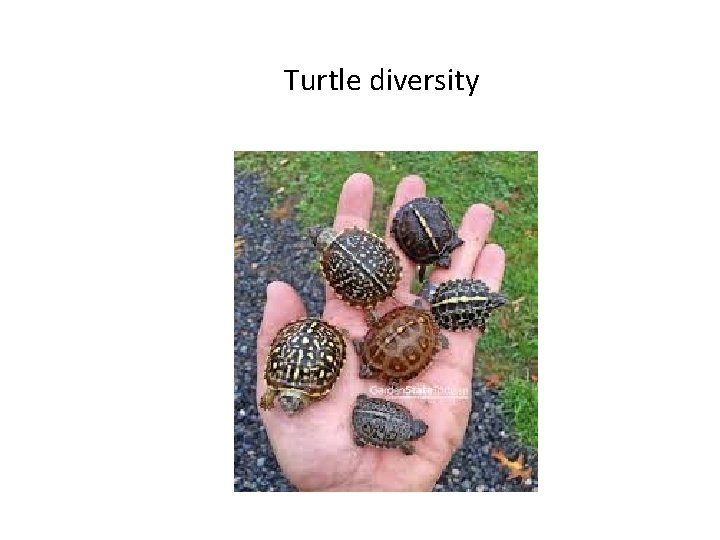
Turtle diversity
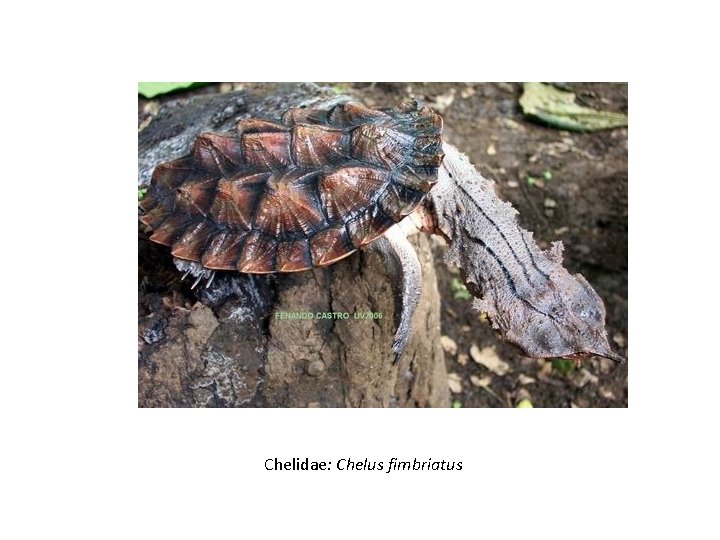
Chelidae: Chelus fimbriatus
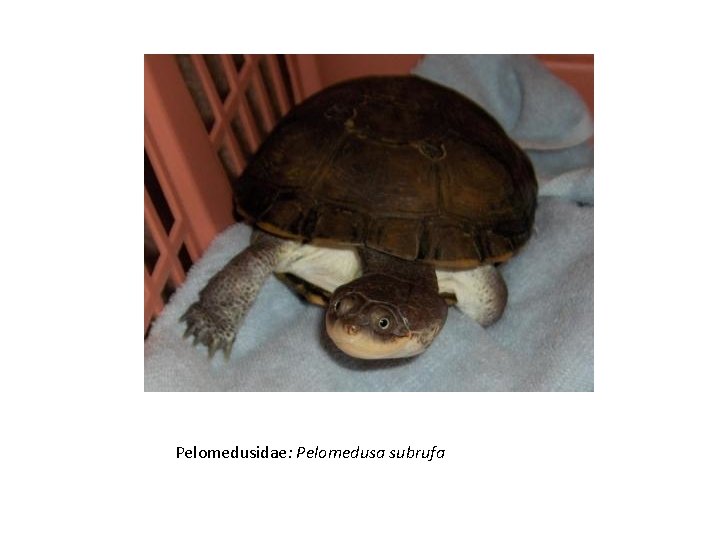
Pelomedusidae: Pelomedusa subrufa
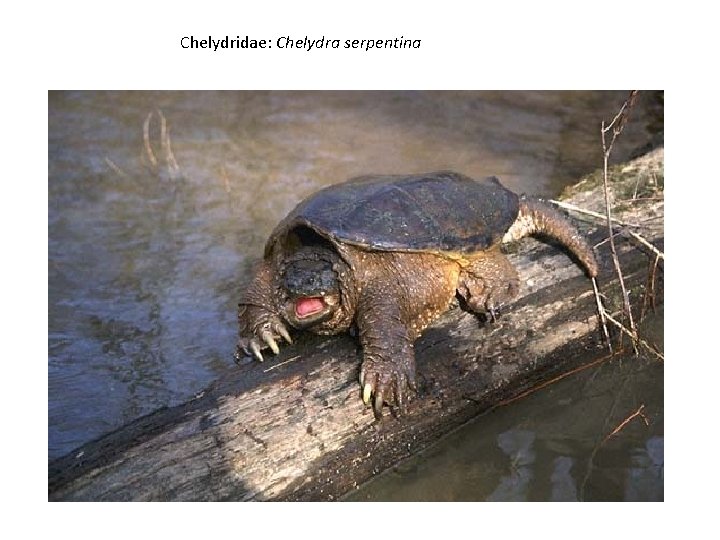
Chelydridae: Chelydra serpentina
Chelydridae: Macrochelys temminckii
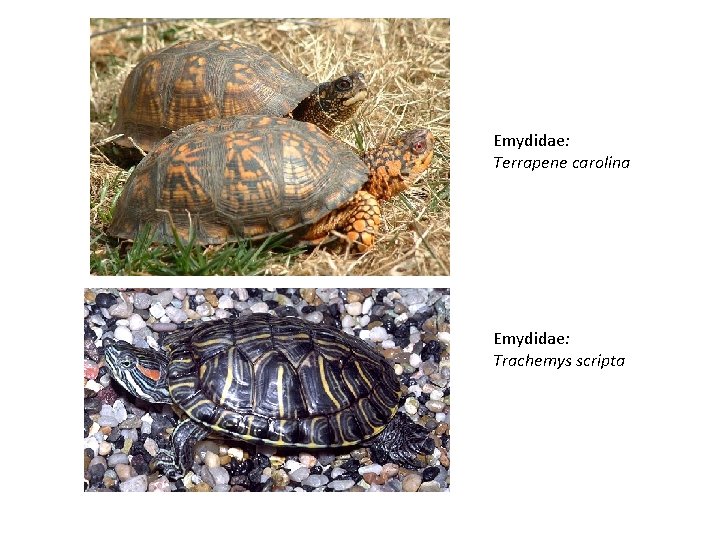
Emydidae: Terrapene carolina Emydidae: Trachemys scripta
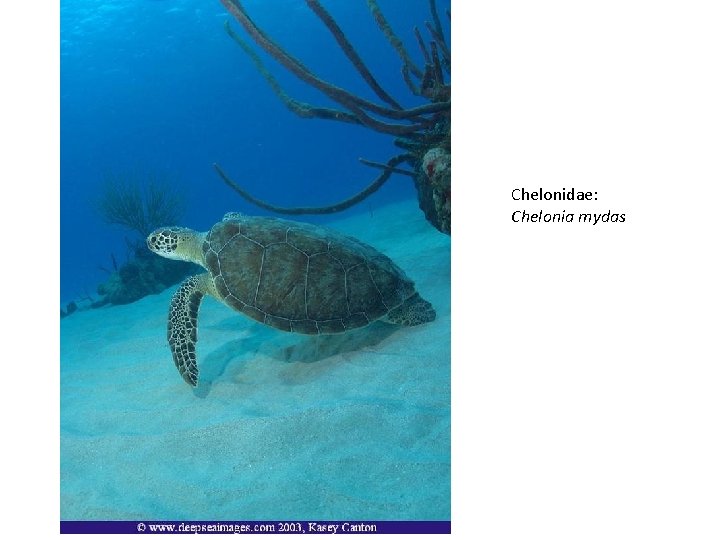
Chelonidae: Chelonia mydas
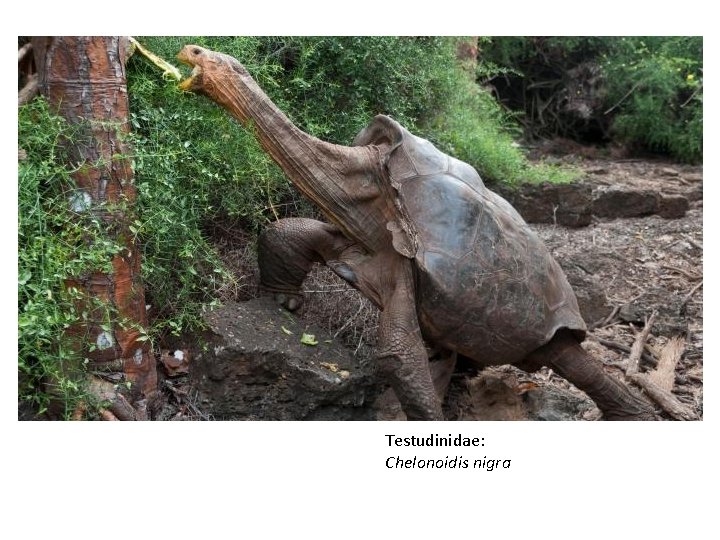
Testudinidae: Chelonoidis nigra
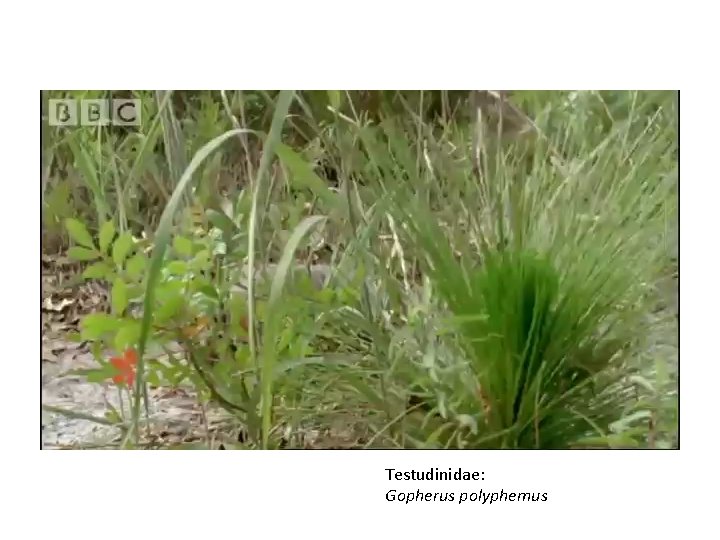
Testudinidae: Gopherus polyphemus
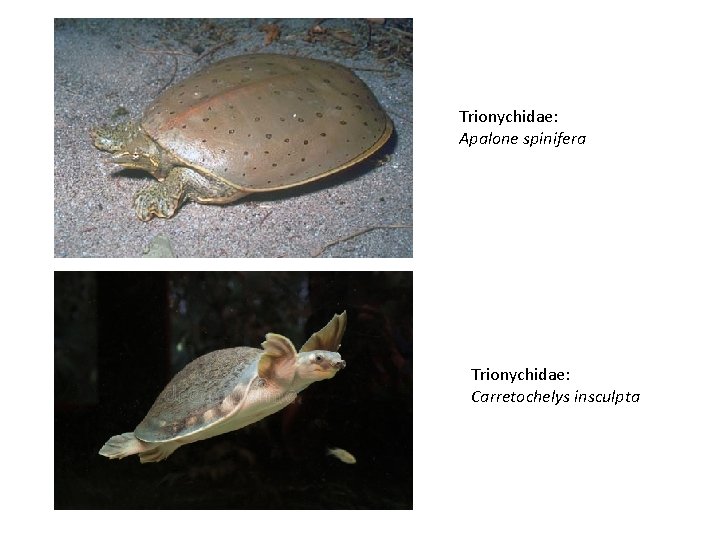
Trionychidae: Apalone spinifera Trionychidae: Carretochelys insculpta
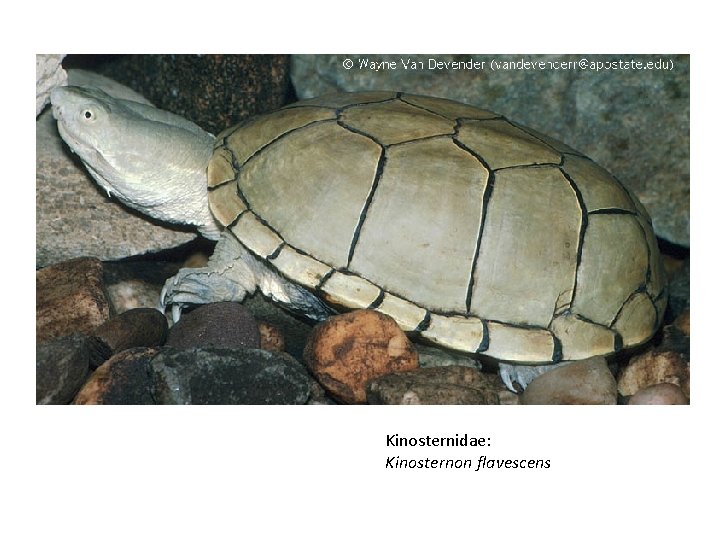
Kinosternidae: Kinosternon flavescens
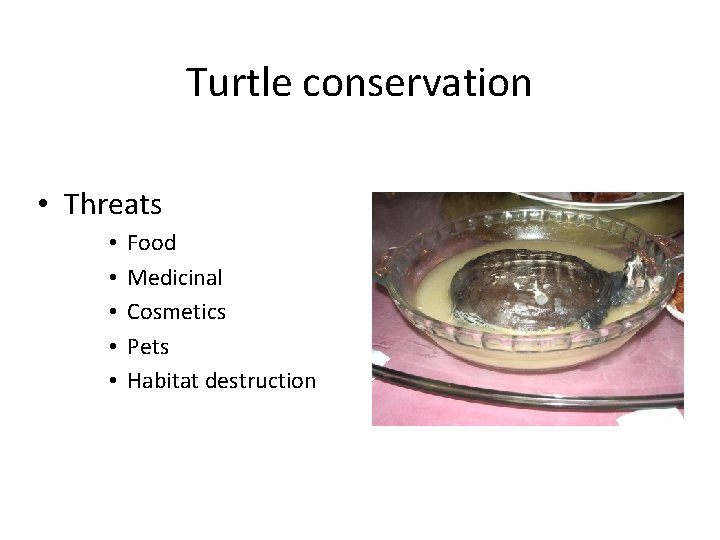
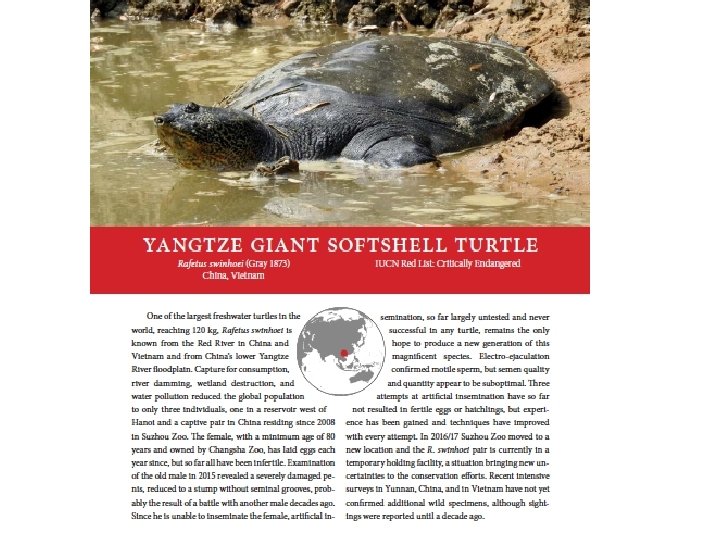
Turtle conservation • Threats • • • Food Medicinal Cosmetics Pets Habitat destruction
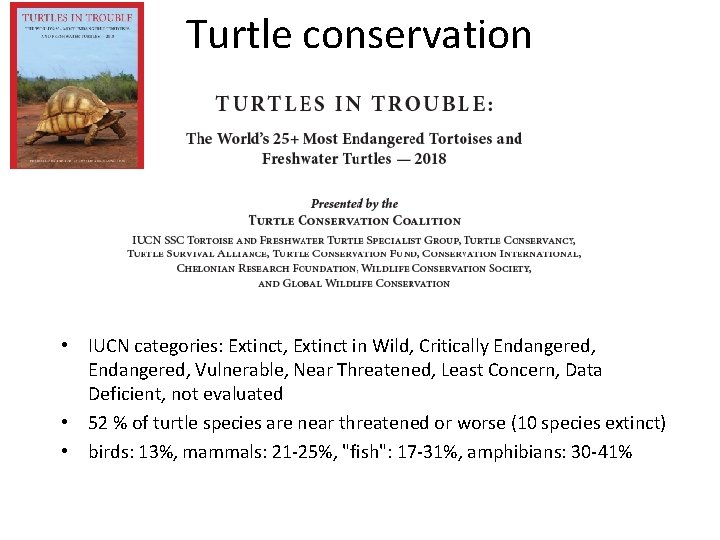
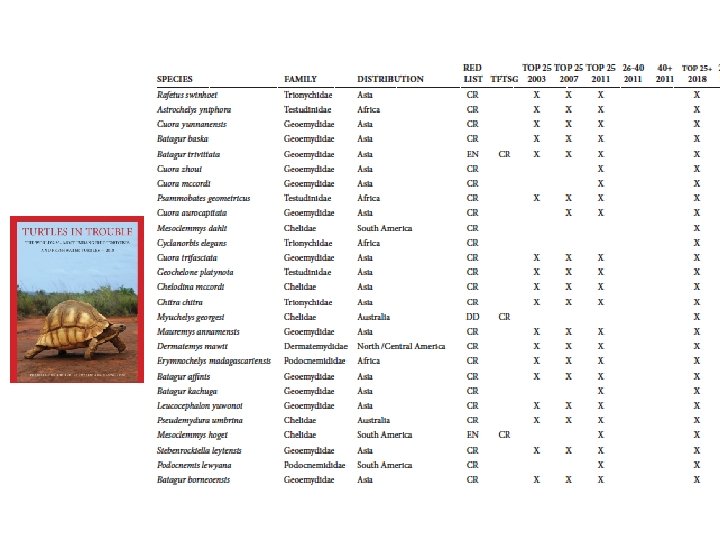
Turtle conservation • IUCN categories: Extinct, Extinct in Wild, Critically Endangered, Vulnerable, Near Threatened, Least Concern, Data Deficient, not evaluated • 52 % of turtle species are near threatened or worse (10 species extinct) • birds: 13%, mammals: 21 -25%, "fish": 17 -31%, amphibians: 30 -41%
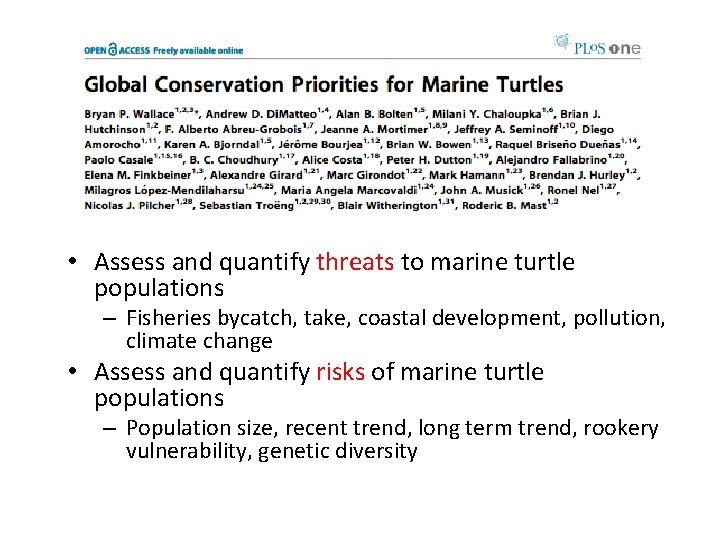
• Assess and quantify threats to marine turtle populations – Fisheries bycatch, take, coastal development, pollution, climate change • Assess and quantify risks of marine turtle populations – Population size, recent trend, long term trend, rookery vulnerability, genetic diversity
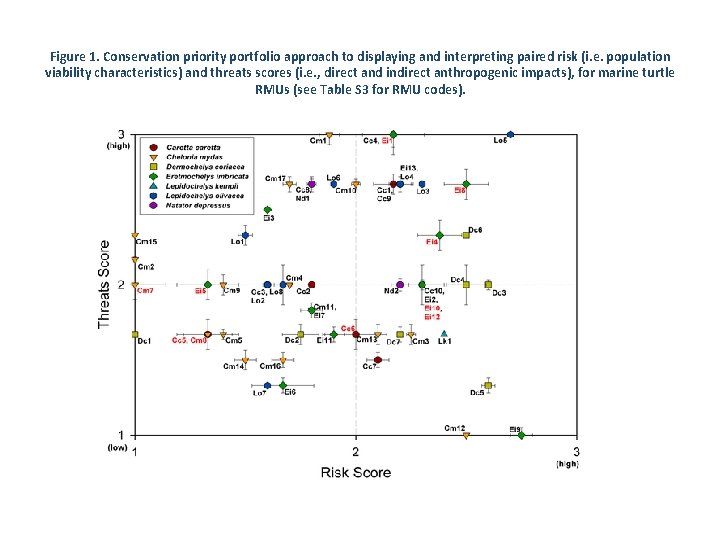
Figure 1. Conservation priority portfolio approach to displaying and interpreting paired risk (i. e. population viability characteristics) and threats scores (i. e. , direct and indirect anthropogenic impacts), for marine turtle RMUs (see Table S 3 for RMU codes).