
Reptiles and Amphibians North American Wildlife Reptiles Scales
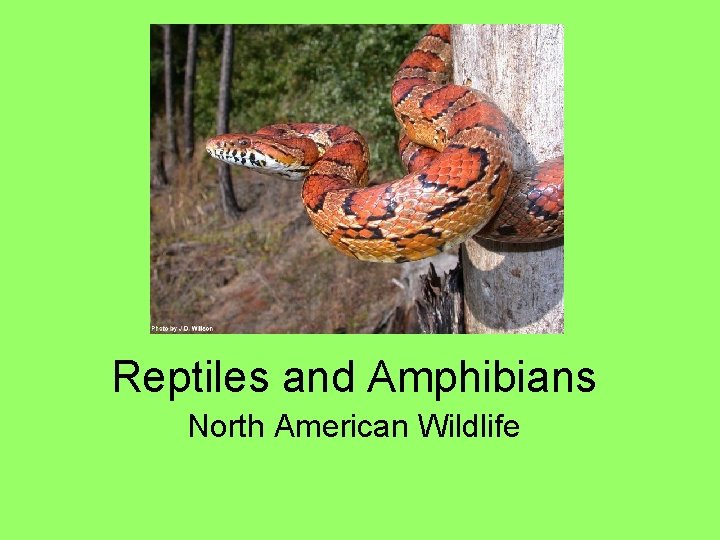
Reptiles and Amphibians North American Wildlife

Reptiles • • • Scales or plates Eggs with leathery skins Internal fertilization Claws on feet Young look like parents just smaller versions • Alligators, crocodiles, turtles, lizards and snakes
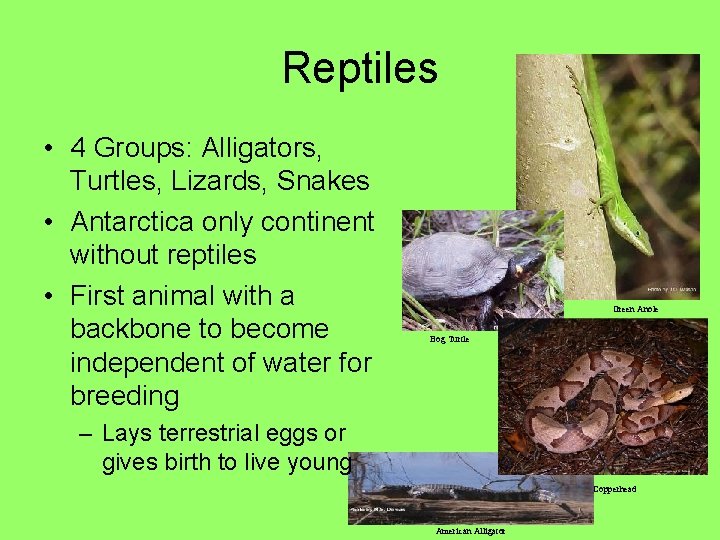
Reptiles • 4 Groups: Alligators, Turtles, Lizards, Snakes • Antarctica only continent without reptiles • First animal with a backbone to become independent of water for breeding Green Anole Bog Turtle – Lays terrestrial eggs or gives birth to live young Copperhead American Alligator
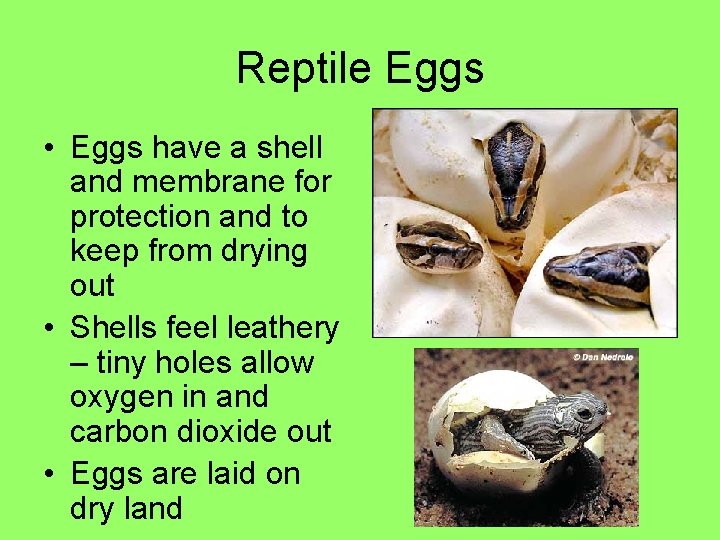
Reptile Eggs • Eggs have a shell and membrane for protection and to keep from drying out • Shells feel leathery – tiny holes allow oxygen in and carbon dioxide out • Eggs are laid on dry land
Alligators and Crocks • American Alligator and American Crocodile • Excellent hearing • Carnivores- do not chew their food • Moms- cows take care of young for up to a year • Hold breath under water for more then an hour • Can swim up to 20 mph, run up to 11 mph
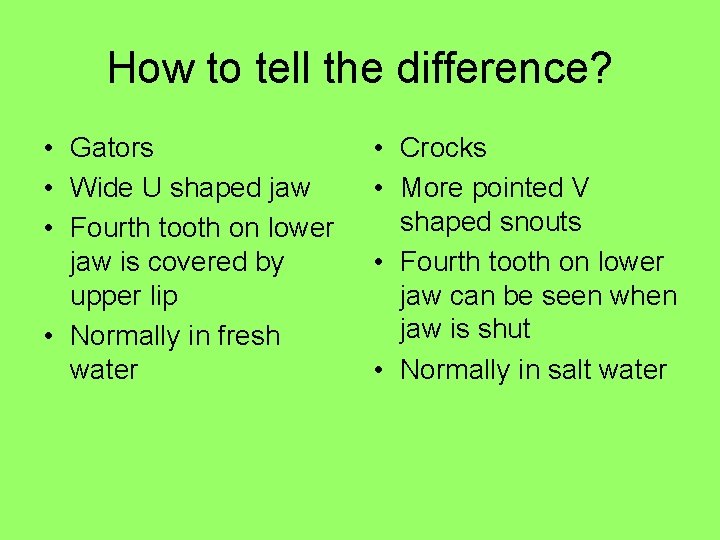
How to tell the difference? • Gators • Wide U shaped jaw • Fourth tooth on lower jaw is covered by upper lip • Normally in fresh water • Crocks • More pointed V shaped snouts • Fourth tooth on lower jaw can be seen when jaw is shut • Normally in salt water
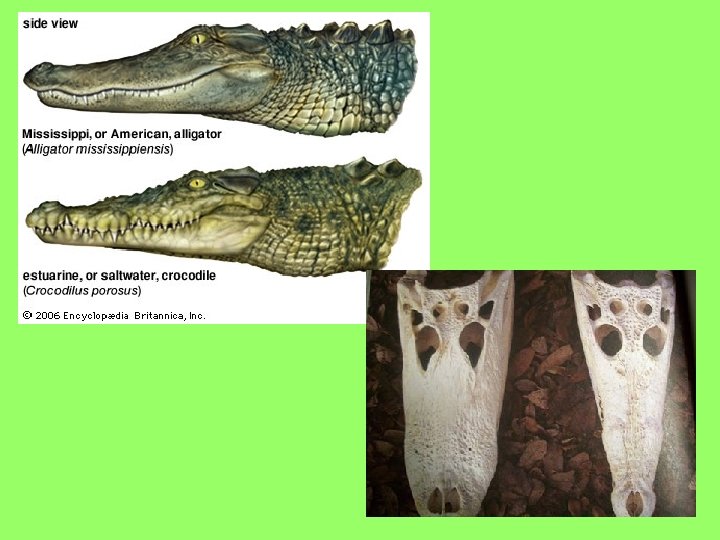
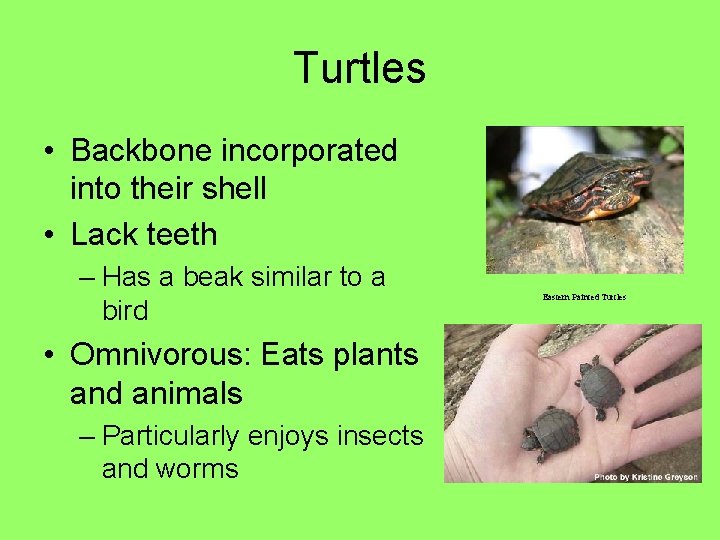
Turtles • Backbone incorporated into their shell • Lack teeth – Has a beak similar to a bird • Omnivorous: Eats plants and animals – Particularly enjoys insects and worms Eastern Painted Turtles
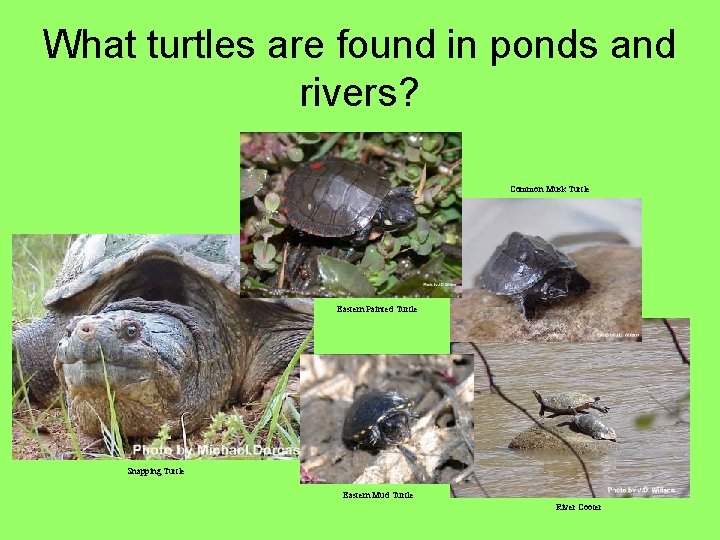
What turtles are found in ponds and rivers? Common Musk Turtle Eastern Painted Turtle Snapping Turtle Eastern Mud Turtle River Cooter
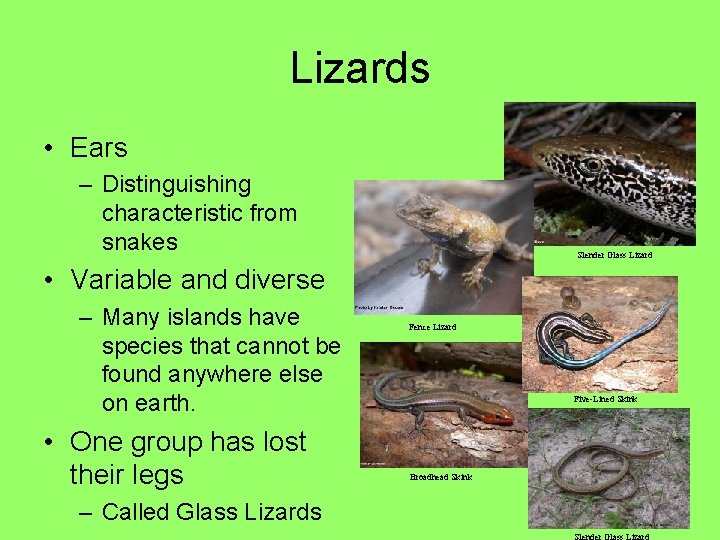
Lizards • Ears – Distinguishing characteristic from snakes Slender Glass Lizard • Variable and diverse – Many islands have species that cannot be found anywhere else on earth. • One group has lost their legs – Called Glass Lizards Fence Lizard Five-Lined Skink Broadhead Skink
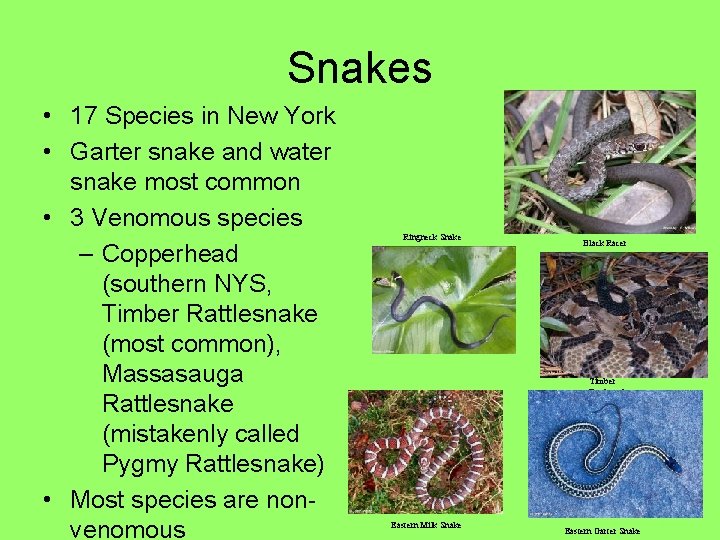
Snakes • 17 Species in New York • Garter snake and water snake most common • 3 Venomous species – Copperhead (southern NYS, Timber Rattlesnake (most common), Massasauga Rattlesnake (mistakenly called Pygmy Rattlesnake) • Most species are nonvenomous Ringneck Snake Black Racer Timber Rattlesnake Eastern Milk Snake Eastern Garter Snake
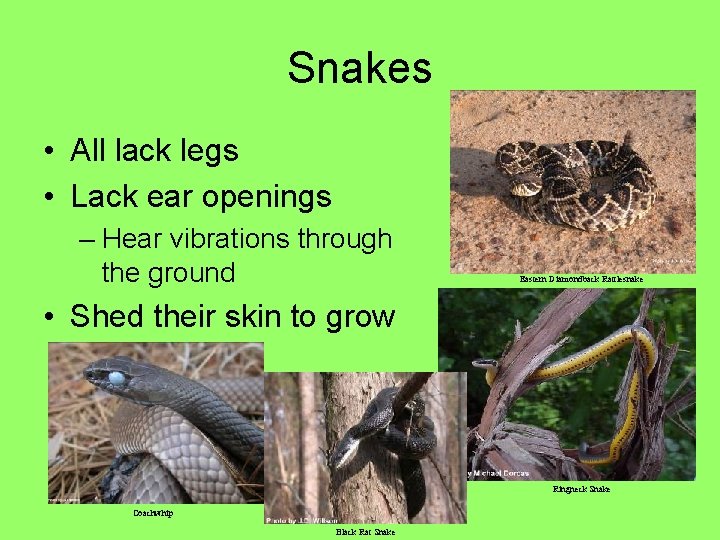
Snakes • All lack legs • Lack ear openings – Hear vibrations through the ground Eastern Diamondback Rattlesnake • Shed their skin to grow Ringneck Snake Coachwhip Black Rat Snake
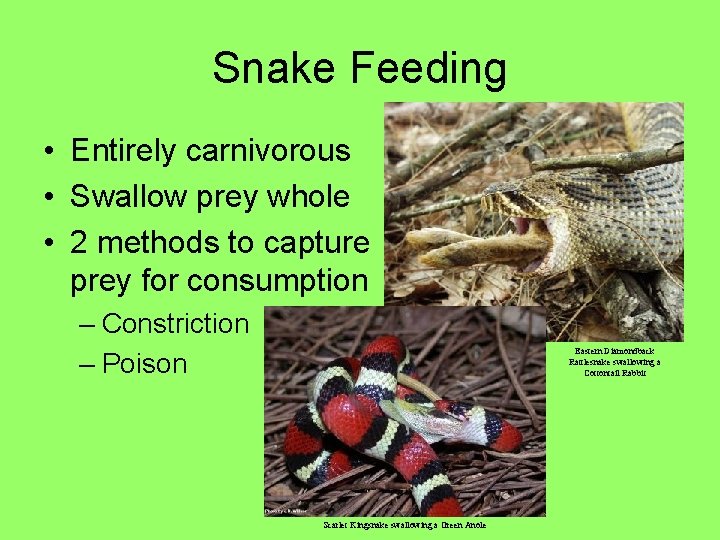
Snake Feeding • Entirely carnivorous • Swallow prey whole • 2 methods to capture prey for consumption – Constriction – Poison Eastern Diamondback Rattlesnake swallowing a Cottontail Rabbit Scarlet Kingsnake swallowing a Green Anole
Amphibians • • • Moist skin with no visible scales Not clawed Eggs in water External fertilization Larval stage before adulthood – Metamorphosis • Frogs, toads, newts and salamanders
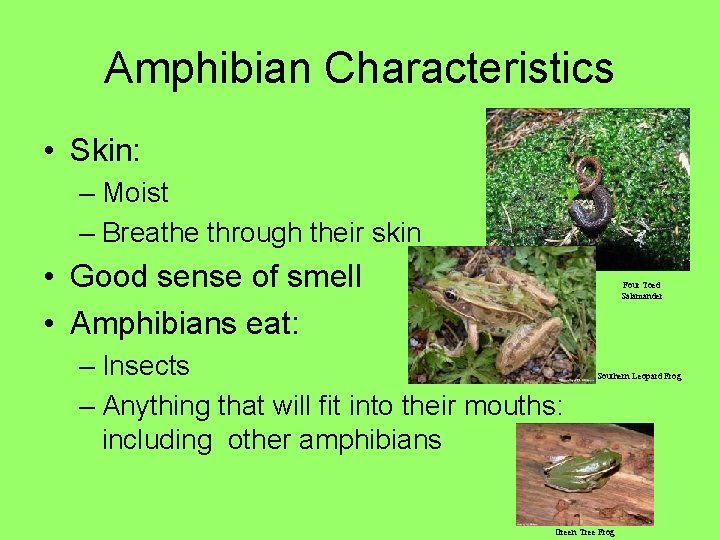
Amphibian Characteristics • Skin: – Moist – Breathe through their skin • Good sense of smell • Amphibians eat: Four Toed Salamander – Insects – Anything that will fit into their mouths: including other amphibians Southern Leopard Frog Green Tree Frog
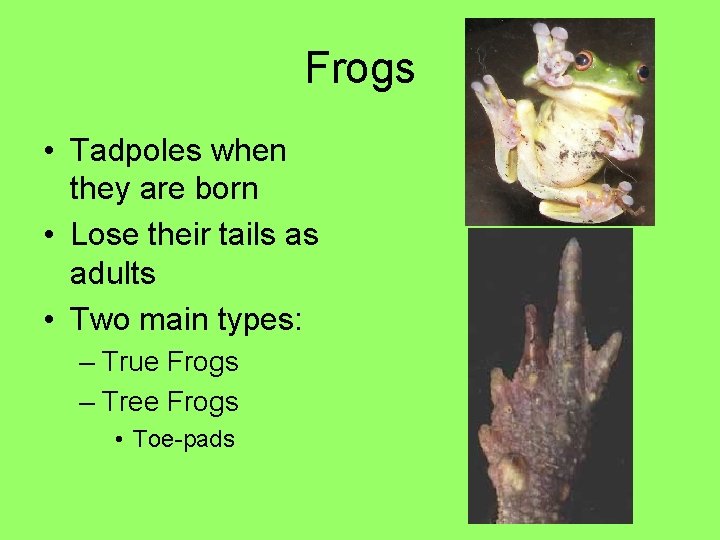
Frogs • Tadpoles when they are born • Lose their tails as adults • Two main types: – True Frogs – Tree Frogs • Toe-pads
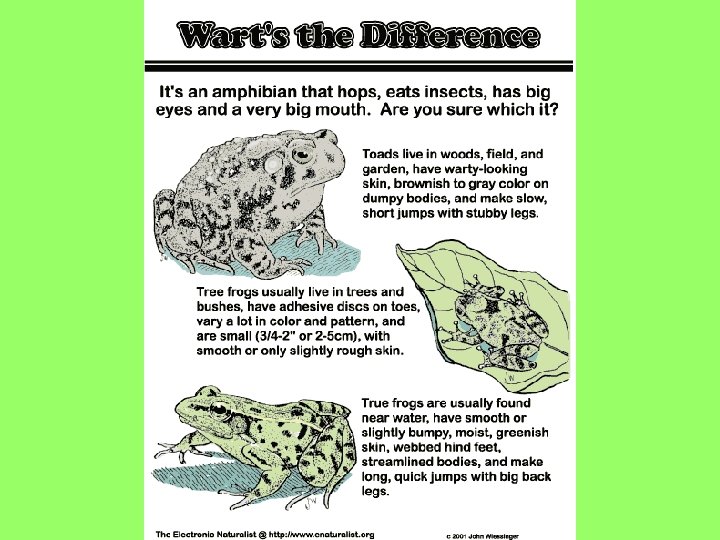
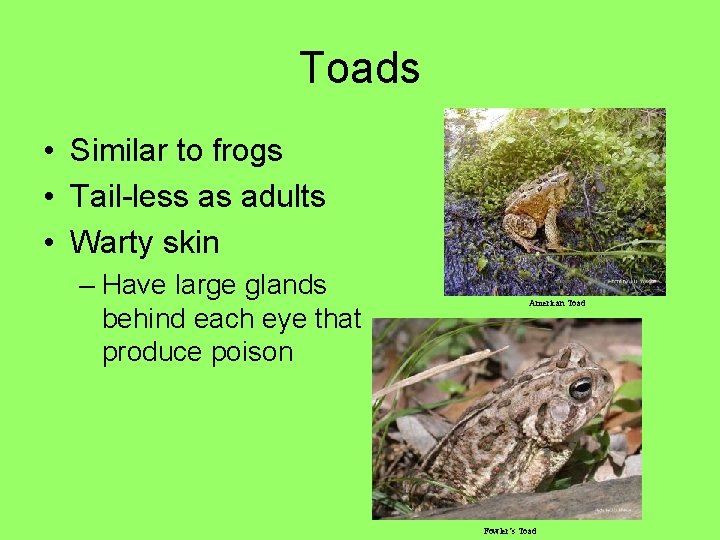
Toads • Similar to frogs • Tail-less as adults • Warty skin – Have large glands behind each eye that produce poison American Toad Fowler’s Toad
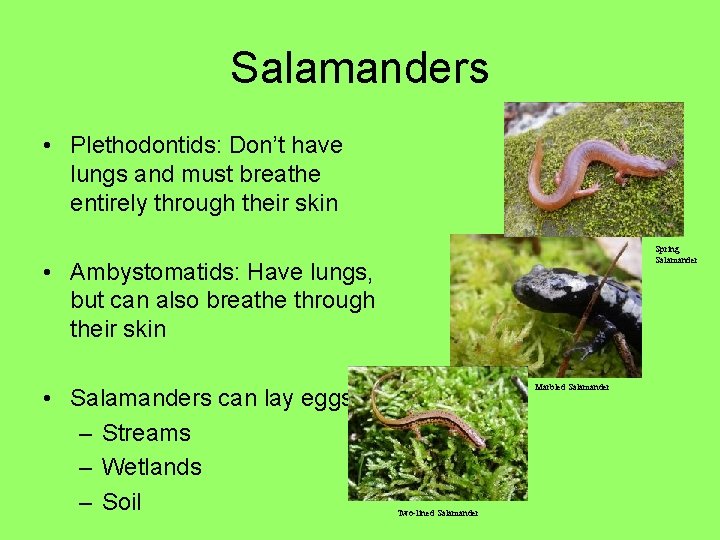
Salamanders • Plethodontids: Don’t have lungs and must breathe entirely through their skin Spring Salamander • Ambystomatids: Have lungs, but can also breathe through their skin • Salamanders can lay eggs in: – Streams – Wetlands – Soil Marbled Salamander Two-lined Salamander
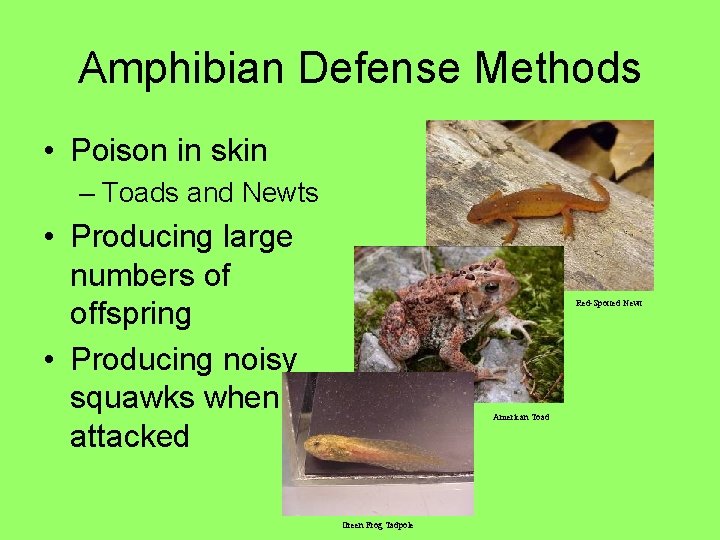
Amphibian Defense Methods • Poison in skin – Toads and Newts • Producing large numbers of offspring • Producing noisy squawks when attacked Red-Spotted Newt American Toad Green Frog Tadpole
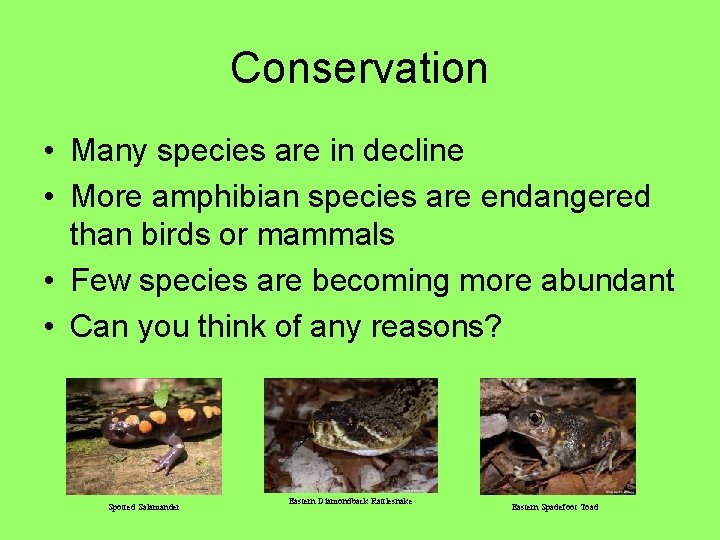
Conservation • Many species are in decline • More amphibian species are endangered than birds or mammals • Few species are becoming more abundant • Can you think of any reasons? Spotted Salamander Eastern Diamondback Rattlesnake Eastern Spadefoot Toad
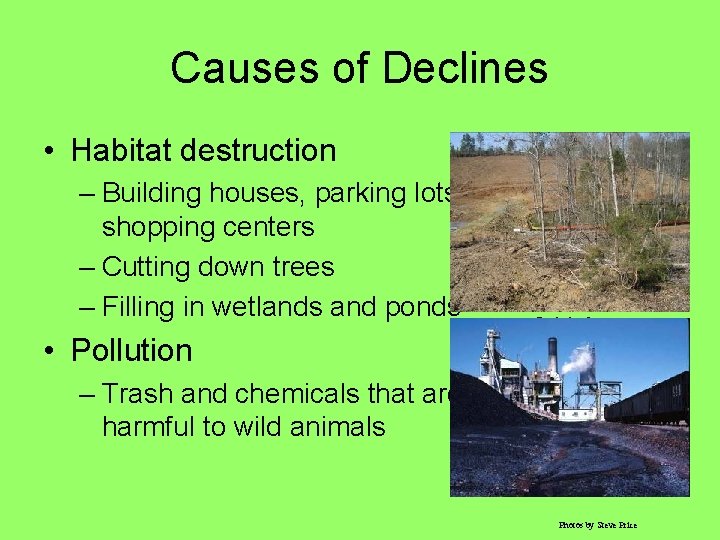
Causes of Declines • Habitat destruction – Building houses, parking lots, shopping centers – Cutting down trees – Filling in wetlands and ponds Photo by Steve Price • Pollution – Trash and chemicals that are harmful to wild animals Photos by Steve Price
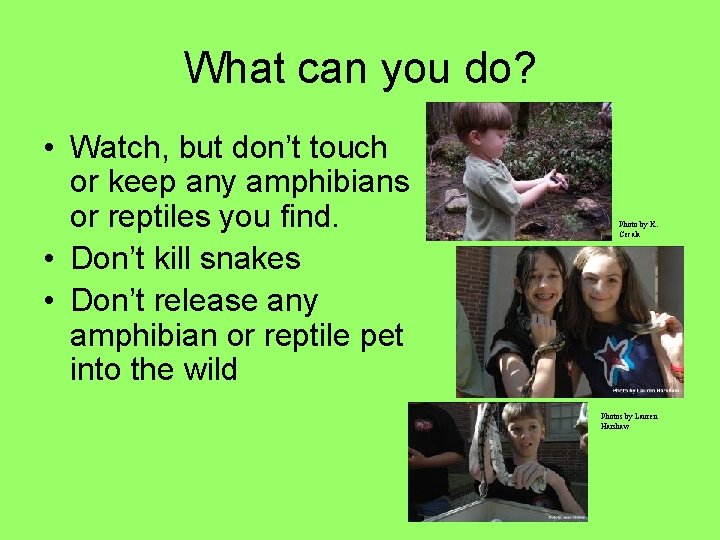
What can you do? • Watch, but don’t touch or keep any amphibians or reptiles you find. • Don’t kill snakes • Don’t release any amphibian or reptile pet into the wild Photo by K. Cecala Photos by Lauren Harshaw
- Slides: 23