
REPRODUCTIVE SYSTEM Unit 7 Lesson 6 6 th
- Slides: 10
REPRODUCTIVE SYSTEM Unit 7: Lesson 6 (6 th Grade Book)
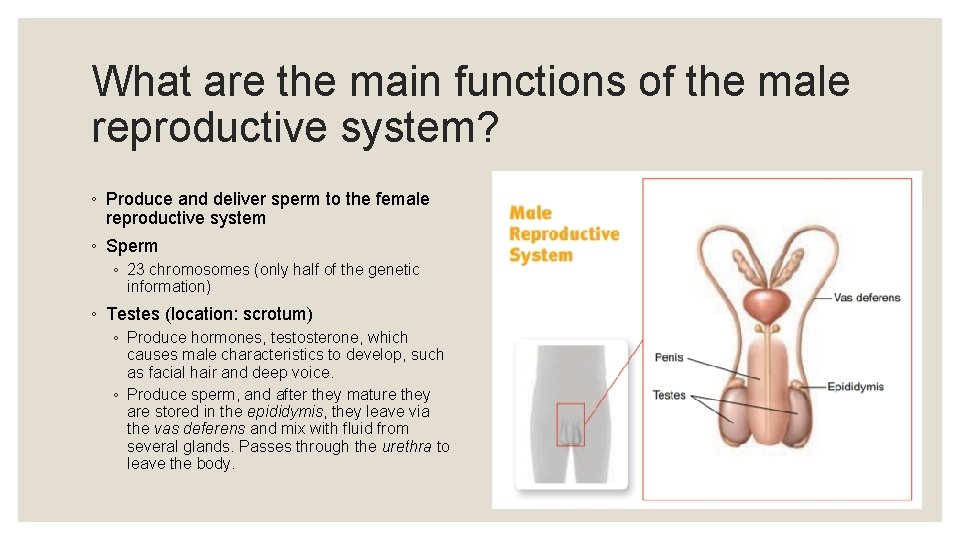
What are the main functions of the male reproductive system? ◦ Produce and deliver sperm to the female reproductive system ◦ Sperm ◦ 23 chromosomes (only half of the genetic information) ◦ Testes (location: scrotum) ◦ Produce hormones, testosterone, which causes male characteristics to develop, such as facial hair and deep voice. ◦ Produce sperm, and after they mature they are stored in the epididymis, they leave via the vas deferens and mix with fluid from several glands. Passes through the urethra to leave the body.
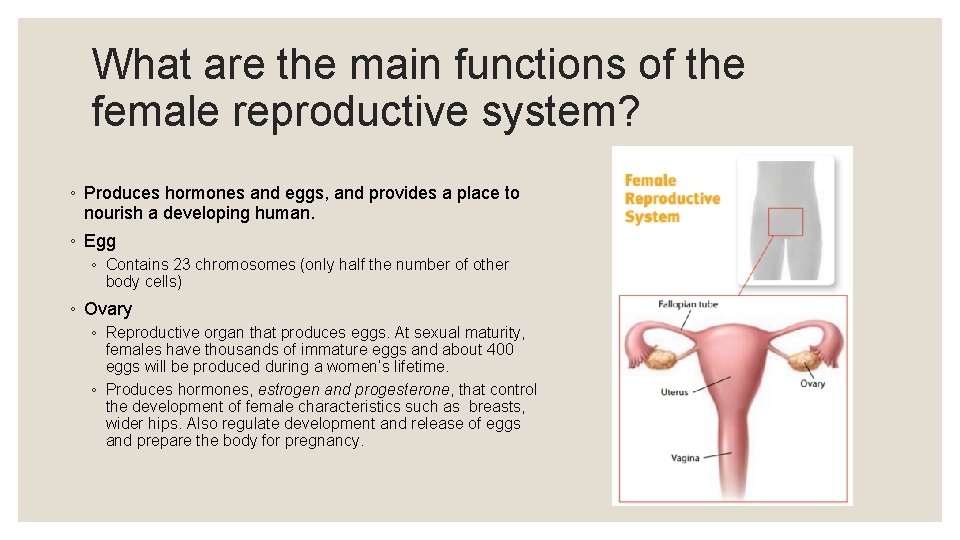
What are the main functions of the female reproductive system? ◦ Produces hormones and eggs, and provides a place to nourish a developing human. ◦ Egg ◦ Contains 23 chromosomes (only half the number of other body cells) ◦ Ovary ◦ Reproductive organ that produces eggs. At sexual maturity, females have thousands of immature eggs and about 400 eggs will be produced during a women’s lifetime. ◦ Produces hormones, estrogen and progesterone, that control the development of female characteristics such as breasts, wider hips. Also regulate development and release of eggs and prepare the body for pregnancy.
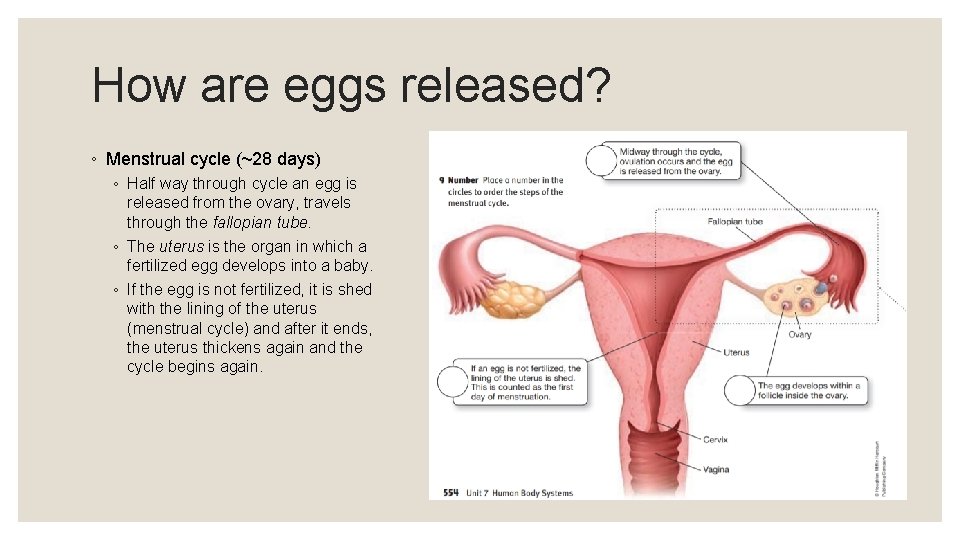
How are eggs released? ◦ Menstrual cycle (~28 days) ◦ Half way through cycle an egg is released from the ovary, travels through the fallopian tube. ◦ The uterus is the organ in which a fertilized egg develops into a baby. ◦ If the egg is not fertilized, it is shed with the lining of the uterus (menstrual cycle) and after it ends, the uterus thickens again and the cycle begins again.
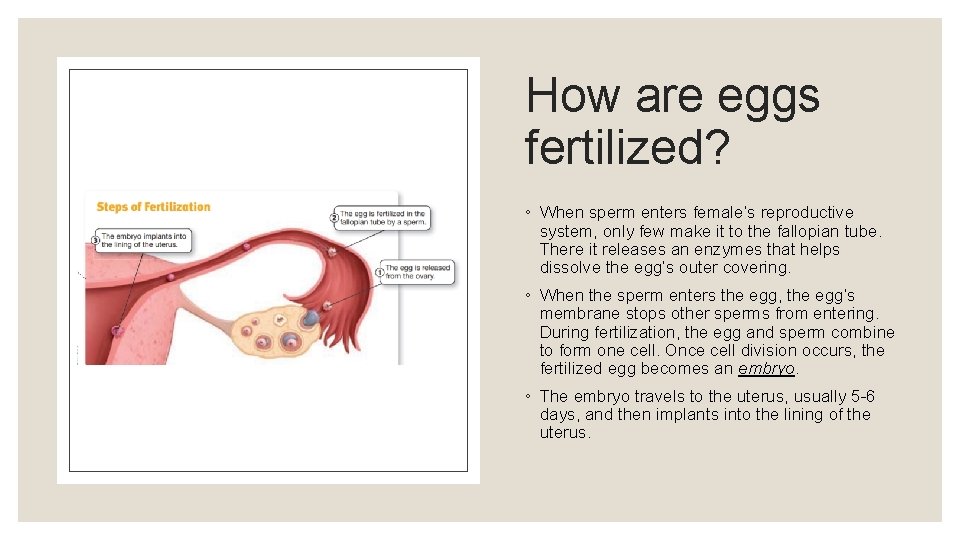
How are eggs fertilized? ◦ When sperm enters female’s reproductive system, only few make it to the fallopian tube. There it releases an enzymes that helps dissolve the egg’s outer covering. ◦ When the sperm enters the egg, the egg’s membrane stops other sperms from entering. During fertilization, the egg and sperm combine to form one cell. Once cell division occurs, the fertilized egg becomes an embryo. ◦ The embryo travels to the uterus, usually 5 -6 days, and then implants into the lining of the uterus.
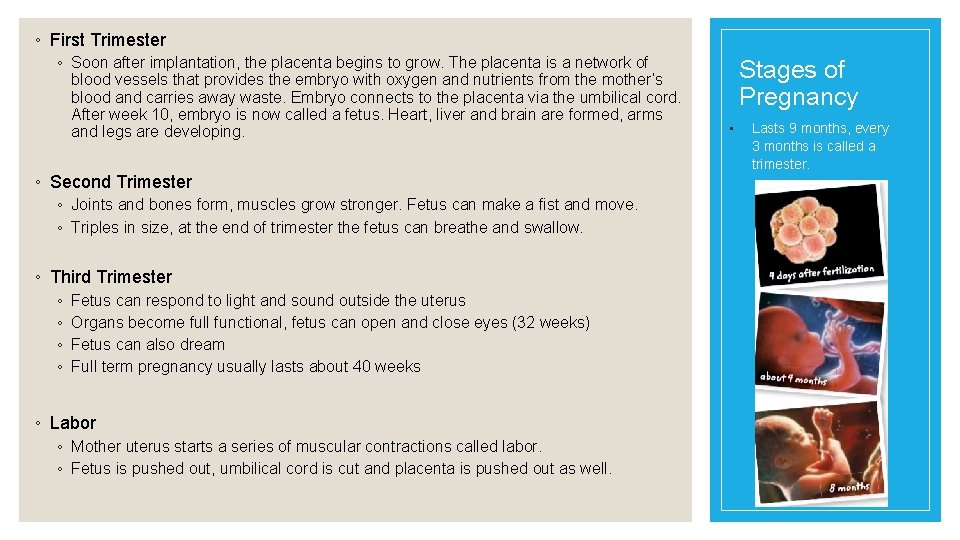
◦ First Trimester ◦ Soon after implantation, the placenta begins to grow. The placenta is a network of blood vessels that provides the embryo with oxygen and nutrients from the mother’s blood and carries away waste. Embryo connects to the placenta via the umbilical cord. After week 10, embryo is now called a fetus. Heart, liver and brain are formed, arms and legs are developing. ◦ Second Trimester ◦ Joints and bones form, muscles grow stronger. Fetus can make a fist and move. ◦ Triples in size, at the end of trimester the fetus can breathe and swallow. ◦ Third Trimester ◦ ◦ Fetus can respond to light and sound outside the uterus Organs become full functional, fetus can open and close eyes (32 weeks) Fetus can also dream Full term pregnancy usually lasts about 40 weeks ◦ Labor ◦ Mother uterus starts a series of muscular contractions called labor. ◦ Fetus is pushed out, umbilical cord is cut and placenta is pushed out as well. Stages of Pregnancy • Lasts 9 months, every 3 months is called a trimester.
Development ◦ Infancy (birth to age 2) ◦ Gain control of skeletal muscle & ability to speak ◦ Rapid growth ◦ Childhood (Age 2 – puberty) ◦ Baby teeth are replaced by permanent teeth ◦ Speak fluently and muscles are more coordinated ◦ Adolescence (puberty- adulthood) ◦ Reproductive system matures ◦ Hormones from puberty develop female/male secondary characteristics (ex. Deep voice, breasts) ◦ Middle Age (between 40 -65 y/o) ◦ Aging, hair turns gray, athletic abilities decrease, & skin wrinkles.
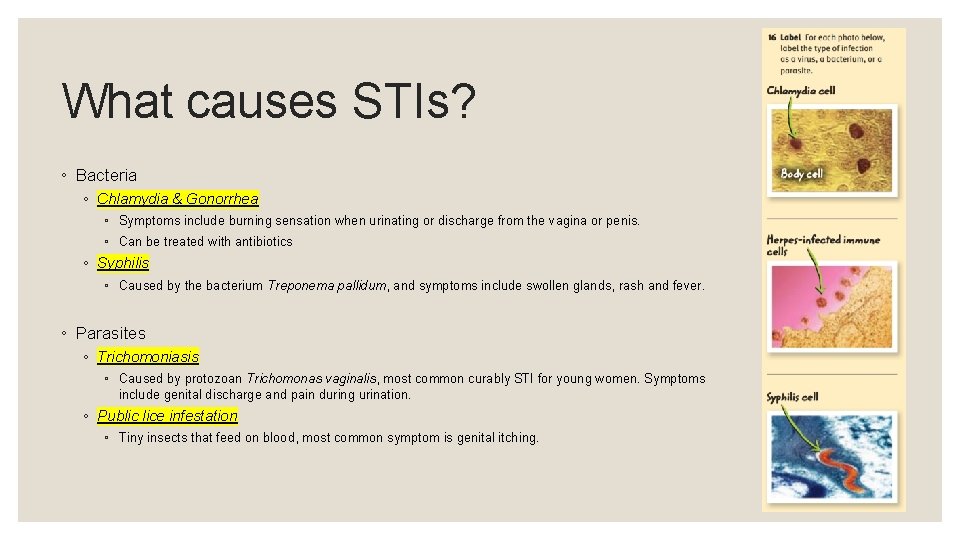
What causes STIs? ◦ Sexually transmitted infections (STI) are passed from one person to another during sexual contact. Can be caused by viruses, bacteria or parasites. ◦ Viruses ◦ Acquired Immunodeficiency syndrome (AIDS) is caused by human immunodeficiency virus (HIV). Infects and destroys immune system cells and as a result people with AIDS show symptoms of many other illnesses that a healthy person usually can fight off. ◦ Genital herpes, causes painful sores. Some people do not have symptoms and can spread the virus. ◦ Human papillomavirus (HPV) and hepatitis B are other STIs that are often symptomless, which can lead to the spread of the virus. HPV can lead to development of warts and cervical cancer and hepatitis B attacks the liver, and can lead to death.
What causes STIs? ◦ Bacteria ◦ Chlamydia & Gonorrhea ◦ Symptoms include burning sensation when urinating or discharge from the vagina or penis. ◦ Can be treated with antibiotics ◦ Syphilis ◦ Caused by the bacterium Treponema pallidum, and symptoms include swollen glands, rash and fever. ◦ Parasites ◦ Trichomoniasis ◦ Caused by protozoan Trichomonas vaginalis, most common curably STI for young women. Symptoms include genital discharge and pain during urination. ◦ Public lice infestation ◦ Tiny insects that feed on blood, most common symptom is genital itching.
Classwork & Homework ◦ Classwork ◦ Reproductive System Lesson Review ◦ Due Wednesday, May 20 th (For A Day) ◦ Due Thursday, May 21 st (For B Day) ◦ Homework ◦ USA Test Prep ◦ Due Friday, May 22 nd